Evidence for our Faith: Why Atheism Fails to Explain the Universe’s Origin

Atheism, as a worldview, suggests that the universe exists without a purposeful intelligent design, relying instead on naturalistic explanations for its origin. Sadly, this perspective struggles to provide a coherent and comprehensive account of the universe’s beginning, leaving critical questions unanswered. In contrast, the Bible offers a logically compelling framework for understanding the universe.

One of atheism’s primary challenges is the question of what caused the beginning of the universe. The universe, according to modern cosmology, began with the Big Bang approximately 13.8 billion years ago (Hawking, 1988). Atheism often leans on theories like quantum fluctuations or multiverse hypotheses to explain this event without invoking a cause. Yet, these explanations falter, only pushing back the question without answering it. Quantum mechanics operates within the framework of space-time, which itself began at the Big Bang. To suggest quantum fluctuations caused the universe requires a pre-existing framework, which doesn’t answer but only blurs the discussion. The multiverse theory, while speculative, lacks any real evidence and merely shifts the question of origin to an unobservable realm (Krauss, 2012). Atheism’s reliance on such theories often feels like an attempt to avoid the question rather than answer it, and requires lots of faith.

In contrast, the Bible presents a clear cause: “In the beginning, God created the heavens and the earth” (Genesis 1:1). This aligns with the philosophical principle of sufficient reason, which argues that everything must have a reason or cause. A transcendent (beyond Time, Space, & Matter), purposeful intelligent design provides a logically consistent explanation for why the universe exists rather than nothing. As Psalm 19:1 states, “The heavens declare the glory of God; and the firmament sheweth his handywork,” suggesting a purposeful order to creation.

Another issue is the fine-tuning of the universe. The physical constants governing gravity, electromagnetism, and nuclear forces are precisely calibrated to allow life (Barrow & Tipler, 1986). Even slight deviations would render the universe inhospitable. Atheism attributes this to chance or necessity, but the odds of such precision arising randomly are astronomically low; it’s like winning a cosmic lottery trillions of times over. Theistic arguments, supported by Romans 1:20, assert that the universe’s order reflects a purposeful design: “For the invisible things of him from the creation of the world are clearly seen, being understood by the things that are made, even his eternal power and Godhead; so that they are without excuse.”

Atheism also struggles with the origin of consciousness and morality. Naturalistic processes like evolution falter in accounting for subjective experiences or objective moral standards as well as biological development. If humans are merely products of matter, why do we possess self-awareness or universal moral intuitions? John 1:3 suggests a divine source for all things: “All things were made by him; and without him was not any thing made that was made.” This implies a purposeful intelligent design behind both the physical and metaphysical aspects of existence.

While atheism offers skepticism, it lacks a robust explanation for the universe’s origin, fine-tuning, and the emergence of consciousness. Theistic arguments, grounded in biblical revelation, provide a coherent narrative that aligns with both reason and observation. Ultimately, atheism’s failure to explain why there is something rather than nothing points to a truth the Bible boldly declares: the universe exists because a purposeful God willed it into being.

The basic question for me is; did everything come from nothing, or did it come from someone who is outside of Time, Space, and Matter? To me, atheism is the least logical belief system (Atheism is the lack of belief in the existence of God). We as humans are currently unable to scan the known universe, let alone the unknown universe, let alone the bottom of our own oceans. How that can one state with confidence, “there is no God.”

AGAPE

Sources:
Barrow, J. D., & Tipler, F. J. (1986). The Anthropic Cosmological Principle. Oxford University Press.
Hawking, S. (1988). A Brief History of Time. Bantam Books.
Krauss, L. M. (2012). A Universe from Nothing. Free Press.
The Bible (KJV): Genesis 1:1, Psalm 19:1, Romans 1:20, John 1:3.

Evidence for our Faith: The Bible’s Answers to Life’s Deepest Questions

Generations of people have wrestled with tough questions: Why are we here? Why is there pain in the world? Is there anything after we die? The Bible, trusted by billions, gives clear and meaningful answers to these deep questions. It’s like a guidebook from God, offering wisdom that makes sense and stands the test of time. It is a book for how to understand and navigate through this world, but also guides us to know how to have eternal life beyond this one. It is the word of God.

“And that from a child thou hast known the holy scriptures, which are able to make thee wise unto salvation through faith which is in Christ Jesus. All scripture is given by inspiration of God, and is profitable for doctrine, for reproof, for correction, for instruction in righteousness: That the man of God may be perfect, throughly furnished unto all good works” (2 Timothy 3:15-17).

The Bible declares our purpose. Ecclesiastes 12:13 puts it plainly: “Fear God, and keep his commandments: for this is the whole duty of man.” This means living in a way that puts God first in our lives, rather than chasing our own lusts, desires, and goals. The Bible teaches we were created by God and are made to glorify Him (Genesis 1:26-8; Isaiah 43:7). This provides a clear purpose, a timeless sense of value, and reassurance that we are more than mere animals.

Suffering is real, and the Bible addresses it head on. The story of Job shows a man who faced terrible pain but found God was still with him. Romans 8:28 promises that “God works all things for good for those who love Him.” Pain might come from human mistakes (Genesis 3:16–19) or just life’s challenges, but the Bible never calls it useless. It can shape us, and make us stronger (James 1:2–4). It can also help us to grow closer to God as we recognize our need for His strength (2 Corinthians 12:9-10). Many are hopeless in suffering, but the Bible offers hope that good can come out of suffering for those that love the Lord. The Bible also assures us that suffering is not God messing with us.

The Bible gives a straight answer about life after death. The Bible says, “God loved the world so much that He gave His only Son, so that everyone who believes in Him and follows Him will not be lost but have eternal life” (John 3:16), and “He that believeth and is baptized shall be saved” (Mark 16:16a). The Bible gives us instructions on how to have eternal life with God (e.g. Acts 2:38, Romans 6:17–18). The Bible’s promise of eternal life is backed by Jesus’ resurrection (1 Corinthians 15:20–22), a real event that gives us solid hope for eternity. We can know where we are going and how to get there.

Some people say the Bible’s answers are too rigid for today’s times of enlightenment. Thinkers through the ages have seen how the Bible’s teachings make sense of life’s big questions and remains timeless. It does more than just comfort us, it shows us how to live with purpose, face challenges with hope, and prepare for eternity through obedience to God’s Word. Every generation needs the Bible to discover true enlightenment in God’s timeless wisdom.

The Bible gives more than just answers; it shows us the true God who walks with us through life’s ups and downs. By believing in Jesus and obeying the gospel, we find purpose, hope, and the promise of eternal life. In a confusing world, the Bible is a steady guide for life’s biggest questions.

Agape

Sources:
The Holy Bible (KJV): Ecclesiastes 12:13, Isaiah 43:7, Romans 8:28, John 3:16, etc.

4 Things I Seek

But thou, O man of God, flee these things; and follow after righteousness, godliness, faith, love, patience, meekness.” (1Tim 6:11)

Flee also youthful lusts: but follow righteousness, faith, charity, peace, with them that call on the Lord out of a pure heart.” (2Tim 2:22)

Striving for Selfless Love.
As I walk through this life, I’m learning that selfless love is the heartbeat of what it means to follow Christ. The New Testament tells me to pursue love (agape, the kind of love that puts others first) as Paul urges in 1 Corinthians 14:1, “Pursue love,” and 1 Corinthians 10:24, “Let no one seek his own, but each one the other’s well-being.” I see this love woven into the virtues of 1 Timothy 6:11 and 2 Timothy 2:22, where love stands alongside righteousness, faith, and peace. Yet, I confess, loving selflessly doesn’t come naturally to me. It’s a daily choice to set aside my own desires and seek the good of those around me.

This pursuit matters deeply because love is the foundation of God’s kingdom. Paul says in 1 Corinthians 13:13 that love is greater than faith or hope, and I’m beginning to understand why. When I choose to love others (whether through a kind word, a listening ear, or an act of hospitality like Romans 12:13 encourages) I reflect Christ’s heart. Every effort to encourage others flows from this love. But I stumble often. My selfishness creeps in, and I need God’s grace to soften my heart, to help me embody the gentleness of 1 Timothy 6:11 or the peace of 2 Timothy 2:22 in my relationships.

Striving for selfless love changes me. It pushes me to forgive when I’d rather hold a grudge, to serve when I’m tired, and to prioritize others’ needs over my own comfort. It’s humbling to realize how far I fall short, yet I find joy in small steps, like a kind word to a neighbor or praying for a struggling friend. This pursuit brightens the light of Christ in my heart, showing the world a glimpse of Jesus’ love through my imperfect efforts. I keep chasing selflessness to make my love more like God’s.

Seeking God; Aspiring to Excellence (Godliness and Holiness)
In my walk with Christ, I’m learning to aspire to excellence through godliness and holiness, though I often feel unworthy of such a high calling. 1 Timothy 6:11 urges me to pursue godliness, a life of devotion to God, while Hebrews 12:14 says to “pursue… holiness, without which no one will see the Lord.” These virtues connect to the righteousness and faith in 1 Timothy 6:11 and 2 Timothy 2:22, and they echo the urging to seek “things above” in Colossians 3:1-2. I’m far from perfect, but I long to reflect God’s character more each day.

This pursuit is crucial because it draws me closer to God Himself. Godliness means living with reverence, seeking His will in every decision, but I often get distracted by worldly concerns. Holiness, too, challenges me to stand apart from sin and selfishness, as Hebrews 12:14 warns that without it, I won’t see God. This sobers me, reminding me that my efforts matter, not to earn salvation but to honor the One who saved me. These virtues shape my heart, teaching me to love what God loves and hate what He hates, aligning with the righteousness of both Timothy passages.

Aspiring to godliness and holiness is a humbling journey. I need the support of other saint, as 2 Timothy 2:22 suggests, pursuing these virtues “with those who call on the Lord.” Through prayer, Scripture, and accountability, I’m slowly growing, learning to forgive quickly, speak truthfully, and serve humbly. Each step feels like a battle, but it’s worth it to become more like Christ. As a saint, I seek this treasure of excellence, trusting God to refine me into His image, one faltering step at a time.

Seeking God; Longing for Eternal Life
As I seek to grow in faith, the hope of eternal life has become a treasure I hold dear, though I’m still learning to pursue it with the patience it demands. Romans 2:7 speaks of “eternal life to those who by patient continuance in doing good seek for glory, honor, and immortality,” and I see this echoed in the patience and righteousness Paul pleads for in 1 Timothy 6:11 and 2 Timothy 2:22. I’m not there yet, my faith wavers, and my endurance falters, but I keep pressing forward, trusting God to sustain me.


This pursuit is vital because it anchors my life in something beyond the fleeting moments of this world. Eternal life isn’t just a future hope; it shapes how I live now. The urging to “patient continuance” in Romans 2:7 reminds me of the patience in 1 Timothy 6:11, compelling me to persevere through trials without giving up. I often grow weary, tempted to chase temporary comforts instead of God’s eternal reward. But when I fix my eyes on eternity, I find strength to choose righteousness, even when it’s costly, like forgiving an offense or staying faithful in difficult times.

Longing for eternal life humbles me. It is God’s gift through Christ to those who obey the gospel. Yet, I’m told to seek it by living uprightly, as 2 Timothy 2:22 encourages in pursuing righteousness. Each step, resisting temptation, serving others, or trusting God in hardship, feels like a deposit toward that eternal hope. It’s a slow, steady journey, and I rely on God’s mercy and His word to keep me faithful. This pursuit reminds me that my true home is with Him, forever.

Seeking God; Seeking the Kingdom of God and His Righteousness
As I grow in faith, I’m learning to make the kingdom of God and His righteousness my highest pursuit, though I often fall short of this priority. Jesus’ words in Matthew 6:33, “Seek first the kingdom of God and His righteousness,” and Luke 12:31 tell me to focus on God’s rule and moral standard above all else. This aligns with the righteousness, faith, and godliness in 1 Timothy 6:11 and 2 Timothy 2:22, but I confess it’s a struggle to keep this first in my heart when life’s demands pull me in every direction.

This pursuit is the cornerstone of my faith because it reorients everything else. Jesus promises that when I seek God’s kingdom first, my needs will be met, freeing me from worry. But trusting this promise requires the faith of 1 Timothy 6:11 and 2 Timothy 2:22, believing God’s way is better than my own. Righteousness (living justly and obediently) isn’t just a rule to follow; it’s a reflection of God’s character, as is the godliness in 1 Timothy 6:11. I’m humbled by how often I prioritize my plans over God’s, yet His word directs me back to God’s seeking His way.

Seeking the kingdom means living differently, praying for God’s will, sharing the gospel, and standing for His truth, even when it’s unpopular. I stumble, chasing lesser things, but each time I refocus, through study, and service, I find purpose and peace. As a saint, I’m learning to seek the Kingdom of God and His righteousness above all, trusting Him along the way.

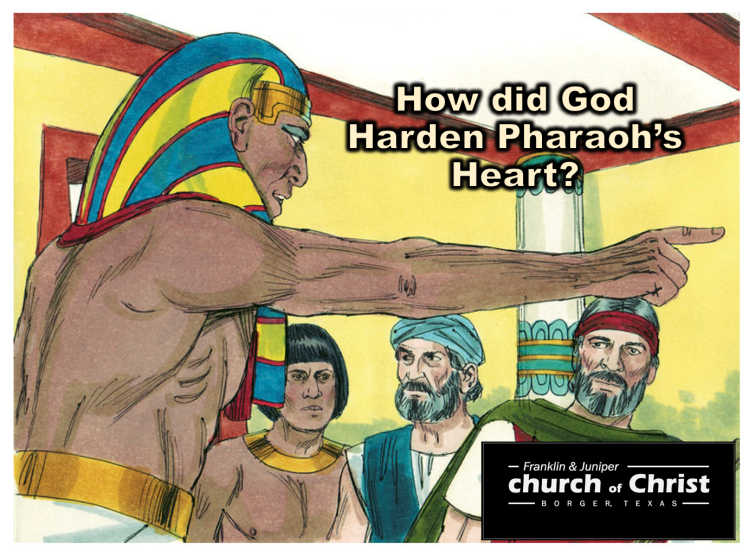
What Do I Say When They Say; God Hardened Pharaoh’s Heart?

God Hardened Pharaoh’s Heart
For the Scripture says to Pharaoh, “For this very purpose I have raised you up, that I may show My power in you, and that My name may be declared in all the earth.” (Rom 9:17)

This objection sounds like this; Calvinists might say that Pharaoh’s hardening is evidence of predestination separate from free will:

“God hardened Pharaoh’s heart to display His sovereign power, showing that human will is subject to His eternal decree.”

“Pharaoh’s hardening proves that God chooses whom to have mercy on and whom to harden, independent of human action.”

“God raised Pharaoh up to be a vessel of wrath, predestined to resist Him, to magnify divine glory.”

“Pharaoh had no free will to resist God’s hardening, as his rebellion was ordained to serve God’s redemptive plan.”

At the end of the day, this error makes God out to be a monster, and that He is a respecter of persons. “Then Peter opened his mouth, and said, Of a truth I perceive that God is no respecter of persons.” (Acts 9:34)

How can we answer this objection?
We Harden Our Own Hearts

The Bible repeatedly warns against hardening our hearts, emphasizing that this is a choice we make by disregarding God’s word. Hebrews 3:15 urges, “To day if ye will hear his voice, harden not your hearts, as in the provocation.” Similarly, Hebrews 4:7 echoes, “To day, after so long a time; as it is said, To day if ye will hear his voice, harden not your hearts.” These verses, rooted in Psalm 95:7–8, recall Israel’s rebellion in the wilderness, where they hardened their hearts by refusing to trust God. Proverbs 28:14 warns, “He that hardeneth his heart shall fall into mischief,” while Zechariah 7:12 describes those who “made their hearts as an adamant stone, lest they should hear the law.” When we ignore God, we actively choose to harden our hearts, shutting out God’s truth. The responsibility lies with us, not with God overriding our will.

God Allows Rebellion to Accomplish His Purpose
God permitted Pharaoh to exalt himself in pride, using his defiance to demonstrate His power. Exodus 7:3–5 declares, “I will harden Pharaoh’s heart, and multiply my signs… that the Egyptians may know that I am the Lord.” Similarly, Exodus 10:1–2 explains that God hardened Pharaoh’s heart “that ye may tell in the hearing of thy son… what I have wrought in Egypt.” Exodus 14:4 adds, “I will harden Pharaoh’s heart, and he will pursue them, and I will get glory over Pharaoh.” This purpose is echoed in Romans 9:17: “For the scripture saith unto Pharaoh, Even for this same purpose have I raised thee up, that I might shew my power in thee.” Like Judas, chosen yet betraying Jesus (John 6:70–71: “Have not I chosen you twelve, and one of you is a devil?”), Pharaoh’s rebellion serves God’s plan without excusing his guilt. God allows human pride to run its course, turning it to His glory.

Rebellion Is to Harden Our Own Heart
Pharaoh’s story vividly illustrates this truth. In Exodus 5:2, he defiantly declares, “Who is the Lord, that I should obey his voice and let Israel go? I do not know the Lord.” This rejection of God’s authority marks the beginning of his heart’s hardening. The Bible shows Pharaoh repeatedly choosing to disregard God’s word through Moses. In Exodus 7:13, after Aaron’s staff becomes a serpent, “Pharaoh’s heart was hardened, and he did not listen to them.” Again, in Exodus 8:15, after the plague of frogs, “he hardened his heart and would not listen to them.” These passages highlight Pharaoh’s active role in hardening his heart by failing to regard God’s signs and commands.

Yet, God’s sovereignty is also at work. Exodus 4:21 states, “I will harden his heart, so that he will not let the people go,” and Exodus 9:12 confirms, “The Lord hardened the heart of Pharaoh.” Does this mean God forced Pharaoh to sin? No. The text consistently shows Pharaoh’s rebellion preceding God’s hardening, as in Exodus 9:27, where Pharaoh admits, “I have sinned this time: the Lord is righteous, and I and my people are in the wrong.” God does not cause Pharaoh’s sin but uses his rebellion to fulfill divine purposes, as Exodus 10:1 explains: “I have hardened his heart… that I may show these signs of mine among them.” Pharaoh remains accountable for his choices, while God sovereignly works through them.

“The Devil Made Me Do It”?
Some might claim, like the old saying, “The devil made me do it,” to shift blame for their sin. But Scripture places responsibility squarely on us. Pharaoh’s pride in Exodus 5:2 mirrors the rebellion of Israel in Judges 17:6 and 21:25: “Every man did that which was right in his own eyes.” This self-rule leads to a hardened heart. James 1:14–15 clarifies, “Every man is tempted, when he is drawn away of his own lust… when lust hath conceived, it bringeth forth sin.” Our deceitful hearts (Jeremiah 17:9: “The heart is deceitful above all things”) and evil thoughts (Mark 7:21–22: “From within, out of the heart of men, proceed evil thoughts… pride”) drive rebellion, not God or the devil. Like Pharaoh, we harden our hearts when we prioritize our own desires over God’s truth.

We are to Soften Our Hearts by God’s word.
The hardening of Pharaoh’s heart teaches us a profound lesson: We harden our hearts by disregarding God’s word, but God uses even our rebellion to fulfill His purposes. The Bible warns us to choose differently. Hebrews 3:15 pleads, “To day if ye will hear his voice, harden not your hearts.” Unlike Pharaoh, who persisted in pride, we must repent and seek a soft heart, as David prayed in Psalm 51:10: “Create in me a clean heart, O God.” Have you ignored God’s voice through Scripture? Choose to obey, for the responsibility to heed the Gospel call is ours.

Agape

Seeking God; His Kingdom & Righteousness

Seeking the Kingdom of God and His Righteousness

As I grow in faith, I’m learning to make the kingdom of God and His righteousness my highest pursuit, though I often fall short of this priority. Jesus’ words in Matthew 6:33, “Seek first the kingdom of God and His righteousness,” and Luke 12:31 call me to focus on God’s rule and moral standard above all else. This aligns with the righteousness, faith, and godliness in 1 Timothy 6:11 and 2 Timothy 2:22, but I confess it’s a struggle to keep this first in my heart when life’s demands pull me in every direction.

This pursuit is the cornerstone of my faith because it reorients everything else. Jesus promises that when I seek God’s kingdom first, my needs will be met, freeing me from worry. But trusting this promise requires the faith of 1 Timothy 6:11 and 2 Timothy 2:22, believing God’s way is better than my own. Righteousness (living justly and obediently) isn’t just a rule to follow; it’s a reflection of God’s character, as is the godliness in 1 Timothy 6:11. I’m humbled by how often I prioritize my plans over God’s, yet His word directs me back to God’s seeking His way.

Seeking the kingdom means living differently, praying for God’s will, sharing the gospel, and standing for His truth, even when it’s unpopular. I stumble, chasing lesser things, but each time I refocus, through study, and service, I find purpose and peace. As a saint, I’m learning to seek the Kingdom of God and His righteousness above all, trusting Him along the way.

agape,

spencer

Seeking God; Aspiring to Excel

Aspiring to Excellence (Godliness and Holiness)

In my walk with Christ, I’m learning to aspire to excellence through godliness and holiness, though I often feel unworthy of such a high calling. 1 Timothy 6:11 urges me to pursue godliness, a life of devotion to God, while Hebrews 12:14 calls me to “pursue… holiness, without which no one will see the Lord.” These virtues connect to the righteousness and faith in 1 Timothy 6:11 and 2 Timothy 2:22, and they echo the call to seek “things above” in Colossians 3:1-2. I’m far from perfect, but I long to reflect God’s character more each day.

This pursuit is crucial because it draws me closer to God Himself. Godliness means living with reverence, seeking His will in every decision, but I often get distracted by worldly concerns. Holiness, too, challenges me to stand apart from sin and selfishness, as Hebrews 12:14 warns that without it, I won’t see God. This sobers me, reminding me that my efforts matter, not to earn salvation but to honor the One who saved me. These virtues shape my heart, teaching me to love what God loves and hate what He hates, aligning with the righteousness of both Timothy passages.

Aspiring to godliness and holiness is a humbling journey. I need the support of other saint, as 2 Timothy 2:22 suggests, pursuing these virtues “with those who call on the Lord.” Through prayer, Scripture, and accountability, I’m slowly growing, learning to forgive quickly, speak truthfully, and serve humbly. Each step feels like a battle, but it’s worth it to become more like Christ. As a saint, I seek this treasure of excellence, trusting God to refine me into His image, one faltering step at a time.

Faith, Hope, and Love: The Keys to Overcoming Troubles and Troublers

Life can throw some heavy punches, can’t it? For the believers in Thessalonica, those punches came in the form of persecutions, false teachings, and even some within their own community slacking off and stirring up trouble. Yet, in his second letter to them, Paul points to three timeless virtues (faith, hope, and love) as the keys to standing firm, no matter what others say or do. Rooted in knowing God’s word, these qualities enabled the Thessalonians to rise above their troubles and the “lowness” of their troublers.

Chapter 1: Enduring Through Faith, Hope, and Love

The Thessalonian church was under fire, literally and figuratively. They faced “persecutions and tribulations” (2 Thessalonians 1:4, KJV), likely from hostile neighbors or authorities who opposed their faith. Yet Paul couldn’t stop bragging about them: “We ourselves glory in you in the churches of God for your patience and faith in all your persecutions and tribulations that ye endure” (1:4). Their faith wasn’t just a Sunday morning nod to God; it was a steadfast trust in His promises, even when the world seemed against them. That faith, Paul says, was “growing exceedingly” (1:3), and their love for one another was increasing right alongside it.

But what kept them going? HOPE. Paul paints a vivid picture of hope tied to God’s justice and Christ’s return: “Seeing it is a righteous thing with God to recompense tribulation to them that trouble you; And to you who are troubled rest with us, when the Lord Jesus shall be revealed from heaven with his mighty angels” (1:6-7). The promise that God would deal with their troublers and grant them relief gave them a reason to hold on. This hope wasn’t wishful thinking, it was grounded in God’s word, which assured them that their suffering was “a manifest token of the righteous judgment of God” (1:5). Knowing God’s word fueled their faith to endure, their hope to look forward, and their love to care for one another, even under pressure. Paul prayed for this to continue, asking God to “fulfil all the good pleasure of his goodness, and the work of faith with power” (1:11).

So, what’s the lesson? When trouble comes (whether it’s people attacking your faith or life’s hardships piling up) lean into faith, hope, and love. Trust God’s word, hold fast to the promise of Christ’s return, and keep loving those around you. That’s how you stay faithful, no matter what others do.

Chapter 2: Standing Firm Against Deception

The troubles didn’t stop with persecution. Someone was spreading lies, maybe even claiming Paul’s authority, saying the day of the Lord had already come. This shook the Thessalonians, leaving them “troubled” and “shaken in mind” (2 Thessalonians 2:2). Imagine the confusion, thinking you missed the biggest event in history! But Paul steps in with clarity, urging them not to be “soon shaken in mind, or be troubled, neither by spirit, nor by word, nor by letter as from us” (2:2). He reminds them of God’s word, which he’d already taught: the day of the Lord won’t come until the “man of lawlessness” is revealed (2:3-4) and destroyed by Christ’s return (2:8).

Here’s where faith, hope, and love shine again. Their faith in the truth (God’s word) kept them from falling for deception. Paul calls them “brethren beloved of the Lord” (2:13), chosen for salvation “through sanctification of the Spirit and belief of the truth” (2:13; see John 17:17). That belief anchored them. Hope came from knowing Christ would return to set things right: “The Lord Jesus Christ… shall destroy with the brightness of his coming” (2:8). This hope steadied them against false alarms. And love? Paul prays for their hearts to be comforted and established “in every good word and work” (2:16-17), a call to keep loving and serving each other despite the chaos.

The troublers spreading lies were low, trying to unsettle God’s people. But Paul’s answer is clear: “Therefore, brethren, stand fast, and hold the traditions which ye have been taught, whether by word, or our epistle” (2:15). Stay rooted in God’s word. Let faith keep you grounded, hope keep you looking up, and love keep you moving forward. That’s how you abound, no matter what others say.

Chapter 3: Overcoming Internal Troubles

If external persecution and false teachings weren’t enough, the Thessalonians had trouble within their own ranks. Some believers were “walking disorderly,” refusing to work and meddling as busybodies (2 Thessalonians 3:6, 11). This idleness wasn’t just laziness, it disrupted the work of the church. Paul doesn’t mince words: “If any would not work, neither should he eat” (3:10). Yet even this discipline is rooted in love, as he urges the church to correct the idle “as a brother” (3:15), not an enemy.

Faith shows up in Paul’s confidence that the Thessalonians would stay faithful: “We have confidence in the Lord touching you, that ye both do and will do the things which we command you” (3:4). Their hope was tied to God’s word, which provided clear instructions for living, and to the promise of God’s peace: “Now the Lord of peace himself give you peace always by all means” (3:16). Love guided their response to the troublers within, balancing discipline with care, and Paul prayed that “the Lord direct your hearts into the love of God, and into the patient waiting for Christ” (3:5).

The idle were acting low, causing trouble by neglecting their responsibilities. But Paul calls the church to a higher standard: “Be not weary in well doing” (3:13). By staying faithful to God’s word (working diligently, loving one another, and holding fast to His commands) they could overcome even internal challenges.

Tying It All Together

What do we learn from the Thessalonians? Troubles and troublers come in many forms: persecutors who mock your faith, deceivers who twist the truth, or even fellow believers who let you down. But faith, hope, and love, rooted in knowing God’s word, are your strength. Faith keeps you trusting God’s truth, like the Thessalonians’ belief in the gospel (2:13) and obedience to Paul’s teaching (3:4). Hope lifts your eyes to God’s vengeance (1:6-9, 2:8) and Christ’s return (1:7, 2:8), assuring you that troubles won’t have the last word. Love binds you to your brothers and sisters, growing even in tough times (1:3) and guiding how you correct the wayward (3:15).

Knowing God’s word is the thread that ties it all together. It’s the foundation for faith, the source of hope, and the guide for love. The Thessalonians’ troubles didn’t define them, their faithfulness did. They stayed abounding, growing in faith and love (1:3), standing firm against lies (2:15), and doing good despite setbacks (3:13). So, when others try to drag you down with their words or actions, don’t stoop to their level. Hold fast to God’s word. Let faith, hope, and love keep you faithful and abounding, just as they did for the Thessalonians.

4 Things I Cannot Hide

4 Things I Cannot Hide: A Personal Reflection

As I navigate life’s winding paths, I often try to present my best self to the world, hoping to mask my flaws. Yet, there are four things I cannot hide: my speech, my assumptions about others, how I let trouble affect me, and my perseverance despite obstacles. These aspects of my character slip through the cracks of my carefully curated facade, revealing my true heart. Through the lens of Scripture, I see both my shortcomings and the path to transformation, as God’s Word guides me to align these areas with His truth.

1. My Speech: The Way I Talk to Others
My words betray my heart. Whether I speak with kindness, impatience, or cutting sarcasm, my tone and intent are laid bare for others to see. I cannot hide the impact of my speech, it lingers, shaping how others perceive me. A harsh word can wound, while a gentle one can heal. Proverbs 15:1 offers wisdom: “A soft answer turneth away wrath: but grievous words stir up anger.” When I choose words that uplift and encourage, I reflect God’s will for my life on how to interact with others. “Let no corrupt word proceed out of your mouth, but what is good for necessary edification, that it may impart grace to the hearers.” (Eph 4:29; see Col 4:6) O God, forgive me.

2. My Assumptions: Judging Without Knowing
I often catch myself forming quick judgments about others based on their appearance or actions. Someone comically said, “I can tell a judgmental person just by looking at them.” These assumptions (especially in impugning motives) creep out through my body language, a fleeting glance, a hesitant tone, or an unconscious step back. My biases betray me, revealing a heart prone to prejudging. James 2:1-4 (KJV) challenges me: “My brethren, have not the faith of our Lord Jesus Christ, the Lord of glory, with respect of persons… Have ye not then been partial in yourselves, and are become judges of evil thoughts?” By seeking to understand others, I strive to embody humility, countering my tendency to assume. (see Matt 7:1-6 Judge not…) O God, forgive me.

3. The Way I Let Trouble Bother Me
When trials come, my response reveals the depth of my faith. Too often, I grumble or slip into pessimism, broadcasting a lack of trust in God. My complaints expose a heart struggling to hold onto hope. Philippians 4:6-7 (KJV) offers a better way: “Be careful for nothing; but in every thing by prayer and supplication with thanksgiving let your requests be made known unto God. And the peace of God, which passeth all understanding, shall keep your hearts and minds through Christ Jesus.” By turning to prayer and gratitude, I can display hope, letting God’s peace shine through my troubles. “Do all things without complaining and disputing, that you may become blameless and harmless, children of God without fault in the midst of a crooked and perverse generation, among whom you shine as lights in the world,” (Phil 2:14-15) O God, Forgive me.

4. The Way I Keep On Despite Obstacles
My perseverance (or lack thereof) reveals my resilience (or lack thereof). Do I press forward when others criticize, when obstacles loom, or when doubts creep in? My response is visible to all. Galatians 6:9 (KJV) encourages me: “And let us not be weary in well doing: for in due season we shall reap, if we faint not.” This verse urges me to keep going, trusting God, no matter what stands in my way. My steadfastness displays my Hope in God. “For you have need of endurance, so that after you have done the will of God, you may receive the promise:” (Heb 10:36) O God, Forgive me.

The Problem Exemplified
When I fail to guard these areas, my flaws are exposed. Proverbs 21:23 (KJV) warns, “Whoso keepeth his mouth and his tongue keepeth his soul from troubles.” My unguarded words can spark conflict, reflecting a broader truth: when my speech, assumptions, complaints, or lack of perseverance go unchecked, I invite calamity. This verse humbles me, reminding me of the consequences of letting my heart run unrestrained.

Transforming My Life
Though I cannot hide these four aspects of myself, I can, by God’s grace, refine them to reflect His character. Proverbs 15:1 teaches me to speak with gentleness. James 2:1-4 calls me to love without prejudice. Philippians 4:6-7 guides me to replace complaints with hope. Galatians 6:9 strengthens me to persevere. Together, these scriptures shape me to live in a better way, letting my words, actions, and attitudes shine as a testimony to the transformative power of God’s word. In a world that sees what I cannot hide, I pray my life reflects Christ.

Agape,

Spencer

The Courage to Stand in our Modern Challenges to Christian Faith

In the pages of Scripture, we find heroes like Esther, Daniel, Abigail, and Paul, who faced imprisonment, death, and danger with unwavering faith in God. Their resolve to remain faithful, even at the cost of their lives, inspires us. Yet, for most Christians today, the threats to faith are subtler but no less real. We may not face lions’ dens or executioners, but we encounter pressures that test our determination to live for Christ. This article explores four modern challenges Christians face in keeping faith and how God’s Word compels us to respond with active, courageous faith.

The Weight of Shame: Proclaiming the Gospel Boldly

I am not ashamed of the gospel, for it is the power of God for salvation to everyone who believes” (Romans 1:16). Yet, in a world that often dismisses or derides Christianity, many believers feel guilt or embarrassment when sharing their faith. Whether it’s hesitating to mention Jesus in a workplace conversation or softening biblical truths to avoid conflict at a family gathering, the fear of being labeled judgmental or outdated can silence us. Paul, who faced beatings and imprisonment for preaching, urges us not to be “ashamed of the testimony about our Lord” (2 Timothy 1:8) but to handle God’s Word rightly, unashamed (2 Timothy 2:15).

Like Daniel, who prayed openly despite a death decree (Daniel 6:10), Christians today must anchor their identity in Christ. The gospel’s power to save outweighs fleeting social discomfort. When a young professional risks awkwardness by inviting a colleague to church or a parent teaches their child biblical values in a skeptical culture, they echo Esther’s resolve: “If I perish, I perish” (Esther 4:16). Faith compels action, speaking boldly, trusting God’s Spirit to work through his word.

The Cost of Reputation and Relationships: Choosing Christ First

Have I become your enemy by telling you the truth?” Paul asked the Galatians (Galatians 4:16). Jesus warned that loving family more than Him makes us unworthy of discipleship (Matthew 10:37). These verses strike at a deep fear: losing reputation or relationships for our faith. In a hyper-connected world, taking a stand on biblical issues (whether on morality, justice, or salvation) can lead to social ostracism, canceled friendships, or strained family ties. A student defending creationism in a classroom or a friend confronting a loved one’s sin risks becoming an outcast.

Abigail’s example shines here. She risked her relationship and safety to mediate peace, aligning with God’s will despite potential backlash (1 Samuel 25:24). Christians today must prioritize allegiance to Christ, even when it costs social capital. This doesn’t mean being harsh but speaking truth in love, trusting God to mend or redeem relationships. Like Esther, who risked her life for her people, we show faith by valuing God’s approval over human esteem, knowing our ultimate family is eternal (Galatians 1:10).

The Risk of Resources: Trusting God’s Provision

Revelation 13:17 paints a stark picture: those without the “mark of the beast” cannot buy or sell. This passage shows a time when some faced economic exclusion for faithfulness, a challenge Christians continue to face. Refusing to compromise ethics in business, prioritizing assembling with the saints for overtime, or declining opportunities that conflict with faith can lead to lost income or career setbacks. A graphic designer who turns down a lucrative but morally questionable project or a doctor who risks her job by objecting to unethical practices feels this pressure.

Daniel’s refusal to bow to Darius’ decree, despite the lion’s den, shows trust in God’s provision (Daniel 6:23). Jesus promised that seeking God’s kingdom first ensures our needs are met (Matthew 6:33). Christians today must act on this promise, choosing integrity over wealth. Like Esther, who faced death to save her people, we demonstrate faith when we sacrifice financial security for God’s principles, confident in His care.

The Choke of Distractions: Persevering Through Trouble

In the parable of the sower, Jesus describes faith shrivel away when trouble comes or choked by “the cares of the world, the deceitfulness of riches, and the desires for other things” (Mark 4:16-19). Modern life bombards us with distractions (endless notifications, career pressures, personal crises) that threaten to erode our spiritual vitality. A single mother juggling work and parenting may skip prayer time; a student consumed by social media may neglect Scripture. Troubles like health issues or financial stress can further crowd out faith, leaving us fruitless.

Paul’s relentless focus on his mission, despite shipwrecks and imprisonments (Acts 20:24), inspires us to stay rooted. Like Abigail, who acted decisively amidst chaos (1 Samuel 25:18), we must discipline ourselves to prioritize God. Regular prayer, Scripture study, and congregational worship act as anchors, ensuring our faith bears fruit. Esther’s focused intercession, fasting amidst a genocidal threat, reminds us that faith thrives when we cling to God’s Word, not the world’s noise.

A Faith That Works: Compelled by God’s Word

The courage of Esther, Daniel, Abigail, and Paul was no blind leap but a response to God’s Word. Daniel obeyed the command to worship God alone (Exodus 20:3); Abigail acted on principles of justice (Proverbs 31:9); Paul preached Christ’s mandate (Matthew 28:19). Their faith produced works (prayer, mediation, proclamation) proving it was alive (James 2:17). Similarly, God’s Word compels us today:

  • Based on Scripture: Romans 1:16 gives confidence in the gospel’s power; Matthew 10:37 prioritizes Christ; Revelation 13:17 trusts God’s provision; Mark 4:19 warns against distractions.
  • Compelled to Action: These truths drive us to share the gospel unashamed, stand for truth despite relational loss, choose integrity over wealth, and persevere through distractions.
  • Their integrity Inspires Others: Their courage became a testimony, encouraging future generations (e.g., Daniel’s influence in Jewish tradition, Paul’s letters, Abigail’s role in David’s story). Esther’s legacy similarly inspired Jewish resilience.
  • Trust in God that Transcends Circumstances: Their actions show that faithfulness is not contingent on safety or success but on God’s unchanging nature.
  • Hope in God that Anticipates Eternity: Their willingness to die reflects hope in God’s promises, whether immediate deliverance or eternal resurrection (Hebrews 11:35). This aligns with Esther’s implied trust in God’s salvation for the Jews.

Living the Courageous Faith Today

While we may not face death, the challenges of shame, relational loss, financial risk, and distractions test our faith as surely as the lion’s den tested Daniel’s. Yet, God’s Word equips us. When we feel shame, we proclaim Christ boldly, trusting His power. When we fear losing reputation, we choose Jesus, knowing His approval lasts. When income is at stake, we trust God’s provision. When distractions overwhelm, we root ourselves in Scripture.

Every Christian is called to this courageous faith. The parent teaching biblical values, the worker refusing unethical shortcuts, the student sharing Christ despite mockery, all reflect Esther’s resolve. Our faith, like hers, is not passive but active, producing works that glorify God. As Paul wrote, “I am not ashamed… for I know whom I have believed” (2 Timothy 1:12). Let us stand firm, compelled by God’s Word, trusting Him through every challenge, for His glory and our eternal hope.

agape

Jesus is the one to follow when we’re HURTING

Hope and Healing in Christ for the Hurting

Life is full of hardship. Suffering, loss, and disappointment are part of the human experience. Some struggle with grief, others with betrayal, loneliness, or physical pain. No one is immune to the trials of life. Yet, in the midst of sorrow, there is One who offers healing, hope, and peace—Jesus Christ.

Jesus understands suffering because He experienced it firsthand. Isaiah 53:3 describes Him as “a man of sorrows, and acquainted with grief.” He knew what it was like to be rejected, betrayed, and physically tormented. He endured humiliation and pain on the cross, bearing the weight of humanity’s sin. Because of this, He is uniquely qualified to comfort those who are hurting. Hebrews 4:15 assures us that we have a Savior who can sympathize with our weaknesses, for He was “tempted like as we are, yet without sin.”

Hope in Christ for the Hurt of This Life

Pain can make life feel unbearable. The world offers temporary distractions, but they cannot bring lasting peace. Only Christ provides true hope. John 16:33 reminds us of this reality: “In the world ye shall have tribulation: but be of good cheer; I have overcome the world.” The suffering of this present life is temporary, but the joy found in Christ is eternal. Paul declares in Romans 8:18, “For I reckon that the sufferings of this present time are not worthy to be compared with the glory which shall be revealed in us.” When we trust in Christ, we gain a perspective that allows us to endure, knowing that something far greater awaits.

Understanding from Christ, Who Endured Suffering

One of the most comforting truths about Jesus is that He understands human suffering. He was betrayed by a close friend (Luke 22:48; Psalm 41:9), falsely accused (Matthew 26:59-60), mocked (Matthew 27:29-31), and crucified (Luke 23:33). He knows what it feels like to be abandoned, rejected, and mistreated. This means that when we pour out our hearts to Him, we are speaking to One who truly understands. Psalm 34:18 assures us, “The Lord is nigh unto them that are of a broken heart.”

Rest and Peace in His Forgiveness and Mercy

Many suffer not only from external circumstances but also from the weight of guilt and shame. Sin leaves scars, and the burden of past mistakes can feel overwhelming. Yet, Jesus offers complete forgiveness. Matthew 11:28 invites us, “Come unto me, all ye that labour and are heavy laden, and I will give you rest.” Through His sacrifice, we are freed from sin’s condemnation. Psalm 103:12 declares, “As far as the east is from the west, so far hath he removed our transgressions from us.” In Christ, we find peace, knowing that our past does not define us.

Truth, Life, and True Joy

Many search for meaning in temporary pleasures, but Jesus alone is the source of true life. He declares in John 14:6, “I am the way, the truth, and the life.” The joy He gives is not dependent on circumstances but is rooted in a relationship with Him. John 15:11 states, “These things have I spoken unto you, that my joy might remain in you, and that your joy might be full.”

Jesus, Our Intercessor

For those who feel distant from God, Jesus bridges the gap. 1 Timothy 2:5 tells us, “For there is one God, and one mediator between God and men, the man Christ Jesus.” He intercedes for us before the Father, offering continual access to God’s grace and help.

He Never Leaves nor Forsakes Us

Loneliness is one of the deepest forms of suffering. Yet, Jesus promises, “I will never leave thee, nor forsake thee” (Hebrews 13:5). Even when we feel abandoned, He is always near.

Good Can Come Despite the Pain

While suffering is hard, God can bring blessings out of trials. Romans 8:28 reassures us, “And we know that all things work together for good to them that love God.” Even when we don’t understand, we can trust that He can bring about good despite the pain and suffering in this life.

Conclusion

No matter what pain or sorrow you carry, Jesus offers hope and healing. Turn to Him, and you will find peace, understanding, and the strength to endure. “Casting all your care upon him; for he careth for you.” (1 Peter 5:7)

Agape

Spencer

There is a way you may know if you have eternal life.