
Gratitude Rejoices at Repentance

Gratitude; Rejoicing in Restoration.
(Luke 15:25–32)

The music was already swelling when the elder brother approached the house. Rejoicing drifted through the air along with the scent of roasted calf. Inside, the father had opened the storeroom of joy. A son once dead was alive, once lost was found. Yet one voice refused to join in the chorus: the brother who had never left.

Ingratitude begins as a whisper: “I’ve been overlooked.” The elder son could not restrain himself. “This son of yours came, who has devoured thy living with harlots, thou hast killed for him the fatted calf!” (v. 30). Notice the language: this son of yours. In one breath, ingratitude severed the tie of brotherhood. The repentant prodigal became a stranger, and the elder brother became judge.

Restoration requires rejoicing with those who rejoice (Romans 12:15), but ingratitude demands a ledger: What have I received? What has he lost? The father’s answer should have been enough: “Son, thou art ever with me, and all that I have is thine” (v. 31). But ingratitude counts deficits.

He overlooked existing blessings the way a man starves beside a banquet. Every day he had walked the fields that were already his, and had eaten from tables never denied him. Yet ingratitude rewrote history: “these many years do I serve thee, neither transgressed I at any time thy commandment: and yet thou never gavest me a kid…” (v. 29). The lie is breathtaking. He had not been a slave but a son. He had not been denied but entrusted. Ingratitude turned sonship into servitude and generosity into grudge.

The elder brother’s complaint was not about goats or calves; it was about merit. I stayed. I worked. I deserved. The prodigal’s return exposed the elder’s idolatry. Bitterness judges repentance and finds it wanting (cf. Hebrews 12:15). The father’s feast became an offense because it celebrated restoration without recognition for himself.

Worst of all, his ingratitude led to a self-imposed separation from the repentant. The prodigal had come home repentant, rehearsing confession. The father had run, embraced, restored. But the elder brother refused to cross the threshold. His ingratitude built a wall where none existed. The repentant son was inside, clothed in the best robe, ring on his finger, sandals on his feet. The unrepentant brother stood outside, arms crossed, heart closed. The father left the rejoicing to plead with him; a heartbreaking moment of reversal. His prodigal son was inside, but his faithful son was now outside.

We never learn if the elder brother ever softened, we’re left to examine ourselves. When someone returns, when someone repents, when someone is restored, will we stand outside, cataloging slights? Or will we hear the music, remember the blessings, and join the rejoicing (Luke 15:7)?

Agape
spencer

Gratitude: God expects it

Gratitude; God expects it.

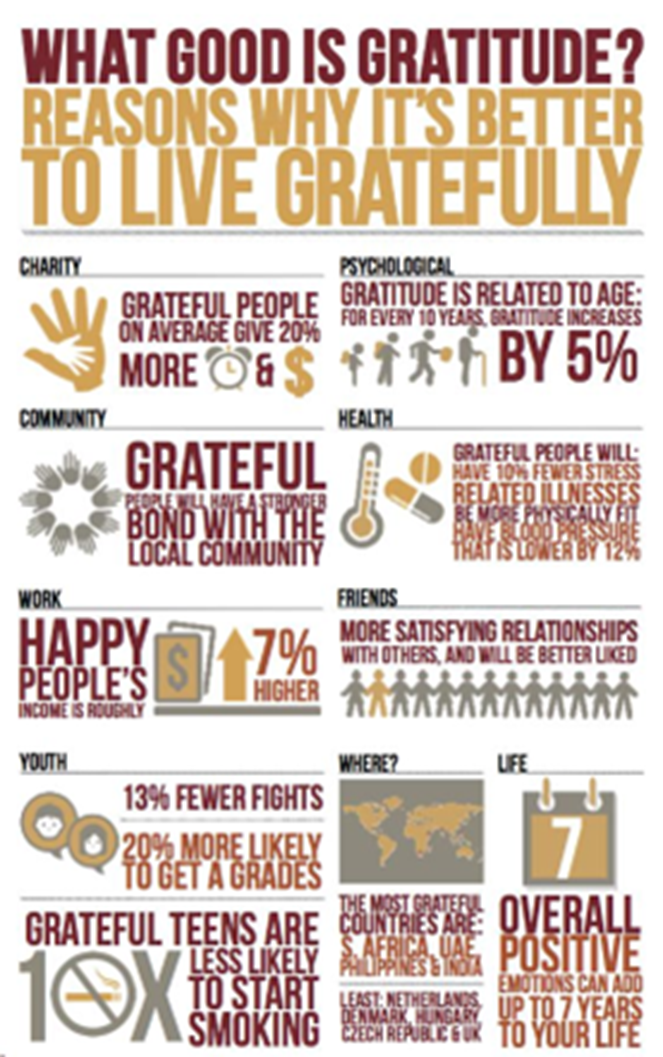
November’s cozy gatherings and pumpkin-spiced moments spark a flicker of gratitude in many of us. Yet, as Black Friday ads flood our screens and holiday shopping takes over, thankfulness often gets trampled under a scramble for deals. God’s Word, however, doesn’t limit gratitude to a single day like Thanksgiving. Scripture reveals that God expects His people to live with thankful hearts every day.

Gratitude refocuses our hearts toward His goodness. In 1 Thessalonians 5:18, Paul writes, “Give thanks in all circumstances; for this is God’s will for you in Christ Jesus.” This is no suggestion; it’s God’s clear expectation.

A compelling example of His displeasure with ingratitude comes from Numbers 11:1-6, where the Israelites grumbled about their wilderness provisions, longing for Egypt’s food instead of praising God for their miraculous deliverance. Their complaints provoked God’s anger, and fire broke out in their camp as a consequence. This stark moment shows that ingratitude dismisses God’s provision, and brings on God’s anger.

Today, when we fixate on what we lack (especially amid our seasonal materialistic rush) we risk echoing the Israelites’ error. Ingratitude is among the conditions that invoke God’s anger, (Romans 1:21). Gratitude, as psychologist Robert Emmons notes in his studies, shifts our focus from scarcity to abundance, helping us see God’s hand in every detail, from daily bread to His unending grace. We don’t need science to tell us what scripture already reveals (Matt 6:25-34).

Gratitude in our worship will deepen our connection to God. Psalm 100:4 says, “enter His gates with thanksgiving and His courts with praise.” God expects gratitude because it acknowledges His sovereignty and faithfulness. When we thank Him daily, whether for an answered prayer or strength in trials, we are acknowledging His blessings in our lives (James 1:17). This counters the fleeting gratitude of social media posts that fade as holiday sales dominate. By making thankfulness a habit, we fulfill God’s desire for a people who recognize His goodness, drawing closer to Him in a world that often pulls us away.

Finally, a grateful heart is essential to being the light of the world that we are showing others, meeting His expectation for us to live as His light. Colossians 3:15-17 urges us to “let the peace of Christ rule in your hearts” and act “with gratitude.” Thankfulness fuels the brightness of our light and allows us to pierce the shadows of darkness, drawing others to Christ. When we’re grateful, we’re less likely to look like the word (in judgment or envy), and more likely to be a blessing to others. Gratitude strengthens our connection to those around us. In a season tempting us to value “things” over people, gratitude keeps us grounded in what matters.

God expects our gratitude every day, not just on Thanksgiving Day. Start now; thank Him for one thing each morning, big or small. Let’s glorify Him, avoiding the Israelites’ mistake, and let a thankful heart shine His love daily.

agape

spencer

Jesus and Gratitude

Jesus and a Heart of Gratitude

Gratitude has a way of softening the heart, doesn’t it? It shifts our gaze from what’s missing to what’s present, from worry to wonder. In the life of Jesus, we see a beautiful model of thankfulness, even in the midst of challenges. The example of our Lord helps us to pause, reflect, and give thanks in our own lives.

Picture the scene: thousands of people, hungry and weary, gathered on a hillside. Jesus holds just five loaves and two fish; hardly enough for a crowd. Yet, in John 6:11, we read that Jesus took the loaves, JESUS GAVE THANKS, and distributed them through the hands of his disciples, and the food multiplied to feed over 5,000 people. Before the miracle even happened, Jesus gave thanks. We don’t give thanks solely on what we see, but on faith in God’s goodness. This moment reminds us that giving thanks, even when resources seem scarce reminds us to trust in God.

In another scene at the Last Supper, Jesus shared a meal that would become a cornerstone of Christian faith. In Luke 22:17-19, He took the cup and bread, JESUS GAVE THANKS, and broke them, sharing with His disciples. This was a deeply human moment of connection. “And he said unto them, With desire I have desired to eat this passover with you before I suffer” (Luke 22:15). Jesus knew betrayal and suffering were near, yet JESUS GAVE THANKS for the elements that represent His Body and His Blood. His gratitude in that bittersweet moment teaches us to be grateful even when the road ahead feels heavy.

In one more scene in John 11:41-42, as Jesus stood before Lazarus’ tomb, He lifted His eyes and said, “Father, I THANK YOU that You have heard Me” (emphasis mine seb). Lazarus was still dead when Jesus spoke these words, but He thanked God with confidence that His prayer would be answered. Not only that, He gave thanks to God vocally for the benefit of those around. “And I knew that thou hearest me always: but because of the people which stand by I said it, that they may believe that thou hast sent me” (John 11:42; cf. James 1:6). Perhaps this is a lesson for me? To give thanks in the view and hearing of others rather than simply saying, “I’ll pray for you.” This bold gratitude shows a deep trust in God, even in the face of death. It’s a powerful reminder that thankfulness isn’t just for what’s already happened but for what God has promised to do.

Jesus’ life shows us that gratitude isn’t just a reaction to what is, but faith in God for what will be. Whether He was facing a hungry crowd, a sacred meal, or a moment of loss, JESUS GAVE THANKS, leaving us an example to follow. For us, this can be a daily practice. Start small: thank God for a warm meal, a kind word, or a quiet moment. Write down three things each day you’re grateful for, or pause to pray before a challenge, trusting God’s provision; and be thankful for the things that God has promised. He has promised to care for us (Heb 13:5,6; Matt 6:33). He has promised the forgiveness of sins (1John 1:9-2:2). He has promised a crown (2Tim 4:6-8).

Giving thanks can change our negative attitudes, drawing us closer to God and each other. Let’s follow Jesus’ example, choosing thankfulness not just when life feels abundant but in every season, knowing God is always near.

Agape
spencer

Evidence for our Faith: Grateful not hateful

Gratitude and Happiness: Be Grateful not Hateful

Imagine waking up to a day where every thought feels heavy, every interaction strained. Now picture flipping that script by choosing gratitude over resentment. I heard a phrase the other day that resonates well with the teaching of the New Testament, “BE GRATEFUL, NOT HATEFUL.”

Paul’s letters to the early church brim with encouragement to embrace thankfulness, not just as a feel-good habit but as a way of changing our life. Paul knew gratitude could reshape our minds, relationships, and faith.

Gratitude rewires our mental health. Paul urges in Philippians 4:6, “Be careful for nothing; but in every thing by prayer and supplication with thanksgiving let your requests be made known unto God.” He’s not dismissing life’s struggles but pointing to a remedy: pairing prayer with thanks.

Studies, like those from psychologists at the University of California, show gratitude reduces stress and boosts resilience. When we focus on what’s good (God’s provision, a kind word, a new day) our perspective shifts. Instead of spiraling into worry or bitterness, we anchor ourselves in hope. Paul’s wisdom aligns with modern science: thanking God in tough times doesn’t erase pain but builds a mental bridge to peace, because our mind can only focus on one thought at a time.

Gratitude also affects our relationships. In 1 Thessalonians 5:18, Paul writes, “In every thing give thanks: for this is the will of God in Christ Jesus concerning you.” This isn’t about ignoring conflict but choosing to see others through a lens of appreciation. When we’re in the midst of a strained friendship or family tension, gratitude can be a game-changer. When we thank God for the people in our lives, even the challenging ones, we start noticing their value. Science is discovering what the Bible already reveals. Research from the Journal of Social Psychology suggests expressing gratitude strengthens bonds, fostering empathy and reducing hostility. Paul’s urging for thankfulness nudges us to replace grudges with grace, softening hearts and healing divides. If we have a complaint, let us also have grace, reminding ourselves of that person’s good qualities that brought us together in the first place and give thanks to God (James 1:17).

Gratitude can also fuel spiritual growth. In Colossians 3:17, Paul says, “And whatsoever ye do in word or deed, do all in the name of the Lord Jesus, giving thanks to God and the Father by him.” Gratitude isn’t usually automatic; it’s a decision that draws us closer to God. When we thank Him for His faithfulness, as Psalm 100:4-5 encourages, we’re reminded of His goodness and sovereignty, which can deepen our faith. Unlike fleeting emotions, gratitude roots us in God’s eternal promises, making us less swayed by life’s ups and downs. Paul’s exhortation isn’t about denying hardship but about seeing God’s faithfulness giving us hope and purpose.

So, let’s take Paul’s inspired words to heart. Start small: thank God for one thing today; a sunrise, a friend, His promises. Replace a bitter thought with a grateful one. Be grateful, not hateful, and watch how gratitude transforms your heart and world.

Agape

Sources: Insights drawn from biblical texts (Philippians, 1 Thessalonians, Colossians, Psalms) and studies from the University of California and the Journal of Social Psychology.

Evidence for our Faith: Gratitude

Gratitude and Happiness: Science Catches Up to the Bible

Picture waking up with a heart brimming with thanks, even when life feels like a storm. It’s like a quiet spark of joy, isn’t it? The Bible has long championed gratitude as a way of life, and now science is unveiling its power, showing how this practice transforms our minds, relationships, and faith. Gratitude isn’t just a passing feeling; it’s a powerful attitude that fits God’s design, blending biblical wisdom with modern discoveries in a way that is both timeless and exciting.

Gratitude reshapes our mental health, anchoring us in hope. Research by psychologist Robert Emmons, a leading gratitude scholar, shows that keeping a daily journal of things you’re thankful for can reduce stress and boost well-being. In a 2003 study from the Journal of Personality and Social Psychology, Emmons found that participants who reflected on gratitude reported less depression and greater optimism after just weeks. This resonates with Psalm 40:5 which proclaims, “Many, O Lord my God, are thy wonderful works which thou hast done, and thy thoughts which are to us-ward: they cannot be reckoned up in order unto thee: if I would declare and speak of them, they are more than can be numbered.” The psalmist knew that gratitude expands our perspective on life, filling our hearts with God’s countless blessings. Science confirms this, revealing how gratitude rewires our brains to seek the good, even in tough times.

Gratitude can strengthen relationships, bringing us closer in ways that reflect God’s love. A 2014 study in Emotion by Sara Algoe showed that expressing thanks fosters trust and deepens connections. When we voice gratitude, it sparks a cycle of kindness, making both giver and receiver feel valued. This echoes 1Thessalonians 5:18 in the KJV, where Paul exhorts, “In every thing give thanks: for this is the will of God in Christ Jesus concerning you.” By thanking others, we build connections with others rooted in love. A heartfelt “thank you” can transform a moment into a lasting bond, mirroring the relational heart of the Gospel (see Luke 17:11-19).

Finally, gratitude fuels spiritual growth, drawing us nearer to God. When we practice thankfulness, we train our hearts to remember that He is with us in every moment, deepening our trust. Philippians 4:6 in the KJV urges, “Be careful for nothing; but in every thing by prayer and supplication with thanksgiving let your requests be made known unto God.” This isn’t mere advice; it’s a roadmap for a joy-filled life. Gratitude shifts our focus from what’s missing to trusting in God’s promises. Science supports this: studies show gratitude fosters a sense of purpose and connection to something greater, aligning with the biblical summons to live in awe of God’s goodness.

In a chaotic world, gratitude is a quiet revolution. The Bible, written centuries ago, aligns beautifully with what science now reveals. Researchers like Emmons and Algoe highlight gratitude’s benefits, while scriptures like Psalm 40:5, 1Thessalonians 5:18, and Philippians 4:6 proclaim its already revealed eternal truth. God’s word beckons us to embrace gratitude daily, not as a task, but as a strategy that changes our minds, relationships, and faith. So, let’s begin today: pause, give thanks, and see how God’s wisdom, that science finally realizes, illuminates your life.

agape Sources: Studies by Robert Emmons (Journal of Personality and Social Psychology, 2003) and Sara Algoe (Emotion, 2014). Biblical references from Psalm 40:5, 1 Thessalonians 5:18, and Philippians 4:6 (KJV).

7 PLAGUES of the mind pt1; Pessimism

Staying Positive in a Negative world.

Negative attitudes have a negative effect on our faith. Life is hard, and it’s even harder with a negative outlook.

The troubles and the sins of this life are troubling for all of us; remember Lot? “For that righteous man dwelling among them, in seeing and hearing, vexed his righteous soul from day to day with their unlawful deeds” (2Peter 2:8). None of us are immune from the constant barrage of evil, but we must not let it infiltrate our minds and hearts to shipwreck our faith.

Negativity is Normal, and is the default setting of our minds, but we must overcome normal. In the absence of light, darkness prevails. Attitude diseases are just as bad as, and contribute to, the physical diseases of the body. Negativity weakens our faith not strengthen it.

Dealing with negative thoughts is like a WAR for keeping our heart and mind. Negative thoughts are like enemy weeds that creep into the beautiful garden. The gardener must be as a vigilant soldier watching on the wall. How far the weeds come in depends on how well he is watching.

EVIL is no match for good, but good must be ACTIVE. We must take action to keep out the negative. We must face it, not ignore it. Facing it doesn’t mean we have to keep it, nor dwell on it, but we do have to handle it. When the gardener sleeps, the tares keep growing. The negative only needs one chance, being positive must be successful continually. Maybe this is why our Lord told us to be mindful of the current day. “Sufficient unto the day is the evil thereof” (Matt 6:34b; see John 11:9). Spiritual warfare requires spiritual weapons (2Cor 10:3-5; Eph 6:11-17). Growing in the Grace and KNOWLEDGE is our strength to ward off these plagues of the mind.

The first of the 7 PLAGUES is PESSIMISM. This is the deadly plague of always looking on the bad side, the difficult side, the listing of all the reasons something can’t be done side. He’s not trying to figure out what is good or right, he’s searching for what’s wrong or how it will go wrong.

The pessimist says, “I can list ten reasons why this is a bad idea.” Why look for ten when one will do? LOL. These folks are on a mission to find fault over virtue. These are the “cup is half empty” people. The “cup is half full” is not the antitheses to this negative idea.

Remembering the overflowing quality of God’s cup is; “Give, and it shall be given unto you; good measure, pressed down, and shaken together, and running over, shall men give into your bosom. For with the same measure that ye mete withal it shall be measured to you again” (Luke 6:38). As the proverb says, “For as he thinketh in his heart, so is he” (Prov 23:7a).

Pessimism, defeatism, and the like are often self-fulfilling prophecies. When the pessimist’s forecast comes true, he seems to find joy. The pessimist can’t enjoy the beauty right outside his house because of the specs on the glass.

While this life may be filled with all kind of reasons to give in, and give up, we need to remember the words of our Lord, “If thou canst believe, all things are possible to him that believeth” (Mark 9:23). The way we think things are affect us more than the way things actually are. “There’s a lion in the street” saith the sluggard, (Prov 22:13; 26:13). Maybe there is, but we won’t know till we try.

Here are four strategies when pessimism attacks:

Instead of listing the reasons something can’t be done, direct your mind to the things that can be done. There is always a way. “but will with the temptation make also the way of escape, that ye may be able to endure it” (1Cor 10:13b).

Redirect pessimism toward appreciation and gratitude. Remembering the great things God has done is how we ward off pessimism. “Many, O LORD my God, are thy wonderful works which thou hast done, and thy thoughts which are to us-ward: they cannot be reckoned up in order unto thee: if I would declare and speak of them, they are more than can be numbered” (Psalm 40:5). “My mouth shall tell of thy righteousness, And of thy salvation all the day; For I know not the numbers thereof” (Psalm 71:15).

Reframing the issue may also help with pessimism. Faced with the problem of those preaching to add to his chains, Paul reframed the issue; “but the other proclaim Christ of faction, not sincerely, thinking to raise up affliction for me in my bonds. What then? only that in every way, whether in pretence or in truth, Christ is proclaimed; and therein I rejoice, yea, and will rejoice” (Phil 1:17-18).

Finally, keeping your eye on the goal is a great way to stave off pessimism. “Brethren, I could not myself yet to have laid hold: but one thing I do, forgetting the things which are behind, and stretching forward to the things which are before, I press on toward the goal unto the prize of the high calling of God in Christ Jesus” (Phil 3:13-14). Regardless of the negative things pressing around us, it won’t change what we ought to do nor where we desire to be, unless we allow it.

The world is a painful place, but “Count it all joy, my brethren, when ye fall into manifold temptations; Knowing that the proving of your faith worketh patience” (James 1:2-3).

Agape,

Spencer

This is part one of a series called the 7 PLAGUES of the heart / mind.

30 Days of Gratitude pt3

During this national holiday of Thanksgiving, let us list the reasons to have THANKFULNESS.

day 19:

I’m Thankful for TEACHERS of the Gospel.

Eph 4:11-12 And he gave some, apostles; and some, prophets; and some, evangelists; and some, pastors and teachers; 12 For the perfecting of the saints, for the work of the ministry, for the edifying of the body of Christ:

day 20.

I’m grateful for HOPE in Christ.

1 Timothy 4:10 KJV

For therefore we both labour and suffer reproach, because we trust in the living God, who is the Saviour of all men, specially of those that believe.

day 21.

I’m grateful for Adoption.

Gal 3:27 For as many of you as have been baptized into Christ have put on Christ. 28 There is neither Jew nor Greek, there is neither bond nor free, there is neither male nor female: for ye are all one in Christ Jesus. 29 And if ye be Christ’s, then are ye Abraham’s seed, and heirs according to the promise. (cf., Gal 4:5)

day 22.

I’m grateful for the New Testament that brings belief, faith, and understanding.

John 20:30-31 And many other signs truly did Jesus in the presence of his disciples, which are not written in this book: 31 But these are written, that ye might believe that Jesus is the Christ, the Son of God; and that believing ye might have life through his name. (Eph 3:3-4; Ron 10:17)

Day 23.

Kingdom of His dear Son. Col 1:13 Who hath delivered us from the power of darkness, and hath translated us into the kingdom of his dear Son:

Day 24.

Family & Friends. Prov 18:24 A man that hath friends must shew himself friendly: and there is a friend that sticketh closer than a brother.

Day 25.

UNSPEAKABLE gift. 2Co 9:15 Thanks be unto God for his unspeakable gift.

Day 26.

The Love of God. John 3:16; Rom 5:8-10 For God so loved the world, that he gave his only begotten Son, that whosoever believeth in him should not perish, but have everlasting life.

Day 27.

My Neighbors. Jas 2:8 If you really fulfill the royal law according to the Scripture, “You shall love your neighbor as yourself,” you do well;

Day 28.

Eternal Life in Christ. Rom 6:23 For the wages of sin is death, but the gift of God is eternal life in Christ Jesus our Lord.

Day 29.

Our Savior, Christ Jesus. Acts 13:23 Of this man’s seed hath God according to his promise raised unto Israel a Saviour, Jesus:

Day 30.

Sacrifice of Christ. John 1:29 The next day John seeth Jesus coming unto him, and saith, Behold the Lamb of God, which taketh away the sin of the world.

Spencer is an evangelist for the church of Christ on Franklin & Juniper in Borger Texas.

10 Times we’re UNGRATEFUL

And Jesus answering said, were there not ten cleansed? but where are the nine? (Luke 17:17)

Jesus gave cleansing to 10 lepers who begged Him for mercy. He commands them to “Go shew yourselves unto the priests.” And it came to pass, that, as they went, they were cleansed.

One of them noticed that he was cleansed and turned back to glorify God. He fell on his face and gave thanks. The necessary inference from Jesus’ response is that all 10 were cleansed, but only one returned to give thanks. This also means that Jesus is saying that the other 9 were UNGRATEFUL.

While we can’t know what they were thinking, we can know from scriptures about other people who were UNGRATEFUL to God for the good things He has done. Let’s learn from these negative examples about how to be GRATEFUL to God.

10 Reasons why we’re sometimes UNGRATEFUL.

The blessings are Unconnected in our mind to Jesus. Sometimes we just don’t realize that everything good is from God. Consider Ephraim, “I taught Ephraim also to go, taking them by their arms; but they knew not that I healed them.” (Hos 11:3; CF. 2:8; Is 1:3; Dan 5:18)

Perhaps some thought it was Not Enough or it was expected. It reminds me of what God said to David, “And I gave thee thy master’s house, and thy master’s wives into thy bosom, and gave thee the house of Israel and of Judah; and if that had been too little, I would moreover have given unto thee such and such things” (2Sam 12:8).

Sometimes we give Glory to another. “And the LORD said unto the children of Israel, Did not I deliver you from the Egyptians,” “Go and cry unto the gods which ye have chosen; let them deliver you in the time of your tribulation” (Judges 10:11,14).

Sometimes there’s Resentment on the part of the recipient of God’s blessings. The elder brother had resentment toward his prodigal brother’s return and restoration. “And he was angry, and would not go in: therefore came his father out, and intreated him. And he answering said to his father, Lo, these many years do I serve thee, neither transgressed I at any time thy commandment: and yet thou never gavest me a kid, that I might make merry with my friends: But as soon as this thy son was come, which hath devoured thy living with harlots, thou hast killed for him the fatted calf” (Luke 15:29-30).

Some disregard any blessings from God because they believe they were Already improving anyway. It reminds me of Pharoah when a plague was lifted. “But when Pharaoh saw that there was respite, he hardened his heart, and hearkened not unto them; as the LORD had said” (Exo 8:15).

There are some that would show gratitude, but are too busy, perhaps Tomorrow. “According to their pasture, so were they filled; they were filled, and their heart was exalted; therefore have they forgotten me” (Hos 13:6; cf Deu 6:11).

Some people are just too proud or Egotistical to recognize God’s blessings. Consider the wealthy man in Luke twelve, 13-21; or the Pharisee & the tax collector, “I fast twice in the week, I give tithes of all that I possess,” (Luke 18:9-14); or Israel toward God’s care for them (Jer 2:31).

Sometimes we Fail to know God’s word about the good things He’s done. “They forgat God their saviour, which had done great things in Egypt” (Psalm 106:21). If we fail to know about Christ, we’ll fail to give thanks to Him for His indescribable gift.

Some of us are just Uncaring about God’s blessings. We take for granted things that come for free. “And also all that generation were gathered unto their fathers: and there arose another generation after them, which knew not the LORD, nor yet the works which he had done for Israel” (Judges 2:10).

Perhaps there are some that just don’t Love God like this sole Samaritan did. “And one of them, when he saw that he was healed, turned back, and with a loud voice glorified God, And fell down on his face at his feet, giving him thanks: and he was a Samaritan” (Luke 17:15-16). It reminds me of the question Jesus posed to Simon about two debtors, “And when they had nothing to pay, he frankly forgave them both. Tell me therefore, which of them will love him most” (Luke 7:36-50)?

We’re commanded to give thanks, “In every thing give thanks: for this is the will of God in Christ Jesus concerning you” (1Thess 5:18), but it begins with recognition of the Source from whom all blessings flow (James 1:17).

Spencer is an evangelist for the church of Christ in Borger Texas.

9 Reasons for GRATITUDE

Are you grateful? As THANKSGIVING approaches, we’re reminded to be thankful. Have you tried to make a list of reasons to be grateful? May I suggest a 30 day challenge of being thankful. Here is my list for the first 9 days of November.

30 days of Thanksgiving.

What are you thankful for?

I’ll start…

Day 1

God’s Grace.

Titus 2:11-12 KJV

For the grace of God that bringeth salvation hath appeared to all men, [12] Teaching us that, denying ungodliness and worldly lusts, we should live soberly, righteously, and godly, in this present world;

Day 2.

I’m grateful for Rain.

Matthew 5:45 KJV

That ye may be the children of your Father which is in heaven: for he maketh his sun to rise on the evil and on the good, and sendeth rain on the just and on the unjust.

day 3.

I’m grateful for the ADVOCATE, Christ Jesus, who makes ATONEMENT.

1 John 2:1-5 KJV

My little children, these things write I unto you, that ye sin not. And if any man sin, we have an advocate with the Father, Jesus Christ the righteous: [2] And he is the propitiation for our sins: and not for ours only, but also for the sins of the whole world. [3] And hereby we do know that we know him, if we keep his commandments. [4] He that saith, I know him, and keepeth not his commandments, is a liar, and the truth is not in him. [5] But whoso keepeth his word, in him verily is the love of God perfected: hereby know we that we are in him.

day 4.

I’m grateful for TRANSPORTATION so we’re able to GO and peach the gospel.

Mark 16:15-16 KJV

And he said unto them, Go ye into all the world, and preach the gospel to every creature. [16] He that believeth and is baptized shall be saved; but he that believeth not shall be damned.

day 5.

I’m grateful for INVOCATION (prayer).

1 John 5:14-15 KJV

And this is the confidence that we have in him, that, if we ask any thing according to his will, he heareth us: [15] And if we know that he hear us, whatsoever we ask, we know that we have the petitions that we desired of him. (cf John 9:31)

day 6.

I’m grateful for THE TEMPLE of God, His body, the church.

1 Corinthians 3:16-17 KJ21

Know ye not that ye are the temple of God, and that the Spirit of God dwelleth in you? [17] If any man defile the temple of God, him shall God destroy. For the temple of God is holy, and ye are that temple. (1Peter 2:5)

day 7.

I’m grateful for the UNDERSTANDABLE Word of God.

Ephesians 3:3-4 KJ21

how by revelation He made known unto me the mystery (as I wrote before in a few words, [4] whereby when ye read this, ye may understand my knowledge of the mystery of Christ),

(cf. John 20:30-31; Rom 10:17)

day 8.

I’m grateful for my DEBT to God being paid by Christ, the Propitiation for my sins.

1 John 2:2-4 KJV

And he is the propitiation for our sins: and not for ours only, but also for the sins of the whole world. [3] And hereby we do know that we know him, if we keep his commandments. [4] He that saith, I know him, and keepeth not his commandments, is a liar, and the truth is not in him.

Propitiation= 2434 hilasmós – properly, propitiation; an offering to appease (satisfy) an angry, offended party. 2434 (hilasmós) is only used twice (1Jn 2:2, 4:10) – both times of Christ’s atoning blood that appeases God’s wrath.

day 9.

I’m grateful for the ELECTION of the saints.

2 Peter 1:10 KJV

Wherefore the rather, brethren, give diligence to make your calling and ELECTION sure: for if ye do these things, ye shall never fall:

Biblical ELECTION is God choosing those who seek Him and obey the Gospel. (Heb 5:8-9; 2Thess 1:7-8). Biblical Election is NOT God randomly choosing individuals to be lost or saved.

He gave His Son to bring the means of salvation to any who will obey Him.

Why are you GRATEFUL?

8 Reasons to be GRATEFUL

In every thing give thanks: for this is the will of God in Christ Jesus concerning you.”

(1Thess 5:18)

People talk a lot about what God wants for them, usually inaccurately. Paul wrote the above passage clearly stating at least one thing God wants for us to do, be GRATEFUL.

In these tumultuous times it’s sometimes difficult to find some reasons to be GRATEFUL. However, when we have a specific command, we need to figure out how to complete it.

If GRATEFUL we should, then GRATEFUL we could.

What follows in this article are just a few things from scripture for which we can give thanks. It need not be very hard, for God says, “Many, O LORD my God, are thy wonderful works which thou hast done, and thy thoughts which are to us-ward: they cannot be reckoned up in order unto thee: if I would declare and speak of them, they are more than can be numbered.” (Psalm 40:3)

Since every good gift comes from above, these are just a sampling of the perfect gifts from God. We could expand upon this list every day for the rest of our lives. (cf. James 1:17)

8 things for which I am GRATEFUL.

I’m grateful for God’s Grace. “For the grace of God that bringeth salvation hath appeared to all men,” (Titus 2:11). “But after that the kindness and love of God our Saviour toward man appeared, not by works of righteousness which we have done, but according to his mercy he saved us, by the washing of regeneration, and renewing of the Holy Ghost” (Titus 3:4-5).

I’m grateful for God’s Revealed word. “And many other signs truly did Jesus in the presence of his disciples, which are not written in this book: But these are written, that ye might believe that Jesus is the Christ, the Son of God; and that believing ye might have life through his name” (John 20:30-31). “According as his divine power hath given unto us all things that pertain unto life and godliness, through the knowledge of him that hath called us to glory and virtue: Whereby are given unto us exceeding great and precious promises: that by these ye might be partakers of the divine nature, having escaped the corruption that is in the world through lust” 2Peter 1:3-4).

I’m grateful for Adoption. “But when the fulness of the time was come, God sent forth his Son, made of a woman, made under the law, To redeem them that were under the law, that we might receive the adoption of sons and because ye are sons, God hath sent forth the Spirit of his Son into your hearts, crying, Abba, Father” (Gal 4:4-6).

I’m grateful for Trying times. “My brethren, count it all joy when ye fall into divers temptations; Knowing this, that the trying of your faith worketh patience. But let patience have her perfect work, that ye may be perfect and entire, wanting nothing” (James 1:2-4).

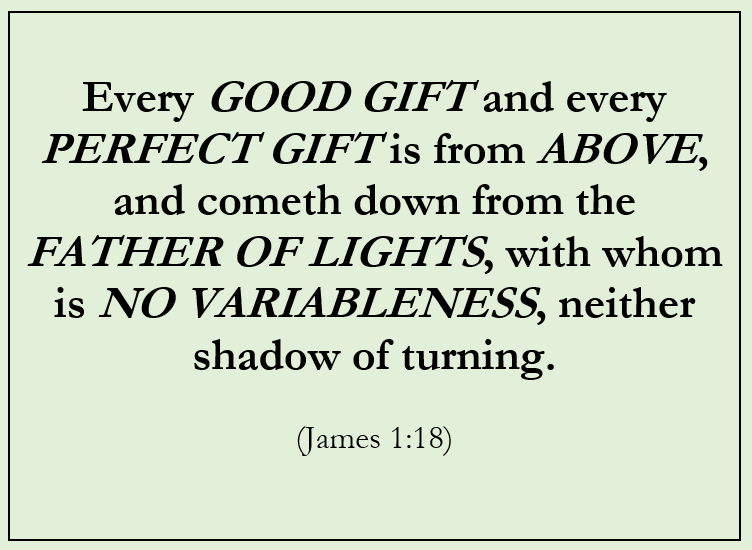
I’m grateful for Everything that Everyone gets. “Every good gift and every perfect gift is from above, and cometh down from the Father of lights, with whom is no variableness, neither shadow of turning” (James 1:17). “Nevertheless he left not himself without witness, in that he did good, and gave us rain from heaven, and fruitful seasons, filling our hearts with food and gladness” (Acts 14:17). “That ye may be the children of your Father which is in heaven: for he maketh his sun to rise on the evil and on the good, and sendeth rain on the just and on the unjust” (Matt 5:45).

I’m grateful for Faithful Brethren. “I thank my God upon every remembrance of you, Always in every prayer of mine for you all making request with joy, For your fellowship in the gospel from the first day until now; Being confident of this very thing, that he which hath begun a good work in you will perform it until the day of Jesus Christ:” (Phil 1:3-6)

I’m grateful for the ability to Understand God’s word, and to know wisdom. “If any of you lack wisdom, let him ask of God, that giveth to all men liberally, and upbraideth not; and it shall be given him. But let him ask in faith, nothing wavering. For he that wavereth is like a wave of the sea driven with the wind and tossed.  For let not that man think that he shall receive any thing of the Lord. A double minded man is unstable in all his ways” (James 1:5-8).

I’m grateful for the Love of God for me, you, and all. “But God commendeth his love toward us, in that, while we were yet sinners, Christ died for us. Much more then, being now justified by his blood, we shall be saved from wrath through him. For if, when we were enemies, we were reconciled to God by the death of his Son, much more, being reconciled, we shall be saved by his life” (Rom 5:8-10). “In this was manifested the love of God toward us, because that God sent his only begotten Son into the world, that we might live through him. Herein is love, not that we loved God, but that he loved us, and sent his Son to be the propitiation for our sins. Beloved, if God so loved us, we ought also to love one another” (1John 4:9-11).

Spencer

Spencer is an evangelist for the church of Christ at Franklin & Juniper in Borger Texas.