
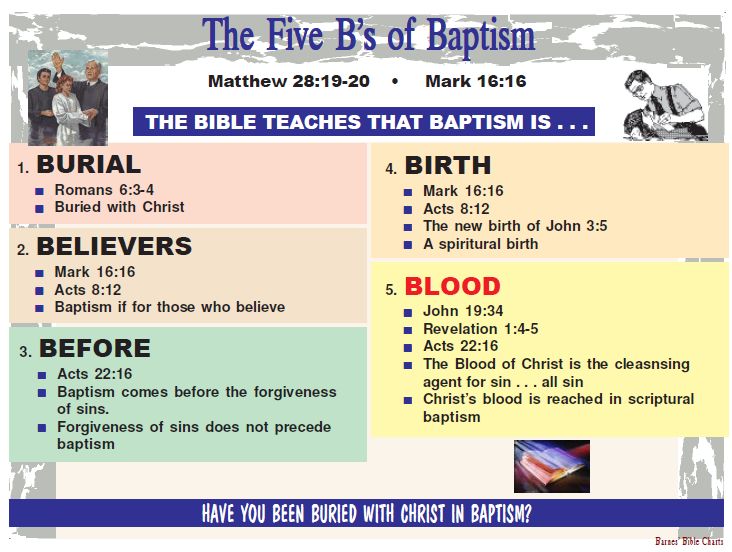
Far from a mere ritual, BAPTISM is a divinely ordained step that aligns believers with Christ’s redemptive work. Through baptism, individuals experience a cleansing of sins, union with Christ’s church, salvation, and an inheritance as heirs of God’s promises.
1. Washing Away Our Sins
Baptism serves as a divine act of cleansing, washing away the stain of sin. In Acts 22:16, Ananias urges Saul, “And now why do you wait? Rise and be baptized and wash away your sins, calling on his name.” This passage emphasizes baptism’s role in cleansing the believer’s conscience before God. Similarly, Acts 2:38 declares, “Repent and be baptized every one of you in the name of Jesus Christ for the forgiveness of your sins, and you will receive the gift of the Holy Spirit.” Here, baptism is linked directly to the remission of sins and the reception of the Holy Spirit. Additionally, Matthew 26:28 connects the concept of forgiveness to Christ’s sacrifice: “For this is my blood of the covenant, which is poured out for many for the forgiveness of sins.” Baptism, therefore, is the moment when a believer appropriates the forgiveness secured by Christ’s blood. Supporting this, Ephesians 5:26 describes Christ sanctifying the church “by the washing of water with the word,” reinforcing baptism’s cleansing power.
2. Added to the Church That Christ Built
Through baptism, believers are united with the body of Christ, the church He established. Acts 2:47 states, “And the Lord added to their number day by day those who were being saved.” This follows the account of 3,000 souls being baptized and added to the church after Peter’s sermon (Acts 2:41). Baptism is the entry point into Christ’s church, as seen in 1 Corinthians 12:13: “For in one Spirit we were all baptized into one body—Jews or Greeks, slaves or free—and all were made to drink of one Spirit.” This passage highlights the unity of believers in the church through baptism. Additionally, Colossians 1:18 affirms Christ as “the head of the body, the church,” underscoring that baptism incorporates individuals into this divine institution, built by Christ Himself (Matthew 16:18).
3. Saved Through Baptism
Baptism is intricately tied to salvation, as it is the moment when a believer’s faith is actualized in obedience to God’s command. 1 Peter 3:21 explicitly states, “Baptism, which corresponds to this, now saves you, not as a removal of dirt from the body but as an appeal to God for a good conscience, through the resurrection of Jesus Christ.” This verse clarifies that baptism is not a mere physical cleansing but a spiritual act that appeals to God for salvation. Mark 16:16 further supports this: “Whoever believes and is baptized will be saved, but whoever does not believe will be condemned.” The connection between baptism and salvation is also evident in Romans 6:3-4, which describes believers being “baptized into his death” and raised to “walk in newness of life,” symbolizing the transformative power of baptism in securing salvation.
4. Becoming Heirs of Abraham
Baptism establishes believers as heirs of the promises made to Abraham, uniting them in God’s covenant family. Galatians 3:27-29 explains, “For as many of you as were baptized into Christ have put on Christ… And if you are Christ’s, then you are Abraham’s offspring, heirs according to promise.” Through baptism, believers become part of the spiritual lineage of Abraham, inheriting the blessings of God’s covenant. Romans 4:16 reinforces this, stating that the promise to Abraham comes “to the one who shares the faith of Abraham, who is the father of us all.” Additionally, Ephesians 3:6 affirms that through the gospel, Gentiles are “fellow heirs” with Israel, a reality actualized in baptism as believers are incorporated into Christ’s body.
5. Putting on Christ
In baptism, believers clothe themselves with Christ, taking on His identity and righteousness. Galatians 3:27 declares, “For as many of you as were baptized into Christ have put on Christ.” This vivid imagery portrays baptism as the moment when a believer is enveloped in Christ’s nature. Romans 13:14 echoes this, urging believers to “put on the Lord Jesus Christ,” a process initiated at baptism. Colossians 3:9-10 further supports this idea, describing believers as having “put off the old self with its practices and… put on the new self,” a transformation that begins with baptism’s symbolic burial and resurrection (Colossians 2:12).
6. Becoming a Disciple of Christ
Baptism marks the beginning of a life of discipleship, as believers commit to following Christ. Matthew 28:19 commands, “Go therefore and make disciples of all nations, baptizing them in the name of the Father and of the Son and of the Holy Spirit.” Baptism is the initiatory step in making disciples, signifying a public commitment to Christ’s teachings. Acts 8:12 illustrates this: “But when they believed Philip as he preached good news… they were baptized, both men and women,” showing that baptism follows belief and marks the start of discipleship. John 3:5 further emphasizes baptism’s role in entering the kingdom of God: “Unless one is born of water and the Spirit, he cannot enter the kingdom of God,” linking baptism to the disciple’s journey of faith.
Baptism is far more than a symbolic act; it is a transformative moment in the believer’s life, rich with spiritual significance. Through baptism, sins are washed away, believers are added to Christ’s church, salvation is received, the promises to Abraham are inherited, Christ is put on, and a lifelong journey of discipleship begins. These truths, grounded in Scripture, underscore baptism’s ESSENTIAL role in the Christian faith.
AGAPE
 Borger church of Christ @ Franklin & Juniper