As faithful believers, our union with Jesus Christ grants us a treasure trove of spiritual riches, transforming our lives and securing our eternal destiny. The Bible reveals many profound blessings we receive through Christ. Here are 6 amazing blessings we have through Christ.
First, we experience cleansing from sin through Christ’s atoning work. The Bible declares, “But if we walk in the light, as he is in the light, we have fellowship one with another, and the blood of Jesus Christ his Son cleanseth us from all sin” (1 John 1:7, KJV). Additionally, Hebrews 9:14 assures us, “How much more shall the blood of Christ, who through the eternal Spirit offered himself without spot to God, purge your conscience from dead works to serve the living God?” Through Christ, our sins are washed away (in baptism, see Acts 22:16), freeing us from guilt and enabling us to live in righteousness.
Second, we are given the hope of heaven, a confident expectation of eternal life with God. Colossians 1:5 speaks of “the hope which is laid up for you in heaven, whereof ye heard before in the word of the truth of the gospel.” Titus 1:2 further confirms, “In hope of eternal life, which God, that cannot lie, promised before the world began.” This hope anchors our souls, giving us peace and purpose as we await our heavenly home.
Third, we receive redemption in His blood, the price paid for our freedom from sin’s penalty. Ephesians 1:7 states, “In whom we have redemption through his blood, the forgiveness of sins, according to the riches of his grace.” Likewise, 1 Peter 1:18-19 reminds us, “Ye were not redeemed with corruptible things, as silver and gold… but with the precious blood of Christ, as of a lamb without blemish and without spot.” Christ’s sacrifice secures our salvation, a gift we could never earn.
Fourth, Christ serves as our intercessor between God and man, bridging the gap sin created. Hebrews 7:25 proclaims, “Wherefore he is able also to save them to the uttermost that come unto God by him, seeing he ever liveth to make intercession for them.” 1 Timothy 2:5 adds, “For there is one God, and one mediator between God and men, the man Christ Jesus.” Through His intercession, we have constant access to God’s throne.
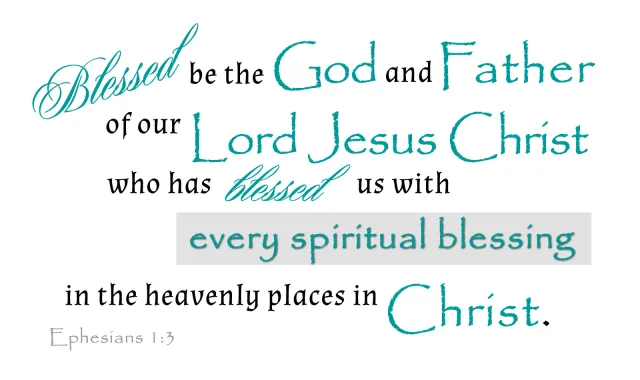
Fifth, we are blessed with all spiritual blessings in Christ. Ephesians 1:3 declares, “Blessed be the God and Father of our Lord Jesus Christ, who hath blessed us with all spiritual blessings in heavenly places in Christ.” 2 Peter 1:3 echoes, “His divine power hath given unto us all things that pertain unto life and godliness.” These blessings equip us for a life of faith and service.
Finally, we are reconciled to God through Christ, restored to a right relationship with Him. Romans 5:10 assures, “For if, when we were enemies, we were reconciled to God by the death of his Son, much more, being reconciled, we shall be saved by his life.” Colossians 1:20 reinforces, “And, having made peace through the blood of his cross, by him to reconcile all things unto himself.” Reconciliation brings us back to God’s embrace, healing the divide caused by sin (Isaiah 59:2).
These six blessings in Christ reveal the depth of God’s love and the sufficiency of Christ’s work. They are ours by obedient faith in Him, offering joy and security for this life and eternity.
Generations of people have wrestled with tough questions: Why are we here? Why is there pain in the world? Is there anything after we die? The Bible, trusted by billions, gives clear and meaningful answers to these deep questions. It’s like a guidebook from God, offering wisdom that makes sense and stands the test of time. It is a book for how to understand and navigate through this world, but also guides us to know how to have eternal life beyond this one. It is the word of God.
“And that from a child thou hast known the holy scriptures, which are able to make thee wise unto salvation through faith which is in Christ Jesus. All scripture is given by inspiration of God, and is profitable for doctrine, for reproof, for correction, for instruction in righteousness: That the man of God may be perfect, throughly furnished unto all good works” (2 Timothy 3:15-17).
The Bible declares our purpose. Ecclesiastes 12:13 puts it plainly: “Fear God, and keep his commandments: for this is the whole duty of man.” This means living in a way that puts God first in our lives, rather than chasing our own lusts, desires, and goals. The Bible teaches we were created by God and are made to glorify Him (Genesis 1:26-8; Isaiah 43:7). This provides a clear purpose, a timeless sense of value, and reassurance that we are more than mere animals.
Suffering is real, and the Bible addresses it head on. The story of Job shows a man who faced terrible pain but found God was still with him. Romans 8:28 promises that “God works all things for good for those who love Him.” Pain might come from human mistakes (Genesis 3:16–19) or just life’s challenges, but the Bible never calls it useless. It can shape us, and make us stronger (James 1:2–4). It can also help us to grow closer to God as we recognize our need for His strength (2 Corinthians 12:9-10). Many are hopeless in suffering, but the Bible offers hope that good can come out of suffering for those that love the Lord. The Bible also assures us that suffering is not God messing with us.
The Bible gives a straight answer about life after death. The Bible says, “God loved the world so much that He gave His only Son, so that everyone who believes in Him and follows Him will not be lost but have eternal life” (John 3:16), and “He that believeth and is baptized shall be saved” (Mark 16:16a). The Bible gives us instructions on how to have eternal life with God (e.g. Acts 2:38, Romans 6:17–18). The Bible’s promise of eternal life is backed by Jesus’ resurrection (1 Corinthians 15:20–22), a real event that gives us solid hope for eternity. We can know where we are going and how to get there.
Some people say the Bible’s answers are too rigid for today’s times of enlightenment. Thinkers through the ages have seen how the Bible’s teachings make sense of life’s big questions and remains timeless. It does more than just comfort us, it shows us how to live with purpose, face challenges with hope, and prepare for eternity through obedience to God’s Word. Every generation needs the Bible to discover true enlightenment in God’s timeless wisdom.
The Bible gives more than just answers; it shows us the true God who walks with us through life’s ups and downs. By believing in Jesus and obeying the gospel, we find purpose, hope, and the promise of eternal life. In a confusing world, the Bible is a steady guide for life’s biggest questions.
“Then Simon Peter answered him, Lord, to whom shall we go? thou hast the words of eternal life.” (John 6:68)
Agape
Sources: The Holy Bible (KJV): Ecclesiastes 12:13, Isaiah 43:7, Romans 8:28, John 3:16, etc.
As I seek to grow in faith, the hope of eternal life has become a treasure I hold dear, though I’m still learning to pursue it with the patience it demands. Romans 2:7 speaks of “eternal life to those who by patient continuance in doing good seek for glory, honor, and immortality,” and I see this echoed in the patience and righteousness Paul calls for in 1 Timothy 6:11 and 2 Timothy 2:22. I’m not there yet, my faith wavers, and my endurance falters, but this promise keeps me pressing forward, trusting God’s grace to sustain me.
This pursuit is vital because it anchors my life in something beyond the fleeting moments of this world. Eternal life isn’t just a future hope; it shapes how I live now. The call to “patient continuance” in Romans 2:7 reminds me of the patience in 1 Timothy 6:11, urging me to persevere through trials without giving up. I often grow weary, tempted to chase temporary comforts instead of God’s eternal reward. But when I fix my eyes on eternity, I find strength to choose righteousness, even when it’s costly, like forgiving an offense or staying faithful in difficult times.
Longing for eternal life humbles me. It is God’s gift through Christ to those who obey the gospel. Yet, I’m told to seek it by living uprightly, as 2 Timothy 2:22 encourages in pursuing righteousness. Each step, resisting temptation, serving others, or trusting God in hardship, feels like a deposit toward that eternal hope. It’s a slow, steady journey, and I rely on God’s mercy and His word to keep me faithful. As a saint, this treasure reorients my priorities, reminding me that my true home is with Him, forever.
Life can throw some heavy punches, can’t it? For the believers in Thessalonica, those punches came in the form of persecutions, false teachings, and even some within their own community slacking off and stirring up trouble. Yet, in his second letter to them, Paul points to three timeless virtues (faith, hope, and love) as the keys to standing firm, no matter what others say or do. Rooted in knowing God’s word, these qualities enabled the Thessalonians to rise above their troubles and the “lowness” of their troublers.
Chapter 1: Enduring Through Faith, Hope, and Love
The Thessalonian church was under fire, literally and figuratively. They faced “persecutions and tribulations” (2 Thessalonians 1:4, KJV), likely from hostile neighbors or authorities who opposed their faith. Yet Paul couldn’t stop bragging about them: “We ourselves glory in you in the churches of God for your patience and faith in all your persecutions and tribulations that ye endure” (1:4). Their faith wasn’t just a Sunday morning nod to God; it was a steadfast trust in His promises, even when the world seemed against them. That faith, Paul says, was “growing exceedingly” (1:3), and their love for one another was increasing right alongside it.
But what kept them going? HOPE. Paul paints a vivid picture of hope tied to God’s justice and Christ’s return: “Seeing it is a righteous thing with God to recompense tribulation to them that trouble you; And to you who are troubled rest with us, when the Lord Jesus shall be revealed from heaven with his mighty angels” (1:6-7). The promise that God would deal with their troublers and grant them relief gave them a reason to hold on. This hope wasn’t wishful thinking, it was grounded in God’s word, which assured them that their suffering was “a manifest token of the righteous judgment of God” (1:5). Knowing God’s word fueled their faith to endure, their hope to look forward, and their love to care for one another, even under pressure. Paul prayed for this to continue, asking God to “fulfil all the good pleasure of his goodness, and the work of faith with power” (1:11).
So, what’s the lesson? When trouble comes (whether it’s people attacking your faith or life’s hardships piling up) lean into faith, hope, and love. Trust God’s word, hold fast to the promise of Christ’s return, and keep loving those around you. That’s how you stay faithful, no matter what others do.
Chapter 2: Standing Firm Against Deception
The troubles didn’t stop with persecution. Someone was spreading lies, maybe even claiming Paul’s authority, saying the day of the Lord had already come. This shook the Thessalonians, leaving them “troubled” and “shaken in mind” (2 Thessalonians 2:2). Imagine the confusion, thinking you missed the biggest event in history! But Paul steps in with clarity, urging them not to be “soon shaken in mind, or be troubled, neither by spirit, nor by word, nor by letter as from us” (2:2). He reminds them of God’s word, which he’d already taught: the day of the Lord won’t come until the “man of lawlessness” is revealed (2:3-4) and destroyed by Christ’s return (2:8).
Here’s where faith, hope, and love shine again. Their faith in the truth (God’s word) kept them from falling for deception. Paul calls them “brethren beloved of the Lord” (2:13), chosen for salvation “through sanctification of the Spirit and belief of the truth” (2:13; see John 17:17). That belief anchored them. Hope came from knowing Christ would return to set things right: “The Lord Jesus Christ… shall destroy with the brightness of his coming” (2:8). This hope steadied them against false alarms. And love? Paul prays for their hearts to be comforted and established “in every good word and work” (2:16-17), a call to keep loving and serving each other despite the chaos.
The troublers spreading lies were low, trying to unsettle God’s people. But Paul’s answer is clear: “Therefore, brethren, stand fast, and hold the traditions which ye have been taught, whether by word, or our epistle” (2:15). Stay rooted in God’s word. Let faith keep you grounded, hope keep you looking up, and love keep you moving forward. That’s how you abound, no matter what others say.
Chapter 3: Overcoming Internal Troubles
If external persecution and false teachings weren’t enough, the Thessalonians had trouble within their own ranks. Some believers were “walking disorderly,” refusing to work and meddling as busybodies (2 Thessalonians 3:6, 11). This idleness wasn’t just laziness, it disrupted the work of the church. Paul doesn’t mince words: “If any would not work, neither should he eat” (3:10). Yet even this discipline is rooted in love, as he urges the church to correct the idle “as a brother” (3:15), not an enemy.
Faith shows up in Paul’s confidence that the Thessalonians would stay faithful: “We have confidence in the Lord touching you, that ye both do and will do the things which we command you” (3:4). Their hope was tied to God’s word, which provided clear instructions for living, and to the promise of God’s peace: “Now the Lord of peace himself give you peace always by all means” (3:16). Love guided their response to the troublers within, balancing discipline with care, and Paul prayed that “the Lord direct your hearts into the love of God, and into the patient waiting for Christ” (3:5).
The idle were acting low, causing trouble by neglecting their responsibilities. But Paul calls the church to a higher standard: “Be not weary in well doing” (3:13). By staying faithful to God’s word (working diligently, loving one another, and holding fast to His commands) they could overcome even internal challenges.
Tying It All Together
What do we learn from the Thessalonians? Troubles and troublers come in many forms: persecutors who mock your faith, deceivers who twist the truth, or even fellow believers who let you down. But faith, hope, and love, rooted in knowing God’s word, are your strength. Faith keeps you trusting God’s truth, like the Thessalonians’ belief in the gospel (2:13) and obedience to Paul’s teaching (3:4). Hope lifts your eyes to God’s vengeance (1:6-9, 2:8) and Christ’s return (1:7, 2:8), assuring you that troubles won’t have the last word. Love binds you to your brothers and sisters, growing even in tough times (1:3) and guiding how you correct the wayward (3:15).
Knowing God’s word is the thread that ties it all together. It’s the foundation for faith, the source of hope, and the guide for love. The Thessalonians’ troubles didn’t define them, their faithfulness did. They stayed abounding, growing in faith and love (1:3), standing firm against lies (2:15), and doing good despite setbacks (3:13). So, when others try to drag you down with their words or actions, don’t stoop to their level. Hold fast to God’s word. Let faith, hope, and love keep you faithful and abounding, just as they did for the Thessalonians.
“I can do all things through Christ which strengtheneth me” (Philippians 4:13).
People are talking about Jesus. Let us be ready to talk about Him also, but with purpose and power.
We have seen in the last two articles that Jesus gives JOY, and ETERNAL LIFE, the above verse shows that He also gives us strength.
While this verse doesn’t explicitly tell how He strengthens us, there is scriptural evidence within the New Testament that teach us how and when we can be STRONG in the Lord.
All of us could use a little more strength in this life, but the true strength we need is only in Christ.
In what ways is the Saint made STRONG in the Lord.
Christ makes us SPIRITUALLY STRONG. Eph 3:16 “That he would grant you, according to the riches of his glory, to be strengthened with might by his Spirit in the inner man; That Christ may dwell in your hearts by faith; that ye, being rooted and grounded in love” (Eph 3:16-17). How can we be strong, and how does He dwell in our hearts? If you read the comparable passage in Colossians 3, you’ll see that it’s through scripture. “Let the word of Christ dwell in you richly in all wisdom” (Colossians 3:16a). Paul would continue to reveal to the Ephesians how to be strong; “Finally, my brethren, be strong in the Lord, and in the power of his might, Put on the whole armour of God, that ye may be able to stand against the wiles of the devil. For we wrestle not against flesh and blood, but against principalities, against powers, against the rulers of the darkness of this world, against spiritual wickedness in high places. Wherefore take unto you the whole armour of God, that ye may be able to withstand in the evil day, and having done all, to stand.” (Eph 6:10-12; cf. 13-18).
Jesus gives us strength to TRANSFORM us by the renewing of our mind. “I beseech you therefore, brethren, by the mercies of God, that ye present your bodies a living sacrifice, holy, acceptable unto God, which is your reasonable service. And be not conformed to this world: but be ye transformed by the renewing of your mind, that ye may prove what is that good, and acceptable, and perfect, will of God” (Rom 12:1-2). This transformation gives us the strength to change our character as seen in the fruit of the Spirit. “But the fruit of the Spirit is love, joy, peace, longsuffering, gentleness, goodness, faith, Meekness, temperance: against such there is no law” (Gal 5:22-23).
Christ gives us strength to rise up in the face of persecution. “Blessed are they which are persecuted for righteousness’ sake: for theirs is the kingdom of heaven. Blessed are ye, when men shall revile you, and persecute you, and shall say all manner of evil against you falsely, for my sake. Rejoice, and be exceeding glad: for great is your reward in heaven: for so persecuted they the prophets which were before you” (Matt 5:10-12). We can have the Resilience to endure this life knowing that He sees, and that we have a reward in heaven.
This strength gives us Hope and Optimism in the face of death. Paul said, “According to my earnest expectation and my hope, that in nothing I shall be ashamed, but that with all boldness, as always, so now also Christ shall be magnified in my body, whether it be by life, or by death. For to me to live is Christ, and to die is gain” (Philippians 1:20-21). This optimism gives us peace of mind instead of vexation because we know that a better place awaits the faithful in Christ (cf. John 14:27). “Be careful for nothing; but in every thing by prayer and supplication with thanksgiving let your requests be made known unto God. And the peace of God, which passeth all understanding, shall keep your hearts and minds through Christ Jesus” (Philippians 4:6-7). This optimism can be seen in personal contentment with our needs, (Phil 4:11-12).
He gives us the strength to be bold in preaching the gospel of Jesus Christ. The Apostles prayed for this strength of courage when they faced physical violence against their preaching (cf. Acts 4:29). “There is no fear in love; but perfect love casteth out fear: because fear hath torment” (1John 4:18). When we commit to and look to Jesus with our whole heart in love, we shall have the nerve to speak the truth in love to our family, friends, and neighbors.
Ultimately, we have the strength of Christ through His Grace. “And he said unto me, My grace is sufficient for thee: for my strength is made perfect in weakness. Most gladly therefore will I rather glory in my infirmities, that the power of Christ may rest upon me. Therefore I take pleasure in infirmities, in reproaches, in necessities, in persecutions, in distresses for Christ’s sake: for when I am weak, then am I strong” (2Cor 12:9-10). Paul had an immediate empowerment from a change of perspective of his “thorn in the flesh.” Instead of viewing it as a weakness that hinders, it became a weakness that empowers! The thorn never changed, the pain never lessened, but the Power of Christ was displayed.
Agape,
Spencer
Spencer is an evangelist for the Franklin & Juniper st church of Christ in Borger, Tx.
This is part of a series of articles about reasons to Talk About Jesus.
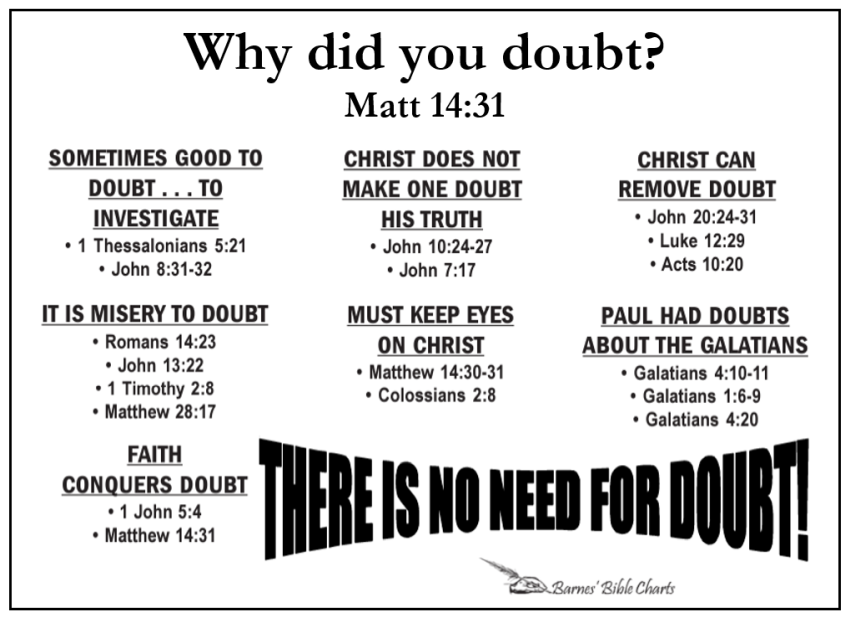
We have seen in this series of articles that doubt can develop from several places. Our job is to recognize the triggers for doubt and to avoid them.
So far we’ve learned about disbelief, opposition, uncertainty, and division. Today we talk about one more, distractions, or as Jesus put it, THORNS.
“And these are they which are sown among thorns; such as hear the word, And the cares of this world, and the deceitfulness of riches, and the lusts of other things entering in, choke the word, and it becometh unfruitful”
(Mark 4:18-19).
Distractions lead to doubt by taking our eyes off the goal, or diverting our time. When we focus on the vanities of life (see Ecclesiastes), we lose sight of hope and then doubt. Distractions give us less time for the study we need to strengthen our faith.
While there are many distractions, most of them can be grouped together into a few categories.
One of the main categories of thorns leading to doubt is from family TRADITIONS. “Howbeit in vain do they worship me, teaching for doctrines the commandments of men” (Mark 7:7). Family traditions (religious or other), can lead to doubt especially as the word of God conflict with their religious practices or family time. When I first became a Christian, the tradition of our Sunday morning brunch interfered with worship. There is often pressure from the family for the Christian to forego worship, bible study, or even beliefs. This is especially difficult for the new in the faith, as they lack the biblical knowledge to defend themselves. (see Matt 10:37; Luke 14:26).
Another areas of distraction that keep us from study, meditation, and serving the Lord (Rom 12:6-8) are HOBBIES, Social-Media, and entertainment that consumes a significant amount of time. While these are non-sinful activities (sinful activities are always to be avoided), they can become distractions when the time & resources needed for them leave little of the same for God. Some have led to neglect of the family and job that can lead to financial strain. Hobbies and such like can be used for godly service. I know of one family that intentionally plans their activities as a tool for meeting people for an opportunity to share the gospel. Some use Social-Media for advancing the kingdom. “He who tills his land will be satisfied with bread, But he who follows frivolity is devoid of understanding” (Prov 12:11; 28:19 NKJV).
Lust for OTHER THINGS is another area that affects us (Mark 4:19). “Ye ask, and receive not, because ye ask amiss, that ye may spend it in your pleasures” (James 4:3). We begin to doubt when our prayers seem to go unanswered not recognizing that we’re praying amiss. Prayer is very personal as we pour out our heart to God. Sometimes we pray for things that go against the will of God. When our desires and God’s will conflict, we need to align our will with His, or doubt will creep in (cf. Jas 1:13-15).
The parable in Mark 4 also warns about the deceitfulness of RICHES. Money is a tool we use to ease trade. Sadly, many of us begin to trust in wealth above trusting in God. “But they that are minded to be rich fall into a temptation and a snare and many foolish and hurtful lusts, such as drown men in destruction and perdition” (1Tim 6:9-17). It’s very easy to think that money solves all our problems and leads to an easier life. That’s what one rich man thought (Luke 12:15-21). If we have problems that can be solved with money, we don’t have a problem. Then, when a real problem comes (one not solved by money), our faith may begin to waver. Our treasure in heaven is far more valuable than any earthly treasure, let’s focus on that (Matt 13:44-45; 16:26).
Related to riches is our concern for the NEEDS of this world. We need what we need and stress about them may lead to doubt. Because they’re needs, they can quickly and easily distract us and cause doubt especially if we lack any need. “Therefore I say unto you, be not anxious for your life, what ye shall eat, or what ye shall drink; nor yet for your body, what ye shall put on. Is not the life more than the food, and the body than the raiment” (Matt 6:25-34)? The command of Christ is to seek first the kingdom of God and His righteousness.
The final category of thorns is found in SICKNESS, Sadness or Sorrows. The physical and emotional pains of life can quickly overwhelm our faith and become the focus of every conversation. When we’re asked how we’re doing, do we give an organ recital (listing all our ailments) or do we talk about our hope? “For our light affliction, which is but for a moment, worketh for us a far more exceeding and eternal weight of glory” (2Cor 4:17). Unhealed pain is a source of doubt for many of our brethren, and certainly for the world.
For me this is one of the most difficult thorns. Pain, Loss, Sickness, and Sorrows can drive our identity. A friend of mine noticed after the loss of his infant son that he could end any joyful moment for himself and others. Some pains can be healed, but the death of a loved one lives with us forever. This and other Sorrows can be a constant source of doubt.
Paul faced a physical thorn that he appealed to the Lord three times in prayer. However, the Lord’s answer changed his perception about the pain. “Concerning this thing I besought the Lord thrice, that it might depart from me. And he hath said unto me, My grace is sufficient for thee: for my power is made perfect in weakness. Most gladly therefore will I rather glory in my weaknesses, that the power of Christ may rest upon me. Wherefore I take pleasure in weaknesses, in injuries, in necessities, in persecutions, in distresses, for Christ’s sake: for when I am weak, then am I strong.” (2Cor 12:8-10). Instead of letting his thorn in the flesh become his identity, it became a motivation and a source of strength through faith in Jesus Christ.
Friends, we all have our fears and doubts, but we must never let it have a foothold in our hearts. When we are aware of how doubt develops, we’ll be better able to stave it off. The tried-and-true way to combat doubt is by keeping our eyes on Jesus. We do this by reading His word, encouraging and assembling with the saints, and being diligent to show ourselves approved unto God.
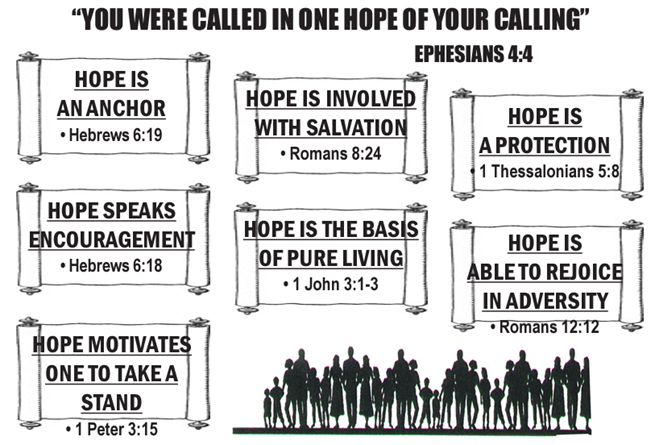
3:1-3) Hope as children to see Him John 15:18-19; 16:3; 17:25 Loves us as children. Rom 8:15,18,29; Ga 3:26; 4:6; Heb 12:7-11.
What kind of body? 1Cor 15:49; Php 3:21; Col 3:4;
Hope seeks to purify. 1Pet 1:16-19. This is so opposite of what denominations teach in the error of OSAS.
Here’s a link to all the published studies from 1 John.
The Franklin and Juniper church of Christ did a study of the book of 1John in the summer and fall of 2023. If you live in the Borger area, We invite you to join us at 9:30am each Sunday Morning for similar Bible studies.
READY to give and answer for the HOPE that is in you.
1 Peter 3:15 KJV
But sanctify the Lord God in your hearts: and be ready always to give an answer to every man that asketh you a reason of the hope that is in you with meekness and fear:
2 Peter 3:15-16 KJV
And account that the longsuffering of our Lord is salvation; even as our beloved brother Paul also according to the wisdom given unto him hath written unto you;
Ephesians 3:3-4 KJV
How that by revelation he made known unto me the mystery; (as I wrote afore in few words, [4] Whereby, when ye read, ye may understand my knowledge in the mystery of Christ)
Bonus point…
We will discover the REASON to HOPE.
Romans 15:4
For whatsoever things were written aforetime were written for our learning, that we through patience and comfort of the scriptures might have hope.
Where we read we can be READY.
Let’s read the bible through in 2023
Here’s a link to some printable Bible reading Bookmarks.
If you live in the Borger area and would like to study the bible better, we invite you to one of our services with the church of Christ on Franklin and Juniper.
“For men shall be lovers of their own selves, covetous, boasters, proud, blasphemers, disobedient to parents, unthankful, unholy.”
(2Timothy 3:2)
In Paul’s letter to Timothy, he warns of imposters in the last and perilous days. He lists a series of qualities that describe these traitors (cf 2Tim 3:2-8).
Among this descriptive list is the quality of being “UNTHANKFUL.”
We usually know when someone ELSE is being an ingrate, but seldom do we recognize it in ourselves. There are only two ways I know to see it in ourselves. One is through constant self-evaluation (cf. 2Cor 13:5), the other is learning by example (both positive & negative).
Let’s combine these strategies with a self-evaluation test using biblical examples.
Take this GRATITUDE self-test to know if we’re being grateful or ungrateful.
Do I only see…
the FORBIDDEN fruit?
the freedom to eat every other FRUIT in the garden?
(Gen 2:16-17; 3:4-6) Metaphorical for those forbidden “fruits” of the lust of the flesh.
Do I exemplify the SICKNESS with an organ recital?
Do I SHOW my hope in my faithful endurance?
(Jas 5:11; 2Cor 4:16-18)
When trouble comes…
Do I only see the STRUGGLE?
Do I see the STRENGTH and patience that comes from endurance?
(Jas 1:1-3; Heb 12:11)
When I go into the marketplace…
Do I lament the COMMERCIALISM?
Do I see the nearly limitless CHOICES?
(Mat 20:13-15)
Life on earth is seldom easy. The way we respond to the struggles of life will determine how much HOPE we display. A positive response gives the best chance to reach the lost through our godly example (cf. 1Peter 3:1-6).
Spencer is an evangelist for the church of Christ in Borger Texas
Paul’s defense to Agrippa is very powerful, and something all Christians should study to understand, and be able to recite.
Acts 24:14 But this I confess unto thee, that after the way which they call heresy, so worship I the God of my fathers, believing all things which are written in the law and in the prophets:
15 And have hope toward God, which they themselves also allow, that there shall be a resurrection of the dead, both of the just and unjust.
16 And herein do I exercise myself, to have always a conscience void of offence toward God, and toward men.
I OPENLY DECLARE…
I Worship the God of the Bible. John 4:24 God is Spirit: then let his worshippers give him worship in the true way of the spirit.
I Believe all things which are written in the Law (of Moses) and the prophets. Luke 24:26 Was it not necessary for the Christ to go through these things, and to come into his glory? 27 And he made clear to them all the things in the Writings, from Moses and from all the prophets, which had to do with himself.
I Have Hope toward God. Heb 6:19 And this hope is like a strong band for our souls, fixed and certain, and going in to that which is inside the veil;
I Hope in the Resurrection of the dead, (both of the just & unjust). 2Cor 5:10 For we all have to come before Christ to be judged; so that every one of us may get his reward for the things done in the body, good or bad.
I Strive to have a conscience without offense toward God. 1Thess 2:4 But as we were allowed of God to be put in trust with the gospel, even so we speak; not as pleasing men, but God, which trieth our hearts.
I Strive to have a conscience without offense toward mankind. Acts 23:1 And Paul, earnestly beholding the council, said, Men and brethren, I have lived in all good conscience before God until this day.
None of the above is to be separated from the New Testament to make a creed we recite in a rote manner. These are the words the Apostle Paul came to know and Believe through inspiration of the Holy Spirit as he gave his defense before Agrippa.





 Borger church of Christ @ Franklin & Juniper