
The ontological argument, first articulated by St. Anselm of Canterbury in the 11th century, explores the concept of God as a necessary being whose existence is self-evident through reason. Unlike other arguments that rely on empirical evidence, the ontological argument is a philosophical proof, rooted in the nature of God as “that than which nothing greater can be conceived.” Modern developments in philosophy and science reinforce the logic of this timeless argument.
The Concept of Necessary Existence. The argument begins with the definition of God as the greatest conceivable being. Such a being must exist not only in the mind (as a concept) but also in reality, for existence in reality is greater than existence solely in thought. If God existed only as a concept, then a greater being—one that exists in reality—could be imagined, contradicting the original definition. Thus, God must exist in reality.
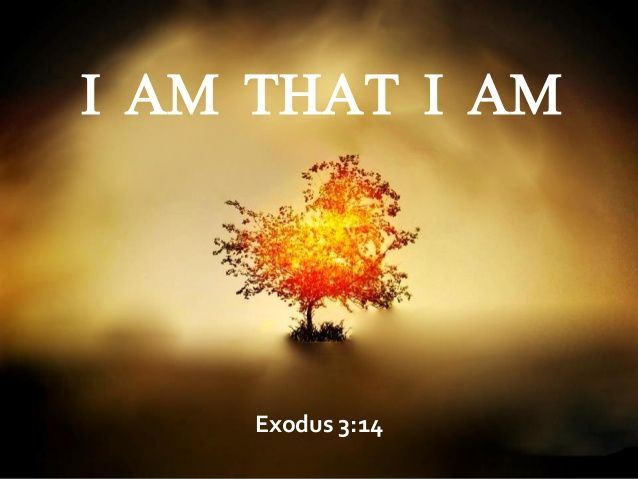
This concept aligns with the biblical understanding of God as self-existent and eternal. Exodus 3:14 encapsulates this when God declares, “I AM THAT I AM,” signifying His independent and necessary existence.
Modern Philosophical Insights. Contemporary philosophers like Alvin Plantinga have refined the argument, framing it within modal logic. Plantinga’s version argues that if it is possible for a maximally great being to exist, then such a being exists in some possible world. If it exists in one possible world, its necessary nature means it exists in all possible worlds—including our own.
This formulation strengthens the argument by considering God’s existence as necessary rather than contingent. A necessary being is one that must exist; its non-existence is impossible. This necessity aligns with the biblical portrayal of God as eternal and unchanging (Malachi 3:6).
Scientific Corroboration of a Necessary Cause. While the ontological argument is primarily philosophical, modern science lends indirect support. The universe, with its intricate fine-tuning, suggests a source that exists outside time and space. This aligns with the concept of a necessary being who undergirds all reality. Romans 1:20 reflects this idea: “For the invisible things of him from the creation of the world are clearly seen, being understood by the things that are made.”
Implications of God’s Necessary Existence. If God’s existence is necessary, He is the source of all contingent reality—everything that depends on something else to exist. This explains not only the existence of the universe but also the rationality, order, and purpose evident in creation.
Conclusion. The ontological argument, grounded in reason and supported by scripture, reveals God as the necessary being upon whom all existence depends. As Colossians 1:17 declares, “And he is before all things, and by him all things consist.” This philosophical proof, when coupled with scripture, underscores the truth of God’s eternal and unchanging nature.
Sources:
• Plantinga, A. The Nature of Necessity.
• Craig, W.L. Reasonable Faith: Christian Truth and Apologetics.
• Exodus 3:14, Romans 1:20, Malachi 3:6, Colossians 1:17 (KJV).
Agape,
Spencer


 Borger church of Christ @ Franklin & Juniper