Evidence for our Faith: The Human Eye

The Human Eye

The human eye is one of the most intricate and sophisticated organs in the body, often cited as evidence of intelligent design. Its complexity and functionality defy random chance, pointing instead to purposeful creation. The eye’s ability to perceive light, distinguish colors, and adapt to varying conditions showcases an engineering marvel that naturalistic evolutionary processes struggle to explain.

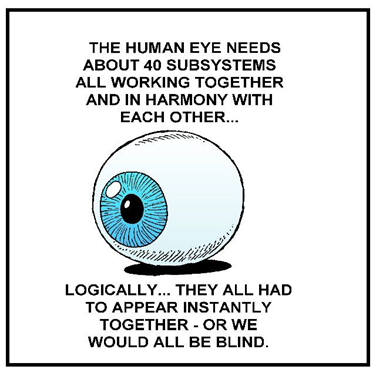
The eye operates as an integrated system, relying on the coordinated function of numerous components. These include the cornea, lens, retina, optic nerve, and a network of supporting cells and tissues. The retina, for example, contains millions of photoreceptor cells—rods and cones—that convert light into electrical signals. These signals are then processed by the brain, enabling us to perceive the world in vivid detail. The cones are responsible for color vision, while rods excel in low-light conditions, allowing us to adapt to different environments.

A hallmark of the eye’s design is its irreducible complexity. Each part of the eye depends on the others to function properly. For instance, the lens focuses light onto the retina, which converts the light into signals transmitted by the optic nerve to the brain. If any of these components were absent or incomplete, the eye would be nonfunctional. This interdependence challenges the notion of gradual evolution, as intermediate stages would provide no survival advantage.

Darwin himself acknowledged this difficulty, writing in On the Origin of Species: “To suppose that the eye, with all its inimitable contrivances… could have been formed by natural selection, seems, I freely confess, absurd in the highest degree.” (Charles Darwin, On the Origin of Species.)

Biblically, the eye’s intricacy reflects God’s intentional design. Psalm 94:9 asks, “He that planted the ear, shall he not hear? He that formed the eye, shall he not see?” This rhetorical question emphasizes that the Creator, who designed the human eye, possesses perfect knowledge and wisdom. The complexity of the eye aligns with this biblical perspective, affirming a purposeful Designer.

Scientific attempts to explain the evolution of the eye, such as the idea of incremental improvements through natural selection, fail to account for the precise coordination required for its functionality. Mutations alone cannot produce the tightly integrated system observed in the human eye, further supporting the argument for intelligent design.

The human eye stands as a testament to the existence of a Creator. Its complexity, irreducible nature, and unparalleled functionality defy naturalistic explanations, pointing instead to purposeful design. As Romans 1:20 declares, “For the invisible things of him from the creation of the world are clearly seen, being understood by the things that are made.” The human eye, a marvel of engineering, is a clear manifestation of God’s creative power and wisdom.

Agape,

Spencer
Evidence for our Faith: Irreducible Complexity

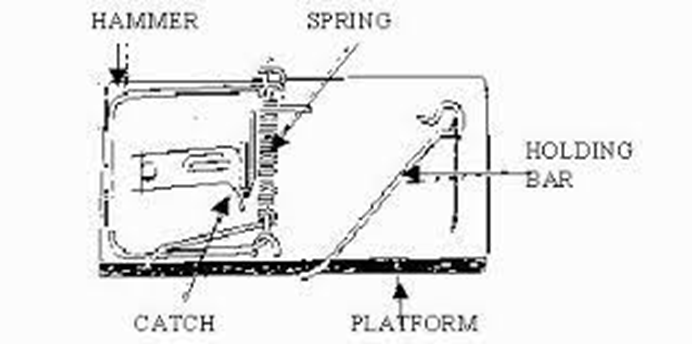
A Mousetrap represents an example of irreducible complexity

The concept of irreducible complexity presents a powerful argument for the existence of a Designer. Coined by biochemist Michael Behe, irreducible complexity refers to biological systems composed of multiple interdependent parts, all of which must function simultaneously for the system to work. Such systems cannot arise through gradual evolutionary processes, as removing even one component renders the system nonfunctional. This hallmark of intentional design points to the existence of an intelligent Creator.

One of the most cited examples of irreducible complexity is the bacterial flagellum, a microscopic rotary motor used by bacteria for propulsion. The flagellum comprises over 40 distinct protein components, including a rotor, stator, drive shaft, bushing, and propeller. Each part is precisely shaped and positioned to interact with the others, enabling the flagellum to rotate at incredible speeds—up to 100,000 revolutions per minute in some species.

The flagellum’s functionality depends on the presence of all its components working together. If even one protein is missing, the entire system fails, offering no advantage to the organism. This contradicts Darwinian evolutionary mechanisms, which propose gradual modifications and natural selection as the means of developing complex structures. As Behe argues in his book Darwin’s Black Box, such irreducible systems could not have evolved step-by-step, as intermediate stages would confer no benefit to survival.

The Bible supports the idea of intentional design in creation. Job 12:7-9 invites us to consider the evidence of God’s hand in the natural world: “But ask now the beasts, and they shall teach thee; and the fowls of the air, and they shall tell thee: Or speak to the earth, and it shall teach thee: and the fishes of the sea shall declare unto thee. Who knoweth not in all these that the hand of the Lord hath wrought this?” The intricacy of the flagellum echoes this truth, revealing the handiwork of a Creator. The bacterial flagellum, a marvel of engineering, stands as evidence of God’s power and wisdom.

Scientifically, attempts to explain the flagellum through evolutionary mechanisms remain inconclusive. Proposals like co-option, which suggest that existing proteins were repurposed for new functions, fail to account for the precise timing, positioning, and coordination required to assemble the flagellum. Such precision implies design, not chance.

Irreducible complexity in systems like the bacterial flagellum provides compelling proof of a Designer. Its intricate structure and functionality defy evolutionary explanations, aligning with biblical declarations of God’s creative work. This undeniable complexity reflects the harmony between science and faith, pointing to the Creator behind the design.

Agape,

Spencer

Evidence for our Faith: DNA

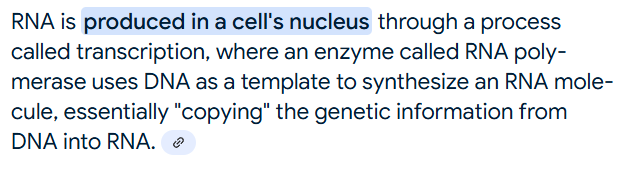
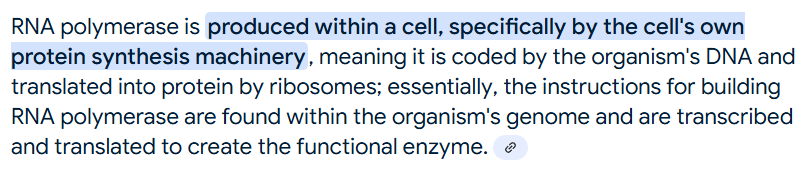
RNA is necessary to produce the proteins, like RNA polymerase, that are required to transcribe RNA from DNA, creating an interdependent system that could not function without all parts existing simultaneously.

Evidence of God in DNA

DNA, deoxyribonucleic acid, serves as the molecular basis of heredity and the blueprint for all living organisms. Within its structure lies an extraordinary amount of information encoded in sequences of nucleotide bases. This informational content directs the development, functioning, and reproduction of living beings, showcasing a complexity that defies random chance.

The intricate information stored in DNA speaks to the concept of intelligent design proposed by the Cosmological Argument. This argument posits that the order and complexity observed in the universe, including biological systems like DNA, imply a purposeful design rather than mere random processes. The information-rich nature of DNA points towards a mind behind its creation—a mind that comprehends and engineers complex systems far beyond human understanding.

Biblically, the narrative supports this idea of intentional design. Psalm 139:14 states, “I praise you, for I am fearfully and wonderfully made. Wonderful are your works; my soul knows it very well.” This verse acknowledges the intricate craftsmanship evident in human beings, echoing the complexity found in DNA. Moreover, Genesis 1:27 affirms that mankind is created in the image of God, implying a deliberate act of creation imbued with purpose and design.

Scientifically, the discovery of DNA’s structure and function has revolutionized our understanding of biology and genetics. Francis Crick and James Watson’s explanation of its double helix structure in 1953 marked a watershed moment in science, revealing the elegance and complexity of this molecule. Since then, advancements in genomic research have uncovered layers of complexity within DNA that continue to astonish scientists.

Moreover, the concept of irreducible complexity, as proposed by biochemist Michael Behe, further bolsters the argument for intelligent design in DNA. Irreducible complexity posits that certain biological systems are composed of multiple intricate parts that must all be present and functioning for the system to work. This challenges the idea of gradual evolution through natural selection alone, suggesting instead a purposeful arrangement of components.

Romans 1:20 declares, “For his invisible attributes, namely, his eternal power and divine nature, have been clearly perceived, ever since the creation of the world, in the things that have been made.” This verse emphasizes that the intricacies of creation, such as DNA, bear witness to God’s existence and creative power.

The study of DNA provides compelling evidence for the Cosmological Argument, pointing towards an intelligent designer behind the complexity of life.

Agape,

Spencer