Who are God’s Chosen People today?

WHO ARE GOD’S CHOSEN PEOPLE TODAY?

The Bible presents the children of Abraham, specifically the twelve tribes of Israel, as God’s chosen people, selected for a divine purpose: to bring forth the Messiah, Jesus Christ, through whom all nations would be blessed. This narrative weaves through the Old and New Testaments, showing the progression from the Law of Moses to the New Covenant in Christ, culminating in the universal call to become God’s chosen through faith and obedience to the Gospel.

The Chosen People and the Promise.
God’s covenant with Abraham (Genesis 12:1-3) established his descendants as the vehicle for His redemptive plan. Through Abraham’s seed—ultimately Christ (Galatians 3:16)—all nations would be blessed. The twelve tribes of Israel, descending from Abraham through Isaac and Jacob (Genesis 17:19; 35:10-12), were chosen to preserve God’s covenant, carry His oracles, and prepare the world for the Messiah. Deuteronomy 7:6-8 emphasizes that Israel’s election was not due to their merit but God’s love and faithfulness to His promise.

The Purpose of the Law of Moses.
The Law of Moses, given to Israel at Sinai (Exodus 19-20), served as a tutor to lead humanity to Christ (Galatians 3:24-25). It revealed God’s holiness, exposed human sinfulness (Romans 3:20), and provided a framework for Israel’s covenant relationship with God. The Law included moral, ceremonial, and civil commands, pointing to Christ through types and shadows (Hebrews 10:1). For example, the Passover lamb (Exodus 12) prefigured Christ’s sacrificial death (1 Corinthians 5:7). However, the Law was temporary, unable to justify or remove sin permanently (Hebrews 7:19; 10:4). Its purpose was to prepare Israel—and the world—for the coming of the Messiah.

Fulfillment in Christ and the New Covenant.
With Christ’s death, burial, and resurrection—the Gospel (1 Corinthians 15:1-4)—the Law of Moses was fulfilled and abrogated (Colossians 2:14; Hebrews 8:6-13). Jesus, as the promised seed of Abraham (Galatians 3:16), accomplished what the Law could not: justification and reconciliation with God (Romans 5:1-2). The New Covenant, established through His blood (Matthew 26:28), replaced the Old Covenant, making salvation accessible to all—Jew and Gentile—through faith in Christ (Romans 10:12-13). The Great Commission (Matthew 28:18-20) commands the spread of this Gospel to all nations, inviting everyone to obey Christ’s doctrine (2 John 1:9).

Paul expresses his heart for Israel’s salvation in Romans 10:1, noting their zeal for God but lack of knowledge about the righteousness that comes through faith in Christ (Romans 10:3-4). The Law’s purpose was fulfilled in Christ, and now all who believe—whether Jew or Gentile—are justified by faith (Galatians 3:26-29).

The Saints as the Chosen People.
Under the New Covenant, the “chosen people” are no longer defined by ethnicity but by faith and obedience to the Gospel. 1 Peter 2:9 describes believers—Jew & Gentile—as a “chosen generation, a royal priesthood, a holy nation,” echoing Israel’s calling in Exodus 19:5-6 but now applied universally to the church. Anyone who obeys the Gospel by faith (Romans 1:16; Acts 2:38) becomes part of this spiritual Israel, grafted into God’s family (Romans 11:17-24). The saints, through Christ, inherit the promises made to Abraham (Galatians 3:29).


The twelve tribes of Israel were chosen to bring Christ into the world, with the Law of Moses guiding them toward this purpose while exposing humanity’s need for a Savior. Christ’s Gospel fulfilled and replaced the Law, opening salvation to all who obey Him by faith. The saints, as God’s new chosen people, reflect His redemptive plan: a universal call to become His own through the New Covenant, demonstrating His grace and power to save.

HOW IS ISRAEL SAVED TODAY?

Israel (and everyone else) is saved not by the Law of Moses but by the Law of Christ under the New Covenant. The fulfillment of Jeremiah 31:31-34, as affirmed in Hebrews 8, establishes that salvation for Israel—and all people—comes through faith and obedience to the Gospel of Christ.

Salvation Through the Law of Christ.

Since Pentecost, when the New Covenant was inaugurated with the outpouring of the Holy Spirit (Acts 2:1-4), salvation for Israel (and all nations) is through the Law of Christ, which is the Gospel—the message of His death, burial, and resurrection (1 Corinthians 15:1-4).

The Bible is clear:

  • Faith and Obedience to the Gospel: Romans 10:9-13 states that salvation comes by confessing Jesus as Lord and believing in His resurrection, with “no distinction between Jew and Greek, for the same Lord over all is rich to all who call upon Him.” Acts 2:38, preached to Jews on Pentecost, commands repentance and baptism in Jesus’ name for the forgiveness of sins, resulting in 3,000 Jews being saved (Acts 2:41). This marks the beginning of salvation under the Law of Christ.
  • The New Covenant Fulfilled: Jeremiah 31:31-34 promised a new covenant with Israel, where God would write His law on their hearts and forgive their sins. Hebrews 8:6-13 declares this fulfilled in Christ, who is the “mediator of a better covenant.” His sacrifice replaced the Old Covenant (Hebrews 8:13), making the Gospel the means of salvation for all, including Israel.
  • The Law of Christ: Galatians 6:2 refers to “the law of Christ” as the guiding principle for believers. This involves faith working through love (Galatians 5:6), obedience to Christ’s commands (John 14:15), and adherence to His doctrine (2 John 1:9). For Israel, this means accepting Jesus as the Messiah and obeying His Gospel, as seen in the Jewish believers of the early church (Acts 2:41; 6:7).

The Law of Moses Abrogated.

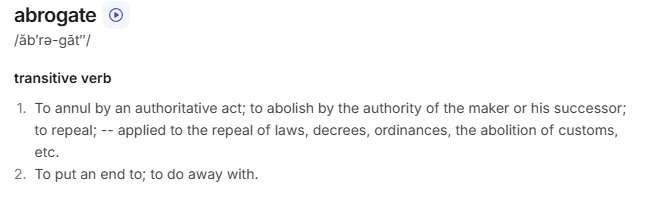
(Abrogated: To annul by an authoritative act; to abolish by the authority of the maker or his successor; To put an end to; to do away with.)

The Law of Moses, given to Israel at Sinai (Exodus 19-20), is no longer the means of salvation:

  • Fulfilled and Replaced: Jesus fulfilled the Law (Matthew 5:17-18), and His death on the cross abolished it as a system of justification (Colossians 2:14; Ephesians 2:15). Hebrews 10:9 states that Christ “takes away the first [covenant] that He may establish the second.” The Law’s sacrifices and ordinances could not perfect or justify (Hebrews 10:1-4; Galatians 3:10-13).
  • A Tutor to Christ: Galatians 3:24-25 explains that the Law was a “tutor to bring us to Christ,” but “after faith has come, we are no longer under a tutor.” For Israel, the Law pointed to the Messiah, but since His coming, salvation is through faith in Him, not the Law’s works (Romans 10:4).
  • Inability to Save: Acts 15:10-11, in the context of Jewish believers, affirms that neither Jews nor Gentiles are saved by the Law, which was a “yoke” they could not bear. Instead, “through the grace of the Lord Jesus Christ we shall be saved.”

Israel’s Salvation Today.

Since Pentecost, Jews (Israel) are saved by:

  • Hearing and Believing the Gospel: Romans 10:17 says faith comes by hearing the word of Christ. Jews must believe Jesus is the Messiah, as Peter proclaimed to Israel (Acts 2:36).
  • Repentance and Baptism: Acts 2:38 applies to Jews, as seen in the mass conversions at Pentecost. Baptism in Jesus’ name unites Jews and Gentiles with Christ (Galatians 3:27-29).
  • Ongoing Faithfulness: Like all believers, Jews must abide in Christ’s doctrine (2 John 1:9) and remain faithful (Hebrews 3:14). The remnant of Israel saved today includes Jews who obey the Gospel, such as the apostles and early disciples (Romans 11:5).

The Remnant and Future Hope.

Romans 11:5 speaks of a “remnant according to the election of grace” among Israel, saved by faith in Christ, as exemplified by Jewish believers in the New Testament (e.g., Acts 21:20). While Romans 11:26 anticipates a future time when “all Israel will be saved,” this does not imply salvation apart from the Gospel. The context (Romans 11:23-27) suggests Israel’s salvation comes through faith in Christ, aligning with the New Covenant promise of Jeremiah 31:31-34, fulfilled in Christ’s blood (Hebrews 8:8-12; Matthew 26:28).

Conclusion.

Since Pentecost, Israel is saved through the Law of Christ—the Gospel—not the Law of Moses, which was fulfilled and abrogated (Hebrews 8:13; Colossians 2:14). The New Covenant, promised in Jeremiah 31:31-34 and established through Christ (Hebrews 8:6), requires Jews to believe in Jesus as Messiah, repent, and be baptized (Acts 2:38; Romans 10:9-13). The remnant of Israel today, like all believers, enters God’s chosen people (1 Peter 2:9) by faith and obedience to the Gospel, fulfilling God’s redemptive plan through the eternal covenant of Christ.

agape

I Don’t Keep Any Of The Ten Commandments

Image result for 10 commandments
I Don’t Keep Any Of The Ten Commandments
William J. Stewart | Odessa, Ontario, Canada
 
When speaking with folks about the distinction between the Old and New Testaments, I will, to make a vivid point, often declare, “I don’t keep any of the Ten Commandments.” You ought to see the look such a statement elicits on the face of some people. Now, what do |I mean by that statement? I acknowledge the God of heaven and worship Him alone. I do not serve false gods. I do not misuse the name of God. I worship on the day which God has prescribed. I render the appropriate respect to my parents. I do not murder. I do not commit fornication. I do not steal. I do not lie. I do not covet other people’s goods. And yet, I earnestly say, “I don’t keep any of the Ten Commandments.”
 
The Ten Commandments (and indeed, the whole Law of Moses) were not given for me to keep, but for the people of Israel (Deuteronomy 4:44-45; 5:1-3). As we consider the testimony of Scripture, it ought to become evident that we are not under the Law of Christ, not the Law of Moses. Consider:
 
MATTHEW 5:17-18
Do not think that I came to destroy the Law or the Prophets. I did not come to destroy but to fulfill. For assuredly, I say to you, till heaven and earth pass away, one jot or one tittle will by no means pass from the law till all is fulfilled.
 
Many will use this text to affirm that the Law would never cease, but the careful Bible student will realize that Jesus is saying just the opposite. In verse 17, the Lord states unequivocally that He came to fulfill the Law. In the next verse, He plainly indicates what would take place once it was fulfilled – it would pass away.
 
A parent may tell a child not to get off a chair until his “time out” is over. A union leader may tell management that the workers will not return until all their demands are met. There are countless statements where a given result will occur once a condition has been met. Shall we leave the child on the chair even after the “time out” is completed? Shall the workers forsake their jobs even after their demands have been satisfied? Of course not. Neither should we affirm the perpetuation of the Law, for the Lord has fulfilled it.
 
ACTS 15:1, 5
Unless you are circumcised according to the custom of Moses, you cannot be saved. … It is necessary to circumcise them, and to command them to keep the law of Moses.
 
These two statements were made by some first century Jewish Christians with regard to the Gentile converts to Christ. They, like some today, were proponents of the Law, and sought to bind it upon believers. Notice what the apostles had to say of them and their position:
  • Peter asked, “…why do you test God by putting a yoke on the neck of the disciples which neither you nor your fathers were able to bear?” (15:10)
  • James, considering the coming of the Gentiles to Christ, in view of prophecy, stated, “…we should not trouble those from among the Gentiles who are turning to God…” (15:19)
  • The apostles distinguished themselves from the Law proponents, declaring, “…we gave no such commandment…” (15:24)
  • The apostles, inspired of God, wrote to the Gentiles, saying, “…it seemed good to the Holy Spirit, and to us, to lay upon you no greater burden than these necessary things: that you abstain from things offered to idols, from blood, from things strangled, and from sexual immorality.” (15:28-29)
Those who affirm that we are still subject to the Law of Moses today set themselves against the apostles of Christ and the Holy Spirit himself.
 
GALATIANS 3:23-26
But before faith came, we were kept under guard by the law, kept for the faith which would afterward be revealed. Therefore the law was our tutor to bring us to Christ, that we might be justified by faith. But after faith has come, we are no longer under a tutor. For you are all sons of God through faith in Christ Jesus.
 
Paul revealed the purpose of the Law of Moses. It guarded the hearts of the Jews until faith came. Not personal faith, for personal faith has existed since creation began. The faith spoke of is the law of faith, which would be revealed in Christ. But notice, when the faith came (ie. the New Testament Law, the Gospel), then “…we are no longer under a tutor.” The purpose of the law had been served. Now, we are God’s people, not by the Law of Moses, but “…through faith in Christ Jesus.” (NOTE, it was only the Jews who had been kept under guard by the law, the Gentiles were never under the law)
 
HEBREWS 8:7-13
For if that first covenant had been faultless, then no place would have been sought for a second. Because finding fault with them, He says, ‘Behold, the days are coming, says the LORD, when I will make a new covenant with the house of Israel and with the house of Judah – not according to the covenant that I made with their fathers in the days when I took them by the hand to lead them out of the land of Egypt; because they did not continue in My covenant, and I disregarded them, says the LORD. For this is the covenant that I will make with the house of Israel after those days, says the LORD: I will put My laws in their mind and write them on their hearts; and I will be their God, and they shall be My people. None of them shall teach his neighbor, and none his brother, saying, ‘Know the LORD,’ for all shall know Me, from the least of them to the greatest of them. For I will be merciful to their unrighteousness, and their sins and their lawless deeds I will remember no more.’ In that He says, ‘A new covenant,’ He has made the first obsolete. Now what is becoming obsolete and growing old is ready to vanish away.
 
Two covenants are under consideration here, the first being established through Moses, the second, through the Christ. In bringing forth a new covenant, what did God plan for the former? Was it to remain, and be kept in conjunction with the second? The Hebrew writer uses words such as “obsolete,” “growing old,” and “ready to vanish away” to describe the Law of Moses. We are not subject to the covenant established by God with Israel at Mount Sinai. We are subject to the law established with the entire world through the Christ at Calvary.
 
GALATIANS 5:1-4
Stand fast therefore in the liberty by which Christ has made us free, and do not be entangled again with a yoke of bondage. Indeed, I, Paul, say to you that if you become circumcised, Christ will profit you nothing. And I testify again to every man who becomes circumcised that he is a debtor to keep the whole law. You have become estranged from Christ, you who attempt to be justified by law; you have fallen from grace. 
 
Those who contend that we are still subject to Moses’ law today fail to be consistent with their own claim. Paul indicated that if one presumes to keep part of the law, they are indebted to keep the whole law (v 3). Do those who claim to keep the law today continue in the sacrifices prescribed? Do they observe the feasts in the way they are commanded? Do they hold to the penalties instructed for crimes and offences under Moses’ law? Some who claim we should keep Moses’ Law even fail to keep the Sabbath day as instructed in the Law. Their claim fails support through their actions.
 
In Galatians 5, Paul wrote to Gentile Christians whom Judaizing teachers pressured to receive circumcision in obedience to the Law of Moses (the same issue which existed in Acts 15), Paul’s message was clear – don’t do it! You have been made free in Christ, why would you turn to a law of bondage (cf. Galatians 2:4)? To seek to be justified by Moses’ law is to separate oneself from Christ.
 
COLOSSIANS 2:14-17
…having wiped out the handwriting of requirements that was against us, which was contrary to us. And He has taken it out of the way, having nailed it to the cross. Having disarmed principalities and powers, He made a public spectacle of them, triumphing over them in it. So let no one judge you in food or in drink, or regarding a festival or a new moon or sabbaths, which are a shadow of things to come, but the substance is of Christ.
 
What was the handwriting of requirements that was against and contrary to us? It is the law of Moses. Recall Peter’s statement in Acts 15 – the law was a yoke “…which neither our fathers nor we were able to bear.” It was “taken out of the way … nailed to the cross.” The Law of Moses had “become obsolete” and was “ready to vanish away” (Hebrews 8). That being the case, Paul urged the disciples not to allow people to judge them in matters related to the Law – food, drink, festivals, new moons, sabbaths. The disciples of Christ are not subject to these laws or any laws from Moses. He identifies the Law as a shadow – the reality, the true, is found in Christ and His law, the gospel.
 
Well, hang on. I said earlier that I acknowledge the one true God, worship Him alone, I don’t misuse His name and I worship on the day He prescribed. I have respect for my parents, I do not murder, commit fornication, steal, lie or covet my neighbour’s goods. By definition, am I not keeping the Ten Commandments? Nope, not a one. All of the commandments (except the Sabbath law) are repeated in the New Testament (Matthew 4:10; 1 Corinthians 10:14; 1 Timothy 6:1; Colossians 3:20; Romans 13:9; 1 Thessalonians 4:3; Ephesians 4:28; Colossians 3:9; Hebrews 13:5). The Sabbath is not repeated, for the prescribed day of worship in the New Testament is the first day of the week (Matthew 28:1-2; John 20:19; Acts 20:7; 1 Corinthians 16:2).
Friend, we are not subject to Moses’ law. It was not and is not our law, not even the Ten Commandments. We are subject to Christ, to the message of the gospel as revealed through the New Testament.

What about the Thief on the Cross?

what about the thief

Folks will use many reasons to take away the command by our Lord to be baptized. The one heard most commonly by me is, “What about the thief on the cross?” This one is offered by those who have a little biblical knowledge, and by those who’ve heard it before, but have never been challenged with scriptural evidence.

THE ARGUMENT goes like this; “If, as you say, baptism is necessary for salvation, then what about the thief on the cross? He was never baptized, yet the Lord said, “To day shalt thou be with me in paradise.” Baptism is not necessary to salvation, because the thief could not obey that command, yet the Lord said he would be in paradise.” [Lu 23:43]

The Scriptures examined: The real issue pertains to a crucial feature of Bible interpretation, are we to take all 66 books of the Bible and take everything that is said and apply it directly and equally to everyone? The Bible is literally filled with commands, instructions, and requirements that were not intended to be duplicated by people living today. People are amenable to the law period under which they lived. [2Timothy 2:15]. There are three dispensations found in the Scriptures:

  • The Patriarchal Dispensation – From creation, everyone was subject to a body of legislation passed down by God through the fathers of family clans (cf. Hebrews 11:1), until the giving of the Law of Moses.
  • The Mosaic Dispensation – At Mt. Sinai, Moses was given a new Law from God and Jews were subject to that body of legal information [Law of Moses] from that time until it also was terminated at the cross of Christ. Consider the following passages:[Matthew 27:51; Romans 2:12-16; Galatians 3:7-29; Ephesians 2:11-22; Colossians 2:11-17]
  • The Christian Dispensation – After Jesus’ death on the Cross, all peoples are now amenable to the Law of Christ. [Galatians 6:2]
Now that we have this background information, let’s examine the reasons which make their argument invalid:

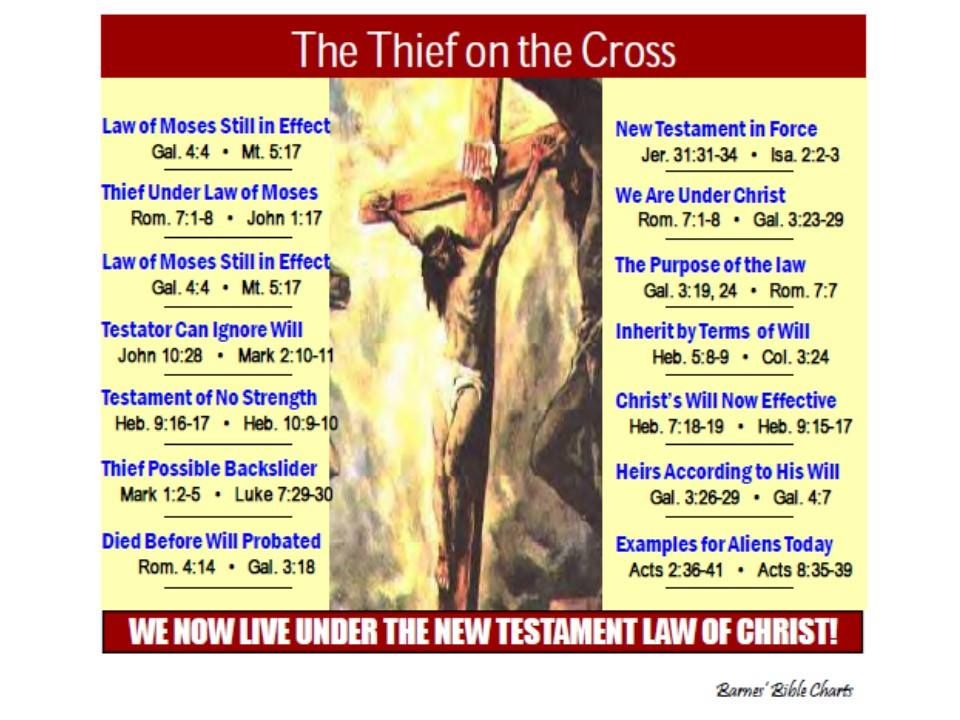
Reason #1– The Law of Moses was still in effect. Many folks are confused when reading the Gospels for it is commonly called, “The New Testament.” However, the majority of the gospel story in Matthew, Mark, Luke & John, take place while Jesus was alive and living as a Jew subject to the Law of Moses.

Jesus was born to a Jewish family under the Law [Mat 1; Luke 3; Ga 4:4], circumcised the 8th day [Lu 2:21], observed the Passover [Lu 2:41, 22:8-20], taught people to follow the Law [Matthew 5:23-24; 8:4], and followed the Law Himself [Matthew 5:17-18].

Under the Law of Moses, never was there a command to be baptized for the remission of sins. Sins were atoned for through the sacrifice of bulls; And he shall do with the bull as he did with the bull as a sin offering; thus he shall do with it. So the priest shall make atonement for them, and it shall be forgiven them. (Leviticus 4:20). The word “atonement” <kaphar> literally means “to cover” and is the same as in Gen 6:14 regarding covering the ark with pitch.

Nowhere in the Old Testament is the teaching that sins were totally removed. As we study our Bibles, we find in Hebrews 10:4 For it is not possible that the blood of bulls and of goats should take away sins. [Heb 10:11 …can never take away sins.] This system pointed to the sacrifice of Jesus on the cross and terminated at the cross [see above scripture references]

The thief on the cross lived during this Mosaic period, therefore was subject to the Law of Moses and it’s system of sacrifice through bulls and goats.

Which brings us to the second reason……

Reason #2 – Since Jesus lived under the Law of Moses, He followed that law. Of course, He would have no reason to offer a sacrifice on His own behalf [Hebrews 4:15] being without sin, He did teach those around Him to do it for themselves [Mt 8:1-4]

As we study, we find out that the sacrifices in the Law of Moses were pointing to the sacrifice that Jesus would offer of Himself. Galatians 3:19-27 teaches that the Law was a teacher to bring us to Christ.

The letter to the HEBREWS teaches us that it was Christ’s death that ended the Law and began the New Covenant. [Hebrews 8-10]. Paul, speaking about the death of Jesus in relationship to the Law of Moses, said “Blotting out the handwriting of ordinances that was against us, which was contrary to us, and took it out of the way, nailing it to his cross;” [Colossians 2:14]

Therefore, the THIEF on the cross never had a command to be baptized for the remission of sins. He died, having repented and placed his trust in the Christ, as EVERYONE UNDER THE LAW OF MOSES did when they obeyed the ordinances under that law.

Reason #3– The command to be baptized “for the remission of sins” was issued AFTER Jesus’ death, burial and resurrection. When Jesus was on the cross, He was fulfilling the Law of Moses, ending it, and bringing in the New Covenant. It was AFTER His death, burial and resurrection that He gave the great commission, “Go ye therefore, and teach all nations, baptizing them in the name of the Father, and of the Son, and of the Holy Ghost:” [Matthew 28:19]

FOR THE REMISSION OF SIN – This phrase is found in connection with baptism. It is particularly important to note how and when it was used;

  • Mt 26:28 For this is my blood of the new testament, which is shed for many for the remission of sins.
  • Ac 2:38 Then Peter said unto them, Repent, and be baptized every one of you in the name of Jesus Christ for the remission of sins, and ye shall receive the gift of the Holy Ghost.

These two verses show the connection between, baptism, Christ’s blood AND the remission of sins.

The other instances of this phrase are connected to the preaching of John “the Baptist”. When we study the scriptures, we find that John’s baptism never remitted any sins, for we read in Acts 19:1-5;

And it came to pass, that, while Apollos was at Corinth, Paul having passed through the upper coasts came to Ephesus: and finding certain disciples, 2 He said unto them, Have ye received the Holy Ghost since ye believed? And they said unto him, We have not so much as heard whether there be any Holy Ghost. 3 And he said unto them, Unto what then were ye baptized? And they said, Unto John’s baptism.  4 Then said Paul, John verily baptized with the baptism of repentance, saying unto the people, that they should believe on him which should come after him, that is, on Christ Jesus. 5 When they heard this, they were baptized in the name of the Lord Jesus.

CONCLUSION:
  • The thief on the cross lived AND DIED under the Law of Moses, as did Jesus our Lord, where there was NO COMMAND to be baptized.
  • The thief, had he been able to obey the command, was not under any obligation to obey it for it DIDN’T APPLY TO HIM at the time of his death, because the Law of Moses was the covenant in force at the time of the statement, “To day shalt thou be with me in paradise.”
  • The command to be baptized was given AFTER his death.