
Messages of Hope: Insights into the Minor Prophets

In the Old Testament, a collection of writings from twelve individuals collectively forms what is known as the “Minor Prophets.”

These books might be brief, but their messages are profoundly significant, providing lessons, that resonate deeply with the human experience.

As stated in Romans 15:4, “For whatsoever things were written aforetime were written for our learning, that we through patience and comfort of the scriptures might have hope.”

The minor prophets might occupy a small section in the Bible, but their teachings echo through centuries, resonating with timeless truths about justice, repentance, and hope. Through a study of these texts, believers today can deepen their understanding of God’s character and His desires for humanity, leading lives that look to Him for how to live.

The minor prophets consistently call for moral integrity. Amos vehemently condemns the exploitation of the poor and the perversion of justice under the Law of Moses, while Micah famously declares, “He has shown you, O mortal, what is good. And what does the LORD require of you? To act justly and to love mercy and to walk humbly with your God” (Micah 6:8). This push towards Moral Integrity and Justice is as relevant today as it was then, reminding us that God requires a morally upright people under the covenant of Christ (2Pet 1:5-11).

The minor prophets powerfully illustrate the immutability of God’s word—His unchanging truth and unwavering promises. Figures like Hosea and Malachi declared God’s steadfast love and justice amidst Israel’s unfaithfulness, underscoring His consistent character and eternal decrees. In the New Testament, this theme resonates in Matthew 24:35, where Jesus affirms, “Heaven and earth will pass away, but my words will never pass away.”

A significant portion of the prophetic messages involves warnings about impending judgments due to the people’s unfaithfulness and idolatry. Prophets like Hosea and Zephaniah offer vivid descriptions of the consequences that await if the nation does not turn back to God. Yet, even within the stark warnings, there is always a call to repentance—a plea for turning away from wrong and returning to God. This pattern underscores a profound truth about God’s character: His justice is tempered with mercy, and His corrections are aimed at restoration, not destruction. “The Lord is not slack concerning his promise, as some men count slackness; but is longsuffering to us-ward, not willing that any should perish, but that all should come to repentance” (2Peter 3:9).

Despite the frequent messages of doom, the minor prophets are also vehicles of incredible hope. They foretell the coming of a Messiah, and the establishment of a kingdom characterized by peace and mercy. For example, Zechariah speaks of a future King who will rule in righteousness and bring peace to the nations (Zechariah 9:9-10). These prophecies provide evidence that Jesus is the Christ, the Son of the Living God, and that the church He built has always been in the plan of God.

The minor prophets, like Micah and Zechariah, emphasize the righteousness and holiness of God, calling for justice and moral purity among His people. They highlight that God detests sin because it is contrary to His holy nature. In the New Testament, this theme is echoed in 1Peter 1:15-16, where believers are exhorted to be holy in all their conduct because God is holy.

Agape,

Spencer
Do you love your enemies?

you LOVE your ENEMY?

But I say unto you which hear, Love your enemies, do good to them which hate you, Bless them that curse you, and pray for them which despitefully use you.”    (Luke 6:27-36).

All this month we’ve been talking about LOVE. Here’s a recap.

Love the LORD week 1;

First, GOD IS LOVE. (1John 4:8)

Second, GOD LOVES. (1John 4:9)

Third, HE LOVED US FIRST. (1John 4:19)

Last, GOD DIED FOR US. (1John 3:16)

Love OTHERS week 2:

Love The Brethren. (John 13:34)

Love Others. (1Thess 3:12)

Love to Visit the needy. (Jas 1:27)

Love our Enemies. (Luke 6:27)

Love His Appearing week 3:

We Look for His return. (Luke 12:37)

We Obey Him. (Luke 6:46)

We add Virtue, etc. (2Pet 1:5-11)

We Endure this life. (Matt 10:24)

This week we’ll look at the Lord’s command to Love our Enemy.

It’s unambiguous that we are to love our enemies. Who our enemies are varies. As much as it lies within us, we try to live at peace with all men (Rom 12:18), but there are some that just don’t like us, are rude, mean, or antagonistic to the church. It matters not why; Jesus taught us to LOVE our ENEMIES.

How are we to LOVE an ENEMY?

First, with EMPATHY. We need to have empathy for we were once enemies to the Lord.

For if, when we were enemies, we were reconciled to God by the death of his Son, much more, being reconciled, we shall be saved by his life” (Romans 5:10).

And such were some of you: but ye are washed, but ye are sanctified, but ye are justified in the name of the Lord Jesus, and by the Spirit of our God” (1Cor 6:9-11).

No matter what a person may say to provoke us, we must remain NICE. The anger of man does not produce the righteousness of God (Jas 1:20)

And if ye do good to them which do good to you, what thank have ye? for sinners also do even the same” (Luke 6:33).

This teaching doesn’t mean we put ourselves in harm’s way. Paul avoided many attacks on his life by the Jews, but he still desired they be saved.

Brethren, my heart’s desire and prayer to God for Israel is, that they might be saved” (Rom 10:1).

This next one is difficult, but we need to have a heart to EVANGELIZE.

Some will, some wont, but you’ll never know until you try. We seldom think about, nor even desire to teach an enemy the truth of the gospel.

I ask myself this question whenever interacting with an “enemy;” Could I invite them to worship despite our conflict? Look at this example:

Jesus sent Ananias to Saul of Tarsus to teach him the gospel. “Then Ananias answered, Lord, I have heard by many of this man, how much evil he hath done to thy saints at Jerusalem” (Acts 9:10-16).

Within the command to love our enemy is to be Merciful.

Be ye therefore merciful, as your Father also is merciful” (Luke 6:36).

Merciful means… compassionate, experiencing deep pity (lamentation) as God has for people who look to Him for help in their difficult situations. Consider the example of the stolen servant girl who told Naaman of a cure for leprosy. (2Kings 5:1-3). “Would God my lord were with the prophet that is in Samaria! for he would recover him of his leprosy.”

Finally, and very importantly, YOUR forgiveness depends on it. Let’s read from our passage in Luke:

For if ye love them which love you, what thank have ye? for sinners also love those that love them. And if ye do good to them which do good to you, what thank have ye? for sinners also do even the same. And if ye lend to them of whom ye hope to receive, what thank have ye? for sinners also lend to sinners, to receive as much again. But love ye your enemies, and do good, and lend, hoping for nothing again; and your reward shall be great, and ye shall be the children of the Highest: for he is kind unto the unthankful and to the evil” (Luke 6:32-35). To love only those that love us is no better than the enemies themselves. Look at what Jesus taught:

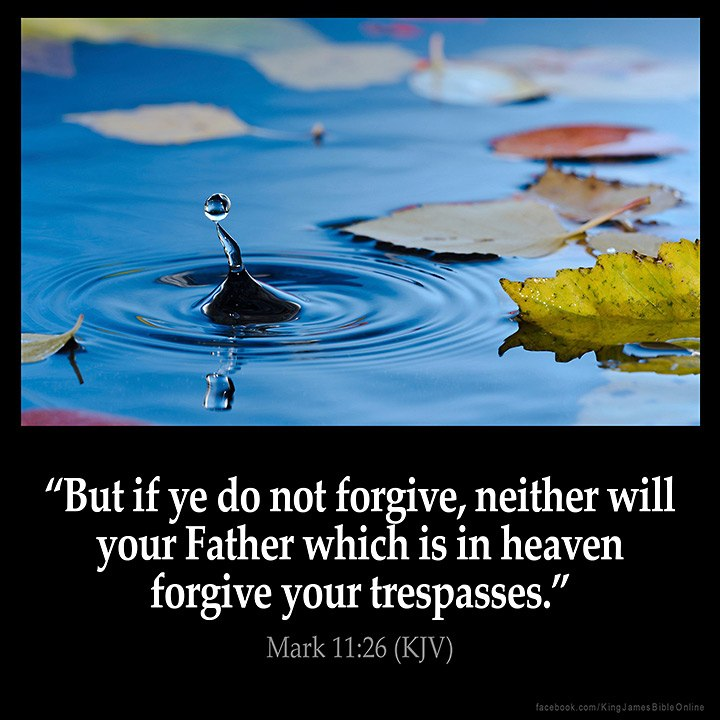
For if ye forgive men their trespasses, your heavenly Father will also forgive you: But if ye forgive not men their trespasses, neither will your Father forgive your trespasses

(Matt 6:14-15; Mt 18:35; Mr 11:25-26; Eph 4:32; Col 3:13).

People mistake these concepts as having to take abuse, pain, etc. That’s a mistake. We have authority to avoid our enemies attacks, if we do it without sin, and without denying the Lord.

Think about the Apostle Paul in Acts 23:12-31. Some of the very people he was trying to reach with the Gospel had sworn to lie in wait for him so they would have occasion to ambush and kill him. He loved those in Judaism who were persecuting him (Rom 10:1-3), but that didn’t mean he had to be killed if it could be avoided (see, Acts 9:25; 2Cor 11:33).

Dearly beloved, avenge not yourselves, but rather give place unto wrath: for it is written, Vengeance is mine; I will repay, saith the Lord. Therefore if thine enemy hunger, feed him; if he thirst, give him drink: for in so doing thou shalt heap coals of fire on his head. Be not overcome of evil, but overcome evil with good

(Rom 12:19-21).

–Spencer