
Faith, Hope, and Love: The Keys to Overcoming Troubles and Troublers

Life can throw some heavy punches, can’t it? For the believers in Thessalonica, those punches came in the form of persecutions, false teachings, and even some within their own community slacking off and stirring up trouble. Yet, in his second letter to them, Paul points to three timeless virtues (faith, hope, and love) as the keys to standing firm, no matter what others say or do. Rooted in knowing God’s word, these qualities enabled the Thessalonians to rise above their troubles and the “lowness” of their troublers.

Chapter 1: Enduring Through Faith, Hope, and Love

The Thessalonian church was under fire, literally and figuratively. They faced “persecutions and tribulations” (2 Thessalonians 1:4, KJV), likely from hostile neighbors or authorities who opposed their faith. Yet Paul couldn’t stop bragging about them: “We ourselves glory in you in the churches of God for your patience and faith in all your persecutions and tribulations that ye endure” (1:4). Their faith wasn’t just a Sunday morning nod to God; it was a steadfast trust in His promises, even when the world seemed against them. That faith, Paul says, was “growing exceedingly” (1:3), and their love for one another was increasing right alongside it.

But what kept them going? HOPE. Paul paints a vivid picture of hope tied to God’s justice and Christ’s return: “Seeing it is a righteous thing with God to recompense tribulation to them that trouble you; And to you who are troubled rest with us, when the Lord Jesus shall be revealed from heaven with his mighty angels” (1:6-7). The promise that God would deal with their troublers and grant them relief gave them a reason to hold on. This hope wasn’t wishful thinking, it was grounded in God’s word, which assured them that their suffering was “a manifest token of the righteous judgment of God” (1:5). Knowing God’s word fueled their faith to endure, their hope to look forward, and their love to care for one another, even under pressure. Paul prayed for this to continue, asking God to “fulfil all the good pleasure of his goodness, and the work of faith with power” (1:11).

So, what’s the lesson? When trouble comes (whether it’s people attacking your faith or life’s hardships piling up) lean into faith, hope, and love. Trust God’s word, hold fast to the promise of Christ’s return, and keep loving those around you. That’s how you stay faithful, no matter what others do.

Chapter 2: Standing Firm Against Deception

The troubles didn’t stop with persecution. Someone was spreading lies, maybe even claiming Paul’s authority, saying the day of the Lord had already come. This shook the Thessalonians, leaving them “troubled” and “shaken in mind” (2 Thessalonians 2:2). Imagine the confusion, thinking you missed the biggest event in history! But Paul steps in with clarity, urging them not to be “soon shaken in mind, or be troubled, neither by spirit, nor by word, nor by letter as from us” (2:2). He reminds them of God’s word, which he’d already taught: the day of the Lord won’t come until the “man of lawlessness” is revealed (2:3-4) and destroyed by Christ’s return (2:8).

Here’s where faith, hope, and love shine again. Their faith in the truth (God’s word) kept them from falling for deception. Paul calls them “brethren beloved of the Lord” (2:13), chosen for salvation “through sanctification of the Spirit and belief of the truth” (2:13; see John 17:17). That belief anchored them. Hope came from knowing Christ would return to set things right: “The Lord Jesus Christ… shall destroy with the brightness of his coming” (2:8). This hope steadied them against false alarms. And love? Paul prays for their hearts to be comforted and established “in every good word and work” (2:16-17), a call to keep loving and serving each other despite the chaos.

The troublers spreading lies were low, trying to unsettle God’s people. But Paul’s answer is clear: “Therefore, brethren, stand fast, and hold the traditions which ye have been taught, whether by word, or our epistle” (2:15). Stay rooted in God’s word. Let faith keep you grounded, hope keep you looking up, and love keep you moving forward. That’s how you abound, no matter what others say.

Chapter 3: Overcoming Internal Troubles

If external persecution and false teachings weren’t enough, the Thessalonians had trouble within their own ranks. Some believers were “walking disorderly,” refusing to work and meddling as busybodies (2 Thessalonians 3:6, 11). This idleness wasn’t just laziness, it disrupted the work of the church. Paul doesn’t mince words: “If any would not work, neither should he eat” (3:10). Yet even this discipline is rooted in love, as he urges the church to correct the idle “as a brother” (3:15), not an enemy.

Faith shows up in Paul’s confidence that the Thessalonians would stay faithful: “We have confidence in the Lord touching you, that ye both do and will do the things which we command you” (3:4). Their hope was tied to God’s word, which provided clear instructions for living, and to the promise of God’s peace: “Now the Lord of peace himself give you peace always by all means” (3:16). Love guided their response to the troublers within, balancing discipline with care, and Paul prayed that “the Lord direct your hearts into the love of God, and into the patient waiting for Christ” (3:5).

The idle were acting low, causing trouble by neglecting their responsibilities. But Paul calls the church to a higher standard: “Be not weary in well doing” (3:13). By staying faithful to God’s word (working diligently, loving one another, and holding fast to His commands) they could overcome even internal challenges.

Tying It All Together

What do we learn from the Thessalonians? Troubles and troublers come in many forms: persecutors who mock your faith, deceivers who twist the truth, or even fellow believers who let you down. But faith, hope, and love, rooted in knowing God’s word, are your strength. Faith keeps you trusting God’s truth, like the Thessalonians’ belief in the gospel (2:13) and obedience to Paul’s teaching (3:4). Hope lifts your eyes to God’s vengeance (1:6-9, 2:8) and Christ’s return (1:7, 2:8), assuring you that troubles won’t have the last word. Love binds you to your brothers and sisters, growing even in tough times (1:3) and guiding how you correct the wayward (3:15).

Knowing God’s word is the thread that ties it all together. It’s the foundation for faith, the source of hope, and the guide for love. The Thessalonians’ troubles didn’t define them, their faithfulness did. They stayed abounding, growing in faith and love (1:3), standing firm against lies (2:15), and doing good despite setbacks (3:13). So, when others try to drag you down with their words or actions, don’t stoop to their level. Hold fast to God’s word. Let faith, hope, and love keep you faithful and abounding, just as they did for the Thessalonians.
What to EXPECT in the New Year

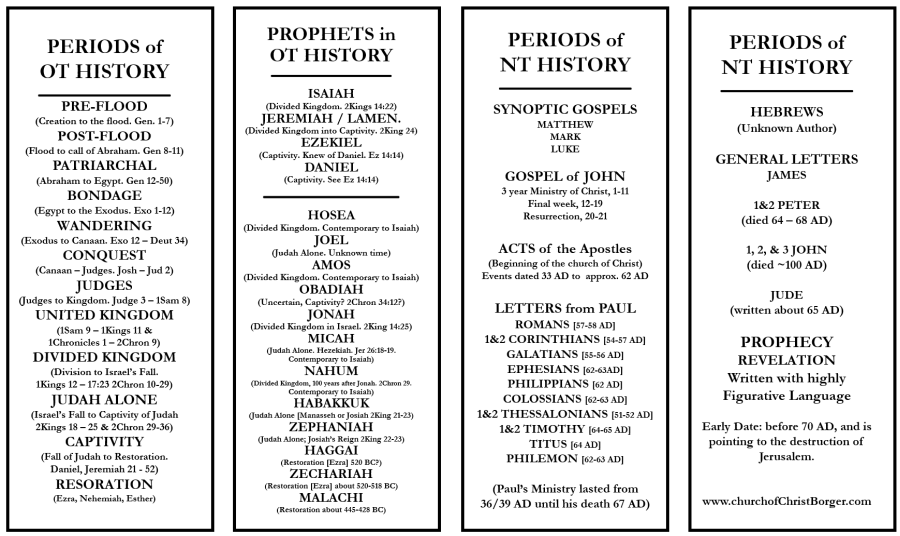
Bible Reading Bookmarks for the Old & New Testament

The thing that hath been, it is that which shall be; and that which is done is that which shall be done: and there is no new thing under the sun.” (Ecclesiastes 1:9).

A large corporation brought in a consultant to give them a forecast about the next 5 years. As they surrounded the conference table awaiting his prognostication, the consultant said, “everything will be about the way it’s always been.”

There will be weather, seasons, traffic, births, deaths, holidays, elections, etc. There will be good times and low ones. That is the record of history. The sad condition of mankind is that many live expecting it always to be different, to always be better, and are unhappy and bitter when it’s not.

The preacher wrote, “there is no new thing under the sun.” We can reasonably predict what life will be like next year.

We will never predict the details, but we can reasonably expect certain things.

We all should be expecting to pile up a TREASURE. We need money & stuff for our earthly needs, and to share with those in need (Eph 4:28). We should expect those things if we’re doing those things God has prescribed in His word. A word of caution, we may become distracted from serving God and will be heaping up treasure against ourselves in judgment. “Your gold and silver is cankered; and the rust of them shall be a witness against you, and shall eat your flesh as it were fire. Ye have heaped treasure together for the last days” (James 5:3; cf. Matt 6:19-21).

We as Christians ought to expect to bear our Cross. “Whosoever will come after me, let him deny himself, and take up his cross, and follow me” (Mark 8:34). This is about commitment to the Cause of Christ and not about some personal pain or shortcoming.

We also ought to expect more wisdom, but we must seek it. Education is one thing nobody can take away from us. Divine wisdom is the most precious of all (Prov 8:1-11).

Christians ought to expect Persecution, but we think it strange even though the Holy Spirit said to expect it (2Tim 3:12).

Everyone ought to expect High & Low eXtremes (Ecc 3:1-10). Sadly, folks expect things to always be better than they are with no pain whatsoever. That condition is in Heaven, and we ought to see the pain in this life as motivation to qualify for the next.

Finally, we all ought to expect Eternity to begin for us. Whether we meet Jesus after our death, or we remain alive when he returns, there is an Eternal hereafter. Where do you want to spend your ETERNITY? “Then we which are alive and remain shall be caught up together with them in the clouds, to meet the Lord in the air: and so shall we ever be with the Lord” (1Thess 4:17).

Agape, Spencer

We invite you to visit one of our services at the Franklin & Juniper st church of Christ in Borger, Texas.

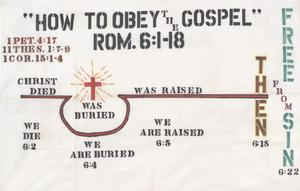
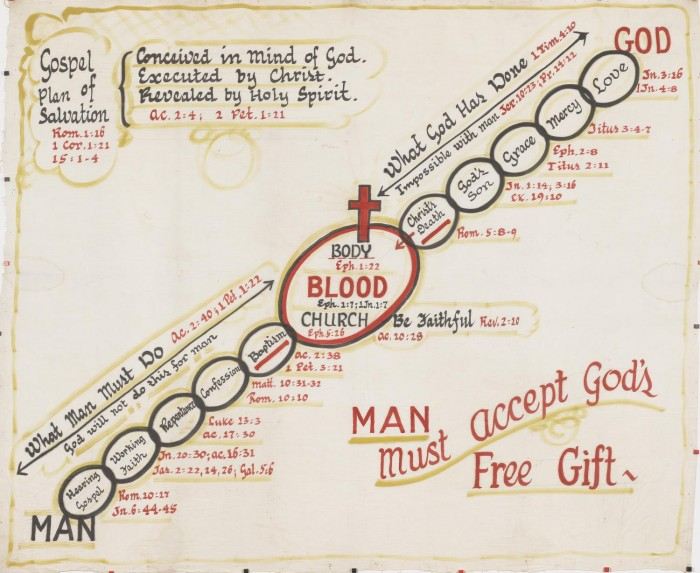
6 things to expect when obeying the GOSPEL.

6 things to expect when you obey the GOSPEL. (3 Positives & 3 negatives)

What comes from obeying the GOSPEL?

3 POSITIVE THINGS:

Godly Blessings. Acts 2:38-39; Eph 1:3; Jas 1:17

For the promise is unto you, and to your children, and to all that are afar off, even as many as the Lord our God shall call.”

Blessed be the God and Father of our Lord Jesus Christ, who hath blessed us with all spiritual blessings in heavenly places in Christ:”

Optimism, hope for the future. Heb 11:6; 1Peter 1:3; 2Tim 4:8

Blessed be the God and Father of our Lord Jesus Christ, who according to His abundant mercy has begotten us again to a living hope through the resurrection of Jesus Christ from the dead,”

Henceforth there is laid up for me a crown of righteousness, which the Lord, the righteous judge, shall give me at that day: and not to me only, but unto all them also that love his appearing.”

Salvation in Christ. 1Pet 3:21; Heb 5:8-9

The like figure whereunto even baptism doth also now save us (not the putting away of the filth of the flesh, but the answer of a good conscience toward God,) by the resurrection of Jesus Christ:”

And being made perfect, he became the author of eternal salvation unto all them that obey him;”

3 NEGATIVE THINGS:

Persecution. 2Tim 3:12

Yea, and all that will live godly in Christ Jesus shall suffer persecution.”

Expectation of trouble from the world. 1Pet 4:4, 12

Wherein they think it strange that ye run not with them to the same excess of riot, speaking evil of you. … Beloved, think it not strange concerning the fiery trial which is to try you, as though some strange thing happened unto you:

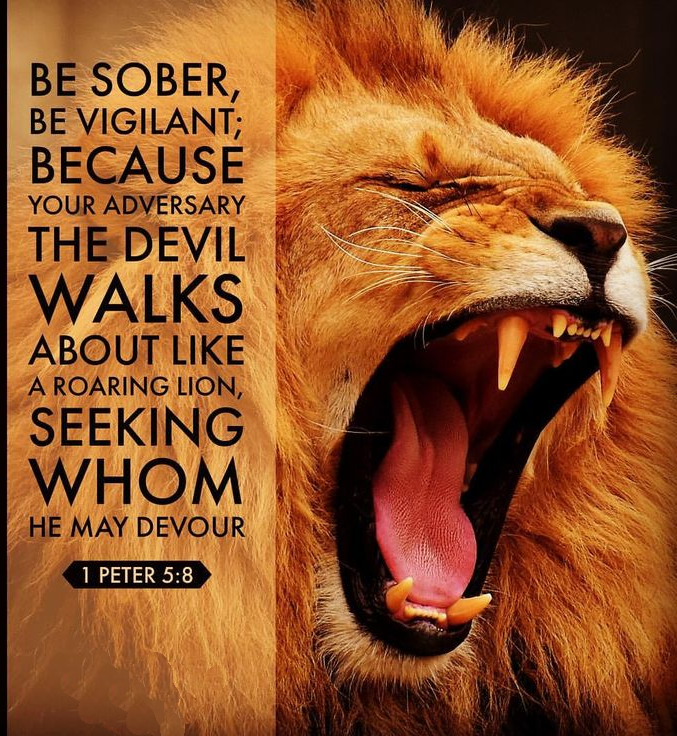
Lion roaring & seeking whom do devour. 1Pet 5:8

Be sober, be vigilant; because your adversary the devil, as a roaring lion, walketh about, seeking whom he may devour:”

cf. “Therefore it is no great thing if his ministers also be transformed as the ministers of righteousness; whose end shall be according to their works.” (2Cor 11:15)

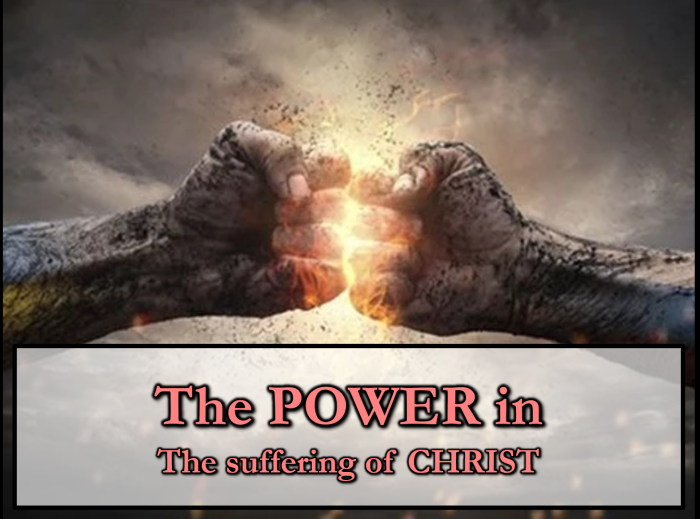
Lessons from 1 Peter: the POWER of Christ

POWER of The SUFFERING Christ in 1 PETER.

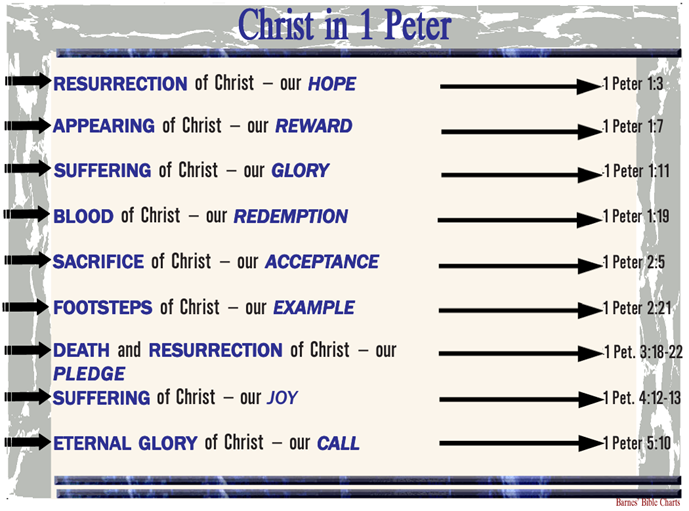
Every chapter of 1Peter has a reference to the suffering of Christ. By looking at these we can see the POWER of His suffering as we face similar difficulties in the Christian’s life.

  1. P-PRECIOUS. 1:19 Precious Blood Shed.
    1. Type Passover Ex 12:5; Joh 1:29,36; 1Co 5:7;
    1. Purchased with Acts 20:28;
    1. forgiveness, redemption Eph 1:7;
    1. His own blood Heb 9:12,14;
  2. O-OBSERVE (follow) His Example. 2:21 Example to follow.
    1. deny self, take up cross Mt 16:24;
    1. leaving an example Joh 13:15;
    1. this mind Php 2:5;
    1. living godly in Christ 2Ti 3:12;
    1. walk as He walked. 1Jo 2:6
  3. W-WATER. 3:18-22 Through Christ’s DBR, through Water.
    1. DEATH. Ro 5:6 in due time Christ died for the ungodly.
    1. BURIAL. 1Co 15:4 And that he was buried,
    1. ROSE AGAIN, 1Cor 15:4; Ac 2:32 This Jesus hath God raised up, whereof we all are witnesses.
    1. ANTITYPE. Noah’s Ark. saved by water.
  4. E-EXCEEDING JOY. 4:12-16 Exceeding Joy when Glory revealed after suffering.
    1. Ac 5:41 And they departed from the presence of the council, rejoicing that they were counted worthy to suffer shame for his name.
    1. 2Tim 2:12 If we suffer, we shall also reign with him:
    1. Mat 5:11 Blessed are ye, when men shall revile you, and persecute you, and shall say all manner of evil against you falsely, for my sake. 12 Rejoice, and be exceeding glad: for great is your reward in heaven: for so persecuted they the prophets which were before you.
  5. R-REVEALED. 5:1-4 Returning, Revealed, Really Happened.
    1. v1; Glory that shall be REVEALED
    1. v2; but of a ready mind;
    1. v3; responsibility, ensample; entrusted with.
    1. v4; ye shall receive a crown of glory that fadeth not away.

CALLED out of darkness

The term ‘church’ (ekklesia) literally means, ‘the called out.’ It is a derivative of the word ‘kaleo’ which means a ‘calling out.’

I bring this to you attention because this is the word Peter uses in his 1st letter to us, the church.

But ye are a chosen generation, a royal priesthood, an holy nation, a peculiar people; that ye should shew forth the praises of him who hath CALLED YOU OUT of darkness into his marvellous light” (1Peter 2:9; emph mine seb).

Peter’s inspired letter says much about being separate, set apart, and different from the rest of the world. The comparison in this verse is light vs darkness.

This calling is to be heeded, but how? To understand what Christian must do to stay out of the darkness and be in the light can be seen in a study of chapter two.

Before we begin, it’s important to remember that the calling by God occurs through the word preached. “Whereunto he called you by our gospel, to the obtaining of the glory of our Lord Jesus Christ” (2Thess 2:14). We become Christians by obeying the Gospel. “Know ye not, that so many of us as were baptized into Jesus Christ were baptized into his death? Therefore we are buried with him by baptism into death: that like as Christ was raised up from the dead by the glory of the Father, even so we also should walk in newness of life” (Rom 6:3-4; 2Thess 2:8-9; 1Cor 15:1-4). After responding to this call, we can then continue to answer the call to walk in the light as He is in the light (cf. 1John 1:7).

With this background, we can now proceed to answer how to answer the call to come out of darkness.

CAST OFF

Beginning at verse one of chapter two we read, “Wherefore laying aside all malice, and all guile, and hypocrisies, and envies, and all evil speakings…” From this we see that we are to CAST OFF worldly behaviors. The Christian that is walking in the light has nothing to do with worldliness and sin. Paul wrote, “But fornication, and all uncleanness, or covetousness, let it not be once named among you, as becometh saints” (Eph 5:3). Paul also described the putting off as a putting to death these worldly attributes.

APPETITE for the word

Continuing on, Peter gives the source of knowing what is to be cast off and what our attitude should be toward it. “As newborn babes, desire the sincere milk of the word, that ye may grow thereby” (1Peter 2:2). The revealed word of God is the source book of information to teach us the difference between light and darkness, and that we need to develop an APPETITE for it as much as a newborn baby cries out for milk when it’s hungry. What a vivid description for us to see how vital the bread of life is to our growth.

LIVING STONES

From here, Peter describes who the called are. “To whom coming, as unto a LIVING STONE, disallowed indeed of men, but chosen of God, and precious, Ye also, as LIVELY STONES, are built up a spiritual house, an holy priesthood, to offer up spiritual sacrifices, acceptable to God by Jesus Christ” (1Pet 2:4-5, emph mine seb). This is important to understand for the Christian. Especially as we face persecution for being Christians. Peter will point this out in the remainder of this letter. We are the LIVING STONES of the Spiritual Temple of God.

LIGHT BEARER

Another thing to notice for those that walk in the light. We are to be LIGHT BEARERS to the dark world. “But ye are a chosen generation, a royal priesthood, an holy nation, a peculiar people; that ye should shew forth the praises of him who hath called you out of darkness into his marvellous light” (1Peter 2:9-12). Notice that we are to “shew forth the praises of Him who hath called you out.” We can do this directly through preaching, and also through our actions in the world. Note verse 12, “they may by your good works, which they shall behold, glorify God in the day of visitation.” The Christian that is CALLED out of darkness shines forth the Light of Christ in their words and deeds (cf. Col 3:17).

EXAMPLE

This walking in the Light becomes an EXAMPLE for others to observe and to follow. Peter lists several areas in which the Christian can shine the Light, “which they shall behold, glorify God in the day of visitation” (1Peter 2:13-17)

DO GOOD

Finally, those that are called out of darkness are to be DO GOODERS. People that continue to do good despite persecution. “For what glory is it, if, when ye be buffeted for your faults, ye shall take it patiently? but if, when ye do well, and suffer for it, ye take it patiently, this is acceptable with God” (1Peter 2:18-25).

But this is not a do as I say, not as I do command. It is a “do as I did” command. Jesus Himself being the standard for those called to follow. “For even hereunto were ye called: because Christ also suffered for us, leaving us an example, that ye should follow his steps: Who did no sin, neither was guile found in his mouth: Who, when he was reviled, reviled not again; when he suffered, he threatened not; but committed himself to him that judgeth righteously: Who his own self bare our sins in his own body on the tree, that we, being dead to sins, should live unto righteousness: by whose stripes ye were healed” (1Peter 2:21-24, emph mine seb).

It’s interesting to note that chapter two is not the only place in this letter that talks about our being CALLED (see 1Pet 1:15; 3:9; 5:10). The last one is given just before the closing greetings.

But the God of all grace, who hath called us unto his eternal glory by Christ Jesus, after that ye have suffered a while, make you perfect, stablish, strengthen, settle you.”

(1Peter 5:10)

This gives us comfort as we suffer persecution because we walk in the Light. It comforts because the suffering is only temporary, but glory is Eternal!

Spencer

Spencer is an evangelist of the church of Christ in Borger Texas. He has been working with the congregation on Franklin and Juniper since 2014.