The Benefits of Reading a Physical Bible: Why REAL Matters
In an age where smartphones dominate, many turn to digital Bible apps for convenience. While these apps are valuable and not sinful, there are unique benefits to reading a physical Bible.
Read Without Pop-Up Distractions from our phones. A physical Bible offers a focused reading experience free from the interruptions of notifications, pop-up ads, or tempting app switches. When you open a physical Bible, you immerse yourself in the text without the risk of a text message or social media alert pulling you away. This uninterrupted time fosters deeper reflection and connection with the Word, allowing for a more contemplative and distraction-free engagement with Scripture.
Evangelism Effectiveness There’s a powerful psychological impact when sharing the Gospel using a physical Bible. Flipping to a passage and showing someone the words on a page carries a tangible weight that a phone screen often lacks. The physical act of turning pages and pointing to verses can make the message feel more authoritative and personal, enhancing evangelism efforts. It signals reverence for the text and invites others to engage with it in a meaningful way.
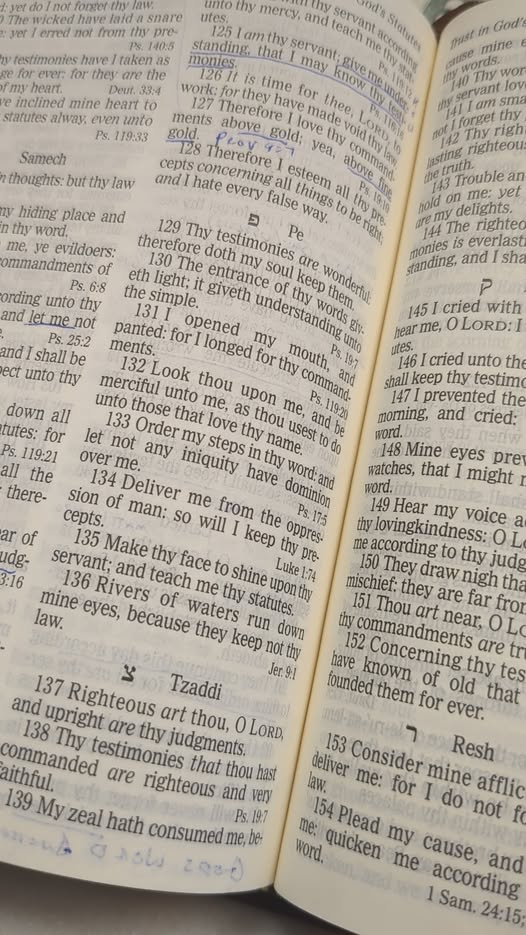
Annotate, Highlight, & Underline. A physical Bible becomes a personal treasure through annotation. Underlining, highlighting, and jotting notes in the margins allow readers to mark insights, prayers, or revelations directly on the page. These annotations create a unique record of one’s spiritual journey, something a digital Bible struggles to replicate with the same tactile intimacy. A well-worn, marked-up Bible tells a story of growth and connection that’s deeply personal.
Look Up, & Look at Multiple Passages at one time. Comparing passages or cross-references is seamless with a physical Bible. You can flip between pages, bookmark multiple sections, or even lay the book open to view two passages side by side. Digital apps often make it cumbersome to switch between two, three, or four passages, requiring multiple taps or split screens that disrupt the flow. A physical Bible’s layout makes it easier to explore connections across Scriptures, enriching study and understanding.
While digital Bibles are practical and accessible, the tactile and focused nature of a physical Bible offers distinct advantages. By embracing the REAL benefits we can deepen our engagement with God’s Word in a way that feels timeless and profound.
How Long Would It Take to Teach the Whole Bible Three Times a Week?
While planning the Bible studies for this congregation, I wondered how long it would take to teach the entire Bible in depth in only our 3 sessions per week?
The schedule in question was familiar: two Bible classes each week, each about 45 minutes long but with an introduction, prayer, discussion, and summary that left roughly 30 minutes for actual material. The third session would be a sermon (possibly as long as 45 minutes) but in reality, I only have about 30 minutes. That gave me three half-hour teaching slots per week to teach.
There are several common methods of teaching Scripture, each has its own pace. The first and perhaps most obvious is the EXPOSITORY method; going chapter-by-chapter in order. At first glance, this seems easy to measure: 1,189 chapters, one per session, for 1,189 classes; about 7.6 years at three sessions per week. But here’s the reality: many chapters require a minimum of two or even three sessions to capture the fullness of their meaning. You could go chapter-per-session if you only did an overview, but true depth would extend the timeline significantly. Recognizing this reality, a book-by-book overview may pick up the pace, but no real depth will be accomplished.
Other methods would take different amounts of time. A topical study, covering 100 major subjects like baptism, love, faith, or the church and giving each three sessions, would total 300 lessons; just under 2 years. Character studies (looking at lives like Abraham, David, Peter, and Paul) might only take around 100 sessions if you covered about 50 people with two classes each. That’s less than a year. Thematic or doctrinal studies, following threads like covenant, kingdom, or grace from Genesis to Revelation, would run about 120 sessions, taking nine months. A chronological narrative, telling the Bible’s story in the order events happened, would be more ambitious: about 250 sessions, or 1.6 years.
If you stacked all these methods back-to-back without repeating material, the grand total would be 2,105 sessions. That’s about 13½ years of steady teaching (three times a week, every week). Start now and finish somewhere in the late 2030s. But here’s the twist: this assumes each important doctrine, like salvation in Christ, IS GIVEN ONLY ONCE. That would be like a wilderness wandering of teaching and never helping anyone actually enter the Promised Land. If salvation (and many other vital subjects) is left as a single stop along the way, we risk people hearing the gospel once every few years.
The truth is, many of these methods overlap, and rightly so. Some themes, especially the gospel of Christ, must resurface again and again no matter which teaching plan is in use. Whether chapter-by-chapter, book-by-book, or topic-by-topic, there must be repeated lessons on repentance, faith, and obedience. Yes, we could make a plan that takes a decade or more to cover everything, but if we’re truly guiding people toward salvation in Christ, we won’t wait until year seven to bring up the cross again.
Knowing the Voice of Jesus: The Written Word as the Sole Means
In John 10:4, Jesus, the Good Shepherd, declares, “And when he putteth forth his own sheep, he goeth before them, and the sheep follow him: for they know his voice.” Believers today do not hear an audible voice nor witness the signs Jesus performed during His earthly ministry, as those signs, per John 20:30-31, were recorded so that we might believe without seeing them firsthand: “And many other signs truly did Jesus in the presence of his disciples, which are not written in this book: But these are written, that ye might believe that Jesus is the Christ, the Son of God; and that believing ye might have life through his name.” The implication is that the signs done then will not be repeated; instead, we know Jesus’ voice through the written word. The apostles’ teaching, the New Testament history of Jesus, and obedience to Christ all converge in the written word as the sole means to know His voice and the truth.
We will know His voice by keeping the apostles’ teaching. The apostles, guided by the Holy Spirit, delivered Jesus’ teachings, preserved in Scripture. John 16:13 promises, “When he, the Spirit of truth, is come, he will guide you into all truth.” Their doctrine, recorded in the written word, allows us to hear Jesus. Later Jesus prays for the apostles in John 17:20, “Neither pray I for these alone, but for them also which shall believe on me through their word;” This shows us that people will believe through their inspired preaching and teaching which is now recorded for all in the New Testament. Acts 2:42 shows early believers “continued stedfastly in the apostles’ doctrine,” while Galatians 1:11-12 clarifies, “The gospel which was preached of me is not after man… but by the revelation of Jesus Christ.” These inspired writings are our access to His voice today.
We will know His voice by the New Testament history of Jesus Christ. The Gospels record Jesus’ life and works, but the signs He performed were for those who saw them personally. John 20:29 reinforces this: “Blessed are they that have not seen, and yet have believed.” We know Him through the written record, as Luke 1:1-4 states: “To set forth in order a declaration… that thou mightest know the certainty of those things.” The written history in Scripture conveys His voice to us. John 20:31a, “But these are written, that ye might believe that Jesus is the Christ, the Son of God;”
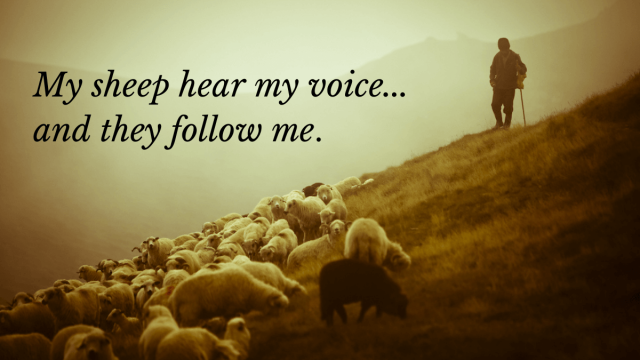
We will know His voice by obedience to Christ. Obeying Jesus’ commands, found in Scripture, confirms we hear His voice. John 10:27 says, “My sheep hear my voice… and they follow me.”1 John 2:4 warns, “He that saith, I know him, and keepeth not his commandments, is a liar, and the truth is not in him.”John 14:23 adds, “If a man love me, he will keep my words: and my Father will love him.” Obedience to the written word ensures we know Him.
The written word is the only means by which we know Jesus’ voice and the truth. The signs Jesus performed, as recorded in John 20:30-31, were for those who saw them, but we believe through what is written. Jesus’ life is in the word (John 5:39: “Search the scriptures… they are they which testify of me”). The apostles’ teachings come from the word (2 Peter 1:21). The Holy Spirit revealed the word (2 Timothy 3:16). While preachers may proclaim the gospel (Romans 10:14), they must teach from the written word. 2 John 1:9 emphasizes, “He that abideth in the doctrine of Christ, he hath both the Father and the Son.” The written word alone enables us to hear and follow the Good Shepherd.
We will know His voice by keeping the apostles’ teaching. The apostles, guided by the Holy Spirit, delivered Jesus’ teachings, preserved in Scripture. John 16:13 promises, “When he, the Spirit of truth, is come, he will guide you into all truth.” Their doctrine, recorded in the written word, allows us to hear Jesus. After Jesus then prays for the apostles, He then prays this in John 17:20, “Neither pray I for these alone, but for them also which shall believe on me through their word;” This shows us that people will believe through their inspired preaching and teaching which is now recorded for all in the New Testament. Acts 2:42 shows early believers “continued stedfastly in the apostles’ doctrine,” while Galatians 1:11-12 clarifies, “The gospel which was preached of me is not after man… but by the revelation of Jesus Christ.” These inspired writings are our access to His voice today.
We will know His voice by the New Testament history of Jesus Christ. The Gospels record Jesus’ life and works, but the signs He performed were for those who saw them personally. John 20:29 reinforces this: “Blessed are they that have not seen, and yet have believed.” We know Him through the written record, as Luke 1:1-4 states: “To set forth in order a declaration… that thou mightest know the certainty of those things.” The written history in Scripture conveys His voice to us.
We will know His voice by obedience to Christ. Obeying Jesus’ commands, found in Scripture, confirms we hear His voice. John 10:27 says, “My sheep hear my voice… and they follow me.”1 John 2:4 warns, “He that saith, I know him, and keepeth not his commandments, is a liar, and the truth is not in him.”John 14:23 adds, “If a man love me, he will keep my words: and my Father will love him.” Obedience to the written word ensures we know Him.
In conclusion, the written word is the only means by which we know Jesus’ voice and the truth. The signs Jesus performed, as recorded in John 20:30-31, were for those who saw them, but we believe through what is written. Jesus’ life is in the word (John 5:39: “Search the scriptures… they are they which testify of me”). The apostles’ teachings come from the word (2 Peter 1:21). The Holy Spirit revealed the word (2 Timothy 3:16). While preachers may proclaim the gospel (Romans 10:14), they must teach from the written word. 2 John 1:9 emphasizes, “He that abideth in the doctrine of Christ, he hath both the Father and the Son.” The written word alone enables us to hear and follow the Good Shepherd.
Not Just another Bible Reading plan you won’t finish.
It’s that time of year again when we encourage folks to find the right Bible reading plan that works for them. If you’ve ever struggled to read the Bible consistently, having a structured plan can make all the difference.
Before we introduce the 2025 plan, let’s take a moment to reflect on why a regular approach to Bible reading is so valuable.
The Word of God is our spiritual nourishment (Matthew 4:4), and regular reading allows us to grow in knowledge, faith, and obedience. A well thought out plan provides consistency and focus, ensuring that we engage with the whole counsel of God (Acts 20:27). It also helps us build a daily habit of spending time in God’s Word, which strengthens our walk with Him and equips us for every good work (2 Timothy 3:16-17).
Following is a simplified version of the Bible Reading Plan I’ve followed for the last few years. This plan is both simple and engaging. By breaking up the reading between the Old and New Testaments it helps to break up any monotony that keeps many folks from finishing.
The Monday Through Friday 5-day Reading Plan This year’s plan has us reading the New Testament twice while incorporating the Old Testament and Poetry/Wisdom books. It is structured to give variety and balance:
• Mondays: Read 4 chapters from the Gospels (Matthew, Mark, Luke, and John – 89 chapters twice).
• Tuesdays: Read 4 chapters from Paul’s letters (Romans through Philemon – 87 chapters twice).
• Wednesdays: Read 4 chapters from the General Letters and Acts (Hebrews through Revelation and Acts – 84 chapters twice).
• Thursdays & Fridays: Read 7 chapters each on these two days from the Old Testament History & prophets (728 chapters total).
• Monday–Friday: Add 1 chapter each morning or evening from the Poetry and Wisdom books (Psalms, Proverbs, Ecclesiastes, Song of Solomon – 201 chapters total). With the 59 days to spare I’ll usually read Proverbs, Ecclesiastes, & Song of Solomon again.
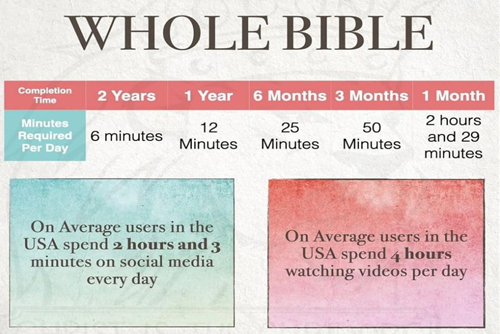
By following this plan, you will read through the entire Bible in a year, with the New Testament covered twice.
Why This Plan Works As New Testament Christians, the focus on the New Covenant is especially meaningful. By reading the New Testament twice in a year—just 4 chapters a day—you’ll gain a deeper understanding of Jesus’ life and teachings, as well as learning about the Lord’s church. In about 15–20 minutes each day, you can reflect on God’s grace and truth revealed through His Word.
The plan also ensures exposure to the Old Testament, grounding us in God’s purpose, and wisdom. With its organized structure, each day brings fresh motivation and variety, helping you stay engaged.
Imagine this time next year, having read about the life of Jesus twice and journeyed through the entire Bible. You’ll gain not just knowledge, but also a richer, deeper relationship with God through His Word. Start your journey today, and see how consistent Bible reading transforms your life in 2025!.
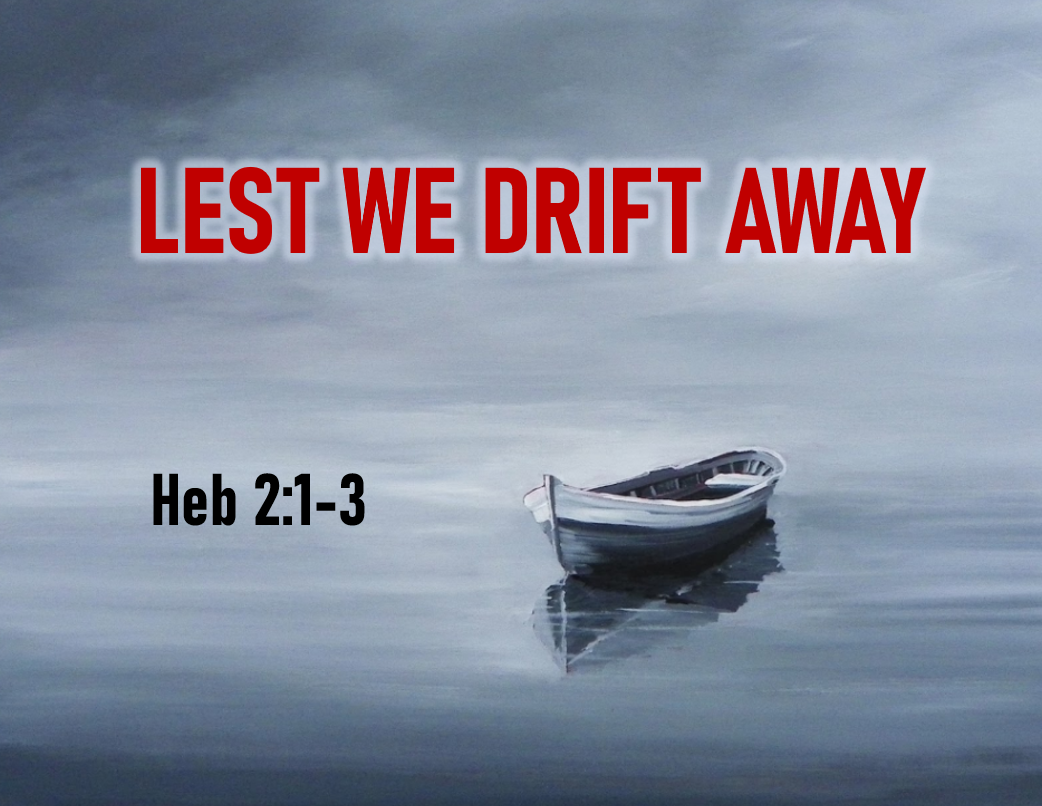
“Therefore we ought to give the more earnest heed to the things that were heard, lest haply we drift away from them. For if the word spoken through angels proved stedfast, and every transgression and disobedience received a just recompense of reward; how shall we escape, if we neglect so great a salvation?” (Heb 2:1-3a ASV)
In the swiftly changing currents of life, it is all too easy to drift away from the secure anchor of hope, “which we have as an anchor of the soul, a hope both sure and stedfast and entering into that which is within the veil” (Heb 6:19).
Let us explore five guiding principles from the book of Hebrews that can help us avoid spiritual drift and ensure our steadfastness in the faith.
DILIGENCE.
The first one is found in Hebrews 6:11, “And we desire that each one of you may show the same diligence unto the fulness of hope even to the end.”
Think of diligence as the steady hand guiding the helm of a ship through treacherous waters. It is not enough to start well; we must persist, with our eyes fixed on the horizon of God’s promises.
Hebrews 4:11 exhorts us, “Let us labour therefore to enter into that rest, lest any man fall after the same example of unbelief.” The necessity of constant effort to avoid spiritual shipwreck is a recurring theme (Hebrews 10:22; 12:1). Are we laboring earnestly, or merely drifting along?
READ & STUDY.
Reading and studying the Bible is the second way we will be able to remain on course, avoiding drift. The writer reminds us, “For the word of God is quick, and powerful, and sharper than any twoedged sword” (Heb 4:12). To avoid drift we must become skilled in the word. Hebrews 5:12-6:8 reveals the peril of spiritual immaturity and the dire consequences of neglecting the deeper teachings of Christ. Is our Bible a well-worn map or an unused artifact?
IMITATE THE FAITHFUL.
Another aid in avoiding drift is imitation which calls us to follow the examples of those who have walked the path of faith before us. Hebrews 6:12 instructs us to be “followers of them who through faith and patience inherit the promises.” We should emulate the faithful who have demonstrated unwavering trust in God. Consider the heroes of faith outlined in Hebrews 11. Their lives serve as beacons, illuminating the way for us to follow. By imitating their faith and perseverance, we reinforce our commitment to Christ. Whose shipping lane are we following today? (1Cor 11:1; 3John 11)
FEAR GOD.
A healthy reverence for God is the fourth in our efforts to maintain our spiritual course. Hebrews 4:1 warns, “Let us therefore fear, lest, a promise being left us of entering into his rest, any of you should seem to come short of it.” Godly fear keeps us vigilant. It reminds us of the gravity of our salvation and the importance of living in a manner worthy of our calling. Does our reverence for God inspire vigilance or apathy?
TAKE HEED.
Finally, we ought to take heed. Taking heed requires self-awareness and caution. Hebrews 3:12 cautions, “Take heed, brethren, lest there be in any of you an evil heart of unbelief, in departing from the living God.” The vigilance of the watchman who stands in the crow’s nest of the ship is akin to the spiritual alertness we must maintain to remain on course. By taking heed, we guard against the drift caused by doubt and sin. Are we watchful or wandering?
Let us heed the wisdom of Hebrews and apply these principles diligently. Through our earnest efforts we anchor our souls firmly in Christ, avoiding the perilous drift that leads away from so great a salvation.
Why do we doubt? What is the source of doubt? This series of articles seeks to search the scriptures for the answer, and to learn how to combat, or to Overcome Doubt.
The first article showed that Doubt is based on Disbelief, and the way to overcome disbelief is through knowledge of the Lord Jesus Christ. The second article spoke about obstacles that reveal doubt. This article will attempt to Overcome Doubt that arises when we turn away from the truth toward uncertainties.
When we begin to DOUBT, our response is often to take matters into our own hands. Think of those examples when folks didn’t know how God was going to fulfill a promise, so they tried to “help” Him out. Sarah’s suggesting Hagar (Gen 16:1-4). King Saul making an unlawful sacrifice when Samuel was delayed (1Sam 13:8-13).
When life becomes uncertain, we may place our trust in more UNCERTAINTIES. We try to walk by sight instead of by faith. When doubts arise and fears dismay, we place our trust in earthly resources.
Paul charged Timothy to warn the rich of this. “But they that will be rich fall into temptation and a snare, and into many foolish and hurtful lusts, which drown men in destruction and perdition. Charge them that are rich in this present world, that they be not highminded, nor have their hope set on the uncertainty of riches, but on God, who giveth us richly all things to enjoy” (1Tim 6:9, 17).
For many of us, instead of the NOTHING wavering faith of James 1, we become tossed about by every wind of doctrine. “That we henceforth be no more children, tossed to and fro, and carried about with every wind of doctrine, by the sleight of men, and cunning craftiness, whereby they lie in wait to deceive” (Eph 4:14). We turn from the truth of God’s word to the opinions of others.
When doubt increases, others place their trust in SELF. “I’ll do it my way.” “Daring, self-willed, they tremble not to rail at dignities” (2Pet 2:10; Lu 12:15-21).
These things may appear helpful, but they are UNFRUITFUL. The deceit of the world leads to being unfruitful, “And some fell among thorns; and the thorns sprung up, and choked them: He also that received seed among the thorns is he that heareth the word; and the care of this world, and the deceitfulness of riches, choke the word, and he becometh unfruitful” (Matt 13:7,22; Mark 4:18,19).
For some they turn to seemingly successful & happy people that end up ROBBING them of whatever faith they have remaining. “Let no man deceive you with empty words: for because of these things cometh the wrath of God upon the sons of disobedience” (Eph 5:6; Col 2:4,8,18; 3:6; 2Th 2:3).
Paul wrote about these deceptive people, “holding a form of godliness, but having denied the power therefore. From these also turn away. For of these are they that creep into houses, and take captive silly women laden with sins, led away by divers lusts, ever learning, and never able to come to the knowledge of the truth” (2Tim 3:5-7).
Each of the above strategies smack of an EARTHLY wisdom from beneath that moves away from the wisdom of God’s word that comes from above. “This wisdom is not a wisdom that cometh down from above, but is earthly, sensual, devilish. For where jealousy and faction are, there is confusion and every vile deed” (James 3:15-16).
What is the remedy to doubt?
The first and main thing we need to do to answer doubt is to continue to SEEK the kingdom of God and his righteousness. In the famous passage on worry, Jesus said, “But seek ye first his kingdom, and his righteousness; and all these things shall be added unto you” (Matt 6:33). Just because we sometimes doubt, doesn’t mean we stop doing the right thing. Sin is never the answer to doubt.
Look UP, set your affections on things above. Developing hope is a great strategy for overcoming or alleviating doubt. “If then ye were raised together with Christ, seek the things that are above, where Christ is, seated on the right hand of God. Set your mind on the things that are above, not on the things that are upon the earth. For ye died, and your life is hid with Christ in God. When Christ, who is our life, shall be manifested, then shall ye also with him be manifested in glory” (Col 3:1-4). When we have a big enough why, we can endure any how.
We can READ the word of the Lord. When we don’t know what to do, instead of turning to the earthly advice, turn to the word of God, or to people that will give godly advice (Titus 2:1-8). His word gives us all things pertaining to life and godliness (2Pet 1:3). Doubt is the opposite of faith, and faith comes by hearing (Rom 10:17). Read the bible for insight into this life. We can learn how to handle fear and doubt by reading of the examples of those that faced the same things. “Every scripture inspired of God is also profitable for teaching, for reproof, for correction, for instruction which is in righteousness. That the man of God may be complete, furnished completely unto every good work” (2Tim 3:16-17).
While doubt is uncomfortable, there is still hope. Doubt tends to focus on what’s missing. There are still things to ENJOY. The wise advice of one of our songs is to “count your many blessings.” Look for what is good, and watch for the good that may come from our continued faithfulness in times of trial. James wrote for us to count it all joy when we face trials. “Count it all joy, my brethren, when ye fall into manifold temptations; Knowing that the proving of your faith worketh patience” (James 1:2-3).
“Every good gift and every perfect gift is from above, coming down from the Father of lights, with whom can be no variation, neither shadow that is cast by turning” (James 1:17).
“Jesus saith unto him, I am the way, the truth, and the life: no man cometh unto the Father, but by me.” (John 14:6)
Since Jesus is the only way to the Father, it stands to reason that we ought to know what He has said on the matter.
“And Jesus came and spake unto them, saying, All power is given unto me in heaven and in earth” (Matt 28:18).
Since Jesus has all power (authority), it stands to reason that we ought to know what He has commanded.
“And then will I profess unto them, I never knew you: depart from me, ye that work iniquity” (Matt 7:23).
Since Jesus will reject those that practice iniquity (lawlessness), it stands to reason that we ought to know what He considers lawful.
We’ll only know these things when we READ His word.
The things we’ve seen so far about how to READ the bible are, 1) Rightly dividing the word, which means to handle it accurately. 2) Examine the bible carefully; Examine ourselves by it, and Examine the teaching of others with it. In this article we’ll notice that the bible contains the Commands of the Lord.
One of the ice-breakers I use to talk with others about the bible is this question; “How do we know what God wants?” Over and over again people answer by saying, “you have to be quiet and listen,” “pray and ask,” “If God opens a way for something or closes a door at something, that’s how you’ll know.” After listing several of these, they may sometimes say, “oh, and the Bible.”
Ask any Christian this question and they will immediately say, “The Bible, specifically the New Testament.” Christians know and understand that “holy men of God spake as they were moved by the Holy Ghost” (1Pet 1:21b). Holy Spirit inspiration of God’s will was revealed to holy men, who then revealed it orally at the beginning, and then written for perpetuity. (1Cor 2:9-13; Joh 20:30-31; Eph 3:3-4; 2Tim 3:15-17). The New Testament is the will of our Lord and Savior Jesus Christ. Here are 3 things to consider about the New Testament.
First, the New Testament writings ARE THE COMMANDMENTS of the Lord. “If any man think himself to be a prophet, or spiritual, let him acknowledge that the things that I write unto you ARE THE COMMANDMENTS OF THE LORD [emphasis added]” (1Cor 14:37). After you read this, note what Jesus said during His time on earth.
“He that rejecteth me, and receiveth not my words, hath one that judgeth him: the word that I have spoken, the same shall judge him in the last day” (John 12:48). These two verses together are very impactful, but consider what will happen on the last day. “And I saw the dead, small and great, stand before God; and the books were opened: and another book was opened, which is the book of life: and the dead were judged out of those things which were written in the books, according to their works” (Rev 20:12).
What Books you ask? It’s clear that one of the books will be the words of Christ. Then, on that day, Jesus will say to some, “And why call ye me, Lord, Lord, and do not the things which I say” (Luke 6:46)? To those who have read His word, and done His will (Matt 7:24) shall hear these words, “Come, ye blessed of my Father, inherit the kingdom prepared for you from the foundation of the world” (Matt 25:34). The New Testament is the will of our Lord.
Second, before we can do His will, we must LOOK into His Law. James wrote, “But whoso looketh into the perfect law of liberty, and continueth therein, he being not a forgetful hearer, but a doer of the work, this man shall be blessed in his deed” (James 1:25). He then wrote in chapter two, “So speak ye, and so do, as they that shall be judged by the law of liberty” (2:12). James repeats what we’ve just learned, we shall be judged by the words, law of Christ. If we don’t know His will, we ought to LOOK into it.
Think about what King Josiah learned upon reading the will of God for His time. “And it came to pass, when the king had heard the words of the book of the law, that he rent his clothes. And the king commanded Hilkiah the priest, and Ahikam the son of Shaphan, and Achbor the son of Michaiah, and Shaphan the scribe, and Asahiah a servant of the king’s, saying, Go ye, enquire of the LORD for me, and for the people, and for all Judah, concerning the words of this book that is found: for great is the wrath of the LORD that is kindled against us, because our fathers have not hearkened unto the words of this book, to do according unto all that which is written concerning us” (2Kings 22:11-13). The New Testament is the will of our Lord.
Lastly, we need to LET His word dwell in our hearts. This speaks to reading, and learning. “Let the word of Christ dwell in you richly in all wisdom” Colossians 3:16a). Note again what James wrote, “But be ye doers of the word, and not hearers only, deceiving your own selves. For if any be a hearer of the word, and not a doer, he is like unto a man beholding his natural face in a glass: For he beholdeth himself, and goeth his way, and straightway forgetteth what manner of man he was. But whoso looketh into the perfect law of liberty, and continueth therein, he being not a forgetfulhearer, but a doer of the work, this man shall be blessed in his deed” (James 1:22-25) [emphasis added]. We need to read, understand, and apply it.
Peter, in his second letter to the Saints, repeatedly said that he wrote to “REMIND” them. To “put you always in remembrance of” (1:12), “putting you in remembrance” (1:13), “always in remembrance” (1:15), “by way of remembrance” (3:1). He was very direct about this point, “But he that lacketh these things is blind, and cannot see afar off, and hath forgotten that he was purged from his old sins” (2Pet 1:9).
O’ that we never FORGET the great things the Lord has done!!!
The New Testament is the will of our Lord. The things that are written ARE His commands. We ought to LOOK into His Law of Liberty. We must LET the word of Christ dwell in our hearts.
Agape,
Spencer
The Franklin & Juniper st church of Christ in Borger is very much involved in Bible reading and study. You’re invited to attend one of our services to hear the Gospel preached in plainness of speech easy to understand.
1) RIGHTLY divide the word. (Handle it accurately)
2) EXAMINE. Examine to learn, Examine Ourselves, Examine Other’s teaching, Examine to Know the Love of God.
NOW FOR PART 3: ALL AUTHORITY of Christ is in the Bible
3) AUTHORITY of Christ is found in the Bible. People claim that God speaks to them personal, & miraculously. This is a contradiction to Scripture.
God speaks to us by His Son, and the commands of Christ are in the New Testament.
Hebrews 1:1-2 KJV
God, who at sundry times and in divers manners spake in time past unto the fathers by the prophets, [2] Hath in these last days spoken unto us by his Son, whom he hath appointed heir of all things, by whom also he made the worlds;
And Jesus came and spoke to them, saying, “All authority has been given to Me in heaven and on earth. (Matt 28:18)
1 Corinthians 14:37 KJV
If any man think himself to be a prophet, or spiritual, let him acknowledge that the things that I write unto you are the commandments of the Lord.
Colossians 3:17 KJV
And whatsoever ye do in word or deed, do all in the name of the Lord Jesus, giving thanks to God and the Father by him.
Matthew 7:28-29 KJV
And it came to pass, when Jesus had ended these sayings, the people were astonished at his doctrine: [29] For he taught them as one having authority, and not as the scribes.
Do you want to know what God wants? Read the Bible. Attend a service of the church of Christ. Check out what is being taught with your copy of the Bible.
If someone claims they know the will of God but cannot show it to you in book, chapter, and verse then run away.
Agape,
spencer
The Franklin & Juniper st church of Christ in Borger is very much involved in Bible reading and study. You’re invited to attend one of our services to hear the Gospel preached in plainness of speech easy to understand.
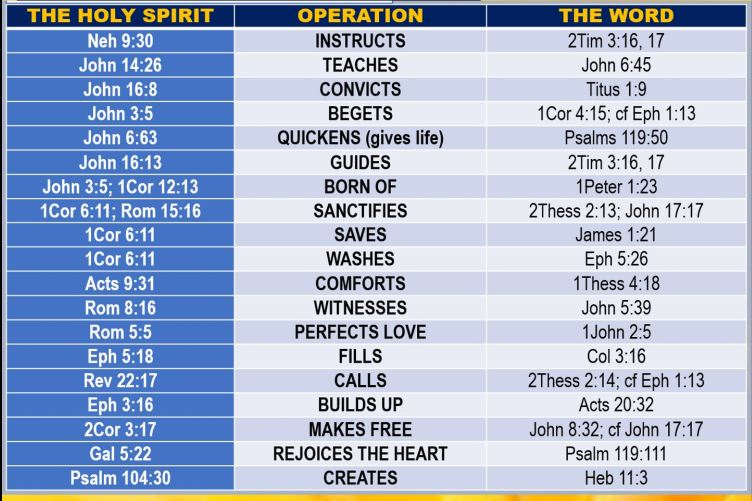
The Holy Spirit inspired the written word of God. “For the prophecy came not in old time by the will of man: but holy men of God spake as they were moved by the Holy Ghost.” 2Peter 1:21
Give One Understanding (Psa.119:130). Build One Up And Give Inheritance Among The Sanctified (Acts 20:32). Keep One From Sinning (Psa. 1119:11; 1 John 2:1). Quicken One; Make Him Alive Spiritually (Psa. 119:50; Eph 2:1). Effect A Spiritual Begettal (1 Cor. 4:15). Consummate A Spiritual Birth (1 Pet. 1:23). Justify (Rom. 2:13). Produce Faith (Rom. 10:17). Guide (Psa. 173:24; 119:105) Produce Fruit (Luke 8:15 Col 1:5,6 Give Everlasting Life (John 4:14). Make One A Disciple Indeed (John 8:31). Cleanse (John 15:3; Eph. 5:26). Sanctify (John 17:17; Eph. 5:26). Purify The Soul (1 Pet. 1:22). Save The Soul (Jas. 1:21). Produce Spiritual Growth (1 Pet. 2:2). Effectually Work (1Thes. 2:13). Comfort (1thes. 4:18; Rom. 15:4). Rejoice The Heart (Psa. 119:111). Give Understanding (Psa. 119:104). Reconcile (2 Cor.5:17,18) Judge Us At The Last Day (John 12:47,48)
WHAT MORE DOES ONE NEED?
Since the Holy Spirit inspired the written word, He leads us through our study and application of the Word.
John 20:30 And many other signs truly did Jesus in the presence of his disciples, which are not written in this book: 31 But these are written, that ye might believe that Jesus is the Christ, the Son of God; and that believing ye might have life through his name.
Eph 3:3 How that by revelation he made known unto me the mystery; (as I wrote afore in few words, 4 Whereby, when ye read, ye may understand my knowledge in the mystery of Christ)
agape,
Spencer
The Franklin & Juniper st church of Christ in Borger is very much involved in Bible reading and study. You’re invited to attend one of our services to hear the Gospel preached in plainness of speech easy to understand.
“So then faith cometh by hearing, and hearing by the word of God.” (Rom 10:17)
One of the chief complaints I hear about reading the Bible is that people find it hard to read.
I’ve wondered why? Is it because of the genealogies, the narrative of the divided kingdom, or difficult concepts? Perhaps it’s a combination of all of these or some other. Perhaps, people are just intimidated by its size and don’t know where to begin?
The average word count for adult fiction is between 70,000 to 120,000 words. Whereas the Old Testament has 929 chapters, 33,214 verses, and 503,493 words.
The New Testament has 260 chapters, 7959 verses, and 181,253 words. For the whole Bible the total is 1189 chapters, 31,173 verses, and 773,746 words.
Maybe it’s a combination of factors. I believe that the main reason folks don’t read the Bible is that they don’t see any relevance for their lives. One man told me, “Sometimes I just real-life help, and not the Bible.” It’s funny that I was giving him real life help at the time along with encouragement to read the bible to avoid future trouble. It’s not either or, it’s both.
The Bible has direct relevance to everyone for the here and now, but especially in the there and then of eternity. Peter writes about the relevant word.
“According as his divine power hath given unto us all things that pertain unto life and godliness, through the knowledge of him that hath called us to glory and virtue” (2Pet 1:3). God’s word contains advice on LIFE, the earthly application, and GODLINESS, the spiritual application. Paul reminded Timothy that the “holy scriptures, which are able to make thee wise unto salvation through faith which is in Christ Jesus” (2Tim 3:15-17). The Bible has relevance!
To those that are still intimidated about reading the Bible, I ask you; Has anyone ever shown you how to READ the Bible? You may be better equipped if you knew 4 simple things about how to READ the Bible.
4 Tips on how to READ the Bible.
First, you need to RIGHTLY DIVIDE the word. “Study to shew thyself approved unto God, a workman that needeth not to be ashamed, rightly dividing the word of truth” (2Tim 2:15). To “rightly divide” means to handle it accurately and correctly. Besides knowing that there’s an Old and New Testament, one needs to know what that means for application.
Handling the word accurately one needs to know that we are under the law of Christ, the New Testament, and are no longer under the law of Moses, the Old Testament. Neither are we a law to ourselves. “In that he saith, A new covenant, he hath made the first old. Now that which decayeth and waxeth old is ready to vanish away” (Heb 8:13). The Apostle John wrote, “Whosoever transgresseth, and abideth not in the doctrine of Christ, hath not God. He that abideth in the doctrine of Christ, he hath both the Father and the Son” (2John 1:9)
While we are under the New Testament that in no way tells us to ignore the Old. The Apostle Paul, in writing about the Old Testament said this, “For whatsoever things were written aforetime were written for our learning, that we through patience and comfort of the scriptures might have hope” (Rom 15:4).
The Old Testament is for our learning about sin, sacrifice, and a future Messiah (Jesus). The New Testament tells us the Messiah has arrived. “Wherefore then serveth the law? It was added because of transgressions, till the seed should come to whom the promise was made; and it was ordained by angels in the hand of a mediator” (Galatians 3:19).
If you’re just getting started in Reading the Bible, allow me to recommend that you begin in the New Testament. Here is a breakdown…
The GOSPELS. Matthew, Mark, Luke, John. These are the books about the life of the Messiah who is being predicted and foreshadowed in the Old Testament.
I recommend you Read LUKE first.
ACTS. This book is written through the inspiration of the Holy Spirit by the same author of the Gospel of Luke. It covers the beginning of the church of Christ that Jesus promised to build (Matt 16:18). This book is the textbook on how to become a Christian.
I recommend you read ACTS next after the Gospel of LUKE.
The rest of the New Testament is written to Christians, who are also called Saints. These are letters written to Christians about being faithful. They also contain warnings about false teachers, and the possibility of falling.
The letters of the Apostle PAUL. Romans, 1&2Corinthians, Galatians, Ephesians, Philippians, Colossians, 1&2Thessalonians, 1&2 Timothy, Titus, Philemon. These letters are addressed to specific local congregations or individual evangelists. They have application for us today.
The GENERAL letters. Hebrews, James, 1&2Peter, 1,2&3John, Jude. These are letters by various authors written to Christians in general. A few are addressed to individuals. The contents are still very much applicable.
The REVELATION. This oft abused book is full of figurative language. It has a message relevant for us today, but much of it is historic. Having a strong understanding of the Old Testament will help you understand the figurative language in this book.
Next week we’ll look at another tip on how to READ the Bible.
Agape,
Spencer
The Franklin & Juniper st church of Christ in Borger is very much involved in Bible reading and study. You’re invited to attend one of our services to hear the Gospel preached in plainness of speech easy to understand.



 Borger church of Christ @ Franklin & Juniper