
Rejoice Always, Phil 4:4

There is a direct command in scripture that is often overlooked by even the most zealous Saint. “Rejoice in the Lord alway: and again I say, Rejoice.” (Phil 4:4).

It is a discriminating command. In matters of the Lord of what does an alien sinner have to rejoice? All spiritual blessings are “in Christ” (Eph 1:3), and only those that have obeyed the Gospel are in the Lord (Gal 3:26-27). Those that have obeyed the Gospel are the only ones that have reason to rejoice (Acts 8:37).

The command is discriminating in that it also excludes rejoicing in the flesh (Phil 3:3,7). It excludes rejoicing in the wisdom of the world (1Cor 1:20-21). It also excludes rejoicing in one’s own works (Titus 3:5; Is 64:6). We are to work God’s righteousness (Acts 10:34-35; Rom 10:1-3).

By the words of some one is led to wonder if Christians are aware of this command to rejoice.

Let us see about what it means to rejoice always in the Lord.

ALWAYS” tells us it is a perpetual command without regard to external conditions. The Apostle Paul wrote this by inspiration while imprisoned in Rome for his faith. This epistle has been called the epistle of joy, for it contains the words “joy,” “rejoice,” or “rejoicing” some sixteen times.

The command is without regard to Adversity or Prosperity. “Yea, and if I be offered upon the sacrifice and service of your faith, I joy, and rejoice with you all. For the same cause also do ye joy, and rejoice with me” (Phil 2:17-18). Paul is able to rejoice in adversity because it was in service to Christ. “But I have all, and abound: I am full, having received of Epaphroditus the things which were sent from you, an odour of a sweet smell, a sacrifice acceptable, wellpleasing to God” (Phil 4:18).

The command is without regard to being Loved or Hated. “The one preach Christ of contention, not sincerely, supposing to add affliction to my bonds: But the other of love, knowing that I am set for the defence of the gospel. What then? notwithstanding, every way, whether in pretence, or in truth, Christ is preached; and I therein do rejoice, yea, and will rejoice” (Phil 1:16-18). Paul is able to rejoice despite the haters because Christ was being preached. “And I will very gladly spend and be spent for you; though the more abundantly I love you, the less I be loved” (2Cor 12:15).

The command is without regard to Weariness or Strength. “I know both how to be abased, and I know how to abound: every where and in all things I am instructed both to be full and to be hungry, both to abound and to suffer need. I can do all things through Christ which strengtheneth me” (Phil 4:12-13). Paul’s life in the Lord is marked by great adversity (2Cor 11:22-29), but it was from his pen the Holy Spirit wrote, “And let us not be weary in well doing: for in due season we shall reap, if we faint not” (Gal 6:9).

The command is without regard to Arrest or Among Friends. “But I would ye should understand, brethren, that the things which happened unto me have fallen out rather unto the furtherance of the gospel; So that my bonds in Christ are manifest in all the palace, and in all other places; And many of the brethren in the Lord, waxing confident by my bonds, are much more bold to speak the word without fear” (Phil 1:12-14). Paul could rejoice in his arrest and detainment because of the increased boldness of others to speak the gospel. Peter and John could rejoice for being beaten for the name of Christ. “And to him they agreed: and when they had called the apostles, and beaten them, they commanded that they should not speak in the name of Jesus, and let them go. And they departed from the presence of the council, rejoicing that they were counted worthy to suffer shame for his name” (Acts 5:41).

The command is without regard even for Your very life. “For to me to live is Christ, and to die is gain. But if I live in the flesh, this is the fruit of my labour: yet what I shall choose I wot not. For I am in a strait betwixt two, having a desire to depart, and to be with Christ; which is far better: Nevertheless to abide in the flesh is more needful for you.” (Phil 1:21-24). The life that one lives in the Lord prepares him for the appointment of death (Heb 9:27). “And I heard a voice from heaven saying unto me, Write, Blessed are the dead which die in the Lord from henceforth: Yea, saith the Spirit, that they may rest from their labours; and their works do follow them” (Rev 14:13). There is comfort in the death of faithful saints (1Thess 4:13-18). For them “to die is gain.”

The command is without regard to Sickness or Health. Paul could rejoice in the highs or lows of his physical life because of the grace of Christ. “Therefore I take pleasure in infirmities, in reproaches, in necessities, in persecutions, in distresses for Christ’s sake: for when I am weak, then am I strong” (2Cor 12:9-10). There was rejoicing for Epaphroditus despite his sickness because he didn’t regard his life to supply those things that were lacking from the church at Philippi. “I sent him therefore the more carefully, that, when ye see him again, ye may rejoice, and that I may be the less sorrowful” (Phil 2:28; cf, 25-30).

Rejoicing in the Lord always brings about many gratifying results. It is the means by which hope can be seen in the midst of adversity (cf. 1Pet 3:14-15). Rejoicing can put to death the PLAGUES of the mind. Rejoicing and negativity cannot coexist nor be done at the same time.

Rejoicing in the Lord always is the means by which our light can shine in this dark world. Our rejoicing in the Lord becomes a beacon of attraction to the lost and our religion will radiate a wholesome influence upon the lives of those around us. 

Rejoicing in the Lord always can do us no harm, but rather only bring about good, and in many ways will preserve our health and effectiveness.

Rejoicing in the Lord always is easy when we remember that our names are written in the heaven as we obey the Gospel of Christ. “And I intreat thee also, true yokefellow, help those women which laboured with me in the gospel, with Clement also, and with other my fellowlabourers, whose names are in the book of life” (Phil 4:3; Acts 2:38-41; Heb 12:23).

Agape,

Spencer

let the PEACE of God rule

Rejoice in the Lord Always and again I say, Rejoice.” (Php 4:4)

Considering the state of our world this seems like an impossible task. One thing we forget however, is that those words were penned while Paul was in a Roman prison.

Every generation has to figure out how to complete this command in themselves despite the ‘troubles’ of their times. We’re no different.

Since the fall of man, we have all had to deal with the troubles that come from a broken sin filled world.

Despite this can we still find a way to REJOICE? Yes. If there is a command, then it’s within our ability to obey. But how?

How do we rejoice in the midst of turmoil? Can we rejoice when there is no peace in the world? We forget that there is no true peace if we’re not at peace with God. When we find peace with God, we can also see how to rejoice.

And let the peace of God rule in your hearts, to the which also ye are called in one body; and be ye thankful.” (Col 3:15)

This verse comes in the midst of a list of instructions; it must then be true then, that when we follow these instructions, we might have that peace of God.

Going to the beginning of the chapter we find the first step. “If ye then be risen with Christ, seek those things which are above, where Christ sitteth on the right hand of God.” (Col 3:1-4). Before we can have peace from God, we need to seek and to set our affections above. From this verse and others, we learn that the child of God is to PURSUE righteousness, the things from above (cf. Jas 3:17; 1Tim 6:11; 2Tim 2:22; 1Pet 3:11).

The child of God is then to, “Mortify therefore your members which are upon the earth; fornication, uncleanness, inordinate affection, evil concupiscence, and covetousness, which is idolatry:” (Col 3:5-9). EVIL is to be put off of the child of God. How can any of us expect peace when we continue to participate in the earthly, carnal, sensual, evil of this world? “For which things’ sake the wrath of God cometh on the children of disobedience:” We used to live this way, but now we are to live differently (cf. 1Cor 6:9-11).

Removing bad habits is not enough, we must replace what we have put off. “Put on therefore, as the elect of God, holy and beloved, bowels of mercies, kindness, humbleness of mind, meekness, longsuffering;” (Col 3:12). We are to put on, ADORN ourselves with the new man. In obeying the gospel through faithful baptism, we are raised up to walk in newness of life (Rom 6:3-4). Failure to do this is why we often return to our old ways. It’s not enough to remove evil. We must replace it with good.

But we still have a little further to go. The elect of God is expected to go beyond just outer actions, we must engage our hearts. “And above all these things put on CHARITY [love], which is the bond of perfectness” (Col 3:14). Without love we are nothing (1Cor 13:1-3). Love is very powerful. “There is no fear in love; but perfect love casteth out fear: because fear hath torment. He that feareth is not made perfect in love.” (1John 4:18).

There is just one more thing in this list. Love is more than an emotion. It’s obedience to God. “For this is the love of God, that we keep his commandments:” (1John 5:3). We see this instruction in our passage. “And let the peace of God rule in your hearts, to the which also ye are called in one body; and be ye thankful. Let the word of Christ dwell in you richly in all wisdom; teaching and admonishing one another in psalms and hymns and spiritual songs, singing with grace in your hearts to the Lord.” (Col 3:15-17).

We must let the peace of God dwell in our hearts, and this is accomplished when we let the word of Christ dwell there also. The last line in this section explains what this means. “And whatsoever ye do in word or deed, do all in the name of the Lord Jesus, giving thanks to God and the Father by him.” “Whatsoever, do, word, deed, do all?” This covers EVERYTHING. The entirety of our lives is to be focused on serving God. A fitting bookend to the beginning where we were told to “set our affections on things above.”

Do we want peace? Do you want rejoicing? It’s possible. When we Pursue those things above, put off Evil, Adorn ourselves with the new, have Charity in our hearts, and let the word of God permeate the Entirety of our lives, then we can rejoice. We rejoice not because life is easier. We rejoice because we know we have hope of an eternal home in heaven where Christ sits.

— spencer

Spencer is an evangelist for the Franklin & Juniper St church of Christ in Borger Texas. If you live in the Borger area and would like to learn more about what the bible says on life and godliness, then let us know how we can help you know more of God’s word.

Facing WOES

1Corinthians 10:13:

There hath no temptation taken you but such as is common to man: but God is faithful, who will not suffer you to be tempted above that ye are able; but will with the temptation also make a way to escape, that ye may be able to bear it.”

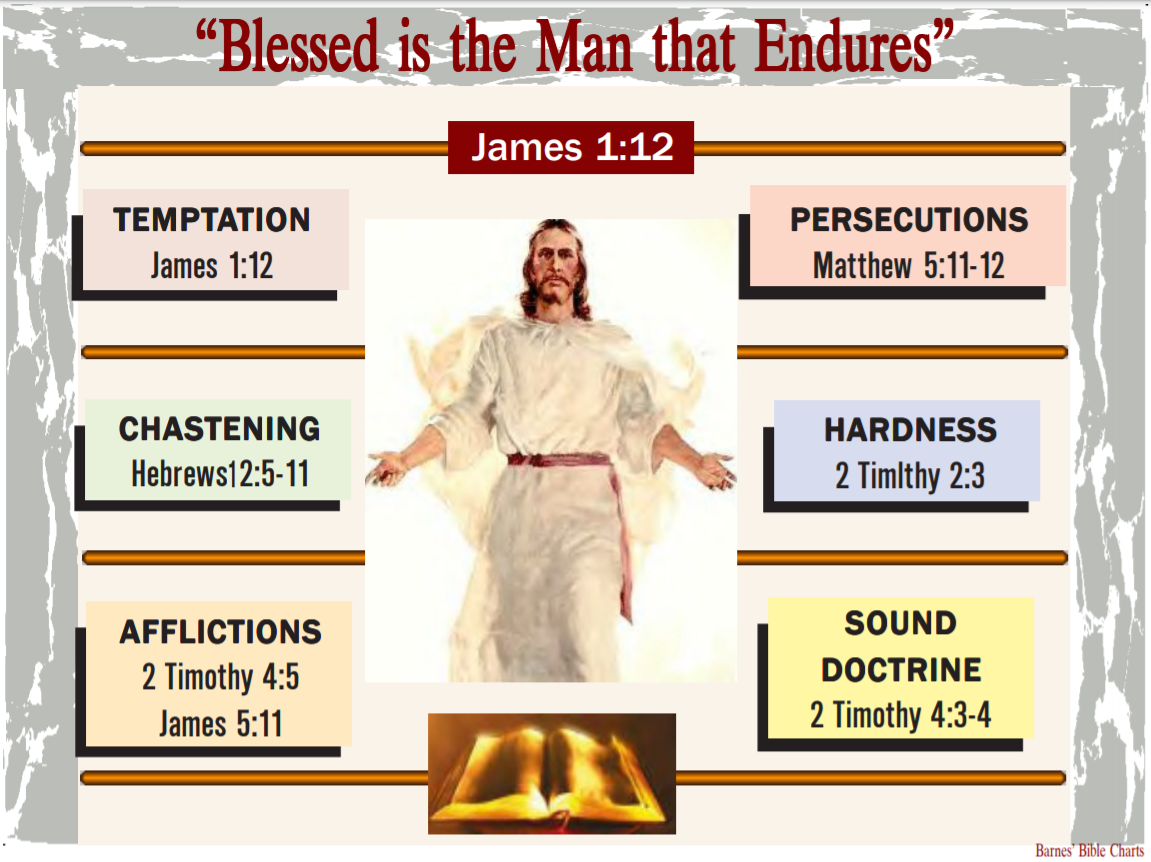
Nobody likes trouble. However, God tells us in His Word to find joy in our trials…

My brethren, count it all joy when ye fall into divers temptations;” [James 1:2]

Rejoice, and be exceeding glad: for great is your reward in heaven: for so persecuted they the prophets which were before you.” [Mat 5:12]

And they departed from the presence of the council, rejoicing that they were counted worthy to suffer shame for his name.” [Acts 5:41]

Therefore I take pleasure in infirmities, in reproaches, in necessities, in persecutions, in distresses for Christ’s sake: for when I am weak, then am I strong.” [2Cor 12:10]

How are we to handle these verses? A solid biblical principle is this; When God gives a command, it’s within our ability to do it. If we SHOULD, the it is something we COULD.

Let’s examine 1Corinthinas 10:13 and see some very comforting truths…

There hath no temptation taken you but such as is common to man:”

First, we must recognize is that trouble comes to everyone, it’s WIDESPREAD. Any trouble, temptation or trial you will face will have been faced by others before. “…and there is no new thing under the sun.” [Ecc 1:9b]. There is comfort in the realization that no trouble is truly exotic. You’re not the first person to face trouble, nor the last. The main take away is this, we’re all in this together. The person that struggles with struggles often believes that they’re struggles are special. This mindset will only make things more miserable. We’ll never be able to “rejoice” if we believe we’re the only ones with trouble.

but God is faithful, who will not suffer you to be tempted above that ye are able;

Next, Paul writes that no trouble is able to OVERWHELM us beyond our ability to endure. God won’t allow it. That’s what the verse says. There’s comfort in these words. God doesn’t remove the trouble, but He does limit it to your capacity. Some might say, “I wish God wouldn’t trust me so much.” I get it, nobody likes trouble. However, we need to remember that nothing worthwhile ever comes without effort. James writes, “Knowing this, that the trying of your faith worketh patience. But let patience have her perfect work, that ye may be perfect and entire, wanting nothing.” [Jas 1:3-4]. This, along with the teaching from Hebrews 12 shows us that enduring trials makes one stronger, more experienced and more capable. This growth then puts us into the position to help others in their time of crisis. It’s through this understanding where we can begin to find Joy in suffering.

but will with the temptation also make a way to escape, that ye may be able to bear it.”

Third, God will also provide the way of ESCAPE. Comforting words to be sure. There will always be a means of ESCAPE to all of life’s temptations. Here’s the key that is often overlooked; YOU MUST SEEK IT AND TAKE IT!!! We have to participate in our own rescue. God provides the way of ESCAPE, but it’s up to each of us to take it. This key principle helps us to understand the true nature of Grace. God provides the means, that’s Grace, we must take it and utilize it. God provides the ultimate way of ESCAPE from the penalty of death for our sins; Salvation through obedience to the Gospel. That is Grace. We must act upon this Grace by doing what is commanded in the way of ESCAPE.

Yea, and for this very cause adding on your part all diligence, in your faith supply virtue; and in your virtue knowledge; and in your knowledge self-control; and in your self-control patience; and in your patience godliness; and in your godliness brotherly kindness; and in your brotherly kindness love.” [2Peter 1:5-7]

Implied in 1Cor 10:13, and directly stated elsewhere, is the command for us to apply SELF-CONTROL. The reality is that SELF is the only control we have. We cannot often control what happens to us, but we can ALWAYS control how we respond to what happens. Our response to the troubles, trials & tribulations of life are within our ability. Is it any wonder that the word ‘RESPONSIBILITY’ has within it the word ‘RESPONSE?’ Taking Responsibility for what happens to us is vital to our finding joy. This is not to say that all trouble is our fault. Often times it is not. However, acting & responding to whatever happens to us is ALWAYS our responsibility. If God says we SHOULD, we must know that we COULD.

Being challenged in life is inevitable. Being defeated is a choice. As shown through our verse, we can see that we have the means and the choice to endure temptations, trials, tribulations, and troubles. When we take responsibility, when we take action, we will instantly begin to discover JOY.

Rejoice in the Lord always:

again I will say, Rejoice.”

[Phil 4:4]