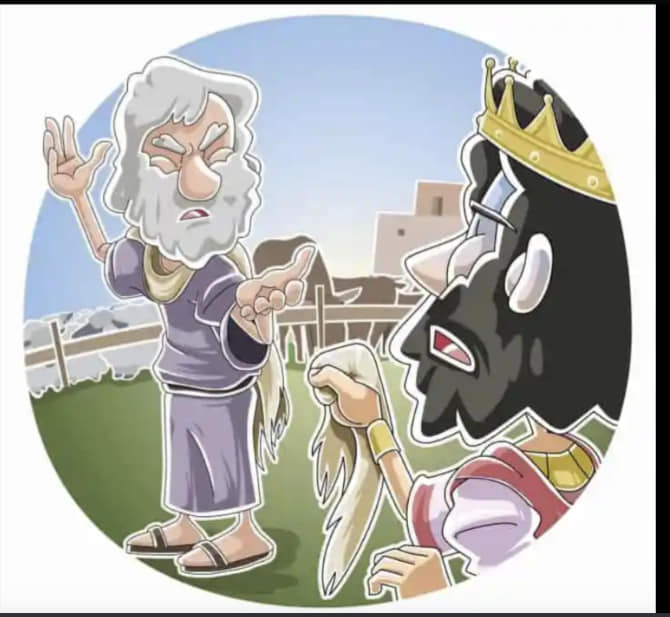
Learning from King SAUL’s Mistakes

But now thy kingdom shall not continue: the LORD hath sought him a man after his own heart, and the LORD hath commanded him to be captain over his people, because thou hast not kept that which the LORD commanded thee.”  (1Sam 13:14)

After King Saul’s first mistake, the tearing of the kingdom away from him had begun.

We need to learn the lessons from Saul’s mistakes so that we will avoid having the kingdom of Christ torn from us.

And hath made us kings and priests unto God and his Father; to him be glory and dominion for ever and ever. Amen

(Rev 1:6; cf. 1Pet 2:9).

While Saul started out strong, the 4 mistakes in this article describe why the kingdom was torn from him so dramatically. Saul made other errors after these, but these are the reasons given by Samuel for the kingdom being given to David.

SACRIFICING without AUTHORITY: “And he tarried seven days, according to the set time that Samuel had appointed: but Samuel came not to Gilgal; and the people were scattered from him. And Saul said, Bring hither a burnt offering to me, and peace offerings. And he offered the burnt offering. And it came to pass, that as soon as he had made an end of offering the burnt offering, behold, Samuel came; and Saul went out to meet him, that he might salute him” (1Sam 13:8-10).

One of the key mistakes of King Saul, as seen in 1 Samuel 13, was his impatience and failure to wait for the prophet Samuel before offering a burnt sacrifice. Saul allowed fear and pressure from his army to push him into taking matters into his own hands, disregarding the authority of God’s chosen servant. This act revealed Saul’s lack of trust in God’s timing and his failure to follow divine instructions.

ARROGANCE and PRESUMPTION: “And Samuel came to Saul: and Saul said unto him, Blessed be thou of the LORD: I have performed the commandment of the LORD. And Samuel said, What meaneth then this bleating of the sheep in mine ears, and the lowing of the oxen which I hear? And Saul said, They have brought them from the Amalekites: for the people spared the best of the sheep and of the oxen, to sacrifice unto the LORD thy God; and the rest we have utterly destroyed” (1Sam 15:13-15).

In 1 Samuel 15, we witness another critical mistake of Saul: his arrogance and presumption in disobeying God’s explicit command. God commanded Saul to completely destroy the Amalekites and everything that belonged to them. However, Saul decided to spare King Agag and some of the best livestock. Saul’s presumptuous act displayed his prideful attitude, thinking that his own judgment and desires were superior to God’s commandments.

UNWILLINGNESS to Accept Responsibility: “And Samuel said, What hast thou done? And Saul said, Because I saw that the people were scattered from me, and that thou camest not within the days appointed, and that the Philistines gathered themselves together at Michmash; Therefore said I, The Philistines will come down now upon me to Gilgal, and I have not made supplication unto the LORD: I forced myself therefore, and offered a burnt offering. And Samuel said to Saul, Thou hast done foolishly: thou hast not kept the commandment of the LORD thy God, which he commanded thee: for now would the LORD have established thy kingdom upon Israel for ever” (1Sam 13:11-13).

Saul’s inability to take responsibility for his actions was evident in his response when confronted by Samuel. Instead of acknowledging his mistake and seeking repentance, Saul shifted blame onto others, making excuses for his disobedience. He attempted to justify his actions rather than humbly admitting his wrongdoing. This lack of accountability demonstrated a failure in Saul’s character as a leader.

LACK OF OBEDIENCE and Submission: “And Saul said unto Samuel, Yea, I have obeyed the voice of the LORD, and have gone the way which the LORD sent me, and have brought Agag the king of Amalek, and have utterly destroyed the Amalekites. But the people took of the spoil, sheep and oxen, the chief of the things which should have been utterly destroyed, to sacrifice unto the LORD thy God in Gilgal. And Samuel said, Hath the LORD as great delight in burnt offerings and sacrifices, as in obeying the voice of the LORD? Behold, to obey is better than sacrifice, and to hearken than the fat of rams. For rebellion is as the sin of witchcraft, and stubbornness is as iniquity and idolatry. Because thou hast rejected the word of the LORD, he hath also rejected thee from being king” (1Sam 15:20-23).

Overall, Saul’s mistakes can be summarized by his consistent failure to obey and submit to God’s authority. Whether it was sacrificing without Samuel’s presence, sparing King Agag, or not fully carrying out God’s command, Saul demonstrated a pattern of rebellion and disobedience. His lack of reverence for God’s instructions ultimately led to his downfall and the loss of his kingship.

In summary, Saul’s mistakes were: 

  1. Sacrificing without Authority, 
  2. Arrogance and Presumption, 
  3. Unwillingness to Accept Responsibility, and 
  4. Lack of Obedience and Submission.

 These lessons from Saul’s life serve as a reminder for us to humbly follow God’s commands, trust in His timing, and accept responsibility for our actions as we strive to be obedient servants.

Agape,

Spencer
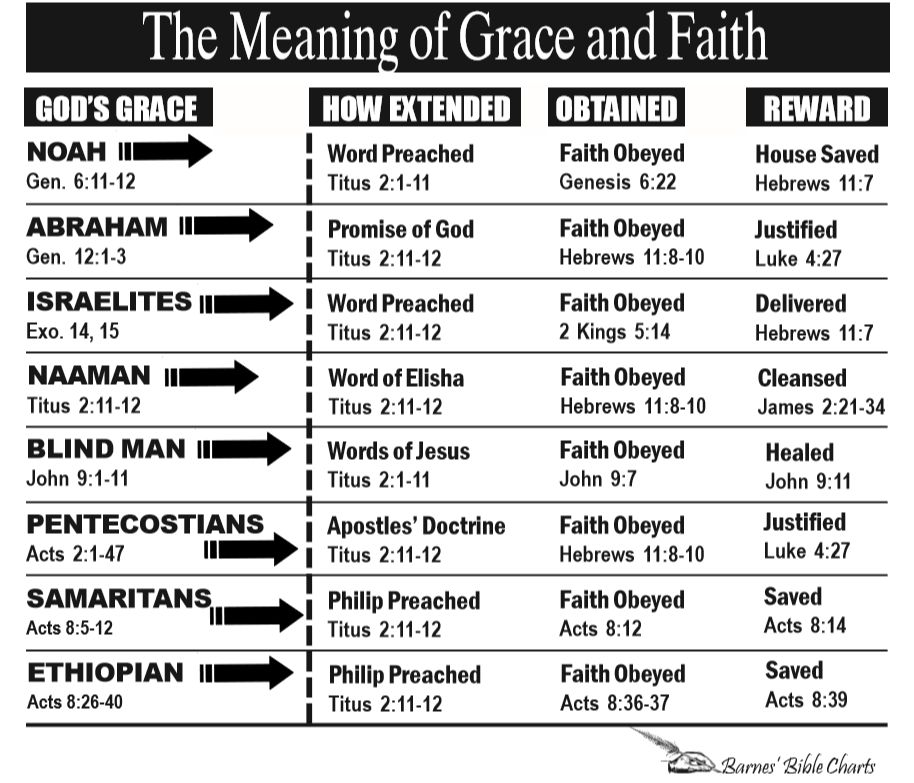
What is GRACE pt4, IN CHRIST

For by grace are ye saved through faith; and that not of yourselves: it is the gift of God.

(Eph 2:8)

But we believe that through the grace of the Lord Jesus Christ we shall be saved, even as they.” (Acts 15:11)

And the grace of our Lord was exceeding abundant with faith and love which is in Christ Jesus” (1Tim 1:14).

Thou therefore, my son, be strong in the grace that is in Christ Jesus” (2Tim 2:1).

As we study more about GRACE, the more we’ll realize that Grace is IN CHRIST. He and His sacrifice is the gift of Grace.

Grace appeared IN CHRIST. How does Grace come through CHRIST?

CHRIST was CRUCIFIED fulfilling the prophecy of the manner of His death for the sins of the world. Jesus said, “And as Moses lifted up the serpent in the wilderness, even so must the Son of man be lifted up” (John 3:14; cf. Deut 21:23; Gal 3:10-13). In the first sermon at Pentecost, Peter said, “Therefore let all the house of Israel know assuredly, that God hath made that same Jesus, whom ye have crucified, both Lord and Christ” (Acts 2:36). It is the included in the preaching of Jesus. “But we preach Christ crucified” (1Cor 1:23).

As we follow CHRIST, being crucified is something we also do in a figure. “And they that are Christ’s have crucified the flesh with the affections and lusts” (Gal 5:24; cf. Rom 6:3-6).

It is only by HIS BLOOD that the church is made possible. “Take heed therefore unto yourselves, and to all the flock, over the which the Holy Ghost hath made you overseers, to feed the church of God, which he hath purchased with his own blood” (Acts 20:28). “Wherefore Jesus also, that he might sanctify the people with his own blood, suffered without the gate” (Heb 13:12; cf Heb 9:12).

We who follow Christ are washed IN HIS blood in baptism. “And from Jesus Christ, who is the faithful witness, and the first begotten of the dead, and the prince of the kings of the earth. Unto him that loved us, and washed us from our sins in his own blood” (Rev 1:5).

After His death and burial, He ROSE FROM THE DEAD. “Be it known unto you all, and to all the people of Israel, that by the name of Jesus Christ of Nazareth, whom ye crucified, whom God raised from the dead, even by him doth this man stand here before you whole” (Acts 4:10). It wasn’t enough that He died, but that He also ROSE AGAIN!

We also RISE to walk in newness of life. “Know ye not, that so many of us as were baptized into Jesus Christ were baptized into his death? Therefore we are buried with him by baptism into death: that like as Christ was raised up from the dead by the glory of the Father, even so we also should walk in newness of life. For if we have been planted together in the likeness of his death, we shall be also in the likeness of his resurrection” (Rom 6:3-5). Because He ROSE from the dead, we have hope in our own RESURRECTION into eternal life.

It’s a fact that man cannot provide his own salvation (Rom 3:12, 23), but Jesus could provide for salvation because He is the very IMAGE OF GOD. “Who is the image of the invisible God, the firstborn of every creature” (Col 1:15; 2Co 4:4; Heb 1:3). As God in the flesh, He is able to be the perfect remedy for the sins of man. “So Christ was once offered to bear the sins of many; and unto them that look for him shall he appear the second time without sin unto salvation” (Hebrews 9:28; cf 4:15).

Man was originally made in the IMAGE of God, but we are not deity. We can become more like Christ the more we IMITATE Him. “And have put on the new man, which is renewed in knowledge after the image of him that created him” (Col 3:10). “For whom he did foreknow, he also did predestinate to be conformed to the image of his Son, that he might be the firstborn among many brethren” (Romans 8:29).

What we’re learning is that grace is Christ as God’s SACRIFICE for man’s sin. “But this man, after he had offered one sacrifice for sins for ever, sat down on the right hand of God” (Heb 10:12). “Who being the brightness of his glory, and the express image of his person, and upholding all things by the word of his power, when he had by himself purged our sins, sat down on the right hand of the Majesty on high” (Heb 1:3).

As followers of Christ, we also SACRIFICE our lives to Him. “And walk in love, as Christ also hath loved us, and hath given himself for us an offering and a sacrifice to God for a sweetsmelling savour” (Eph 5:2). “I beseech you therefore, brethren, by the mercies of God, that ye present your bodies a living sacrifice, holy, acceptable unto God, which is your reasonable service” (Romans 12:1).

GRACE is IN CHRIST because He TASTED DEATH FOR US. “But we see Jesus, who was made a little lower than the angels for the suffering of death, crowned with glory and honour; that he by the grace of God should taste death for every man” (Heb 2:9). “For when we were yet without strength, in due time Christ died for the ungodly” (Rom 5:6). “And that he died for all, that they which live should not henceforth live unto themselves, but unto him which died for them, and rose again” (2Cor 5:15).

We also TASTE DEATH IN WATER BAPTISM. “Know ye not, that so many of us as were baptized into Jesus Christ were baptized into his death?” (Rom 6:3; cf. Rom 6:11-12; 14:7-8; 1Co 6:19; Ga 2:20; 1Th 5:10). And we mortify (put to death) the deeds of the flesh. “Mortify therefore your members which are upon the earth; fornication, uncleanness, inordinate affection, evil concupiscence, and covetousness, which is idolatry” (Col 3:4-9).

While GRACE is IN CHRIST, we have none of these blessings until we are IN CHRIST. “For as many of you as have been baptized into Christ have put on Christ” (Gal 3:27; Eph 1:3).

Spencer

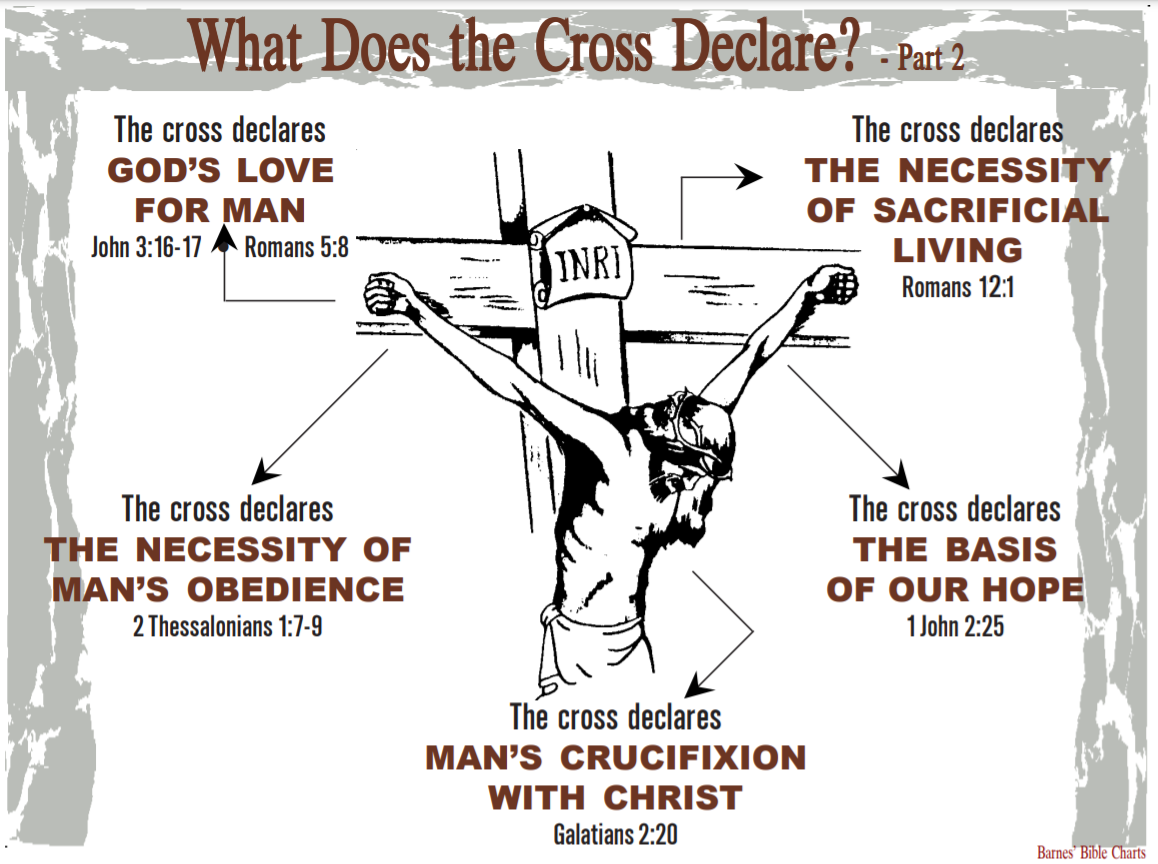
The CROSS of Christ

One of the saddest days in history, while simultaneously being the greatest day, was the day that Jesus died on an ancient Roman cross of execution.

While this is the time of year many are talking about His birth, can we remember and be ready to talk about His death?

What does the CROSS of Christ mean to us? While books can and have been written on this subject, this article will look at just a few aspects of the Cross of Christ.

We have no instructions on how nor when to celebrate His birth, but we do have instructions on how & when to remember His death… His death on a CROSS.

Behold, we go up to Jerusalem; and the Son of man shall be betrayed unto the chief priests and unto the scribes, and they shall condemn him to death,And shall deliver him to the Gentiles to mock, and to scourge, and to crucify him: and the thir d day he shall rise again.” [Matt 20:18-19]

Jesus lived a perfect life free of sin [Heb 4:15; 1Pet 2:21-22]. Yet, His short life on earth ended as if He were the vilest of sinners by being executed on a Cross.

The Cross of Christ means death by CRUCIFIXION. It is the execution of a person by nailing them to a post with their arms outstretched on a cross member lifting the person up on full display to all. Our Savior knew all of this. He told His disciples about it [Mat 16:21; Joh 3:14], and He did it anyway. The Cross of Christ represents CRUCIFIXION still [Rom 6:6; Gal 2:20; 5:24; 6:14].

The Cross of Christ represents REJECTION by His own. The prophet Isaiah foretold this, “He is despised and rejected of men; a man of sorrows, and acquainted with grief: and we hid as it were our faces from him; he was despised, and we esteemed him not.” [Isa 53:3] During His last hours on earth, the ones who cried “Hosanna: Blessed is the King of Israel that cometh in the name of the Lord” [John 12:13], just days earlier, were calling out for His death. This despite the evidence of scripture, and His own works and words, the Jews REJECTED Him. The Cross of Christ represents REJECTION still. [John 15:18]

The Cross of Christ represents His OBEDIENCE to God the Father. “And he said, Abba, Father, all things are possible unto thee; take away this cup from me: nevertheless not what I will, but what thou wilt.” [Mar 14:36; Joh 8:29; Heb 5:7] It amazes me how fervent some will fight against our need for OBEDIENCE to Christ while claiming to follow the example of Jesus. “Though he were a Son, yet learned he obedience by the things which he suffered; And being made perfect, he became the author of eternal salvation unto all them that obey him;” [Heb 5:8-9]. The Cross of Christ represents OBEDIENCE still. [2Thess 1:8-9]

The Cross of Christ represents SUFFERING. Jesus suffered even before reaching the cross. “Then Pilate therefore took Jesus, and scourged him.” [John 19:1; Mark 15:15-20]. The Cross of Christ represents SUFFERING still today; “Forasmuch then as Christ hath suffered for us in the flesh, arm yourselves likewise with the same mind: for he that hath suffered in the flesh hath ceased from sin;” [1Pet 4:1-2]. “For even hereunto were ye called: because Christ also suffered for us, leaving us an example, that ye should follow his steps:” [2:21].

The Cross of Christ represents SACRIFICE. Jesus died because He was the only acceptable Sacrifice for our sin. The blood of animals can never take away sin, “For it is not possible that the blood of bulls and of goats should take away sins.” [Heb 10:4], and without the shedding of blood there is no remission of sin, “…and without shedding of blood is no remission.” [Heb 9:22]. Christ shed His own blood, becoming, “the Lamb of God, which taketh away the sin of the world.” [John 1:29, 36]. The Gospel we obey, by which we may be saved, is the Death (on a Cross), Burial, and resurrection of Jesus [1Cor 15:1-4]. The death of Christ is God’s grace toward us who deserve nothing from Him. He provided the Lamb, the SACRIFICE [cf. Gen 22:8].

The Cross of Christ represents SACRIFICE still. “I beseech you therefore, brethren, by the mercies of God, that ye present your bodies a living sacrifice, holy, acceptable unto God, which is your reasonable service.” [Rom 12:1; cf. Phil 4:18]

So you see, the Cross of Christ represents so much more than an object to be viewed. What happened on that Cross, and our response to it is what truly matters. May God bless us all.

     — spencer

A MEMORIAL Day Reminder


a MEMORIAL of Christ.


Memorials are often Monuments or statues, but let us keep the memory of Christ always on our heart, not with a physical image. Christ commanded that a memorial Supper be kept in His honor, not any images or crosses. Matt 26:26-30; Mark 14:22-26


The Memorial is about Christ who He is. He is Immanuel, that is, God with us. Mat 1:23; Isa 7:14


We Set aside time to examine ourselves on the 1st day of the week with the gathered local church just as they did in the first century. Acts 2:42; 20:7.


We keep the memorial Supper and we observe it until He returns. 1Cor 11:26 For as often as ye eat this bread, and drink the cup, ye proclaim the Lord’s death till he come.


We practice the memorial of the Lord’s Supper as a Remembrance of Christ, His life, death, burial & resurrection. 1Cor 11:24-25 and when he had given thanks, he brake it, and said, This is my body, which is for you: this do in remembrance of me. In like manner also the cup, after supper, saying, This cup is the new covenant in my blood: this do, as often as ye drink it, in remembrance of me.


The Lord’s Supper was Instituted by Jesus on the night of His betrayal. Luke 22:14-21; 1Cor 11:23 For I received of the Lord that which also I delivered unto you, that the Lord Jesus in the night in which he was betrayed took bread;


This Supper is a continual reminder that Jesus’ death was an Atonement offered for our sins. Heb 10:12; 2:17 (cr Ex 30:10; Lev 16) Propitiation. 1Cor 11:26

Heb 10:12 But this man, after he had offered one sacrifice for sins for ever, sat down on the right hand of God;


This memorial Supper is a reminder of the Love demonstrated by His dying for us. Rom 5:8-10; 1John 3:16; 4:7-11

1John 3:16 Hereby know we love, because he laid down his life for us: and we ought to lay down our lives for the brethren.


–Spencer