
Evidence for our Faith: Faith comes by hearing

How Long Would It Take to Teach the Whole Bible Three Times a Week?

While planning the Bible studies for this congregation, I wondered how long it would take to teach the entire Bible in depth in only our 3 sessions per week?

The schedule in question was familiar: two Bible classes each week, each about 45 minutes long but with an introduction, prayer, discussion, and summary that left roughly 30 minutes for actual material. The third session would be a sermon (possibly as long as 45 minutes) but in reality, I only have about 30 minutes. That gave me three half-hour teaching slots per week to teach.

There are several common methods of teaching Scripture, each has its own pace. The first and perhaps most obvious is the EXPOSITORY method; going chapter-by-chapter in order. At first glance, this seems easy to measure: 1,189 chapters, one per session, for 1,189 classes; about 7.6 years at three sessions per week. But here’s the reality: many chapters require a minimum of two or even three sessions to capture the fullness of their meaning. You could go chapter-per-session if you only did an overview, but true depth would extend the timeline significantly. Recognizing this reality, a book-by-book overview may pick up the pace, but no real depth will be accomplished.

Other methods would take different amounts of time. A topical study, covering 100 major subjects like baptism, love, faith, or the church and giving each three sessions, would total 300 lessons; just under 2 years. Character studies (looking at lives like Abraham, David, Peter, and Paul) might only take around 100 sessions if you covered about 50 people with two classes each. That’s less than a year. Thematic or doctrinal studies, following threads like covenant, kingdom, or grace from Genesis to Revelation, would run about 120 sessions, taking nine months. A chronological narrative, telling the Bible’s story in the order events happened, would be more ambitious: about 250 sessions, or 1.6 years.

If you stacked all these methods back-to-back without repeating material, the grand total would be 2,105 sessions. That’s about 13½ years of steady teaching (three times a week, every week). Start now and finish somewhere in the late 2030s. But here’s the twist: this assumes each important doctrine, like salvation in Christ, IS GIVEN ONLY ONCE. That would be like a wilderness wandering of teaching and never helping anyone actually enter the Promised Land. If salvation (and many other vital subjects) is left as a single stop along the way, we risk people hearing the gospel once every few years.

The truth is, many of these methods overlap, and rightly so. Some themes, especially the gospel of Christ, must resurface again and again no matter which teaching plan is in use. Whether chapter-by-chapter, book-by-book, or topic-by-topic, there must be repeated lessons on repentance, faith, and obedience. Yes, we could make a plan that takes a decade or more to cover everything, but if we’re truly guiding people toward salvation in Christ, we won’t wait until year seven to bring up the cross again.

Agape

A Plea to Our Catholic Friends

A Passionate Plea to My Catholic Friends: Turn to the True Gospel

MY DEAR CATHOLIC FRIENDS, I come to you with a heart overflowing with love and urgency, pleading with you to hear the truth about the dangers of the Catholic faith. As your friend, I cannot stay silent when I see you entangled in a system that strays from the pure gospel of Christ. With Scripture as our guide, here are five critical warnings, praying they will open your eyes to the truth and lead you to the freedom found in Jesus alone.

FIRST, Jesus Himself warned us in Matthew 23:9, “Call no man your father on earth, for you have one Father, who is in heaven.” Yet the Catholic Church exalts the Pope, calling him “Holy Father” or “Papa,” a title reserved for God alone. This is no minor mistake—it elevates a man to a position that belongs only to our Heavenly Father. Paul referenced himself “as a father” but never took on the title as “Holy Father.” He often used humbling language and pleaded with people not to bow down to him. “Sirs, why do ye these things? We also are men of like passions with you, and preach unto you that ye should turn from these vanities unto the living God, which made heaven, and earth, and the sea, and all things that are therein:” (Acts 14:15). I implore you to reject this practice and honor God alone as your Father.

SECOND, the organization of the Catholic Church, with its hierarchy of popes, cardinals, and priests, contradicts the biblical model for the church. In 1 Timothy 3:1-10, Paul outlines the qualifications for elders and deacons—humble, local leaders who serve the local body of Christ, not a global institution with supreme rulers. The Catholic structure, centered in the Vatican, adds layers of human authority that Scripture never endorses. The largest organization of the Lord’s church on earth is the local church with autonomy from any other. Please, compare this to God’s Word and see the difference for yourselves!

THIRD, the Catholic religion preaches a perverted gospel, which Paul condemns in Galatians 1:6-10. The Catholic Church distorts the biblical gospel by adding human inventions like infant baptism, the granting of indulgences, an infallible Pope, and purgatory, which obscure the truth of salvation. Scripture teaches that salvation comes through faith in Christ, expressed in obedience to His commands, such as believing and being baptized, as Jesus declared in Mark 16:16: “Whoever believes and is baptized will be saved.” In Acts 19:1-5, Paul taught the Ephesians to believe and be baptized, and they demonstrated repentance by burning their magic books, showing fruits worthy of their faith. While Ephesians 2:8-9 affirms salvation is by grace through faith, not by works of human merit, this faith is active and obedient, not a mere mental assent. By contrast, Catholicism’s reliance on sacraments, human mediators to forgive sins, and man-made doctrines perverts the gospel’s simplicity. Paul warns, “If anyone is preaching to you a gospel contrary to the one you received, let him be accursed!” My friends, this is a matter of eternal life—reject these false teachings and embrace the true gospel of Christ’s grace and obedient faith!

FOURTH, the Catholic Church elevates men above what is proper, violating 1 Corinthians 4:6, which warns us “not to think of men above that which is written.” The veneration of Mary, the canonization of saints, and the authority given to priests and popes place mere humans on pedestals that belong to God alone. Mary was a humble servant, not a co-redeemer; saints are all believers, not an elite class; and no man can stand between you and Christ as your mediator (1 Timothy 2:5). I plead with you to humble yourselves before God and reject these man-made traditions!

FINALLY, the Catholic Church promotes false signs and a misunderstanding of saints, contradicting 1 Corinthians 1:2 and 13:8-11. In 1 Corinthians 1:2, Paul calls all Christians saints, not just those canonized by the Church. The Catholic obsession with miracles, apparitions, and relics often borders on idolatry, and 1 Corinthians 13:8-11 tells us that miraculous signs were temporary, meant to confirm the gospel in the early church, not to be sought after today. Turn away from these deceptive signs and embrace the sufficiency of Christ and His Word!

MY FRIENDS, I know these words may be hard to hear, but they come from a heart that loves you and longs for you to know the freedom of the true gospel. The traditions of Catholicism may feel comforting, but they are a trap, leading you away from the simplicity and purity of Christ. I beg you, search the Scriptures for yourselves, test what I’ve said, and turn to Jesus alone for salvation. He is enough! May God open your eyes and draw you to His truth. With all my love, I pray for you.

—Anon

If I met the Pope

Calling on the name of the Lord: What is it really?

Calling on the name of the Lord:

Prayer or obedience?

Acts 22:16 (KJV) states:

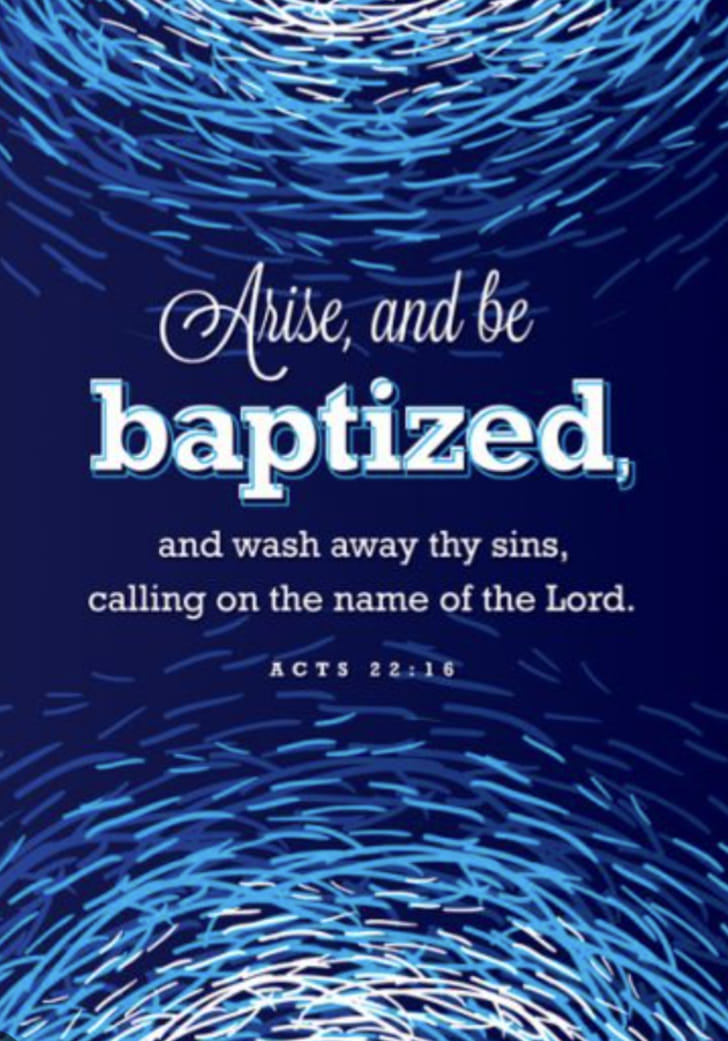
“And now why tarriest thou? Arise, and be baptized, and wash away thy sins, calling on the name of the Lord.”

This verse records Ananias’ instructions to Saul (later Paul) regarding his conversion. To understand what it means to “call on the name of the Lord,” we must look at how the Bible defines and uses this phrase.

1. Calling on the Name of the Lord Involves Obedience

Acts 22:16 ties “calling on the name of the Lord” directly to baptism, which is the moment when Saul’s sins were washed away. This aligns with Jesus’ own words in Mark 16:16:

“He that believeth and is baptized shall be saved; but he that believeth not shall be damned.”

Calling on the name of the Lord, then, is not merely a verbal plea but involves obedient action. This is further clarified by Romans 10:13-14:

“For whosoever shall call upon the name of the Lord shall be saved. How then shall they call on him in whom they have not believed? and how shall they believe in him of whom they have not heard? and how shall they hear without a preacher?”

Paul, writing later, shows that calling on the Lord’s name requires hearing the gospel, believing, and responding in obedience.

2. Calling on the Name of the Lord Is Not Just Prayer

Some assume that calling on the Lord’s name is merely saying a prayer for salvation, but Scripture does not support this idea. Consider Jesus’ words in Matthew 7:21:

“Not every one that saith unto me, Lord, Lord, shall enter into the kingdom of heaven; but he that doeth the will of my Father which is in heaven.”

Merely addressing Jesus as Lord does not save—doing His will does. This is consistent with Acts 22:16, where Paul had already been praying (Acts 9:11), yet he still needed to be baptized to wash away his sins.

3. Biblical Examples of Calling on the Name of the Lord

The phrase “call on the name of the Lord” is used throughout Scripture in connection with worship and obedience.

• Genesis 4:26 – “Then began men to call upon the name of the LORD.” This refers to worship and devotion to God.

• Joel 2:32 (quoted in Acts 2:21) – “Whosoever shall call on the name of the Lord shall be delivered.” This was fulfilled in Acts 2, where Peter preached that repentance and baptism in Jesus’ name were necessary for salvation (Acts 2:38).

In Acts 2, the people called upon the Lord by obeying Peter’s command to repent and be baptized. This directly parallels Acts 22:16, where Paul was instructed to do the same.

So what now?

To “call on the name of the Lord” is to appeal to Him for salvation by faithful obedience to His commands. Acts 22:16 shows that Saul (Paul) did this when he was baptized, at which point his sins were washed away. This is consistent with how the phrase is used throughout the Bible—faith in action, not merely words.

Spencer

Franklin & Juniper St

church of Christ

Borger, Tx

Plea for Pure Christianity

“And whatsoever ye do in word or deed, do all in the name of the Lord Jesus, giving thanks to God and the Father by him.” (Colossians 3:17).

(by Jere E. Frost, via “According To The Pattern”, Medina, TN, 04/01/1990)

WE BELIEVE the Bible to be the inspired word of God, a perfect and sufficient guide (2 Timothy 3:16, 17). It does not incidentally contain some things which we teach — it is the alpha and omega of our faith and practice, and we dare not go beyond it (2 John 9).

WE COME to you with no denominational plan seeking your favor, but only in the name of Christ, desiring to help you find the truth, anxious that you obey all of God’s commandments. The obedient have a right to the tree of life and may enter in through the gates into the city (Revelation 22:14). But those who merely cry, “Lord, Lord,” shall not enter into the kingdom of heaven (Matthew 7:21).

WE SUBMIT to the matchless authority of Christ, heeding the faultless message that He and his inspired servants taught (Hebrews 2:3). His word produces faith, and faith in Him as the Son of God is the foundation of hope (Hebrews 11:1; John 8:24). Every person must repent, repentance being required of all and death being held forth as the wage of refusal (Acts 17:30; Luke 13:3). Confession of faith in Christ is unto salvation, and upon such a confession one may be baptized (Romans 10:10; Acts 8:37). Baptism was commanded by Christ Himself (Mark 16:16), puts one into Christ (Galatians 3:27) where all spiritual blessings abound (Ephesians 1:3), and is for the remission of our sins and the salvation of our souls (Acts 2:38; 1 Peter 3:21). Who dares refuse it? Faithfulness unto life’s end is promised a rich heavenly reward (Revelation 2:10).

WE PRAY for unity among all professed believers, for Christ so prayed (John 17:20-23). Paul besought the Corinthians to be “of the same mind” and to “speak the same things.” (1 Corinthians 1:10). Since human wisdom is the cause of (not the cure for) division, we must discard and abandon it in order to be true to any prayer for unity. A perfect and God-given platform for genuine unity is set forth in Ephesians 4:3-6. This is the basis for spiritual harmony and lasting peace with God. Consider: One God (unity in worship), one Lord, Jesus Christ (unity in authority), one Spirit (unity in life), one faith (unity in doctrine), one body, the church (unity in organization), one baptism (unity in practice), and one hope (unity in desire and expectation).

WE REFUSE to sectarianize ourselves by wearing man-made religious names; they are not only unauthorized, but actually foment division. We are to be Christians, nothing more and nothing less, being completely satisfied and humbly grateful to be honored with the privilege of wearing Christ’s name (1 Peter 4:16). God has placed His name above every name, and the disciples wore it (Philippians 2:9; Acts 11:26). The body (church) of Christ also wears His name, preferring none other, and thus the New Testament speaks of “the churches of Christ” (Romans 16:16).

WE ENDEAVOR to speak where the Bible speaks, and to be silent where it is silent. Christians have no creed but Christ, are to uphold no name but the divine, and have no plea but the gospel. We should mutually seek to establish and maintain unity in essentials, liberty in opinions, and love in all things.

WE INVITE you, most sincerely, to come and study the Bible with us – pure Christianity is wonderful! Embrace it! Be just a Christian!

Agape

How to be saved according to the Bible

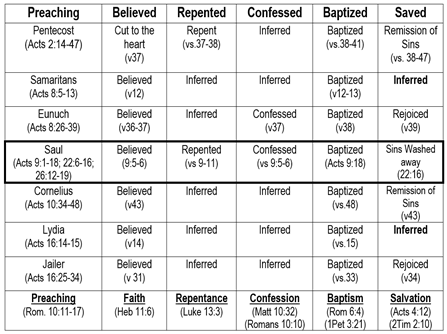
People often appeal to single passages on how to be saved, but ignore an entire book in the New Testament that shows people going from a lost condition to being saved. That book is called ACTS. It contains the founding of the church of Christ at Pentecost, and the conversion of the lost to salvation in Christ Jesus.

1. The first of these conversions happened on the notable day of Pentecost when the church was established. The text (Acts 2:14) shows that they had the Gospel preached to them; they heard (vv. 36-37); they repented of their sins (v. 38); and they were baptized into Christ (v. 38). The result was that they had their sins washed away. 

2. In Acts 8:4-5, Phillip preached to the people of Samaria; they heard (v. 6); they were baptized (v. 12).

3. Phillip also preached to Simon (Acts 8:4-5); he heard the Gospel (v. 6); he was baptized (v. 13).

4. Phillip preached to the Eunuch (Acts 8:35-39); he made the good confession (v. 37); he was baptized (v. 38) and rejoiced in the forgiveness of his sins (v. 39).

5. Ananias preached to Saul, later called Paul (Acts 9:17); he was baptized (Acts 22:16), and the rest of his life he taught others to do the same (I Cor. 12:13).

6. Peter preached to Cornelius (Acts 10:34-35); he and his family heard (v. 44); they repented of their sins (Acts 11:18); they were baptized (v. 48). They were saved (Acts 11:14).

7. Paul preached the saving message to Lydia on his second missionary journey (Acts 16:13); she heard (v. 14); she was baptized (v. 15).

8. Paul preached to the Jailor (Acts 16:32); he repented (v. 33); he was baptized (v. 33).

9. Paul preached to and converted souls at Corinth (Acts 18:5); they heard (v. 8); they were baptized (v. 8).

10. Paul preached to Crispus (Acts 18:5); though it is not recorded in the book of Acts that he was baptized, he was baptized according to Paul’s writing to the Corinthian church (1Cor. 1:14).

11. The Ephesians had the Gospel preached to them (Acts 19:8); they heard the message of salvation (Eph. 1:13). They were baptized (Acts 19:5) and were in this way saved by grace (Eph. 2:8-10).

agape,

spencer

Here is a link to another article on the conversions in Acts.

What Can We Say Shen We Don’t Know What to Say?

And if it seem evil unto you to serve the LORD, choose you this day whom ye will serve; whether the gods which your fathers served that were on the other side of the flood, or the gods of the Amorites, in whose land ye dwell: but as for me and my house, we will serve the LORD.” (Joshua 24:15).

Being a personal worker is hard. Not only does the personal worker need to be able to present the truth with love, we must also combat error. I’ll admit it, I’ve often taken the “you’re wrong here’s why” approach to evangelism.

 Almost on a daily basis, especially Since I started preaching in Borger, I am told fantastic stories of how folks claim to have been saved. At no point is there ever a “thus saith the Lord” with a bible book, chapter, verse reference.

What do we say after those kinds of tales? It’s too easy to shake your head and close off the conversation because we don’t know how to respond.

I’ve discovered a better way, and I want to share it with you. Instead of running away, I see it as an opportunity to share the true Gospel, (Romans 1:16).

It’s called the “As for me…” principle as found in Joshua 24:15. The Apostle Paul used a similar tactic on Mars Hill. “Then Paul stood in the midst of Mars’ hill, and said, Ye men of Athens, I perceive that in all things ye are too superstitious. For as I passed by, and beheld your devotions, I found an altar with this inscription, TO THE UNKNOWN GOD. Whom therefore ye ignorantly worship, him declare I unto you. God that made the world and all things therein, seeing that he is Lord of heaven and earth, dwelleth not in temples made with hands” (Acts 17:22-24).

Here’s how it works. First, I ASK if I can open up to them about my own salvation. I then tell them how I was SAVED according to the commands of God. I had to Hear the gospel (Matt 7:23-29). I Believe that Jesus is the Christ (John 8:24). I Repented and continue to live a penitent life (Luke 13:3). I have Confessed and continue to Confess Jesus before all (Matt 10:32). I was Baptized in Water, just as the Lord commands to have my sins washed away (Mar 16:16; Acts 2:38), and I strive to be Faithful to the Lord all the days of my life even if doing so causes me hurt (Mat 28:20; Rev 2:10). “I know whom I have believed, and am persuaded that he is able to keep that which I have committed unto him against that day” (2Tim 1:12).       

Sometimes there are questions about what I’ve said. I answer by saying, “I’ve FOUND that there are many discrepancies between what people say and what God teaches in His word. This next part is important. I ask if I can show them what I did. Then OPEN an actual printed bible for them to see and read for themselves.

I READ to them, (or let them read) those passages that I saw when I first learned the truth. Sometimes I need a few MARGIN notes to remind me where they are. I let the gospel be the power of God unto salvation and not myself for the converting of the soul. Whenever I’ve relied on my own ability to quote scripture, I’ve been met with resistance. One person said, “Satan quoted scripture too.” That push back was helpful because it revealed to me what people are thinking whenever I have quoted verses (even if accurately). It’s hard for people to argue against the Word. They’ll try, but they’ll fail.

Finally, I have no EXPECTATIONS of them. Certainly, my desire is that they come to the knowledge of the truth and be saved, but that’s God’s work. My job is to scatter the seed on the ground of the heart (see Mark 4:14-20). “I have planted, Apollos watered; but God gave the increase” (1Cor 3:6).

Agape,

Spencer

Go here For some helps with scripture when sharing the gospel.

Let’s Talk about Jesus #4; His Unspeakable Gift

Thanks be unto God for his unspeakable gift.

(2Corinthians 9:15).

While we’re talking about Jesus, let’s see if we can talk about this unspeakable gift.

The word here is the idea of indescribable, something we’re often unable to put into words. We are allowed to speak about it, but we’ll find it difficult to fully describe the good gifts of God.

Since most folks are talking about Jesus, let’s talk about Him too. Jesus told a healed man, “Go home to thy friends, and tell them how great things the Lord hath done for thee, and hath had compassion on thee” (Mark 5:19). Perhaps, we can do the same?

Maybe we can try to put into words the unspeakable GIFTS of Christ.
Every good gift and every perfect gift is from above, and cometh down from the Father of lights, with whom is no variableness, neither shadow of turning
 (James 1:17).

Blessed be the God and Father of our Lord Jesus Christ, who hath blessed us with all spiritual blessings in heavenly places in Christ” (Ephesians 1:3).

What are a few of the spiritual GIFTS we have from God in Christ?

We have GRACE. “For the grace of God that bringeth salvation hath appeared to all men” (Titus 2:11; cf Eph 2:8). We need to start here for it is by the GRACE of God in Christ that we have access to salvation. Grace is a gift of God. It is God’s Rescue plan for sinful man. Grace gives us Access to God through Christ. The sacrifice of Christ is the central component of God’s Grace. When we are baptized into Christ we are saved and can Escape the corruption of this life (for by Grace are you saved). Truly Grace is an indescribable gift.

The divinely INSPIRED word is a Gift of God. After James says that every perfect gift comes down from above, he writes this, “Of his own will begat he us with the word of truth, that we should be a kind of firstfruits of his creatures” (James 1:18). His inspired word is the source of knowledge about salvation in Christ, and is the source for how to live a life that is pleasing to Him. The Apostle Paul wrote to Timothy; “And that from a child thou hast known the holy scriptures, which are able to make thee wise unto salvation through faith which is in Christ Jesus. All scripture is given by inspiration of God, and is profitable for doctrine, for reproof, for correction, for instruction in righteousness: That the man of God may be perfect, throughly furnished unto all good works” (2Tim 3:15-17).

On a personal level, God gives us the Gift of bearing FRUIT. “But the fruit of the Spirit is love, joy, peace, longsuffering, gentleness, goodness, faith, Meekness, temperance: against such there is no law. And they that are Christ’s have crucified the flesh with the affections and lusts. If we live in the Spirit, let us also walk in the Spirit” (Galatians 5:22-25).

He also gives us gifts for our earthly TREASURE for our physical needs as well as for the church, “And God is able to make all grace abound toward you; that ye, always having all sufficiency in all things, may abound to every good work: (As it is written, He hath dispersed abroad; he hath given to the poor: his righteousness remaineth for ever. Now he that ministereth seed to the sower both minister bread for your food, and multiply your seed sown, and increase the fruits of your righteousness;) Being enriched in every thing to all bountifulness, which causeth through us thanksgiving to God” (2Corinthians 9:8-11; Mat 7:11).

Not just for our own use, but to share with those in need as the church in Macedonia did for the Saint in Jerusalem, “Moreover, brethren, we do you to wit of the grace of God bestowed on the churches of Macedonia; How that in a great trial of affliction the abundance of their joy and their deep poverty abounded unto the riches of their liberality. For to their power, I bear record, yea, and beyond their power they were willing of themselves; Praying us with much intreaty that we would receive the gift, and take upon us the fellowship of the ministering to the saints” (2Corinthians 8:1-4).

Lastly but certainly not least, God gives the gift of SALVATION. “For the wages of sin is death; but the gift of God is eternal life through Jesus Christ our Lord” (Romans 6:23). This gift He brings to all those that repent and are baptized (Acts 2:38) will not be removed. “For the gifts and calling of God are without repentance” (won’t take them back) (Romans 11:29).

People often mistake God’s Gifts as automatic & universal salvation, and that He gives physical blessings for all mankind regardless of their beliefs or actions. Not so. God gives the Gift of Access to salvation ONLY through His Son Christ Jesus. There is no other way. “Jesus saith unto him, I am the way, the truth, and the life: no man cometh unto the Father, but by me” (John 14:6).

The Gift of Salvation comes to those that obey Him. “And being made perfect, he became the author of eternal salvation unto all them that obey him” (Hebrews 5:9). Jesus has told us what will be said to the disobedient who call His name at the day of judgment, “And why call ye me, Lord, Lord, and do not the things which I say” (Luke 6:46)?

It is such a shame that even though we all have access to the Gift of God in Christ many will refuse it. God is full of Grace and Mercy, but one day everyone will stand before the throne of Christ to give an account and He “In flaming fire taking vengeance on them that know not God, and that obey not the gospel of our Lord Jesus Christ” (2Thessalonians 1:8).

While we still have breath, we can obey the Gift of the Gospel of Christ and be saved. Then when death comes, we shall hear, “Well done, thou good and faithful servant: thou hast been faithful over a few things, I will make thee ruler over many things: enter thou into the joy of thy lord” (Matthew 25:21).

Agape,

Spencer

Spencer is an evangelist for the Franklin & Juniper st church of Christ in Borger, Tx.

This is part of a series of articles about reasons to Talk About Jesus.

The Divine Order of Baptism

When is one saved, before or after baptism?

I contend that baptism comes before salvation. Some claim salvation comes before baptism.

Which does the Holy Spirit place first?

A. Mark 16:16 He that believeth and is baptized shall be saved;”

(1) Belief, (2) Baptism, (3) Salvation.

B. Acts 2:38Repent, and be baptized every one of you in the name of Jesus Christ for the remission of sins, and ye shall receive the gift of the Holy Ghost.”

(1) Repent, (2) Baptized, (3) Remission of sins.

C. Acts 22:16And now why tarriest thou? arise, and be baptized, and wash away thy sins, calling on the name of the Lord.”

(1) Arise, (2) Baptized, (3) Wash away sins.

D. Galatians 3:27For as many of you as have been baptized into Christ have put on Christ.”

(1) Baptized, (2) Into Christ, (3) Put on Christ.

E. 1Peter 3:21The like figure whereunto even baptism doth also now save us…”

(1) Baptism, (2) Saves.

If they’re correct that salvation comes before baptism, is it not strange that the Holy Spirit never one time had these in the right order?

Agape,

Spencer

Do you know what the Bible says about what SAVES?

Can we know too much Bible? pt1

Can we know too much Bible? 1/4

We need to know enough to be able to speak the SAME things.

Now I beseech you, brethren, by the name of our Lord Jesus Christ, that ye all speak the SAME thing, and that there be no divisions among you; but that ye be perfectly joined together in the SAME mind and in the SAME judgment. (1Cor1:10)

Can you know too much about SALVATION? Are all churches teaching the SAME thing as The Bible? Are we teaching the SAME thing as Jesus.

What did Jesus say about SALVATION?

Matthew 7:24 KJV

Therefore whosoever HEARS these sayings of mine, and doeth them, I will liken him unto a wise man, which built his house upon a rock:

John 8:24 KJV

I said therefore unto you, that ye shall die in your sins: for if ye BELIEVE not that I am he, ye shall die in your sins.

Luke 13:3,5 KJV

I tell you, Nay: but, except ye REPENT, ye shall all likewise perish. [5] I tell you, Nay: but, except ye REPENT, ye shall all likewise perish.

Matthew 10:32-33 KJV

Whosoever therefore shall CONFESS me before men, him will I CONFESS also before my Father which is in heaven. [33] But whosoever shall deny me before men, him will I also deny before my Father which is in heaven.

Mark 16:16 KJV

He that believeth and is BAPTIZED shall be saved; but he that believeth not shall be damned.

It’s water baptism. Notice what the first Christian evangelists taught.

Acts 8:35-36 KJV

Then Philip opened his mouth, and began at the same scripture, and preached unto him JESUS. [36] And as they went on their way, they came unto a certain WATER: and the eunuch said, See, here is WATER; what doth hinder me to be BAPTIZED?

Baptism is a burial in water.

Colossians 2:12 KJV

BURIED with him in BAPTISM, wherein also ye are risen with him through the faith of the operation of God, who hath raised him from the dead.

Matthew 28:20 KJV

Teaching them to OBSERVE ALL THINGS whatsoever I have COMMANDED you: and, lo, I am with you alway, even unto the end of the world. Amen.

Does your church teach the SAME as Jesus about how to be saved? Does it teach the SAME purpose?

Hear, Believe, Repent, Confess, water Baptism, & Faithfulness.

Which can you add, change, or remove and still be speaking the SAME thing as Jesus, Peter, Philip, Paul & the rest of the NT?

Agapa,

Spencer

Take a look at these self-directed bible studies. Let us know what you think.

James: God brings GIFTS

Every good gift and every perfect gift is from above…

The gift of GRACE. Eph 2:8-9.

The gift of the INSPIRED word.  2Tim 3:15-17.

The gift of FRUITFUL seasons.   Acts 14:15-17.

The gift of earthly TREASURE. Mat 7:11. to Give & to share. Eph 4:28.

The Gift of SALVATION.   Acts 2:38; Rom 6:23.

The Franklin and Juniper church of Christ begins an overview study of the book of James. If you live in the Borger area, We invite you to join us at 6:30pm each Wednesday night for the next few weeks.

Click here for an overview chart of the Book of James.