
Evidence for our Faith: The Bible’s Answers to Life’s Deepest Questions

Generations of people have wrestled with tough questions: Why are we here? Why is there pain in the world? Is there anything after we die? The Bible, trusted by billions, gives clear and meaningful answers to these deep questions. It’s like a guidebook from God, offering wisdom that makes sense and stands the test of time. It is a book for how to understand and navigate through this world, but also guides us to know how to have eternal life beyond this one. It is the word of God.

“And that from a child thou hast known the holy scriptures, which are able to make thee wise unto salvation through faith which is in Christ Jesus. All scripture is given by inspiration of God, and is profitable for doctrine, for reproof, for correction, for instruction in righteousness: That the man of God may be perfect, throughly furnished unto all good works” (2 Timothy 3:15-17).

The Bible declares our purpose. Ecclesiastes 12:13 puts it plainly: “Fear God, and keep his commandments: for this is the whole duty of man.” This means living in a way that puts God first in our lives, rather than chasing our own lusts, desires, and goals. The Bible teaches we were created by God and are made to glorify Him (Genesis 1:26-8; Isaiah 43:7). This provides a clear purpose, a timeless sense of value, and reassurance that we are more than mere animals.

Suffering is real, and the Bible addresses it head on. The story of Job shows a man who faced terrible pain but found God was still with him. Romans 8:28 promises that “God works all things for good for those who love Him.” Pain might come from human mistakes (Genesis 3:16–19) or just life’s challenges, but the Bible never calls it useless. It can shape us, and make us stronger (James 1:2–4). It can also help us to grow closer to God as we recognize our need for His strength (2 Corinthians 12:9-10). Many are hopeless in suffering, but the Bible offers hope that good can come out of suffering for those that love the Lord. The Bible also assures us that suffering is not God messing with us.

The Bible gives a straight answer about life after death. The Bible says, “God loved the world so much that He gave His only Son, so that everyone who believes in Him and follows Him will not be lost but have eternal life” (John 3:16), and “He that believeth and is baptized shall be saved” (Mark 16:16a). The Bible gives us instructions on how to have eternal life with God (e.g. Acts 2:38, Romans 6:17–18). The Bible’s promise of eternal life is backed by Jesus’ resurrection (1 Corinthians 15:20–22), a real event that gives us solid hope for eternity. We can know where we are going and how to get there.

Some people say the Bible’s answers are too rigid for today’s times of enlightenment. Thinkers through the ages have seen how the Bible’s teachings make sense of life’s big questions and remains timeless. It does more than just comfort us, it shows us how to live with purpose, face challenges with hope, and prepare for eternity through obedience to God’s Word. Every generation needs the Bible to discover true enlightenment in God’s timeless wisdom.

The Bible gives more than just answers; it shows us the true God who walks with us through life’s ups and downs. By believing in Jesus and obeying the gospel, we find purpose, hope, and the promise of eternal life. In a confusing world, the Bible is a steady guide for life’s biggest questions.

Agape

Sources:
The Holy Bible (KJV): Ecclesiastes 12:13, Isaiah 43:7, Romans 8:28, John 3:16, etc.
Seeking God; Aspiring to Excel

Aspiring to Excellence (Godliness and Holiness)

In my walk with Christ, I’m learning to aspire to excellence through godliness and holiness, though I often feel unworthy of such a high calling. 1 Timothy 6:11 urges me to pursue godliness, a life of devotion to God, while Hebrews 12:14 calls me to “pursue… holiness, without which no one will see the Lord.” These virtues connect to the righteousness and faith in 1 Timothy 6:11 and 2 Timothy 2:22, and they echo the call to seek “things above” in Colossians 3:1-2. I’m far from perfect, but I long to reflect God’s character more each day.

This pursuit is crucial because it draws me closer to God Himself. Godliness means living with reverence, seeking His will in every decision, but I often get distracted by worldly concerns. Holiness, too, challenges me to stand apart from sin and selfishness, as Hebrews 12:14 warns that without it, I won’t see God. This sobers me, reminding me that my efforts matter, not to earn salvation but to honor the One who saved me. These virtues shape my heart, teaching me to love what God loves and hate what He hates, aligning with the righteousness of both Timothy passages.

Aspiring to godliness and holiness is a humbling journey. I need the support of other saint, as 2 Timothy 2:22 suggests, pursuing these virtues “with those who call on the Lord.” Through prayer, Scripture, and accountability, I’m slowly growing, learning to forgive quickly, speak truthfully, and serve humbly. Each step feels like a battle, but it’s worth it to become more like Christ. As a saint, I seek this treasure of excellence, trusting God to refine me into His image, one faltering step at a time.

SHADOWS of good things to come

Which are a shadow of things to come; but the body is of Christ.”        (Col 2:17)

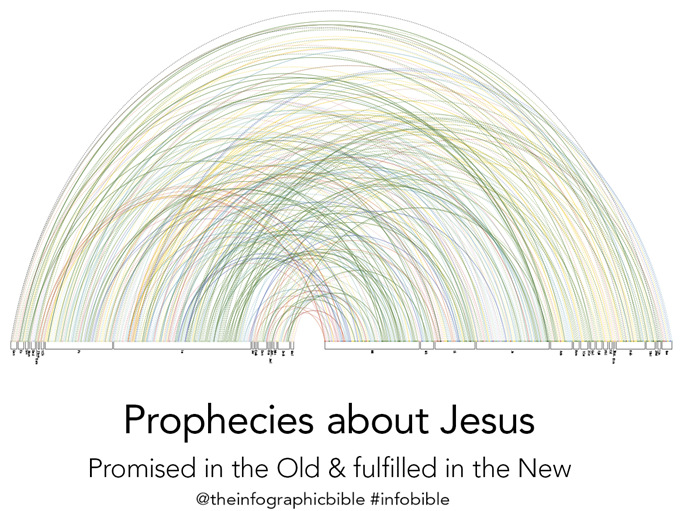
Jesus the Christ, is the main point of the bible which was in the mind of God before the foundation of the world. “Who verily was foreordained before the foundation of the world, but was manifest in these last times for you” (1Pet 1:20).

This means that the things written before in the Old Testament point to the things in the New Testament. This concept gives us better understanding of what Paul wrote in Rom 15:4, “For whatsoever things were written aforetime were written for our learning, that we through patience and comfort of the scriptures might have hope.”

While we cannot use the commands of the OT for doctrine today, we can look into the OT for the message of Christ. These messages are contained in Types and Shadows. “For the law having a shadow of good things to come, and not the very image of the things, can never with those sacrifices which they offered year by year continually make the comers thereunto perfect” (Heb 10:1).

Types and shadows are Old Testament people, events, or ceremony the foreshadow the coming Messiah and His church. We often use the terms “Type” and “Antitype. For some this can be confusing. The “TYPE” is the shadow of the real thing. The “ANTITYPE” is the real thing.

There are three kinds of SHADOWS.

  1. PERSONS, like Adam, Cain, Abel, Melchizedek, Abraham, Isaac, Joseph, Moses, Joshua, David, Jonah.
  2. EVENTS, like the Flood, the Plagues of Egypt, the Passover, the Brazen Serpent, Crossing the Jordan, Cities of Refuge.
  3. CEREMONIES, like the Offerings, Ceremonial Cleansing, Feasts, Year of Jubilee, Day of Atonement. To this could be added STRUCTURES, like the Ark, the Tabernacle, the Temple, and the furnishings in the temple. We would also include COLORS & NUMBERS.

Another way to describe these 3 types is as Historical, Legal, and Prophetic types.

The purpose of the SHADOWS.

The first purpose of the SHADOWS was to give a picture and outline representing something in the future. Especially the Scheme of Redemption. Such were the point of the SACRIFICES from patriarchal to Jewish age. (Heb 9, 10:18)

Another purpose of the type or shadow was as proof and as a demonstration of the Divine origin of the antitype. “And Moses verily was faithful in all his house, as a servant, for a testimony of those things which were to be spoken after; But Christ as a son over his own house; whose house are we, if we hold fast the confidence and the rejoicing of the hope firm unto the end” (Heb 3:5-6).

Here’s what is of powerful interest to us. The TYPES & SHADOWS must have originated by ONE who perfectly understood the antitype toward which the type or shadow pointed. God alone understood them from before, and could author them perfectly.   

The Patriarchs and the Jews engaging in the events, setting up and writing on the types, could not understand them. Hence, they are not the originators of them. The Bible is all of God!!! This is another evidence for the validity of the Bible as being the Inspired Word of God.

The System of Sacrifices serve as a Shadow for the sacrifice of Christ.

Which was a figure for the time then present, in which were offered both gifts and sacrifices, that could not make him that did the service perfect, as pertaining to the conscience; Which stood only in meats and drinks, and divers washings, and carnal ordinances, imposed on them until the time of reformation. But Christ being come an high priest of good things to come, by a greater and more perfect tabernacle, not made with hands, that is to say, not of this building; Neither by the blood of goats and calves, but by his own blood he entered in once into the holy place, having obtained eternal redemption for us. For if the blood of bulls and of goats, and the ashes of an heifer sprinkling the unclean, sanctifieth to the purifying of the flesh: How much more shall the blood of Christ, who through the eternal Spirit offered himself without spot to God, purge your conscience from dead works to serve the living God?” (Heb 9:9-14)

If you find reading the Old Testament boring, or you are unable to see its relevance, looking for the Types & Shadows may help you develop an excitement to read those things written before. The Old Testament is about Jesus. “Search the scriptures; for in them ye think ye have eternal life: and they are they which testify of me” (John 5:39).

spencer

How to TEST the spirits. 1Thess 5:21

1Thess 5:21 Test all things; hold fast what is good. (NKJV)

1John 4:1; 1Thess 5:21

  1. Are they just TROUBLERS? Gal 1:7
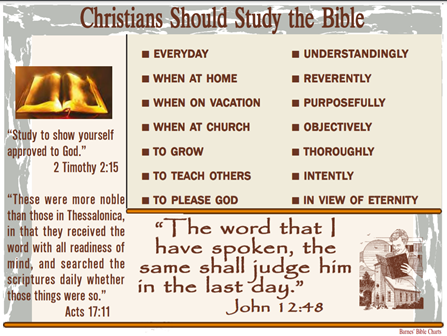
  2. Do they EXAMINE the scriptures to see if what is said is true? Act 17:11
  3. Do they SHOW the SCRIPTURES? 2Tim 3:15-17
  4. Do they TAKE TIME with you to teach, learn, or clarify. Like Paul & Aquila, Priscilla at Ephesus. Acts 18:26; 19:9-10

Spencer

Are There Any Bereans Today?

Upon leaving a very difficult evangelism trip through Thessalonica, Luke tells a refreshing story of those he & Paul met in Berea [Acts 17:1-12].

These were more noble than those in Thessalonica, in that they received the word with all readiness of mind, and searched the scriptures daily, whether those things were so. Therefore many of them believed; also of honourable women which were Greeks, and of men, not a few.”

When the word of the Lord was preached to them, they displayed some NOBLE characteristics we all would do well to emulate.

Are there any Bereans today?

Acts chapter 17 relates various reactions to the preaching of God’s word. Some mocked, others got angry even to the point of assault. The Bereans had a proper attitude toward hearing the message of the Gospel. Let’s consider some qualities that would make one NOBLE and ask ourselves if there are any Bereans today?

The Bereans were NOT going to be tossed about with every wind of doctrine NOR be deceived by empty words (cf. Eph 4:14; 5:6). How did they accomplish this? They “searched the scriptures daily, whether those things were so.” The Bereans were NOT gullible people to the extent that they would automatically accept anything taught them.  It’s interesting that Paul would write to the saints in Thessalonica about this very quality; “Prove all things; hold fast that which is good.” (1Thess 5:21; cf 1John 4:1). Are there any Bereans today with a mind to make a proper investigation?

The Bereans appear to be free of bias & preconceived ideas and OPEN to hear the message of the cross. “…in that they received the word with all readiness of mind…” People with prejudice don’t do this. Have you ever wondered how a person can claim to read the Bible yet miss the necessity of baptism? Perhaps it’s overlooked because of bias. Jesus encountered this type of problem with the religious of His day. “For this people’s heart is waxed gross, and their ears are dull of hearing, and their eyes they have closed; lest at any time they should see with their eyes, and hear with their ears, and should understand with their heart, and should be converted, and I should heal them.” (Matt 13:15)

Bias is like the blinders on a horse, seeing nothing that might cause any discomfort. Condemnation before investigation is not what the Bereans practiced. “He that answereth a matter before he heareth it, it is folly and shame unto him.” (Prov 18:13) Bias is the opposite of the love of the truth. Paul gave this warning also to the Thessalonians; “That they all might be damned who believed not the truth, but had pleasure in unrighteousness.” (2Thess 2:11-12) Are there any unbiased Bereans today?

The Bereans BELIEVED the truth. “Therefore many of them believed; also of honourable women which were Greeks, and of men, not a few.” Hearing the truth is how faith & belief comes. “So then faith cometh by hearing, and hearing by the word of God.” and “But these are written, that ye might believe that Jesus is the Christ, the Son of God; and that believing ye might have life through his name.” (Rom 10:17; John 20:31). Are there any Bereans today?

The Bereans LOOKED daily. This speaks to their tenacity & diligence. The scriptures in question of their day were the Old Testament Scriptures. These scriptures were written prior to the days of chapter and verse numbering which would have required considerable effort on their part to search. Undeterred, they searched daily! Are there any Bereans today that would have the energy to undertake this tedious endeavor? In a day when the Scriptures are so conveniently available on our phones, in apps, and when we have concordances and other types of helps to locate various passages. We should be teaming with Bereans!

Lastly, as they “searched the scriptures daily, whether those things were so,” we make note of their attitude of EARNEST attention. An attitude that the writer of Hebrews said we “ought to give the more earnest heed to the things which we have heard, lest at any time we should let them slip.” (Heb 2:1). They had elevated the word of God to the importance it deserves as the word of God (John 17:17). We can’t help but note what Paul wrote to the church at Thessalonica, “ye received it not as the word of men, but as it is in truth, the word of God, which effectually worketh also in you that believe.” (1Thess 2:13; cf 2Tim 3:15-17)

Are there any Bereans today?

The COMFORT of the scriptures

Romans 15:4 Such things were written in the Scriptures long ago to teach  us. And the Scriptures give us hope and encouragement as we wait patiently  for God's promises to be fulfilled. |
…through COMFORT of the scriptures we might have hope.

For whatsoever things were written aforetime were written for our learning, that through patience and through comfort of the scriptures we might have hope.[Romans 15:4]

Read that again; “…through the comfort of the scriptures we might have hope.” Did you catch it? Paul was referring to the Old Testament scriptures, and that those scriptures can give us comfort and hope.

I know many that find the Old Testament unpalatable, being too disgusting and violent. While it’s true that the OT is full of those things, the Holy Spirit has revealed that through them we may have COMFORT and HOPE.

The new year is upon us. Let’s renew our efforts to read for COMFORT and HOPE.  

7 ways we may find…

COMFORT and hope in the OT Scriptures.

The first thing we can notice is that CHRIST is in the Old Testament. “Search the scriptures; for in them ye think ye have eternal life: and they are they which testify of me.” Jesus taught of Himself to those on the road to Emmaus, and they said, “Was not our heart burning within us, while he spake to us in the way, while he opened to us the scriptures?” [John 5:39; Luke 24:13-27,32]

Paul wrote in two of his letters saying the scriptures were written for OUR Learning and OUR admonition upon whom the end of the age are come. We have a huge advantage in that we have the full revelation of Jesus Christ. [Rom 15:4; 1Cor 10:11]

In the letter to the Corinthians he wrote about those God brought out of Egypt, “Howbeit with MOST of them God was not well pleased: for they were overthrown in the wilderness. Now these things were our examples, to the intent we should not lust after evil things, as they also lusted. We always learn by others example or experiences. The Old Testament scriptures reveal both good and negative examples. It is foolish to try to learn from just your own mistakes. You may never recover! [1Cor 10:1-13]

A major lesson the entire world needed from the very first day of man in the Garden until now is to learn the FEAR of the Lord. Every generation, every person must learn this. The Old Testament teaches this lesson over and over through the example of those that disobeyed God. “And unto man he said, Behold, the fear of the Lord, that is wisdom; And to depart from evil is understanding.” Some dislike this idea of the FEAR of the Lord, but they misunderstand. If you’re in Christ through faithful baptism, you will have a reverential fear. But if not, you ought to have a terror type fear. “Knowing therefore the terror of the Lord, we persuade men.” [Job 28:28; 2Cor 5:11; cr Prov 1:7; Ecc 12:13; Mat 10:28]

Another lesson is that the OLD Covenant was hard, really hard. By reading Leviticus & Deuteronomy (reading through Romans & Hebrews also) we can see that the Law of Moses went well beyond the 10 Commandments. The Jewish traditions teach that there are about 613 commandments. But now we are under the Liberty of Christ. “A better covenant, which hath been enacted upon better promises.” We are no longer under the bondage of the OLD testament system that couldn’t remove sins, but left a reminder of sin year by year. “Thanks be to God for his unspeakable gift.” [Heb 8:6; Gal 2:4; 4:3, 9, 24, 25; 5:1]

The Law of Moses has been REMOVED & REPLACED by the Love and Blood of Christ on that cross. Having abolished in his flesh the enmity, even the law of commandments. We now live under grace through the doctrine of Christ. [Col 2:12-14; Eph 2:15; 2John 1:9]

Finally, we can use both the Old and the New Testament scriptures to TEST the spirits. The Bereans were “more noble than those in Thessalonica, in that they received the word with all readiness of the mind, examining the Scriptures daily, whether these things were so.” Who’s teaching where they testing? It was the Apostle Paul’s delivered to him through the inspiration of the Holy Spirit, AND THEY ARE CALLED MORE NOBLE! [Acts 17:11; Eph 3:3-4; cr. 1Thess 5:21; 1John 4:1-4; Deut 13:1-11; 18:20-22]

We need not abhor the OT scriptures for in them is COMFORT and HOPE.

Objections pt4

Objection! | Know Your Meme


OBJECTIONS to the GOSPEL pt4.

We need not view all challenges & objections to the truth as a bad thing. Some folks are just trying to work through the differences from what they’ve been falsely taught.

For the most part it is a necessary step in presenting the gospel. Challenges and objections are necessary to help a person to learn how to study and determine scriptural authority.

It can be viewed as a sign that a person is interested. It can also be a sign of someone who is rejecting the gospel.

As long as they’re asking questions, we can be prepared to answer them. [Col 4:6; 1Peter 3:15].


OBJECTIONS #7; I THINK.

This is a subtle objection that I find myself saying. The phrase “I Think” needs to be replaced with “God’s word says.” We live in a world that has embraced the idea of ‘my truth, your truth’ as if everyone has their own version of what is true. We need to have discussions about what does the Bible say?

Naaman is a great illustration for this very point. [2Kings 5:1-14] He had leprosy, learned of the cure and was told by ‘then man of God’ what he had to do to be cured. His first words? I THOUGHT… He thought the cure should look different, be more dramatic or at least be more comfortable. [v11] What we want things to be, doesn’t change the way things are. We need to obey the cure God commands.

For some they think the way to go is through TRADITIONS of their family or culture. Jesus pointed out that the religious leaders were laying aside the commands of God for their TRADITIONS. “Full well ye reject the commandment of God, that ye may keep your own tradition.” [Mark 7:9]

Others thing that their HEART will lead them to the truth, that they can feel they’re saved. Experience tells us this is no way to go. Emotion neither proves nor disproves anything. It’s possible to believe a lie, [2Thess 2:11-12; cf. Gen 37:30-35]

God’s word says through the Apostle Paul, IF ANYONE preach any other gospel unto you than that ye have received, let him be accursed. [Gal 1:6-10] We need to check out everyone, especially our own selves. Search the scriptures [Acts 17:11; 2Tim 2:15; 3:16-17].

This touches on the real problem. More and more people, even among believers, just do NOT KNOW the Scriptures. Jesus pointed this out to the Sadducees in Mat 22:26; “Ye do err, not knowing the scriptures, nor the power of God.” God said it this way, “My people are destroyed for lack of knowledge: because thou hast rejected knowledge, I will also reject thee,” [Hosea 4:6]

The last part of this objection comes in the form of an appeal to what our KIN folk have done. Very similar to tradition, but this takes it further by adding an emotional spin to it. “I go to the church my grandparents used to go. I even sit in their pew.”

What if your parents, grandparents were wrong? Are you going to allow yourself to be lost because they got it wrong? Here’s a question to ask yourself, What do your grandparents want for you now that they have sight? [cf. Luke 16:27-28] No parent or grandparent wants their children to repeat their mistakes.

Jesus gave a very difficult saying, “For I am come to set a man at variance against his father, and the daughter against her mother, and the daughter in law against her mother in law. And a man’s foes shall be they of his own household. He that loveth father or mother more than me is not worthy of me: and he that loveth son or daughter more than me is not worthy of me.” [Mat 10:34-38]. This is not a physical sword, rather it’s a spiritual sword. [cf. Eph 6:17; Heb 4:12]

The solution to I THINK is to ask;

  • What does the BIBLE SAY?
  • What does GOD SAY? (I repeat myself)
  • What does JESUS SAY? (I repeat, repeat myself)

This is my beloved Son: hear him.”

[Mark 9:7; cr. Heb 1:1-2]


–Spencer

Under the Influence

As the New Year fast approaches, I know that many will be celebrating the new year, often while drinking adult alcoholic beverages. You’ve heard about driving under the influence? That is when a person decides to drink alcohol unto intoxication, or imbibing in some other mind altering drug, and then decides to get behind the wheel of their vehicle. In a recent news story, a woman driving while under the influence, ran a red light plowing through a crosswalk, killing 3 people including a child and his mother.

Here in Borger, Texas, it’s listed as DWI; Driving While Intoxicated. According to the Texas DoT website, a first offense DWI charge can get you; “A fine of up to $2,000, Three days to 180 days in jail, Loss of driver license up to a year and an Annual fee of $1,000 or $2,000 for three years to retain driver license.”

Just the first offense penalty would be enough for me to avoid DWI. When you consider the human costs with the possibility of causing someone’s death or even my own, then without a doubt I would never drive under the influence of alcohol.

But that is the secular human side of me. As a Christian, I abstain from alcohol use. I don’t drink. As I pondered this thing called DUI or being under the influence, I was reminded of a passage I had recently studied in Ephesians;

“And do not be drunk with wine, in which is dissipation; but be filled with the Spirit,” — Eph 5:18

            This verse instructs us to NOT get drunk, but rather to be under the influence of the Holy Spirit. Some would suppose that we should be under the control of the Holy Spirit, losing our own control and free will. But this just doesn’t fit with the rest of the scriptures. Paul had just written in Chapter 3 of the same book:

“…if indeed you have heard of the dispensation of the grace of God which was given to me for you, 3 how that by revelation He made known to me the mystery (as I have briefly written already,  4 by which, when you read, you may understand my knowledge in the mystery of Christ),”– Eph 3:2-4

            When you consider these verses from the same letter together, what you will see is that we need to read and to study our Bibles, allowing those teachings to influence us. To “BE FILLED” with the Spirit. The Holy Spirit was the Helper promised by Christ;

“However, when He, the Spirit of truth, has come, He will guide you into all truth; for He will not speak on His own authority, but whatever He hears He will speak; and He will tell you things to come.”– Joh 16:13

We have the Bible, the scriptures, because holy men of God were inspired by the Holy Spirit to write down the things of God. [2Pet 1:20-21] It’s through the study of the scriptures that we can know the will of God for our lives, to know how to live on this earth and how to get to heaven.

“All Scripture is given by inspiration of God, and is profitable for doctrine, for reproof, for correction, for instruction in righteousness, 17 that the man of God may be complete, thoroughly equipped for every good work.”– 2Ti 3:16

            Jesus charged the Apostles to teach the people “all things that I have commanded you,” and this they did as they traveled, speaking to people, and also as they, with others, wrote these commands down for us today.

“Go therefore and make disciples of all the nations, baptizing them in the name of the Father and of the Son and of the Holy Spirit, 20 “teaching them to observe all things that I have commanded you; and lo, I am with you always, even to the end of the age.” Amen. — Mt 28:19

Knowing all of this, let us not be drunk with alcohol or drugs, rather, let us be filled with the Holy Spirit by studying our Bibles, learning what is the will of the Lord.