
Testing the Spirits: Knowing God’s Will Through Scripture

Many who claim to follow Jesus assert they “hear God” or “feel the Holy Spirit” guiding them through personal experiences, visions, or inner promptings. While sincerity is commendable, the New Testament instructs believers to test such claims against the inspired Word of God, which alone reveals His will. The Bible warns that not every spirit is from God (1John 4:1), and it provides the sole standard for discerning truth. Today, no one receives divine revelation apart from Scripture, and we must lovingly but firmly guide others to this truth.

The New Testament teaches that God’s revelation was completed through the apostles and prophets. John 20:30-31 declares that the recorded signs of Jesus are sufficient for belief and life in His name. Similarly, 2Timothy 3:16-17 affirms that Scripture is “by inspiration of God” and equips believers for every good work, leaving no need for additional revelation. The apostles, uniquely inspired by the Holy Spirit (John 16:13; Acts 2:4), delivered the faith “once delivered unto the saints” (Jude 3). This completed revelation warns against adding to or subtracting from God’s Word (Revelation 22:18-19).

Claims of hearing God apart from Scripture often lead to confusion, as seen in the conflicting beliefs among denominations. The Bible cautions against deceptive spirits and false prophets (2Corinthians 11:13-15; 1Timothy 4:1). Jesus Himself warned of false christs and prophets who would mislead many (Matthew 24:24). If individuals claim divine guidance that contradicts Scripture or leads to opposing doctrines, such “spirits” fail the test of 1John 4:2-3, which demands alignment with the apostolic testimony about Christ.

The Holy Spirit’s work today is not to provide new revelations but to illuminate the written Word. Jesus promised the Holy Spirit would guide the apostles into all truth (John 16:13), a process fulfilled in the New Testament’s completion. Ephesians 3:3-5 reveals that God’s mystery was made known through apostolic writings, not ongoing personal revelations. Peter underscores that Scripture, inspired by the Spirit, surpasses even eyewitness experiences (2Peter 1:16-21). Thus, any claim of divine communication must be measured against the Bible’s unchanging standard.

To those who feel they “hear God,” we respond with compassion but clarity: God has spoken fully through His Word. Hebrews 1:1-2 contrasts God’s past revelations with His final word in Christ, recorded in Scripture.

Personal feelings, while powerful, are subjective and fallible (Jeremiah 17:9). The Bereans were commended for testing even Paul’s teachings against Scripture (Acts 17:11). We must do the same, trusting that the Bible alone is sufficient to guide us into God’s will (Psalm 119:105). In a world of competing voices, Christians must anchor their faith in the inspired, complete Word of God. By testing every spirit against Scripture, we guard against deception and find the true path to knowing God.

The heart is deceitful above all things, and desperately wicked: who can know it?” (Jeremiah 17:9)

I verily thought with myself, that I ought to do many things contrary to the name of Jesus of Nazareth.” (Acts 26:9)

agape

Spencer
Evidence for our Faith: I Ain’t ‘fraid of no Ghosts

Comfort in Christ: I aint ‘fraid of no Ghosts. The Ghost of Jacob Marley vs. the Truth of Luke 16:19-31

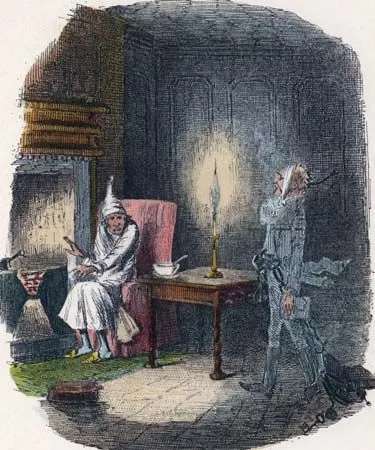
Charles Dickens’ “A Christmas Carol” paints a vivid picture of Jacob Marley’s ghost returning from the dead to warn Ebenezer Scrooge of his selfish ways, hoping to spare him a grim afterlife. Marley’s clanking chains and desperate plea grip our imaginations, but how does this fictional tale stack up against the truth of God’s Word in Luke 16:19-31, the story of Lazarus and the rich man? The Bible offers a different, more comforting reality for believers: Neither the faithful nor the lost return as ghosts.

In “A Christmas Carol”, Marley’s ghost is a restless spirit, burdened by chains forged from his greed and indifference in life. He returns to haunt Scrooge, warning him to change his ways to avoid eternal torment. The story suggests the dead can cross back to the living (or never cross over to the realm of the dead), intervening to deliver messages of repentance or hope. This makes for a compelling plot, stirring Scrooge to transform, but it leans on a cultural idea of ghosts lingering to settle unfinished business. Marley’s return implies the afterlife allows such spectral visits, with the dead actively influencing the living. This concept has enriched Hollywood with movies like “Ghost” and “The sixth sense.”

Contrast this with Luke 16:19-31, where Jesus tells of Lazarus, a poor man, and a rich man who die. Lazarus rests in peace at Abraham’s side, while the rich man suffers in torment. The rich man begs Abraham to send Lazarus back to warn his brothers, hoping to save them from his fate. Abraham says, “They have Moses and the prophets; let them hear them” (Luke 16:29). When the rich man insists a return from the dead would convince them, Abraham replies, “If they hear not Moses and the prophets, neither will they be persuaded, though one rose from the dead” (Luke 16:31). Unlike Marley, Lazarus doesn’t haunt the earth (nor does the rich man); he’s at rest, and the rich man’s plea for a ghostly messenger is denied. God’s Word, not supernatural visits, is sufficient for guidance. Ironically, a man named Lazarus did come back from the dead, “But the chief priests consulted that they might put Lazarus also to death; Because that by reason of him many of the Jews went away, and believed on Jesus” (John 12:10-11). So also did ANOTHER come back from the dead and it’s HIS WORD that either warns or haunts us today. “He that rejecteth me, and receiveth not my words, hath one that judgeth him: the word that I have spoken, the same shall judge him in the last day” (John 12:48). The message today is the same; if we hear not Christ, neither will we be persuaded, though one rose from the dead.

Marley’s story fuels the idea that the dead roam to fix past wrongs, reflecting a human longing for second chances or closure. But this clashes with Scripture’s truth: the faithful, like Lazarus, are immediately in comfort, not wandering as spirits. Hebrews 9:27 states, “And as it is appointed unto men once to die, but after this the judgment,” with no provision for ghostly returns. For believers, this is a warm comfort; the faithful in Christ aren’t trapped or restless but safe with God.

Dickens’ tale captivates, but it’s fiction. Luke 16:19-31 grounds us in truth: God’s Word guides the living, and the faithful find eternal rest, not a ghostly mission.

agape

Sources:

  • Holy Bible KJV.
  • Dickens, Charles. “A Christmas Carol” (1843).

Final Thought: Marley’s ghost makes a great story, but God’s Word assures us there are no ghosts haunting the earth. I aint ‘fraid of no Ghosts.