
Timothy, a beloved son

Timothy’s Faithful Heart – A Teachable, Ready, and Strong Servant
Timothy’s life offers us an inspiring example of Christian service. He was young, but he was full of wisdom, strength, and dedication. The New Testament paints a picture of a man who was willing to be taught, always ready to serve, and strong in the face of adversity. These qualities made Timothy a powerful servant of God and a true blessing to others.

A Teachable Teacher
One of Timothy’s most admirable traits was his teachability. From childhood, he was taught the Holy Scriptures which are able to save. As Paul wrote, “And that from a child thou hast known the holy scriptures, which are able to make thee wise unto salvation through faith which is in Christ Jesus” (2Timothy 3:15). Timothy shared this knowledge with others, training up faithful believers to teach in turn (2 Timothy 2:2). As Proverbs 1:5 says, “A wise man will hear and will increase learning.”

God wants us to be teachers. As Jesus commanded in the Great Commission, we’re not only to be taught but to teach others, “teaching them to observe all things whatsoever I have commanded you” (Matthew 28:20). Like Timothy, as we grow in wisdom, we can pass it on to those around us (see Hebrews 5:12).

Ready in Season and Out
Timothy was ready to serve at all times. In 2Timothy 4:2, Paul urges him to “preach the word; be instant in season, out of season.” To be instant means being prepared to share the gospel, whether the timing seems favorable or not. Timothy didn’t wait for ideal conditions or worry about convenience. His faithfulness kept him ready, and he served wherever there was need. 1Peter 3:15 reminds us of this same readiness: “But sanctify the Lord God in your hearts: and be ready always to give an answer to every man that asketh you a reason of the hope that is in you.”

When we live in readiness, we are better able to respond to the needs of those around us. Romans 12:11 says, “Not slothful in business; fervent in spirit; serving the Lord.” May we, like Timothy, respond eagerly to God’s work, not allowing any situation to keep us from sharing the gospel.

Strong and Courageous
Timothy’s strength in the face of trials is yet another remarkable example for us. Paul reminds us of his courage in Hebrews 13:23, showing that Timothy was steadfast and faithful despite challenges. the challenges of bondage.

The Bible encourages all believers to be strong. “Watch ye, stand fast in the faith, quit you like men, be strong” (1 Corinthians 16:13). God wants us to face the obstacles in life, just as Timothy did, with confidence and faith. Our strength isn’t in ourselves but in God. We see this echoed in Philippians 4:13: “I can do all things through Christ which strengtheneth me.”

Conclusion
Timothy’s life is an example for us to be teachable, ready, and strong in faith. He shows us that when we’re open to learning, prepared to serve, and firm in our strength from God, we can fulfill our calling and make a difference in others’ lives. His example encourages us to seek wisdom, stay prepared, and find our courage in the Lord.

As we grow in these qualities, we can serve like Timothy did, with a willing spirit and a heart full of faith, trusting that God can use us wherever we are. Just as Timothy’s legacy continues to inspire us, may our lives reflect a commitment to serving the Lord faithfully in all seasons.

Agape

Spencer

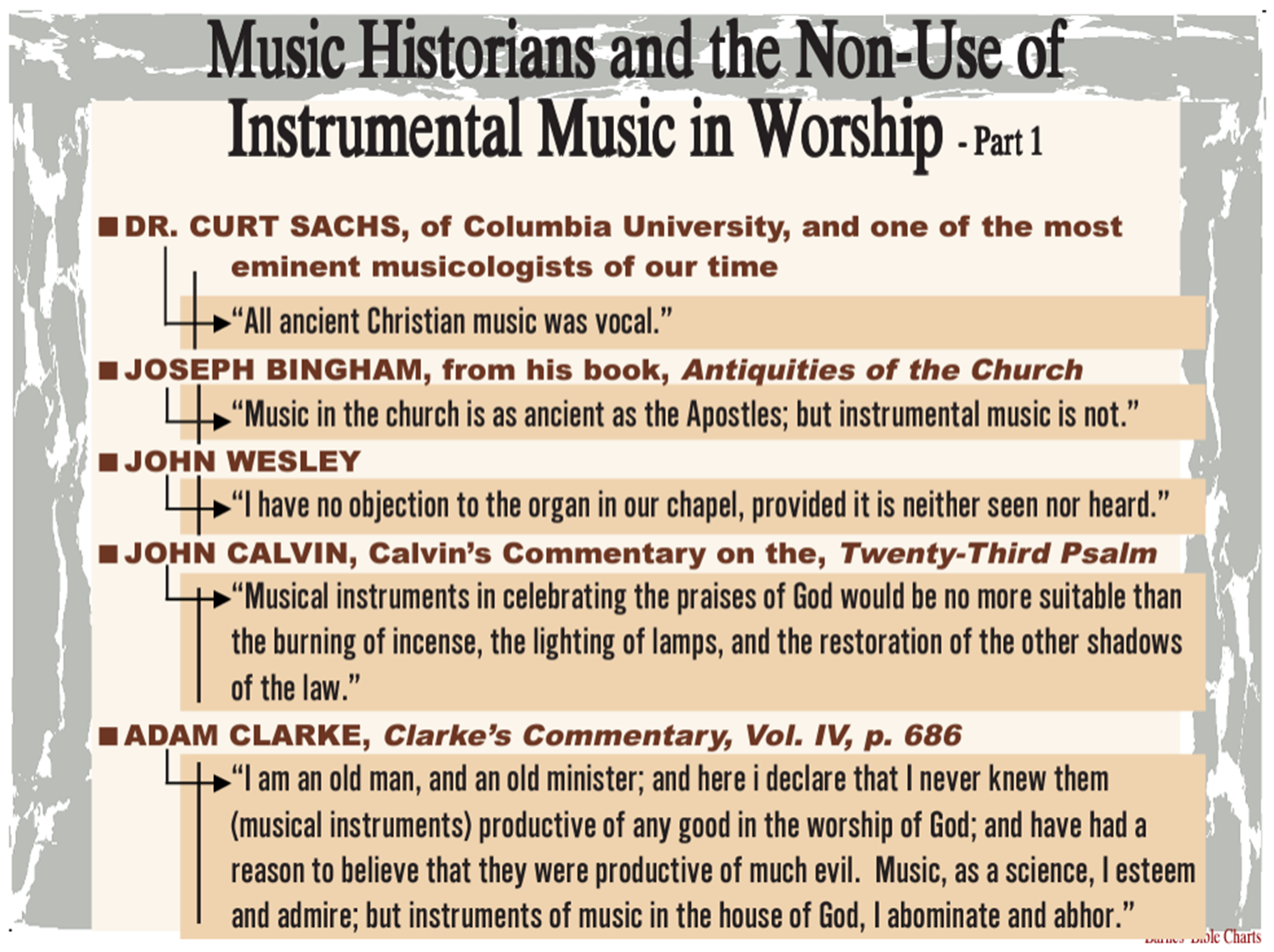
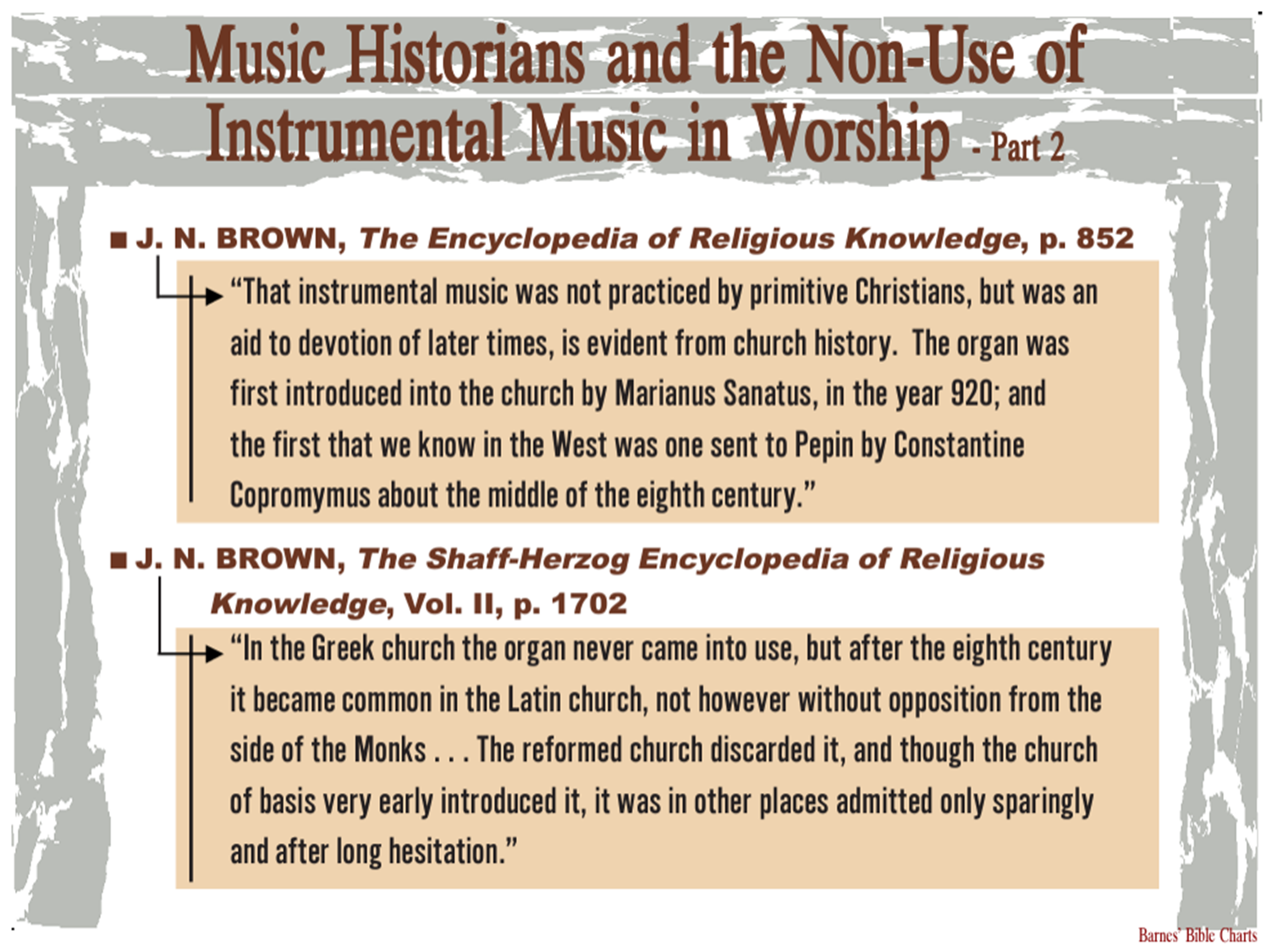
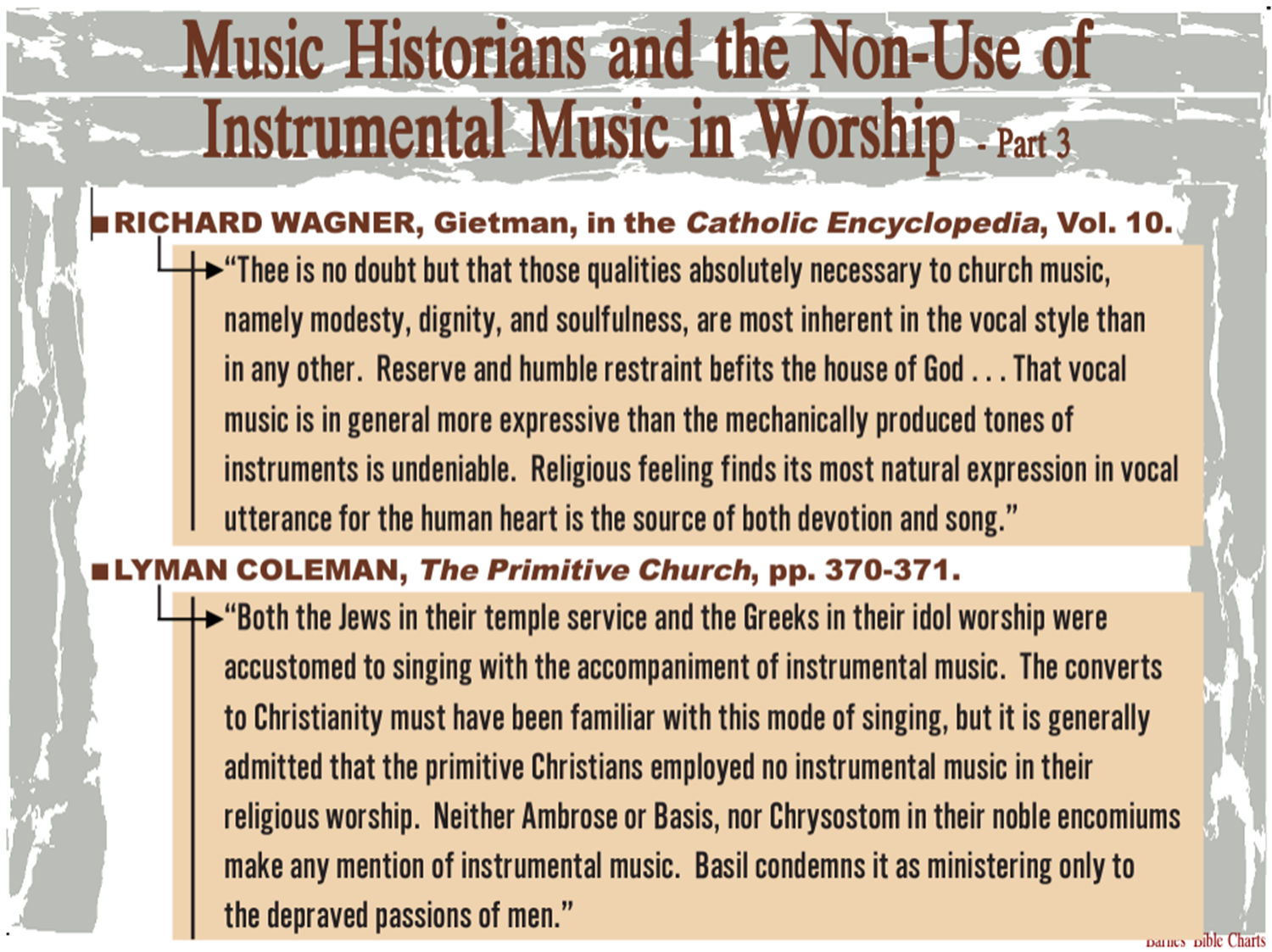
But David used Instruments

Praise ye the LORD. Praise God in his sanctuary: praise him in the firmament of his power. Praise him for his mighty acts: praise him according to his excellent greatness. Praise him with the sound of the trumpet: praise him with the psaltery and harp. Praise him with the timbrel and dance: praise him with stringed instruments and organs. Praise him upon the loud cymbals: praise him upon the high sounding cymbals. Let every thing that hath breath praise the LORD. Praise ye the LORD.”  (Psalm 150)

An appeal is often made to Psalm 150 as justification for the use of instru-mental music in the assembly of the saints. The argument goes like this;

“David used instruments in worship, and he is a man after God’s own heart. Therefore, we are authorized to use instruments today in worship.”

At first this may sound reasonable, but is it sound doctrine for the New Testament church?

Let’s examine some things David did.

I will offer unto thee burnt sacrifices of fatlings, with the incense of rams; I will offer bullocks with goats. Selah. Come and hear, all ye that fear God, and I will declare what he hath done for my soul.” (Psalm 66:15-16).

After reading this passage, Let’s Imagine this conversation…

Person A: Walking into the assembly carrying a lamb, a man asks, “can I bring a lamb to worship and sacrifice it to the Lord? David did it.”

Person B: No. That is part of the OT system. Jesus is the Lamb of God and it’s His blood that takes away sin (Heb 10:1-12). “Behold the Lamb of God, which taketh away the sin of the world” (John 1:29).

Person A: Walking into the assembly carrying a burning lamp of incense, a man asks, “can I burn incense of rams in the worship today? David did it.”

Person B: No, that is not authorized in the New Testament. Jesus is the sweet-smelling savor. “And walk in love, as Christ also hath loved us, and hath given himself for us an offering and a sacrifice to God for a sweetsmelling savour” (Eph 5:2).

Person A: Walking into the assembly carrying a guitar, or some other mechanical instrument, a man asks, “can I bring this into the assembly to worship using my God given talent to play an instrument? David did it.”

Person B: YES! David did, so we can too! Come on in!!

Do you see the ridiculousness of the above conversation? Let’s imagine an alternative ending to this conversation.

Person A: Walking into the assembly carrying a guitar, or some other mechanical instrument, a man asks, “can I bring this into the assembly to worship using my God given talent to play an instrument? David did it.”

Person B: Hold on a moment. Just because David did something doesn’t necessarily mean it’s authorized for us in the New Testament. As I’ve shown at other times, we need to look at the teachings and guidelines given in the New Testament for worship practices. Regarding music in the worship, we are given specific instructions.

Speaking to yourselves in psalms and hymns and spiritual songs, singing and making melody in your heart to the Lord” (Eph 5:19).

Let the word of Christ dwell in you richly in all wisdom; teaching and admonishing one another in psalms and hymns and spiritual songs, singing with grace in your hearts to the Lord” (Col 3:16). Note the specifics of the command which eliminates all other items. Sing, Speak, Teaching, Admonishing, Melody & Grace in your hearts; instruments can do none of that.

Person A: But if David did it, shouldn’t it be acceptable for us to do the same? After all, he was a man after God’s own heart.

Person B: While David was a significant figure in the Old Testament and had commands for worship in his age, the New Testament provides specific instructions and teachings for believers. It’s important to follow those guidelines rather than solely relying on David’s actions.

Person A: I see your point. So, if the New Testament hasn’t commanded bringing a lamb, burning incense, nor instruments, God has not authorized those practices in our worship. But there’s no command not to have it.

Person B: That’s correct, and we don’t need one. We should seek to worship in spirit and truth according to the teachings given in the New Testament. When God specifies what He wants, it cancels all other possibilities. We have no need of a passage to condemn it. The specific command automatically eliminates any additions.

Person A: That makes sense. We should prioritize aligning our worship practices with the teachings of the New Testament rather than simply imitating the actions of individuals from the Old Testament.

Person B: Exactly. It’s essential to have a solid foundation in the New Testament and understand the principles it teaches to ensure our worship is pleasing to God and in line with His will. “For do I now persuade men, or God? or do I seek to please men? for if I yet pleased men, I should not be the servant of Christ” (Gal 1:10).

Person A: I appreciate your insight. I’ll take the time to study the New Testament further and seek a thus saith the Lord to ensure our worship practices are in accordance with God’s Word.

Person B: That’s a wise approach. Let’s strive to worship in a way that honors God and reflects the truths revealed in the New Testament. Jesus says, “And why call ye me, Lord, Lord, and do not the things which I say?” And Paul wrote by the command of the Lord, “And whatsoever ye do in word or deed, do all in the name of the Lord Jesus, giving thanks to God and the Father by him” (Col 3:17).

Agape,

Spencer

5 Tips for effective Bible STUDY

Each New Year I write to encourage us all to read the Word of God. “New Year, New Me” is the mantra of most of us at the beginning of a New Year.

For the word of God is quick, and powerful, and sharper than any twoedged sword, piercing even to the dividing asunder of soul and spirit, and of the joints and marrow, and is a discerner of the thoughts and intents of the heart. Neither is there any creature that is not manifest in his sight: but all things are naked and opened unto the eyes of him with whom we have to do” (Heb 4:12-13).

Usually someone would say, “It’s not enough to just read it, you’ve got to STUDY it.” To this I would whole heartedly agree. (The basis of any study is of course reading).

That being said, people struggle to study the bible as it appears overwhelming at first. To allay those fears, this article is titled…

5 Tips for Effective Bible STUDY.

These tips will have a foundation of scripture along with a tip on how to be more effective in our study of the Word of God.

#1 SEARCH the word. “These were more noble than those in Thessalonica, in that they received the word with all readiness of mind, and searched the scriptures daily, whether those things were so” (Acts 17:11). “Search the scriptures; for in them ye think ye have eternal life: and they are they which testify of me” (John 5:39). “And beginning at Moses and all the prophets, he expounded unto them in all the scriptures the things concerning himself” (Luke 24:27).

From these scriptures we find the first tip, SEARCH the scriptures. There are a few resources available to just about everyone to help us in our SEARCH through God’s word. First, I use “Nave’s Topical Bible.” This is a type of Bible concordance with over 20,000 topics and subtopics. Plus, there’s an app for that!

Other online resources I use are either “Bible Hub” or the “Blue Letter Bible.” Both of these sites & apps have within them “Strong’s Exhaustive Concordance of the Bible.” A concordance can help you SEARCH for any word, phrase, or verse in the Bible. Because all of these are compilations of humans, care & discernment needs to be taken by the Bible Student.

We can SEARCH the Scriptures and be “more noble minded.”

#2 TEACH it to others. “And the things that thou hast heard of me among many witnesses, the same teach thou to faithful men, who shall be able to teach others also” (2Tim 2:2). “Till I come, give attendance to reading, to exhortation, to doctrine” (1Tim 4:13). “That they may teach the young women to be sober, to love their husbands, to love their children,” (Titus 2:4).

From these passages we can’t help but notice the need to TEACH the things we STUDY to others in the faith. This is separate from evangelism which is also important. In the church there are those that need a boost from the more mature members (cf. Heb 5:12). It is often said by the one that teaches that they learn even more from their studies than they teach to others.  

We can TEACH sound doctrine to other faithful Christians.

#3 Seek to UNDERSTAND because you can. “How that by revelation he made known unto me the mystery; (as I wrote afore in few words, [4] Whereby, when ye read, ye may understand my knowledge in the mystery of Christ” (Eph 3:3-4). “In the first year of his reign I Daniel understood by books the number of the years, whereof the word of the Lord came to Jeremiah the prophet, that he would accomplish seventy years in the desolations of Jerusalem” (Dan 9:2).

While some will claim that you are unable to understand the Bible without their personal guidance, these scriptures show otherwise. While it is helpful to call on another for help with your study of more difficult passages (see Acts 8:30-31), it’s still possible to UNDERSTAND the word of God yourself through your own studies.

The resources listed above also give you access to Bible Dictionaries like; “Smith’s Bible Dictionary” “W.E. Vine’s” and “Strong’s Dictionary of Hebrew and Greek words” to look up the meanings of words as used in the original languages. Along with the concordances, a student can discover the meaning of a text through understanding the words, and examining similar passages allowing the Bible to explain itself through less difficult passages.

We can UNDERSTAND the Bible through reading and STUDY.

#4 Develop a DELIGHT to study the Bible. “Be diligent to present yourself approved to God, a worker who does not need to be ashamed, rightly dividing the word of truth” (2Tim 2:15). “I will delight myself in thy statutes: I will not forget thy word.” (Psalm 119:24,161).

When we see that we can be approved to God, and that His word has so many valuable truths, it becomes possible to enjoy reading, to DELIGHT in His word. The Psalmist tells us that God’s word is, righteous, pure, perfect, and that they provide comfort. These are just a few attributes of God’s word listed in the 176 verses in the Psalm, each of which is about the word of God. Is it any wonder that he found DELIGHT in His word?

We can DELIGHT in studying the Bible.

#5 We can find rest when we put on the YOKE of Christ and YEARN to LEARN of Him. “Come unto me, all ye that labour and are heavy laden, and I will give you rest. Take my yoke upon you, and learn of me; for I am meek and lowly in heart: and ye shall find rest unto your souls. For my yoke is easy, and my burden is light” (Matt 11:28-30).

When citing this verse, we often overlook the LEARNING part. We desire the rest, but we never really ask how. We learn through reading and study.

We can find rest when we put on the YOKE to learn of Him.

Spencer is an evangelist working with the Franklin & Juniper St church of Christ in Borger Texas.

Click Here if you would like to hear this online.

How to TEST the spirits. 1Thess 5:21

1Thess 5:21 Test all things; hold fast what is good. (NKJV)

1John 4:1; 1Thess 5:21

  1. Are they just TROUBLERS? Gal 1:7
  2. Do they EXAMINE the scriptures to see if what is said is true? Act 17:11
  3. Do they SHOW the SCRIPTURES? 2Tim 3:15-17
  4. Do they TAKE TIME with you to teach, learn, or clarify. Like Paul & Aquila, Priscilla at Ephesus. Acts 18:26; 19:9-10

Spencer

Becoming a Butterfly

We may never know what is going on in the mind of a caterpillar. What we do know is that its singular purpose seems to be the devouring of every leaf in its path until such time that it stops eating, hangs himself upside down and spins around itself a silky cocoon. Within about two weeks, the caterpillar breaks out of its self-imposed prison emerging as a beautiful butterfly.

You probably already have an idea of the 2 normal lessons of the caterpillar;

FIRST, it’s about devoting our time to nourishing our minds with the word so that we can go through our own metamorphosis.

Peter said, As newborn babes, desire the sincere milk of the word, that ye may grow thereby:” [1Peter 2:2] He uses the metaphor of a newborn babe to express the same idea, that of devouring the word of God to grow and to change.

Jesus also used the idea of eating when He spoke about His word in John 6; I am that bread of life…I am the living bread which came down from heaven: if any man eat of this bread, he shall live for ever: and the bread that I will give is my flesh, which I will give for the life of the world.” [48, 51]

THE SECOND typical lesson is about transformation. Romans 12:2a states; “And be not conformed to this world: but be ye transformed by the renewing of your mind,” The Greek word ‘transformed’ is ‘METAMORPHOO’ which means to change. Just as the caterpillar goes through a metamorphosis, we also go through a transformation through the ‘renewing’ of our minds. This involves taking what we have devoured of the word and pondering it, thinking on it and learning it so that it causes that renovation of our mind.

“But continue thou in the things which thou hast learned and hast been assured of, knowing of whom thou hast learned them.” [2Timothy 3:14]

THERE IS ANOTHER LESSON we can learn from the caterpillar, it is the lesson about sharing. You see, the butterfly acts very much like bees in that they are pollinators for plants. Without the likes of these creatures, there would be no plants, no flowers and no food. In addition to this vital role, they are beautiful and share with us the splendor of God’s handiwork.

The lesson on sharing is, for me, the more fantastic of the lessons. The key to incredible and lasting growth is to share what you learn. Sharing has a certain transformative effect on the one doing the teaching.

As scary as it is, talking to people about God, Jesus & the Word has a powerful effect on your own personal growth. When you teach 10 separate people about the Gospel, they only hear it once, whereas you get to HEAR IT 10 TIMES! Every telling of the Wonderful Story of Love strengthens the next.

Another incredible benefit to you is when they oppose you with their denominational views. In your struggles to learn how to answer each one [Col 4:6] you become even stronger and more knowledgeable. These are the keys to lasting knowledge; teaching it and defending it.

It’s been said that a person who never uses what they learn will lose it. This agrees with the Scriptures. “For he that hath, to him shall be given: and he that hath not, from him shall be taken even that which he hath.” [Mark 4:25] In children it has been identified as ‘summer learning loss.’

Each time you share the Good News, not only will you continue to be transformed, but the other person may as well. You may have caught them at the right time or because of your own relationship with them your words penetrated their otherwise closed heart.

Why else should we develop the transformative mindset? In the same principle that tells us to use it or lose it, it also teaches that we shall receive even more than what we already have!

“Take therefore the talent from him, and give it unto him which hath ten talents. For unto every one that hath shall be given, and he shall have abundance: but from him that hath not shall be taken away even that which he hath.” [Matt 25:28-29]

The amazing thing about teaching is also found in love. It’s said that to receive even more love you must give it. The more you give, the more you get of love AND SHARING.

The bigger & better you get enables you to give even more, and the more you give, the more you will receive.

“Give, and it shall be given unto you; good measure, pressed down, and shaken together, and running over, shall men give into your bosom. For with the same measure that ye mete withal it shall be measured to you again.” [Luke 6:38]