
any OTHER gospel? Galatians 1:6-9

The Uncompromising Gospel: A Warning Against Deviation

The Apostle Paul’s words in Galatians 1:8 are a thunderous declaration of the exclusivity and purity of the gospel: “But though we, or an angel from heaven, preach any other gospel unto you than that which we have preached unto you, let him be accursed.” This verse is not merely a caution but a divine boundary, safeguarding the truth of Christ’s gospel against distortion. Paul’s warning underscores the danger of deviating from the apostolic teaching, structure, and practice of the church as revealed in Scripture. Any alteration, whether in organization, doctrine, hierarchy, mission, or worship, risks leading souls astray. Let us explore this verse through the lens of biblical fidelity, examining why deviations are perilous and why Paul’s response is so severe.

No Other Centralized Organization Beyond the Local Church
Scripture establishes the local church as the sole earthly organization for God’s people, with Christ as the head and heaven as its headquarters (1 Corinthians 11:3). The New Testament knows no centralized authority—such as denominations, synods, or councils—beyond the autonomous local congregation. Each church, under the oversight of its elders, answers directly to Christ, who reigns from heaven. Introducing hierarchical structures or external governing bodies usurps Christ’s authority and distorts the simplicity of His design. Paul’s warning in Galatians 1:8 condemns such innovations as a departure from the gospel, for they shift allegiance from Christ to human institutions.

No Other Doctrine of Christ
The gospel is singular and unchangeable, rooted in the teachings of Christ and His apostles. Second John 9 warns, “Whosoever transgresseth, and abideth not in the doctrine of Christ, hath not God.” To preach “another gospel” is to introduce teachings foreign to the New Testament—whether adding human traditions, altering the plan of salvation, or diluting the truth with cultural compromises. The doctrine of Christ encompasses His deity, His sacrifice, His resurrection, and His commands for obedience (e.g., faith, repentance, baptism, and perseverance). Any deviation risks severing fellowship with God, making Paul’s curse a necessary defense of eternal truth.

No Other Hierarchy Beyond Elders, Deacons, and Saints
The New Testament prescribes a simple leadership structure for the church: elders (overseers), deacons, and saints (Philippians 1:1; 1 Timothy 3:1-10). Elders shepherd the flock, deacons serve practical needs, and all members are saints, called to holiness. No additional offices—such as popes, cardinals, or regional bishops—are authorized. Introducing such hierarchies elevates human authority above Scripture and undermines the priesthood of all believers. Paul’s anathema in Galatians 1:8 applies to those who impose unbiblical structures, as they distort the gospel’s call to humility and submission to Christ alone.

No Other Work Beyond Making, Teaching, and Helping Saints
The mission of the church is clear: make disciples, teach them, and provide limited benevolence to saints in need (Matthew 28:18-20). The church is not a social club, political organization, or community activity center. Its work is spiritual—evangelizing the lost, edifying believers, and assisting struggling Christians (e.g., widows, as in 1 Timothy 5:16). Romans 16:16 identifies congregations as “churches of Christ,” not entertainment hubs or welfare agencies. When churches prioritize secular goals over spiritual ones, they preach “another gospel” by redefining the church’s purpose, incurring Paul’s curse.

No Other Worship Practices
True worship is regulated by Scripture, limited to specific acts that honor God and edify the church. Acts 2:42, Ephesians 5:19, Colossians 3:16, and 1 Corinthians 16:1-2 outline these practices: partaking in Communion, hearing biblical preaching, singing understandable vocal songs, praying for God’s help, contributing financially to the church’s work, and encouraging one another to love and good deeds. Adding instrumental music, theatrical performances, or other innovations introduces “strange fire” into worship, akin to Nadab and Abihu’s unauthorized offering (Leviticus 10:1-2). Such practices deviate from the gospel’s pattern, inviting the condemnation of Galatians 1:8.

Why Was Paul So Harsh?
Paul’s pronouncement—“let him be accursed”—is jarring, but its severity reflects the stakes involved. The Greek word for “accursed” (anathema) denotes something devoted to destruction, cut off from God. Paul’s harshness stems from the eternal consequences of a corrupted gospel. The true gospel saves souls (Romans 1:16); a false gospel damns them. By invoking this curse, Paul emphasizes that no one—not even an apostle or an angel—has the authority to alter the message delivered once for all (Jude 3). His zeal mirrors Christ’s cleansing of the temple (John 2:17), protecting the purity of God’s truth from human tampering.

The Galatian churches were being swayed by Judaizers, who added circumcision and Mosaic law to the gospel (Galatians 1:6-7). This distortion threatened to enslave believers and nullify Christ’s sacrifice (Galatians 5:4). Paul’s curse is not vindictive but protective, urging believers to cling to the unaltered gospel. For modern readers, this serves as a sobering reminder: deviations in organization, doctrine, hierarchy, mission, or worship are not mere preferences but assaults on the truth that saves.

Galatians 1:8 is a blaring trumpet call to preserve the gospel in its pristine form. The church must remain a local, autonomous body under Christ’s headship, teaching only His doctrine, led by elders and deacons, focused on making and nurturing saints, and worshipping according to Scripture’s pattern. Any deviation risks preaching “another gospel,” leading souls to ruin. Paul’s harsh curse underscores the gravity of this truth: the gospel is not ours to modify. Let us heed his warning, holding fast to the faith delivered to the saints, ensuring that our churches reflect Christ’s design and our worship glorifies Him alone.

agape

Do we TRUST Jesus?

But Jesus said unto them, A prophet is not without honour, but in his own country, and among his own kin, and in his own house.” (Mark 6:4).

In Mark chapter six we see several scenes of varying levels of faith. Part of faith involves trust.

Jesus Rejected in Nazareth                               (Mark 6:1-6)

Sending Out the Twelve Apostles                    (Mark 6:7-13)

Herod’s Perplexity about Jesus                        (Mark 6:14-16)

John the Baptist Beheaded                               (Mark 6:17-29)

Feeding the Five Thousand                             (Mark 6:30-44)

Jesus Walks on Water                                      (Mark 6:45-52)

Healing in Gennesaret                                     (Mark 6:53-56)

Mark’s gospel may be the shortest of the four, but what it contains is of great help to us in our faith.

Let us take a glimpse at these scenes of trust.

In the first scene we find Jesus teaching in His own country and among His own people. Although many were astonished at His teaching, His wisdom, and His mighty works, they were offended at Him. His own people rejected Him. Now that’s astonishing!

But Jesus said unto them, A prophet is not without honour, but in his own country, and among his own kin, and in his own house. And he could there do no mighty work, save that he laid his hands upon a few sick folk, and healed them. And he marvelled because of their unbelief. And he went round about the villages, teaching” (Mark 6:4-6).

The next 3 scenes show differing levels of faith during times of uncertainty. The 12 apostles being sent out to preach, “And commanded them that they should take nothing for their journey, save a staff only; no scrip, no bread, no money in their purse” (v8). Then we see Herod’s perplexity about the identity Jesus, (14-17). The third is in the events leading to the death of John the baptizer at the birthday banquet for Herod, (18-29). From these we see faith, uncertain faith, and great faith.

Following these we come to another kind of banquet called the feeding of the 5,000 (30-44). This began with banquet of spiritual food because of the compassion of Jesus. Faith involves knowledge. Then Jesus is urged to send them away to go find physical food. He tells the 12, “Give ye them to eat.” Here we see another side of their faith when they say, “Shall we go and buy two hundred pennyworth of bread, and give them to eat?” Remember, they had just returned excitedly from preaching without any provisions.

The last scenes of faith are times of trouble. One a storm, the last the sick of Gennesaret (45-56; cf Matt 14:27-33). In the storm, after Jesus had sent the 12 away in boats, He comes to them walking on the water. It’s here that Peter wants confirmation by being allowed to walk on the water also. Peter indeed is able to walk on the water, but places his eyes on the storm, starts to fear, and begins to sink. “O thou of little faith, wherefore didst thou doubt?”

When they arrive at the shore we see an exact opposite response from the first of this chapter. “And when they were come out of the ship, straightway they knew him, And ran through that whole region round about, and began to carry about in beds those that were sick, where they heard he was. And whithersoever he entered, into villages, or cities, or country, they laid the sick in the streets, and besought him that they might touch if it were but the border of his garment: and as many as touched him were made whole.”

Agape,

Spencer

This is part 6 of a series called Preaching through Mark.

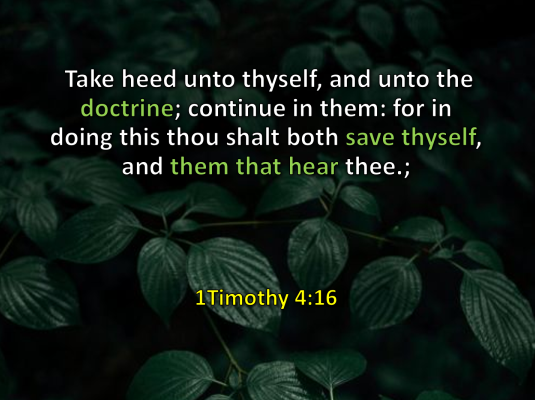
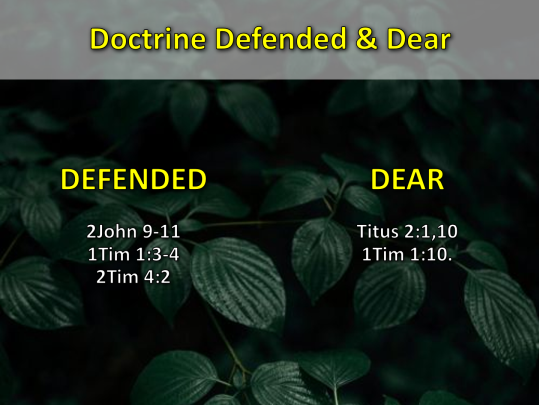
Take Heed unto the Doctrine

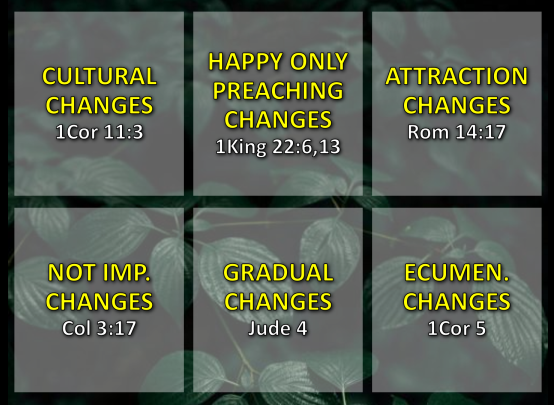
The denominational world is trying to CHANGE the church, which means they’re trying to CHANGE the doctrine of Christ.

DOCTRINE DEFINED. Doctrine is Teaching.

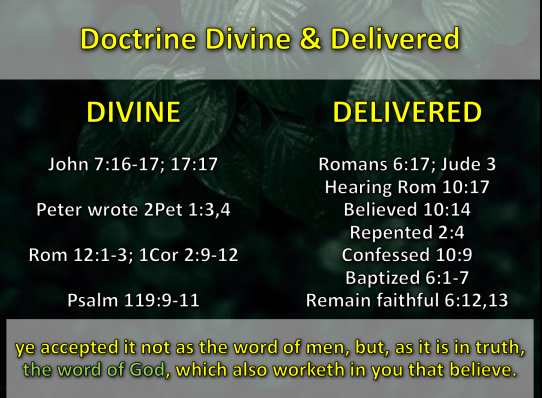
DOCTRINE DIVINE & DOCTRINE DELIVERED.

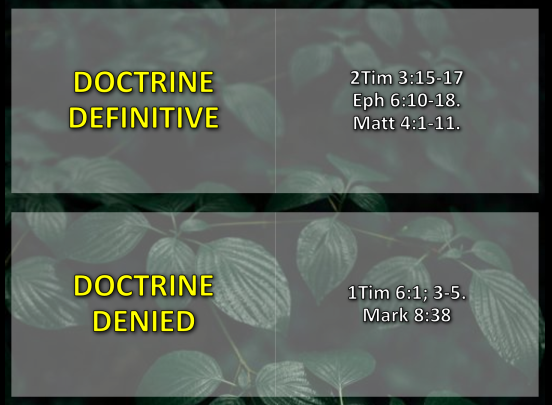
DOCTRINE that is DIFINITIVE, and DOCTRINE that is DENIED.

DOCTRINE to be DEFENDED, and a DOCTRINE so DEAR.

Why so urgent about the Doctrine of Christ? Because heaven is at stake. Fellowship with God and His Son Christ Jesus demand it.

Agape,

Spencer

Spencer is an evangelist for the church of Christ at Franklin & Juniper st. in Borger Texas. You’re invited to visit one of our services to learn more about the doctrine of Christ.

Lessons from 1Peter 2: Spiritual Sacrifices

We’ve already talked about being living STONES, now we turn our attention to the second half of verse 5:

Ye also, as lively stones, are built up a spiritual house, an holy priesthood, to offer up SPIRITUAL SACRIFICES, acceptable to God by Jesus Christ.”

(1Peter 2:5, emph seb)

What exactly are the SPIRITUAL SACRIFICES we are to offer up to God?

Before we attempt to discern what they are, let’s note four things about them.

Firstly, we are to be ACTIVELY doing them, “Offer up…” Being a Christian is not a passive condition, it’s active. Note that we are “LIVELY” stones.

Secondly, our sacrifices must be “ACCEPTABLE to God.” Paul wrote, “Study to shew thyself approved unto God” (2Tim 2:15a; cf. Rom 12:1).

Thirdly, they we are to AIM them “…to God”. Whatever these sacrifices are, they are to be directed toward God.

Fourthly, they are directed toward God through the AVENUE of Jesus; “…by Jesus Christ.” Jesus Himself said, “Jesus saith unto him, I am the way, the truth, and the life: no man cometh unto the Father, but by me” (John 14:6).

Paul also wrote on spiritual SACRIFICES, “I beseech you therefore, brethren, by the mercies of God, that ye present your bodies a living sacrifice, holy, acceptable unto God, which is your reasonable service” (Rom 12:1). So, what are they? Verse 6 begins a list from Paul, so we shall look at both Peter & Paul’s letters. “Having then gifts differing according to the grace that is given to us, whether…”

We are to SHEW Forth Praises of God. “But ye are a chosen generation, a royal priesthood, an holy nation, a peculiar people; that ye should shew forth the praises of him who hath called you out of darkness into his marvellous light” (1Peter 2:9; cf Heb 13:15-16). It reminds me of when Jesus told the healed man to “Go home to thy friends, and tell them how great things the Lord hath done for thee, and hath had compassion on thee” (Mark 5:16).

ALL of our BODY, our whole being is a living sacrifice to God. “that ye present your bodies a living sacrifice” (Rom 12:1). This clarifies how much of our life is dedicated to God, ALL of it. Christ is our life (Col 3:4).

We are to give a CONTRIBUTION for the helping of needy Saints and for the  work of the Church. “But I have all, and abound: I am full, having received of Epaphroditus the things which were sent from you, an odour of a sweet smell, a sacrifice acceptable, wellpleasing to God” (Phil 4:18; cf. Heb 13:15-16). “He that giveth, let him do it with liberality” (Rom 12:8). God loves a cheerful giver (2Cor 8:2; 9:7).

By him therefore let us offer the sacrifice of praise to God continually, that is, the fruit of our lips giving thanks to his name. But to do good and to communicate forget not: for with such sacrifices God is well pleased” (Heb 13:15-16).

It’s a spiritual sacrifice to submit to Leaders that God has ordained for the local church, and those that RULE are offering up a sacrifice. “He that ruleth, with diligence” (Rom 12:8; cf. 1Tim 3:1-7). This is further supported in Peter’s letter, “Feed the flock of God which is among you, taking the oversight thereof, not by constraint, but willingly; not for filthy lucre, but of a ready mind; Neither as being lords over God’s heritage, but being ensamples to the flock” (1Peter 5:2-3).

Peter’s letter is just as much about how the Saint INFLUENCES the world. “Having your conversation honest among the Gentiles: that, whereas they speak against you as evildoers, they may by your good works, which they shall behold, glorify God in the day of visitation” (1Peter 2:12). This speaks to evildoers converting to Christ through the INFLUENCE of good works done by the saints (cf. 1Pet 3:1).

Paul includes Prophecy or FORETELLING in his letter to the Romans. “Whether prophecy, let us prophesy according to the proportion of faith” (Rom 12:6). While there was a miraculous element in the 1st century, we today can FORETELL through the inspired written word. Peter wrote, “according as each hath received a gift, ministering it among yourselves, as good stewards of the manifold grace of God; if any man speaketh, speaking as it were oracles of God; is any man ministereth, ministering as of the strength which God supplieth: that in all things God may be glorified through Jesus Christ, whose is the glory and the dominion for ever and ever. Amen. (1Peter 4:10-11). The future return of Christ is just one example.

It’s a sacrifice to be an INSTRUCTOR or Teacher of God’s word. “He that teacheth, on teaching” (Rom 12:8; cf. 2Tim 2:2).

It’s certainly a sacrifice to have COMPASSION (Mercy) on our fellow man. “He that sheweth mercy, with cheerfulness” (Rom 12:8). We have obtained mercy through the blood of Jesus. Ought we not show mercy on others?

EXHORTING (to urge one to pursue some course of conduct) is another important sacrifice. “Or he that exhorteth, on exhortation” (Rom 12:8; 2Tim 4:2). Encouraging brethren to better conduct can be a challenge. For example; “Not forsaking the assembling of ourselves together, as the manner of some is; but EXHORTING one another: and so much the more, as ye see the day approaching” (Heb 10:25).

Finally, SERVING (ministering) our brethren is a Spiritual Sacrifice to God. “Or ministry, let us wait on our ministering” (Rom 12:7). When we serve the brethren, we serve Christ. Jesus listed some things, “For I was an hungred, … I was thirsty, … I was a stranger, … Naked, … I was sick, … I was in prison… Then shall the righteous answer him, saying, Lord, when … ? And the King shall answer and say unto them, Verily I say unto you, Inasmuch as ye have done it unto one of the least of these my brethren, ye have done it unto me” (Acts 25:35-40’ cf. Acts 6:1-7).

These are all matters the individual Christian does through their own lives and homes. Some believe we abdicate these to others. These are OUR SPIRITUAL SACRIFICES. May we all offer up spiritual sacrifices, acceptable to God by Jesus Christ.

Spencer

The Lonely Ember

A MEMBER OF A certain church, who previously had been attending services regularly, stopped going. After a few weeks, the pastor decided to visit him. It was a chilly evening. The pastor found the man at home alone, sitting before a blazing fire.

Guessing the reason for his pastor’s visit, the man welcomed him, led him to a big chair near the fireplace and waited. The pastor made himself comfortable but said nothing. In the grave silence, he contemplated the play of the flames around the burning logs.

After some minutes, the pastor took the fire tongs, carefully picked up a brightly burning ember and placed it to one side of the hearth all alone. Then he sat back in his chair, still silent. The host watched all this in quiet fascination.

As the one lone ember’s flame diminished, there was a momentary glow and then its fire was no more. Soon it was cold and “dead as a doornail.”

Not a word had been spoken since the initial greeting.

Just before the pastor was ready to leave, he picked up the cold, dead ember and placed it back in the middle of the fire. Immediately it began to glow once more with the light and warmth of the burning coals around it.

As the pastor reached the door to leave, his host said, “Thank you so much for your visit and especially for the fiery sermon. I shall be back in church next Sunday.”

Source: unknown.

It would be difficult to add much to this simple illustration, but there’s a little room so I must. This story demonstrates an important reality regarding our role in the worship. Sure, you can see yourself as the lone ember, desiring to be uplifted by the others, but do you see yourself as a part of the larger fire?

Many complain, “I get nothing from the worship” or “that church is so cold” looking only at how it affects THEM. The illustration also shows what we GIVE to each other, of which you are a part.

Rather than asking, “what do I get” ask, what do I give? When we come together, as the Lord commanded, we give so much to each other. The New Testament writers presented a picture of giving in our coming together (I’m not referring to the monetary collection). You say that you gain nothing from the worship, but what do you keep with you in your absence?

Here’s what you give us

  • Love – And let us consider one another to provoke unto love and to good works: Hebrews 10:24
  • Exhortation – not forsaking our own assembling together, as the custom of some is, but exhorting one another; and so much the more, as ye see the day drawing nigh. Hebrews 10:25
  • Teaching – Teaching and admonishing one another in psalms and hymns and spiritual songs, singing with grace in your hearts to the Lord. Colossians 3:16
  • Proclaim the Lord’s death – For as often as ye eat this bread, and drink the cup, ye proclaim the Lord’s death till he come. 1Corinthians 11:26, 30
  • Fellowship – And they continued stedfastly in the apostles’ teaching and fellowship, in the breaking of bread and the prayers. Acts 2:42
  • Edification – Let all things be done unto edifying. 1Corinthians 14:26b

Do you see it? We need each other. I need you as much, or more than, you need me. The worship is an assembly of the local saints together in one place. We can’t do it alone. Matt 18:20.

God’s Succession Plan

ONE OF THE ARGUMENTS against the church is that we have no line of succession from the church in Jerusalem at Pentecost to the Franklin St. Church of Christ. Some point to Campbell as the originator of the church of Christ in America. This is a false teaching, and demonstrates their failure to understand biblical authority. We, as members of the Franklin St. Church of Christ, do have a direct connection to the first century church that began on Pentecost. Let’s go to the scriptures and look at God succession plan.

God’s 3 step succession Plan

FIRST, Teach our children. God expects His ways to be passed along through our children. In Genesis, we read about a man named Abraham. He was a righteous man and obeyed the Lord faithfully, from the command to leave Ur through the command to sacrifice his son. God said this about Abraham, “For I know him, that he will command his children and his household after him, and they shall keep the way of the LORD, to do justice and judgment; that the LORD may bring upon Abraham that which he hath spoken of him” [Ge 18:19]. Abraham was spoken well of because God knew that he would pass along the “ways of the Lord” to his children and his household.

Others in scripture seem to have failed in this. Eli had children that did horrible things against the ways of the Lord [1Sam 2:12, 22] and God rebuked Eli for failing to stop it. “For I have told him that I will judge his house for ever for the iniquity which he knoweth; because his sons made themselves vile, and he restrained them not” [1Sam 3:13].

The Lord has been very clear on this point;

De 6:7 And thou shalt teach them (commands, statutes & judgments of the Lord) diligently unto thy children, and shalt talk of them when thou sittest in thine house, and when thou walkest by the way, and when thou liest down, and when thou risest up. [De 4:9; 6:20; 11:19; Ps 78:4]

Pr 22:6 Train up a child in the way he should go: and when he is old, he will not depart from it. [Pr 19:18; 29:17;]

In the New Testament, Paul taught this same principle, teach it to our children. “And, ye fathers, provoke not your children to wrath: but bring them up in the nurture and admonition of the Lord” [Ephesians 6:4]. Parents play a vital role in God’s succession plan.

SECOND, Teach others. God commands Christians to pass along what they learn to others. This command is contained in the “great commission”; “Go ye therefore, and teach all nations, baptizing them in the name of the Father, and of the Son, and of the Holy Ghost: 20 Teaching them to observe all things whatsoever I have commanded you:” [Matthew 28:19-20]. Paul demonstrated his obedience to this command when he instructed Timothy and so many others. “And the things that thou hast heard of me among many witnesses, the same commit thou to faithful men, who shall be able to teach others also” [2Timothy 2:2]. This was also a qualification of an Elder, “able to teach” [1Timothy 3:2]. What are they to teach, what else than the “whatsoever I have commanded you.”

THIRDLY, Sow the seed of the kingdom. What all these verses have in common is The word of God. God’s succession plan has ALWAYS been through the teaching of His word to mankind. Look at the parable of the sower; “Hearken; Behold, there went out a sower to sow: 14 The sower soweth the word… And these are they which are sown on good ground; such as hear the word, and receive it, and bring forth fruit, some thirtyfold, some sixty, and some an hundred.” [Mr 4:3-20].

Let’s illustrate this point; If a person desired to grow Florida oranges he would go down to the place where he could buy some orange seeds. Taking that orange seed home, if he were to plant it, nurture it, and provide all that is needed for that seed to grow, in a short time he would be enjoying Oranges. The church today can be planted in any place by sowing the seeds of the kingdom of God, which is His word. We do this by reading, studying and obeying His divine word.

In human institutions we see succession by elections or by birth, as in the case of a monarchy. In God’s kingdom there is also a birth. Christians are “born again” when we obey His word. “Of his own will begat he us with the word of truth, that we should be a kind of firstfruits of his creatures” [James 1:18].

Let no one deceive you. We become Christians through His word. His word tells us to Hear the word [Rom 10:14], Believe His word [John 11:24], Repent of our sins [Luke 13:3], Confess Jesus as both Lord and Christ [Matthew 10:32-33], be baptized for the remission of our sins [Mark 16:15-16] and to live faithfully [2Peter 2:20-22]. Plant the seed of God in your heart and become just a Christian.   

– Spencer