Evidence for our Faith: The Bible’s Influence on Western Law

The Bible’s Enduring Influence on Western Law and the U.S. Constitution

It is apparent to me that the Bible has profoundly shaped Western civilization and the U.S. Constitution, providing moral and legal principles. Its scriptural teachings influenced the cultural and intellectual society of the West and the American founding, creating a legacy evident in modern legal systems and constitutional governance.

The biblical concept of human dignity, derived from the idea that humans are created in God’s image (Genesis 1:26-27), laid the foundation for Western notions of individual rights. Historian David Landes, in The Wealth and Poverty of Nations, argues that this principle inspired accountability and fairness, influencing documents like the Magna Carta (1215), which echoes Deuteronomy 16:20’s call for justice. This idea can be seen in the Declaration of Independence’s “unalienable rights” and the Constitution’s Bill of Rights, particularly the First Amendment’s protections of speech and religion. James Madison, a key framer, drew on biblical notions of human worth, as noted by Carl Richard in The Founders and the Bible.

The Ten Commandments (Exodus 20:1-17) provided a moral framework for Western jurisprudence, with prohibitions against murder, theft, and perjury shaping legal codes from medieval Europe to colonial America. Legal scholar Harold Berman, in Law and Revolution, highlights how biblical ethics standardized justice in fragmented societies, a legacy reflected in the Constitution’s emphasis on impartiality (Leviticus 19:15). The command to “love your neighbor as yourself” (Leviticus 19:18; Matthew 22:39) further inspired Western social welfare laws and the Constitution’s reliance on civic virtue, as Benjamin Franklin emphasized in his writings.

The Bible’s warnings against unchecked power (1 Samuel 8:10-18; Deuteronomy 17:14-20) influenced the Western concept of the rule of law and the Constitution’s checks and balances. John Locke’s Two Treatises of Government, which cites scripture, argued for limited government, shaping the Constitution’s separation of powers (Articles I-III). Historian Donald Lutz, in The Origins of American Constitutionalism, notes that colonial sermons often referenced Exodus 18:21-22’s decentralized governance, influencing federalism. John Adams, in his Defence of the Constitutions, tied governance to biblical morality (Proverbs 29:2), reinforcing accountability.

The Great Awakening (1730s-1740s) embedded biblical values in colonial culture, shaping the framers’ commitment to liberty, as Daniel Dreisbach details in Reading the Bible with the Founding Fathers. While Enlightenment ideas contributed, the Bible’s influence provided a moral compass for constitutional principles like forgiveness (Colossians 3:13), evident in rehabilitative justice systems. Critics may emphasize secular influences, but the framers’ biblical worldview, as seen in their writings, brought together faith and reason.

agape

Sources:
Berman, Harold. Law and Revolution. Harvard University Press, 1983.
Dreisbach, Daniel L. Reading the Bible with the Founding Fathers. Oxford University Press, 2017.
Landes, David. The Wealth and Poverty of Nations. W.W. Norton, 1998.
Lutz, Donald S. The Origins of American Constitutionalism. LSU Press, 1988.
Richard, Carl J. The Founders and the Bible. Rowman & Littlefield, 2016.
The Bible (KJV): Genesis 1:26-27, Exodus 18:21-22, 20:1-17, Leviticus 19:15, 19:18, Deuteronomy 16:20, 17:14-20, 1 Samuel 8:10-18, Proverbs 29:2, Matthew 22:39, Colossians 3:13.
Evidence for our faith: Historical Accuracy of the Bible

The Bible’s Historical Accuracy: Archaeology and Scripture

The historical accuracy of the Bible has long been debated, yet archaeological discoveries consistently affirm its reliability as a historical document. Far from being a mere collection of spiritual tales, the Bible contains detailed accounts of people, places, and events that align with evidence unearthed by modern archaeology. This interplay between Scripture and science offers a compelling case for the Bible’s trustworthiness, bridging faith and reason in a unique way.

One striking example is the discovery of the Hittites, a once-obscure people mentioned over 50 times in the Old Testament (e.g., Genesis 15:20, 2 Chronicles 1:17). For centuries, skeptics dismissed the Hittites as fictional, as no evidence of their existence appeared in known ancient records. However, in 1906, German archaeologist Hugo Winckler excavated Hattusa, the Hittite capital, in modern-day Turkey. Tablets and ruins revealed a sophisticated Bronze Age civilization that matched biblical descriptions, including their interactions with Abraham’s descendants (Genesis 23:10). This find silenced doubters and showcased the Bible’s precision in recording historical peoples.

Similarly, the Pool of Bethesda, described in John 5:2 as having “five porches,” was long questioned by critics who argued no such structure existed in Jerusalem. Excavations in the 19th century, however, uncovered a twin-pool complex with five porticoes, precisely as Scripture depicted. This discovery, detailed by archaeologist Conrad Schick, not only confirmed the Gospel’s topographic accuracy but also its cultural context, as the site was linked to healing practices consistent with the narrative of John 5:7-9.

The Tel Dan Stele, unearthed in 1993 in northern Israel, provides another powerful corroboration. This 9th-century BC inscription references the “House of David,” marking the first extra-biblical mention of King David, a central figure in Scripture (2 Samuel 5:11). Critics had previously argued David was a myth, akin to King Arthur, but this basalt fragment, discovered by archaeologist Avraham Biran, aligns with the biblical timeline and dynasty, lending credibility to the historicity of Israel’s monarchy as recorded in 1 and 2 Kings.

Even the New Testament finds support in archaeology. The Pilate Stone, discovered in 1961 at Caesarea Maritima by Italian archaeologist Antonio Frova, bears the name and title of Pontius Pilate, the Roman prefect who sentenced Jesus to death (Matthew 27:24). This limestone block, dated to AD 26-36, matches the biblical timeframe and refutes claims that Pilate was a fabricated character. Such finds anchor the Gospel narratives in verifiable history.

These examples, spanning countries, centuries, and both Testaments, demonstrate a pattern: the Bible’s details, once dismissed as implausible, are repeatedly vindicated by the spade of the archaeologist. While not every verse has been archaeologically confirmed, the cumulative weight of evidence challenges the notion that Scripture is detached from reality. Sources like The Archaeology of the Bible by James K. Hoffmeier (2008) and Biblical Archaeology Review underscore this growing alignment.

Agape

Bible Reading Plan 2025

Not Just another Bible Reading plan you won’t finish.

It’s that time of year again when we encourage folks to find the right Bible reading plan that works for them. If you’ve ever struggled to read the Bible consistently, having a structured plan can make all the difference.

Before we introduce the 2025 plan, let’s take a moment to reflect on why a regular approach to Bible reading is so valuable.

The Word of God is our spiritual nourishment (Matthew 4:4), and regular reading allows us to grow in knowledge, faith, and obedience. A well thought out plan provides consistency and focus, ensuring that we engage with the whole counsel of God (Acts 20:27). It also helps us build a daily habit of spending time in God’s Word, which strengthens our walk with Him and equips us for every good work (2 Timothy 3:16-17).

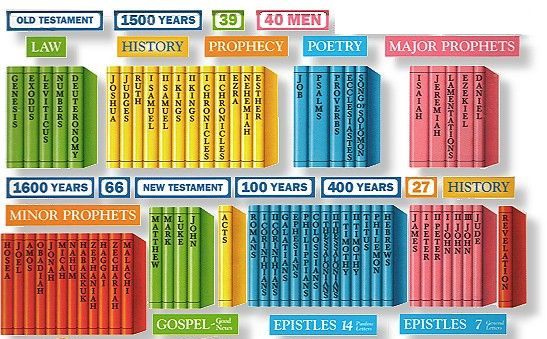
Following is a simplified version of the Bible Reading Plan I’ve followed for the last few years. This plan is both simple and engaging. By breaking up the reading between the Old and New Testaments it helps to break up any monotony that keeps many folks from finishing.


The Monday Through Friday 5-day Reading Plan
This year’s plan has us reading the New Testament twice while incorporating the Old Testament and Poetry/Wisdom books. It is structured to give variety and balance:

• Mondays: Read 4 chapters from the Gospels (Matthew, Mark, Luke, and John – 89 chapters twice).

• Tuesdays: Read 4 chapters from Paul’s letters (Romans through Philemon – 87 chapters twice).

• Wednesdays: Read 4 chapters from the General Letters and Acts (Hebrews through Revelation and Acts – 84 chapters twice).

• Thursdays & Fridays: Read 7 chapters each on these two days from the Old Testament History & prophets (728 chapters total).

• Monday–Friday: Add 1 chapter each morning or evening from the Poetry and Wisdom books (Psalms, Proverbs, Ecclesiastes, Song of Solomon – 201 chapters total). With the 59 days to spare I’ll usually read Proverbs, Ecclesiastes, & Song of Solomon again.

By following this plan, you will read through the entire Bible in a year, with the New Testament covered twice.

Why This Plan Works
As New Testament Christians, the focus on the New Covenant is especially meaningful. By reading the New Testament twice in a year—just 4 chapters a day—you’ll gain a deeper understanding of Jesus’ life and teachings, as well as learning about the Lord’s church. In about 15–20 minutes each day, you can reflect on God’s grace and truth revealed through His Word.

The plan also ensures exposure to the Old Testament, grounding us in God’s purpose, and wisdom. With its organized structure, each day brings fresh motivation and variety, helping you stay engaged.

Imagine this time next year, having read about the life of Jesus twice and journeyed through the entire Bible. You’ll gain not just knowledge, but also a richer, deeper relationship with God through His Word. Start your journey today, and see how consistent Bible reading transforms your life in 2025!.

Agape,
Spencer

to what shall we compare the WORD?

The Bible is filled with powerful imagery to describe the Word of God, using metaphors that reflect its dynamic and life-altering nature. From being a weapon in spiritual warfare to our daily spiritual sustenance, the scriptures portray the Word as essential for life, growth, and transformation.

1. The Word as a Weapon: Sword and Hammer

The Word of God is often depicted as a tool of immense power, capable of cutting through deception and breaking down barriers. In Ephesians 6:17, the Apostle Paul describes the Word as “the sword of the Spirit,” a crucial part of the armor of God. This sword is not just any weapon but one that can pierce deeply, exposing the truth and confronting the lies and temptations of the enemy.

Similarly, Hebrews 4:12 emphasizes that “the word of God is quick, and powerful, and sharper than any twoedged sword,” underscoring its ability to discern “the thoughts and intents of the heart.” This sharpness reflects the way God’s Word penetrates to the deepest levels of human existence, challenging us, revealing sin, and guiding us toward righteousness.

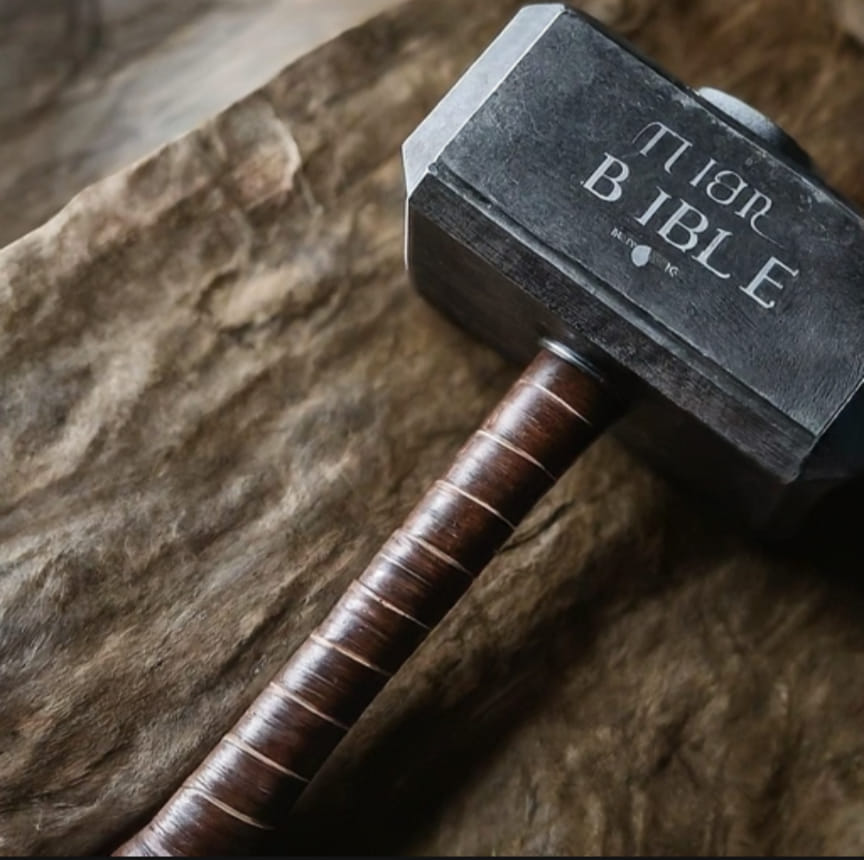
In Jeremiah 23:29, God says, “Is not my word like a fire? saith the Lord; and like a hammer that breaketh the rock in pieces?” The image of a hammer conveys the sheer strength of the Word, which can break through even the hardest heart, bringing about conviction, repentance, and transformation.

2. The Word as Our Daily Food: Bread, Milk, Meat, & Honey

The Bible also presents the Word of God as essential nourishment for our spiritual lives. In Matthew 4:4, Jesus declares, “Man shall not live by bread alone, but by every word that proceedeth out of the mouth of God.” Here, the Word is compared to bread, the basic sustenance for life. Just as physical bread nourishes the body, the Word of God nourishes the soul, giving us the strength we need to grow and thrive spiritually.

For those new in their faith, the Bible compares the Word to milk. 1 Peter 2:2 encourages believers, “As newborn babes, desire the sincere milk of the word, that ye may grow thereby.” Just as infants need milk to grow strong and healthy, new believers need the simple truths of the Word to mature in their faith.

As we grow, the Bible encourages us to go beyond the milk of the Word to the deeper, richer truths that are compared to meat. Hebrews 5:14 says, “Strong meat belongeth to them that are of full age.” This metaphor emphasizes that the Word is not only for the spiritual beginner but also for the mature believer seeking deeper spiritual understanding.

In Psalm 19:10, the Word of God is described as “sweeter also than honey and the honeycomb.” Honey represents sweetness and pleasure, highlighting how the Word brings delight, satisfaction, and joy to those who meditate on it and apply its teachings.

3. The Word as Life-Giving Rain and Snow

The Bible uses natural cycles like rain and snow to symbolize the life-giving impact of God’s Word. In Isaiah 55:10-11, God compares His Word to rain and snow that water the earth and make it fruitful: “So shall my word be that goeth forth out of my mouth: it shall not return unto me void, but it shall accomplish that which I please.” Just as rain and snow nourish the ground, causing plants to grow and produce fruit, the Word of God accomplishes its purpose, bringing growth and fruitfulness to our spiritual lives.

4. The Word as Light in Darkness

Finally, the Word of God is described as light, providing guidance and clarity in a dark world. Psalm 119:105 declares, “Thy word is a lamp unto my feet, and a light unto my path.” Without the Word, we would stumble in spiritual darkness, unable to see the right way forward. The Word reveals the truth, showing us the path of righteousness and helping us navigate life’s challenges with wisdom and discernment.

The Word of God is a powerful weapon, an essential source of nourishment, a life-giving force, and a guiding light. Its metaphors reflect its multifaceted role as it confronts, sustains, renews, and leads us closer to God. As we embrace the Word, we experience its transforming power and its ability to equip us for every good work.

Agape

spencer

How are we Led by the Holy Spirit?

WHAT THE WORD CAN DO?

The Holy Spirit inspired the written word of God. “For the prophecy came not in old time by the will of man: but holy men of God spake as they were moved by the Holy Ghost.” 2Peter 1:21

Give One Understanding (Psa.119:130).
Build One Up And Give Inheritance Among The Sanctified (Acts 20:32).
Keep One From Sinning (Psa. 1119:11; 1 John 2:1).
Quicken One; Make Him Alive Spiritually (Psa. 119:50; Eph 2:1).
Effect A Spiritual Begettal (1 Cor. 4:15).
Consummate A Spiritual Birth (1 Pet. 1:23).
Justify (Rom. 2:13).
Produce Faith (Rom. 10:17).
Guide (Psa. 173:24; 119:105)
Produce Fruit (Luke 8:15 Col 1:5,6
Give Everlasting Life (John 4:14).
Make One A Disciple Indeed (John 8:31).
Cleanse (John 15:3; Eph. 5:26).
Sanctify (John 17:17; Eph. 5:26).
Purify The Soul (1 Pet. 1:22).
Save The Soul (Jas. 1:21).
Produce Spiritual Growth (1 Pet. 2:2).
Effectually Work (1Thes. 2:13).
Comfort (1thes. 4:18; Rom. 15:4).
Rejoice The Heart (Psa. 119:111).
Give Understanding (Psa. 119:104).
Reconcile (2 Cor.5:17,18)
Judge Us At The Last Day (John 12:47,48)

WHAT MORE DOES ONE NEED?

Since the Holy Spirit inspired the written word, He leads us through our study and application of the Word.

John 20:30 And many other signs truly did Jesus in the presence of his disciples, which are not written in this book: 31 But these are written, that ye might believe that Jesus is the Christ, the Son of God; and that believing ye might have life through his name.

Eph 3:3 How that by revelation he made known unto me the mystery; (as I wrote afore in few words, 4 Whereby, when ye read, ye may understand my knowledge in the mystery of Christ)

agape,

Spencer

The Franklin & Juniper st church of Christ in Borger is very much involved in Bible reading and study. You’re invited to attend one of our services to hear the Gospel preached in plainness of speech easy to understand.

There’s Death in the POT

Today’s reading is so good that I had to share it with you.

Proverbs 19:27 KJV

Cease, my son, to hear the instruction that causeth to err from the words of knowledge.”

It reminded me of a story in 2Kings 4:38-41.

And Elisha returned to Gilgal, and there was a famine in the land. Now the sons of the prophets were sitting before him; and he said to his servant, “Put on the large pot, and boil stew for the sons of the prophets.” So one went out into the field to gather herbs, and found a wild vine, and gathered from it a lapful of wild gourds, and came and sliced them into the pot of stew, though they did not know what they were. Then they served it to the men to eat. Now it happened, as they were eating the stew, that they cried out and said, “Man of God, there is death in the pot!” And they could not eat it.”

I use this story to make the point about eating a drinking from secular pots in our studies. Far too many times we drink from secular pots and wonder why we have division. Paul warned of this problem of listening to unsound doctrine. 2 Timothy 4:3 KJV

“For the time will come when they will not endure sound doctrine; but after their own lusts shall they heap to themselves teachers, having itching ears;”

“Man of God, there is death in the pot!”

I’ve noticed gospel preachers consuming books by well known false teachers. Francis Chan, Joel Osteen, Rick Warren, Jakes, and the like.

“Man of God, there is death in the pot!”

Let us return to the old paths. The scriptures shall make us wise unto salvation. 2 Timothy 3:15-17 KJV

And that from a child thou hast known the holy scriptures, which are able to make thee wise unto salvation through faith which is in Christ Jesus. All scripture is given by inspiration of God, and is profitable for doctrine, for reproof, for correction, for instruction in righteousness: That the man of God may be perfect, throughly furnished unto all good works.”

Jesus is the bread of Life. “And Jesus said to them, “I am the bread of life. He who comes to Me shall never hunger, and he who believes in Me shall never thirst.” John 6:35

Man of God, there is LIFE in that pot!

Agape,

Spencer

Recap of January 2023

The Theme for January focused on Bible study, reading, and warnings.

WEEK ONE:

4 Examples of those that READ the bible.

Josiah Read to RESTORE worship.

EZRA Read to the people.

Examples of Readers in ACTS.

DANIEL Read the scriptures.

WEEK TWO:

5 Tips for Effective Bible STUDY.

WEEK THREE:

the Relevant BIBLE.

WEEK FOUR:

5 ways we ALTER the word to keep our beliefs.

The focus of our assemblies is to Know Jesus through His word. You’re welcome to join us at one of our assemblies.

GREAT THINGS He hath done

Howbeit Jesus suffered him not, but saith unto him, Go home to thy friends, and tell them how GREAT THINGS the Lord hath done for thee, and hath had compassion on thee” emph mine seb (Mark 5:19).

Jesus gave those instructions to the man he had just healed of the “legion” demon possession. This incredibly grateful man wanted to accompany Jesus wherever He would go. Jesus wouldn’t allow it, but gave him a personal mission, “tell them how GREAT THINGS the Lord hath done for thee, and hath had compassion on thee

This verse impresses me as a method of personal evangelism. Before we can apply it, we must know what GREAT THINGS the Lord has done for us.

Here’s my personal list.

The Lord has been very GRACEFUL in the giving of Himself as a sacrifice, and Propitiation for sin. (Eph 2:8-9)

He has shown me how to REJOICE in times of trial. (Jas 1:2-3)

He has left EVIDENCE of His goodness. (Acts 14:17)

He demonstrated AGAPE style Love. (Rom 5:6-10)

He has delivered to us God’s TRUTH. (John 17:17)

He has given me certain TALENTS by which I can provide for the needs of my family and for helping others. (Matt 25:15)

He has given me HOPE. (Heb 6:19)

He has given me access to INTERCESSORY prayer which is unavailable to those outside of Christ. (Rom 8:34; Heb 4:16)

He has taught me how to love my NEIGHBORS. (Matt 22:39)

He has given me every GOOD GIFT & perfect Gift. (Jas 1:17)

Lastly, but not least, He has provided for me SALVATION through obedience to the Gospel. (1Cor 15:1-4)

This list is certainly not comprehensive, but it does represent some of the GREAT THINGS He has done. I have another more private and personal list of GREAT THINGS the Lord has done.

What about you? Do you have a list? We sing the song, “Count your blessings,” do you know what some of them are?

How precious also are thy thoughts unto me, O God! how great is the sum of them! If I should count them, they are more in number than the sand: when I awake, I am still with thee” (Psalm 139:17-18).

Perhaps you would like to make a note of the many GREAT THINGS the Lord has done for you?

______________  ______________  ______________

______________  ______________  ______________

______________  ______________  ______________

Jesus, the Way

The Hebrew writer speaks about Jesus as bringing better things for us:

But, beloved, we are persuaded better things of you, and things that accompany salvation, though we thus speak.”

[Heb 6:9]

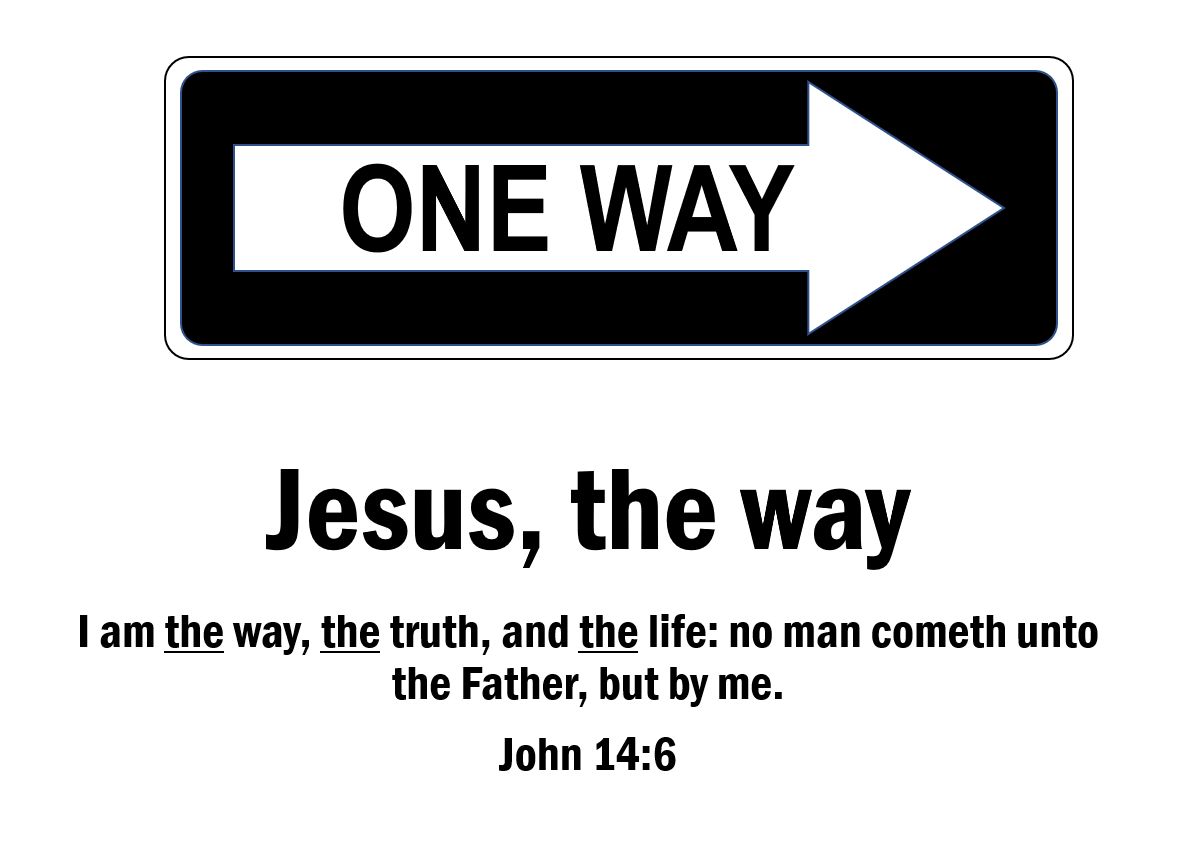
Jesus tells us about a few of these better things when He said that He is the WAY, the TRUTH and the LIFE.

Jesus saith unto him, I am the way, the truth, and the life: no man cometh unto the Father, but by me.”

[John 14:6]

We’ll study about more of these ‘BETTER THINGS’ as we delve into the story of Jesus, His ministry, His teachings & His sacrifice.

It’s important for us to study, as far too many have a misunderstanding about Jesus. They make Jesus into a genie. The struggles of life cause many to look to Jesus, but they often encounter erroneous & contradictory teachings. These false teachings won’t take away the struggles, rather they will turn them into despair.

  • Do you have problems? Are you confused about the answers? Do you know that Jesus has revealed to us all things pertaining to life & godliness [2Pet 1:3]? Through the guidance of His word we can smooth out many of life’s problems. When we study His word, we will discover how profitable it is to our life on this earth.

All scripture is given by inspiration of God, and is profitable for doctrine, for reproof, for correction, for instruction in righteousness: That the man of God may be perfect, throughly furnished unto all good works.”

[2Tim 3:16-17]

  • Do you feel lost with a feeling of despair? That can be overwhelming. You’re not alone. Jesus felt all of the same things you feel, yet without sin.

He is despised and rejected of men; a man of sorrows, and acquainted with grief: and we hid as it were our faces from him; he was despised, and we esteemed him not.”     [Isaiah 53:3]

  • Are you afraid? “HAVE NO FEAR” is an idea found hundreds of times throughout scripture, and is one of those better things found in Christ. [1John 4:17-18]
  • Are you confused about the Bible? A confusion caused by the 1,000’s of denominations in our world. You don’t have to be, because Jesus is the way to a better truth. He is the truth.

For the law was given by Moses, but grace and truth came by Jesus Christ.” [John 1:17]

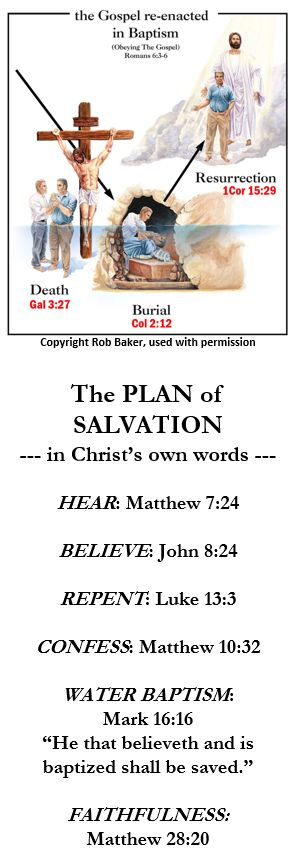
  • Are you confused about the church? It’s easy to see why by the many denominations proclaiming to be the Lord’s church. All the while as they preach another Jesus, another Gospel and another spirit [2Cor 11:4]. Jesus spoke of better things about the church. Jesus made a promise to build A church. Just ONE, [Eph 4:4; 1:22-23]. The church that He would build would be paid for with His own shed blood [Acts 20:28]. The church that Christ built has Himself as the chief cornerstone [Eph 2:20]. And you cannot join His church. No sir, you cannot join the church of Christ. You must be ADDED TO IT by the Lord through obedience to His instructions, “repent and be baptized every one of you in the name of Jesus Christ for the remission of sins.” [Acts 2:38, 41, 47]

I will build my church; and the gates of hell shall not prevail against it.” [Matt 16:18b]

These are just a few of the ‘better things’ found in Christ. Everything will be better in Christ, in His WAY, in His TRUTH and in His LIFE. Please, I beg you, get in that WAY, that bright & shining WAY.

—Spencer

365 Daily Instructions for Life

10 March 2015
(Numbers 16.1-3)
Now Korah the son of Izhar, son of Kohath, son of Levi, and Dathan and Abiram the sons of Eliab, and On the son of Peleth, sons of Reuben, took men. And they rose up before Moses, with a number of the people of Israel, 250 chiefs of the congregation, chosen from the assembly, well-known men. They assembled themselves together against Moses and against Aaron and said to them, “You have gone too far! For all in the congregation are holy, every one of them, and the LORD is among them. Why then do you exalt yourselves above the assembly of the LORD?”

God had appointed specific men from a specific family of a specific tribe to be priests.

Yet Korah (from the same tribe, but different family) along with Dathan and Abiram (from another tribe) reasoned that since God had made the nation holy, anyone could serve as His priests.
In fact, these self-appointed priests accused Moses and Aaron of self-serving bias, claiming they were guilty of transgression by exalting themselves above all Israel.

Korah, Dathan, Abiram, and those who followed them tried to set one part of God’s word above another, reasoning that since the whole nation was holy, then anyone could serve as priests without distinction. Yet, although God had sanctified the nation, He had also specified who would be priests: Aaron and his sons, of the tribe of Levi.

Many Christians reason accordingly today, claiming that all who have been sanctified in Christ are able to perform any function and fulfill any role of service for the Lord, in spite of clear passages to the contrary. We now have women speaking, teaching, and even preaching in the assemblies of the church, contrary to God’s word (1 Cor 14.35; 1 Tim 2.11-12). Some churches have ordained women elders, despite God-given qualifications (1 Tim 3.2; Titus 1.6).
Some churches have begun approving marriages which Jesus clearly rejected (Matthew 19.9), and even accept same-sex unions, though God clearly defined marriage as a commitment between a man and a woman, and condemned homosexual acts (Rom 1.26-27). We would do well to learn from the example of Korah, Dathan, and Abiram (1 Cor 10.6,11), recognizing that God does not approve setting one Scripture above another to nullify one part of His covenant in favor of a misapplication of another. Those who went ahead and offered incense, though they were not called to be priests, were consumed with fire from God (Num 16.35). Their leaders, who promoted this disobedience were swallowed up by the ground (Num 16.31-33).

Clearly, God is not pleased when He specifies one thing and people veto His word by doing something else.

Stuart Tullis