
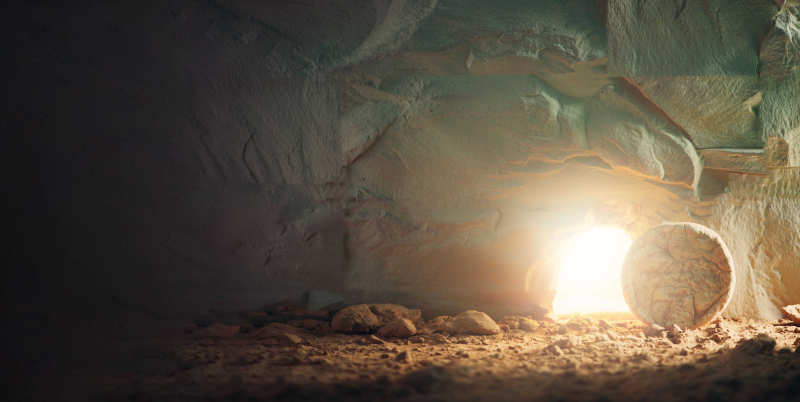
The Empty Tomb: Historical Evidence and Explanations
The empty tomb of Jesus Christ stands as one of the most compelling pieces of historical evidence supporting His resurrection, defying naturalistic explanations and aligning with the transformative impact of early Christianity. Recorded in all four Gospels (Matthew 28:1-10, Mark 16:1-8, Luke 24:1-12, John 20:1-18), the tomb’s vacancy is more than a theological claim but a historical puzzle that demands a logical resolution.
First, the empty tomb is a widely attested fact, even by Jesus’ opponents. The Gospel of Matthew notes that the Jewish leaders bribed guards to claim the disciples stole the body (Matthew 28:11-15), implicitly conceding the tomb was empty. This early counter-narrative, preserved in a text dated to within decades of the event, suggests the vacancy was undeniable—otherwise, producing the body would have silenced the resurrection claim. Historian N.T. Wright, in The Resurrection of the Son of God (2003), argues that this admission from hostile sources strengthens the case, as it reflects a historical reality too stubborn to dismiss.
Second, alternative explanations falter under scrutiny. The “stolen body” theory lacks plausibility: the disciples, described as terrified post-crucifixion (John 20:19), were unlikely to overpower Roman guards, risking death for a corpse. The Roman seal and guard presence (Matthew 27:62-66) further complicate this scenario—failure to secure the tomb would have cost the soldiers their lives. The “wrong tomb” hypothesis also fails; the burial site, owned by Joseph of Arimathea, a known figure (Mark 15:43), was no obscure location. Women witnesses, the first to report the empty tomb (Luke 24:1-3), would have ensured accuracy, as their testimony—unexpected in a patriarchal culture—adds credibility, per historian Michael Licona in The Resurrection of Jesus (2010).
Third, the empty tomb’s implications align with historical outcomes. If Jesus’ body remained, the Jewish or Roman authorities, with every motive to crush Christianity, could have displayed it to end the movement. Instead, Christianity exploded, with Paul citing over 500 witnesses to the risen Christ (1 Corinthians 15:3-8), a claim circulated early enough to be verified. The transformation of disciples into bold proclaimers (Acts 2:14-36) and the conversion of skeptics like Paul (Acts 9:1-19) hinge on an event—the resurrection—tied to that empty tomb. Archaeologically, no rival tomb has ever surfaced, despite Jerusalem’s significance.
Finally, the cultural context bolsters the argument. Jewish theology expected a general resurrection at history’s end, not an individual rising (Daniel 12:2). The claim of Jesus’ resurrection, centered on an empty tomb, was radical yet gained traction, suggesting an extraordinary event shifted expectations. As scholar Gary Habermas notes in The Case for the Resurrection of Jesus (2004), the tomb’s emptiness, paired with appearances, best explains this shift. The empty tomb stands as a historical anchor—unrefuted by foes, unexplainable by skeptics, and unshaken by time. No body was found because no body remained; the tomb’s silence screams resurrection.
Agape
 Borger church of Christ @ Franklin & Juniper