
Scientific Evidence for the Global Flood
The biblical account of a global flood is detailed in Genesis 6–9, describing Noah’s ark, the catastrophic deluge, and the repopulation of the earth. This narrative has parallels in ancient cultures worldwide, suggesting a shared memory of a catastrophic event. Scientific evidence also lends credibility to this account, providing compelling data that aligns with the possibility of a global flood.
Sedimentary Layers and Fossil Evidence
Sedimentary rock layers, found across the earth, contain fossils of marine and land organisms, often in unexpected locations. For instance, marine fossils have been discovered atop the Himalayas and other high-altitude regions. This suggests that these areas were once submerged under water. Rapid burial of organisms during a massive flood could explain the fossilization of soft-bodied creatures and the preservation of delicate features, such as jellyfish imprints, which would decay under normal conditions.
Polystrate Fossils
Polystrate fossils, or fossils that extend vertically through multiple sedimentary layers, challenge the standard geological timeline that attributes these layers to slow accumulation over millions of years. A rapid deposition of sediment, such as during a global flood, provides a more plausible explanation for how these fossils formed without significant decay.
Large-Scale Erosion and Canyon Formation
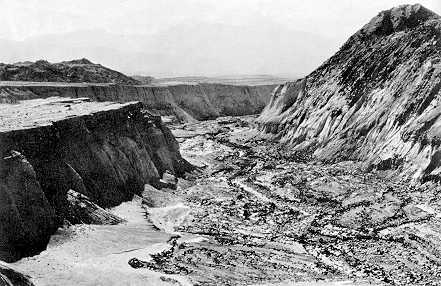
The formation of canyons, such as the Grand Canyon, shows evidence of rapid water erosion rather than slow geological processes. Experiments following events like the eruption of Mount St. Helens in 1980 showed how massive volumes of water can carve canyons in a short period, mirroring what a global flood might accomplish on a larger scale.
Flood Legends Across Cultures
Over 200 flood legends exist among ancient cultures worldwide, including those of the Sumerians, Babylonians, and Native Americans. Many of these accounts include a large vessel, a remnant of humanity and animals, and a divine reason for the flood. Such widespread narratives suggest a historical basis for the biblical account of Noah’s flood.
Biblical Consistency with Science
Genesis describes “the fountains of the great deep” breaking open and “the windows of heaven” releasing water (Genesis 7:11). Modern geology acknowledges subterranean water reserves and their role in catastrophic events. Furthermore, the ark’s dimensions (Genesis 6:15) align with the proportions needed for stability and capacity, as confirmed by naval architects.
Conclusion
While interpretations of evidence vary, the sedimentary layers, polystrate fossils, rapid erosion patterns, and global flood legends align with the Genesis narrative. These findings challenge the notion of slow geological processes and suggest that a catastrophic event, consistent with the biblical flood, is plausible.
Agape,
Spencer
Sources:
Morris, J. “The Global Flood.” Institute for Creation Research.
Snelling, A. “Flood Evidences.” Answers in Genesis.
Genesis 6–9, KJV.
 Borger church of Christ @ Franklin & Juniper