

Evidence for our Faith: the Population Problem

The Population Problem: A Case for a Young Earth

One of the most intriguing arguments for a young Earth comes from an analysis of human population growth. If humans have existed for 300,000 years or more, as conventional science suggests, the number of humans alive today—or even in recorded history—presents a logical conundrum when viewed through the lens of population dynamics. By examining reasonable growth rates and historical data, the evidence aligns more closely with a young Earth timeline, consistent with a biblical framework of roughly 6,000 to 10,000 years.

By looking at how quickly people multiply and comparing ancient survival rates to today’s, the current 8 billion population supports a short history rooted in reason and scripture.

Picture the biblical Flood 4,500 years ago, leaving just Noah’s family of eight (Genesis 7:13). With a small, steady growth rate—much lower than today’s because fewer babies survived back then—the population could climb to 8 billion in that time. It’s a straightforward buildup: start small, grow consistently, and hit today’s number without any wild leaps. This fits the tough conditions of ancient life, where disease and hardship kept survival rates low, with studies showing only about half of kids made it to adulthood (Volk & Atkinson, 2013, Historical Biology).

Now imagine humans starting 200,000 to 300,000 years ago, as some claim. Even with a tiny growth rate, the numbers explode way past 8 billion—think hundreds of billions or more in just a fraction of that time. To stay at today’s population, growth would have to stall almost completely for centuries, suggesting endless disasters like plagues or wars. But history shows humans thriving and spreading since about 10,000 years ago, not stuck in a rut. And where are all the graves from those supposed billions of extra people?

Today’s faster growth—around 0.8% a year—comes from better medicine and food, things ancient people didn’t have. Apply that rate backward over thousands of years, and you’d get ridiculous numbers, far beyond what Earth could hold. The Bible’s call to “be fruitful and multiply” (Genesis 9:1) and the spread of nations (Genesis 10) match a 4,500-year rise to 8 billion, backed by genetic hints of a recent common ancestor (Carter, 2007, Journal of Creation). A 200,000–300,000-year story, though, needs constant excuses to explain why we’re not overrun with people.

In short, a young Earth makes sense: a steady climb from a handful to 8 billion in a few thousand years, no tricks needed. The longer timeline buckles under its own logic, leaving too many questions and not enough bones!


Agape,
spencer

Sources:
o Carter, R. (2007). “Mitochondrial Diversity within Modern Humans.” Journal of Creation, 21(2).
o Volk, A. A., & Atkinson, J. A. (2013). “Infant and Child Death in the Human Environment of Evolutionary Adaptation.” Historical Biology, 25(5).
o Genesis 5, 7:13, 9:1, 10 (KJV).
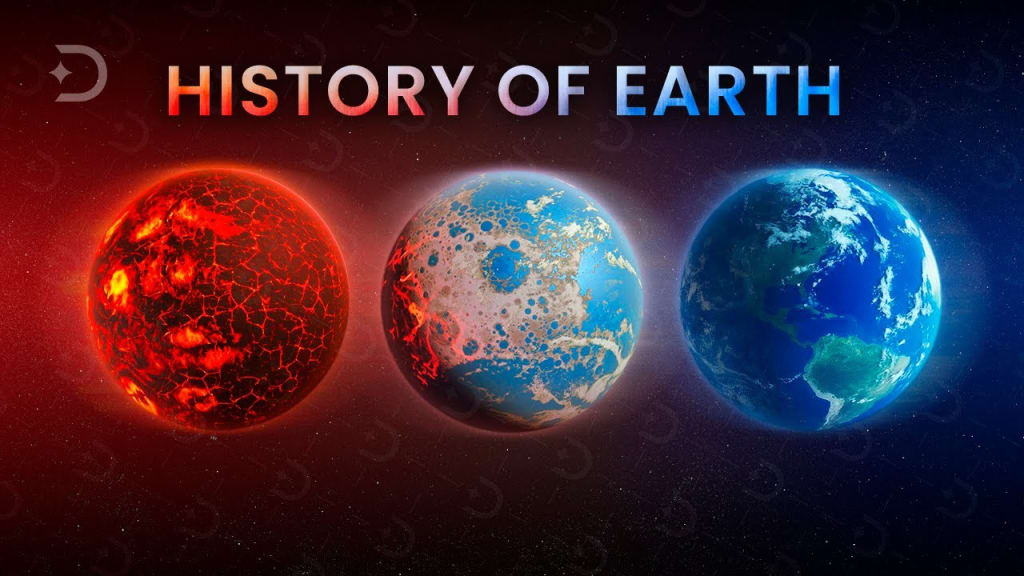
Evidence for our faith: a Young Earth

Compelling Evidence of a Young Earth

The debate over the age of the Earth has been ongoing for centuries, with mainstream science advocating for an age of about 4.5 billion years. However, significant scientific evidence challenges this timeline and supports the view that the Earth is much younger. Below are several compelling arguments, supported by observable data, that point to a young Earth.

1. The Decay of Earth’s Magnetic Field. The Earth’s magnetic field is rapidly decaying, with measurements indicating an exponential decline. Dr. Thomas G. Barnes first analyzed this phenomenon in 1971, showing that the field’s energy has decreased by approximately 50% over the past 1,400 years (Barnes, 1973). If we extrapolate this trend backward, the field would have been so strong just 10,000 years ago that life on Earth would not have been possible due to excessive heat and radiation. This suggests that the Earth’s magnetic field cannot be millions of years old, let alone billions.

2. Soft Tissue in Dinosaur Fossils. One of the most astonishing discoveries in paleontology has been the presence of soft tissues, collagen, and even red blood cells in dinosaur fossils. Dr. Mary Schweitzer first reported these findings in a 1997 study on a T. rex femur (Schweitzer et al., 1997). Subsequent discoveries confirmed that proteins like collagen, which break down relatively quickly, could not survive for the 65+ million years assigned to these fossils. Since such biological materials should degrade completely within a few tens of thousands of years, these discoveries suggest that the fossils are much younger than traditionally believed.

3. Carbon-14 in Ancient Fossils and Diamonds. Carbon-14 (C-14) dating is a method used to determine the age of once-living materials, but it has a fundamental limitation: C-14 decays so quickly that anything older than 100,000 years should have no detectable traces remaining. However, measurable amounts of C-14 have been found in coal, oil, natural gas, and even diamonds—materials supposedly millions to billions of years old (Baumgardner et al., 2003). These findings indicate that these materials are not nearly as old as conventional dating methods suggest.

4. Recession of the Moon. The Moon is slowly moving away from the Earth at a measured rate of approximately 3.8 cm per year (Dickey et al., 1994). If we extrapolate this rate backward, the Moon would have been much closer to the Earth in the past. Just 1.5 billion years ago, the Moon would have been so close that Earth’s tidal forces would have torn it apart. Yet, the standard model suggests the Moon has been receding for over 4 billion years. The current observed recession rate is difficult to reconcile with a billions-of-years-old Earth-Moon system, but it fits well within a young Earth framework.

5. Helium Retention in Zircon Crystals. Zircon crystals, found deep in the Earth’s crust, contain uranium, which decays into lead while simultaneously releasing helium. Since helium is a lightweight, highly diffusive gas, it should escape from these crystals relatively quickly. However, studies have found high concentrations of helium in zircons from Precambrian rock (Gentry et al., 1982). If these rocks were truly over a billion years old, the helium should have long since dissipated. The retention of helium suggests an age of only about 6,000 years, aligning closely with a biblical timeframe.

6. Rapid Formation of Geological Features. The 1980 eruption of Mount St. Helens provided a remarkable case study on how catastrophic events can rapidly shape geological features. Within hours, massive sedimentary layers were deposited, and within days, a new canyon was carved, resembling those believed to have taken millions of years to form (Morris & Austin, 2003). This demonstrates that many geological formations attributed to vast ages could have been formed quickly under the right conditions, such as during a global flood.

7. Biblical Evidence for a Young Earth. The Bible provides a historical framework that aligns with a young Earth. The genealogies in Genesis 5 and 11, when traced chronologically, place the creation of the world at approximately 6,000 years ago. Exodus 20:11 states, “For in six days the Lord made heaven and earth, the sea, and all that in them is, and rested the seventh day.” This passage affirms a literal six-day creation, contradicting the notion of an ancient Earth. Furthermore, Jesus referenced the creation of man “from the beginning of the creation” (Mark 10:6), indicating that humanity was present near the start of Earth’s history, not billions of years after its formation.

The Weight of the Evidence. The conventional billions-of-years model is based on assumptions that increasingly conflict with observable scientific data. The rapid decay of Earth’s magnetic field, the presence of soft tissues in dinosaur fossils, the discovery of C-14 in supposedly ancient materials, the Moon’s recession rate, helium retention in zircons, and the rapid formation of geological features all point to an Earth that is far younger than mainstream science asserts.

If the foundations of an old Earth are shaken by observable data, then the question remains: Why is the conventional narrative so resistant to change? The implications of a young Earth challenge not just scientific paradigms but also philosophical and theological worldviews. If the Earth is young, then biblical history is not just a religious tradition—it is an accurate record of our origins. The evidence speaks for itself, but the willingness to follow that evidence remains a matter of conviction.

Agape,

Spencer