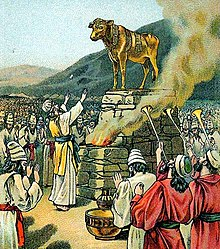
“Here are your gods, Israel, who brought you up out of Egypt.” (1Kings 12:28)
Jeroboam, the first king of the northern kingdom of Israel, initiated a series of significant changes that altered the course of worship for his people. His actions were driven by political motives rather than spiritual fidelity, leading to the establishment of a false system of worship that had long-lasting ramifications.
Replacing the Place, Object, and Priests of Worship
His primary objective was to prevent his subjects from traveling to Jerusalem, in the southern kingdom of Judah, for worship. He feared that such pilgrimages would foster loyalty to the house of David and threaten his own reign. To counter this, Jeroboam replaced the central place of worship and also substituted the object of worship with idols. He also appointed non-Levitical priests to serve, undermining the divinely ordained priesthood.
The Enduring Error of Jeroboam
Jeroboam’s innovations did not end with his reign but extended into the next generations. His establishment of idolatrous practices became a stumbling block for the northern kingdom of Israel. Kings who followed Jeroboam perpetuated these errors, leading the people further away from true worship. The legacy of Jeroboam’s apostasy was so significant that it became a standard by which the sins of Israel’s kings were measured (1Kings 16:26).
The Idolatrous Practices of Ahab and Jezebel
The reign of Ahab and his queen, Jezebel, marked a further decline in the spiritual state of Israel. Jezebel introduced the worship of Baal and Asherah into Israel, practices that were abominable to the Lord. Ahab provoked the Lord more than all the kings of Israel before him (1Kings 16:31-33).
The Lord’s disapproval on Mount Carmel
The prophet Elijah emerged as a powerful voice against the rampant idolatry. In one of the most dramatic confrontations recorded in Scripture, Elijah challenged the prophets of Baal on Mount Carmel. He called upon the Lord to demonstrate His sovereignty, and God responded with fire from heaven, consuming Elijah’s sacrifice (1Kings 18:36-39). This miraculous event underscored the Lord’s disapproval of Israel’s idolatry and called the people back to genuine worship.
Prophetic Admonishment and Call for Repentance
Despite Elijah’s victory, the prophets continuously admonished Israel to repent. The persistent call for repentance echoed throughout the ministries of subsequent prophets, yet the people remained obstinate. Their refusal to abandon false worship led to their downfall (see Hos 8:4-6; Amos 4:4-5).
The Consequences of Continued Apostasy
Israel’s continued apostasy ultimately resulted in their captivity. In 722 BC, the Assyrians conquered the northern kingdom, scattering the ten tribes and bringing an end to the Northern Kingdom. The seeds of their destruction were sown by Jeroboam’s initial departure from true worship.
The Persistence of Errors in Judah
In the southern kingdom of Judah, despite periodic reforms, such as those under King Josiah, errors persisted. Josiah’s reforms were extensive, yet they could not completely eradicate the entrenched practices of idolatry.
Nehemiah’s Acknowledgment of Persistent Disobedience
Centuries later, Nehemiah reflected on Israel’s history of disobedience and idolatry. In his prayer, he acknowledged the persistent sinfulness that had plagued the nation, attributing their suffering to their unfaithfulness (Nehemiah 9:26-37). Nehemiah’s reflection underscores the long-lasting impact of Jeroboam’s initial errors, demonstrating that false worship and disobedience to God’s commands lead to severe consequences.
Conclusion
The establishment of false worship by Jeroboam in 1Kings 12:25-33 had long-lasting effects on the northern kingdom of Israel. This sin was perpetuated by subsequent kings and contributed to the spiritual decline of Israel. Prophets repeatedly condemned these practices and called for repentance, but the people’s persistence in idolatry ultimately led to their downfall and exile. The enduring influence of Jeroboam’s sin is a stark reminder of the consequences of deviating from God’s commands.
Agape,
Spencer
“Howbeit in vain do they worship me, teaching for doctrines the commandments of men.” (Mark 7:7)
 Borger church of Christ @ Franklin & Juniper
One thought on “Jeroboam REPLACED the worship”