“Blessed be the God and Father of our Lord Jesus Christ, who hath blessed us with all spiritual blessings in heavenly places in Christ” (Eph 1:3)
As we continue to count our spiritual blessings in Christ, today is a fitting time to talk about the blessings we have in Christ through His blood. For us to appreciate the full impact of this blessing, we need to go back and see the impact of blood in the Old Testament.
The first implied reference to blood appears in Genesis 3, when God took animal skins to cover Adam and Eve after their sin. “Unto Adam also and to his wife did the LORD God make coats of skins, and clothed them” (Gen 3:21).
The next reference we find in the scene with Cain and Abel. Abel made an offering to the Lord from the firstlings of his flock. It says, “And the LORD had respect unto Abel and to his offering” (Gen 4:4; cf. Heb 11:4). Three things stand out: first, that Abel gave the ‘firstling’; second, that it was the shedding of blood; and third, he offered it by faith (Heb 11:4).
We see animal sacrifices continue throughout Genesis, often involving the building of an altar and the offering of clean animals as burnt offerings. They emphasize faith, obedience, thanksgiving, or covenant relationship. When we get to Abraham we see another important element. Initially, his son Isaac was to be offered as a burnt offering, but God provided a ram caught in a thicket, which Abraham sacrificed in his son’s place. This event is seen as a foreshadowing of substitutionary sacrifice. “And Abraham lifted up his eyes, and looked, and behold behind him a ram caught in a thicket by his horns: and Abraham went and took the ram, and offered him up for a burnt offering in the stead of his son. And Abraham called the name of that place Jehovahjireh (the LORD will see to it [will provide]): as it is said to this day, In the mount of the LORD it shall be seen” (Gen 22:13-14).
In Exodus God turned the waters of the Nile to blood and commanded the Israelites to apply blood to the doorposts and lintel during the final plague. This Passover event powerfully foreshadows the sacrifice of Christ. Jesus Himself used the elements of the Passover meal as symbols of His body and blood: “And as they were eating, Jesus took bread… this is my body… For this is my blood of the new testament, which is shed for many for the remission of sins” (Matt 26:26-28).
Another notable instance of the use of blood is at the dedication of the tabernacle. Blood was used—along with oil—to consecrate both the tabernacle and the priests setting them apart as holy for God’s service. Moses applied blood to the horns of the altar to purify it (Lev. 8:15), and he placed blood on the right ear, thumb, and big toe of Aaron and his sons before sprinkling them and their garments with a mixture of blood and oil (Lev. 8:23–24, 30; see also Ex. 29:12, 20-21, 36–37).
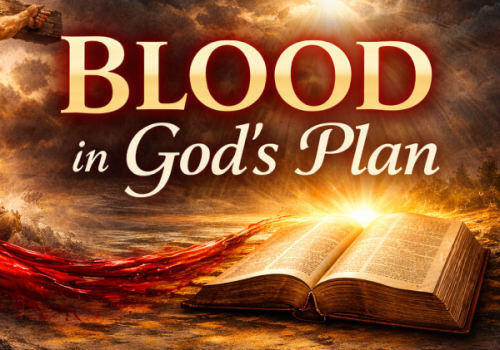
Blood plays a central role in God’s plan of redemption.
Agape
spencer
BLOOD
And almost all things are by the law purged with blood; and without shedding of blood is no remission.
(Hebrews 9:22)
For the life of the flesh is in the blood: and I have given it to you upon the altar to make an atonement for your souls: for it is the blood that maketh an atonement for the soul. (Leviticus 17:11)
 Borger church of Christ @ Franklin & Juniper