Evidence for our Faith: the Moral Argument

The Moral Argument: Why Morality Points to a Creator. God’s Revealed Word as the Source of Objective Morality

The Moral Argument for God’s existence rests on the premise that objective moral values—universal standards of right and wrong—exist and are best explained by a purposeful design from a Creator. While science highlights our innate moral instincts, the Bible provides a unique and compelling case that humanity learns these objective standards through God’s revealed word. This interplay of divine revelation and human conscience offers a profound clue to the existence of a moral lawgiver.

Objective moral values, such as the inherent wrongness of betrayal or the goodness of self-sacrifice, transcend personal opinion or cultural trends. Psychological research, like that of Paul Bloom, shows even infants exhibit rudimentary moral judgments—preferring kindness over cruelty—suggesting an inborn moral sense (Bloom, Just Babies, 2013). Yet, this alone doesn’t explain how we refine and understand these principles. The Bible steps in, asserting that God’s revealed word clarifies and establishes these standards for humanity. Without this guidance, our moral intuitions might remain vague or misdirected.

Scripture presents God as the ultimate source of morality, with His word providing the definitive moral framework. In Exodus 20:1-17, the Ten Commandments are delivered directly from God to Moses, offering unambiguous directives: “You shall not murder,” “You shall not steal.” These laws aren’t mere suggestions but objective truths, reflecting God’s character and intended for all people. This revelation transforms abstract moral instincts into concrete duties, shaping human understanding of right and wrong.

Further, Deuteronomy 6:6-7 instructs, “These commandments that I give you today are to be on your hearts. Impress them on your children.” This emphasizes that morality isn’t left to human guesswork—God’s word is taught, learned, and passed down, refining our natural inclinations. The Psalms reinforce this: Psalm 119:105 declares, “Your word is a lamp to my feet and a light to my path,” portraying divine revelation as the guide that illuminates moral living.

Romans 2:14-15 offers a striking insight: “When Gentiles, who do not have the law, do by nature things required by the law… they show that the requirements of the law are written on their hearts.” This suggests an innate moral awareness, yet the passage implies it aligns with God’s law, revealed fully in Scripture. The Bible bridges the gap between our God-given conscience and the precise standards we’re meant to follow. For instance, Micah 6:8 summarizes divine expectation: “To act justly and to love mercy and to walk humbly with your God”—a standard humanity learns through God’s word, not intuition alone.

Naturalists might argue morality evolves socially, but this fails to explain its objective weight. Cultures differ on specifics, yet core values—like justice—persist universally, echoing biblical principles. God’s revealed word provides the anchor, ensuring morality isn’t arbitrary. As Isaiah 55:8-9 notes, God’s ways are higher than ours, suggesting His revelation elevates human understanding beyond what nature alone could teach.

The Moral Argument, enriched by biblical evidence, posits that objective morality points to a Creator who reveals it through His word. Science hints at our moral wiring, but Scripture—through commandments, teachings, and declarations—grounds it in God’s eternal truth, offering humanity a clear path to righteousness.


Agape,
Spencer

Sources:
o Bloom, Paul. Just Babies: The Origins of Good and Evil. Crown, 2013.
o The Holy Bible, New International Version. Zondervan, 2011 (Exodus 20:1-17, Deuteronomy 6:6-7, Psalm 119:105, Romans 2:14-15, Micah 6:8, Isaiah 55:8-9).

Evidence for our faith: Fine Tuning

The Laws of Physics: Evidence of a Lawgiver

Could the laws of physics—precise, universal, and life-sustaining—point to a purposeful design, a Lawgiver shaping the cosmos? Modern science offers compelling clues that resonate with biblical accounts, suggesting God’s hand in creation.

The universe’s fine-tuning is astonishing. Physicist Paul Davies (The Cosmic Blueprint, 1988) highlights that if gravity shifted by one part in 10^40, stars like our Sun—vital for life—wouldn’t exist.

Roger Penrose (The Emperor’s New Mind, 1989) calculates the initial entropy —essentially the universe’s starting level of disorder— required odds-defying precision (1 in 10^10^123) for a habitable cosmos. This suggests intent, not chance, mirroring Genesis 1:1: “In the beginning, God created the heavens and the earth.”

Equally remarkable is the rational order of these laws. Eugene Wigner’s 1960 paper, “The Unreasonable Effectiveness of Mathematics,” marvels at how abstract equations govern reality with uncanny accuracy. Why does the universe follow such logic? Psalm 19:1 offers a poetic parallel: “The heavens declare the glory of God; the skies proclaim the work of his hands,” declaring a mind behind the order.

The universe’s origin adds intrigue. The Big Bang, confirmed by cosmic microwave background radiation (Penzias and Wilson, 1965), marks a sudden start from nothing. Stephen Hawking (A Brief History of Time, 1988) notes this challenges materialist explanations, as “nothing” producing “something” implies a cause beyond physics. Genesis 1:3—“And God said, ‘Let there be light’”—echoes this emergence.

The anthropic principle—meaning the universe seems tailored for human life— deepens the case. Michael Denton (Nature’s Destiny, 1998) argues that physical laws governing carbon, water, and oxygen are uniquely tuned for life. Alter any constant slightly, and biology collapses. Isaiah 45:18 aligns: God “formed the earth… to be inhabited.” Such specificity strains random odds, suggesting deliberate calibration.

Skeptics propose a multiverse to explain our “lucky” universe, but this lacks evidence and complicates rather than clarifies. A single, purposeful design aligns with Occam’s razor. Romans 1:20 ties it together: God’s “invisible qualities… have been clearly seen, being understood from what has been made.” The laws of physics—fine-tuned, rational, and life-enabling— more than whisper of a Lawgiver, inviting us to ponder the Creator behind the cosmos.

Agape,

Spencer

Sources:

  • Davies, Paul. The Cosmic Blueprint. 1988.
  • Penrose, Roger. The Emperor’s New Mind. 1989.
  • Wigner, Eugene. “The Unreasonable Effectiveness of Mathematics.” 1960.
  • Hawking, Stephen. A Brief History of Time. 1988.

Denton, Michael. Nature’s Destiny. 1998.

Calling on the name of the Lord: What is it really?

Calling on the name of the Lord:

Prayer or obedience?

Acts 22:16 (KJV) states:

“And now why tarriest thou? Arise, and be baptized, and wash away thy sins, calling on the name of the Lord.”

This verse records Ananias’ instructions to Saul (later Paul) regarding his conversion. To understand what it means to “call on the name of the Lord,” we must look at how the Bible defines and uses this phrase.

1. Calling on the Name of the Lord Involves Obedience

Acts 22:16 ties “calling on the name of the Lord” directly to baptism, which is the moment when Saul’s sins were washed away. This aligns with Jesus’ own words in Mark 16:16:

“He that believeth and is baptized shall be saved; but he that believeth not shall be damned.”

Calling on the name of the Lord, then, is not merely a verbal plea but involves obedient action. This is further clarified by Romans 10:13-14:

“For whosoever shall call upon the name of the Lord shall be saved. How then shall they call on him in whom they have not believed? and how shall they believe in him of whom they have not heard? and how shall they hear without a preacher?”

Paul, writing later, shows that calling on the Lord’s name requires hearing the gospel, believing, and responding in obedience.

2. Calling on the Name of the Lord Is Not Just Prayer

Some assume that calling on the Lord’s name is merely saying a prayer for salvation, but Scripture does not support this idea. Consider Jesus’ words in Matthew 7:21:

“Not every one that saith unto me, Lord, Lord, shall enter into the kingdom of heaven; but he that doeth the will of my Father which is in heaven.”

Merely addressing Jesus as Lord does not save—doing His will does. This is consistent with Acts 22:16, where Paul had already been praying (Acts 9:11), yet he still needed to be baptized to wash away his sins.

3. Biblical Examples of Calling on the Name of the Lord

The phrase “call on the name of the Lord” is used throughout Scripture in connection with worship and obedience.

• Genesis 4:26 – “Then began men to call upon the name of the LORD.” This refers to worship and devotion to God.

• Joel 2:32 (quoted in Acts 2:21) – “Whosoever shall call on the name of the Lord shall be delivered.” This was fulfilled in Acts 2, where Peter preached that repentance and baptism in Jesus’ name were necessary for salvation (Acts 2:38).

In Acts 2, the people called upon the Lord by obeying Peter’s command to repent and be baptized. This directly parallels Acts 22:16, where Paul was instructed to do the same.

So what now?

To “call on the name of the Lord” is to appeal to Him for salvation by faithful obedience to His commands. Acts 22:16 shows that Saul (Paul) did this when he was baptized, at which point his sins were washed away. This is consistent with how the phrase is used throughout the Bible—faith in action, not merely words.

Spencer

Franklin & Juniper St

church of Christ

Borger, Tx

Evidence for our faith: a Young Earth

Compelling Evidence of a Young Earth

The debate over the age of the Earth has been ongoing for centuries, with mainstream science advocating for an age of about 4.5 billion years. However, significant scientific evidence challenges this timeline and supports the view that the Earth is much younger. Below are several compelling arguments, supported by observable data, that point to a young Earth.

1. The Decay of Earth’s Magnetic Field. The Earth’s magnetic field is rapidly decaying, with measurements indicating an exponential decline. Dr. Thomas G. Barnes first analyzed this phenomenon in 1971, showing that the field’s energy has decreased by approximately 50% over the past 1,400 years (Barnes, 1973). If we extrapolate this trend backward, the field would have been so strong just 10,000 years ago that life on Earth would not have been possible due to excessive heat and radiation. This suggests that the Earth’s magnetic field cannot be millions of years old, let alone billions.

2. Soft Tissue in Dinosaur Fossils. One of the most astonishing discoveries in paleontology has been the presence of soft tissues, collagen, and even red blood cells in dinosaur fossils. Dr. Mary Schweitzer first reported these findings in a 1997 study on a T. rex femur (Schweitzer et al., 1997). Subsequent discoveries confirmed that proteins like collagen, which break down relatively quickly, could not survive for the 65+ million years assigned to these fossils. Since such biological materials should degrade completely within a few tens of thousands of years, these discoveries suggest that the fossils are much younger than traditionally believed.

3. Carbon-14 in Ancient Fossils and Diamonds. Carbon-14 (C-14) dating is a method used to determine the age of once-living materials, but it has a fundamental limitation: C-14 decays so quickly that anything older than 100,000 years should have no detectable traces remaining. However, measurable amounts of C-14 have been found in coal, oil, natural gas, and even diamonds—materials supposedly millions to billions of years old (Baumgardner et al., 2003). These findings indicate that these materials are not nearly as old as conventional dating methods suggest.

4. Recession of the Moon. The Moon is slowly moving away from the Earth at a measured rate of approximately 3.8 cm per year (Dickey et al., 1994). If we extrapolate this rate backward, the Moon would have been much closer to the Earth in the past. Just 1.5 billion years ago, the Moon would have been so close that Earth’s tidal forces would have torn it apart. Yet, the standard model suggests the Moon has been receding for over 4 billion years. The current observed recession rate is difficult to reconcile with a billions-of-years-old Earth-Moon system, but it fits well within a young Earth framework.

5. Helium Retention in Zircon Crystals. Zircon crystals, found deep in the Earth’s crust, contain uranium, which decays into lead while simultaneously releasing helium. Since helium is a lightweight, highly diffusive gas, it should escape from these crystals relatively quickly. However, studies have found high concentrations of helium in zircons from Precambrian rock (Gentry et al., 1982). If these rocks were truly over a billion years old, the helium should have long since dissipated. The retention of helium suggests an age of only about 6,000 years, aligning closely with a biblical timeframe.

6. Rapid Formation of Geological Features. The 1980 eruption of Mount St. Helens provided a remarkable case study on how catastrophic events can rapidly shape geological features. Within hours, massive sedimentary layers were deposited, and within days, a new canyon was carved, resembling those believed to have taken millions of years to form (Morris & Austin, 2003). This demonstrates that many geological formations attributed to vast ages could have been formed quickly under the right conditions, such as during a global flood.

7. Biblical Evidence for a Young Earth. The Bible provides a historical framework that aligns with a young Earth. The genealogies in Genesis 5 and 11, when traced chronologically, place the creation of the world at approximately 6,000 years ago. Exodus 20:11 states, “For in six days the Lord made heaven and earth, the sea, and all that in them is, and rested the seventh day.” This passage affirms a literal six-day creation, contradicting the notion of an ancient Earth. Furthermore, Jesus referenced the creation of man “from the beginning of the creation” (Mark 10:6), indicating that humanity was present near the start of Earth’s history, not billions of years after its formation.

The Weight of the Evidence. The conventional billions-of-years model is based on assumptions that increasingly conflict with observable scientific data. The rapid decay of Earth’s magnetic field, the presence of soft tissues in dinosaur fossils, the discovery of C-14 in supposedly ancient materials, the Moon’s recession rate, helium retention in zircons, and the rapid formation of geological features all point to an Earth that is far younger than mainstream science asserts.

If the foundations of an old Earth are shaken by observable data, then the question remains: Why is the conventional narrative so resistant to change? The implications of a young Earth challenge not just scientific paradigms but also philosophical and theological worldviews. If the Earth is young, then biblical history is not just a religious tradition—it is an accurate record of our origins. The evidence speaks for itself, but the willingness to follow that evidence remains a matter of conviction.

Agape,

Spencer

Evidence for our faith: the Cambrian Explosion

The Cambrian Explosion presents one of the most compelling challenges to evolutionary theory and a powerful argument for sudden creation. This event, characterized by the sudden appearance of diverse and complex animal forms in the fossil record, aligns with the Cosmological Argument, suggesting a Creator’s intervention in the origins of life.

During the Cambrian Explosion, nearly all the major animal phyla appeared abruptly without clear evolutionary precursors. Trilobites, arthropods, mollusks, echinoderms, and many other complex organisms emerged fully formed with distinct body plans. This event contradicts Darwinian expectations of gradual transitions through intermediate forms over long periods. Instead, the fossil evidence supports the idea of sudden creation, where life forms were introduced in a fully functional and diverse state.

One of the most striking examples is the trilobite, which possessed highly complex compound eyes with dozens of lenses. These eyes required precise anatomical and biochemical systems to function, challenging the idea of their gradual evolution. Such sophisticated designs appearing suddenly in the fossil record point toward intelligent design rather than chance processes.

The abruptness of the Cambrian Explosion highlights the inadequacy of naturalistic explanations. Evolutionary models have struggled to account for the lack of transitional fossils leading to these diverse life forms. Attempts to explain this event, such as the “genetic toolkit” hypothesis, fail to address why the genetic information and mechanisms for such diversity appeared so suddenly and simultaneously.

From a biblical perspective, the Cambrian Explosion aligns with the narrative of creation as described in Genesis. Genesis 1:20-21 declares, “And God said, Let the waters bring forth abundantly the moving creature that hath life… And God created great whales, and every living creature that moveth, which the waters brought forth abundantly, after their kind.” This description of life appearing abundantly and fully formed mirrors the pattern observed in the Cambrian Explosion.

The Cambrian Explosion provides compelling evidence for sudden creation, challenging the gradualism central to Darwinian evolution. The abrupt appearance of complex organisms, lacking evolutionary precursors, suggests a Creator who brings forth life in abundance and complexity.

Another theory for the Cambrian explosion held by some creationists interprets it as consistent with the biblical account of a worldwide flood, as described in Genesis 6–9.

Sources:

  • Stephen C. Meyer, Darwin’s Doubt: The Explosive Origin of Animal Life and the Case for Intelligent Design

Agape, Spencer

Evidence for our Faith: The Human Eye

The Human Eye

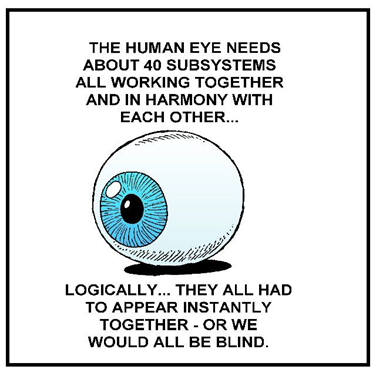
The human eye is one of the most intricate and sophisticated organs in the body, often cited as evidence of intelligent design. Its complexity and functionality defy random chance, pointing instead to purposeful creation. The eye’s ability to perceive light, distinguish colors, and adapt to varying conditions showcases an engineering marvel that naturalistic evolutionary processes struggle to explain.

The eye operates as an integrated system, relying on the coordinated function of numerous components. These include the cornea, lens, retina, optic nerve, and a network of supporting cells and tissues. The retina, for example, contains millions of photoreceptor cells—rods and cones—that convert light into electrical signals. These signals are then processed by the brain, enabling us to perceive the world in vivid detail. The cones are responsible for color vision, while rods excel in low-light conditions, allowing us to adapt to different environments.

A hallmark of the eye’s design is its irreducible complexity. Each part of the eye depends on the others to function properly. For instance, the lens focuses light onto the retina, which converts the light into signals transmitted by the optic nerve to the brain. If any of these components were absent or incomplete, the eye would be nonfunctional. This interdependence challenges the notion of gradual evolution, as intermediate stages would provide no survival advantage.

Darwin himself acknowledged this difficulty, writing in On the Origin of Species: “To suppose that the eye, with all its inimitable contrivances… could have been formed by natural selection, seems, I freely confess, absurd in the highest degree.” (Charles Darwin, On the Origin of Species.)

Biblically, the eye’s intricacy reflects God’s intentional design. Psalm 94:9 asks, “He that planted the ear, shall he not hear? He that formed the eye, shall he not see?” This rhetorical question emphasizes that the Creator, who designed the human eye, possesses perfect knowledge and wisdom. The complexity of the eye aligns with this biblical perspective, affirming a purposeful Designer.

Scientific attempts to explain the evolution of the eye, such as the idea of incremental improvements through natural selection, fail to account for the precise coordination required for its functionality. Mutations alone cannot produce the tightly integrated system observed in the human eye, further supporting the argument for intelligent design.

The human eye stands as a testament to the existence of a Creator. Its complexity, irreducible nature, and unparalleled functionality defy naturalistic explanations, pointing instead to purposeful design. As Romans 1:20 declares, “For the invisible things of him from the creation of the world are clearly seen, being understood by the things that are made.” The human eye, a marvel of engineering, is a clear manifestation of God’s creative power and wisdom.

Agape,

Spencer

Evidence for our Faith: Irreducible Complexity

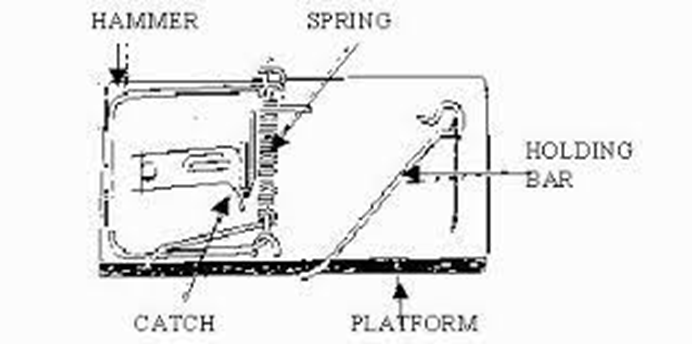
A Mousetrap represents an example of irreducible complexity

The concept of irreducible complexity presents a powerful argument for the existence of a Designer. Coined by biochemist Michael Behe, irreducible complexity refers to biological systems composed of multiple interdependent parts, all of which must function simultaneously for the system to work. Such systems cannot arise through gradual evolutionary processes, as removing even one component renders the system nonfunctional. This hallmark of intentional design points to the existence of an intelligent Creator.

One of the most cited examples of irreducible complexity is the bacterial flagellum, a microscopic rotary motor used by bacteria for propulsion. The flagellum comprises over 40 distinct protein components, including a rotor, stator, drive shaft, bushing, and propeller. Each part is precisely shaped and positioned to interact with the others, enabling the flagellum to rotate at incredible speeds—up to 100,000 revolutions per minute in some species.

The flagellum’s functionality depends on the presence of all its components working together. If even one protein is missing, the entire system fails, offering no advantage to the organism. This contradicts Darwinian evolutionary mechanisms, which propose gradual modifications and natural selection as the means of developing complex structures. As Behe argues in his book Darwin’s Black Box, such irreducible systems could not have evolved step-by-step, as intermediate stages would confer no benefit to survival.

The Bible supports the idea of intentional design in creation. Job 12:7-9 invites us to consider the evidence of God’s hand in the natural world: “But ask now the beasts, and they shall teach thee; and the fowls of the air, and they shall tell thee: Or speak to the earth, and it shall teach thee: and the fishes of the sea shall declare unto thee. Who knoweth not in all these that the hand of the Lord hath wrought this?” The intricacy of the flagellum echoes this truth, revealing the handiwork of a Creator. The bacterial flagellum, a marvel of engineering, stands as evidence of God’s power and wisdom.

Scientifically, attempts to explain the flagellum through evolutionary mechanisms remain inconclusive. Proposals like co-option, which suggest that existing proteins were repurposed for new functions, fail to account for the precise timing, positioning, and coordination required to assemble the flagellum. Such precision implies design, not chance.

Irreducible complexity in systems like the bacterial flagellum provides compelling proof of a Designer. Its intricate structure and functionality defy evolutionary explanations, aligning with biblical declarations of God’s creative work. This undeniable complexity reflects the harmony between science and faith, pointing to the Creator behind the design.

Agape,

Spencer

Evidence for our Faith: DNA

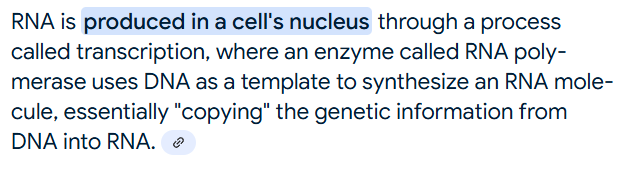
RNA is necessary to produce the proteins, like RNA polymerase, that are required to transcribe RNA from DNA, creating an interdependent system that could not function without all parts existing simultaneously.

Evidence of God in DNA

DNA, deoxyribonucleic acid, serves as the molecular basis of heredity and the blueprint for all living organisms. Within its structure lies an extraordinary amount of information encoded in sequences of nucleotide bases. This informational content directs the development, functioning, and reproduction of living beings, showcasing a complexity that defies random chance.

The intricate information stored in DNA speaks to the concept of intelligent design proposed by the Cosmological Argument. This argument posits that the order and complexity observed in the universe, including biological systems like DNA, imply a purposeful design rather than mere random processes. The information-rich nature of DNA points towards a mind behind its creation—a mind that comprehends and engineers complex systems far beyond human understanding.

Biblically, the narrative supports this idea of intentional design. Psalm 139:14 states, “I praise you, for I am fearfully and wonderfully made. Wonderful are your works; my soul knows it very well.” This verse acknowledges the intricate craftsmanship evident in human beings, echoing the complexity found in DNA. Moreover, Genesis 1:27 affirms that mankind is created in the image of God, implying a deliberate act of creation imbued with purpose and design.

Scientifically, the discovery of DNA’s structure and function has revolutionized our understanding of biology and genetics. Francis Crick and James Watson’s explanation of its double helix structure in 1953 marked a watershed moment in science, revealing the elegance and complexity of this molecule. Since then, advancements in genomic research have uncovered layers of complexity within DNA that continue to astonish scientists.

Moreover, the concept of irreducible complexity, as proposed by biochemist Michael Behe, further bolsters the argument for intelligent design in DNA. Irreducible complexity posits that certain biological systems are composed of multiple intricate parts that must all be present and functioning for the system to work. This challenges the idea of gradual evolution through natural selection alone, suggesting instead a purposeful arrangement of components.

Romans 1:20 declares, “For his invisible attributes, namely, his eternal power and divine nature, have been clearly perceived, ever since the creation of the world, in the things that have been made.” This verse emphasizes that the intricacies of creation, such as DNA, bear witness to God’s existence and creative power.

The study of DNA provides compelling evidence for the Cosmological Argument, pointing towards an intelligent designer behind the complexity of life.

Agape,

Spencer

Evidence for our faith: Ontological Argument

The ontological argument, first articulated by St. Anselm of Canterbury in the 11th century, explores the concept of God as a necessary being whose existence is self-evident through reason. Unlike other arguments that rely on empirical evidence, the ontological argument is a philosophical proof, rooted in the nature of God as “that than which nothing greater can be conceived.” Modern developments in philosophy and science reinforce the logic of this timeless argument.

The Concept of Necessary Existence. The argument begins with the definition of God as the greatest conceivable being. Such a being must exist not only in the mind (as a concept) but also in reality, for existence in reality is greater than existence solely in thought. If God existed only as a concept, then a greater being—one that exists in reality—could be imagined, contradicting the original definition. Thus, God must exist in reality.

This concept aligns with the biblical understanding of God as self-existent and eternal. Exodus 3:14 encapsulates this when God declares, “I AM THAT I AM,” signifying His independent and necessary existence.

Modern Philosophical Insights. Contemporary philosophers like Alvin Plantinga have refined the argument, framing it within modal logic. Plantinga’s version argues that if it is possible for a maximally great being to exist, then such a being exists in some possible world. If it exists in one possible world, its necessary nature means it exists in all possible worlds—including our own.

This formulation strengthens the argument by considering God’s existence as necessary rather than contingent. A necessary being is one that must exist; its non-existence is impossible. This necessity aligns with the biblical portrayal of God as eternal and unchanging (Malachi 3:6).

Scientific Corroboration of a Necessary Cause. While the ontological argument is primarily philosophical, modern science lends indirect support. The universe, with its intricate fine-tuning, suggests a source that exists outside time and space. This aligns with the concept of a necessary being who undergirds all reality. Romans 1:20 reflects this idea: “For the invisible things of him from the creation of the world are clearly seen, being understood by the things that are made.”

Implications of God’s Necessary Existence. If God’s existence is necessary, He is the source of all contingent reality—everything that depends on something else to exist. This explains not only the existence of the universe but also the rationality, order, and purpose evident in creation.

Conclusion. The ontological argument, grounded in reason and supported by scripture, reveals God as the necessary being upon whom all existence depends. As Colossians 1:17 declares, “And he is before all things, and by him all things consist.” This philosophical proof, when coupled with scripture, underscores the truth of God’s eternal and unchanging nature.

Sources:
• Plantinga, A. The Nature of Necessity.
• Craig, W.L. Reasonable Faith: Christian Truth and Apologetics.
• Exodus 3:14, Romans 1:20, Malachi 3:6, Colossians 1:17 (KJV).


Agape,
Spencer

Evidence for our Faith

The Cosmological Argument: Why the Universe Needs a Cause

The cosmological argument, one of the oldest and most compelling proofs for the existence of God, asserts that the universe must have a cause. Its foundation lies in the principle of causality: everything that begins to exist has a cause. Scientific discoveries and philosophical reasoning bolster this argument, making a strong case for a Creator.

The Universe Had a Beginning. One of the most significant discoveries of modern science is that the universe had a beginning. The Big Bang theory, widely accepted among cosmologists, posits that all matter, energy, space, and time originated from a singular event approximately 13.8 billion years ago. Before this point, there was no time, space, or physical reality. This supports the biblical assertion that the universe is not eternal but was created, as described in Genesis 1:1: “In the beginning, God created the heaven and the earth.” (other evidence supports the Biblical narrative for the age of the Earth)

The Second Law of Thermodynamics also supports this conclusion. The universe is moving toward a state of increased entropy, or disorder, which implies that it had an initial highly ordered state. If the universe were eternal, it would have already reached maximum entropy, contradicting observable reality.

Causality and the Need for a Cause. The principle of causality states that everything that begins to exist has a cause. Since the universe began to exist, it must have a cause. However, this cause cannot be part of the physical universe because time, space, and matter only came into existence at the universe’s origin. Therefore, the cause must be timeless, spaceless, and immaterial—qualities that align with the biblical description of God.

Hebrews 11:3 affirms this: “Through faith, we understand that the worlds were framed by the word of God so that things which are seen were not made of things which do appear.” This aligns with the cosmological argument, as it emphasizes that the universe was caused by something outside itself.

The Impossibility of Infinite Regress. An infinite regress of causes—where every cause has a prior cause—leads to logical contradictions. If there were no first cause, the chain of causes could never begin, and the universe could not exist. This necessitates a first, uncaused cause, which philosophers and theologians identify as God.

The cosmological argument is reinforced by scientific evidence that the universe had a beginning, philosophical reasoning on causality, and the impossibility of infinite regress. These findings point to a timeless, spaceless, immaterial, and powerful Creator—attributes consistent with the God of the Bible. As Psalm 33:6 declares, “By the word of the Lord were the heavens made; and all the host of them by the breath of his mouth.”

Sources:
• Craig, W.L. Reasonable Faith: Christian Truth and Apologetics.
• Hawking, S., and Mlodinow, L. The Grand Design.
• Genesis 1:1, Hebrews 11:3, Psalm 33:6 (KJV).

Agape,
Spencer