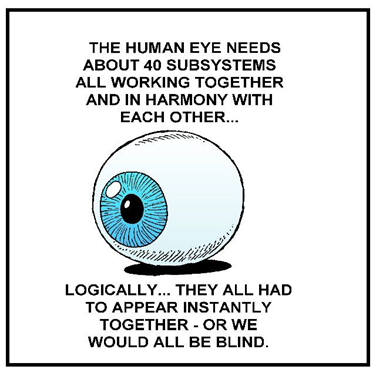
The human eye is one of the most intricate and sophisticated organs in the body, often cited as evidence of intelligent design. Its complexity and functionality defy random chance, pointing instead to purposeful creation. The eye’s ability to perceive light, distinguish colors, and adapt to varying conditions showcases an engineering marvel that naturalistic evolutionary processes struggle to explain.
The eye operates as an integrated system, relying on the coordinated function of numerous components. These include the cornea, lens, retina, optic nerve, and a network of supporting cells and tissues. The retina, for example, contains millions of photoreceptor cells—rods and cones—that convert light into electrical signals. These signals are then processed by the brain, enabling us to perceive the world in vivid detail. The cones are responsible for color vision, while rods excel in low-light conditions, allowing us to adapt to different environments.
A hallmark of the eye’s design is its irreducible complexity. Each part of the eye depends on the others to function properly. For instance, the lens focuses light onto the retina, which converts the light into signals transmitted by the optic nerve to the brain. If any of these components were absent or incomplete, the eye would be nonfunctional. This interdependence challenges the notion of gradual evolution, as intermediate stages would provide no survival advantage.
Darwin himself acknowledged this difficulty, writing in On the Origin of Species: “To suppose that the eye, with all its inimitable contrivances… could have been formed by natural selection, seems, I freely confess, absurd in the highest degree.” (Charles Darwin, On the Origin of Species.)
Biblically, the eye’s intricacy reflects God’s intentional design. Psalm 94:9 asks, “He that planted the ear, shall he not hear? He that formed the eye, shall he not see?” This rhetorical question emphasizes that the Creator, who designed the human eye, possesses perfect knowledge and wisdom. The complexity of the eye aligns with this biblical perspective, affirming a purposeful Designer.
Scientific attempts to explain the evolution of the eye, such as the idea of incremental improvements through natural selection, fail to account for the precise coordination required for its functionality. Mutations alone cannot produce the tightly integrated system observed in the human eye, further supporting the argument for intelligent design.
The human eye stands as a testament to the existence of a Creator. Its complexity, irreducible nature, and unparalleled functionality defy naturalistic explanations, pointing instead to purposeful design. As Romans 1:20 declares, “For the invisible things of him from the creation of the world are clearly seen, being understood by the things that are made.” The human eye, a marvel of engineering, is a clear manifestation of God’s creative power and wisdom.
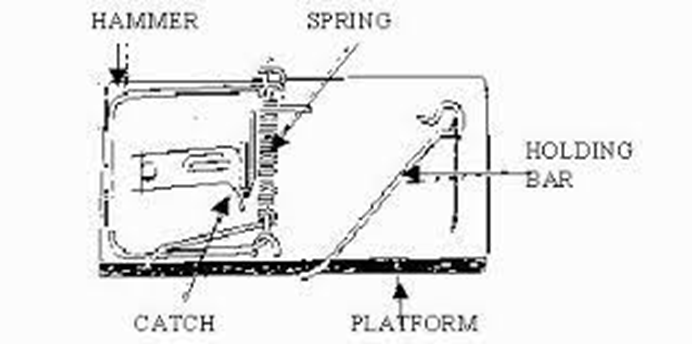
A Mousetrap represents an example of irreducible complexity
The concept of irreducible complexity presents a powerful argument for the existence of a Designer. Coined by biochemist Michael Behe, irreducible complexity refers to biological systems composed of multiple interdependent parts, all of which must function simultaneously for the system to work. Such systems cannot arise through gradual evolutionary processes, as removing even one component renders the system nonfunctional. This hallmark of intentional design points to the existence of an intelligent Creator.
One of the most cited examples of irreducible complexity is the bacterial flagellum, a microscopic rotary motor used by bacteria for propulsion. The flagellum comprises over 40 distinct protein components, including a rotor, stator, drive shaft, bushing, and propeller. Each part is precisely shaped and positioned to interact with the others, enabling the flagellum to rotate at incredible speeds—up to 100,000 revolutions per minute in some species.
The flagellum’s functionality depends on the presence of all its components working together. If even one protein is missing, the entire system fails, offering no advantage to the organism. This contradicts Darwinian evolutionary mechanisms, which propose gradual modifications and natural selection as the means of developing complex structures. As Behe argues in his book Darwin’s Black Box, such irreducible systems could not have evolved step-by-step, as intermediate stages would confer no benefit to survival.
The Bible supports the idea of intentional design in creation. Job 12:7-9 invites us to consider the evidence of God’s hand in the natural world: “But ask now the beasts, and they shall teach thee; and the fowls of the air, and they shall tell thee: Or speak to the earth, and it shall teach thee: and the fishes of the sea shall declare unto thee. Who knoweth not in all these that the hand of the Lord hath wrought this?” The intricacy of the flagellum echoes this truth, revealing the handiwork of a Creator. The bacterial flagellum, a marvel of engineering, stands as evidence of God’s power and wisdom.
Scientifically, attempts to explain the flagellum through evolutionary mechanisms remain inconclusive. Proposals like co-option, which suggest that existing proteins were repurposed for new functions, fail to account for the precise timing, positioning, and coordination required to assemble the flagellum. Such precision implies design, not chance.
Irreducible complexity in systems like the bacterial flagellum provides compelling proof of a Designer. Its intricate structure and functionality defy evolutionary explanations, aligning with biblical declarations of God’s creative work. This undeniable complexity reflects the harmony between science and faith, pointing to the Creator behind the design.
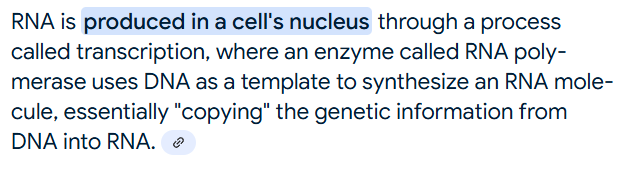
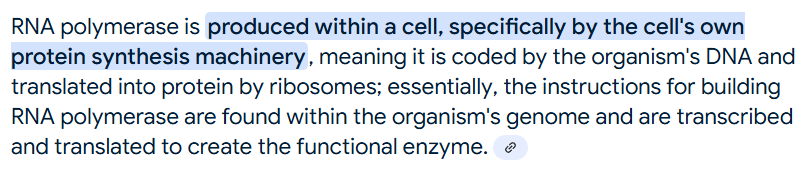
RNA is necessary to produce the proteins, like RNA polymerase, that are required to transcribe RNA from DNA, creating an interdependent system that could not function without all parts existing simultaneously.
Evidence of God in DNA
DNA, deoxyribonucleic acid, serves as the molecular basis of heredity and the blueprint for all living organisms. Within its structure lies an extraordinary amount of information encoded in sequences of nucleotide bases. This informational content directs the development, functioning, and reproduction of living beings, showcasing a complexity that defies random chance.
The intricate information stored in DNA speaks to the concept of intelligent design proposed by the Cosmological Argument. This argument posits that the order and complexity observed in the universe, including biological systems like DNA, imply a purposeful design rather than mere random processes. The information-rich nature of DNA points towards a mind behind its creation—a mind that comprehends and engineers complex systems far beyond human understanding.
Biblically, the narrative supports this idea of intentional design. Psalm 139:14 states, “I praise you, for I am fearfully and wonderfully made. Wonderful are your works; my soul knows it very well.” This verse acknowledges the intricate craftsmanship evident in human beings, echoing the complexity found in DNA. Moreover, Genesis 1:27 affirms that mankind is created in the image of God, implying a deliberate act of creation imbued with purpose and design.
Scientifically, the discovery of DNA’s structure and function has revolutionized our understanding of biology and genetics. Francis Crick and James Watson’s explanation of its double helix structure in 1953 marked a watershed moment in science, revealing the elegance and complexity of this molecule. Since then, advancements in genomic research have uncovered layers of complexity within DNA that continue to astonish scientists.
Moreover, the concept of irreducible complexity, as proposed by biochemist Michael Behe, further bolsters the argument for intelligent design in DNA. Irreducible complexity posits that certain biological systems are composed of multiple intricate parts that must all be present and functioning for the system to work. This challenges the idea of gradual evolution through natural selection alone, suggesting instead a purposeful arrangement of components.
Romans 1:20 declares, “For his invisible attributes, namely, his eternal power and divine nature, have been clearly perceived, ever since the creation of the world, in the things that have been made.” This verse emphasizes that the intricacies of creation, such as DNA, bear witness to God’s existence and creative power.
The study of DNA provides compelling evidence for the Cosmological Argument, pointing towards an intelligent designer behind the complexity of life.
The ontological argument, first articulated by St. Anselm of Canterbury in the 11th century, explores the concept of God as a necessary being whose existence is self-evident through reason. Unlike other arguments that rely on empirical evidence, the ontological argument is a philosophical proof, rooted in the nature of God as “that than which nothing greater can be conceived.” Modern developments in philosophy and science reinforce the logic of this timeless argument.
The Concept of Necessary Existence. The argument begins with the definition of God as the greatest conceivable being. Such a being must exist not only in the mind (as a concept) but also in reality, for existence in reality is greater than existence solely in thought. If God existed only as a concept, then a greater being—one that exists in reality—could be imagined, contradicting the original definition. Thus, God must exist in reality.
This concept aligns with the biblical understanding of God as self-existent and eternal. Exodus 3:14 encapsulates this when God declares, “I AM THAT I AM,” signifying His independent and necessary existence.
Modern Philosophical Insights. Contemporary philosophers like Alvin Plantinga have refined the argument, framing it within modal logic. Plantinga’s version argues that if it is possible for a maximally great being to exist, then such a being exists in some possible world. If it exists in one possible world, its necessary nature means it exists in all possible worlds—including our own.
This formulation strengthens the argument by considering God’s existence as necessary rather than contingent. A necessary being is one that must exist; its non-existence is impossible. This necessity aligns with the biblical portrayal of God as eternal and unchanging (Malachi 3:6).
Scientific Corroboration of a Necessary Cause. While the ontological argument is primarily philosophical, modern science lends indirect support. The universe, with its intricate fine-tuning, suggests a source that exists outside time and space. This aligns with the concept of a necessary being who undergirds all reality. Romans 1:20 reflects this idea: “For the invisible things of him from the creation of the world are clearly seen, being understood by the things that are made.”
Implications of God’s Necessary Existence. If God’s existence is necessary, He is the source of all contingent reality—everything that depends on something else to exist. This explains not only the existence of the universe but also the rationality, order, and purpose evident in creation.
Conclusion. The ontological argument, grounded in reason and supported by scripture, reveals God as the necessary being upon whom all existence depends. As Colossians 1:17 declares, “And he is before all things, and by him all things consist.” This philosophical proof, when coupled with scripture, underscores the truth of God’s eternal and unchanging nature.
Sources: • Plantinga, A. The Nature of Necessity. • Craig, W.L. Reasonable Faith: Christian Truth and Apologetics. • Exodus 3:14, Romans 1:20, Malachi 3:6, Colossians 1:17 (KJV).
The Cosmological Argument: Why the Universe Needs a Cause
The cosmological argument, one of the oldest and most compelling proofs for the existence of God, asserts that the universe must have a cause. Its foundation lies in the principle of causality: everything that begins to exist has a cause. Scientific discoveries and philosophical reasoning bolster this argument, making a strong case for a Creator.
The Universe Had a Beginning. One of the most significant discoveries of modern science is that the universe had a beginning. The Big Bang theory, widely accepted among cosmologists, posits that all matter, energy, space, and time originated from a singular event approximately 13.8 billion years ago. Before this point, there was no time, space, or physical reality. This supports the biblical assertion that the universe is not eternal but was created, as described in Genesis 1:1: “In the beginning, God created the heaven and the earth.” (other evidence supports the Biblical narrative for the age of the Earth)
The Second Law of Thermodynamics also supports this conclusion. The universe is moving toward a state of increased entropy, or disorder, which implies that it had an initial highly ordered state. If the universe were eternal, it would have already reached maximum entropy, contradicting observable reality.
Causality and the Need for a Cause. The principle of causality states that everything that begins to exist has a cause. Since the universe began to exist, it must have a cause. However, this cause cannot be part of the physical universe because time, space, and matter only came into existence at the universe’s origin. Therefore, the cause must be timeless, spaceless, and immaterial—qualities that align with the biblical description of God.
Hebrews 11:3 affirms this: “Through faith, we understand that the worlds were framed by the word of God so that things which are seen were not made of things which do appear.” This aligns with the cosmological argument, as it emphasizes that the universe was caused by something outside itself.
The Impossibility of Infinite Regress. An infinite regress of causes—where every cause has a prior cause—leads to logical contradictions. If there were no first cause, the chain of causes could never begin, and the universe could not exist. This necessitates a first, uncaused cause, which philosophers and theologians identify as God.
The cosmological argument is reinforced by scientific evidence that the universe had a beginning, philosophical reasoning on causality, and the impossibility of infinite regress. These findings point to a timeless, spaceless, immaterial, and powerful Creator—attributes consistent with the God of the Bible. As Psalm 33:6 declares, “By the word of the Lord were the heavens made; and all the host of them by the breath of his mouth.”
Sources: • Craig, W.L. Reasonable Faith: Christian Truth and Apologetics. • Hawking, S., and Mlodinow, L. The Grand Design. • Genesis 1:1, Hebrews 11:3, Psalm 33:6 (KJV).
The existence of beauty in the world presents a profound question: why does beauty exist at all, and why are humans uniquely capable of perceiving and appreciating it? From awe-inspiring sunsets to masterful works of art, beauty seems unnecessary for survival, challenging purely naturalistic explanations and pointing to a Creator who values aesthetics.
Beauty in Nature Nature abounds with intricate and breathtaking beauty. The symmetry of snowflakes, the vibrant colors of a coral reef, and the majesty of mountain ranges go far beyond what is required for survival. Evolutionary theory might explain functional traits aiding survival and reproduction, but beauty often serves no such purpose. For example, the iridescence of a butterfly’s wing or the intricate design of a seashell does not directly contribute to the organism’s fitness. These examples suggest an artist behind the canvas of creation.
The Human Appreciation of Beauty Human beings uniquely recognize and create beauty. Unlike animals, which may engage in utilitarian behaviors related to survival, humans produce art, music, and poetry with no direct survival benefit. Neuroscientists have identified regions of the brain that respond to beauty, regardless of its form—visual, auditory, or conceptual. This capacity for aesthetic appreciation suggests that humans are made in the image of a Creator who delights in beauty. The Bible affirms this in Genesis 1:27, where it states, “God created man in his own image.”
Universality of Beauty Across cultures and times, humans have consistently found certain patterns, colors, and sounds beautiful. The golden ratio, found in natural phenomena and human art, is a prime example. This universality suggests an objective standard of beauty woven into the fabric of creation. Ecclesiastes 3:11 notes, “He hath made every thing beautiful in his time,” affirming that beauty reflects the order and intention of God.
Beauty and Purpose If the universe were purely a product of random chance, beauty would be an inexplicable anomaly. However, the Bible reveals that creation declares the glory of God: “The heavens declare the glory of God; and the firmament sheweth his handywork” (Psalm 19:1). Beauty serves a purpose in pointing humanity to its Creator, inspiring wonder and gratitude.
Conclusion The existence and appreciation of beauty challenge naturalistic explanations and align with the biblical worldview of a Creator who delights in aesthetics. Beauty is not accidental but purposeful, reflecting God’s nature and inviting us to seek Him. As Romans 1:20 states, “For the invisible things of him from the creation of the world are clearly seen, being understood by the things that are made.” Beauty, in all its forms, is a testament to the divine Artist behind the universe.
Sources: • D’Souza, D. What’s So Great About Christianity? • Lennox, J. God’s Undertaker: Has Science Buried God? • Genesis 1:27, Psalm 19:1, Ecclesiastes 3:11, Romans 1:20 (KJV).
The biblical account of a global flood is detailed in Genesis 6–9, describing Noah’s ark, the catastrophic deluge, and the repopulation of the earth. This narrative has parallels in ancient cultures worldwide, suggesting a shared memory of a catastrophic event. Scientific evidence also lends credibility to this account, providing compelling data that aligns with the possibility of a global flood.
Sedimentary Layers and Fossil Evidence
Sedimentary rock layers, found across the earth, contain fossils of marine and land organisms, often in unexpected locations. For instance, marine fossils have been discovered atop the Himalayas and other high-altitude regions. This suggests that these areas were once submerged under water. Rapid burial of organisms during a massive flood could explain the fossilization of soft-bodied creatures and the preservation of delicate features, such as jellyfish imprints, which would decay under normal conditions.
Polystrate Fossils
Polystrate fossils, or fossils that extend vertically through multiple sedimentary layers, challenge the standard geological timeline that attributes these layers to slow accumulation over millions of years. A rapid deposition of sediment, such as during a global flood, provides a more plausible explanation for how these fossils formed without significant decay.
Large-Scale Erosion and Canyon Formation
The formation of canyons, such as the Grand Canyon, shows evidence of rapid water erosion rather than slow geological processes. Experiments following events like the eruption of Mount St. Helens in 1980 showed how massive volumes of water can carve canyons in a short period, mirroring what a global flood might accomplish on a larger scale.
Flood Legends Across Cultures
Over 200 flood legends exist among ancient cultures worldwide, including those of the Sumerians, Babylonians, and Native Americans. Many of these accounts include a large vessel, a remnant of humanity and animals, and a divine reason for the flood. Such widespread narratives suggest a historical basis for the biblical account of Noah’s flood.
Biblical Consistency with Science
Genesis describes “the fountains of the great deep” breaking open and “the windows of heaven” releasing water (Genesis 7:11). Modern geology acknowledges subterranean water reserves and their role in catastrophic events. Furthermore, the ark’s dimensions (Genesis 6:15) align with the proportions needed for stability and capacity, as confirmed by naval architects.
Conclusion
While interpretations of evidence vary, the sedimentary layers, polystrate fossils, rapid erosion patterns, and global flood legends align with the Genesis narrative. These findings challenge the notion of slow geological processes and suggest that a catastrophic event, consistent with the biblical flood, is plausible.
Agape,
Spencer
Sources:
Morris, J. “The Global Flood.” Institute for Creation Research.
Snelling, A. “Flood Evidences.” Answers in Genesis.
The story of the man of God in 1Kings 13:1-26 is one of the Bible’s most sobering narratives about obedience. This account teaches timeless lessons about the seriousness of following God’s Word without compromise. Let us examine these lessons in light of Scripture.
God gave the man of God specific instructions (1Kings 13:9): not to eat, drink, or return by the same way. These commands were obvious, straightforward, and easy to understand. God’s Word consistently provides clear guidance for those who seek it. “For this commandment which I command thee this day, it is not hidden from thee, neither is it far off. It is not in heaven, that thou shouldest say, Who shall go up for us to heaven, and bring it unto us, that we may hear it, and do it? Neither is it beyond the sea, that thou shouldest say, Who shall go over the sea for us, and bring it unto us, that we may hear it, and do it? But the word is very nigh unto thee, in thy mouth, and in thy heart, that thou mayest do it.” (Deut 30:11-14).
In the example of the flood story, Noah’s adherence to God’s precise instructions for building the ark (Genesis 6:14-22) saved his family from the flood. Ignoring or altering God’s commands would have led to disaster.
The man of God told Jeroboam that there would be no variation to God’s command (v8-10). “And the man of God said unto the king, If thou wilt give me half thine house, I will not go in with thee, neither will I eat bread nor drink water in this place.” Galatians 1:8-9 warns that even an angel preaching a different gospel is accursed. Nadab and Abihu’s offering of “strange fire” resulted in their immediate death (Leviticus 10:1-2). Their unauthorized act highlights the danger of altering God’s instructions.
No matter how sincere or convincing, error cannot produce righteousness. The old prophet’s lie (v18-19) did not excuse the man of God’s disobedience. King Saul’s partial obedience when sparing Amalekite spoils led to his rejection by God (1Samuel 15:22-23). Obedience requires following God’s commands completely.
The man of God believed the old prophet’s lie, and it led to his death. Sincerity alone cannot excuse disobedience to God’s truth. 2Thessalonians 2:10-12 teaches that those who reject the truth and believe lies will be condemned. “In flaming fire taking vengeance on them that know not God, and that obey not the gospel of our Lord Jesus Christ:”
The man of God’s failure to obey all of God’s instructions cost him his life. Every command of God is significant and deserves our attention. Luke 16:10 emphasizes that faithfulness in small matters reflects overall faithfulness. Uzzah’s touching the Ark of the Covenant (2 Samuel 6:6-7) highlights that even seemingly minor acts of disobedience are significant to God.
The account of the man of God from Judah serves as a solemn reminder: God’s way is clear, unchanging, and demands our full obedience. We must respect His commands, rejecting lies and half-truths. By adhering to His Word, we honor Him and secure our eternal reward. Believing lies or compromising His commands leads to spiritual ruin. Let us resolve to honor God by faithfully following His Word in every aspect of our lives.
The Bible is God’s communication to us, written to guide, instruct, and equip His people. In Ephesians 3:1-5, Paul reminds Christians that God revealed His mystery to the Apostles and prophets by the Holy Spirit, ensuring that all can now understand it through what has been written. This truth highlights the sufficiency and authority of Scripture for every generation.
It was Written for Us Today: No Continuing Revelation
Paul’s words affirm that the Scriptures are complete. In Ephesians 3:3-5, he explains that the mystery of Christ has been fully revealed and recorded for our understanding. This aligns with Jude 3, which tells us the faith was once delivered to the saints. There is no need for additional revelations. Galatians 1:8-9 warns against anyone who would add to or alter the gospel, emphasizing that God’s Word is final and unchanging. Likewise, 2 Peter 1:3 assures us that God has given us everything necessary for life and godliness through His Word. Scripture alone contains the truth we need to live faithfully (2Tim 3:15-17).
It was written to be obeyed
Jesus asked, “Why call ye me, Lord, Lord, and do not the things which I say?” (Luke 6:46). His question emphasizes the necessity of obeying His commands. The written Word is not merely for information but for transformation and obedience. Paul reinforced this in 2 Thessalonians 3:14, urging discipline for those who disregard the apostles’ writings. The Great Commission (Matthew 28:20) reminds us to observe all Christ has commanded, and John 12:48 warns that His Word will be the standard by which we are judged.
It was Revealed to a Select Few, Confirmed by Miracles and Signs
Scripture’s authority is rooted in its divine inspiration. As Paul explains in Ephesians 3:5, the Holy Spirit revealed God’s truth to him and other select Apostles and prophets. Miracles and signs confirmed their message (Mark 16:20). Paul highlights these “signs of an apostle” in 2 Corinthians 12:12, showing their role in validating God’s Word. However, these miraculous gifts ceased with the completion of divine revelation (1 Corinthians 13:8-10), leaving us the written Word as the enduring foundation of faith.
Diligence is Required to Study and Apply the Word
Understanding God’s will requires effort. Paul instructs Timothy to “study (give diligence) to shew thyself approved unto God” (2 Timothy 2:15). The Bereans, commended in Acts 17:11, exemplify this diligence by examining the Scriptures daily. Abiding in the doctrine of Christ, as emphasized in 2 John 1:9, is essential for fellowship with God.
The Bible is God’s sufficient and final revelation. Let us treasure it, study it, and obey its commands to walk in His will and receive eternal life.
“Whereby, when ye read, ye may understand my knowledge in the mystery of Christ).” (Eph 3:4)
In a world filled with a myriad of voices, opinions, and influences, it can be challenging to discern the truth. As Christians, we are to hear and follow the voice of Jesus above all others. The Bible provides the clear words of Jesus and how we should prioritize hearing Him over other voices that compete for our attention. Let’s explore why it’s essential to hear Jesus and how we can overcome the distractions that often lead us away from His teachings.
Listening to Self. In our modern culture, self-reliance and personal wisdom are often exalted. We’re told to “trust our gut” and “follow our hearts.” However, the Bible warns against leaning on our own understanding. Proverbs 3:5-6 reminds us, “Trust in the LORD with all thine heart; and lean not unto thine own understanding. In all thy ways acknowledge him, and he shall direct thy paths.”
Imagine a ship’s captain in the middle of the ocean who ignores his navigational charts and instruments, relying solely on his instincts. Despite his confidence, he quickly becomes lost, unable to find his way through the vast and treacherous waters. In the same way, when we rely solely on our own understanding and desires, we can easily lose our way spiritually.
Our hearts can be deceptive, leading us into paths that seem right but ultimately end in destruction. “The heart is deceitful above all things, and desperately wicked: who can know it” (Jeremiah 17:9)? Instead of placing our trust in ourselves, we are urged to submit to God and trust in His wisdom. When we choose to hear Jesus, we are placing our confidence in the One who knows all, sees all, and loves us all. By aligning our thoughts with His teachings, we find guidance and direction that are far beyond our limited human understanding.
Listening to Relationships Like Family & Friends. Family and friends often have a significant influence on our lives. While these relationships are important, they must not take precedence over our relationship with Christ. In Matthew 10:37, Jesus makes a bold statement: “Anyone who loves their father or mother more than me is not worthy of me; anyone who loves their son or daughter more than me is not worthy of me.”
This scripture isn’t a call to neglect our loved ones but rather a reminder to keep Jesus as our primary focus. When we elevate the opinions, traditions, and desires of others above the teachings of Christ, we risk compromising our faith. When we prioritize the voices of our loved ones over God’s Word, we become confused and unfocused in our walk with Christ
Our love for Jesus should surpass all other affections, ensuring that His voice is the loudest in our lives. By hearing Jesus first, we can love and serve our families better, rooted in the truth of the Gospel.
Listening to Authority Figures Without Verification. We live in a world where authority figures—be they religious leaders, politicians, or cultural icons—can significantly shape our beliefs. However, it’s crucial to remember that no human authority is infallible. Acts 17:11 praises the Bereans for their diligence in verifying Paul’s teachings: “These were more noble than those in Thessalonica, in that they received the word with all readiness of mind, and searched the scriptures daily, whether those things were so.”
This passage encourages us to be discerning listeners. We should respect authority but also verify their words against the ultimate authority—the Word of God. Hearing Jesus requires us to examine everything through the lens of Scripture, ensuring that we remain grounded in truth (see 1John 4:1; 1Thess 5:21).
Listening to Evil Spirits, Tarot Cards, Mediums, Psychics, and Astrology. In a quest for guidance and answers, some people turn to supernatural sources like tarot cards, mediums, psychics, and astrology. However, the Bible explicitly warns against such practices. Isaiah 8:19-20 says, “And when they shall say unto you, Seek unto them that have familiar spirits, and unto wizards that peep, and that mutter: should not a people seek unto their God? for the living to the dead? To the law and to the testimony: if they speak not according to this word, it is because there is no light in them.”
Imagine a traveler, seeking guidance, consults a broken compass, believing it will lead them to their destination. Instead, it leads them further into danger. When we turn to tarot cards, psychics, or astrology, we are like that traveler, misguided and led astray. These sources cannot truly communicate with us or guide us because they are not from God.
These practices are dangerous because they open the door to deception and spiritual harm. Instead of seeking answers from these sources, we are called to seek God directly. Jesus is the ultimate source of truth, and when we hear Him, we receive the guidance and wisdom that leads to life.
Hearing Jesus. Amidst all these competing voices, God’s command is clear: we must hear Jesus. In Matthew 17:5, during the Transfiguration, God the Father declares, “This is my beloved Son, in whom I am well pleased; hear ye him!” This directive emphasizes the authority and importance of Jesus’ teachings. When we listen to Jesus, we are hearing the voice of God Himself.
Jesus affirms this in John 14:6, where He states, “I am the way and the truth and the life. No one comes to the Father except through me.” By hearing and following Jesus, we find the true path to salvation and eternal life. His voice leads us to the Father, guiding us through the complexities of life with divine wisdom and love. We hear Jesus through the words that have been recorded for us in the New Testament. “He that rejecteth me, and receiveth not my words, hath one that judgeth him: the word that I have spoken, the same shall judge him in the last day” (John 12:48; cf. John 20:30-31).
Hearing Jesus above all others is not just a command; it is a necessity for every believer. By prioritizing His voice, we can navigate the challenges of life with clarity, purpose, and peace. Let us commit to tuning our ears to His teachings, allowing His words to shape our hearts and guide our steps.
“If any man think himself to be a prophet, or spiritual, let him acknowledge that the things that I write unto you are the commandments of the Lord”







 Borger church of Christ @ Franklin & Juniper