How Long Would It Take to Teach the Whole Bible Three Times a Week?
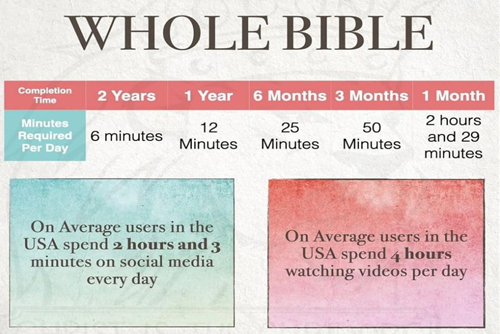
While planning the Bible studies for this congregation, I wondered how long it would take to teach the entire Bible in depth in only our 3 sessions per week?
The schedule in question was familiar: two Bible classes each week, each about 45 minutes long but with an introduction, prayer, discussion, and summary that left roughly 30 minutes for actual material. The third session would be a sermon (possibly as long as 45 minutes) but in reality, I only have about 30 minutes. That gave me three half-hour teaching slots per week to teach.
There are several common methods of teaching Scripture, each has its own pace. The first and perhaps most obvious is the EXPOSITORY method; going chapter-by-chapter in order. At first glance, this seems easy to measure: 1,189 chapters, one per session, for 1,189 classes; about 7.6 years at three sessions per week. But here’s the reality: many chapters require a minimum of two or even three sessions to capture the fullness of their meaning. You could go chapter-per-session if you only did an overview, but true depth would extend the timeline significantly. Recognizing this reality, a book-by-book overview may pick up the pace, but no real depth will be accomplished.
Other methods would take different amounts of time. A topical study, covering 100 major subjects like baptism, love, faith, or the church and giving each three sessions, would total 300 lessons; just under 2 years. Character studies (looking at lives like Abraham, David, Peter, and Paul) might only take around 100 sessions if you covered about 50 people with two classes each. That’s less than a year. Thematic or doctrinal studies, following threads like covenant, kingdom, or grace from Genesis to Revelation, would run about 120 sessions, taking nine months. A chronological narrative, telling the Bible’s story in the order events happened, would be more ambitious: about 250 sessions, or 1.6 years.
If you stacked all these methods back-to-back without repeating material, the grand total would be 2,105 sessions. That’s about 13½ years of steady teaching (three times a week, every week). Start now and finish somewhere in the late 2030s. But here’s the twist: this assumes each important doctrine, like salvation in Christ, IS GIVEN ONLY ONCE. That would be like a wilderness wandering of teaching and never helping anyone actually enter the Promised Land. If salvation (and many other vital subjects) is left as a single stop along the way, we risk people hearing the gospel once every few years.
The truth is, many of these methods overlap, and rightly so. Some themes, especially the gospel of Christ, must resurface again and again no matter which teaching plan is in use. Whether chapter-by-chapter, book-by-book, or topic-by-topic, there must be repeated lessons on repentance, faith, and obedience. Yes, we could make a plan that takes a decade or more to cover everything, but if we’re truly guiding people toward salvation in Christ, we won’t wait until year seven to bring up the cross again.
The way we speak reveals the condition of our hearts and serves as a powerful expression of love. Scripture, particularly Ephesians, provides a blueprint for how our words can reflect Christ’s love, fostering unity, encouragement, and grace. By aligning our speech with biblical principles, we demonstrate love that honors God and uplifts others.
Seasoned with Salt; Colossians 4:6 urges believers to let their speech be “always full of grace, seasoned with salt,” so that they know how to answer everyone (“seasoned with salt” suggesting speech that is gracious, wise, and impactful, enhancing conversations like salt enhances food). Similarly, James 3:17 describes wisdom from above as pure, peace-loving, and gentle. Words seasoned with salt are purposeful, preserving truth and adding value to conversations. They avoid blandness or harshness, striking a balance that reflects thoughtfulness and care. When our speech is seasoned with grace, it becomes a tool to point others to Christ, making our interactions meaningful and impactful.
Pleasant, Not Profane; Ephesians 5:4 warns against “filthiness, foolish talk, or crude joking,” which are out of place for those who follow Christ. Instead, our words should be pleasant, reflecting gratitude and reverence. Filthy or foolish speech tears down, while pleasant words build up and create an atmosphere of love. Avoiding foul language doesn’t mean stifling humor or joy but choosing words that align with God’s holiness. Pleasant speech invites others into a space of dignity and respect, mirroring the love Christ shows us.
Edifying, Empathetic, & Encouraging; Ephesians 4:29 instructs, “Let no corrupting talk come out of your mouths, but only such as is good for building up, as fits the occasion, that it may give grace to those who hear” (Edifying means Building up or strengthening others spiritually). Romans 14:19 tells us to pursue peace and mutual edification, while Colossians 3:16 encourages teaching and admonishing one another with wisdom. Hebrews 10:24-25 emphasizes spurring one another toward love and good works. Empathetic and encouraging speech listens deeply, validates feelings, and inspires growth. It puts others’ needs above our own, fostering community and reflecting Christ’s sacrificial love.
Speaking Truth in Love; Ephesians 4:15 and 4:25 highlight the importance of speaking truth in love, rooted in agape type (love selfless, unconditional love). Truth without love can wound, while love without truth can enable. Speaking truth in love requires humility and courage, ensuring our words are honest yet delivered with kindness. This balance builds trust and strengthens relationships, as we lovingly correct or guide others toward God’s truth. Loving speech prioritizes the other person’s spiritual growth, even when it’s uncomfortable, because it seeks their ultimate good.
Kindness in Speech; Ephesians 4:32 tells us to be kind and compassionate, forgiving one another as God forgave us. James 1:26 warns that those who fail to bridle their tongues deceive themselves, and Colossians 3:12-13 emphasizes clothing ourselves with kindness and patience. Kind words diffuse conflict, heal wounds, and demonstrate grace. They reflect a heart transformed by Christ, choosing gentleness over harshness and forgiveness over bitterness. Kindness in speech is a daily practice of love, creating a ripple effect of grace in our interactions.
Generations of people have wrestled with tough questions: Why are we here? Why is there pain in the world? Is there anything after we die? The Bible, trusted by billions, gives clear and meaningful answers to these deep questions. It’s like a guidebook from God, offering wisdom that makes sense and stands the test of time. It is a book for how to understand and navigate through this world, but also guides us to know how to have eternal life beyond this one. It is the word of God.
“And that from a child thou hast known the holy scriptures, which are able to make thee wise unto salvation through faith which is in Christ Jesus. All scripture is given by inspiration of God, and is profitable for doctrine, for reproof, for correction, for instruction in righteousness: That the man of God may be perfect, throughly furnished unto all good works” (2 Timothy 3:15-17).
The Bible declares our purpose. Ecclesiastes 12:13 puts it plainly: “Fear God, and keep his commandments: for this is the whole duty of man.” This means living in a way that puts God first in our lives, rather than chasing our own lusts, desires, and goals. The Bible teaches we were created by God and are made to glorify Him (Genesis 1:26-8; Isaiah 43:7). This provides a clear purpose, a timeless sense of value, and reassurance that we are more than mere animals.
Suffering is real, and the Bible addresses it head on. The story of Job shows a man who faced terrible pain but found God was still with him. Romans 8:28 promises that “God works all things for good for those who love Him.” Pain might come from human mistakes (Genesis 3:16–19) or just life’s challenges, but the Bible never calls it useless. It can shape us, and make us stronger (James 1:2–4). It can also help us to grow closer to God as we recognize our need for His strength (2 Corinthians 12:9-10). Many are hopeless in suffering, but the Bible offers hope that good can come out of suffering for those that love the Lord. The Bible also assures us that suffering is not God messing with us.
The Bible gives a straight answer about life after death. The Bible says, “God loved the world so much that He gave His only Son, so that everyone who believes in Him and follows Him will not be lost but have eternal life” (John 3:16), and “He that believeth and is baptized shall be saved” (Mark 16:16a). The Bible gives us instructions on how to have eternal life with God (e.g. Acts 2:38, Romans 6:17–18). The Bible’s promise of eternal life is backed by Jesus’ resurrection (1 Corinthians 15:20–22), a real event that gives us solid hope for eternity. We can know where we are going and how to get there.
Some people say the Bible’s answers are too rigid for today’s times of enlightenment. Thinkers through the ages have seen how the Bible’s teachings make sense of life’s big questions and remains timeless. It does more than just comfort us, it shows us how to live with purpose, face challenges with hope, and prepare for eternity through obedience to God’s Word. Every generation needs the Bible to discover true enlightenment in God’s timeless wisdom.
The Bible gives more than just answers; it shows us the true God who walks with us through life’s ups and downs. By believing in Jesus and obeying the gospel, we find purpose, hope, and the promise of eternal life. In a confusing world, the Bible is a steady guide for life’s biggest questions.
“Then Simon Peter answered him, Lord, to whom shall we go? thou hast the words of eternal life.” (John 6:68)
Agape
Sources: The Holy Bible (KJV): Ecclesiastes 12:13, Isaiah 43:7, Romans 8:28, John 3:16, etc.
Uniqueness of Biblical Prophecy Compared to Other Religious Texts
Biblical prophecy stands apart from the sacred texts of other mainstream religions due to its specificity, historical fulfillment, and divine coherence across centuries. Unlike the often vague or symbolic predictions found in other religious writings, the Bible’s prophecies offer detailed, verifiable claims that have been demonstrably fulfilled, lending credibility to its divine inspiration.
First, the Bible’s prophecies are remarkably precise. For instance, the prophecy in Isaiah 44:28–45:1 (circa 700 BCE) names Cyrus, a Persian king, as the one who would allow the Jews to return to Jerusalem and rebuild the temple. This prophecy was fulfilled over 150 years later when Cyrus issued the decree in 538 BCE (Ezra 1:1-4). No other religious text matches this level of specificity, naming a future individual and their actions centuries in advance. The Qur’an, for example, lacks detailed predictive prophecies tied to historical events. Similarly, the Bhagavad Gita offers no specific, testable predictions about future rulers or events.
Second, biblical prophecies span centuries and demonstrate consistent fulfillment. The book of Daniel (circa 6th century BCE) predicts the rise and fall of empires (Babylon, Persia, Greece, and Rome) with astonishing accuracy (Daniel 2:31-45; 7:1-28). Historical records, such as those from Herodotus and archaeological findings, confirm these empires’ timelines and transitions. In contrast, texts like the Buddhist Pali Canon or the Vedas focus on cyclical time or spiritual principles without offering verifiable historical predictions. The Bible’s ability to predict geopolitical shifts with precision sets it apart as a text rooted in a divine perspective of history.
Third, the sheer volume and interconnectedness of biblical prophecies create a cohesive narrative. Over 300 prophecies about the Messiah, spanning from Genesis 3:15 to Malachi 3:1, find fulfillment in Jesus’ life, death, and resurrection. For example, Micah 5:2 predicts the Messiah’s birthplace in Bethlehem, fulfilled in Matthew 2:1. Psalm 22:16-18 foretells the crucifixion’s details, including pierced hands and feet and the casting of lots for clothing, fulfilled in John 19:23-24. This intricate web of predictions, written by multiple authors over centuries, demonstrates a unified divine purpose. Other religious texts, such as the Taoist Tao Te Ching, lacks a comparable prophetic framework that ties together historical events and spiritual promises.
Skeptics might argue that these fulfillments are coincidental or retroactively interpreted. However, the Dead Sea Scrolls, dated to the 2nd century BCE, confirm the antiquity of these prophecies, predating their fulfillment. No other religious text provides such a robust, historically verifiable prophetic record.
Biblical prophecy’s unmatched precision and fulfillment reveal a divine hand. No other text dares to predict with such clarity and succeed.
agape
Sources:
The Bible (ESV): Isaiah 44:28–45:1, Ezra 1:1-4, Daniel 2:31-45, Micah 5:2, Psalm 22:16-18, Matthew 2:1, John 19:23-24.
McDowell, Josh. Evidence That Demands a Verdict. Thomas Nelson, 2017.
Archer, Gleason L. A Survey of Old Testament Introduction. Moody Press, 1994.
The Bible’s 66 books, penned across millennia, weave a seamless tapestry of truth, revealing a divine hand guiding its every word.
The Internal Consistency of the Bible Across 66 Books
The Bible, a collection of 66 books written by over 40 authors across 1,500 years, displays remarkable internal consistency, weaving a unified narrative despite its diverse origins. This coherence is evident in its thematic unity, fulfilled prophecies, and consistent theological principles, offering compelling evidence of its divine inspiration.
First, the Bible’s thematic unity binds its books into a cohesive story. From Genesis to Revelation, the narrative centers on God’s relationship with humanity, His redemptive plan, and the promise of a Messiah. Genesis 3:15 introduces the first mention of the gospel or “good news” in the Bible, the first hint of a savior who will crush the serpent’s head, a theme that culminates in Christ’s victory in Revelation 20:10.
The Old Testament’s covenants (with Abraham (Genesis 12:3), Moses (Exodus 19:5-6), and David (2 Samuel 7:12-16)) find fulfillment in the New Testament through Jesus, who establishes the New Covenant (Luke 22:20; Heb 8:8-11). This continuity across centuries and authors suggests a purposeful design.
Second, fulfilled prophecies demonstrate the Bible’s reliability. Over 300 Old Testament prophecies, such as Isaiah 7:14 (the virgin birth) and Micah 5:2 (Bethlehem as the Messiah’s birthplace), are fulfilled in Jesus’ life, as recorded in the Gospels (Matthew 1:22-23; 2:5-6). The precision of these predictions, written centuries earlier, defies coincidence and human invention. For example, Psalm 22:16-18, written long before crucifixion was practiced, vividly describes Jesus’ death, including pierced hands and feet and divided garments (John 19:23-24). The consistency between prophecy and fulfillment across books reinforces the Bible’s unified message.
Third, the Bible maintains consistent theological principles despite its diverse cultural and historical contexts. The concept of God’s holiness, justice, and mercy remains constant. Leviticus 19:2 calls Israel to be holy because God is holy, a principle echoed in 1 Peter 1:15-16 for New Testament believers. Similarly, the emphasis on active faith as the basis for righteousness spans from Abraham (Genesis 15:6) to Paul’s teachings (Romans 4:3). These shared doctrines, articulated by authors from shepherds to kings, suggest a singular guiding intelligence.
Skeptics might argue that apparent contradictions, such as differing Gospel accounts, undermine this consistency. However, these variations often reflect complementary perspectives rather than errors. For instance, the number of women at Jesus’ tomb varies across Gospels (John 20:1 vs. Luke 24:10), but this reflects selective emphasis, not contradiction, as ancient biographies prioritized thematic truth over exhaustive detail (Carson, The Gospel According to John, 1991). Harmonizing these accounts reveals a coherent resurrection narrative.
The Bible’s internal consistency is not merely literary but points to a divine author orchestrating its message. As 2Timothy 3:16 states, “All Scripture is God-breathed,” suggesting a supernatural unity that transcends human effort. This coherence gives its readers confidence to explore its claims.
Sources: Carson, D.A. The Gospel According to John. Eerdmans, 1991.
In an era of social division, mental health crises, and moral ambiguity, the teachings of Jesus Christ offer timeless solutions rooted in love, forgiveness, and purpose. Grounded in a biblical worldview, these principles address modern challenges with clarity and hope. Let’s see how Jesus’ teachings, as recorded in Scripture, provide practical answers to today’s pressing issues.
First, Jesus’ emphasis on love as the greatest commandment counters the divisions that are plaguing society. In Matthew 22:37-39, He instructs to “love the Lord your God” and “love your neighbor as yourself.” Selfless love goes beyond political and cultural divides, fostering unity despite our differences. Studies show that communities practicing altruistic behaviors, like those Jesus modeled, experience lower conflict and higher social connection (Putnam, 2000). By prioritizing love over enmity, We can improve how we relate to one another in workplaces, families, and on social media.
Second, Jesus’ teachings on forgiveness address the mental health epidemic. Modern psychology links unforgiveness to anxiety and depression (Toussaint et al., 2015). In Matthew 6:14-15, Jesus teaches that forgiving others is a prerequisite to God’s forgiveness, which promotes better relationships with others. His parable of the unforgiving servant (Matthew 18:21-35) illustrates the destructive cycle of unforgiveness in light of the mercy shown to us. Applying the principle of forgiveness (whether it be exoneration, forbearance, or release) we are able to move forward in healing relationships strained by betrayal or misunderstanding.
Third, Jesus provides purpose in a world grappling with life altering despair. Rising rates of loneliness and suicide reflect a loss of meaning (Twenge, 2017). In John 10:10, Jesus declares, “I have come that they may have life, and have it to the full.” When we truly follow Jesus, we find purpose in our lives higher than ourselves. It moves us to serve our fellow man, and gives us hope a hopeless world. If you’re dealing with recovery of any sort, you’ll find a greater rate of success in your fight against addiction and despair by becoming anchored in purpose (Koenig, 2012). Jesus’ call to “follow me” (Matthew 4:19) offers a roadmap for navigating life’s uncertainties. “But be ye doers of the word, and not hearers only, deceiving your own selves.” (James 1:22)
Critics may argue that Jesus’ teachings are outdated or impractical, yet their universal applicability endures. Loving one’s enemy (Luke 6:27) disarms hostility, forgiveness heals psychological wounds, and purpose through faith counters defeatism. These principles align with the evidence and human needs, proving their relevance.
Jesus’ teachings are not mere ideals but actionable solutions. By embracing love, forgiveness, and purpose, individuals and societies can overcome division, heal emotional wounds, and find meaning.
Agape,
spencer
Sources:
Koenig, H. G. (2012). Religion and Mental Health. Academic Press.
Putnam, R. D. (2000). Bowling Alone. Simon & Schuster.
Toussaint, L., et al. (2015). Forgiveness and Health. Springer.
Twenge, J. M. (2017). iGen. Atria Books. Zehr, H. (2015). Changing Lenses. Herald Press.
Knowing the Voice of Jesus: The Written Word as the Sole Means
In John 10:4, Jesus, the Good Shepherd, declares, “And when he putteth forth his own sheep, he goeth before them, and the sheep follow him: for they know his voice.” Believers today do not hear an audible voice nor witness the signs Jesus performed during His earthly ministry, as those signs, per John 20:30-31, were recorded so that we might believe without seeing them firsthand: “And many other signs truly did Jesus in the presence of his disciples, which are not written in this book: But these are written, that ye might believe that Jesus is the Christ, the Son of God; and that believing ye might have life through his name.” The implication is that the signs done then will not be repeated; instead, we know Jesus’ voice through the written word. The apostles’ teaching, the New Testament history of Jesus, and obedience to Christ all converge in the written word as the sole means to know His voice and the truth.
We will know His voice by keeping the apostles’ teaching. The apostles, guided by the Holy Spirit, delivered Jesus’ teachings, preserved in Scripture. John 16:13 promises, “When he, the Spirit of truth, is come, he will guide you into all truth.” Their doctrine, recorded in the written word, allows us to hear Jesus. Later Jesus prays for the apostles in John 17:20, “Neither pray I for these alone, but for them also which shall believe on me through their word;” This shows us that people will believe through their inspired preaching and teaching which is now recorded for all in the New Testament. Acts 2:42 shows early believers “continued stedfastly in the apostles’ doctrine,” while Galatians 1:11-12 clarifies, “The gospel which was preached of me is not after man… but by the revelation of Jesus Christ.” These inspired writings are our access to His voice today.
We will know His voice by the New Testament history of Jesus Christ. The Gospels record Jesus’ life and works, but the signs He performed were for those who saw them personally. John 20:29 reinforces this: “Blessed are they that have not seen, and yet have believed.” We know Him through the written record, as Luke 1:1-4 states: “To set forth in order a declaration… that thou mightest know the certainty of those things.” The written history in Scripture conveys His voice to us. John 20:31a, “But these are written, that ye might believe that Jesus is the Christ, the Son of God;”
We will know His voice by obedience to Christ. Obeying Jesus’ commands, found in Scripture, confirms we hear His voice. John 10:27 says, “My sheep hear my voice… and they follow me.”1 John 2:4 warns, “He that saith, I know him, and keepeth not his commandments, is a liar, and the truth is not in him.”John 14:23 adds, “If a man love me, he will keep my words: and my Father will love him.” Obedience to the written word ensures we know Him.
The written word is the only means by which we know Jesus’ voice and the truth. The signs Jesus performed, as recorded in John 20:30-31, were for those who saw them, but we believe through what is written. Jesus’ life is in the word (John 5:39: “Search the scriptures… they are they which testify of me”). The apostles’ teachings come from the word (2 Peter 1:21). The Holy Spirit revealed the word (2 Timothy 3:16). While preachers may proclaim the gospel (Romans 10:14), they must teach from the written word. 2 John 1:9 emphasizes, “He that abideth in the doctrine of Christ, he hath both the Father and the Son.” The written word alone enables us to hear and follow the Good Shepherd.
We will know His voice by keeping the apostles’ teaching. The apostles, guided by the Holy Spirit, delivered Jesus’ teachings, preserved in Scripture. John 16:13 promises, “When he, the Spirit of truth, is come, he will guide you into all truth.” Their doctrine, recorded in the written word, allows us to hear Jesus. After Jesus then prays for the apostles, He then prays this in John 17:20, “Neither pray I for these alone, but for them also which shall believe on me through their word;” This shows us that people will believe through their inspired preaching and teaching which is now recorded for all in the New Testament. Acts 2:42 shows early believers “continued stedfastly in the apostles’ doctrine,” while Galatians 1:11-12 clarifies, “The gospel which was preached of me is not after man… but by the revelation of Jesus Christ.” These inspired writings are our access to His voice today.
We will know His voice by the New Testament history of Jesus Christ. The Gospels record Jesus’ life and works, but the signs He performed were for those who saw them personally. John 20:29 reinforces this: “Blessed are they that have not seen, and yet have believed.” We know Him through the written record, as Luke 1:1-4 states: “To set forth in order a declaration… that thou mightest know the certainty of those things.” The written history in Scripture conveys His voice to us.
We will know His voice by obedience to Christ. Obeying Jesus’ commands, found in Scripture, confirms we hear His voice. John 10:27 says, “My sheep hear my voice… and they follow me.”1 John 2:4 warns, “He that saith, I know him, and keepeth not his commandments, is a liar, and the truth is not in him.”John 14:23 adds, “If a man love me, he will keep my words: and my Father will love him.” Obedience to the written word ensures we know Him.
In conclusion, the written word is the only means by which we know Jesus’ voice and the truth. The signs Jesus performed, as recorded in John 20:30-31, were for those who saw them, but we believe through what is written. Jesus’ life is in the word (John 5:39: “Search the scriptures… they are they which testify of me”). The apostles’ teachings come from the word (2 Peter 1:21). The Holy Spirit revealed the word (2 Timothy 3:16). While preachers may proclaim the gospel (Romans 10:14), they must teach from the written word. 2 John 1:9 emphasizes, “He that abideth in the doctrine of Christ, he hath both the Father and the Son.” The written word alone enables us to hear and follow the Good Shepherd.
Life can throw some heavy punches, can’t it? For the believers in Thessalonica, those punches came in the form of persecutions, false teachings, and even some within their own community slacking off and stirring up trouble. Yet, in his second letter to them, Paul points to three timeless virtues (faith, hope, and love) as the keys to standing firm, no matter what others say or do. Rooted in knowing God’s word, these qualities enabled the Thessalonians to rise above their troubles and the “lowness” of their troublers.
Chapter 1: Enduring Through Faith, Hope, and Love
The Thessalonian church was under fire, literally and figuratively. They faced “persecutions and tribulations” (2 Thessalonians 1:4, KJV), likely from hostile neighbors or authorities who opposed their faith. Yet Paul couldn’t stop bragging about them: “We ourselves glory in you in the churches of God for your patience and faith in all your persecutions and tribulations that ye endure” (1:4). Their faith wasn’t just a Sunday morning nod to God; it was a steadfast trust in His promises, even when the world seemed against them. That faith, Paul says, was “growing exceedingly” (1:3), and their love for one another was increasing right alongside it.
But what kept them going? HOPE. Paul paints a vivid picture of hope tied to God’s justice and Christ’s return: “Seeing it is a righteous thing with God to recompense tribulation to them that trouble you; And to you who are troubled rest with us, when the Lord Jesus shall be revealed from heaven with his mighty angels” (1:6-7). The promise that God would deal with their troublers and grant them relief gave them a reason to hold on. This hope wasn’t wishful thinking, it was grounded in God’s word, which assured them that their suffering was “a manifest token of the righteous judgment of God” (1:5). Knowing God’s word fueled their faith to endure, their hope to look forward, and their love to care for one another, even under pressure. Paul prayed for this to continue, asking God to “fulfil all the good pleasure of his goodness, and the work of faith with power” (1:11).
So, what’s the lesson? When trouble comes (whether it’s people attacking your faith or life’s hardships piling up) lean into faith, hope, and love. Trust God’s word, hold fast to the promise of Christ’s return, and keep loving those around you. That’s how you stay faithful, no matter what others do.
Chapter 2: Standing Firm Against Deception
The troubles didn’t stop with persecution. Someone was spreading lies, maybe even claiming Paul’s authority, saying the day of the Lord had already come. This shook the Thessalonians, leaving them “troubled” and “shaken in mind” (2 Thessalonians 2:2). Imagine the confusion, thinking you missed the biggest event in history! But Paul steps in with clarity, urging them not to be “soon shaken in mind, or be troubled, neither by spirit, nor by word, nor by letter as from us” (2:2). He reminds them of God’s word, which he’d already taught: the day of the Lord won’t come until the “man of lawlessness” is revealed (2:3-4) and destroyed by Christ’s return (2:8).
Here’s where faith, hope, and love shine again. Their faith in the truth (God’s word) kept them from falling for deception. Paul calls them “brethren beloved of the Lord” (2:13), chosen for salvation “through sanctification of the Spirit and belief of the truth” (2:13; see John 17:17). That belief anchored them. Hope came from knowing Christ would return to set things right: “The Lord Jesus Christ… shall destroy with the brightness of his coming” (2:8). This hope steadied them against false alarms. And love? Paul prays for their hearts to be comforted and established “in every good word and work” (2:16-17), a call to keep loving and serving each other despite the chaos.
The troublers spreading lies were low, trying to unsettle God’s people. But Paul’s answer is clear: “Therefore, brethren, stand fast, and hold the traditions which ye have been taught, whether by word, or our epistle” (2:15). Stay rooted in God’s word. Let faith keep you grounded, hope keep you looking up, and love keep you moving forward. That’s how you abound, no matter what others say.
Chapter 3: Overcoming Internal Troubles
If external persecution and false teachings weren’t enough, the Thessalonians had trouble within their own ranks. Some believers were “walking disorderly,” refusing to work and meddling as busybodies (2 Thessalonians 3:6, 11). This idleness wasn’t just laziness, it disrupted the work of the church. Paul doesn’t mince words: “If any would not work, neither should he eat” (3:10). Yet even this discipline is rooted in love, as he urges the church to correct the idle “as a brother” (3:15), not an enemy.
Faith shows up in Paul’s confidence that the Thessalonians would stay faithful: “We have confidence in the Lord touching you, that ye both do and will do the things which we command you” (3:4). Their hope was tied to God’s word, which provided clear instructions for living, and to the promise of God’s peace: “Now the Lord of peace himself give you peace always by all means” (3:16). Love guided their response to the troublers within, balancing discipline with care, and Paul prayed that “the Lord direct your hearts into the love of God, and into the patient waiting for Christ” (3:5).
The idle were acting low, causing trouble by neglecting their responsibilities. But Paul calls the church to a higher standard: “Be not weary in well doing” (3:13). By staying faithful to God’s word (working diligently, loving one another, and holding fast to His commands) they could overcome even internal challenges.
Tying It All Together
What do we learn from the Thessalonians? Troubles and troublers come in many forms: persecutors who mock your faith, deceivers who twist the truth, or even fellow believers who let you down. But faith, hope, and love, rooted in knowing God’s word, are your strength. Faith keeps you trusting God’s truth, like the Thessalonians’ belief in the gospel (2:13) and obedience to Paul’s teaching (3:4). Hope lifts your eyes to God’s vengeance (1:6-9, 2:8) and Christ’s return (1:7, 2:8), assuring you that troubles won’t have the last word. Love binds you to your brothers and sisters, growing even in tough times (1:3) and guiding how you correct the wayward (3:15).
Knowing God’s word is the thread that ties it all together. It’s the foundation for faith, the source of hope, and the guide for love. The Thessalonians’ troubles didn’t define them, their faithfulness did. They stayed abounding, growing in faith and love (1:3), standing firm against lies (2:15), and doing good despite setbacks (3:13). So, when others try to drag you down with their words or actions, don’t stoop to their level. Hold fast to God’s word. Let faith, hope, and love keep you faithful and abounding, just as they did for the Thessalonians.
The Manuscript Evidence for the Bible’s Preservation
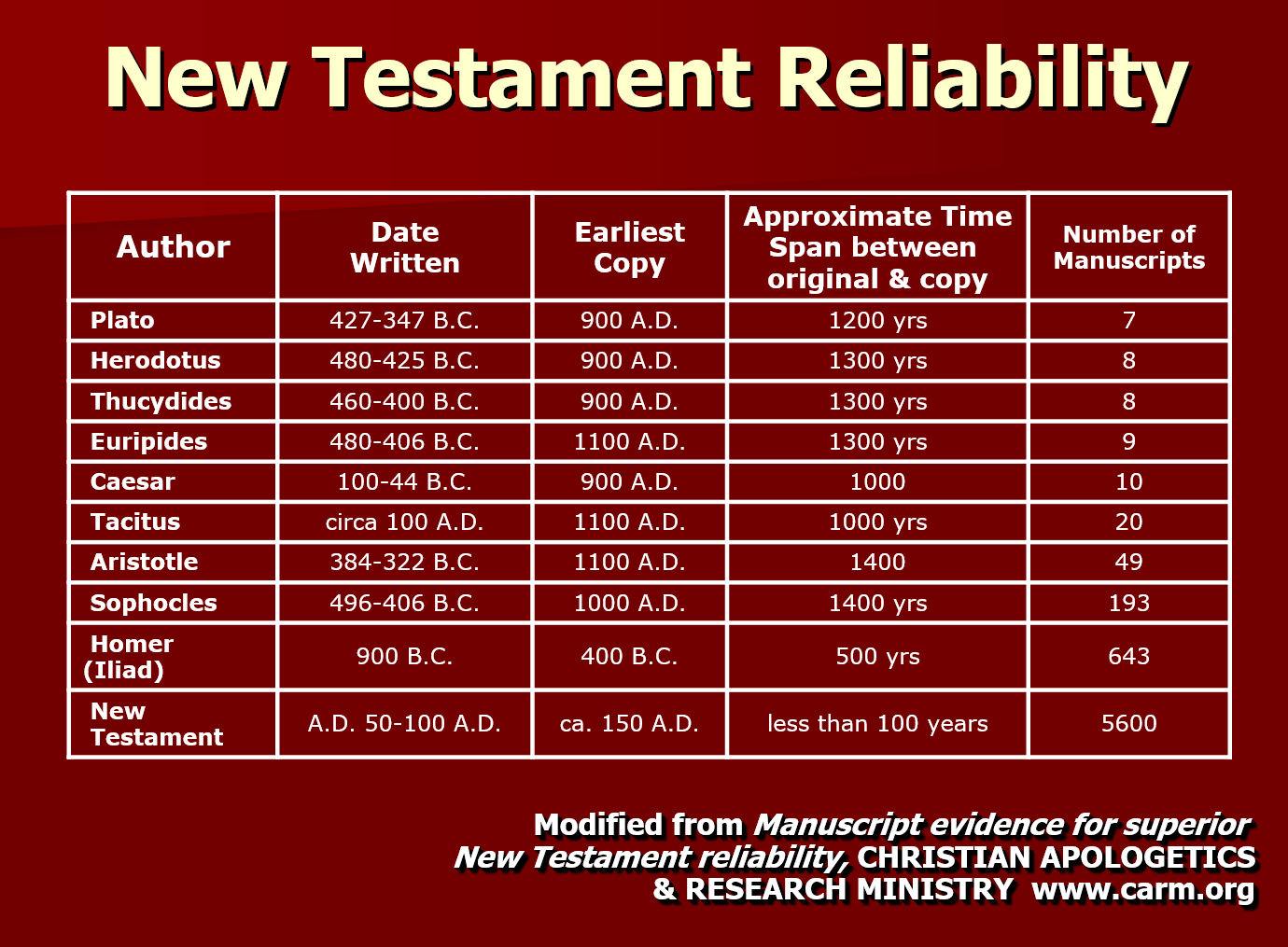
The Bible’s preservation across millennia stands as a testament to its enduring reliability, backed by an unmatched trove of manuscript evidence. With over 5,800 Greek New Testament manuscripts and more than 19,000 in other languages, the Bible dwarfs all other ancient texts in sheer volume. This vast collection, paired with its textual consistency, builds a logical and compelling case that today’s Scriptures faithfully echo their original form.
Take the New Testament: The Rylands Papyrus (P52), dated to around AD 125, preserves John 18:31-33, penned just decades after the Gospel’s origin. Contrast this with Caesar’s Gallic Wars, where the earliest copies lag 900 years behind the original, yet face little skepticism. The Bible’s early manuscripts, hundreds before AD 300, shrink the window for distortion. F.F. Bruce, in The New Testament Documents: Are They Reliable? (1943), asserts this abundance yields a text 99.5% accurate, with variants largely trivial (e.g., spelling in John 1:1).
For the Old Testament, the Dead Sea Scrolls, like the Great Isaiah Scroll (1QIsa^a) from 125 BC, showcase precision. Isaiah 7:14, foretelling a virgin birth, aligns almost perfectly with the 10th-century Masoretic Text across 66 chapters. Minor shifts, like phrasing in Isaiah 40:3, leave meaning intact. Daniel B. Wallace’s Revisiting the Corruption of the New Testament (2011) praises the scribes’ meticulousness, reflecting their obedience to Deuteronomy 4:2’s command against altering God’s Word.
This consistency holds across key doctrines. Christ’s divinity (John 1:14), God’s covenant (Genesis 17:7), and salvation through faith and baptism (Acts 2:38, preserved in Codex Vaticanus, 4th century AD) remain unshaken. In Acts 2:38, Peter’s call to “repent and be baptized… for the remission of your sins” mirrors countless manuscripts, showing no doctrinal drift despite centuries of copying. The volume of texts enables rigorous comparison, a privilege rare among ancient works like Homer’s Iliad (643 copies).
Such preservation stems from deliberate effort, not chance. Jewish scribes counted letters per line, while early Christians, under persecution, shared copies widely—Paul even instructed in 1 Thessalonians 5:27, “I charge you by the Lord that this letter be read to all the brethren,” fostering circulation among congregations. This dedication ensured texts endured, as urged in 2 Timothy 2:15 to handle truth diligently. The Codex Sinaiticus (4th century AD) and later Byzantine manuscripts align closely, bridging continents and eras.
Skeptics may doubt miracles, but the manuscript evidence refutes claims of textual unreliability. From desert caves to medieval scriptoriums, the Bible’s words have weathered time, emerging intact. In a sea of ancient literature, Scripture stands as a rock—its message preserved not by chance, but by a legacy of care that echoes its own call to endure.
Agape
Sources: Bruce, F.F. The New Testament Documents: Are They Reliable? Eerdmans, 1943. Wallace, Daniel B. Revisiting the Corruption of the New Testament. Kregel Academic, 2011.
The discovery of the Dead Sea Scrolls in 1947 ranks among the most significant archaeological finds in history, offering a profound window into the reliability of the Bible. Hidden in caves near Qumran, these ancient manuscripts, dating from the 3rd century BC to the 1st century AD, include fragments of nearly every Old Testament book. Their remarkable preservation and textual consistency with later biblical manuscripts provide compelling evidence that the Scriptures we read today faithfully reflect their ancient origins.
One of the most striking finds is the Great Isaiah Scroll (1QIsa^a), a nearly complete copy of the Book of Isaiah dating to around 125 BC. When compared to the Masoretic Text, the standard Hebrew Bible from the 10th century AD, the scroll shows astonishing fidelity. For instance, Isaiah 53, a messianic prophecy central to both Jewish and Christian theology (Isaiah 53:5-6), differs only in minor spelling or stylistic variations—none altering the meaning. This consistency across a millennium demonstrates that scribes meticulously preserved the text, countering claims of rampant corruption over time.
The scrolls also include fragments of Deuteronomy, such as 4QDeut^j, which preserves Deuteronomy 32:43. This passage, part of Moses’ song, aligns closely with the Septuagint (Greek translation) suggesting a textual tradition predating later standardization. Yet, its core message—God’s covenant with Israel—remains intact, as seen in Deuteronomy 32:8-9. Such findings reveal a diversity of ancient texts but affirm their essential unity, reinforcing the Bible’s reliability as a transmitted document.
Beyond specific books, the scrolls reflect a broader cultural and religious context matching biblical accounts. The Community Rule (1QS) and other sectarian writings echo the ascetic lifestyle of groups like the Essenes, resonating with descriptions of John the Baptist’s wilderness ministry (Matthew 3:1-4). While not direct proof of New Testament events, this alignment anchors the biblical world in historical reality, showing that its narratives were not invented centuries later.
Critics once argued that the Bible’s text evolved significantly over time, but the Dead Sea Scrolls challenge that notion. Scholarly analysis, such as Millar Burrows’ The Dead Sea Scrolls (1955), notes that discrepancies are minimal—often mere scribal errors—while Frank Moore Cross’s The Ancient Library of Qumran (1995) highlights the scrolls’ role in tracing textual transmission. These manuscripts predate the Masoretic Text by over a thousand years, yet their agreement is uncanny, suggesting a disciplined copying tradition rooted in reverence for the Word.
The Dead Sea Scrolls do not prove every biblical claim, but they powerfully affirm the Old Testament’s textual integrity. They bridge centuries, showing that what was written in antiquity endures today with remarkable accuracy. In an age of skepticism, these fragile fragments whisper a timeless truth: the Bible’s words have been guarded through the ages, as if etched in stone and sealed in clay.
Agape
Sources: Burrows, Millar. The Dead Sea Scrolls. Viking Press, 1955. Cross, Frank Moore. The Ancient Library of Qumran. Sheffield Academic Press, 1995.







 Borger church of Christ @ Franklin & Juniper