Bearing Fruit: Members

Herein is my Father glorified, that ye bear much fruit; so shall ye be my disciples.” (John 15:8)

When we talk about being fruit bearers, we recognize that there is One vine (Christ) and One way of defining fruit (the word). What we may overlook is how different each of the branches are. While we are all part of the One vine, and bear fruit, we are still unique individuals. For this we look at another metaphor, the parts of the body.

“For the body is not one member, but many. If the foot shall say, Because I am not the hand, I am not of the body; is it therefore not of the body? And if the ear shall say, Because I am not the eye, I am not of the body; is it therefore not of the body? If the whole body were an eye, where were the hearing? If the whole were hearing, where were the smelling? But now hath God set the members every one of them in the body, as it hath pleased him. And if they were all one member, where were the body? But now are they many members, yet but one body. And the eye cannot say unto the hand, I have no need of thee: nor again the head to the feet, I have no need of you. Nay, much more those members of the body, which seem to be more feeble, are necessary: And those members of the body, which we think to be less honourable, upon these we bestow more abundant honour; and our uncomely parts have more abundant comeliness. For our comely parts have no need: but God hath tempered the body together, having given more abundant honour to that part which lacked: That there should be no schism in the body; but that the members should have the same care one for another. And whether one member suffer, all the members suffer with it; or one member be honoured, all the members rejoice with it” (1Cor 12:14-26). Another passage on this topic is in Romans 12:4-8, “For as we have many members in one body, and all members have not the same office.”

From these two passages we learn that each of us is individual fruit bearers attached to the One vine, who is Christ. He is the source of our nourishment and growth, and we each have differing abilities from which we bear fruit (cf. Matt 25:14-30). We have differing roles, functions, and abilities for “…the perfecting of the saints, for the work of the ministry, for the edifying of the body of Christ: Till we all come in the unity of the faith, and of the knowledge of the Son of God, unto a perfect man, unto the measure of the stature of the fulness of Christ” (Eph 4:12-13). These differences work together for the building up of the body.

One of the ways we can bear fruit is through personal evangelism. Our differences (not in the political sense of unity in diversity–which celebrates plurality itself, with less insistence on a single unifying purpose) give the church the greatest ability to reach the most people. Because of our differing interests, abilities, and spheres of influence, we are able to reach people with the gospel that others in the congregation may never meet. From my experience, some folks respond better to those who have similar backgrounds than to those who come from different ones.

Being one in Christ fuses many hearts into one purpose.

Agape
spencer

Blood in God’s plan

Blessed be the God and Father of our Lord Jesus Christ, who hath blessed us with all spiritual blessings in heavenly places in Christ” (Eph 1:3)

As we continue to count our spiritual blessings in Christ, today is a fitting time to talk about the blessings we have in Christ through His blood. For us to appreciate the full impact of this blessing, we need to go back and see the impact of blood in the Old Testament.

The first implied reference to blood appears in Genesis 3, when God took animal skins to cover Adam and Eve after their sin. “Unto Adam also and to his wife did the LORD God make coats of skins, and clothed them” (Gen 3:21).

The next reference we find in the scene with Cain and Abel. Abel made an offering to the Lord from the firstlings of his flock. It says, “And the LORD had respect unto Abel and to his offering” (Gen 4:4; cf. Heb 11:4). Three things stand out: first, that Abel gave the ‘firstling’; second, that it was the shedding of blood; and third, he offered it by faith (Heb 11:4).

We see animal sacrifices continue throughout Genesis, often involving the building of an altar and the offering of clean animals as burnt offerings. They emphasize faith, obedience, thanksgiving, or covenant relationship. When we get to Abraham we see another important element. Initially, his son Isaac was to be offered as a burnt offering, but God provided a ram caught in a thicket, which Abraham sacrificed in his son’s place. This event is seen as a foreshadowing of substitutionary sacrifice. “And Abraham lifted up his eyes, and looked, and behold behind him a ram caught in a thicket by his horns: and Abraham went and took the ram, and offered him up for a burnt offering in the stead of his son. And Abraham called the name of that place Jehovahjireh (the LORD will see to it [will provide]): as it is said to this day, In the mount of the LORD it shall be seen” (Gen 22:13-14).

In Exodus God turned the waters of the Nile to blood and commanded the Israelites to apply blood to the doorposts and lintel during the final plague. This Passover event powerfully foreshadows the sacrifice of Christ. Jesus Himself used the elements of the Passover meal as symbols of His body and blood: “And as they were eating, Jesus took bread… this is my body… For this is my blood of the new testament, which is shed for many for the remission of sins” (Matt 26:26-28).

Another notable instance of the use of blood is at the dedication of the tabernacle. Blood was used—along with oil—to consecrate both the tabernacle and the priests setting them apart as holy for God’s service. Moses applied blood to the horns of the altar to purify it (Lev. 8:15), and he placed blood on the right ear, thumb, and big toe of Aaron and his sons before sprinkling them and their garments with a mixture of blood and oil (Lev. 8:23–24, 30; see also Ex. 29:12, 20-21, 36–37).

Blood plays a central role in God’s plan of redemption.

Agape
spencer

BLOOD

And almost all things are by the law purged with blood; and without shedding of blood is no remission.

(Hebrews 9:22)

For the life of the flesh is in the blood: and I have given it to you upon the altar to make an atonement for your souls: for it is the blood that maketh an atonement for the soul. (Leviticus 17:11)

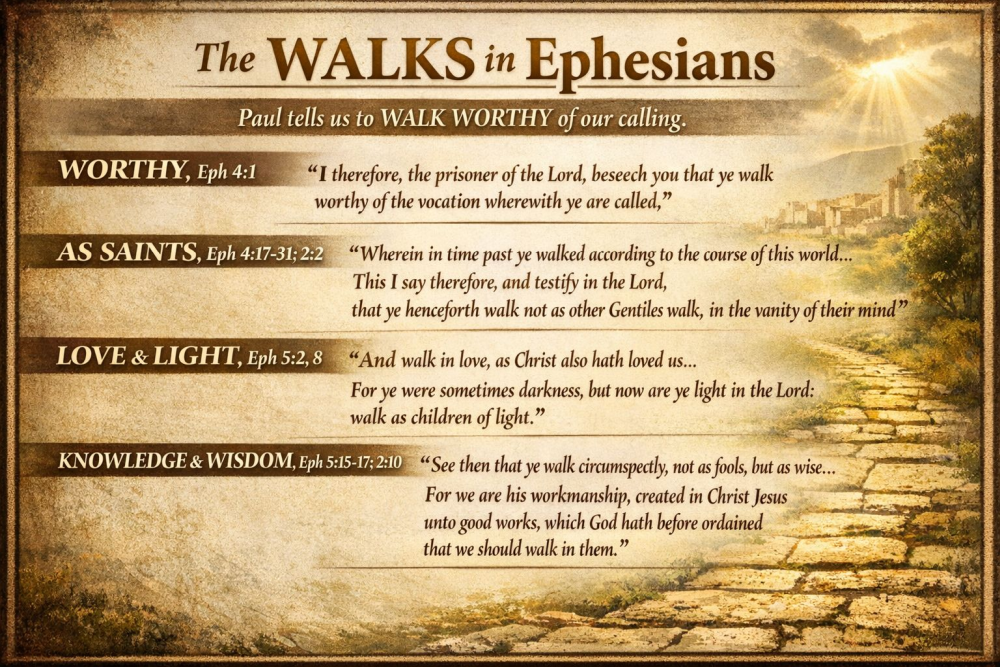
WALKING WORTHY

I therefore, the prisoner of the Lord, beseech you that ye walk worthy of the vocation wherewith ye are called, With all lowliness and meekness, with longsuffering, forbearing one another in love; Endeavouring to keep the unity of the Spirit in the bond of peace.” (Eph 4:1-3)

The Holy Spirit wants us to keep the unity of His Spirit in the bond of peace. In this passage He gives 3 avenues through which we are to “walk worthy of the vocation you are called.” To understand this passage, we need to understand the words.

Walk: To conduct one’s life, behave, or live in a habitual manner; the ongoing pattern of daily conduct and lifestyle as a believer (Colossians 1:10; Ephesians 5:2)

Worthy: Suitably, appropriately, or in a manner that matches or balances the value of something; living in congruence with the dignity and nature of what has been received. Philippians 1:27 — “Let your conversation be as it becometh the gospel of Christ” (worthy manner);

Vocation: The divine calling, invitation, or summons to salvation and service in Christ; the position or role to which God has invited believers. 1Corinthians 7:20 — “Let every man abide in the same calling wherein he was called”;

Called: To be summoned, invited, or effectually drawn by God into relationship with Him through the gospel. 2Thessalonians 2:14 — “Whereunto he called you by our gospel.”

Lowliness: Humility of mind, lowliness of thought about oneself; thinking soberly of self in light of God’s grace, without pride or self-exaltation. Colossians 3:12 — “Put on… humbleness of mind.”

Meekness: Gentleness, mildness, or controlled strength; a disposition that is patient and considerate, not harsh or self-assertive, even under provocation. It’s Restrained power, not weakness. Matthew 11:29 — “For I am meek and lowly in heart.”

Longsuffering: Patience, forbearance, or endurance in bearing wrongs; slow to anger and long to endure provocation or hardship. Colossians 3:12 — “Putting on… longsuffering.”

Unity: Oneness, harmony, or unanimity; the state of being one in spirit and purpose, produced by the Holy Spirit among believers. The term appears only here and in Ephesians 4:13.

Peace: Harmony, tranquility, and reconciliation; the state of concord and absence of strife, especially the bond that holds believers together. Ephesians 2:14 — “For he is our peace, who hath made both one.”

These words reveal that walking worthy involves humble, gentle, patient conduct that preserves the Spirit-given oneness among believers.

Agape
spencer

Bearing Fruit: 100 fold

Herein is my Father glorified, that ye bear much fruit; so shall ye be my disciples.” (John 15:8)

Bearing fruit is more than a positive affirmation, it has substance. In God’s law of sowing and reaping, the physical act of planting seed mirrors the spiritual work of evangelism. Jesus taught in the Parable of the Sower, “But he that received seed into the good ground is he that heareth the word, and understandeth it; which also beareth fruit, and bringeth forth, some an hundredfold, some sixty, some thirty” (Matthew 13:8, 23). When we scatter the seed of the Gospel, four powerful incentives assure us that our labor is never in vain.

First, we receive personal benefit—FOOD for ourselves. Just as the farmer’s harvest supplies daily bread, God promises the same in the spiritual realm: “Now he that ministereth seed to the sower both minister bread for your food, and multiply your seed sown, and increase the fruits of your righteousness” (2Corinthians 9:10). Every time we share the Gospel, our own faith is nourished. You’ve heard that the teacher gets more than the student. Evangelism also feeds the sower. Are you sowing the seeds of the kingdom, brother?

Second, we can expect a harvest OVER and ABOVE what we can imagine—30, 60, or 100-fold—but it may come well after us. Paul declares, “Now unto him that is able to do exceeding abundantly above all that we ask or think, according to the power that worketh in us” (Ephesians 3:20). A single conversion to Christ can ripple across decades and continents. The person you teach to obey the Gospel today may win others tomorrow, producing fruit far beyond your lifetime (2Timothy 2:2). The surplus benefits into future generations, and praise that glorifies God. While we can expect an overabundance, there is a caveat, “He which soweth sparingly shall reap also sparingly; and he which soweth bountifully shall reap also bountifully” (2Corinthians 9:6). Are you sowing the seeds of the kingdom, brother?

Third, we benefit from the LABORS of others, and others will benefit from ours. Jesus reminded His disciples, “One soweth, and another reapeth… I sent you to reap that whereon ye bestowed no labour: other men laboured, and ye are entered into their labours” (John 4:37-38). Every believer is the fruit of someone else’s faithful sowing—parents, teachers, friends, or even strangers who planted the seed of the kingdom years earlier. We in this place are beneficiaries of the labors of others. Are you sowing the seeds of the kingdom, brother?

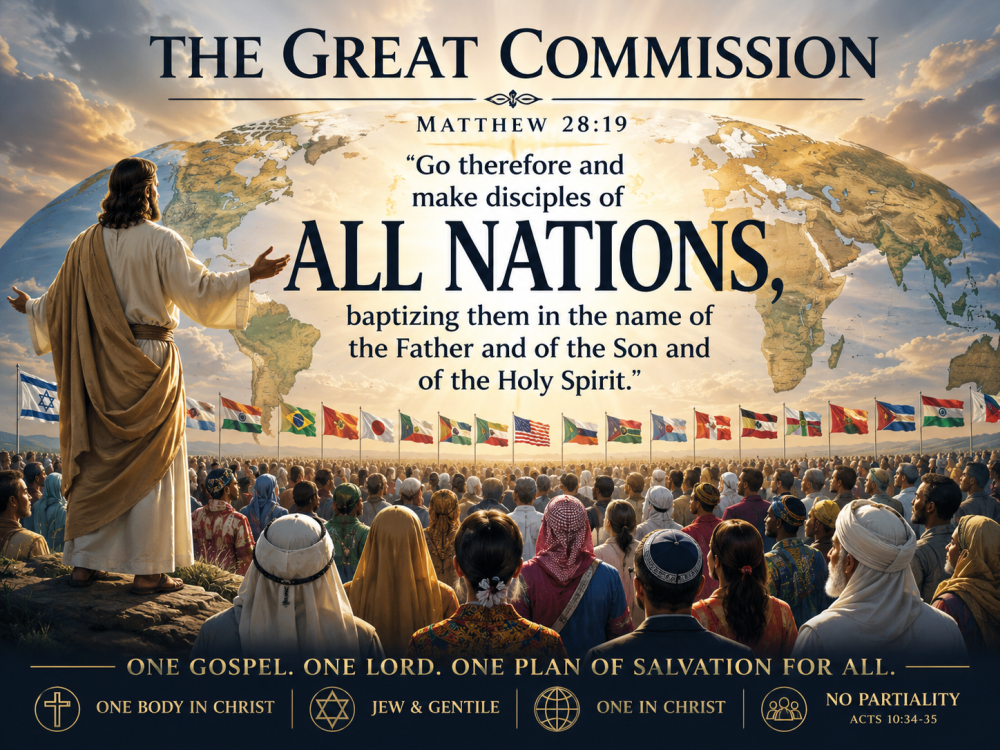
Finally, we are to sow DILIGENTLY—while remaining wholly DEPENDENT on God. Even in paradise, Adam was commanded to cultivate the garden. The same command echoes in the Great Commission: go and sow the Gospel. Diligent Duty is the record of history; we cannot sit idle. Yet growth is never by our power alone. God sends the sunshine, the rain, and He gives the increase. All glory belongs to Him. Are you sowing the seeds of the kingdom, brother?

This goes beyond evangelism. These lessons can be applied to all fruit bearing. The fruit is felt first by the individual Saint, then there’s an overabundance of fruit, followed by lasting benefits for others. Finally, there’s a reminder to remain faithful and thankful to Christ, the Vine.

Agape,

spencer

How to get All The Spiritual Blessings that are in Christ

“Blessed be the God and Father of our Lord Jesus Christ, who hath blessed us with all spiritual blessings in heavenly places in Christ” (Eph 1:3)

Last month we saw how all spiritual blessings are IN CHRIST, and none are for those OUTSIDE of Christ. This month we shall answer the all-important question, “How to be in Christ?”

Continuing in the first chapter of Ephesians, all spiritual blessings (such as election, adoption, redemption, forgiveness, inheritance, and sealing with the Holy Spirit) belong exclusively to those who are “IN CHRIST” (Ephesians 1:3–14).

To be “IN CHRIST” means to be united with Him in His death, burial, and resurrection, then His righteousness, and blessings become yours (Romans 6:3–11; 2Cor 5:17, 21; Col 2:12; Gal 2:20).

The New Testament describes this union as happening through faith in Christ, through FAITH, REPENTANCE and BAPTISM:

Faith is the means: “Ye are all sons of God by faith in Christ Jesus” (Galatians 3:26). Believing the gospel of Jesus Christ begins our unity to Christ (Romans 10:9–10; Ephesians 2:8–9).

Repentance is inseparable from faith: Repentance was preached by Jesus at the beginning when Jesus said, “The time is fulfilled, and the kingdom of God is at hand: repent ye, and believe the gospel” (Mark 1:15). And continued to be preached after His death, burial, & resurrection, “Testifying both to the Jews, and also to the Greeks, repentance toward God, and faith toward our Lord Jesus Christ” (Acts 20:21; cf Acts 2:38).

Baptism in water is the point of inclusion: “Then they that gladly received his word were baptized: and the same day there were added unto them about three thousand souls” (Acts 2:42, 47). “For as many of you as have been baptized into Christ have put on Christ” (Galatians 3:27). “Know ye not, that so many of us as were baptized into Jesus Christ were baptized into his death” (Romans 6:3). “Buried with him in baptism, wherein also ye are risen with him through the faith of the operation of God, who hath raised him from the dead” (Colossians 2:12). Note that it is faith in God’s work as we obey the Gospel.

Thus, one becomes “IN CHRIST” by Hearing, Believing the gospel of Christ, Repentance, Confession (Romans 10:9), then being Baptized into Him (immersion in water in His name, Acts 2:38). It’s only then that a person is a new creation (2Corinthians 5:17), reconciled to God, and receives every spiritual blessing in Him.

Agape
Spencer

Bearing Fruit by Abiding in Christ

“Herein is my Father glorified, that ye bear much fruit; so shall ye be my disciples.” (John 15:8)

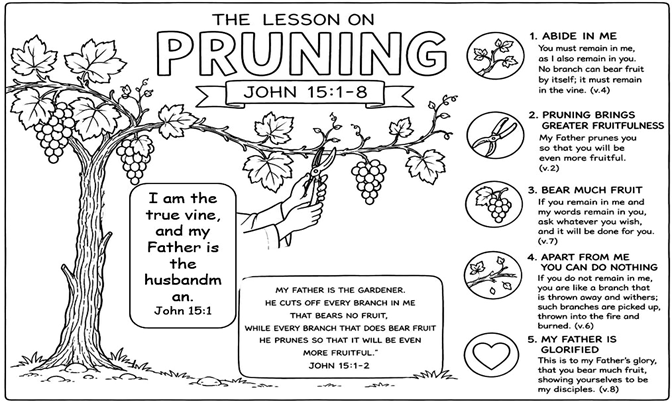
Last month we learned who defines good fruit, this month we find out that Jesus expects fruit bearing, and He tells us how to bear MUCH fruit. “Abide in me, and I in you. As the branch cannot bear fruit of itself, except it abide in the vine; no more can ye, except ye abide in me. I am the vine, ye are the branches: He that abideth in me, and I in him, the same bringeth forth much fruit: for without me ye can do nothing” (John 15:4-5).

People let their imaginations run wild with ideas about what it means to “ABIDE” in Christ. Anything from emotional claims, miraculous personal indwelling, to hearing of still small voices. The trouble with these is there’s no way to distinguish from what a person already desires from that which God desires.

What needs to be observed from the passage in John 15 is that Jesus is giving a directive to us. When He gives a command, or a directive, then it is something WE MUST DO. Another example is the command to “repent and be baptized” (Acts 2:38). When we’re told to do something, it stands to reason that it involves action on our part. The command to ABIDE IN ME, is a directive that we must ACT upon. We can do things to abide in Christ. The question then becomes, ‘what things?’

First, John also wrote, “Therefore let that abide in you which you heard from the beginning. If what you heard from the beginning abides in you, you also will abide in the Son and in the Father.” (1John 2:24) We today hear & know what they heard when we read the Bible. Note these passages in the Letter of 1John:


• 1John 1:4 And these things write we unto you…
• 1John 2:1 My little children, these things write I unto you…
• 1John 2:7 Brethren, I write no new commandment unto you…
• 1John 2:8 Again, a new commandment I write unto you…
• 1John 2:12 I write unto you…
• 1John 2:13 I write unto you…
• 1John 2:14 I have written unto you…
• 1John 2:21 I have not written unto you…
• 1John 2:26 These things have I written unto you…
• 1John 5:13 These things have I written unto you…

We abide in Christ when we study & keep His word so that it DWELLS IN us. “If you continue [same Greek word: abide/remain] in My word, you are truly My disciple.” (John 8:31 cf. Col 3:16).

We abide in Christ when we DO HIS WILL. “Whoever transgresses and does not abide in the doctrine of Christ does not have God. He who abides in the doctrine of Christ has both the Father and the Son” (2John 9). “Whoever says he abides in Him ought himself also to walk just as He walked” (1John 2:6).

Repeatedly the scriptures connect ABIDING IN CHRIST with scripture. To abide in Christ is to keep His commands and to bear fruit. Paul wrote to Timothy, “All scripture is given by inspiration of God, and is profitable for doctrine, for reproof, for correction, for instruction in righteousness: That the man of God may be perfect, throughly furnished unto all good works.” (2Tim 3:16-17). It stands to reason then, that knowing the scriptures EQUIPS us to bear fruit (good works). This includes avoiding sin. “No one who abides in Him keeps on sinning; no one who keeps on sinning has either seen Him or known Him” (1John 3:6).

We can ABIDE IN CHRIST. He has shown us and told us how.

Agape
spencer

Aaron’s Golden CALF; A Pattern for false Worship

THE GOLDEN CALF: HAVE YOU NOT READ…?

While Moses was on Mount Sinai for forty days receiving God’s law and the stone tablets, the Israelites grew impatient. They gathered around Aaron and demanded, “Come, make us gods who will go before us. As for this fellow Moses who brought us up out of Egypt, we don’t know what has happened to him.

”Aaron told them to bring their gold earrings, which they did. He took the gold, melted it down, and CRAFTED it into the image of a calf. When the people saw it, they exclaimed, “These are your gods, Israel, who brought you up out of Egypt!” Aaron built an ALTAR in front of the calf and announced, “Tomorrow there will be a festival to the Lord.” The next day, the people rose early, offered burnt offerings and peace offerings, then sat down to eat and drink and rose up to revel and play in wild celebration (LET LOOSE).

The Lord told Moses to go down, saying the people had become corrupt and were worshiping an idol, breaking the covenant. God was ready to destroy them and start over with Moses, but Moses interceded, pleading for mercy based on God’s promises to Abraham, Isaac, and Jacob. The Lord relented from total destruction.

Moses descended the mountain with Joshua. Hearing noise, Joshua thought it was battle, but Moses recognized it as singing. When he saw the calf and the dancing, his anger burned. He threw down the tablets, shattering them. He burned the calf, ground it to powder, scattered it on water, and made the people drink it.

Moses confronted Aaron, then called for those on the Lord’s side. The Levites stepped forward and, at Moses’ command, and about three thousand FELL of the guilty that day. Later, a plague struck the people because of their sin with the calf.

This dramatic rebellion showed how quickly the people turned from true worship of the living God to false, man-made worship—even while claiming it honored Him.

He CRAFTED from the people’s earrings (Exodus 32:3-4)

In Exodus 32, while Moses was on Mount Sinai receiving God’s law, the Israelites grew restless. They pressured Aaron: “Come, make us gods who will go before us” (v. 1). Aaron collected their gold earrings, melted them down, and CRAFTED a golden calf. He declared, “These are your gods, Israel, who brought you up out of Egypt!” (v. 4). He BLENDED idol worship with claims of honoring Yahweh. What started as impatience ended in outright idolatry—crafting a god in their own image: visible, portable, controllable, and convenient to their desires.

This is the heart of false worship: people remaking God to fit their preferences rather than submitting to Him as He reveals Himself. They took a kernel of truth—the memory of deliverance from Egypt—and mixed it with massive error: a physical idol violating God’s commands (Ex. 20:4-5). It looked religious, sounded familiar, but it was self-made.

Paul warns of the same danger in Colossians 2:23: “These [regulations] indeed have an appearance of wisdom in promoting self-made religion [or self-imposed worship], false humility and harsh treatment of the body, but they are of no value in stopping the indulgence of the flesh” (ESV/NIV). Today, false worship often follows this pattern—crafting God after our image by blending a little biblical truth with a lot of human invention. We might add entertainment-driven services, self-centered “experiences,” man-made traditions, or watered-down doctrines that prioritize comfort over obedience, all while claiming to honor God. It has the “appearance of wisdom”—it feels spiritual, looks impressive—but it LACKS DIVINE AUTHORITY AND FAILS TO PRODUCE TRUE HOLINESS.

The golden calf teaches us: True worship doesn’t reshape God to suit us; it reshapes us to fit Him. Let’s reject self-made religion and offer God the pure, obedient worship He commands—in spirit and truth (John 4:24).

An ALTAR was also built for it (Exodus 32:5-6)

In Exodus 32, after fashioning the golden calf from the people’s earrings, Aaron took it further. As verse 5 records in the KJV: “And when Aaron saw it, he built an ALTAR before it; and Aaron made proclamation, and said, To morrow is a feast to the LORD.”

Aaron constructed an ALTAR and instituted sacrifices—burnt offerings and peace offerings—typical of legitimate worship to Yahweh. He even called it a “feast to the LORD,” invoking God’s name. Yet this was all directed toward the idol he had made. It appeared devout and sacrificial, but it was corrupt: a man-invented ritual honoring a false god while pretending to serve the true God. God declared the people had “corrupted themselves” (v. 7) and turned aside from His commands.

This pattern persists in false worship today. People build their own “ALTARS”—structures of religious activity—and offer sacrifices that deviate from God’s New Testament pattern. Instead of the living, holy sacrifice God requires, many substitute outward shows: mere attendance, emotional highs, traditions of men, or self-pleasing acts that feel spiritual but lack true submission.

The BIBLE instructs believers in Romans 12:1: “I beseech you therefore, brethren, by the mercies of God, that ye present your bodies a living sacrifice, holy, acceptable unto God, which is your reasonable service.” And in 1 Peter 2:5: “Ye also, as lively stones, are built up a spiritual house, an holy priesthood, to offer up spiritual sacrifices, acceptable to God by Jesus Christ.”

True worship demands our whole selves—living, holy, and spiritual—offered through Christ, not dead rituals or self-made substitutes. The golden calf’s altar reminds us: Any sacrifice not aligned with God’s revealed will is false, no matter how religious it appears. Let us offer only what He accepts: ourselves as living sacrifices in obedient, Spirit-led worship.

They Let LOOSE (Exodus 32:6, 25)

In Exodus 32, after offering sacrifices before the golden calf, the people descended into indulgence. Verse 6 states: “And they rose up early on the morrow, and offered burnt offerings, and brought peace offerings; and the people sat down to eat and to drink, and rose up to play.” The Hebrew term for “play” here implies revelry—LOOSE, immoral behavior, feasting, drinking, and frolic that quickly turned the supposed “feast to the LORD” into carnal excess. What began as religious ritual degenerated into unrestrained partying, idolatry fueling sensuality and self-gratification. God viewed this as corruption (v. 7), and it brought swift judgment.

This “LETTING LOOSE” mirrors false worship today, where assemblies prioritize entertainment over reverence. Many modern “worship centers” resemble concerts—with loud bands, dramatic lighting, smoke machines, and performance-style music that feels more like a rock show than congregational praise. Attendees often observe passively, sipping coffee from on-site cafes, scrolling phones, or enjoying the spectacle rather than actively participating in humble adoration. Some churches even incorporate video games, recreation areas, bowling, or themed play zones—especially for youth—blending social fun with claims of spiritual community. These elements create a casual, consumer-driven atmosphere: eat, drink, play, and feel entertained, all under the guise of worship.

Yet Scripture calls for something different. Romans 14:17 declares: “For the kingdom of God is not meat and drink; but righteousness, and peace, and joy in the Holy Ghost.” True worship produces holiness and spiritual fruit, not worldly indulgence. Paul rebuked the Corinthians for turning the Lord’s Supper into selfish feasting and divisions (1 Corinthians 11:17-34), much like the calf’s revelry.

The golden calf teaches that when worship becomes playtime—food, fun, frolic, concerts, and entertainment hubs—it ceases to honor God. It entertains the flesh instead of transforming the heart. Let us guard against this: Assemble to offer reverent, Spirit-led worship in spirit and truth (John 4:24), not to be amused. Flee the LOOSE LIVING of false worship and pursue the holy joy of true devotion to Christ.

3k People FELL that day (Exodus 32:28)

In Exodus 32, the golden calf incident reached its tragic climax in judgment. After the people had crafted the idol, built the altar, offered false sacrifices, and let loose in revelry, Moses descended the mountain in righteous anger. He confronted Aaron, then called out, “Who is on the LORD’s side?” (v. 26). The Levites stepped forward. Moses commanded them: “Thus saith the LORD God of Israel, Put every man his sword by his side, and go in and out from gate to gate throughout the camp, and slay every man his brother, and every man his companion, and every man his neighbour” (v. 27). Verse 28 in the KJV records the outcome: “And the children of Levi did according to the word of Moses: and there fell of the people that day about three thousand men.”

Three thousand fell by the sword that day because of their idolatry and false worship. Later, verse 35 adds: “And the LORD plagued the people, because they made the calf, which Aaron made.” The sin brought immediate death and ongoing plague—consequences for corrupting true worship.

Paul draws a direct parallel in the New Testament church. In 1 Corinthians 11, he rebukes the Corinthians for mishandling the Lord’s Supper—divisions, selfishness, and unworthy participation that turned a sacred memorial into a selfish meal. He warns in verse 30 (KJV): “For this cause many are weak and sickly among you, and many sleep.” “Sleep” here means death—some had literally died as divine judgment for profaning the Lord’s table. False or irreverent “worship” brought physical weakness, sickness, and even premature death.

Today, false worship carries the same danger. When assemblies prioritize entertainment, man-made traditions, or self over humble obedience—when people approach God casually, divisively, or hypocritically—they risk spiritual and even physical consequences. God is holy; He does not tolerate corrupted worship. The three thousand who fell at Sinai and those who “sleep” in Corinth stand as warnings: False worship is not harmless fun—it can be deadly.

Let us examine ourselves. Are we assembling in truth, offering living sacrifices in reverence? Or are we risking judgment by crafting modern golden calves? Flee false worship. Pursue pure, obedient devotion to Christ, that we may honor Him rightly and escape the falling that comes from dishonoring God.

BE NOBLE & SEARCH THE SCRIPTURES TO FIND OUT IF THESE THINGS ARE SO.

All Spiritual Blessings are IN CHRIST

From this verse we learn that those who are “IN CHRIST” have been given spiritual blessings. There is a very important distinction being made by this verse; those “IN CHRIST” from those who are “OUTSIDE of CHRIST.”

Paul describes those who are (or were) outside of Christ: “…who were dead in trespasses and sins; Wherein in time past ye walked according to the course of this world, according to the prince of the power of the air, the spirit that now worketh in the children of disobedience: Among whom also we all had our conversation in times past in the lusts of our flesh, fulfilling the desires of the flesh and of the mind; and were by nature the children of wrath, even as others” (Eph 2:1-3), and “That at that time ye were without Christ, being aliens from the commonwealth of Israel, and strangers from the covenants of promise, having no hope, and without God in the world” (Eph 2:12, emphasis added seb). There’s more going on in these chapters, but for our discussion we must recognize that there are NO SPIRITUAL blessings for anyone OUTSIDE OF CHRIST! This must serve as a warning for everyone. Living outside of Christ is like standing exposed in the open wilderness during a ferocious storm—far beyond the sturdy walls of a fortified city or the secure shelter of a stormproof refuge.

The winds howl, lightning cracks without mercy, torrents of rain lash, and unseen predators circle in the darkness. Every step is perilous: the ground shifts underfoot, thunder drowns out any cry for help, and the cold seeps into the bones with no warmth to counter it. There is no barrier against the elements, no refuge from judgment, no covering from the wrath to come. There’s only vulnerability, isolation, and inevitable ruin.

Jesus Himself described this danger vividly in the parable of the two builders (Matthew 7:24-27): The foolish man built his house upon the sand. When the rain descended, the floods came, and the winds blew and beat upon that house, it fell: and great was the fall of it.

Outside of Christ, life is built on shifting, unstable ground. No matter how impressive the structure appears, the inevitable storms of life, temptation, trial, and final judgment will sweep it away completely.

In stark contrast, the wise man built his house upon the rock. The same rain fell, the same floods came, the same winds blew and beat upon that house—yet it stood: for it was founded upon a rock.

Do you remember what Jesus declared to Peter in Matthew 16:18? “And I say also unto thee, That thou art Peter, and upon this rock I will build my church; and the gates of hell shall not prevail against it.” That Rock is Christ!

ALL SPIRITUAL BLESSINGS ARE IN CHRIST!

Agape
Spencer

who defines good fruit?

Herein is my Father glorified, that ye bear much fruit; so shall ye be my disciples.” (John 15:8)

The Bible uses agricultural metaphors to describe spiritual reality: some speak of fruitful branches connected to the true vine (Jesus), bringing glory to the Father and proving genuine discipleship (John 15:8), while others warn of land (or lives) that produce only thorns and briers—unfruitful, rejected, near cursing, and destined for burning (Heb 6:8).

Jesus teaches that true character is revealed by what we produce (e.g., Matthew 7:16–20, no grapes from thornbushes). The contrast is stark: fruitful lives reflect connection to Christ and yield good things (love, obedience, character, good works), while thorn-bearing lives show disconnection, barrenness, or harm.

Here’s a good question; who defines what is fruit and what are thorns? That’s the crucial question, isn’t it? In a world full of opinions, subjective morality, and cultural shifts, who gets to decide what counts as good fruit (fruitful, glorifying to God) versus thorns and briers (unfruitful, worthless, harmful, or rebellious)?

Before we look into bearing fruit, let’s answer the question. The Bible warns about human centered standards that lead astray, and produce unfruitful or harmful outcomes.

Who Doesn’t Define GOOD FRUIT?
TRADITIONS of men can never define good fruit (Mark 7:7). Traditions often elevate above or nullify God’s command. The danger is in the possibility of practicing vain worship that cannot honor nor glorify God.

HEART (“It feels right to me”) “The heart is deceitful above all things, and desperately wicked: who can know it?” (Jeremiah 17:9). The danger lies in self-deception; what “feels good” can justify sin or error, yielding thorns of pride and rebellion instead of humble submission to God’s revealed will. Our feelings never override God’s word.

OPINIONS of men or of the majority. Naaman is a perfect example of this. Despite his terrible condition, his opinion about how it was to be done turned him in a rage away from the cure. “I thought… Are not Abana and Pharpar, rivers of Damascus, better than all the waters of Israel? may I not wash in them, and be clean? So he turned and went away in a rage” (2Kings 5:11-12). The danger lies in following hapless & happy ignorant mobs into destruction, (Matt 7:13-14; 15:14).

RELIGIOUS performance to be seen of men. Jesus highlighted those who practiced their religion to “be seen of men” (Matt 23:5-7; 6:2,5,16). He went onto say, “Verily I say unto you, They have their reward.” The danger lies in that showmanship never produces lasting fruit. Kudos from men is a lousy reward (Galatians 1:10).

NICE in appearance masks the rotten fruit. Paul warned repeatedly about masquerade parties. “And no marvel; for Satan himself is transformed into an angel of light” (2Cor 11:14; 2Pet 2:1-3; Acts 20:29-30). The danger is in the subtle seduction of charming exteriors that hides the destructive heresies, leading souls astray.

SEASONAL TRENDS shift like winds. “That we henceforth be no more children, tossed to and fro, and carried about with every wind of doctrine” (Ephesians 4:14). Fads come and go, but the word of the Lord endures forever (1Peter 1:24-25). Chasing novelties yields fleeting, unprofitable results rather than enduring fruit rooted in Christ’s truth. The danger is immaturity and instability.

Good fruit is defined solely by God’s revealed Word. Relying on unreliable sources risks producing thorns (worthless, harmful growth) that leads to rejection. Abide in the doctrine of Christ alone for fruit that glorifies the Father.

Agape
spencer

WILL SILVER HIT $100?

But there’s something better.

Since January of 2025 silver has skyrocketed from around $30 an ounce to over $90 as of this writing. Most of the gain happening in only the last 90 days.

The 1-year chart for silver prices, spanning from early 2025 to mid-January 2026, illustrates a classic pattern of gradual, persistent upward momentum that eventually culminates in dramatic gains. The metals prices have exhibited a slow, uneven climb through much of the year, with periods of consolidation, minor pullbacks, and steady accumulation. This incremental progress—often just a few percentage points month-over-month—built the foundation for an explosive breakout in late 2025 and early 2026, propelling silver to new all-time highs. The graph resembles many long-term growth phenomena: a compounding curve where small, consistent advances compound into life changing results, turning what seems modest & boring into something extraordinary.

The silver growth chart serves as a powerful metaphor for the value of small incremental growth in any domain—whether personal development, skill-building, financial habits, or spiritual disciplines. Just as silver didn’t surge overnight but accumulated value through persistent upward pressure over time, meaningful change rarely comes from flashy, one-time efforts; it emerges from daily, seemingly minor choices that compound relentlessly. A few minutes of reading Scripture each day may feel insignificant in the moment, yet over years, these habits forge profound transformation. The Bible echoes this principle in passages like Proverbs 13:11 “Wealth gained hastily dwindles, but whoever gathers little by little will increase it,” reminding us that lasting growth often stems from patient, incremental faithfulness rather than shortcuts.

But there’s more…
While people are frantically buying (or selling) to capitalize on this phenomenal growth, there is something far greater than silver and gold combined. The Scriptures repeatedly declare that the Word of God surpasses even the most glittering earthly treasures. As Proverbs 8:19 proclaims, wisdom of God is “better than gold, yea, than fine gold,” and its revenue exceeds choice silver. Psalm 119:72 echoes this, “the law of thy mouth is better unto me than thousands of gold and silver,” while Psalm 19:10 describes God’s precepts as “more to be desired… than gold, yea, than much fine gold” and sweeter than honey. These verses remind us that no amount of precious metal—however explosive its appreciation—can match the eternal value, guidance, joy, and life-giving power found in God’s unchanging Word.

Putting it all together, as the markets frenzy over silver’s explosive growth, the Scriptures reveal an infinitely superior treasure that grows through small, faithful, daily habits of reading, meditating, and obedience to God’s word. Little by little we will gain great and precious gems that work in our hearts that compounds into spiritual riches eclipsing any earthly gain. The precious treasures of unshakable wisdom, lasting joy, eternal security, as we “…grow in grace, and in the knowledge of our Lord and Saviour Jesus Christ” (2Peter 3:18).

Agape
spencer