Do you want what’s different from the bible? You Can’t. In Mark 10:1-12, the Pharisees challenge Jesus about divorce, hoping to trap Him into contradicting Moses’ law. Jesus responds by affirming the unchanging authority of God’s Word, pointing back to the original design of marriage at the beginning of creation (Genesis 2:24). This illustrates the point: you can’t want something different from what the Bible says because God’s Word is eternal and unchanging. People often desire the convenience of twisting scripture to fit modern preferences, but God’s truth stands firm regardless of societal trends. Psalm 119:89 says, “For ever, O Lord, thy word is settled in heaven.” Galatians 1:8 warns, “But though we, or an angel from heaven, preach any other gospel unto you than that which we have preached unto you, let him be accursed.” The Bible is not subject to personal modification or preference. Just like in Mark 10, any attempt to change or soften the Word for comfort or convenience fails, because God’s standards do not shift with the tide.
Do you want acceptance without sacrifice? You Can’t. When the rich young ruler approached Jesus in Mark 10:17-22, he wanted the assurance of eternal life without relinquishing his wealth. He desired acceptance into the Kingdom of God without the cost of giving up what held his heart. Jesus’ response is clear: it’s not possible. True discipleship requires sacrifice. We cannot hold on to worldly attachments and still fully follow Christ, as Luke 14:33 reminds us, “So likewise, whosoever he be of you that forsaketh not all that he hath, he cannot be my disciple.” Jesus didn’t just ask the rich man to part with his wealth; He asked for his full surrender. 1 Samuel 15:22 echoes this: “To obey is better than sacrifice.” There is no path to genuine acceptance by God without the willingness to sacrifice earthly treasures, desires, or comforts. Christ demands full allegiance and obedience, not half-hearted commitment.
Do you want notoriety with the Lord above your brethren? You Can’t. James and John sought glory and prestige above their fellow apostles in Mark 10:35-45. They asked for seats of honor beside Jesus in His Kingdom, not realizing that true greatness in God’s eyes comes through humble service, not self-exaltation. Jesus rebuked their request by explaining that greatness in the Kingdom of God is measured by serving others, not by claiming superior status (Mark 10:43). Philippians 2:3 teaches, “Let nothing be done through strife or vainglory; but in lowliness of mind let each esteem other better than themselves.” Seeking prominence for oneself contradicts Christ’s example of humility. 1 Peter 5:6 instructs, “Humble yourselves therefore under the mighty hand of God, that he may exalt you in due time.” Notoriety is not a competition among believers; it is an outgrowth of genuine servanthood.
We must take up our cross (sacrifice our life to Christ) to be worthy to follow Him. In Mark 10:21, Jesus told the rich young man, “Go thy way, sell whatsoever thou hast, and give to the poor, and thou shalt have treasure in heaven: and come, take up the cross, and follow me.” This call to take up the cross means more than just bearing hardship; it’s a call to die to oneself daily, surrendering our lives entirely to Christ. Jesus made it clear in Luke 9:23, “If any man will come after me, let him deny himself, and take up his cross daily, and follow me.” Taking up our cross is not optional—it’s the only way to be worthy of Christ. Romans 6:6 reminds us, “Knowing this, that our old man is crucified with him, that the body of sin might be destroyed.” To follow Jesus means we must sacrifice our desires, ambitions, and even our comfort for the sake of the gospel. It’s a life of surrender, where the only goal is to glorify God through obedience and faith.
Agape,
Spencer
This article is from a series of sermons on the Gospel of Mark. Click here for the list of available articles on the Gospel of Mark.
The Bible is filled with powerful imagery to describe the Word of God, using metaphors that reflect its dynamic and life-altering nature. From being a weapon in spiritual warfare to our daily spiritual sustenance, the scriptures portray the Word as essential for life, growth, and transformation.
1. The Word as a Weapon: Sword and Hammer
The Word of God is often depicted as a tool of immense power, capable of cutting through deception and breaking down barriers. In Ephesians 6:17, the Apostle Paul describes the Word as “the sword of the Spirit,” a crucial part of the armor of God. This sword is not just any weapon but one that can pierce deeply, exposing the truth and confronting the lies and temptations of the enemy.
Similarly, Hebrews 4:12 emphasizes that “the word of God is quick, and powerful, and sharper than any twoedged sword,” underscoring its ability to discern “the thoughts and intents of the heart.” This sharpness reflects the way God’s Word penetrates to the deepest levels of human existence, challenging us, revealing sin, and guiding us toward righteousness.
In Jeremiah 23:29, God says, “Is not my word like a fire? saith the Lord; and like a hammer that breaketh the rock in pieces?” The image of a hammer conveys the sheer strength of the Word, which can break through even the hardest heart, bringing about conviction, repentance, and transformation.
2. The Word as Our Daily Food: Bread, Milk, Meat, & Honey
The Bible also presents the Word of God as essential nourishment for our spiritual lives. In Matthew 4:4, Jesus declares, “Man shall not live by bread alone, but by every word that proceedeth out of the mouth of God.” Here, the Word is compared to bread, the basic sustenance for life. Just as physical bread nourishes the body, the Word of God nourishes the soul, giving us the strength we need to grow and thrive spiritually.
For those new in their faith, the Bible compares the Word to milk. 1 Peter 2:2 encourages believers, “As newborn babes, desire the sincere milk of the word, that ye may grow thereby.” Just as infants need milk to grow strong and healthy, new believers need the simple truths of the Word to mature in their faith.
As we grow, the Bible encourages us to go beyond the milk of the Word to the deeper, richer truths that are compared to meat. Hebrews 5:14 says, “Strong meat belongeth to them that are of full age.” This metaphor emphasizes that the Word is not only for the spiritual beginner but also for the mature believer seeking deeper spiritual understanding.
In Psalm 19:10, the Word of God is described as “sweeter also than honey and the honeycomb.” Honey represents sweetness and pleasure, highlighting how the Word brings delight, satisfaction, and joy to those who meditate on it and apply its teachings.
3. The Word as Life-Giving Rain and Snow
The Bible uses natural cycles like rain and snow to symbolize the life-giving impact of God’s Word. In Isaiah 55:10-11, God compares His Word to rain and snow that water the earth and make it fruitful: “So shall my word be that goeth forth out of my mouth: it shall not return unto me void, but it shall accomplish that which I please.” Just as rain and snow nourish the ground, causing plants to grow and produce fruit, the Word of God accomplishes its purpose, bringing growth and fruitfulness to our spiritual lives.
4. The Word as Light in Darkness
Finally, the Word of God is described as light, providing guidance and clarity in a dark world. Psalm 119:105 declares, “Thy word is a lamp unto my feet, and a light unto my path.” Without the Word, we would stumble in spiritual darkness, unable to see the right way forward. The Word reveals the truth, showing us the path of righteousness and helping us navigate life’s challenges with wisdom and discernment.
The Word of God is a powerful weapon, an essential source of nourishment, a life-giving force, and a guiding light. Its metaphors reflect its multifaceted role as it confronts, sustains, renews, and leads us closer to God. As we embrace the Word, we experience its transforming power and its ability to equip us for every good work.
“And whatsoever ye do in word or deed, do all in the name of the Lord Jesus, giving thanks to God and the Father by him.” (Colossians 3:17).
(by Jere E. Frost, via “According To The Pattern”, Medina, TN, 04/01/1990)
WE BELIEVE the Bible to be the inspired word of God, a perfect and sufficient guide (2 Timothy 3:16, 17). It does not incidentally contain some things which we teach — it is the alpha and omega of our faith and practice, and we dare not go beyond it (2 John 9).
WE COME to you with no denominational plan seeking your favor, but only in the name of Christ, desiring to help you find the truth, anxious that you obey all of God’s commandments. The obedient have a right to the tree of life and may enter in through the gates into the city (Revelation 22:14). But those who merely cry, “Lord, Lord,” shall not enter into the kingdom of heaven (Matthew 7:21).
WE SUBMIT to the matchless authority of Christ, heeding the faultless message that He and his inspired servants taught (Hebrews 2:3). His word produces faith, and faith in Him as the Son of God is the foundation of hope (Hebrews 11:1; John 8:24). Every person must repent, repentance being required of all and death being held forth as the wage of refusal (Acts 17:30; Luke 13:3). Confession of faith in Christ is unto salvation, and upon such a confession one may be baptized (Romans 10:10; Acts 8:37). Baptism was commanded by Christ Himself (Mark 16:16), puts one into Christ (Galatians 3:27) where all spiritual blessings abound (Ephesians 1:3), and is for the remission of our sins and the salvation of our souls (Acts 2:38; 1 Peter 3:21). Who dares refuse it? Faithfulness unto life’s end is promised a rich heavenly reward (Revelation 2:10).
WE PRAY for unity among all professed believers, for Christ so prayed (John 17:20-23). Paul besought the Corinthians to be “of the same mind” and to “speak the same things.” (1 Corinthians 1:10). Since human wisdom is the cause of (not the cure for) division, we must discard and abandon it in order to be true to any prayer for unity. A perfect and God-given platform for genuine unity is set forth in Ephesians 4:3-6. This is the basis for spiritual harmony and lasting peace with God. Consider: One God (unity in worship), one Lord, Jesus Christ (unity in authority), one Spirit (unity in life), one faith (unity in doctrine), one body, the church (unity in organization), one baptism (unity in practice), and one hope (unity in desire and expectation).
WE REFUSE to sectarianize ourselves by wearing man-made religious names; they are not only unauthorized, but actually foment division. We are to be Christians, nothing more and nothing less, being completely satisfied and humbly grateful to be honored with the privilege of wearing Christ’s name (1 Peter 4:16). God has placed His name above every name, and the disciples wore it (Philippians 2:9; Acts 11:26). The body (church) of Christ also wears His name, preferring none other, and thus the New Testament speaks of “the churches of Christ” (Romans 16:16).
WE ENDEAVOR to speak where the Bible speaks, and to be silent where it is silent. Christians have no creed but Christ, are to uphold no name but the divine, and have no plea but the gospel. We should mutually seek to establish and maintain unity in essentials, liberty in opinions, and love in all things.
WE INVITE you, most sincerely, to come and study the Bible with us – pure Christianity is wonderful! Embrace it! Be just a Christian!
In a world filled with a myriad of voices, opinions, and influences, it can be challenging to discern the truth. As Christians, we are to hear and follow the voice of Jesus above all others. The Bible provides the clear words of Jesus and how we should prioritize hearing Him over other voices that compete for our attention. Let’s explore why it’s essential to hear Jesus and how we can overcome the distractions that often lead us away from His teachings.
Listening to Self. In our modern culture, self-reliance and personal wisdom are often exalted. We’re told to “trust our gut” and “follow our hearts.” However, the Bible warns against leaning on our own understanding. Proverbs 3:5-6 reminds us, “Trust in the LORD with all thine heart; and lean not unto thine own understanding. In all thy ways acknowledge him, and he shall direct thy paths.”
Imagine a ship’s captain in the middle of the ocean who ignores his navigational charts and instruments, relying solely on his instincts. Despite his confidence, he quickly becomes lost, unable to find his way through the vast and treacherous waters. In the same way, when we rely solely on our own understanding and desires, we can easily lose our way spiritually.
Our hearts can be deceptive, leading us into paths that seem right but ultimately end in destruction. “The heart is deceitful above all things, and desperately wicked: who can know it” (Jeremiah 17:9)? Instead of placing our trust in ourselves, we are urged to submit to God and trust in His wisdom. When we choose to hear Jesus, we are placing our confidence in the One who knows all, sees all, and loves us all. By aligning our thoughts with His teachings, we find guidance and direction that are far beyond our limited human understanding.
Listening to Relationships Like Family & Friends. Family and friends often have a significant influence on our lives. While these relationships are important, they must not take precedence over our relationship with Christ. In Matthew 10:37, Jesus makes a bold statement: “Anyone who loves their father or mother more than me is not worthy of me; anyone who loves their son or daughter more than me is not worthy of me.”
This scripture isn’t a call to neglect our loved ones but rather a reminder to keep Jesus as our primary focus. When we elevate the opinions, traditions, and desires of others above the teachings of Christ, we risk compromising our faith. When we prioritize the voices of our loved ones over God’s Word, we become confused and unfocused in our walk with Christ
Our love for Jesus should surpass all other affections, ensuring that His voice is the loudest in our lives. By hearing Jesus first, we can love and serve our families better, rooted in the truth of the Gospel.
Listening to Authority Figures Without Verification. We live in a world where authority figures—be they religious leaders, politicians, or cultural icons—can significantly shape our beliefs. However, it’s crucial to remember that no human authority is infallible. Acts 17:11 praises the Bereans for their diligence in verifying Paul’s teachings: “These were more noble than those in Thessalonica, in that they received the word with all readiness of mind, and searched the scriptures daily, whether those things were so.”
This passage encourages us to be discerning listeners. We should respect authority but also verify their words against the ultimate authority—the Word of God. Hearing Jesus requires us to examine everything through the lens of Scripture, ensuring that we remain grounded in truth (see 1John 4:1; 1Thess 5:21).
Listening to Evil Spirits, Tarot Cards, Mediums, Psychics, and Astrology. In a quest for guidance and answers, some people turn to supernatural sources like tarot cards, mediums, psychics, and astrology. However, the Bible explicitly warns against such practices. Isaiah 8:19-20 says, “And when they shall say unto you, Seek unto them that have familiar spirits, and unto wizards that peep, and that mutter: should not a people seek unto their God? for the living to the dead? To the law and to the testimony: if they speak not according to this word, it is because there is no light in them.”
Imagine a traveler, seeking guidance, consults a broken compass, believing it will lead them to their destination. Instead, it leads them further into danger. When we turn to tarot cards, psychics, or astrology, we are like that traveler, misguided and led astray. These sources cannot truly communicate with us or guide us because they are not from God.
These practices are dangerous because they open the door to deception and spiritual harm. Instead of seeking answers from these sources, we are called to seek God directly. Jesus is the ultimate source of truth, and when we hear Him, we receive the guidance and wisdom that leads to life.
Hearing Jesus. Amidst all these competing voices, God’s command is clear: we must hear Jesus. In Matthew 17:5, during the Transfiguration, God the Father declares, “This is my beloved Son, in whom I am well pleased; hear ye him!” This directive emphasizes the authority and importance of Jesus’ teachings. When we listen to Jesus, we are hearing the voice of God Himself.
Jesus affirms this in John 14:6, where He states, “I am the way and the truth and the life. No one comes to the Father except through me.” By hearing and following Jesus, we find the true path to salvation and eternal life. His voice leads us to the Father, guiding us through the complexities of life with divine wisdom and love. We hear Jesus through the words that have been recorded for us in the New Testament. “He that rejecteth me, and receiveth not my words, hath one that judgeth him: the word that I have spoken, the same shall judge him in the last day” (John 12:48; cf. John 20:30-31).
Hearing Jesus above all others is not just a command; it is a necessity for every believer. By prioritizing His voice, we can navigate the challenges of life with clarity, purpose, and peace. Let us commit to tuning our ears to His teachings, allowing His words to shape our hearts and guide our steps.
“If any man think himself to be a prophet, or spiritual, let him acknowledge that the things that I write unto you are the commandments of the Lord”
“And whatsoever ye do in word or deed, do all in the name of the Lord Jesus, giving thanks to God and the Father by him.” (Col 3:17)
This verse encapsulates the essence of living a life fully devoted to Christ. It means more than just offering lip service or superficial honor to God; it demands genuine obedience to His commands in every aspect of our lives. To fully understand this, let us explore scriptural examples where individuals desired to honor God but failed to keep His commandments, thus illustrating the true meaning of doing all in the name of the Lord.
Nadab & Abihu:
A Cautionary Tale. Leviticus 10:1-2 provides a stark example of what happens when individuals seek to honor God without adhering to His explicit instructions. Nadab and Abihu, the sons of Aaron, offered “strange fire before the Lord, which he commanded them not.” Despite their likely intentions to honor God, their offering was contrary to His command, and as a result, fire came out from the Lord and consumed them. This incident underscores the critical importance of obedience. Honoring God is not just about good intentions; it requires strict adherence to His directives.
Saul’s Amalekite Error.
Another poignant example is King Saul’s disobedience in 1 Samuel 15. God commanded Saul to utterly destroy the Amalekites and all their possessions. Instead, Saul spared King Agag and kept the best of the livestock, justifying his actions by claiming that the animals were preserved for sacrifice to the Lord (1Samuel 15:15). However, Saul’s partial obedience was deemed rebellion. Samuel rebuked him, stating, “Behold, to obey is better than sacrifice, and to hearken than the fat of rams” (1Samuel 15:22). Saul’s failure highlights that honoring God involves complete obedience to His commands, not selective adherence.
Well Meaning Uzzah.
In 2 Samuel 6, we read about Uzzah, who, in a well-meaning effort to honor God, reached out to steady the Ark of the Covenant when the oxen stumbled. Despite his intentions, he violated God’s command that no one should touch the Ark (Numbers 4:15). As a result, Uzzah was struck dead by God (2Samuel 6:7). This account demonstrates that good intentions are not enough when they lead to disobedience. Honoring God requires respecting and following His specific instructions even under extreme circumstance.
The Errors of the Pharisees.
The Pharisees in the New Testament provide a further illustration of misplaced honor. They meticulously followed traditions and outward rituals, believing they were honoring God. However, Jesus criticized them for neglecting the more important matters of the law—justice, mercy, and faithfulness (Matthew 23:23). Their focus on external observance rather than heartfelt obedience and adherence to God’s true commands showed that they were not truly honoring God in their actions.
Jesus Himself addressed the importance of true worship in Matthew 15:8-9, quoting Isaiah: “This people draweth nigh unto me with their mouth, and honoureth me with their lips; but their heart is far from me. But in vain they do worship me, teaching for doctrines the commandments of men.” Here, Jesus condemns those who appear to honor God outwardly but fail to adhere to His commands, substituting human traditions for divine instructions. True worship, according to Jesus, is rooted in obedience to God’s word.
Applying Colossians 3:17 Today.
For believers today, Colossians 3:17 is a call to full obedience. It challenges us to ensure that every word and deed aligns with God’s will as revealed in Scripture. It is not enough to perform acts of worship or service with good intentions if those acts are not grounded in obedience to God’s commands.
For instance, when it comes to worship practices, evangelism, or daily living, our actions must be rooted in biblical directives. Doing everything in the name of the Lord means we act under His authority and guidance, ensuring our lives reflect His teachings and commands.
Colossians 3:17 reminds us that honoring God involves more than mere intention or lip service. It requires a heart and life fully committed to obeying His will. True honor to God is found in faithful obedience to His word. Let us strive to do all in the name of the Lord, giving thanks to God and living in full submission to His divine will.
Agape,
Spencer
This is part 4 of a series of lessons on the Duties of Saints, pt1
“In the beginning, God created the heavens and the earth” (Genesis 1:1).
This statement is a foundational truth that establishes God’s existence and His unparalleled power. As Creator, God brought everything into being out of nothing, speaking life and order into the void. The intricate design of the universe, from the vast galaxies to the smallest particles, testifies to His wisdom and omnipotence. This truth is said also of Jesus, “For by him were all things created, that are in heaven, and that are in earth, visible and invisible, whether they be thrones, or dominions, or principalities, or powers: all things were created by him, and for him” (Col 1:16). But some do not recognize the Creator, “Who is the LORD, that I should obey his voice to let Israel go? I know not the LORD…” (Exo 5:2_
Everything that exists owes its existence to Him. This includes not only the physical universe but also the moral and spiritual dimensions of life. Since He is the source of all life, He possesses an inherent authority over His creation.
GOD is the OWNER of all things.
Because God is the Creator, He is also the Owner of all that He has made. Psalm 24:1-2 proclaims, “The earth is the Lord’s, and everything in it, the world, and all who live in it; for he founded it on the seas and established it on the waters.” Ownership implies a deep and comprehensive authority. Just as an artist has rights over their masterpiece, God has the ultimate right and claim over His creation.
God’s ownership extends to every aspect of our lives. Our talents, resources, and even our very breath belong to Him. This perspective shifts our focus from self-centered living to a life that honors and glorifies Him. But some would not honor Him, “Because that, when they knew God, they glorified him not as God, neither were thankful” (Rom 1:21a).
GOD is the DEFINER of Righteousness, Justice, & Salvation.
Flowing from this truth that God is Creator and Owner, He possesses the sole right to define and decide what is right, just, and necessary for salvation. This divine prerogative is evident throughout Scripture. In Isaiah 45:9, the prophet declares, “Woe to those who quarrel with their Maker… Does the clay say to the potter, ‘What are you making?’” This rhetorical question highlights the absurdity of creation questioning its Creator.
God’s authority encompasses defining moral and ethical standards. In a world rife with moral relativism, God’s Word stands as the absolute standard. His laws and commandments, revealed through Scripture, are not arbitrary rules but reflections of His holy and righteous character.
Moreover, God’s authority extends to the realm of salvation. Throughout the Bible, He has clearly delineated the path to reconciliation with Him. The New Testament emphasizes that salvation is through Jesus Christ alone. In John 14:6, Jesus asserts, “I am the way and the truth and the life. No one comes to the Father except through me.” This exclusivity underscores God’s right to determine the means by which humanity can be saved. But some say that salvation can be found another way, “And when they heard of the resurrection of the dead, some mocked” (Acts 17:32). For some, the gospel is foolishness, (1Cor 1:18).
Understanding God as the ultimate authority challenges us to submit to His will and to obey the gospel (Mark 16:16; Acts 2:38). We trust His wisdom, even when it contradicts our limited understanding or societal norms.
“Here are your gods, Israel, who brought you up out of Egypt.” (1Kings 12:28)
Jeroboam, the first king of the northern kingdom of Israel, initiated a series of significant changes that altered the course of worship for his people. His actions were driven by political motives rather than spiritual fidelity, leading to the establishment of a false system of worship that had long-lasting ramifications.
Replacing the Place, Object, and Priests of Worship
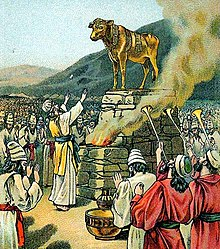
His primary objective was to prevent his subjects from traveling to Jerusalem, in the southern kingdom of Judah, for worship. He feared that such pilgrimages would foster loyalty to the house of David and threaten his own reign. To counter this, Jeroboam replaced the central place of worship and also substituted the object of worship with idols. He also appointed non-Levitical priests to serve, undermining the divinely ordained priesthood.
The Enduring Error of Jeroboam
Jeroboam’s innovations did not end with his reign but extended into the next generations. His establishment of idolatrous practices became a stumbling block for the northern kingdom of Israel. Kings who followed Jeroboam perpetuated these errors, leading the people further away from true worship. The legacy of Jeroboam’s apostasy was so significant that it became a standard by which the sins of Israel’s kings were measured (1Kings 16:26).
The Idolatrous Practices of Ahab and Jezebel
The reign of Ahab and his queen, Jezebel, marked a further decline in the spiritual state of Israel. Jezebel introduced the worship of Baal and Asherah into Israel, practices that were abominable to the Lord. Ahab provoked the Lord more than all the kings of Israel before him (1Kings 16:31-33).
The Lord’s disapproval on Mount Carmel
The prophet Elijah emerged as a powerful voice against the rampant idolatry. In one of the most dramatic confrontations recorded in Scripture, Elijah challenged the prophets of Baal on Mount Carmel. He called upon the Lord to demonstrate His sovereignty, and God responded with fire from heaven, consuming Elijah’s sacrifice (1Kings 18:36-39). This miraculous event underscored the Lord’s disapproval of Israel’s idolatry and called the people back to genuine worship.
Prophetic Admonishment and Call for Repentance
Despite Elijah’s victory, the prophets continuously admonished Israel to repent. The persistent call for repentance echoed throughout the ministries of subsequent prophets, yet the people remained obstinate. Their refusal to abandon false worship led to their downfall (see Hos 8:4-6; Amos 4:4-5).
The Consequences of Continued Apostasy
Israel’s continued apostasy ultimately resulted in their captivity. In 722 BC, the Assyrians conquered the northern kingdom, scattering the ten tribes and bringing an end to the Northern Kingdom. The seeds of their destruction were sown by Jeroboam’s initial departure from true worship.
The Persistence of Errors in Judah
In the southern kingdom of Judah, despite periodic reforms, such as those under King Josiah, errors persisted. Josiah’s reforms were extensive, yet they could not completely eradicate the entrenched practices of idolatry.
Nehemiah’s Acknowledgment of Persistent Disobedience
Centuries later, Nehemiah reflected on Israel’s history of disobedience and idolatry. In his prayer, he acknowledged the persistent sinfulness that had plagued the nation, attributing their suffering to their unfaithfulness (Nehemiah 9:26-37). Nehemiah’s reflection underscores the long-lasting impact of Jeroboam’s initial errors, demonstrating that false worship and disobedience to God’s commands lead to severe consequences.
Conclusion
The establishment of false worship by Jeroboam in 1Kings 12:25-33 had long-lasting effects on the northern kingdom of Israel. This sin was perpetuated by subsequent kings and contributed to the spiritual decline of Israel. Prophets repeatedly condemned these practices and called for repentance, but the people’s persistence in idolatry ultimately led to their downfall and exile. The enduring influence of Jeroboam’s sin is a stark reminder of the consequences of deviating from God’s commands.
Agape, Spencer
“Howbeit in vain do they worship me, teaching for doctrines the commandments of men.” (Mark 7:7)
“Ye ask, and receive not, because ye ask amiss, that ye may consume it upon your lusts.” (James 4:3)
If one can pray AMISS, then it stands to reason that we can do other commands of God in a manner that He won’t accept. There are examples of people…
Preaching a different Gospel: “But though we, or an angel from heaven, preach any other gospel unto you than that which we have preached unto you, let him be accursed.” (Gal 1:8)
Following a different Jesus: “For if he that cometh preacheth another Jesus, whom we have not preached, or if ye receive another spirit, which ye have not received, or another gospel, which ye have not accepted, ye might well bear with him.” (2Cor 11:4)
Obeying the Law of Moses: “And certain men which came down from Judaea taught the brethren, and said, Except ye be circumcised after the manner of Moses, ye cannot be saved.” (Acts 15:1)
“Stand fast therefore in the liberty wherewith Christ hath made us free, and be not entangled again with the yoke of bondage. Behold, I Paul say unto you, that if ye be circumcised, Christ shall profit you nothing. For I testify again to every man that is circumcised, that he is a debtor to do the whole law. Christ is become of no effect unto you, whosoever of you are justified by the law; ye are fallen from grace.” (Gal 5:1-4)
Practicing vain worship: “Howbeit in vain do they worship me, teaching for doctrines the commandments of men.” (Mark 7:7)
From these few examples it’s clear that we can appear to be obeying God, but in reality, we’re disobedient. How can we know?
Can we be Baptized AMISS?
If you’ve been baptized to be ADDED to a denomination, then you’ve been baptized AMISS.
The Lord adds to the church, and never to a denomination. “Then they that gladly received his word were baptized: and the same day there were added unto them about three thousand souls.” (Acts 2:41).
Getting baptized solely as a requirement to join a specific denomination or church, rather than for the biblical purpose of remission of sins and entrance into the body of Christ (Galatians 3:27), misses the true purpose (cf. 1Cor 1:10-13).
Some might get baptized to gain favor in a political or social context, which is not a biblical reason. Some might seek baptism to gain prestige or authority within a religious community, which is not a biblical reason.
If you’ve been baptized as a MERITORIOUS work, then you’ve been baptized AMISS.
Some believe that baptism is a meritorious work that earns salvation, whereas the New Testament teaches that baptism is an act of faith and obedience (Ephesians 2:8-9; Colossians 2:12). It is not legalism to comply with the conditions of salvation given by God.
Any reason for baptism except to obey the gospel through faith in Jesus Christ for the remission of sins is no reason at all. It’s possible to outwardly comply with a command of God, but inwardly. “This people draweth nigh unto me with their mouth, and honoureth me with their lips; but their heart is far from me. But in vain they do worship me, teaching for doctrines the commandments of men.” (Matt 15:8,9)
Believing that baptism will bring material or physical blessings, such as health, wealth, or prosperity, is not a biblical reason for baptism. Repentance is a prerequisite for baptism (Acts 2:38).
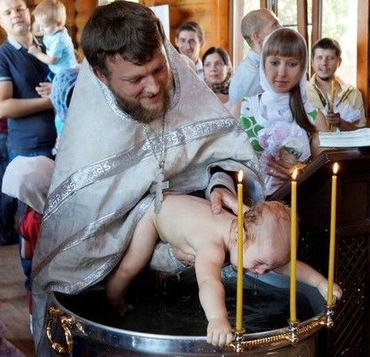
If you’ve been baptized as an INFANT or by any mode other than IMMERSION, then you’ve been baptized AMISS.
Infant baptism is contrary to the doctrine of Christ. “Suffer the little children to come unto me, and forbid them not: for of such is the kingdom of God. Verily I say unto you, Whosoever shall not receive the kingdom of God as a little child, he shall not enter therein.” (Mark 10:14,15). To Cleanse from Original Sin is not a doctrine taught in the New Testament. The doctrine of original sin and its cleansing through infant baptism is not supported by the Bible, which teaches that baptism is for the remission of personal sins (Acts 2:38).
Baptism is a burial (immersion in water) for those that believe. “Buried with him in baptism, wherein also ye are risen with him through the faith of the operation of God, who hath raised him from the dead.” (Col 2:12). Getting baptized without personal faith and understanding, possibly under coercion or pressure, is not scriptural. Baptism requires belief.
“And as they went on their way, they came unto a certain water: and the eunuch said, See, here is water; what doth hinder me to be baptized? And Philip said, If thou believest with all thine heart, thou mayest. And he answered and said, I believe that Jesus Christ is the Son of God.” (Acts 8:36,37)
If you’ve been baptized after you think you were SAVED, then you’ve been baptized AMISS.
The bible teaches that a person is baptized to be saved. “The like figure whereunto even baptism doth also now save us (not the putting away of the filth of the flesh, but the answer of a good conscience toward God,) by the resurrection of Jesus Christ:” (1Peter 3:21).
Saul of Tarsus (later to become Paul the Apostle), was baptized to wash away his sins. How can one be saved then have their sins washed away? “And now why tarriest thou? arise, and be baptized, and wash away thy sins, calling on the name of the Lord.” (Acts 22:16)
The idea that baptism is merely a symbolic public declaration of faith without any salvific purpose contradicts the biblical teaching that it is essential for the forgiveness of sins (Acts 2:38).
Viewing baptism as merely a religious tradition or ritual without understanding its significance in salvation contradicts the New Testament teaching (Romans 6:3-4).
If you’ve been baptized for SOCIAL acceptance, then you’ve been baptized AMISS.
There are some who are baptized for social acceptance among their Family or friends, or to fit in. Some have been baptized to make their parents happy. Some are baptized so they can make a future spouse happy. If we’re baptized to please a person and not for the remission of sins, then we’ve been baptized amiss. It’s a very nervous thing for parents who desire that their children obey the gospel, but they want it to be on the child’s own volition and not just to please their parents.
Jesus taught about counting the cost of discipleship (Luke 14:28-33). Baptism should not be entered into lightly or without understanding its lifelong commitment. The concept of being baptized because one has already been saved through a prior “decision” for Christ overlooks the New Testament’s connection of baptism with the forgiveness of sins and new birth (Acts 22:16; John 3:5).
I know of several young people who get baptized because their older peers had obeyed the gospel, rather than out of personal conviction and obedience to Christ. because they didn’t want to feel left out.
“He that believeth and is baptized shall be saved; but he that believeth not shall be damned.”
(Mark 16:16)
There are other reasons people give for baptism. The practice of baptism for the dead, as practiced in some religious groups, is not supported by New Testament teaching and is mentioned only ambiguously in 1 Corinthians 15:29 without endorsement.
The idea that baptism is an emergency ritual to be performed in dire circumstances, without the individual’s faith and understanding, does not align with the New Testament teaching.
Any reason for baptism that does not align with the biblical teaching that it is for the remission of sins, to receive the gift of the Holy Spirit, and to be added to the body of Christ (Acts 2:38; 1Corinthians 12:13) is not according to the Bible.
It is crucial to emphasize that baptism, according to the New Testament, is an act of faith and obedience, necessary for the forgiveness of sins, the gift of the Holy Spirit, and entrance into the body of Christ (Acts 2:38; Romans 6:3-4; Galatians 3:27).
“But Jesus said unto them, A prophet is not without honour, but in his own country, and among his own kin, and in his own house.” (Mark 6:4).
In Mark chapter six we see several scenes of varying levels of faith. Part of faith involves trust.
Jesus Rejected in Nazareth (Mark 6:1-6)
Sending Out the Twelve Apostles (Mark 6:7-13)
Herod’s Perplexity about Jesus (Mark 6:14-16)
John the Baptist Beheaded (Mark 6:17-29)
Feeding the Five Thousand (Mark 6:30-44)
Jesus Walks on Water (Mark 6:45-52)
Healing in Gennesaret (Mark 6:53-56)
Mark’s gospel may be the shortest of the four, but what it contains is of great help to us in our faith.
Let us take a glimpse at these scenes of trust.
In the first scene we find Jesus teaching in His own country and among His own people. Although many were astonished at His teaching, His wisdom, and His mighty works, they were offended at Him. His own people rejected Him. Now that’s astonishing!
“But Jesus said unto them, A prophet is not without honour, but in his own country, and among his own kin, and in his own house. And he could there do no mighty work, save that he laid his hands upon a few sick folk, and healed them. And he marvelled because of their unbelief. And he went round about the villages, teaching” (Mark 6:4-6).
The next 3 scenes show differing levels of faith during times of uncertainty. The 12 apostles being sent out to preach, “And commanded them that they should take nothing for their journey, save a staff only; no scrip, no bread, no money in their purse” (v8). Then we see Herod’s perplexity about the identity Jesus, (14-17). The third is in the events leading to the death of John the baptizer at the birthday banquet for Herod, (18-29). From these we see faith, uncertain faith, and great faith.
Following these we come to another kind of banquet called the feeding of the 5,000 (30-44). This began with banquet of spiritual food because of the compassion of Jesus. Faith involves knowledge. Then Jesus is urged to send them away to go find physical food. He tells the 12, “Give ye them to eat.” Here we see another side of their faith when they say, “Shall we go and buy two hundred pennyworth of bread, and give them to eat?” Remember, they had just returned excitedly from preaching without any provisions.
The last scenes of faith are times of trouble. One a storm, the last the sick of Gennesaret (45-56; cf Matt 14:27-33). In the storm, after Jesus had sent the 12 away in boats, He comes to them walking on the water. It’s here that Peter wants confirmation by being allowed to walk on the water also. Peter indeed is able to walk on the water, but places his eyes on the storm, starts to fear, and begins to sink. “O thou of little faith, wherefore didst thou doubt?”
When they arrive at the shore we see an exact opposite response from the first of this chapter. “And when they were come out of the ship, straightway they knew him, And ran through that whole region round about, and began to carry about in beds those that were sick, where they heard he was. And whithersoever he entered, into villages, or cities, or country, they laid the sick in the streets, and besought him that they might touch if it were but the border of his garment: and as many as touched him were made whole.”
Agape,
Spencer
This is part 6 of a series called Preaching through Mark.
What’s a DEVO book? DEVO is short for “DEVOTIONAL.”
A devotional book is a text, often religious in nature, designed to inspire and guide individuals in their spiritual practices. These books typically contain daily readings, reflections, prayers, or meditations aimed at fostering a deeper connection with one’s faith or spiritual beliefs. They can cover a wide range of topics, from personal growth and introspection to theological teachings and biblical passages.
While devotional books can be valuable tools for spiritual growth and contemplation, they can also potentially lead individuals into a false sense of godliness or spirituality for several reasons:
One. Verse. Every. Day.
What’s wrong with reading a DEVO?
DEVO’s…
They DON’T TEACH the Whole Bible, and often Don’t teach it accurately. It’s really just a commentary of man on one or a few verses.
Surface-Level Engagement: Some devotional books offer quick, easily digestible readings that may encourage a superficial understanding of faith or spirituality. Readers may mistake this cursory engagement for genuine spiritual depth.
Acts 20:27 KJV. For I have not shunned to declare unto you all the counsel of God.
They’re usually full of EMOTIONALISM without the whole truth. They often have highly charged stories that can make one believe something that’s not true.
Emotional Appeal: Devotional books often appeal to readers’ emotions, offering comforting words or inspiring stories. While emotional resonance can be a powerful aspect of spiritual experience, it can also lead individuals to prioritize feelings over critical thinking or authentic spiritual growth.
Romans 10:2 KJV. For I bear them record that they have a zeal of God, but not according to knowledge.
They VIOLATE basic Bible authority by not handling the word correctly. They often ignore who’s speaking, who’s being spoken to, and ignore the covenant that is in place.
2 Timothy 2:15 KJV. Study to shew thyself approved unto God, a workman that needeth not to be ashamed, rightly dividing the word of truth.
Lack of Covenant context: Many devotional books are written from a particular Old Covenant, potentially limiting readers’ exposure to the New Testament covenant. This lack of diversity can reinforce existing biases and prevent individuals from engaging with more accurate and applicable viewpoints.
Hebrews 8:13 In that he saith, A new covenant, he hath made the first old. Now that which decayeth and waxeth old is ready to vanish away.
They’re usually OUT OF CONTEXT Joel Osteen style of reading the Bible. Not everything in the Bible is written about you. Everything in the Bible is for us, but not necessarily about us.
For example, do we need to do animal sacrifices? Nope! Look at this verse. Are we to continue to make animal sacrifices now that Christ has sacricfied Himself?
Psalm 66:15 KJV. I will offer unto thee burnt sacrifices of fatlings, with the incense of rams; I will offer bullocks with goats. Selah.
Hebrews 10:11 And every priest standeth daily ministering and offering oftentimes the same sacrifices, which can never take away sins:
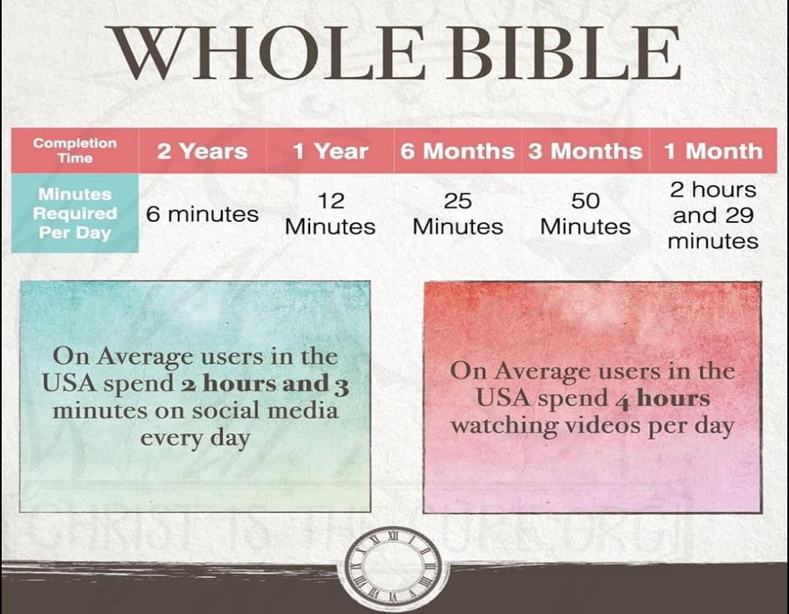
There are 31,102 verses in the Bible. At that pace of One. Verse. Every. Day. It would take 85 years to read through the Bible.
I don’t have that kind of time left.
Agape,
Spencer
Here is a link to printable bookmarks to help you read through the bible in an organized fashion.











 Borger church of Christ @ Franklin & Juniper