
Uniqueness of Biblical Prophecy Compared to Other Religious Texts
Biblical prophecy stands apart from the sacred texts of other mainstream religions due to its specificity, historical fulfillment, and divine coherence across centuries. Unlike the often vague or symbolic predictions found in other religious writings, the Bible’s prophecies offer detailed, verifiable claims that have been demonstrably fulfilled, lending credibility to its divine inspiration.
First, the Bible’s prophecies are remarkably precise. For instance, the prophecy in Isaiah 44:28–45:1 (circa 700 BCE) names Cyrus, a Persian king, as the one who would allow the Jews to return to Jerusalem and rebuild the temple. This prophecy was fulfilled over 150 years later when Cyrus issued the decree in 538 BCE (Ezra 1:1-4). No other religious text matches this level of specificity, naming a future individual and their actions centuries in advance. The Qur’an, for example, lacks detailed predictive prophecies tied to historical events. Similarly, the Bhagavad Gita offers no specific, testable predictions about future rulers or events.
Second, biblical prophecies span centuries and demonstrate consistent fulfillment. The book of Daniel (circa 6th century BCE) predicts the rise and fall of empires (Babylon, Persia, Greece, and Rome) with astonishing accuracy (Daniel 2:31-45; 7:1-28). Historical records, such as those from Herodotus and archaeological findings, confirm these empires’ timelines and transitions. In contrast, texts like the Buddhist Pali Canon or the Vedas focus on cyclical time or spiritual principles without offering verifiable historical predictions. The Bible’s ability to predict geopolitical shifts with precision sets it apart as a text rooted in a divine perspective of history.
Third, the sheer volume and interconnectedness of biblical prophecies create a cohesive narrative. Over 300 prophecies about the Messiah, spanning from Genesis 3:15 to Malachi 3:1, find fulfillment in Jesus’ life, death, and resurrection. For example, Micah 5:2 predicts the Messiah’s birthplace in Bethlehem, fulfilled in Matthew 2:1. Psalm 22:16-18 foretells the crucifixion’s details, including pierced hands and feet and the casting of lots for clothing, fulfilled in John 19:23-24. This intricate web of predictions, written by multiple authors over centuries, demonstrates a unified divine purpose. Other religious texts, such as the Taoist Tao Te Ching, lacks a comparable prophetic framework that ties together historical events and spiritual promises.
Skeptics might argue that these fulfillments are coincidental or retroactively interpreted. However, the Dead Sea Scrolls, dated to the 2nd century BCE, confirm the antiquity of these prophecies, predating their fulfillment. No other religious text provides such a robust, historically verifiable prophetic record.
Biblical prophecy’s unmatched precision and fulfillment reveal a divine hand. No other text dares to predict with such clarity and succeed.
agape
Sources:
The Bible (ESV): Isaiah 44:28–45:1, Ezra 1:1-4, Daniel 2:31-45, Micah 5:2, Psalm 22:16-18, Matthew 2:1, John 19:23-24.
McDowell, Josh. Evidence That Demands a Verdict. Thomas Nelson, 2017.
Archer, Gleason L. A Survey of Old Testament Introduction. Moody Press, 1994.
The Bible’s 66 books, penned across millennia, weave a seamless tapestry of truth, revealing a divine hand guiding its every word.
The Internal Consistency of the Bible Across 66 Books
The Bible, a collection of 66 books written by over 40 authors across 1,500 years, displays remarkable internal consistency, weaving a unified narrative despite its diverse origins. This coherence is evident in its thematic unity, fulfilled prophecies, and consistent theological principles, offering compelling evidence of its divine inspiration.
First, the Bible’s thematic unity binds its books into a cohesive story. From Genesis to Revelation, the narrative centers on God’s relationship with humanity, His redemptive plan, and the promise of a Messiah. Genesis 3:15 introduces the first mention of the gospel or “good news” in the Bible, the first hint of a savior who will crush the serpent’s head, a theme that culminates in Christ’s victory in Revelation 20:10.
The Old Testament’s covenants (with Abraham (Genesis 12:3), Moses (Exodus 19:5-6), and David (2 Samuel 7:12-16)) find fulfillment in the New Testament through Jesus, who establishes the New Covenant (Luke 22:20; Heb 8:8-11). This continuity across centuries and authors suggests a purposeful design.
Second, fulfilled prophecies demonstrate the Bible’s reliability. Over 300 Old Testament prophecies, such as Isaiah 7:14 (the virgin birth) and Micah 5:2 (Bethlehem as the Messiah’s birthplace), are fulfilled in Jesus’ life, as recorded in the Gospels (Matthew 1:22-23; 2:5-6). The precision of these predictions, written centuries earlier, defies coincidence and human invention. For example, Psalm 22:16-18, written long before crucifixion was practiced, vividly describes Jesus’ death, including pierced hands and feet and divided garments (John 19:23-24). The consistency between prophecy and fulfillment across books reinforces the Bible’s unified message.
Third, the Bible maintains consistent theological principles despite its diverse cultural and historical contexts. The concept of God’s holiness, justice, and mercy remains constant. Leviticus 19:2 calls Israel to be holy because God is holy, a principle echoed in 1 Peter 1:15-16 for New Testament believers. Similarly, the emphasis on active faith as the basis for righteousness spans from Abraham (Genesis 15:6) to Paul’s teachings (Romans 4:3). These shared doctrines, articulated by authors from shepherds to kings, suggest a singular guiding intelligence.
Skeptics might argue that apparent contradictions, such as differing Gospel accounts, undermine this consistency. However, these variations often reflect complementary perspectives rather than errors. For instance, the number of women at Jesus’ tomb varies across Gospels (John 20:1 vs. Luke 24:10), but this reflects selective emphasis, not contradiction, as ancient biographies prioritized thematic truth over exhaustive detail (Carson, The Gospel According to John, 1991). Harmonizing these accounts reveals a coherent resurrection narrative.
The Bible’s internal consistency is not merely literary but points to a divine author orchestrating its message. As 2Timothy 3:16 states, “All Scripture is God-breathed,” suggesting a supernatural unity that transcends human effort. This coherence gives its readers confidence to explore its claims.
Sources: Carson, D.A. The Gospel According to John. Eerdmans, 1991.
In an era of social division, mental health crises, and moral ambiguity, the teachings of Jesus Christ offer timeless solutions rooted in love, forgiveness, and purpose. Grounded in a biblical worldview, these principles address modern challenges with clarity and hope. Let’s see how Jesus’ teachings, as recorded in Scripture, provide practical answers to today’s pressing issues.
First, Jesus’ emphasis on love as the greatest commandment counters the divisions that are plaguing society. In Matthew 22:37-39, He instructs to “love the Lord your God” and “love your neighbor as yourself.” Selfless love goes beyond political and cultural divides, fostering unity despite our differences. Studies show that communities practicing altruistic behaviors, like those Jesus modeled, experience lower conflict and higher social connection (Putnam, 2000). By prioritizing love over enmity, We can improve how we relate to one another in workplaces, families, and on social media.
Second, Jesus’ teachings on forgiveness address the mental health epidemic. Modern psychology links unforgiveness to anxiety and depression (Toussaint et al., 2015). In Matthew 6:14-15, Jesus teaches that forgiving others is a prerequisite to God’s forgiveness, which promotes better relationships with others. His parable of the unforgiving servant (Matthew 18:21-35) illustrates the destructive cycle of unforgiveness in light of the mercy shown to us. Applying the principle of forgiveness (whether it be exoneration, forbearance, or release) we are able to move forward in healing relationships strained by betrayal or misunderstanding.
Third, Jesus provides purpose in a world grappling with life altering despair. Rising rates of loneliness and suicide reflect a loss of meaning (Twenge, 2017). In John 10:10, Jesus declares, “I have come that they may have life, and have it to the full.” When we truly follow Jesus, we find purpose in our lives higher than ourselves. It moves us to serve our fellow man, and gives us hope a hopeless world. If you’re dealing with recovery of any sort, you’ll find a greater rate of success in your fight against addiction and despair by becoming anchored in purpose (Koenig, 2012). Jesus’ call to “follow me” (Matthew 4:19) offers a roadmap for navigating life’s uncertainties. “But be ye doers of the word, and not hearers only, deceiving your own selves.” (James 1:22)
Critics may argue that Jesus’ teachings are outdated or impractical, yet their universal applicability endures. Loving one’s enemy (Luke 6:27) disarms hostility, forgiveness heals psychological wounds, and purpose through faith counters defeatism. These principles align with the evidence and human needs, proving their relevance.
Jesus’ teachings are not mere ideals but actionable solutions. By embracing love, forgiveness, and purpose, individuals and societies can overcome division, heal emotional wounds, and find meaning.
Agape,
spencer
Sources:
Koenig, H. G. (2012). Religion and Mental Health. Academic Press.
Putnam, R. D. (2000). Bowling Alone. Simon & Schuster.
Toussaint, L., et al. (2015). Forgiveness and Health. Springer.
Twenge, J. M. (2017). iGen. Atria Books. Zehr, H. (2015). Changing Lenses. Herald Press.
Knowing the Voice of Jesus: The Written Word as the Sole Means
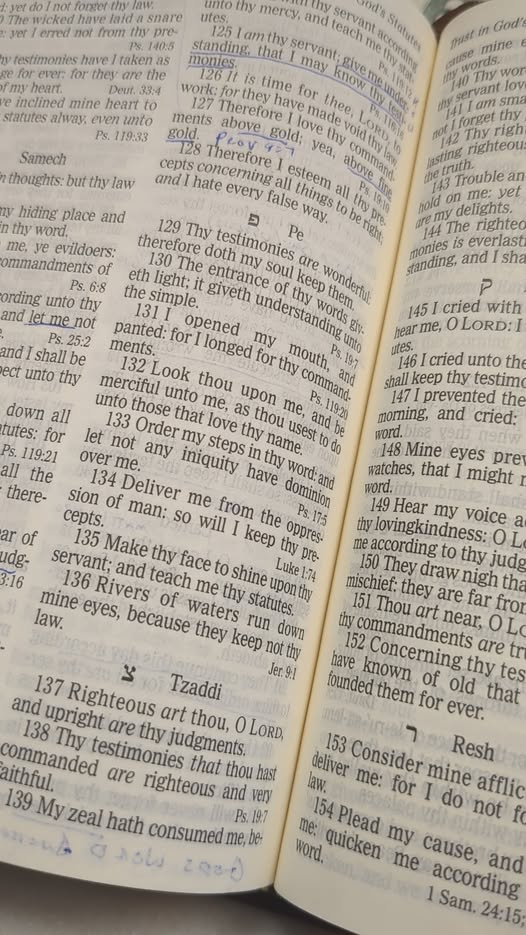
In John 10:4, Jesus, the Good Shepherd, declares, “And when he putteth forth his own sheep, he goeth before them, and the sheep follow him: for they know his voice.” Believers today do not hear an audible voice nor witness the signs Jesus performed during His earthly ministry, as those signs, per John 20:30-31, were recorded so that we might believe without seeing them firsthand: “And many other signs truly did Jesus in the presence of his disciples, which are not written in this book: But these are written, that ye might believe that Jesus is the Christ, the Son of God; and that believing ye might have life through his name.” The implication is that the signs done then will not be repeated; instead, we know Jesus’ voice through the written word. The apostles’ teaching, the New Testament history of Jesus, and obedience to Christ all converge in the written word as the sole means to know His voice and the truth.
We will know His voice by keeping the apostles’ teaching. The apostles, guided by the Holy Spirit, delivered Jesus’ teachings, preserved in Scripture. John 16:13 promises, “When he, the Spirit of truth, is come, he will guide you into all truth.” Their doctrine, recorded in the written word, allows us to hear Jesus. Later Jesus prays for the apostles in John 17:20, “Neither pray I for these alone, but for them also which shall believe on me through their word;” This shows us that people will believe through their inspired preaching and teaching which is now recorded for all in the New Testament. Acts 2:42 shows early believers “continued stedfastly in the apostles’ doctrine,” while Galatians 1:11-12 clarifies, “The gospel which was preached of me is not after man… but by the revelation of Jesus Christ.” These inspired writings are our access to His voice today.
We will know His voice by the New Testament history of Jesus Christ. The Gospels record Jesus’ life and works, but the signs He performed were for those who saw them personally. John 20:29 reinforces this: “Blessed are they that have not seen, and yet have believed.” We know Him through the written record, as Luke 1:1-4 states: “To set forth in order a declaration… that thou mightest know the certainty of those things.” The written history in Scripture conveys His voice to us. John 20:31a, “But these are written, that ye might believe that Jesus is the Christ, the Son of God;”
We will know His voice by obedience to Christ. Obeying Jesus’ commands, found in Scripture, confirms we hear His voice. John 10:27 says, “My sheep hear my voice… and they follow me.”1 John 2:4 warns, “He that saith, I know him, and keepeth not his commandments, is a liar, and the truth is not in him.”John 14:23 adds, “If a man love me, he will keep my words: and my Father will love him.” Obedience to the written word ensures we know Him.
The written word is the only means by which we know Jesus’ voice and the truth. The signs Jesus performed, as recorded in John 20:30-31, were for those who saw them, but we believe through what is written. Jesus’ life is in the word (John 5:39: “Search the scriptures… they are they which testify of me”). The apostles’ teachings come from the word (2 Peter 1:21). The Holy Spirit revealed the word (2 Timothy 3:16). While preachers may proclaim the gospel (Romans 10:14), they must teach from the written word. 2 John 1:9 emphasizes, “He that abideth in the doctrine of Christ, he hath both the Father and the Son.” The written word alone enables us to hear and follow the Good Shepherd.
We will know His voice by keeping the apostles’ teaching. The apostles, guided by the Holy Spirit, delivered Jesus’ teachings, preserved in Scripture. John 16:13 promises, “When he, the Spirit of truth, is come, he will guide you into all truth.” Their doctrine, recorded in the written word, allows us to hear Jesus. After Jesus then prays for the apostles, He then prays this in John 17:20, “Neither pray I for these alone, but for them also which shall believe on me through their word;” This shows us that people will believe through their inspired preaching and teaching which is now recorded for all in the New Testament. Acts 2:42 shows early believers “continued stedfastly in the apostles’ doctrine,” while Galatians 1:11-12 clarifies, “The gospel which was preached of me is not after man… but by the revelation of Jesus Christ.” These inspired writings are our access to His voice today.
We will know His voice by the New Testament history of Jesus Christ. The Gospels record Jesus’ life and works, but the signs He performed were for those who saw them personally. John 20:29 reinforces this: “Blessed are they that have not seen, and yet have believed.” We know Him through the written record, as Luke 1:1-4 states: “To set forth in order a declaration… that thou mightest know the certainty of those things.” The written history in Scripture conveys His voice to us.
We will know His voice by obedience to Christ. Obeying Jesus’ commands, found in Scripture, confirms we hear His voice. John 10:27 says, “My sheep hear my voice… and they follow me.”1 John 2:4 warns, “He that saith, I know him, and keepeth not his commandments, is a liar, and the truth is not in him.”John 14:23 adds, “If a man love me, he will keep my words: and my Father will love him.” Obedience to the written word ensures we know Him.
In conclusion, the written word is the only means by which we know Jesus’ voice and the truth. The signs Jesus performed, as recorded in John 20:30-31, were for those who saw them, but we believe through what is written. Jesus’ life is in the word (John 5:39: “Search the scriptures… they are they which testify of me”). The apostles’ teachings come from the word (2 Peter 1:21). The Holy Spirit revealed the word (2 Timothy 3:16). While preachers may proclaim the gospel (Romans 10:14), they must teach from the written word. 2 John 1:9 emphasizes, “He that abideth in the doctrine of Christ, he hath both the Father and the Son.” The written word alone enables us to hear and follow the Good Shepherd.
Life can throw some heavy punches, can’t it? For the believers in Thessalonica, those punches came in the form of persecutions, false teachings, and even some within their own community slacking off and stirring up trouble. Yet, in his second letter to them, Paul points to three timeless virtues (faith, hope, and love) as the keys to standing firm, no matter what others say or do. Rooted in knowing God’s word, these qualities enabled the Thessalonians to rise above their troubles and the “lowness” of their troublers.
Chapter 1: Enduring Through Faith, Hope, and Love
The Thessalonian church was under fire, literally and figuratively. They faced “persecutions and tribulations” (2 Thessalonians 1:4, KJV), likely from hostile neighbors or authorities who opposed their faith. Yet Paul couldn’t stop bragging about them: “We ourselves glory in you in the churches of God for your patience and faith in all your persecutions and tribulations that ye endure” (1:4). Their faith wasn’t just a Sunday morning nod to God; it was a steadfast trust in His promises, even when the world seemed against them. That faith, Paul says, was “growing exceedingly” (1:3), and their love for one another was increasing right alongside it.
But what kept them going? HOPE. Paul paints a vivid picture of hope tied to God’s justice and Christ’s return: “Seeing it is a righteous thing with God to recompense tribulation to them that trouble you; And to you who are troubled rest with us, when the Lord Jesus shall be revealed from heaven with his mighty angels” (1:6-7). The promise that God would deal with their troublers and grant them relief gave them a reason to hold on. This hope wasn’t wishful thinking, it was grounded in God’s word, which assured them that their suffering was “a manifest token of the righteous judgment of God” (1:5). Knowing God’s word fueled their faith to endure, their hope to look forward, and their love to care for one another, even under pressure. Paul prayed for this to continue, asking God to “fulfil all the good pleasure of his goodness, and the work of faith with power” (1:11).
So, what’s the lesson? When trouble comes (whether it’s people attacking your faith or life’s hardships piling up) lean into faith, hope, and love. Trust God’s word, hold fast to the promise of Christ’s return, and keep loving those around you. That’s how you stay faithful, no matter what others do.
Chapter 2: Standing Firm Against Deception
The troubles didn’t stop with persecution. Someone was spreading lies, maybe even claiming Paul’s authority, saying the day of the Lord had already come. This shook the Thessalonians, leaving them “troubled” and “shaken in mind” (2 Thessalonians 2:2). Imagine the confusion, thinking you missed the biggest event in history! But Paul steps in with clarity, urging them not to be “soon shaken in mind, or be troubled, neither by spirit, nor by word, nor by letter as from us” (2:2). He reminds them of God’s word, which he’d already taught: the day of the Lord won’t come until the “man of lawlessness” is revealed (2:3-4) and destroyed by Christ’s return (2:8).
Here’s where faith, hope, and love shine again. Their faith in the truth (God’s word) kept them from falling for deception. Paul calls them “brethren beloved of the Lord” (2:13), chosen for salvation “through sanctification of the Spirit and belief of the truth” (2:13; see John 17:17). That belief anchored them. Hope came from knowing Christ would return to set things right: “The Lord Jesus Christ… shall destroy with the brightness of his coming” (2:8). This hope steadied them against false alarms. And love? Paul prays for their hearts to be comforted and established “in every good word and work” (2:16-17), a call to keep loving and serving each other despite the chaos.
The troublers spreading lies were low, trying to unsettle God’s people. But Paul’s answer is clear: “Therefore, brethren, stand fast, and hold the traditions which ye have been taught, whether by word, or our epistle” (2:15). Stay rooted in God’s word. Let faith keep you grounded, hope keep you looking up, and love keep you moving forward. That’s how you abound, no matter what others say.
Chapter 3: Overcoming Internal Troubles
If external persecution and false teachings weren’t enough, the Thessalonians had trouble within their own ranks. Some believers were “walking disorderly,” refusing to work and meddling as busybodies (2 Thessalonians 3:6, 11). This idleness wasn’t just laziness, it disrupted the work of the church. Paul doesn’t mince words: “If any would not work, neither should he eat” (3:10). Yet even this discipline is rooted in love, as he urges the church to correct the idle “as a brother” (3:15), not an enemy.
Faith shows up in Paul’s confidence that the Thessalonians would stay faithful: “We have confidence in the Lord touching you, that ye both do and will do the things which we command you” (3:4). Their hope was tied to God’s word, which provided clear instructions for living, and to the promise of God’s peace: “Now the Lord of peace himself give you peace always by all means” (3:16). Love guided their response to the troublers within, balancing discipline with care, and Paul prayed that “the Lord direct your hearts into the love of God, and into the patient waiting for Christ” (3:5).
The idle were acting low, causing trouble by neglecting their responsibilities. But Paul calls the church to a higher standard: “Be not weary in well doing” (3:13). By staying faithful to God’s word (working diligently, loving one another, and holding fast to His commands) they could overcome even internal challenges.
Tying It All Together
What do we learn from the Thessalonians? Troubles and troublers come in many forms: persecutors who mock your faith, deceivers who twist the truth, or even fellow believers who let you down. But faith, hope, and love, rooted in knowing God’s word, are your strength. Faith keeps you trusting God’s truth, like the Thessalonians’ belief in the gospel (2:13) and obedience to Paul’s teaching (3:4). Hope lifts your eyes to God’s vengeance (1:6-9, 2:8) and Christ’s return (1:7, 2:8), assuring you that troubles won’t have the last word. Love binds you to your brothers and sisters, growing even in tough times (1:3) and guiding how you correct the wayward (3:15).
Knowing God’s word is the thread that ties it all together. It’s the foundation for faith, the source of hope, and the guide for love. The Thessalonians’ troubles didn’t define them, their faithfulness did. They stayed abounding, growing in faith and love (1:3), standing firm against lies (2:15), and doing good despite setbacks (3:13). So, when others try to drag you down with their words or actions, don’t stoop to their level. Hold fast to God’s word. Let faith, hope, and love keep you faithful and abounding, just as they did for the Thessalonians.
The discovery of the Dead Sea Scrolls in 1947 ranks among the most significant archaeological finds in history, offering a profound window into the reliability of the Bible. Hidden in caves near Qumran, these ancient manuscripts, dating from the 3rd century BC to the 1st century AD, include fragments of nearly every Old Testament book. Their remarkable preservation and textual consistency with later biblical manuscripts provide compelling evidence that the Scriptures we read today faithfully reflect their ancient origins.
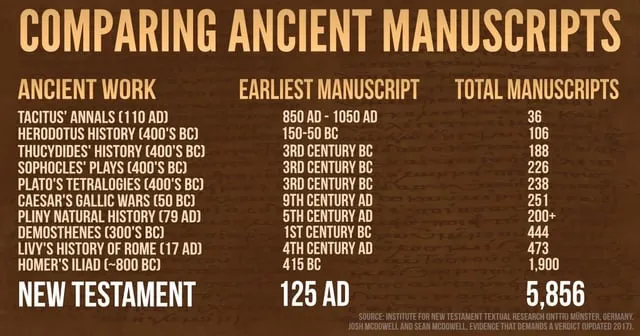
One of the most striking finds is the Great Isaiah Scroll (1QIsa^a), a nearly complete copy of the Book of Isaiah dating to around 125 BC. When compared to the Masoretic Text, the standard Hebrew Bible from the 10th century AD, the scroll shows astonishing fidelity. For instance, Isaiah 53, a messianic prophecy central to both Jewish and Christian theology (Isaiah 53:5-6), differs only in minor spelling or stylistic variations—none altering the meaning. This consistency across a millennium demonstrates that scribes meticulously preserved the text, countering claims of rampant corruption over time.
The scrolls also include fragments of Deuteronomy, such as 4QDeut^j, which preserves Deuteronomy 32:43. This passage, part of Moses’ song, aligns closely with the Septuagint (Greek translation) suggesting a textual tradition predating later standardization. Yet, its core message—God’s covenant with Israel—remains intact, as seen in Deuteronomy 32:8-9. Such findings reveal a diversity of ancient texts but affirm their essential unity, reinforcing the Bible’s reliability as a transmitted document.
Beyond specific books, the scrolls reflect a broader cultural and religious context matching biblical accounts. The Community Rule (1QS) and other sectarian writings echo the ascetic lifestyle of groups like the Essenes, resonating with descriptions of John the Baptist’s wilderness ministry (Matthew 3:1-4). While not direct proof of New Testament events, this alignment anchors the biblical world in historical reality, showing that its narratives were not invented centuries later.
Critics once argued that the Bible’s text evolved significantly over time, but the Dead Sea Scrolls challenge that notion. Scholarly analysis, such as Millar Burrows’ The Dead Sea Scrolls (1955), notes that discrepancies are minimal—often mere scribal errors—while Frank Moore Cross’s The Ancient Library of Qumran (1995) highlights the scrolls’ role in tracing textual transmission. These manuscripts predate the Masoretic Text by over a thousand years, yet their agreement is uncanny, suggesting a disciplined copying tradition rooted in reverence for the Word.
The Dead Sea Scrolls do not prove every biblical claim, but they powerfully affirm the Old Testament’s textual integrity. They bridge centuries, showing that what was written in antiquity endures today with remarkable accuracy. In an age of skepticism, these fragile fragments whisper a timeless truth: the Bible’s words have been guarded through the ages, as if etched in stone and sealed in clay.
Agape
Sources: Burrows, Millar. The Dead Sea Scrolls. Viking Press, 1955. Cross, Frank Moore. The Ancient Library of Qumran. Sheffield Academic Press, 1995.
In the pages of Scripture, we find heroes like Esther, Daniel, Abigail, and Paul, who faced imprisonment, death, and danger with unwavering faith in God. Their resolve to remain faithful, even at the cost of their lives, inspires us. Yet, for most Christians today, the threats to faith are subtler but no less real. We may not face lions’ dens or executioners, but we encounter pressures that test our determination to live for Christ. This article explores four modern challenges Christians face in keeping faith and how God’s Word compels us to respond with active, courageous faith.
The Weight of Shame: Proclaiming the Gospel Boldly
“I am not ashamed of the gospel, for it is the power of God for salvation to everyone who believes” (Romans 1:16). Yet, in a world that often dismisses or derides Christianity, many believers feel guilt or embarrassment when sharing their faith. Whether it’s hesitating to mention Jesus in a workplace conversation or softening biblical truths to avoid conflict at a family gathering, the fear of being labeled judgmental or outdated can silence us. Paul, who faced beatings and imprisonment for preaching, urges us not to be “ashamed of the testimony about our Lord” (2 Timothy 1:8) but to handle God’s Word rightly, unashamed (2 Timothy 2:15).
Like Daniel, who prayed openly despite a death decree (Daniel 6:10), Christians today must anchor their identity in Christ. The gospel’s power to save outweighs fleeting social discomfort. When a young professional risks awkwardness by inviting a colleague to church or a parent teaches their child biblical values in a skeptical culture, they echo Esther’s resolve: “If I perish, I perish” (Esther 4:16). Faith compels action, speaking boldly, trusting God’s Spirit to work through his word.
The Cost of Reputation and Relationships: Choosing Christ First
“Have I become your enemy by telling you the truth?” Paul asked the Galatians (Galatians 4:16). Jesus warned that loving family more than Him makes us unworthy of discipleship (Matthew 10:37). These verses strike at a deep fear: losing reputation or relationships for our faith. In a hyper-connected world, taking a stand on biblical issues (whether on morality, justice, or salvation) can lead to social ostracism, canceled friendships, or strained family ties. A student defending creationism in a classroom or a friend confronting a loved one’s sin risks becoming an outcast.
Abigail’s example shines here. She risked her relationship and safety to mediate peace, aligning with God’s will despite potential backlash (1 Samuel 25:24). Christians today must prioritize allegiance to Christ, even when it costs social capital. This doesn’t mean being harsh but speaking truth in love, trusting God to mend or redeem relationships. Like Esther, who risked her life for her people, we show faith by valuing God’s approval over human esteem, knowing our ultimate family is eternal (Galatians 1:10).
The Risk of Resources: Trusting God’s Provision
Revelation 13:17 paints a stark picture: those without the “mark of the beast” cannot buy or sell. This passage shows a time when some faced economic exclusion for faithfulness, a challenge Christians continue to face. Refusing to compromise ethics in business, prioritizing assembling with the saints for overtime, or declining opportunities that conflict with faith can lead to lost income or career setbacks. A graphic designer who turns down a lucrative but morally questionable project or a doctor who risks her job by objecting to unethical practices feels this pressure.
Daniel’s refusal to bow to Darius’ decree, despite the lion’s den, shows trust in God’s provision (Daniel 6:23). Jesus promised that seeking God’s kingdom first ensures our needs are met (Matthew 6:33). Christians today must act on this promise, choosing integrity over wealth. Like Esther, who faced death to save her people, we demonstrate faith when we sacrifice financial security for God’s principles, confident in His care.
The Choke of Distractions: Persevering Through Trouble
In the parable of the sower, Jesus describes faith shrivel away when trouble comes or choked by “the cares of the world, the deceitfulness of riches, and the desires for other things” (Mark 4:16-19). Modern life bombards us with distractions (endless notifications, career pressures, personal crises) that threaten to erode our spiritual vitality. A single mother juggling work and parenting may skip prayer time; a student consumed by social media may neglect Scripture. Troubles like health issues or financial stress can further crowd out faith, leaving us fruitless.
Paul’s relentless focus on his mission, despite shipwrecks and imprisonments (Acts 20:24), inspires us to stay rooted. Like Abigail, who acted decisively amidst chaos (1 Samuel 25:18), we must discipline ourselves to prioritize God. Regular prayer, Scripture study, and congregational worship act as anchors, ensuring our faith bears fruit. Esther’s focused intercession, fasting amidst a genocidal threat, reminds us that faith thrives when we cling to God’s Word, not the world’s noise.
A Faith That Works: Compelled by God’s Word
The courage of Esther, Daniel, Abigail, and Paul was no blind leap but a response to God’s Word. Daniel obeyed the command to worship God alone (Exodus 20:3); Abigail acted on principles of justice (Proverbs 31:9); Paul preached Christ’s mandate (Matthew 28:19). Their faith produced works (prayer, mediation, proclamation) proving it was alive (James 2:17). Similarly, God’s Word compels us today:
Based on Scripture: Romans 1:16 gives confidence in the gospel’s power; Matthew 10:37 prioritizes Christ; Revelation 13:17 trusts God’s provision; Mark 4:19 warns against distractions.
Compelled to Action: These truths drive us to share the gospel unashamed, stand for truth despite relational loss, choose integrity over wealth, and persevere through distractions.
Their integrity Inspires Others: Their courage became a testimony, encouraging future generations (e.g., Daniel’s influence in Jewish tradition, Paul’s letters, Abigail’s role in David’s story). Esther’s legacy similarly inspired Jewish resilience.
Trust in God that Transcends Circumstances: Their actions show that faithfulness is not contingent on safety or success but on God’s unchanging nature.
Hope in God that Anticipates Eternity: Their willingness to die reflects hope in God’s promises, whether immediate deliverance or eternal resurrection (Hebrews 11:35). This aligns with Esther’s implied trust in God’s salvation for the Jews.
Living the Courageous Faith Today
While we may not face death, the challenges of shame, relational loss, financial risk, and distractions test our faith as surely as the lion’s den tested Daniel’s. Yet, God’s Word equips us. When we feel shame, we proclaim Christ boldly, trusting His power. When we fear losing reputation, we choose Jesus, knowing His approval lasts. When income is at stake, we trust God’s provision. When distractions overwhelm, we root ourselves in Scripture.
Every Christian is called to this courageous faith. The parent teaching biblical values, the worker refusing unethical shortcuts, the student sharing Christ despite mockery, all reflect Esther’s resolve. Our faith, like hers, is not passive but active, producing works that glorify God. As Paul wrote, “I am not ashamed… for I know whom I have believed” (2 Timothy 1:12). Let us stand firm, compelled by God’s Word, trusting Him through every challenge, for His glory and our eternal hope.
In Matthew 25:10, within the parable of the ten virgins, Jesus declares, “And while they were going to buy, the bridegroom came, and those who were ready went in with him to the marriage feast, and the door was shut.” This vivid imagery underscores a sobering truth: opportunities for salvation and readiness have limits. The shutting of the door represents finality, a point of no return in our spiritual journey. How, then, is this door shut in practical application? Scripture reveals four key ways that the door becomes shut.
First, death is a closed door. Hebrews 9:27 states, “It is appointed for man to die once, and after that comes judgment.” Life is the season for repentance and faith, but death ends that opportunity, once life ends, the opportunity for repentance ceases. The parable’s foolish virgins, unprepared when the bridegroom arrived, mirror those who delay repentance, assuming time remains. Death seals our choices, shutting the door to further chances to accept God’s grace by obeying the gospel. This urges us to live ready, embracing salvation now, as tomorrow is not promised (2 Corinthians 6:2). Like the foolish virgins who scrambled too late to prepare, those who postpone turning to Christ risk facing eternity unprepared. This reality presses us to act now, (by obeying the gospel through baptism by through faith, Colossians 2:11-12) because no one knows their final hour (James 4:14). Death’s finality demands we live ready.
Second, obstinance toward the Holy Spirit shuts the door. Acts 7:51 warns against resisting the Spirit, who convicts us of sin and guides us to truth (John 16:8). Rejecting the revealed Word (God’s plan for salvation through Christ and call to godliness) hardens the heart. Like Pharaoh, who ignored God’s signs (Exodus 8:15), persistent refusal to heed Scripture’s clear path (John 3:16; Acts 2:38) closes the door to grace. Jesus warned of blasphemy against the Spirit as an unforgivable sin (Matthew 12:31-32), reflecting a willful, persistent refusal to accept God’s way. The foolish virgins’ lack of oil mirrors this neglect, choosing self-reliance over surrender. The foolish virgins’ neglect of oil symbolizes this willful unpreparedness, choosing self over surrender to God’s Spirit. To keep the door open, we must heed the Spirit’s prompting today through the revealed word in scripture.
Third, refusing to open the door Jesus knocks upon seals our exclusion. Revelation 3:20 declares, “Behold, I stand at the door and knock. If anyone hears my voice and opens the door, I will come in.” Salvation is a personal choice; Jesus invites, but we must respond. Ignoring His call (through apathy, pride, or worldly distractions) leaves us outside the feast, as the virgins discovered. Scripture laments those who reject God’s invitation (Luke 14:24), underscoring that an unopened heart shuts the door to eternal life. There are several examples of those who turned away from Jesus. The Rich Young Ruler (Matthew 19:16-22). Some of Jesus’ Disciples (John 6:60-66). Answering Jesus now ensures entry.
Fourth, Christ’s return will shut the door finally for all. Matthew 25:31-46 describes the judgment day, when Christ separates the ready from the unprepared. The bridegroom’s arrival in the parable foreshadows this moment, when “the Son of Man comes” unexpectedly (Matthew 24:44). No further chances remain; every soul will account for their faith and deeds (2 Corinthians 5:10). As God shut the ark’s door before the flood (Genesis 7:16), Christ’s return will close salvation’s offer, finalizing destinies. On that day, “But the day of the Lord will come as a thief in the night; in the which the heavens shall pass away with a great noise, and the elements shall melt with fervent heat, the earth also and the works that are therein shall be burned up.” (2Peter 3:10). This compels us to live in readiness, clothed in Christ (Galatians 3:27), faith and obedience.
Matthew 25:10 is a call to vigilance. Death’s certainty, the Spirit’s voice, Jesus’ knock, and Christ’s return all remind us: the door is open now, but not forever. Like the wise virgins, we must prepare (embracing salvation, yielding to God’s Spirit, welcoming Christ, and awaiting His return). Let us act before the door is shut, securing our place at the eternal feast.
The resurrection of Jesus Christ stands as a pivotal claim of Christianity, and its credibility is bolstered by the transformations of skeptics like Simon Greenleaf and Frank Morison, who, through rigorous examination of evidence, became convinced of its truth. These non-biblical figures—initially doubters—offer compelling, logical arguments rooted in historical and legal scrutiny, making their conclusions a powerful case for the resurrection.
Simon Greenleaf, a 19th-century Harvard law professor and co-founder of its law school, was a skeptic of Christianity. Known for his work A Treatise on the Law of Evidence, Greenleaf applied legal standards to the Gospel accounts. He argued that the testimonies of Matthew, Mark, Luke, and John (e.g., Matthew 28:1-10, John 20:1-18) hold up as credible eyewitness reports. In his book The Testimony of the Evangelists (1874), Greenleaf noted the consistency of the resurrection narratives despite minor variations, a hallmark of authentic, uncoached testimony. He emphasized that the disciples’ willingness to die for their claims, as tradition records (e.g., Peter’s crucifixion), defies the behavior of liars protecting a hoax. Greenleaf concluded that the resurrection met the burden of proof beyond reasonable doubt, converting him from skeptic to believer.
Similarly, Frank Morison, a 20th-century British journalist, set out to disprove the resurrection in his book Who Moved the Stone? (1930). Initially viewing the story as myth, Morison approached it with a detective’s mindset, analyzing historical context and psychological plausibility. He found the empty tomb (Matthew 28:11-15) particularly persuasive—Roman and Jewish authorities, with every incentive to produce Jesus’ body, failed to do so. Morison also grappled with the transformation of the disciples, from despairing cowards (John 20:19) to bold proclaimers (Acts 2:14-36), a shift he deemed inexplicable without a real event. The sudden conversion of Paul, a former persecutor (Acts 9:1-19), further convinced Morison that only a tangible encounter with the risen Christ could account for such a reversal. His investigation led him to faith.
Both men highlight the resurrection’s evidential strength outside biblical bias. Greenleaf’s legal lens underscores the reliability of the Gospel witnesses, while Morison’s historical probe reveals the improbability of alternative explanations (like theft or hallucination) given the cultural and political pressures of the time. The rapid spread of Christianity, despite persecution, aligns with their findings: a fabricated tale wouldn’t inspire such conviction. Paul’s own testimony in 1 Corinthians 15:3-8, listing over 500 witnesses, adds weight, as Greenleaf and Morison noted its early circulation, too soon for legend to distort fact.
These skeptics-turned-believers demonstrate that the resurrection withstands intellectual scrutiny. Their journeys from doubt to conviction rest on evidence (eyewitness accounts, an empty tomb, and transformed lives) that defies dismissal.
“And now why tarriest thou? Arise, and be baptized, and wash away thy sins, calling on the name of the Lord.”
This verse records Ananias’ instructions to Saul (later Paul) regarding his conversion. To understand what it means to “call on the name of the Lord,” we must look at how the Bible defines and uses this phrase.
1. Calling on the Name of the Lord Involves Obedience
Acts 22:16 ties “calling on the name of the Lord” directly to baptism, which is the moment when Saul’s sins were washed away. This aligns with Jesus’ own words in Mark 16:16:
“He that believeth and is baptized shall be saved; but he that believeth not shall be damned.”
Calling on the name of the Lord, then, is not merely a verbal plea but involves obedient action. This is further clarified by Romans 10:13-14:
“For whosoever shall call upon the name of the Lord shall be saved. How then shall they call on him in whom they have not believed? and how shall they believe in him of whom they have not heard? and how shall they hear without a preacher?”
Paul, writing later, shows that calling on the Lord’s name requires hearing the gospel, believing, and responding in obedience.
2. Calling on the Name of the Lord Is Not Just Prayer
Some assume that calling on the Lord’s name is merely saying a prayer for salvation, but Scripture does not support this idea. Consider Jesus’ words in Matthew 7:21:
“Not every one that saith unto me, Lord, Lord, shall enter into the kingdom of heaven; but he that doeth the will of my Father which is in heaven.”
Merely addressing Jesus as Lord does not save—doing His will does. This is consistent with Acts 22:16, where Paul had already been praying (Acts 9:11), yet he still needed to be baptized to wash away his sins.
3. Biblical Examples of Calling on the Name of the Lord
The phrase “call on the name of the Lord” is used throughout Scripture in connection with worship and obedience.
• Genesis 4:26 – “Then began men to call upon the name of the LORD.” This refers to worship and devotion to God.
• Joel 2:32 (quoted in Acts 2:21) – “Whosoever shall call on the name of the Lord shall be delivered.” This was fulfilled in Acts 2, where Peter preached that repentance and baptism in Jesus’ name were necessary for salvation (Acts 2:38).
In Acts 2, the people called upon the Lord by obeying Peter’s command to repent and be baptized. This directly parallels Acts 22:16, where Paul was instructed to do the same.
So what now?
To “call on the name of the Lord” is to appeal to Him for salvation by faithful obedience to His commands. Acts 22:16 shows that Saul (Paul) did this when he was baptized, at which point his sins were washed away. This is consistent with how the phrase is used throughout the Bible—faith in action, not merely words.