As faithful believers, our union with Jesus Christ grants us a treasure trove of spiritual riches, transforming our lives and securing our eternal destiny. The Bible reveals many profound blessings we receive through Christ. Here are 6 amazing blessings we have through Christ.
First, we experience cleansing from sin through Christ’s atoning work. The Bible declares, “But if we walk in the light, as he is in the light, we have fellowship one with another, and the blood of Jesus Christ his Son cleanseth us from all sin” (1 John 1:7, KJV). Additionally, Hebrews 9:14 assures us, “How much more shall the blood of Christ, who through the eternal Spirit offered himself without spot to God, purge your conscience from dead works to serve the living God?” Through Christ, our sins are washed away (in baptism, see Acts 22:16), freeing us from guilt and enabling us to live in righteousness.
Second, we are given the hope of heaven, a confident expectation of eternal life with God. Colossians 1:5 speaks of “the hope which is laid up for you in heaven, whereof ye heard before in the word of the truth of the gospel.” Titus 1:2 further confirms, “In hope of eternal life, which God, that cannot lie, promised before the world began.” This hope anchors our souls, giving us peace and purpose as we await our heavenly home.
Third, we receive redemption in His blood, the price paid for our freedom from sin’s penalty. Ephesians 1:7 states, “In whom we have redemption through his blood, the forgiveness of sins, according to the riches of his grace.” Likewise, 1 Peter 1:18-19 reminds us, “Ye were not redeemed with corruptible things, as silver and gold… but with the precious blood of Christ, as of a lamb without blemish and without spot.” Christ’s sacrifice secures our salvation, a gift we could never earn.
Fourth, Christ serves as our intercessor between God and man, bridging the gap sin created. Hebrews 7:25 proclaims, “Wherefore he is able also to save them to the uttermost that come unto God by him, seeing he ever liveth to make intercession for them.” 1 Timothy 2:5 adds, “For there is one God, and one mediator between God and men, the man Christ Jesus.” Through His intercession, we have constant access to God’s throne.
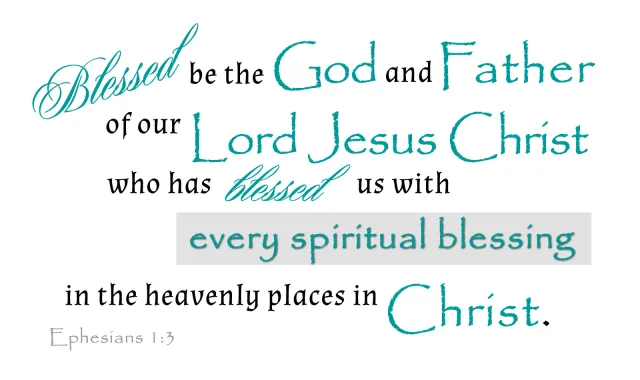
Fifth, we are blessed with all spiritual blessings in Christ. Ephesians 1:3 declares, “Blessed be the God and Father of our Lord Jesus Christ, who hath blessed us with all spiritual blessings in heavenly places in Christ.” 2 Peter 1:3 echoes, “His divine power hath given unto us all things that pertain unto life and godliness.” These blessings equip us for a life of faith and service.
Finally, we are reconciled to God through Christ, restored to a right relationship with Him. Romans 5:10 assures, “For if, when we were enemies, we were reconciled to God by the death of his Son, much more, being reconciled, we shall be saved by his life.” Colossians 1:20 reinforces, “And, having made peace through the blood of his cross, by him to reconcile all things unto himself.” Reconciliation brings us back to God’s embrace, healing the divide caused by sin (Isaiah 59:2).
These six blessings in Christ reveal the depth of God’s love and the sufficiency of Christ’s work. They are ours by obedient faith in Him, offering joy and security for this life and eternity.
Comfort in Christ: The Biblical Truth About Demons: Bound, Limited, and Not Possessing Us Today.
When people think of demons, their minds often race to Hollywood horror flicks (red-eyed creatures, spinning heads, and sinister voices). But the Bible paints a far less theatrical picture. What do the Scriptures actually say about the origin and limitations of demons? The comforting truth is this: demons, as fallen angels, are bound by God’s authority and no longer possess people today. The scary stuff? That’s the theatrical imaginations of entertainers or false teachers creating pictures running wild in our minds.
The Bible reveals that demons are angels who rebelled against God and fell from their heavenly roles. Revelation 12:7-9 describes a war in heaven where Satan, the dragon, and “his angels” fought against Michael and were “cast out into the earth.” Jude 1:6 speaks of angels who “kept not their first estate” and are now “reserved in everlasting chains under darkness unto the judgment of the great day.” Similarly, 2Peter 2:4 says God “cast them down to hell, and delivered them into chains of darkness, to be reserved unto judgment.” These verses point to demons as fallen angels, once glorious but now defeated and restricted, under God’s sovereign control (see Zech 13:2).
What about their power? The Bible shows demons as limited beings, not the all-powerful terrors of pop culture (Job 1:12, 2:6). In the Gospels, demons cause harm (like the Gerasene man’s possession in Mark 5:1-20) but Jesus casts them out with a word, proving His absolute authority (Matthew 8:16). Demons tremble before God (James 2:19), and their activity in the New Testament is tied to a specific time: Jesus’ earthly ministry (to prove Christ’s identity), when spiritual warfare peaked as He confronted Satan head-on (Luke 10:18). After His resurrection, Jesus declared, “All authority in heaven and on earth has been given to me” (Matthew 28:18). This victory binds Satan and his forces, keeping them from possessing people any longer (Colossians 2:15).
Here’s the comforting part: there’s no biblical evidence that demons possess people today as they did in Jesus’ time. The New Testament epistles, written to guide the early church, focus on resisting temptation and standing firm in faith (Ephesians 6:12; James 4:7), not casting out demons. When Paul did have to cast out demons they fulfilled the same purpose, to identify him as an approved messenger of Christ. “These men are the servants of the most high God, which shew unto us the way of salvation” (Acts 16:17; e.g., 19:15). The idea of possession today often stems from theatrical imaginations like movies, books, and spooky campfire stories that amplify fear. While Ephesians 6:12 mentions “spiritual wickedness,” it’s about their influence in the world, not body-snatching. Believers are sealed by the Holy Spirit (Ephesians 1:13), and 1 John 4:4 assures us, “because greater is he that is in you, than he that is in the world.” Demons can’t override God’s boundaries.
Our fascination with demons often comes from cultural exaggerations, not Scripture. The Bible doesn’t describe them with pitchforks or glowing eyes; that’s medieval art and modern cinema talking. Demons are real but restrained, awaiting final judgment (Matthew 25:41). There’s no need to fear demon possession; we need to trust in Christ’s triumph.
So, let’s set aside the horror movie hype. Demons are fallen angels, bound by God, and they’re no longer free to terrorize us (Satan’s teaching is still with us). Fear not; the victory’s already won!
In Colossians 2, Paul issues a powerful warning to believers: “Stop letting people disqualify you” (Colossians 2:18). He urges the church to stand firm against deceptive influences that threaten to lead them astray from the truth of Christ. Paul identifies four types of false teachers, each with distinct tactics that remain relevant today. By understanding these dangers, we can guard our faith against those who distort the gospel.
1. Enticing Speech (Colossians 2:4-7)
False teachers often wield persuasive language to deceive. Paul warns against those who use “enticing words” to sway believers (Colossians 2:4). This tactic echoes Romans 16:18, where smooth talk and flattery manipulate the unsuspecting, and Ephesians 4:14, which describes cunning words that toss believers like waves. In our digital age, TikTok influencers, online preachers, and charismatic personalities can charm audiences with polished rhetoric, much like Satan’s subtle deception in Genesis 3 and Matthew 4. These voices may sound convincing, promising quick spiritual fixes or worldly success, but they often lead away from Christ’s sufficiency. Believers must root themselves in the truth of Scripture, as Paul encourages in Colossians 2:6-7, to discern and resist such deception.
2. Traditions of Men and the World (Colossians 2:8-10)
Another group of false teachers promotes human traditions and worldly philosophies over Christ’s authority. Paul cautions against being captivated by “philosophy and empty deceit, according to human tradition” (Colossians 2:8). Jesus confronted similar issues in Matthew 15:2, where religious leaders prioritized their traditions over God’s commands. Today, this manifests in appeals to “the way we’ve always done it” or the approval of experts, organizations, or governments. Philosophies like those Paul encountered in Acts 17 (stoicism, epicureanism, or modern ideologies) can subtly infiltrate the church. These traditions and ideas may seem appealing, but they lack the fullness of Christ, who is “the head of all rule and authority” (Colossians 2:10). Believers must test every teaching against the gospel, rejecting what elevates human wisdom over divine truth.
3. Judgments About the Old Law (Colossians 2:16-17)
Paul also warns against those who judge believers based on adherence to the Old Testament law, such as dietary rules or festivals (Colossians 2:16). Romans 14:2-3 and Galatians 4:10 highlight the danger of imposing outdated regulations, while Hebrews 8:13 declares the old covenant “obsolete.” False teachers may pressure Christians to follow Old Testament practices, claiming they are essential for righteousness (see Acts 15). Yet, Paul emphasizes that these are mere “shadows” of Christ, the true substance (Colossians 2:17). Some modern churches continue to impose the Law of Moses upon people. Why return to the shadows when the true Light has come into the world?
4. Puffed-Up Wisdom and Will Worship (Colossians 2:18-23)
The final type of false teacher Paul warns against is those who promote self-made spirituality and “puffed-up” wisdom (Colossians 2:18). These individuals boast of esoteric knowledge or mystical experiences, such as worshipping angels or embracing strange beliefs like sun gods or witchcraft. Paul describes such practices as “self-imposed worship” and “false humility” (Colossians 2:18, 23), which appear spiritual but lack true substance. Romans 6:3-6 and Ephesians 2:15 emphasize that believers are freed from such elemental principles through Christ’s death and resurrection. Paul warns against turning to weak and worthless spiritual systems. Today, this might look like New Age mysticism, occult practices, or prideful claims of exclusive spiritual insight. These teachings inflate human ego rather than exalting Christ, who alone is sufficient (Colossians 2:10). Paul urges believers to reject such distractions and cling to the gospel’s simplicity.
Guarding Against Deception
The common thread among these false teachers is their attempt to disqualify believers by shifting focus from Christ’s all-sufficient work. Whether through persuasive speech, human traditions, Old Testament practices, or puffed-up mysticism, they undermine the gospel’s power. Colossians 2 reminds us that Christ is the fullness of God, in whom all wisdom and knowledge reside (Colossians 2:3, 9-10). Believers are complete in Him, needing no additional rituals or philosophies to earn God’s favor.
In our modern context, these warnings are strikingly relevant. Social media amplifies enticing voices, from influencers peddling self-help spirituality to charismatic leaders pushing personal or mystical agendas. Cultural traditions (like prioritizing societal norms or “expert” consensus over biblical truth) can subtly erode faith. The Law of Moses persists in churches that impose Old Testament rules, while puffed-up wisdom appears in trendy spiritual fads that promise enlightenment apart from Christ.
To avoid being disqualified, believers must remain rooted in Christ (Colossians 2:6-7). This means immersing ourselves in Scripture and testing every teaching against God’s Word. Assembling with other believers provides accountability, helping us stay anchored in truth. Prayer is also vital, as we seek God’s wisdom in matters of truth.
Paul’s exhortation in Colossians 2 is a reminder for vigilance. False teachers will always arise, but we are not defenseless. By holding fast to Christ as our head, we can stand firm against enticing words, worldly traditions, Old Testament judgments, and prideful spirituality. Let us walk in the freedom and fullness of Christ, rejecting anything that seeks to disqualify us from the truth of His gospel.
The way we speak reveals the condition of our hearts and serves as a powerful expression of love. Scripture, particularly Ephesians, provides a blueprint for how our words can reflect Christ’s love, fostering unity, encouragement, and grace. By aligning our speech with biblical principles, we demonstrate love that honors God and uplifts others.
Seasoned with Salt; Colossians 4:6 urges believers to let their speech be “always full of grace, seasoned with salt,” so that they know how to answer everyone (“seasoned with salt” suggesting speech that is gracious, wise, and impactful, enhancing conversations like salt enhances food). Similarly, James 3:17 describes wisdom from above as pure, peace-loving, and gentle. Words seasoned with salt are purposeful, preserving truth and adding value to conversations. They avoid blandness or harshness, striking a balance that reflects thoughtfulness and care. When our speech is seasoned with grace, it becomes a tool to point others to Christ, making our interactions meaningful and impactful.
Pleasant, Not Profane; Ephesians 5:4 warns against “filthiness, foolish talk, or crude joking,” which are out of place for those who follow Christ. Instead, our words should be pleasant, reflecting gratitude and reverence. Filthy or foolish speech tears down, while pleasant words build up and create an atmosphere of love. Avoiding foul language doesn’t mean stifling humor or joy but choosing words that align with God’s holiness. Pleasant speech invites others into a space of dignity and respect, mirroring the love Christ shows us.
Edifying, Empathetic, & Encouraging; Ephesians 4:29 instructs, “Let no corrupting talk come out of your mouths, but only such as is good for building up, as fits the occasion, that it may give grace to those who hear” (Edifying means Building up or strengthening others spiritually). Romans 14:19 tells us to pursue peace and mutual edification, while Colossians 3:16 encourages teaching and admonishing one another with wisdom. Hebrews 10:24-25 emphasizes spurring one another toward love and good works. Empathetic and encouraging speech listens deeply, validates feelings, and inspires growth. It puts others’ needs above our own, fostering community and reflecting Christ’s sacrificial love.
Speaking Truth in Love; Ephesians 4:15 and 4:25 highlight the importance of speaking truth in love, rooted in agape type (love selfless, unconditional love). Truth without love can wound, while love without truth can enable. Speaking truth in love requires humility and courage, ensuring our words are honest yet delivered with kindness. This balance builds trust and strengthens relationships, as we lovingly correct or guide others toward God’s truth. Loving speech prioritizes the other person’s spiritual growth, even when it’s uncomfortable, because it seeks their ultimate good.
Kindness in Speech; Ephesians 4:32 tells us to be kind and compassionate, forgiving one another as God forgave us. James 1:26 warns that those who fail to bridle their tongues deceive themselves, and Colossians 3:12-13 emphasizes clothing ourselves with kindness and patience. Kind words diffuse conflict, heal wounds, and demonstrate grace. They reflect a heart transformed by Christ, choosing gentleness over harshness and forgiveness over bitterness. Kindness in speech is a daily practice of love, creating a ripple effect of grace in our interactions.
Generations of people have wrestled with tough questions: Why are we here? Why is there pain in the world? Is there anything after we die? The Bible, trusted by billions, gives clear and meaningful answers to these deep questions. It’s like a guidebook from God, offering wisdom that makes sense and stands the test of time. It is a book for how to understand and navigate through this world, but also guides us to know how to have eternal life beyond this one. It is the word of God.
“And that from a child thou hast known the holy scriptures, which are able to make thee wise unto salvation through faith which is in Christ Jesus. All scripture is given by inspiration of God, and is profitable for doctrine, for reproof, for correction, for instruction in righteousness: That the man of God may be perfect, throughly furnished unto all good works” (2 Timothy 3:15-17).
The Bible declares our purpose. Ecclesiastes 12:13 puts it plainly: “Fear God, and keep his commandments: for this is the whole duty of man.” This means living in a way that puts God first in our lives, rather than chasing our own lusts, desires, and goals. The Bible teaches we were created by God and are made to glorify Him (Genesis 1:26-8; Isaiah 43:7). This provides a clear purpose, a timeless sense of value, and reassurance that we are more than mere animals.
Suffering is real, and the Bible addresses it head on. The story of Job shows a man who faced terrible pain but found God was still with him. Romans 8:28 promises that “God works all things for good for those who love Him.” Pain might come from human mistakes (Genesis 3:16–19) or just life’s challenges, but the Bible never calls it useless. It can shape us, and make us stronger (James 1:2–4). It can also help us to grow closer to God as we recognize our need for His strength (2 Corinthians 12:9-10). Many are hopeless in suffering, but the Bible offers hope that good can come out of suffering for those that love the Lord. The Bible also assures us that suffering is not God messing with us.
The Bible gives a straight answer about life after death. The Bible says, “God loved the world so much that He gave His only Son, so that everyone who believes in Him and follows Him will not be lost but have eternal life” (John 3:16), and “He that believeth and is baptized shall be saved” (Mark 16:16a). The Bible gives us instructions on how to have eternal life with God (e.g. Acts 2:38, Romans 6:17–18). The Bible’s promise of eternal life is backed by Jesus’ resurrection (1 Corinthians 15:20–22), a real event that gives us solid hope for eternity. We can know where we are going and how to get there.
Some people say the Bible’s answers are too rigid for today’s times of enlightenment. Thinkers through the ages have seen how the Bible’s teachings make sense of life’s big questions and remains timeless. It does more than just comfort us, it shows us how to live with purpose, face challenges with hope, and prepare for eternity through obedience to God’s Word. Every generation needs the Bible to discover true enlightenment in God’s timeless wisdom.
The Bible gives more than just answers; it shows us the true God who walks with us through life’s ups and downs. By believing in Jesus and obeying the gospel, we find purpose, hope, and the promise of eternal life. In a confusing world, the Bible is a steady guide for life’s biggest questions.
“Then Simon Peter answered him, Lord, to whom shall we go? thou hast the words of eternal life.” (John 6:68)
Agape
Sources: The Holy Bible (KJV): Ecclesiastes 12:13, Isaiah 43:7, Romans 8:28, John 3:16, etc.
The Bible’s Enduring Influence on Western Law and the U.S. Constitution
It is apparent to me that the Bible has profoundly shaped Western civilization and the U.S. Constitution, providing moral and legal principles. Its scriptural teachings influenced the cultural and intellectual society of the West and the American founding, creating a legacy evident in modern legal systems and constitutional governance.
The biblical concept of human dignity, derived from the idea that humans are created in God’s image (Genesis 1:26-27), laid the foundation for Western notions of individual rights. Historian David Landes, in The Wealth and Poverty of Nations, argues that this principle inspired accountability and fairness, influencing documents like the Magna Carta (1215), which echoes Deuteronomy 16:20’s call for justice. This idea can be seen in the Declaration of Independence’s “unalienable rights” and the Constitution’s Bill of Rights, particularly the First Amendment’s protections of speech and religion. James Madison, a key framer, drew on biblical notions of human worth, as noted by Carl Richard in The Founders and the Bible.
The Ten Commandments (Exodus 20:1-17) provided a moral framework for Western jurisprudence, with prohibitions against murder, theft, and perjury shaping legal codes from medieval Europe to colonial America. Legal scholar Harold Berman, in Law and Revolution, highlights how biblical ethics standardized justice in fragmented societies, a legacy reflected in the Constitution’s emphasis on impartiality (Leviticus 19:15). The command to “love your neighbor as yourself” (Leviticus 19:18; Matthew 22:39) further inspired Western social welfare laws and the Constitution’s reliance on civic virtue, as Benjamin Franklin emphasized in his writings.
The Bible’s warnings against unchecked power (1 Samuel 8:10-18; Deuteronomy 17:14-20) influenced the Western concept of the rule of law and the Constitution’s checks and balances. John Locke’s Two Treatises of Government, which cites scripture, argued for limited government, shaping the Constitution’s separation of powers (Articles I-III). Historian Donald Lutz, in The Origins of American Constitutionalism, notes that colonial sermons often referenced Exodus 18:21-22’s decentralized governance, influencing federalism. John Adams, in his Defence of the Constitutions, tied governance to biblical morality (Proverbs 29:2), reinforcing accountability.
The Great Awakening (1730s-1740s) embedded biblical values in colonial culture, shaping the framers’ commitment to liberty, as Daniel Dreisbach details in Reading the Bible with the Founding Fathers. While Enlightenment ideas contributed, the Bible’s influence provided a moral compass for constitutional principles like forgiveness (Colossians 3:13), evident in rehabilitative justice systems. Critics may emphasize secular influences, but the framers’ biblical worldview, as seen in their writings, brought together faith and reason.
agape
Sources: Berman, Harold. Law and Revolution. Harvard University Press, 1983. Dreisbach, Daniel L. Reading the Bible with the Founding Fathers. Oxford University Press, 2017. Landes, David. The Wealth and Poverty of Nations. W.W. Norton, 1998. Lutz, Donald S. The Origins of American Constitutionalism. LSU Press, 1988. Richard, Carl J. The Founders and the Bible. Rowman & Littlefield, 2016. The Bible (KJV): Genesis 1:26-27, Exodus 18:21-22, 20:1-17, Leviticus 19:15, 19:18, Deuteronomy 16:20, 17:14-20, 1 Samuel 8:10-18, Proverbs 29:2, Matthew 22:39, Colossians 3:13.
In an era of social division, mental health crises, and moral ambiguity, the teachings of Jesus Christ offer timeless solutions rooted in love, forgiveness, and purpose. Grounded in a biblical worldview, these principles address modern challenges with clarity and hope. Let’s see how Jesus’ teachings, as recorded in Scripture, provide practical answers to today’s pressing issues.
First, Jesus’ emphasis on love as the greatest commandment counters the divisions that are plaguing society. In Matthew 22:37-39, He instructs to “love the Lord your God” and “love your neighbor as yourself.” Selfless love goes beyond political and cultural divides, fostering unity despite our differences. Studies show that communities practicing altruistic behaviors, like those Jesus modeled, experience lower conflict and higher social connection (Putnam, 2000). By prioritizing love over enmity, We can improve how we relate to one another in workplaces, families, and on social media.
Second, Jesus’ teachings on forgiveness address the mental health epidemic. Modern psychology links unforgiveness to anxiety and depression (Toussaint et al., 2015). In Matthew 6:14-15, Jesus teaches that forgiving others is a prerequisite to God’s forgiveness, which promotes better relationships with others. His parable of the unforgiving servant (Matthew 18:21-35) illustrates the destructive cycle of unforgiveness in light of the mercy shown to us. Applying the principle of forgiveness (whether it be exoneration, forbearance, or release) we are able to move forward in healing relationships strained by betrayal or misunderstanding.
Third, Jesus provides purpose in a world grappling with life altering despair. Rising rates of loneliness and suicide reflect a loss of meaning (Twenge, 2017). In John 10:10, Jesus declares, “I have come that they may have life, and have it to the full.” When we truly follow Jesus, we find purpose in our lives higher than ourselves. It moves us to serve our fellow man, and gives us hope a hopeless world. If you’re dealing with recovery of any sort, you’ll find a greater rate of success in your fight against addiction and despair by becoming anchored in purpose (Koenig, 2012). Jesus’ call to “follow me” (Matthew 4:19) offers a roadmap for navigating life’s uncertainties. “But be ye doers of the word, and not hearers only, deceiving your own selves.” (James 1:22)
Critics may argue that Jesus’ teachings are outdated or impractical, yet their universal applicability endures. Loving one’s enemy (Luke 6:27) disarms hostility, forgiveness heals psychological wounds, and purpose through faith counters defeatism. These principles align with the evidence and human needs, proving their relevance.
Jesus’ teachings are not mere ideals but actionable solutions. By embracing love, forgiveness, and purpose, individuals and societies can overcome division, heal emotional wounds, and find meaning.
Agape,
spencer
Sources:
Koenig, H. G. (2012). Religion and Mental Health. Academic Press.
Putnam, R. D. (2000). Bowling Alone. Simon & Schuster.
Toussaint, L., et al. (2015). Forgiveness and Health. Springer.
Twenge, J. M. (2017). iGen. Atria Books. Zehr, H. (2015). Changing Lenses. Herald Press.
“But thou, O man of God, flee these things; and follow after righteousness, godliness, faith, love, patience, meekness.” (1Tim 6:11)
“Flee also youthful lusts: but follow righteousness, faith, charity, peace, with them that call on the Lord out of a pure heart.” (2Tim 2:22)
Striving for Selfless Love. As I walk through this life, I’m learning that selfless love is the heartbeat of what it means to follow Christ. The New Testament tells me to pursue love (agape, the kind of love that puts others first) as Paul urges in 1 Corinthians 14:1, “Pursue love,” and 1 Corinthians 10:24, “Let no one seek his own, but each one the other’s well-being.” I see this love woven into the virtues of 1 Timothy 6:11 and 2 Timothy 2:22, where love stands alongside righteousness, faith, and peace. Yet, I confess, loving selflessly doesn’t come naturally to me. It’s a daily choice to set aside my own desires and seek the good of those around me.
This pursuit matters deeply because love is the foundation of God’s kingdom. Paul says in 1 Corinthians 13:13 that love is greater than faith or hope, and I’m beginning to understand why. When I choose to love others (whether through a kind word, a listening ear, or an act of hospitality like Romans 12:13 encourages) I reflect Christ’s heart. Every effort to encourage others flows from this love. But I stumble often. My selfishness creeps in, and I need God’s grace to soften my heart, to help me embody the gentleness of 1 Timothy 6:11 or the peace of 2 Timothy 2:22 in my relationships.
Striving for selfless love changes me. It pushes me to forgive when I’d rather hold a grudge, to serve when I’m tired, and to prioritize others’ needs over my own comfort. It’s humbling to realize how far I fall short, yet I find joy in small steps, like a kind word to a neighbor or praying for a struggling friend. This pursuit brightens the light of Christ in my heart, showing the world a glimpse of Jesus’ love through my imperfect efforts. I keep chasing selflessness to make my love more like God’s.
Seeking God; Aspiring to Excellence (Godliness and Holiness) In my walk with Christ, I’m learning to aspire to excellence through godliness and holiness, though I often feel unworthy of such a high calling. 1 Timothy 6:11 urges me to pursue godliness, a life of devotion to God, while Hebrews 12:14 says to “pursue… holiness, without which no one will see the Lord.” These virtues connect to the righteousness and faith in 1 Timothy 6:11 and 2 Timothy 2:22, and they echo the urging to seek “things above” in Colossians 3:1-2. I’m far from perfect, but I long to reflect God’s character more each day.
This pursuit is crucial because it draws me closer to God Himself. Godliness means living with reverence, seeking His will in every decision, but I often get distracted by worldly concerns. Holiness, too, challenges me to stand apart from sin and selfishness, as Hebrews 12:14 warns that without it, I won’t see God. This sobers me, reminding me that my efforts matter, not to earn salvation but to honor the One who saved me. These virtues shape my heart, teaching me to love what God loves and hate what He hates, aligning with the righteousness of both Timothy passages.
Aspiring to godliness and holiness is a humbling journey. I need the support of other saint, as 2 Timothy 2:22 suggests, pursuing these virtues “with those who call on the Lord.” Through prayer, Scripture, and accountability, I’m slowly growing, learning to forgive quickly, speak truthfully, and serve humbly. Each step feels like a battle, but it’s worth it to become more like Christ. As a saint, I seek this treasure of excellence, trusting God to refine me into His image, one faltering step at a time.
Seeking God; Longing for Eternal Life As I seek to grow in faith, the hope of eternal life has become a treasure I hold dear, though I’m still learning to pursue it with the patience it demands. Romans 2:7 speaks of “eternal life to those who by patient continuance in doing good seek for glory, honor, and immortality,” and I see this echoed in the patience and righteousness Paul pleads for in 1 Timothy 6:11 and 2 Timothy 2:22. I’m not there yet, my faith wavers, and my endurance falters, but I keep pressing forward, trusting God to sustain me.
This pursuit is vital because it anchors my life in something beyond the fleeting moments of this world. Eternal life isn’t just a future hope; it shapes how I live now. The urging to “patient continuance” in Romans 2:7 reminds me of the patience in 1 Timothy 6:11, compelling me to persevere through trials without giving up. I often grow weary, tempted to chase temporary comforts instead of God’s eternal reward. But when I fix my eyes on eternity, I find strength to choose righteousness, even when it’s costly, like forgiving an offense or staying faithful in difficult times.
Longing for eternal life humbles me. It is God’s gift through Christ to those who obey the gospel. Yet, I’m told to seek it by living uprightly, as 2 Timothy 2:22 encourages in pursuing righteousness. Each step, resisting temptation, serving others, or trusting God in hardship, feels like a deposit toward that eternal hope. It’s a slow, steady journey, and I rely on God’s mercy and His word to keep me faithful. This pursuit reminds me that my true home is with Him, forever.
Seeking God; Seeking the Kingdom of God and His Righteousness As I grow in faith, I’m learning to make the kingdom of God and His righteousness my highest pursuit, though I often fall short of this priority. Jesus’ words in Matthew 6:33, “Seek first the kingdom of God and His righteousness,” and Luke 12:31 tell me to focus on God’s rule and moral standard above all else. This aligns with the righteousness, faith, and godliness in 1 Timothy 6:11 and 2 Timothy 2:22, but I confess it’s a struggle to keep this first in my heart when life’s demands pull me in every direction.
This pursuit is the cornerstone of my faith because it reorients everything else. Jesus promises that when I seek God’s kingdom first, my needs will be met, freeing me from worry. But trusting this promise requires the faith of 1 Timothy 6:11 and 2 Timothy 2:22, believing God’s way is better than my own. Righteousness (living justly and obediently) isn’t just a rule to follow; it’s a reflection of God’s character, as is the godliness in 1 Timothy 6:11. I’m humbled by how often I prioritize my plans over God’s, yet His word directs me back to God’s seeking His way.
Seeking the kingdom means living differently, praying for God’s will, sharing the gospel, and standing for His truth, even when it’s unpopular. I stumble, chasing lesser things, but each time I refocus, through study, and service, I find purpose and peace. As a saint, I’m learning to seek the Kingdom of God and His righteousness above all, trusting Him along the way.
In my walk with Christ, I’m learning to aspire to excellence through godliness and holiness, though I often feel unworthy of such a high calling. 1 Timothy 6:11 urges me to pursue godliness, a life of devotion to God, while Hebrews 12:14 calls me to “pursue… holiness, without which no one will see the Lord.” These virtues connect to the righteousness and faith in 1 Timothy 6:11 and 2 Timothy 2:22, and they echo the call to seek “things above” in Colossians 3:1-2. I’m far from perfect, but I long to reflect God’s character more each day.
This pursuit is crucial because it draws me closer to God Himself. Godliness means living with reverence, seeking His will in every decision, but I often get distracted by worldly concerns. Holiness, too, challenges me to stand apart from sin and selfishness, as Hebrews 12:14 warns that without it, I won’t see God. This sobers me, reminding me that my efforts matter, not to earn salvation but to honor the One who saved me. These virtues shape my heart, teaching me to love what God loves and hate what He hates, aligning with the righteousness of both Timothy passages.
Aspiring to godliness and holiness is a humbling journey. I need the support of other saint, as 2 Timothy 2:22 suggests, pursuing these virtues “with those who call on the Lord.” Through prayer, Scripture, and accountability, I’m slowly growing, learning to forgive quickly, speak truthfully, and serve humbly. Each step feels like a battle, but it’s worth it to become more like Christ. As a saint, I seek this treasure of excellence, trusting God to refine me into His image, one faltering step at a time.
Life can throw some heavy punches, can’t it? For the believers in Thessalonica, those punches came in the form of persecutions, false teachings, and even some within their own community slacking off and stirring up trouble. Yet, in his second letter to them, Paul points to three timeless virtues (faith, hope, and love) as the keys to standing firm, no matter what others say or do. Rooted in knowing God’s word, these qualities enabled the Thessalonians to rise above their troubles and the “lowness” of their troublers.
Chapter 1: Enduring Through Faith, Hope, and Love
The Thessalonian church was under fire, literally and figuratively. They faced “persecutions and tribulations” (2 Thessalonians 1:4, KJV), likely from hostile neighbors or authorities who opposed their faith. Yet Paul couldn’t stop bragging about them: “We ourselves glory in you in the churches of God for your patience and faith in all your persecutions and tribulations that ye endure” (1:4). Their faith wasn’t just a Sunday morning nod to God; it was a steadfast trust in His promises, even when the world seemed against them. That faith, Paul says, was “growing exceedingly” (1:3), and their love for one another was increasing right alongside it.
But what kept them going? HOPE. Paul paints a vivid picture of hope tied to God’s justice and Christ’s return: “Seeing it is a righteous thing with God to recompense tribulation to them that trouble you; And to you who are troubled rest with us, when the Lord Jesus shall be revealed from heaven with his mighty angels” (1:6-7). The promise that God would deal with their troublers and grant them relief gave them a reason to hold on. This hope wasn’t wishful thinking, it was grounded in God’s word, which assured them that their suffering was “a manifest token of the righteous judgment of God” (1:5). Knowing God’s word fueled their faith to endure, their hope to look forward, and their love to care for one another, even under pressure. Paul prayed for this to continue, asking God to “fulfil all the good pleasure of his goodness, and the work of faith with power” (1:11).
So, what’s the lesson? When trouble comes (whether it’s people attacking your faith or life’s hardships piling up) lean into faith, hope, and love. Trust God’s word, hold fast to the promise of Christ’s return, and keep loving those around you. That’s how you stay faithful, no matter what others do.
Chapter 2: Standing Firm Against Deception
The troubles didn’t stop with persecution. Someone was spreading lies, maybe even claiming Paul’s authority, saying the day of the Lord had already come. This shook the Thessalonians, leaving them “troubled” and “shaken in mind” (2 Thessalonians 2:2). Imagine the confusion, thinking you missed the biggest event in history! But Paul steps in with clarity, urging them not to be “soon shaken in mind, or be troubled, neither by spirit, nor by word, nor by letter as from us” (2:2). He reminds them of God’s word, which he’d already taught: the day of the Lord won’t come until the “man of lawlessness” is revealed (2:3-4) and destroyed by Christ’s return (2:8).
Here’s where faith, hope, and love shine again. Their faith in the truth (God’s word) kept them from falling for deception. Paul calls them “brethren beloved of the Lord” (2:13), chosen for salvation “through sanctification of the Spirit and belief of the truth” (2:13; see John 17:17). That belief anchored them. Hope came from knowing Christ would return to set things right: “The Lord Jesus Christ… shall destroy with the brightness of his coming” (2:8). This hope steadied them against false alarms. And love? Paul prays for their hearts to be comforted and established “in every good word and work” (2:16-17), a call to keep loving and serving each other despite the chaos.
The troublers spreading lies were low, trying to unsettle God’s people. But Paul’s answer is clear: “Therefore, brethren, stand fast, and hold the traditions which ye have been taught, whether by word, or our epistle” (2:15). Stay rooted in God’s word. Let faith keep you grounded, hope keep you looking up, and love keep you moving forward. That’s how you abound, no matter what others say.
Chapter 3: Overcoming Internal Troubles
If external persecution and false teachings weren’t enough, the Thessalonians had trouble within their own ranks. Some believers were “walking disorderly,” refusing to work and meddling as busybodies (2 Thessalonians 3:6, 11). This idleness wasn’t just laziness, it disrupted the work of the church. Paul doesn’t mince words: “If any would not work, neither should he eat” (3:10). Yet even this discipline is rooted in love, as he urges the church to correct the idle “as a brother” (3:15), not an enemy.
Faith shows up in Paul’s confidence that the Thessalonians would stay faithful: “We have confidence in the Lord touching you, that ye both do and will do the things which we command you” (3:4). Their hope was tied to God’s word, which provided clear instructions for living, and to the promise of God’s peace: “Now the Lord of peace himself give you peace always by all means” (3:16). Love guided their response to the troublers within, balancing discipline with care, and Paul prayed that “the Lord direct your hearts into the love of God, and into the patient waiting for Christ” (3:5).
The idle were acting low, causing trouble by neglecting their responsibilities. But Paul calls the church to a higher standard: “Be not weary in well doing” (3:13). By staying faithful to God’s word (working diligently, loving one another, and holding fast to His commands) they could overcome even internal challenges.
Tying It All Together
What do we learn from the Thessalonians? Troubles and troublers come in many forms: persecutors who mock your faith, deceivers who twist the truth, or even fellow believers who let you down. But faith, hope, and love, rooted in knowing God’s word, are your strength. Faith keeps you trusting God’s truth, like the Thessalonians’ belief in the gospel (2:13) and obedience to Paul’s teaching (3:4). Hope lifts your eyes to God’s vengeance (1:6-9, 2:8) and Christ’s return (1:7, 2:8), assuring you that troubles won’t have the last word. Love binds you to your brothers and sisters, growing even in tough times (1:3) and guiding how you correct the wayward (3:15).
Knowing God’s word is the thread that ties it all together. It’s the foundation for faith, the source of hope, and the guide for love. The Thessalonians’ troubles didn’t define them, their faithfulness did. They stayed abounding, growing in faith and love (1:3), standing firm against lies (2:15), and doing good despite setbacks (3:13). So, when others try to drag you down with their words or actions, don’t stoop to their level. Hold fast to God’s word. Let faith, hope, and love keep you faithful and abounding, just as they did for the Thessalonians.






 Borger church of Christ @ Franklin & Juniper