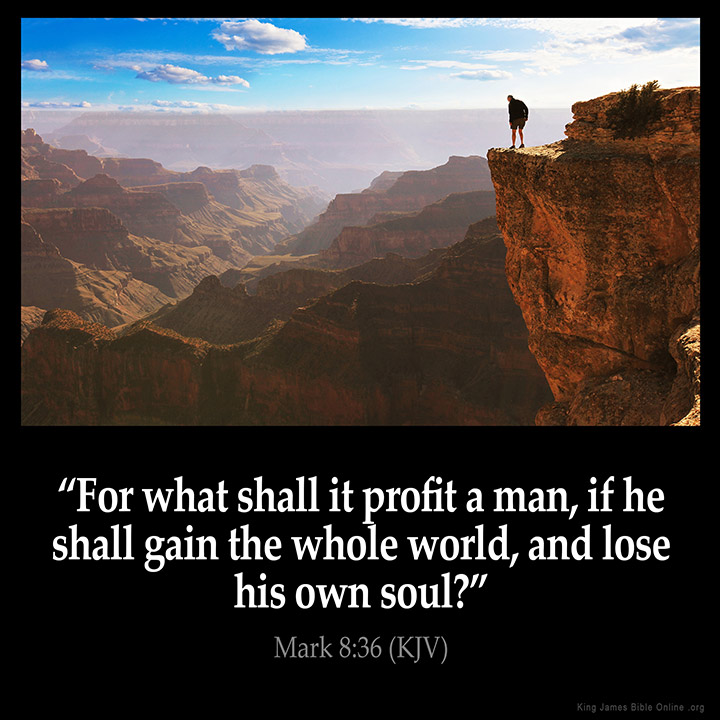
What is the Value of your Soul?

For what shall it profit a man, if he shall gain the whole world, and lose his own soul? Or what shall a man give in exchange for his soul?” (Mark 8:36-37).

The question of the soul’s worth is one that transcends time and culture, touching the very essence of human existence. Jesus Himself addressed this profound query in Mark 8:34-38 and Matthew 16:24-26, challenging us to consider the eternal value of our souls. Let us explore four pivotal aspects that underscore the immeasurable worth of a soul.

As living souls, we have much greater potential than all others of God’s creation. Technology, Arts, and Mercy are unique to humans. More than these, we have the potential to become like Christ. “So also is the resurrection of the dead. It is sown in corruption; it is raised in incorruption: It is sown in dishonour; it is raised in glory: it is sown in weakness; it is raised in power: It is sown a natural body; it is raised a spiritual body. There is a natural body, and there is a spiritual body” (1Cor 15:42-44). When we obey the gospel, we look forward to eternal life with our Savior and to see Him as He is, (cf. Rev 22:4).

In Matthew 10:28, Jesus admonishes, “And fear not them which kill the body, but are not able to kill the soul: but rather fear him which is able to destroy both soul and body in hell.” This declaration underscores the eternal nature of the soul, distinguishing it from our temporal physical bodies. The body may perish, but the soul endures beyond the grave, facing either eternal life or eternal punishment as stated in Matthew 25:46: “And these shall go away into everlasting punishment: but the righteous into life eternal.”

The everlasting nature of the soul is a solemn reminder of its infinite value. Our earthly concerns often distract us from this reality, yet Jesus calls us to prioritize our spiritual well-being. The choices we make in this life have eternal consequences, emphasizing the need for a life aligned with God’s will.

Jesus highlighted the incomparable worth of a soul by pointing to God’s providence over creation. In Matthew 6:26-30, He illustrates His care for the birds and the flowers, reminding us that we are of far greater value: “Are ye not much better than they?” Jesus also said that “the very hairs of your head are all numbered” (Matt 10:30). These passages underscore the unique and cherished place humanity holds in God’s creation.

I am fearfully and wonderfully made” (Psalm 139:14). This divine craftsmanship reflects the soul’s worth, a masterpiece of God’s creative power. Unlike the rest of creation, the human soul bears a unique value.

The soul’s worth is further magnified by its divine origin. Acts 17:29 declares, “Forasmuch then as we are the offspring of God, we ought not to think that the Godhead is like unto gold, or silver, or stone, graven by art and man’s device.” We are not merely physical beings but spiritual offspring of God, created in His image.

Genesis 1:26-27 records God’s decision to create humanity in His likeness, endowing us with attributes that reflect His nature: “And God said, Let us make man in our image, after our likeness.” The Preacher reminds us that at death, “Then shall the dust return to the earth as it was: and the spirit shall return unto God who gave it” (Ecc 12:7). The soul’s divine origin and destiny underscore its unparalleled worth, calling us to live in a manner that honors our Creator.

The ultimate measure of the soul’s worth is found in the sacrifice of Jesus Christ. John 3:16, perhaps the most well-known verse in the Bible, proclaims, “For God so loved the world, that he gave his only begotten Son, that whosoever believeth in him should not perish, but have everlasting life.” This profound act of love underscores the soul’s value, worthy of the highest price (cf. Rom 5:8-10).

2Peter 3:9 emphasizes God’s desire for our salvation, stating, “The Lord is not slack concerning his promise, as some men count slackness; but is longsuffering to us-ward, not willing that any should perish, but that all should come to repentance.” The sacrificial death of Christ on the cross is the ultimate testament to the worth of our souls, offering us redemption and eternal life.

In contemplating the worth of a soul, we must recognize its eternal nature, its unparalleled value in creation, its divine origin, and the supreme sacrifice made for its salvation. As we reflect on these truths, let us heed Jesus’ call in Mark 8:34-38 and Matthew 16:24-26 to deny ourselves, take up our cross, and follow Him. For in doing so, we affirm the immeasurable worth of our souls and align our lives with God’s eternal purpose.

Agape,
Spencer

This article is from a series of sermons on the Gospel of Mark. Click here for the list of available articles on the Gospel of Mark.

Let’s Talk about Jesus the Strength Giver

I can do all things through Christ which strengtheneth me” (Philippians 4:13).

People are talking about Jesus. Let us be ready to talk about Him also, but with purpose and power.

We have seen in the last two articles that Jesus gives JOY, and ETERNAL LIFE, the above verse shows that He also gives us strength.

While this verse doesn’t explicitly tell how He strengthens us, there is scriptural evidence within the New Testament that teach us how and when we can be STRONG in the Lord.

All of us could use a little more strength in this life, but the true strength we need is only in Christ.

In what ways is the Saint made STRONG in the Lord.


Christ makes us SPIRITUALLY STRONG. Eph 3:16 “That he would grant you, according to the riches of his glory, to be strengthened with might by his Spirit in the inner man; That Christ may dwell in your hearts by faith; that ye, being rooted and grounded in love” (Eph 3:16-17). How can we be strong, and how does He dwell in our hearts? If you read the comparable passage in Colossians 3, you’ll see that it’s through scripture. “Let the word of Christ dwell in you richly in all wisdom” (Colossians 3:16a). Paul would continue to reveal to the Ephesians how to be strong; “Finally, my brethren, be strong in the Lord, and in the power of his might, Put on the whole armour of God, that ye may be able to stand against the wiles of the devil. For we wrestle not against flesh and blood, but against principalities, against powers, against the rulers of the darkness of this world, against spiritual wickedness in high places. Wherefore take unto you the whole armour of God, that ye may be able to withstand in the evil day, and having done all, to stand.” (Eph 6:10-12; cf. 13-18).

Jesus gives us strength to TRANSFORM us by the renewing of our mind. I beseech you therefore, brethren, by the mercies of God, that ye present your bodies a living sacrifice, holy, acceptable unto God, which is your reasonable service. And be not conformed to this world: but be ye transformed by the renewing of your mind, that ye may prove what is that good, and acceptable, and perfect, will of God” (Rom 12:1-2). This transformation gives us the strength to change our character as seen in the fruit of the Spirit. “But the fruit of the Spirit is love, joy, peace, longsuffering, gentleness, goodness, faith, Meekness, temperance: against such there is no law” (Gal 5:22-23).

Christ gives us strength to rise up in the face of persecution. “Blessed are they which are persecuted for righteousness’ sake: for theirs is the kingdom of heaven. Blessed are ye, when men shall revile you, and persecute you, and shall say all manner of evil against you falsely, for my sake. Rejoice, and be exceeding glad: for great is your reward in heaven: for so persecuted they the prophets which were before you” (Matt 5:10-12). We can have the Resilience to endure this life knowing that He sees, and that we have a reward in heaven.

This strength gives us Hope and Optimism in the face of death. Paul said, “According to my earnest expectation and my hope, that in nothing I shall be ashamed, but that with all boldness, as always, so now also Christ shall be magnified in my body, whether it be by life, or by death. For to me to live is Christ, and to die is gain” (Philippians 1:20-21). This optimism gives us peace of mind instead of vexation because we know that a better place awaits the faithful in Christ (cf. John 14:27). “Be careful for nothing; but in every thing by prayer and supplication with thanksgiving let your requests be made known unto God. And the peace of God, which passeth all understanding, shall keep your hearts and minds through Christ Jesus” (Philippians 4:6-7). This optimism can be seen in personal contentment with our needs, (Phil 4:11-12).

He gives us the strength to be bold in preaching the gospel of Jesus Christ. The Apostles prayed for this strength of courage when they faced physical violence against their preaching (cf. Acts 4:29). “There is no fear in love; but perfect love casteth out fear: because fear hath torment” (1John 4:18). When we commit to and look to Jesus with our whole heart in love, we shall have the nerve to speak the truth in love to our family, friends, and neighbors.

Ultimately, we have the strength of Christ through His Grace. “And he said unto me, My grace is sufficient for thee: for my strength is made perfect in weakness. Most gladly therefore will I rather glory in my infirmities, that the power of Christ may rest upon me.  Therefore I take pleasure in infirmities, in reproaches, in necessities, in persecutions, in distresses for Christ’s sake: for when I am weak, then am I strong” (2Cor 12:9-10). Paul had an immediate empowerment from a change of perspective of his “thorn in the flesh.” Instead of viewing it as a weakness that hinders, it became a weakness that empowers! The thorn never changed, the pain never lessened, but the Power of Christ was displayed.

Agape,

Spencer

Spencer is an evangelist for the Franklin & Juniper st church of Christ in Borger, Tx.

This is part of a series of articles about reasons to Talk About Jesus.

Let’s Talk about Jesus, the Joy Giver

We have no need of a season to talk about our Lord. Let it be continually on the tip of our tongue. While everyone around us is scurrying to find a reason for the season, we already have reason to rejoice.

Let’s talk about Jesus” will be the theme of the next several articles. It’s not because I desire to put Christ back into Christmas, He never really was part of that holiday. I write about things that are already on people’s minds, and perhaps we can persuade them to look into the True Jesus of the Bible (2Cor 11:4).

Since this is the season of giving and joy, in this first article Let’s talk about Jesus as being the Real Joy Giver. To do that we will look at the JOYS in Jesus from the book of Philippians.

This book is described as the book of Joy. Over and over, we can see the words “Joy” & “rejoice.”  This book is also one of the “prison epistles” of Paul, which makes those words even more astounding.

Let’s talk about the JOYS of Jesus.

JESUS IS PREACHED. While Paul was imprisoned for the cause of Christ (1:13), he found joy because JESUS was being preached. “What then? notwithstanding, every way, whether in pretence, or in truth, Christ is preached; and I therein do rejoice, yea, and will rejoice” (1:18). Some preached Christ out of insincerely, and out of contention, seeking to add to Paul’s bonds. While others preached Jesus out of Love and Good will. Paul rejoiced that Jesus is preached, and that many brethren had grown bolder. They preached boldly the word of Jesus without fear (1:14).

We can rejoice today knowing that Jesus is being preached. Certainly, many preach from error, but I see it as an opportunity to preach boldly the word of Jesus from sincerity and truth. Instead of taking the negative nelly approach, we can ask friendly questions to help folks think accurately about the truth. One was is to ask about the birth story of Christ. Here are a couple of ice-breaker questions to Preach Jesus more accurately (cf. Acts 8:26).

How many wise men are listed in the nativity story (Matt 2:1-12)?

How old was Jesus when the wise men came to Him (Matt 2:11-16)?

Open up your bible and show the answers to these questions. Perhaps a deeper discussion will occur because we were bold to preach Jesus.

ONE MIND IN CHRIST. Paul called for the Joy of having unity, ONE MIND in CHRIST. “If there be therefore any consolation in Christ, if any comfort of love, if any fellowship of the Spirit, if any bowels and mercies, Fulfil ye my joy, that ye be likeminded, having the same love, being of one accord, of one mind. Let nothing be done through strife or vainglory; but in lowliness of mind let each esteem other better than themselves” (Phil 2:1-3). Joy would be made complete when we have the same LOVE, being of one ACCORD (harmony), and of one MIND.

Does it bring you Joy to know that there are others out there who have come to the same conclusions when they read and study the truth for themselves? While the world is on a mission to have contrarian view points on everything, there is Joy in the church when folks from different backgrounds and walks of life come together in Unity having learned the truth and obey it. “Endeavouring to keep the unity of the Spirit in the bond of peace. There is one body, and one Spirit, even as ye are called in one hope of your calling; One Lord, one faith, one baptism, One God and Father of all, who is above all, and through all, and in you all” (Eph 4:2-6).

When we talk with folks about our faith with joy, we might meet someone who is coming to the same conclusions. Part of my evangelism is around seeking seekers. I’ve met several folks (pray for the seed to grow) who have started to question the practices in their religion. 

YOU AND I ARE TO REJOICE IN THE LORD. Paul continued to write about joy even as he gave warning about false teachers. “Finally, my brethren, rejoice in the Lord. To write the same things to you, to me indeed is not grievous, but for you it is safe. Beware of dogs, beware of evil workers, beware of the concision” (Phil 3:1-2). It seems a bit odd to rejoice in the midst of false teachers, but as you read you will see that it makes perfect sense. Because we know the truth, and how to recognize error, we can have Joy and Rejoice knowing that we have a home in heaven! “For our conversation is in heaven; from whence also we look for the Saviour, the Lord Jesus Christ: Who shall change our vile body, that it may be fashioned like unto his glorious body, according to the working whereby he is able even to subdue all things unto himself” (Phil 3:20-21).

While we still have the same problem today, let us rejoice in the fact we have the wisdom to recognize it, and that we have God’s word available to show the truth to others.

STRENGTHENED BY CHRIST. Paul could rejoice in all of these seemingly difficult obstacles to the cause of Christ because he drew his strength from Christ. “I can do all things through Christ which strengtheneth me” (4:13). He wasn’t saying that he could do whatever he wanted through Christ. He was saying that he could be strengthened to endure all the hardships of preaching Jesus as an Apostle and evangelist through Christ.

While we’re surrounded by a vexing world (2Pet 2:7-9), we can have the same joy and strength through the truth of God’s word. We can have joy because we have heard the truth, believed the truth, and obeyed the truth. We can have joy knowing that our names are written above in the Lamb’s book of life.

And I intreat thee also, true yokefellow, help those women which laboured with me in the gospel, with Clement also, and with other my fellowlabourers, whose names are in the book of life. Rejoice in the Lord alway: and again I say, Rejoice (Phil 3:3-4).

Agape,

Spencer is an evangelist for the Franklin & Juniper st church of Christ in Borger, Tx.

This is part of a series of articles about reasons to Talk About Jesus.

7 Plagues of the mind pt5

The last plague of the mind on our list is vacillation, or being like a See-Saw. This plague can be described as a person that is easily pulled away from one thing to another without being resolute on any one thing. This is a problem when dealing with the truth.

Paul described it this way, “That we henceforth be no more children, tossed to and fro, and carried about with every wind of doctrine, by the sleight of men, and cunning craftiness, whereby they lie in wait to deceive” (Eph 4:14).

Being irresolute is different from being indecisive. A See-Saw person bounces back and forth and appears to be very confident about opposing viewpoints.

Elijah said it this way, “How long go ye limping between the two sides? if the LORD be God, follow him: but if Baal, then follow him. And the people answered him not a word” (1Kings 18:21).

He calls it “limping between two sides” (ASV). Everyone can see it, but seldom in ourselves. Let’s see why this plague of the mind is so dangerous.

Our Lord warned us that it’s impossible to SERVE two masters. “No man can serve two masters; for either he will hate the one, and love the other; or else he will hold to one, and despise the other. Ye cannot serve God and mammon” (Matt 6:24). He then connects it to anxiety in verse 25, “Therefore I say unto you, be not anxious for your life…”

It’s impossible to serve and please everyone. “For am I now seeking the favor of men, or of God? or am I striving to please men? if I were still pleasing men, I should not be a servant of Christ” (Gal 1:10). If we seek to SERVE man, we will not be a SERVANT of Christ! THIS IS WHY IT’S DANGEROUS!

Another illustration of this comes from Paul, “Know ye not that your bodies are members of Christ? shall I then take away the members of Christ, and make them members of a harlot? God forbid” (1Cor 6:15). We cannot be both a member of the body of Christ while still trying to remain in sin.

Paul would give the solution in his 2nd letter to the Corinthians. “Be not unequally yoked with unbelievers: for what fellowship have righteousness and iniquity? or what communion hath light with darkness? And what concord hath Christ with Belial? or what portion hath a believer with an unbeliever? And what agreement hath a temple of God with idols? for we are a temple of the living God; even as God said, I will dwell in them, and walk in them; and I will be their God, and they shall be my people. Wherefore Come ye out from among them, and be ye separate, saith the Lord, And touch no unclean thing; And I will receive you, And will be to you a Father, And ye shall be to me sons and daughters, saith the Lord Almighty” (2Cor 6:14-18).

Our next point on this topic comes from this same warning, (quoting from Luke). “No servant can serve two masters: for either he will hate the one, and love the other; or else he will hold to the one, and despise the other” (Luke 16:13).

To limp between two opinions places us in opposition to Christ. We become ENEMIES to God! “Ye adulterers and adulteresses, know ye not that the friendship of the world is enmity with God? whosoever therefore will be a friend of the world is the enemy of God” (James 4:4). The Apostle John wrote, “Love not the world, neither the things that are in the world. If any man love the world, the love of the Father is not in him” (1John 2:15). THIS IS WHY IT’S DANGEROUS!

Finally, believing that everyone or anyone’s opinion is the truth ie, “your truth, my truth, we all have truth,” is a belief of confusion. “For God is not the AUTHOR of confusion,” (1Cor 14:33). There is only ONE truth. “There is one body, and one Spirit, even as also ye were called in one hope of your calling; one Lord, one faith, one baptism, one God and Father of all, who is over all, and through all, and in all” (Eph 4:4-6).

Recognition of the fact that there is only one truth will move us from duplicity to certainty. It’s here we had our starting place, “that we may be no longer children, tossed to and fro and carried about with every wind of doctrine, by the sleight of men, in craftiness, after the wiles of error.” Error leads to sin and sin leads to death. “For it were better for them not to have known the way of righteousness, than, after knowing it, to turn back from the holy commandment delivered unto them. It has happened unto them according to the true proverb, The dog turning to his own vomit again, and the sow that had washed to wallowing in the mire” (2Peter 2:21-22).

THIS IS WHY IT’S DANGEROUS! To limp, halt, falter between serving mankind or serving the Lord puts us in an impossibility, puts us in the position of being an enemy of God, and makes us confused! Is it any wonder that people are living wandering, hopeless, and worry filled lives?

The solution is a simple one; CHOOSE TO SERVE THE LORD.

This is the solution that Joshua presented to the Israelites after conquering the promised land, “And if it seem evil unto you to serve the LORD, choose you this day whom ye will serve; whether the gods which your fathers served that were on the other side of the flood, or the gods of the Amorites, in whose land ye dwell: but as for me and my house, we will serve the LORD” (Joshua 24:15; emph mine SEB).

Solomon concluded, “Let us hear the conclusion of the whole matter: Fear God, and keep his commandments: for this is the whole duty of man” (Ecc 12:13).

This is the same answer Jesus gives when asked what is the greatest commandment, “Thou shalt love the Lord thy God with all thy heart, and with all thy soul, and with all thy mind. This is the first and great commandment” (Matt 22:37).

When Jesus was being tempted by Satan, this was His answer, “Then saith Jesus unto him, Get thee hence, Satan: for it is written, Thou shalt worship the Lord thy God, and him only shalt thou serve” (Matt 4:10).

Let us be focused, and singular in purpose. Anything else is idolatry.

Agape,

Spencer

This is part of a series on the 7 PLAGUES of the mind.

7 PLAGUES of the mind pt4

The next two plagues of the mind in our list are UNCERTAINTY (duplicity) & EXASPERATION (worry).

These two are related to one another in their effect on our faith. Two key passages to remember related to these diseases of the mind;

No man can serve two masters: for either he will hate the one, and love the other; or else he will hold to the one, and despise the other. Ye cannot serve God and mammon.” (Matt 6:24).

And which of you by being anxious can add one cubit unto the measure of his life” (Matt 6:27 ASV)?

These are so interconnected that it can be difficult to distinguish one from the other. It’s like the age old which comes first question?

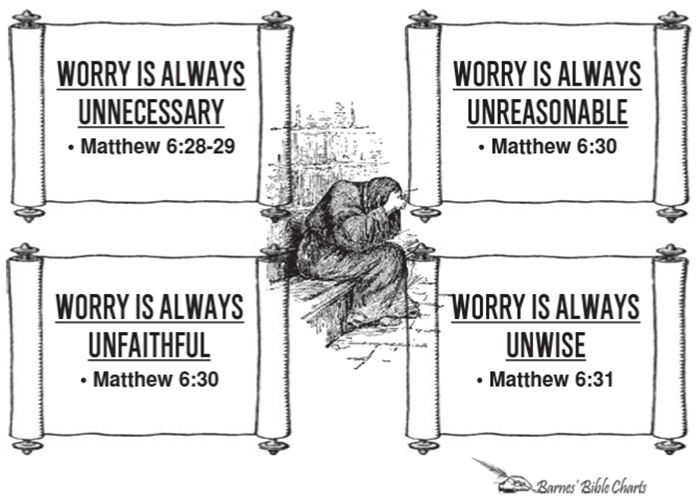
Therefore, we will examine these two plagues of the mind together. “Wherefore, if God so clothe the grass of the field, which to day is, and to morrow is cast into the oven, shall he not much more clothe you, O ye of little faith” (Matt 6:30)?

UNCERTAINTY is a form of doubt that is seen when a person is torn between two things. We’re not talking about trying to decide between two good and righteous things. This plague of the mind is about being torn between the world and God. Remember Lot’s wife (Luke 17:32; Gen 19:26).

During the divided Kingdom years under Ahab, the people were torn between two Gods, the One and Only True God of heaven, and the false, pretend little “g” god of Baalim. “And Elijah came unto all the people, and said, How long halt ye between two opinions? if the LORD be God, follow him: but if Baal, then follow him. And the people answered him not a word” (1Kings 18:21).

Jesus spoke of this duplicity in His teaching on worry in the Sermon on the Mount. “For where your treasure is, there will your heart be also” (Matt 6:19-24). There are only two treasure, an earthly one, and a heavenly one. “Ye cannot serve God and mammon.”

James wrote this, “Ye adulterers and adulteresses, know ye not that the friendship of the world is enmity with God? whosoever therefore will be a friend of the world is the enemy of God” (James 4:4). We can either seek friendship with the world, or seek to be a friend of the Lord, “Ye are my friends, if ye do whatsoever I command you” (John 15:14). James would continue the warning about becoming too focused on worldly wealth, “But now ye rejoice in your boastings: all such rejoicing is evil. Therefore to him that knoweth to do good, and doeth it not, to him it is sin” (James 4:16-17). “Ye have lived delicately on the earth, and taken your pleasure; ye have nourished your hearts in a day of slaughter” (5:5).

Paul, in his concern for the Galatians as they turned from the gospel to another he wrote, “For do I now persuade men, or God? or do I seek to please men? for if I yet pleased men, I should not be the servant of Christ” (Gal 1:10). The Apostle John wrote, “Love not the world, neither the things that are in the world. If any man love the world, the love of the Father is not in him. For all that is in the world, the lust of the flesh, and the lust of the eyes, and the pride of life, is not of the Father, but is of the world” (1John 2:14-15).

Indecision about our faith in God is serious business. Does it matter what one believes? Apparently, it does. We cannot serve two masters. Idolatry is another word to describe this duplicity. Paul’s teaching on covetousness and worldliness is very much related, “covetousness, which is idolatry” (Col 3:5b).

The words of Joshua still ring true today, “And if it seem evil unto you to serve the LORD, choose you this day whom ye will serve; whether the gods which your fathers served that were on the other side of the flood, or the gods of the Amorites, in whose land ye dwell: but as for me and my house, we will serve the LORD” (Joshua 24:15).

Which brings us to the plague of worry. A duplicitous life leads to a worrisome one. It may be that our uncertainty about God or mammon is why so many of us are living exasperated, worrisome lives. The best answer about this subject comes from our Lord in His sermon on the mount.

Therefore I say unto you, Take no thought for your life, what ye shall eat, or what ye shall drink; nor yet for your body, what ye shall put on. Is not the life more than meat, and the body than raiment?

26 Behold the fowls of the air: for they sow not, neither do they reap, nor gather into barns; yet your heavenly Father feedeth them. Are ye not much better than they?

 27 Which of you by taking thought can add one cubit unto his stature?

 28 And why take ye thought for raiment? Consider the lilies of the field, how they grow; they toil not, neither do they spin:

29 And yet I say unto you, That even Solomon in all his glory was not arrayed like one of these.

30 Wherefore, if God so clothe the grass of the field, which to day is, and to morrow is cast into the oven, shall he not much more clothe you, O ye of little faith?

31 Therefore take no thought, saying, What shall we eat? or, What shall we drink? or, Wherewithal shall we be clothed?

32 (For after all these things do the Gentiles seek:) for your heavenly Father knoweth that ye have need of all these things.

33 But seek ye first the kingdom of God, and his righteousness; and all these things shall be added unto you.

34 Take therefore no thought for the morrow: for the morrow shall take thought for the things of itself. Sufficient unto the day is the evil thereof.” (Matt 6:25-34)

Worry that overwhelms our thinking can become an interference to our faith. Are we Worrier or Warrior? Paul was able to face persecution because of his trust in God. “Nay, in all these things we are more than conquerors through him that loved us” (Rom 8:37). Having joy in trial tells us that we will have difficulty, but that we can also exemplify hope (cf. James 1:2-4; 2Tim 3:12). Faithfulness doesn’t mean free from difficulty, but a path to be free from worry.

The Kingdom of God is a treasure to be desired (Matt 13:44), and if we’re able to have a singular focus for Him and His righteousness in our daily lives, we may just see that this life is more tolerable when we know a better life awaits.

Agape,

Spencer

This is part of a series on the 7 PLAGUES of the mind.

7 Plagues of the mind pt3. GRUMBLING

(Phil 2:14-15)

The fourth plague of the mind is complaining, or what the bible calls murmuring. I like to call it grumbling, because much of it sounds like we’re growling like hungry dogs.

Generally speaking, God hates it.

How long shall I bear with this evil congregation, that murmur against me? I have heard the murmurings of the children of Israel, which they murmur against me.” (Num 14:27)?

However, before we go running off to condemn everyone that ever has a complaint, let’s make sure we know what we’re talking about.

Some complaints are warranted, and not condemned by God. “Now in these days, when the number of the disciples was multiplying, there arose a murmuring of the Grecian Jews against the Hebrews, because their widows were neglected in the daily ministration” (Acts 6:1).

Here is an example of a “murmur” that was justified and a remedy was sought for the complaint.

There are some complaints that are warranted and should be expressed. Complaints about a health issue needs to be taken up with our doctors. However, when we complain about our health to every stranger, it becomes less about health and more about attention.

The children of Israel had several complaints in the books of Exodus and Numbers after leaving Egypt. Some of the notable complaints include:

These complaints often led to God’s interventions, and sometimes punishments as part of their journey in the wilderness. You’ll notice that they had 3 main categories of complaint that continue to all generations (Food, Conditions, and Leadership). What was the difference between a complaint that was answered and a complaint that invoked God’s wrath?

The main difference is when they were complaining about the blessing, and having no gratitude toward God for His provisions. Note just one example, the complaint about food. At the beginning of their journey, they had no food so they complained and received food (Ex 16:3). Later, they continued to complain about food, but not that it was lacking, but that they were tired of the Miracle Manna from Heaven. “but now our soul is dried away; there is nothing at all save this manna to look upon” (Num 11).

Even so, constant grumbling and complaining is frowned upon by God for at least another reason. It makes the Christian appear hopeless. Paul looked at the pains of life this way, “Wherefore we faint not; but though our outward man is decaying, yet our inward man is renewed day by day. For our light affliction, which is for the moment, worketh for us more and more exceedingly an eternal weight of glory; while we look not at the things which are seen, but at the things which are not seen: for the things which are seen are temporal; but the things which are not seen are eternal” (2Cor 4:16-18; cf. 2Cor 12:7-10; 1Pet 3:14-16).

What can we do when we feel that urge to complain. First, when faced with the THORNS of life, complain with Grace by being thankful for the good. We can show our gratitude by thinking about what is right amidst all that is wrong. “in everything give thanks: for this is the will of God in Christ Jesus to you-ward” (1Thess 5:18).

We can be helpful in the area of complaints about Leadership. Instead of fault finding, we can solution seeking. We can Pray, and we can Participate. Be Helpful instead of Hurtful. “that they may do it with joy, and not with grief: for that is unprofitable for you” (Heb 13:17).

When life appears unfair, instead of lamenting what’s wrong, let’s seek out Opportunities to serve our fellow man. When we are left out, go and include someone else in your plans instead of stewing in complaint. “Do ye not make distinctions among yourselves, and become judges with evil thoughts” (Jas 2:1-4)?

We can also Rejoice, like Paul, knowing that pain produces patience and glorifies God in our continuing hope of His return (2Cor 12:10; Jas 1:2-4).

Never complain to someone who can’t fix it or isn’t responsible for our problem. Much damage has been done against one person when we complain about them to another (James 3:10-15). That’s not to say we can’t share with each other about our pains (James 5:13), but let us be careful about hopeless complaining.

Finally, Seek Solutions that Serve. We can all serve in some manner, whether it be encouraging, ministering, giving, teaching, mercy, or cheerfulness (Romans 12). If there is nothing anyone can do, give it to God, and look forward to His return.

Agape,

Spencer

Based on a series “the 7 PLAGUES of the mind / heart”

Why do we doubt? pt5

We have seen in this series of articles that doubt can develop from several places. Our job is to recognize the triggers for doubt and to avoid them.

So far we’ve learned about disbelief, opposition, uncertainty, and division. Today we talk about one more, distractions, or as Jesus put it, THORNS.

 “And these are they which are sown among thorns; such as hear the word, And the cares of this world, and the deceitfulness of riches, and the lusts of other things entering in, choke the word, and it becometh unfruitful

(Mark 4:18-19).

Distractions lead to doubt by taking our eyes off the goal, or diverting our time. When we focus on the vanities of life (see Ecclesiastes), we lose sight of hope and then doubt. Distractions give us less time for the study we need to strengthen our faith.

While there are many distractions, most of them can be grouped together into a few categories. 

One of the main categories of thorns leading to doubt is from family TRADITIONS. “Howbeit in vain do they worship me, teaching for doctrines the commandments of men” (Mark 7:7). Family traditions (religious or other), can lead to doubt especially as the word of God conflict with their religious practices or family time. When I first became a Christian, the tradition of our Sunday morning brunch interfered with worship. There is often pressure from the family for the Christian to forego worship, bible study, or even beliefs. This is especially difficult for the new in the faith, as they lack the biblical knowledge to defend themselves. (see Matt 10:37; Luke 14:26).

Another areas of distraction that keep us from study, meditation, and serving the Lord (Rom 12:6-8) are HOBBIES, Social-Media, and entertainment that consumes a significant amount of time. While these are non-sinful activities (sinful activities are always to be avoided), they can become distractions when the time & resources needed for them leave little of the same for God. Some have led to neglect of the family and job that can lead to financial strain. Hobbies and such like can be used for godly service. I know of one family that intentionally plans their activities as a tool for meeting people for an opportunity to share the gospel. Some use Social-Media for advancing the kingdom. “He who tills his land will be satisfied with bread, But he who follows frivolity is devoid of understanding” (Prov 12:11; 28:19 NKJV).

Lust for OTHER THINGS is another area that affects us (Mark 4:19). “Ye ask, and receive not, because ye ask amiss, that ye may spend it in your pleasures” (James 4:3). We begin to doubt when our prayers seem to go unanswered not recognizing that we’re praying amiss. Prayer is very personal as we pour out our heart to God. Sometimes we pray for things that go against the will of God. When our desires and God’s will conflict, we need to align our will with His, or doubt will creep in (cf. Jas 1:13-15).

The parable in Mark 4 also warns about the deceitfulness of RICHES. Money is a tool we use to ease trade. Sadly, many of us begin to trust in wealth above trusting in God. “But they that are minded to be rich fall into a temptation and a snare and many foolish and hurtful lusts, such as drown men in destruction and perdition” (1Tim 6:9-17). It’s very easy to think that money solves all our problems and leads to an easier life. That’s what one rich man thought (Luke 12:15-21). If we have problems that can be solved with money, we don’t have a problem. Then, when a real problem comes (one not solved by money), our faith may begin to waver. Our treasure in heaven is far more valuable than any earthly treasure, let’s focus on that (Matt 13:44-45; 16:26).

Related to riches is our concern for the NEEDS of this world. We need what we need and stress about them may lead to doubt. Because they’re needs, they can quickly and easily distract us and cause doubt especially if we lack any need. “Therefore I say unto you, be not anxious for your life, what ye shall eat, or what ye shall drink; nor yet for your body, what ye shall put on. Is not the life more than the food, and the body than the raiment” (Matt 6:25-34)? The command of Christ is to seek first the kingdom of God and His righteousness.

The final category of thorns is found in SICKNESS, Sadness or Sorrows. The physical and emotional pains of life can quickly overwhelm our faith and become the focus of every conversation. When we’re asked how we’re doing, do we give an organ recital (listing all our ailments) or do we talk about our hope? “For our light affliction, which is but for a moment, worketh for us a far more exceeding and eternal weight of glory” (2Cor 4:17). Unhealed pain is a source of doubt for many of our brethren, and certainly for the world.

For me this is one of the most difficult thorns. Pain, Loss, Sickness, and Sorrows can drive our identity. A friend of mine noticed after the loss of his infant son that he could end any joyful moment for himself and others. Some pains can be healed, but the death of a loved one lives with us forever. This and other Sorrows can be a constant source of doubt.

Paul faced a physical thorn that he appealed to the Lord three times in prayer. However, the Lord’s answer changed his perception about the pain. “Concerning this thing I besought the Lord thrice, that it might depart from me. And he hath said unto me, My grace is sufficient for thee: for my power is made perfect in weakness. Most gladly therefore will I rather glory in my weaknesses, that the power of Christ may rest upon me. Wherefore I take pleasure in weaknesses, in injuries, in necessities, in persecutions, in distresses, for Christ’s sake: for when I am weak, then am I strong.” (2Cor 12:8-10). Instead of letting his thorn in the flesh become his identity, it became a motivation and a source of strength through faith in Jesus Christ.

Friends, we all have our fears and doubts, but we must never let it have a foothold in our hearts. When we are aware of how doubt develops, we’ll be better able to stave it off. The tried-and-true way to combat doubt is by keeping our eyes on Jesus. We do this by reading His word, encouraging and assembling with the saints, and being diligent to show ourselves approved unto God.

Agape,

Spencer

This is part 5 of a series on Overcoming Doubt.

Why do we DOUBT? Oppression.

When Jesus asked Peter; “why did you doubt?” they were standing in the midst of a storm on tossing seas (Matt 14:24-31).

Isn’t that how it is for us? Our doubts arise in the midst of the storms on the crashing seas of life. We seldom doubt on the calm, and peaceful waters.

This scene with Peter on the sea reminds me of the parable of the Sower. Jesus’ teaching about the rocky soil resembles the fear and doubt that arise during times of trouble.

But he that received the seed into stony places, the same is he that heareth the word, and anon with joy receiveth it; Yet hath he not root in himself, but dureth for a while: for when tribulation or persecution ariseth because of the word, by and by he is offended” (Matt 13:20-21).

Doubt, and falling away, often comes in the face of opposition, or persecution for the word’s sake.

If we can learn to overcome doubt in these situations, perhaps we’ll be able to endure the regular troubles of life.

Why do we doubt? What is the source of doubt? This series of articles will seek to search the scriptures for the answer, and to learn how to combat, or to Overcome Doubt. The first article showed that Doubt is based on Disbelief, and the way to overcome disbelief is through knowledge of the Lord Jesus Christ. This article will attempt to Overcome Doubt that arises from the Oppression of life. 

In the parable of the soils, and in the example of Peter, it becomes clear that trouble reveals our DOUBTS instead of causing them. There are some who teach the error that becoming a Christian relieves us of all pain & suffering. The bible says something completely different.

Yea, and all that will live godly in Christ Jesus shall suffer persecution” (2Tim 3:12).

Confirming the souls of the disciples, and exhorting them to continue in the faith, and that we must through much tribulation enter into the kingdom of God” (Acts 14:22).

Be not thou therefore ashamed of the testimony of our Lord, nor of me his prisoner: but be thou partaker of the afflictions of the gospel according to the power of God” (2Tim 1:8)

Marvel not, my brethren, if the world hate you” (1John 3:13).

These few verses should be sufficient to show that suffering for the faith is a reality for the faithful. Resilience & Endurance is the antidote to DOUBT, but developing these is key. Resilience is the capacity to recover quickly from difficulties; toughness. Endurance is the ability or strength to continue or last, especially despite fatigue, stress, or other adverse conditions.

There is a very good reason why we ought to endure. “You therefore must endure hardship as a good soldier of Jesus Christ” (2Tim 2:3). “If we endure, We shall also reign with Him. If we deny Him, He also will deny us” (2Tim 2:12).

How does one develop endurance? This lesson goes along with the first lesson about faith; remember to remember the Lord and have faith. “Remember that Jesus Christ of the seed of David was raised from the dead according to my gospel: Wherein I suffer trouble, as an evil doer, even unto bonds; but the word of God is not bound. Therefore I endure all things for the elect’s sakes, that they may also obtain the salvation which is in Christ Jesus with eternal glory. It is a faithful saying: For if we be dead with him, we shall also live with him: If we suffer, we shall also reign with him: if we deny him, he also will deny us” (2Timothy 2:8-12).

Have Faith, then after that, the next thing is to stand firm for the faith. The way we can do this is through 5 reminders.

First, Stand back and ask, “is this the worst that can happen?” Before we sink, take time to think. “For our light affliction, which is for the moment, worketh for us more and more exceedingly an eternal weight of glory” (2Cor 4:17). “Fear him that can destroy in Hell” (Mat 10:28; Luke 12:5). “For I reckon that the sufferings of this present time are not worthy to be compared with the glory which shall be revealed to us-ward” (Rom 8:18). We often give up long before our endurance expires. 

Then ask, “How can I endure this?” Before we give up, remember the example of those that faced trials before you. “rejoicing that they were counted worthy to suffer dishonor for the Name” (Acts 5:41; cf. 2Cor 11:22-33). “Behold, we count them happy which endure. Ye have heard of the patience of Job, and have seen the end of the Lord; that the Lord is very pitiful, and of tender mercy” (James 5:11). Can you steel yourself against the pain, can you TOUGHEN up? Paul wrote, “Watch ye, stand fast in the faith, quit you like men, be strong” (1Cor 16:13).

A third question to ask is, “Are there any good things that can come from this?” Paul saw the good of preaching Christ even under false pretenses (Phil 1:12-18). James wrote that the trying of our faith produces patience (Jas 1:3).

Nature itself teaches us that growth comes through enduring difficulties. The writer of Hebrews noted this. “Furthermore we have had fathers of our flesh which corrected us, and we gave them reverence: shall we not much rather be in subjection unto the Father of spirits, and live? For they verily for a few days chastened us after their own pleasure; but he for our profit, that we might be partakers of his holiness. Now no chastening for the present seemeth to be joyous, but grievous: nevertheless afterward it yieldeth the peaceable fruit of righteousness unto them which are exercised thereby. Wherefore lift up the hands which hang down, and the feeble knees(Heb 12:9-13).

Then make a commitment to NEVER, NEVER, NEVER, NEVER, GIVE UP! “And let us not be weary in well doing: for in due season we shall reap, if we faint not” (Gal 6:9; cf. Phil 4:13; Rev 2:10). Make endurance the only option.

Lastly, and most importantly, do all you can do to stand. “Wherefore take unto you the whole armour of God, that ye may be able to withstand in the evil day, and having done all, to stand” (Eph 6:13; cf. 10-18). Be a doer of God’s word and not a hearer only. Do the best you can and when you learn to do better, do better.

I press toward the mark for the prize of the high calling of God in Christ Jesus.” “I can do all things through Christ which strengtheneth me”. (Phil 3:14; 4:13). The troubles of life reveal our doubts, but we can do it, the Lord said so (1Cor 10:13).

Agape,

Spencer

FILED UNDER: Overcoming doubt.

You’re invited to attend one of the services of the Franklin & Juniper st church of Christ in Borger Texas.

Overcoming Doubt

Why do we doubt? What is the source of doubt? This series of articles will seek to search the scriptures for the answer, and to learn how to combat, or to Overcome Doubt.

LESSON LINKS.

Why do we DOUBT? Don’t Believe. 09/08/23

Why do we DOUBT? Oppression. 9/14/23

Why do we DOUBT? Uncertainties. 9-22-23

Why do we DOUBT? Backbiting. 09-30-23

Why do we DOUBT? Thorns. 10-07-23

You’re invited to visit our services at the Franklin & Juniper St church of Christ in Borger Texas.

Why do we DOUBT?

Jesus asked this question of Peter when he began to sink after walking on the water.

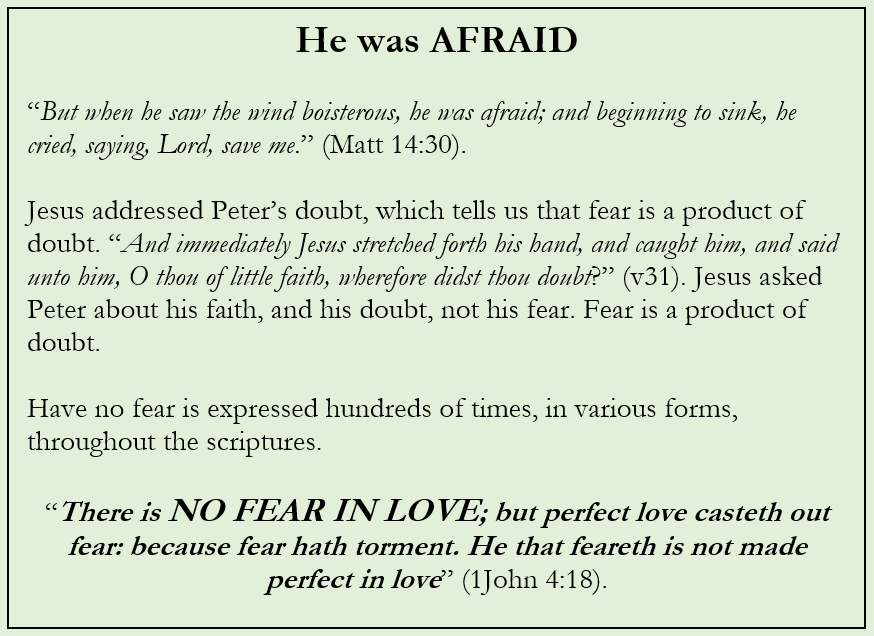
And in the fourth watch of the night Jesus went unto them, walking on the sea. And when the disciples saw him walking on the sea, they were troubled, saying, It is a spirit; and they cried out for fear. But straightway Jesus spake unto them, saying, Be of good cheer; it is I; be not afraid. And Peter answered him and said, Lord, if it be thou, bid me come unto thee on the water. And he said, Come. And when Peter was come down out of the ship, he walked on the water, to go to Jesus. But when he saw the wind boisterous, he was afraid; and beginning to sink, he cried, saying, Lord, save me. And immediately Jesus stretched forth his hand, and caught him, and said unto him, O thou of little faith, wherefore didst thou doubt? And when they were come into the ship, the wind ceased. Then they that were in the ship came and worshipped him, saying, Of a truth thou art the Son of God

(Matthew 14:25-23).

You may wonder why the Lord was so critical of Peter’s doubt, because walking on water is not normal. But that was not the Lord’s rebuke. Peter was walking on water. Jesus was walking on water. They both walked on water together in the storm.

Do we also doubt in the storms of life?
Why do we doubt? What is the source of doubt? This series of articles will seek to search the scriptures for the answer, and to learn how to combat, or to Overcome Doubt.

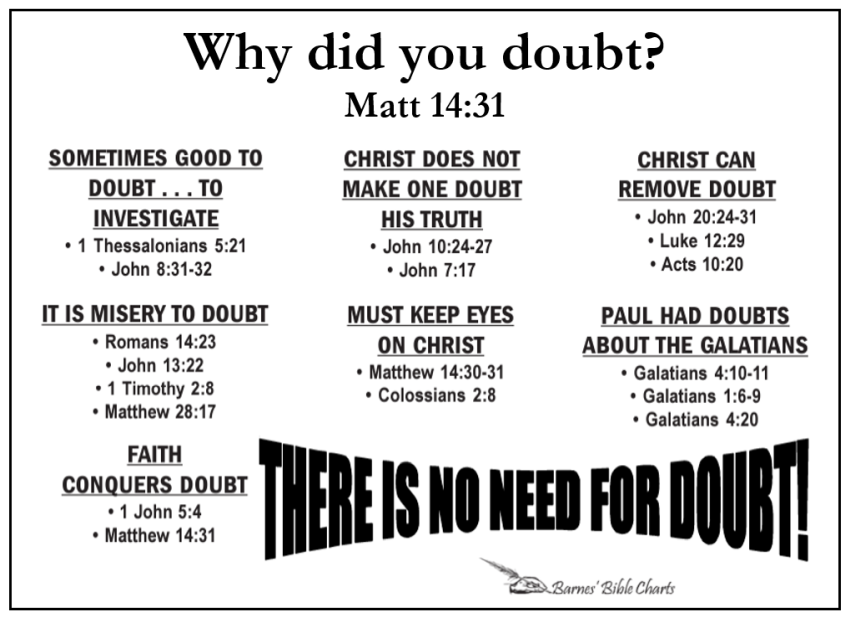
The first thing we ought to do is to make certain we know what it means. Jesus asked Peter, “why did you doubt (duplicate, i.e. mentally to waver in opinion) [Strong’s Greek dictionary; distazo]. The dictionary defines doubt as; “to be uncertain about; consider questionable or unlikely; hesitate to believe.” DOUBT is the opposite of BELIEF. Therefore, our first source of DOUBT is DISBELIEF. This will be the ultimate root of all the sources.

DISBELIEF is the target of the Lord’s question to Peter (v31), and is our challenge today. Belief in God is the beginning of our salvation. It’s placed first of all other commands in obeying the gospel. Works without faith is vanity. Faith is a work (John 6:29; 1Thess 1:3; 2Thess 1:11).

But without faith it is impossible to please him: for he that cometh to God must believe that he is, and that he is a rewarder of them that diligently seek him” (Hebrews 11:6).

He that believeth and is baptized shall be saved; but he that believeth not shall be damned” (Mark 16:16).

The type of Belief under consideration is compared to the faith of Abraham when he went to sacrifice the son of promise. “Was not Abraham our father justified by works, when he had offered Isaac his son upon the altar? Seest thou how faith wrought with his works, and by works was faith made perfect? And the scripture was fulfilled which saith, Abraham believed God, and it was imputed unto him for righteousness: and he was called the Friend of God. Ye see then how that by works a man is justified, and not by faith only” (James 2:21-24). His belief was so certain that he supposed God would raise Isaac from the dead (Heb 11:17).

However, faith is not blind. “Now faith is the substance of things hoped for, the evidence of things not seen” (Hebrews 11:1). There’s evidence to believe. Peter’s evidence was the prior miracles of Jesus (which are still evidence for us today John 20:30-31). Peter had participated in the feeding of the 5,000 just preceding his water ambulation. How many steps he made on the water we do not know, but one step out of a boat into the deep stormy waters is sufficient. He had gone out in the limited commission with powers, “against unclean spirits, to cast them out, and to heal all manner of sickness and all manner of disease” (Matthew 10:1).

Well, that was Peter you may say; what about us? We don’t see those miracles today. No, we don’t see biblical miracles today, but that’s okay. The miracles Peter saw, and those in the early church are for our belief. “And many other signs truly did Jesus in the presence of his disciples, which are not written in this book: But these are written, that ye might believe that Jesus is the Christ, the Son of God; and that believing ye might have life through his name” (John 20:30-31). But there’s more…

God’s word says that God’s creation is for belief. “Because that which may be known of God is manifest in them; for God hath shewed it unto them. For the invisible things of him from the creation of the world are clearly seen, being understood by the things that are made, even his eternal power and Godhead; so that they are without excuse” (Romans 1:19-20). God’s creation is enough to begin our belief in Him.

Paul used this same evidence for belief. “Nevertheless he left not himself without witness, in that he did good, and gave us rain from heaven, and fruitful seasons, filling our hearts with food and gladness” (Acts 14:17; 17:27-28). The evidence of creation and human life will point you in the right direction to look further. There are only 2 possibilities about creation: 1) that everything came from a thoughtless nothing, or 2) everything came from a very wise, powerful, and brilliant God.

Belief is not blind. It has evidence and there’s so much evidence inside and outside of scripture. If you doubt, perhaps a study of evidences is for you to combat that doubt. Here are a few areas to study…

I have a few resources in my library. One of my favorites is by a brother in Christ named A.O. Schnabel, “Has God Spoken?” This book references scriptures of nature that science discovered many hundreds and thousands of years later. Some discoveries as recent as the 1960’s!

There’s no need to doubt. We can know and be assured.

(to be continued)

Agape,

Spencer