Just about everyone knows that Jesus taught with parables. If you were to say the world parable, folks would automatically think of Jesus.
The PURPOSE of the parables is explained in scripture.
“And the disciples came, and said unto him, Why speakest thou unto them in parables? He answered and said unto them, Because it is given unto you to know the mysteries of the kingdom of heaven, but to them it is not given. For whosoever hath, to him shall be given, and he shall have more abundance: but whosoever hath not, from him shall be taken away even that he hath. Therefore speak I to them in parables: because they seeing see not; and hearing they hear not, neither do they understand. And in them is fulfilled the prophecy of Esaias, which saith, By hearing ye shall hear, and shall not understand; and seeing ye shall see, and shall not perceive:” (Matt 13:10-14).
We will notice that parables were part of PROPHECY which contributed to identifying Jesus as the Christ. “I will open my mouth in a parable:” (Psalm 78:2)
We will also notice that parables ASSIST people in understanding the lessons from Christ. We can easily identify the example in the parable to discover His teaching.
If you’ll look at the list of the parables you notice that Christ uses REAL life scenarios to explain His teachings. (ie. a sower)
Parables will ALLOW the seekers to see, but the BLIND not to see. Christ never keeps life saving truth from anyone, but some just don’t want it, hence they’re BLIND.
The meaning of the word parable is; to LAY along side. (cf. W.E. Vines). “And he said, Whereunto shall we liken the kingdom of God? or with what comparison shall we compare it?” (Mark 4:30)
Another way to describe a parable is as an EXTENDED metaphor or simile. It’s not intended to be mysterious, concealing, nor prevent the truth seeker from understanding.
Ultimately, a parable is a SPIRITUAL lesson using an understood physical scenario. Jesus uses a known thing to explain SPIRITUAL things.
“And he said unto them, Know ye not this parable? and how then will ye know all parables?” (Mark 4:13)
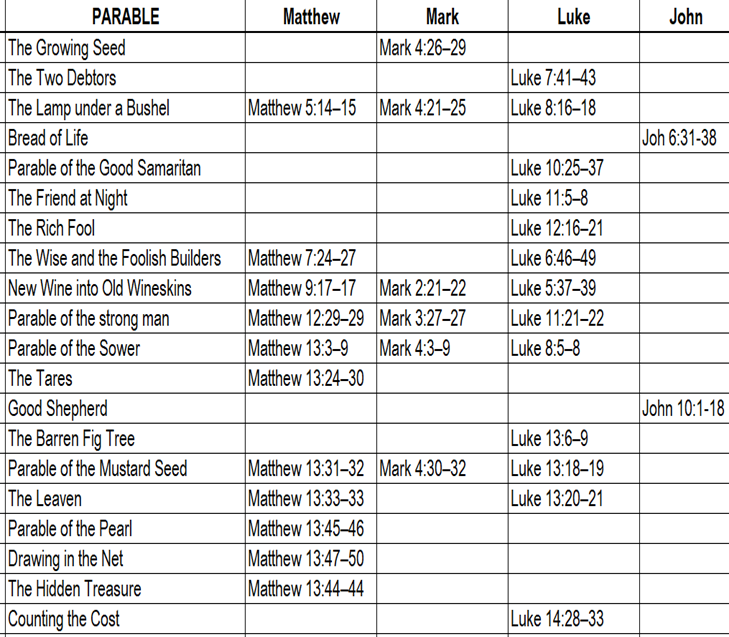
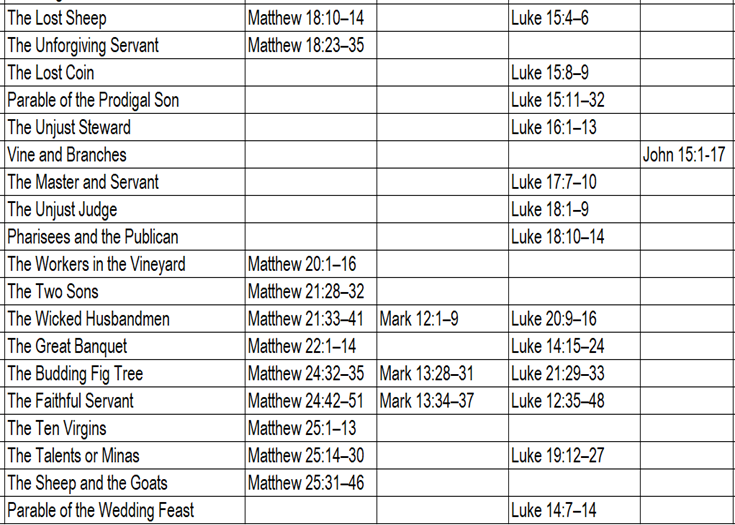
On the following page is a list of all the parables (I think). Luke carries the most parables. While many people categorize them in different ways, I’ve identified seven. Prayer Parables, Kingdom Parables, Forgiveness Parables, Christ Parables, Parables of the Lost, Readiness Parables, and Stewardship Parables.
While challenging Jesus, a certain lawyer seeking to justify himself, asked, “who is my neighbor?” Jesus answered with the parable of the good Samaritan to make him and us consider the answer to that question. (Luke 10:25-37)
Who is my neighbor?
What a great question! Seeing that the second great command is to love thy neighbor as thyself, we ought to ask it of ourselves today. (Matt 22:39; cf Lev 19:18)
It reminds me of NAAMAN’S stolen little maid (2King 5:1-14). Who was her neighbor?
It was the one that STOLE HER!!
From the parable and the story of the little maid we learn that EVERYONE we come in contact with is our neighbor, and let’s not forget about our online neighbor.
Do we have the love to INVITE our neighbor to the healing power of Jesus? Another question, would they accept or decline the invitation based on our GOOD works or lack thereof? “They profess that they know God; but in works they deny him, being abominable, and disobedient, and unto every good work reprobate.” (Titus 1:16). The story of the healing of Naaman hinges on an invitation from the stolen little maid. What does Naaman’s acceptance of her word speak about her good behavior?
Jesus speaks of love for, rather than HATRED of our enemies. “You have heard that it was said, ‘You shall love your neighbor and hate your enemy.’ But I say unto you, Love your enemies, bless them that curse you, do good to them that hate you, and pray for them which despitefully use you, and persecute you” (Matt 5:43-44). It makes me think of the server that had wronged a Christian. After he exacted his pound of flesh through a verbal assault, I wonder if the server would be open to an invitation to a home bible study with that Christian? (Ouch, that hurt.)
What about our BORDER neighbors, the ones with whom we share a fence line? If history is indicative of future possibilities, what would their answer be to our invitation to worship after our current land dispute? Let alone the Proverbs wisdom about being friendly with our property neighbors. “Better is a neighbor nearby than a brother far away.” (Prov 27:10; cf. Prov 3:29)
It can be difficult to be at peace with everyone, but we OUGHT to try. “Let every one of us please his neighbour for his good to edification.” (Rom 15:2) “If it be possible, as much as lieth in you, live peaceably with all men.” (Rom 12:18) We OUGHT to pursue peace with our neighbor if for no other reason than it interferes with both of us going to heaven. (cf. Mark 9:50; Rom 14:19; Heb 12:14) “For this is good and acceptable in the sight of God our Saviour; Who will have all men to be saved, and to come unto the knowledge of the truth.” (1Tim 2:3-4).
Lastly, let’s also think of our less fortunate neighbors without showing RESPECT of persons. Jesus said, “When you give a dinner or a supper, do not ask your friends, your brothers, your relatives, nor rich neighbors, lest they also invite you back, and you be repaid.” (Luke 14:12; cf. James 2:1-13). After disregarding our poor neighbors, or those different from us, could we invite them to worship and would they accept?
Who is our neighbor? Great question. The take away for me is to live in such a way as to not make enemies. This doesn’t mean to ignore nor to whitewash the truth of the gospel. Rather it’s about avoiding situations where we might create lifelong enemies that will hinder the spreading of the gospel. “I am made all things to all men, that I might by all means save some.” (1Cor 9:22)
—spencer
Spencer is an evangelist for the Franklin & Juniper St church of Christ in Borger Texas. If you live in the Borger area and would like a personal bible study, please reach out & let us know how we can help you know more of God’s word.
…there would not be any division.” You’ve probably heard something like this before. Another way of saying this is, “Let’s unite over the things we have in common and not divide over our differences.”
They contend that love will prevent any division among us. I would agree, but not in the way that they use love.
If love for the truth is what is meant by “more love” then I’m all in. However, it is evident that not everyone will love and accept the truth on some matters of faith.
“…because they received not the love of the truth, that they might be saved.” (2Thess. 2:10)
LOVE for the truth motivates the servants of the Lord to preach it and to exhort all to follow it (cf. 2Tim 4:2). Sadly, there are those who refuse to submit to the will of the Lord, and do not have the doctrine of Christ. “Whosoever transgresseth, and abideth not in the doctrine of Christ, hath not God.” (2John 1:9a)
When some say that love will prevent division, they are using their definition of love which OVERLOOKS practices that are not found in the doctrine of Christ. These will place the blame of division on those laboring to practice the truth rather on those who will not accept it. Paul wrote, “And have no fellowship with the unfruitful works of darkness, but rather reprove them” (Eph 5:11). Love of the truth would have adherents practicing the divine pattern of the truth, rather than advocating an umbrella of love that ignores it.
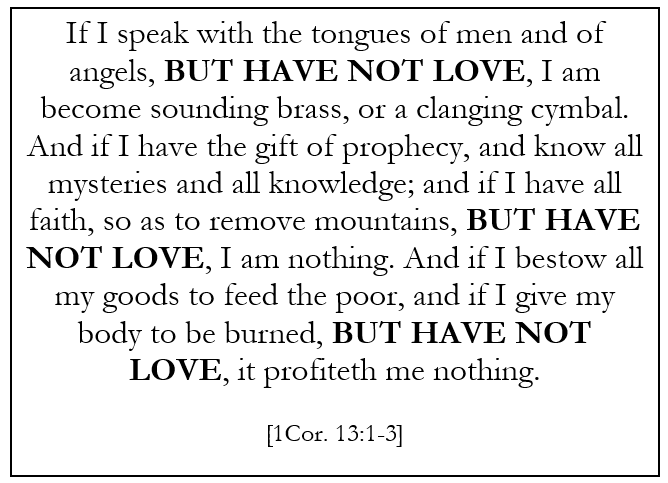
Certainly, the truth is to be spoken in love. “But speaking the truth in love, may grow up into him in all things, which is the head, even Christ” (Eph 4:15). We have a responsibility to speak the truth in love. Perhaps, those who cry that love would prevent divisions, dwell on the manner of presentation. Every preacher ought to work on the manner of presenting the truth in love (1Cor 13), but what right does anyone have to reject the word of God based on the manner of presentation? Salvation comes through obeying the gospel of Christ, and any failure should be placed on the hearts of the hearers (cf. Luke 8:11-15; 2Thess 1:8).
All the love in the world is not going to result in some people accepting the truth whereby brethren can walk together in truth. “For God so loved the world, that he gave his only begotten Son, that whosoever believeth in him should not perish, but have everlasting life” (John 3:16) “So there was a division among the people because of him” (John 7:43).
VIOLATION of God’s word is to be blamed for division, not a lack of love. Are we prepared to say that a lack of love from Christ resulted in division? May it never be!!
Was there a lack of love on the part of John toward Diotrephes that caused division? No, it’s the following of EVIL that causes the division. It was the lack of love for the truth on the part of Diotrephes that caused the division. “but Diotrephes, who loveth to have the preeminence among them, receiveth us not” (2John 9-11). [emph mine seb]
Yes, we need more love “And this I pray, that your love may abound yet more and more in knowledge and in all judgment” (Phil 1:9; cf. 1Thess 3:12). May there be more love of the truth that we may walk together in unity of the Spirit and have fellowship with God through Jesus Christ our Savior. “Endeavouring to keep the unity of the Spirit in the bond of peace. There is one body, and one Spirit, even as ye are called in one hope of your calling; One Lord, one faith, one baptism, One God and Father of all, who is above all, and through all, and in you all” (Eph 4:4-6)
—spencer
Spencer is an evangelist for the Franklin & Juniper St church of Christ in Borger Texas. If you live in the Borger area and would like a personal bible study, please reach out & let us know how we can help you know more of God’s word.
“7 Beloved, let us love one another: for love is of God; and every one that loveth is born of God, and knoweth God.
8 He that loveth not knoweth not God; for God is love.
9 In this was manifested the love of God toward us, because that God sent his only begotten Son into the world, that we might live through him.
10 Herein is love, not that we loved God, but that he loved us, and sent his Son to be the propitiation for our sins.
11 Beloved, if God so loved us, we ought also to love one another.” [1John 4:7-11]
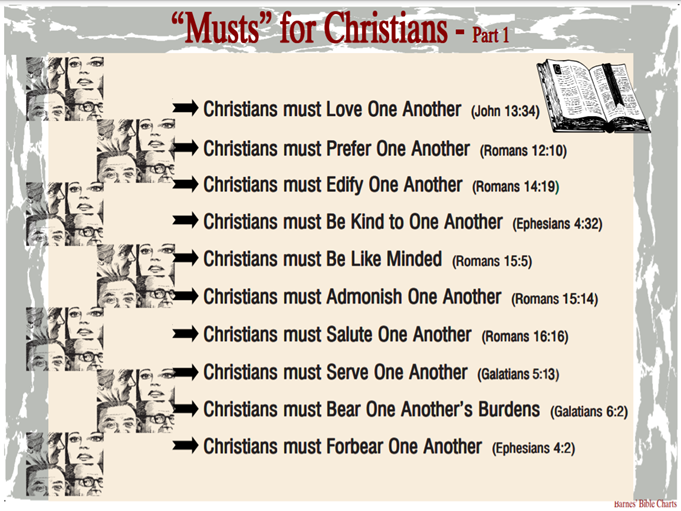
Since most are focused on the commercialized version of Love shown through the giving of chocolate filled cardboard hearts, let us also talk about what it means to LOVE ONE ANOTHER.
“And the Lord make you to increase and ABOUND in love one toward another, and toward all men, even as we do toward you:” (1Thess 3:12).
“NO MAN hath seen God at any time. If we love one another, God dwelleth in us, and his love is perfected in us.” (1John 4:12)
“OWE no man any thing, but to love one another: for he that loveth another hath fulfilled the law.” (Rom 13:8)
“For, brethren, ye have been called unto liberty; only use not liberty for an occasion to the flesh, but by love serve one another.”
(Galatians 5:13).
“But as touching brotherly love ye need not that I write unto you: for ye yourselves are TAUGHT of God to love one another.” (1Thessalonians 4:9).
“Seeing ye have purified your souls in obeying the truth through the Spirit unto unfeigned love of the brethren, see that ye love one another with a pure HEART FERVENTLY.” “And above all things have fervent charity among yourselves: for charity shall cover the multitude of sins.” (1Peter 1:22, 1Peter 4:8).
“For I have given you an EXAMPLE, that ye should do as I have done to you.” “A new commandment I give unto you, That ye love one another; as I have loved you, that ye also love one another. By this shall all men know that ye are my disciples, if ye have love one to another.” “This is my commandment, That ye love one another, as I have loved you.” “And be ye kind one to another, tenderhearted, forgiving one another, even as God for Christ’s sake hath forgiven you.” “Beloved, if God so loved us, we ought also to love one another.” (John 13:15; 34-35; 15:12; Eph 4:32; 1John 4:11)
“And the second is like unto it, Thou shalt love thy neighbour as thyself.” “For this is the message that ye heard from the beginning, that we should love one another.” “And this is his commandment, That we should believe on the name of his Son Jesus Christ, and love one another, as he gave us commandment.” “Beloved, let us love one another: for love is of God; and every one that loveth is born of God, and knoweth God.” “And now I beseech thee, lady, not as though I wrote a new commandment unto thee, but that which we had from the beginning, that we love one another.” (Matt 22:39; 1John 3:11, 23, 4:7, 12, 2John 1:5) To love one another is a Requirement of God.
(emph mine seb)
As opposed to our former life…
“For we ourselves also were sometimes foolish, disobedient, deceived, serving divers lusts and pleasures, living in malice and envy, hateful, and hating one another.” (Titus 3:3)
—spencer
Spencer is an evangelist for the Franklin & Juniper St church of Christ in Borger Texas. If you live in the Borger area and would like a personal bible study, please reach out & let us know how we can help you know more of God’s word.
After miraculously feeding 5,000+ people, Jesus crosses the sea of Galilee, and those having eaten, follow Him.
Jesus, knowing what is in the heart of a person said, “Verily, verily, I say unto you, Ye seek me, not because ye saw the miracles, but because ye did eat of the loaves, and were filled. Labour not for the meat which perisheth, but for that meat which endureth unto everlasting life, which the Son of man shall give unto you: for him hath God the Father sealed.” (John 6:26-27)
He then preaches to them where he says, “I am the living bread which came down from heaven: if any man eat of this bread, he shall live for ever: and the bread that I will give is my flesh, which I will give for the life of the world.” (John 3:51)
Those hearing this statement were confused, so too many today. How are we to understand this statement about Jesus being the BREAD of life and the necessity of eating it? This is a figurative statement with a major lesson behind it. Here are 5 clues to help us understand its meaning and how to comply.
The first clue, Jesus said in verse 35, “I am the bread of life: he that cometh to me shall never hunger; and he that believeth on me shall never thirst.” Two things are discovered; 1) whoever is to have the blessing of the Bread of Life must come to Him, and 2) they must BELIEVE on Him. In this same book of John, we learn that BELIEF comes from reading about Him. “But these are written, that ye might believe that Jesus is the Christ, the Son of God; and that believing ye might have life through his name.” (John 20:31; cf. Rom 10:17) So, the first clue teaches us that to eat His flesh is a figure for reading His word.
Next, Jesus continues by comparing Himself to the manna that came down from heaven (6:31-34). He then says, “For I came down from heaven, not to do mine own will, but the will of him that sent me. And this is the Father’s will which hath sent me, that of all which he hath given me I should lose nothing, but should raise it up again at the last day.” (38-39). From this we learn that He, as the Bread of Life, came down from heaven to RAISE up certain people. The Bread of Life is related to being RAISED up to heaven.
Related to this is the next clue found in verse 40. “And this is the will of him that sent me, that every one which seeth the Son, and believeth on him, may have everlasting life: and I will raise him up at the last day.” (47,54) Speaking again about ‘belief,’ Jesus relates the raising up to those same people having EVERLASTING LIFE. Remember, Belief comes from reading about Jesus.
The fourth clue is found in verse 62. Many of the disciples began to murmur, wondering who could hear it. In response Jesus said, “What and if ye shall see the Son of man ascend up where he was before?” It’s interesting that He now speaks of ASCENDING into heaven after telling them He came down. This Bread of Life came down, like the manna, but this Bread will ASCEND back into heaven. In our time, we know what happens later. Jesus will ASCEND into heaven, but not before instructing the Apostles in Matt 28:19-20, where we read; “Go ye therefore, and teach all nations, baptizing them in the name of the Father, and of the Son, and of the Holy Ghost: Teaching them to observe all things whatsoever I have commanded you: and, lo, I am with you alway, even unto the end of the world.” (Matt 28:19-20). Once again, we see the repeated theme of teaching, learning, and obeying.
The commentary of scripture is telling us that the eating of the Bread of Life is related to learning, reading, and obeying the instructions from Jesus. In John 1 He is also called The Word.
However, some of the DISCIPLES turned. “From that time many of his disciples went back, and walked no more with him. The last clue is found in Peter’s statement. “Then said Jesus unto the twelve, Will ye also go away? Then Simon Peter answered him, Lord, to whom shall we go? thou hast the words of eternal life.” (John 6:66-68)
While they may not have fully appreciated the depth of Jesus’ words, Peter seems to recognize something. Eternal Life is related to the teaching of Jesus. He would fully understand later; “Howbeit when he, the Spirit of truth, is come, he will guide you into all truth:” (John 16:13). So, being a DISCIPLE, (a learner, i.e. pupil), is our fifth clue. It’s not enough to just believe, we must do.
Eating His flesh and drinking His blood is not literal. Neither is it related to the Lord’s Supper, which is not literal either. What it means is to be a Hearing, believing, obedient follower of Christ.
— spencer
Spencer is an evangelist for the Franklin & Juniper St church of Christ in Borger Texas. If you live in the Borger area and would like a personal bible study, please reach out & let us know how we can help you know more of God’s word.
One of the saddest days in history, while simultaneously being the greatest day, was the day that Jesus died on an ancient Roman cross of execution.
While this is the time of year many are talking about His birth, can we remember and be ready to talk about His death?
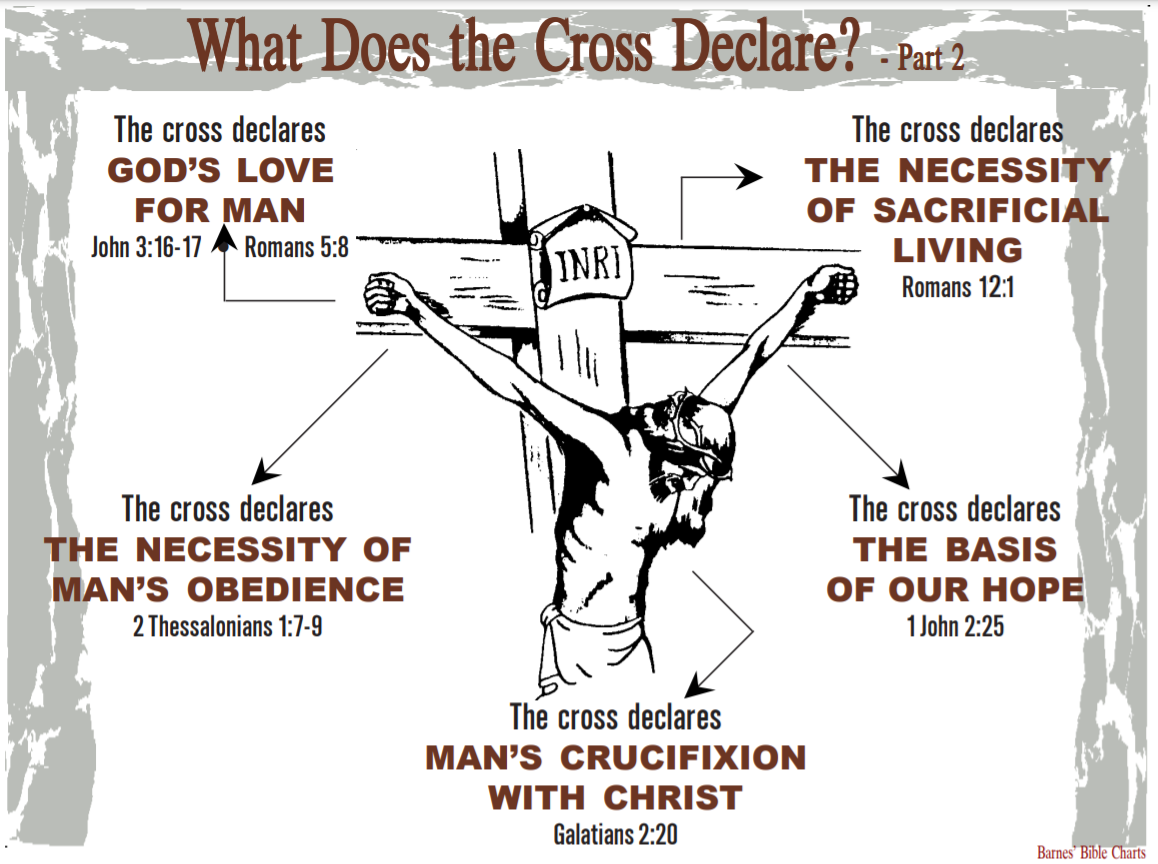
What does the CROSS of Christ mean to us? While books can and have been written on this subject, this article will look at just a few aspects of the Cross of Christ.
We have no instructions on how nor when to celebrate His birth, but we do have instructions on how & when to remember His death… His death on a CROSS.
“Behold, we go up to Jerusalem; and the Son of man shall be betrayed unto the chief priests and unto the scribes, and they shall condemn him to death,And shall deliver him to the Gentiles to mock, and to scourge, and to crucify him: and the thir d day he shall rise again.” [Matt 20:18-19]
Jesus lived a perfect life free of sin [Heb 4:15; 1Pet 2:21-22]. Yet, His short life on earth ended as if He were the vilest of sinners by being executed on a Cross.
The Cross of Christ means death by CRUCIFIXION. It is the execution of a person by nailing them to a post with their arms outstretched on a cross member lifting the person up on full display to all. Our Savior knew all of this. He told His disciples about it [Mat 16:21; Joh 3:14], and He did it anyway. The Cross of Christ represents CRUCIFIXION still [Rom 6:6; Gal 2:20; 5:24; 6:14].
The Cross of Christ represents REJECTION by His own. The prophet Isaiah foretold this, “He is despised and rejected of men; a man of sorrows, and acquainted with grief: and we hid as it were our faces from him; he was despised, and we esteemed him not.” [Isa 53:3] During His last hours on earth, the ones who cried “Hosanna: Blessed is the King of Israel that cometh in the name of the Lord” [John 12:13], just days earlier, were calling out for His death. This despite the evidence of scripture, and His own works and words, the Jews REJECTED Him. The Cross of Christ represents REJECTION still. [John 15:18]
The Cross of Christ represents His OBEDIENCE to God the Father. “And he said, Abba, Father, all things are possible unto thee; take away this cup from me: nevertheless not what I will, but what thou wilt.” [Mar 14:36; Joh 8:29; Heb 5:7] It amazes me how fervent some will fight against our need for OBEDIENCE to Christ while claiming to follow the example of Jesus. “Though he were a Son, yet learned he obedience by the things which he suffered; And being made perfect, he became the author of eternal salvation unto all them that obey him;” [Heb 5:8-9]. The Cross of Christ represents OBEDIENCE still. [2Thess 1:8-9]
The Cross of Christ represents SUFFERING. Jesus suffered even before reaching the cross. “Then Pilate therefore took Jesus, and scourged him.” [John 19:1; Mark 15:15-20]. The Cross of Christ represents SUFFERING still today; “Forasmuch then as Christ hath suffered for us in the flesh, arm yourselves likewise with the same mind: for he that hath suffered in the flesh hath ceased from sin;” [1Pet 4:1-2]. “For even hereunto were ye called: because Christ also suffered for us, leaving us an example, that ye should follow his steps:” [2:21].
The Cross of Christ represents SACRIFICE. Jesus died because He was the only acceptable Sacrifice for our sin. The blood of animals can never take away sin, “For it is not possible that the blood of bulls and of goats should take away sins.” [Heb 10:4], and without the shedding of blood there is no remission of sin, “…and without shedding of blood is no remission.” [Heb 9:22]. Christ shed His own blood, becoming, “the Lamb of God, which taketh away the sin of the world.” [John 1:29, 36]. The Gospel we obey, by which we may be saved, is the Death (on a Cross), Burial, and resurrection of Jesus [1Cor 15:1-4]. The death of Christ is God’s grace toward us who deserve nothing from Him. He provided the Lamb, the SACRIFICE [cf. Gen 22:8].
The Cross of Christ represents SACRIFICE still. “I beseech you therefore, brethren, by the mercies of God, that ye present your bodies a living sacrifice, holy, acceptable unto God, which is your reasonable service.” [Rom 12:1; cf. Phil 4:18]
So you see, the Cross of Christ represents so much more than an object to be viewed. What happened on that Cross, and our response to it is what truly matters. May God bless us all.
Yes, I can hear your eyes rolling after having read the title, perhaps thinking, “Another holiday bashing lesson.”
Before you toss this bulletin aside, know that this article is about seizing opportunities as they become available. Every year for about 5 or 6 weeks, the world is talking about Jesus. [1Co 16:9; 2Cor 2:12]
We might as well join in the conversation, but more accurately. (Where have we heard that before? Acts 18:26)
We can have friendly conversations about Christ with the hopes that we may lead others to Him.
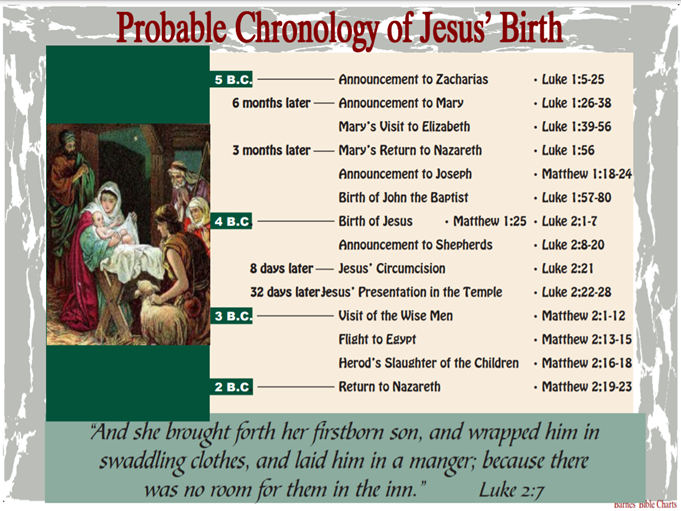
Many of the Myths about the BIRTH of Jesus surround the popular manger scenes on display and many of the pageants performed this time of year. The rest are based on assumptions of what people think the bible says.
The FIRST Myth is that Jesus was BORN on December 25th (or January 6, or 7 according to some denominations). If you were to ask the average person when Jesus was born, they would say, “Dec 25th of course!” When you point out that no date is revealed, they may say, “It doesn’t matter, let’s just all agree.”
How can we have the conversation? Instead of taking the “you’re wrong, here’s why approach” we might ask, “do you know a day of birth that we are certain about?” The day of Pentecost is the day the church BEGAN. [Mat 16:18, 28; Acts 2]
The SECOND Myth is that the shepherds came to worship Jesus and brought Him gifts. My favorite unscriptural song this time of year is the little drummer boy. Full of emotion, zero scripture.
How can we talk about this? The shepherds truly did see the star and hear the announcement of His birth, the angel saying, “And this shall be a sign unto you; Ye shall find the babe wrapped in swaddling clothes, lying in a manger.” [Luke 2:12]. What did they do? They went to INVESTIGATE the words of the angel to see the sign. “So it was when the angels had gone away from them into heaven, that the shepherds said to one another, ‘Let us now go to Bethlehem and see this thing that has come to pass, which the Lord has made known to us.’ And they came with haste and found Mary and Joseph, and the Babe lying in a manger. And when they had seen Him, they made widely known the saying which was told them concerning this Child” [Luke 2:15- 17]
The FOURTH Myth is that Joseph & Mary RECEIVED the wise men at the manger. What does the Bible say and how can we have a conversation about it?
Perhaps you could show folks the scriptures where Herod ordered children under 2yo and younger be killed. “Then Herod, when he saw that he was mocked of the wise men, was exceeding wroth, and sent forth, and slew all the children that were in Bethlehem, and in all the coasts thereof, from two years old and under, according to the time which he had diligently enquired of the wise men.” [Matt 2:9-12] This same passage has Joseph & Mary RECEIVING the wise men in their “HOUSE” after they returned to their home from Bethlehem.
Which brings us to the FOURTH Myth; the Myth that there were THREE wise men. The bible says there were THREE kinds of gifts of “gold, and frankincense, and myrrh.” The number of wise men is unrevealed. The divine text simply states, “behold, wise men from the East came to Jerusalem” [Matt. 2:1].
Why do we do this? The goal is to get folks to read for themselves the biblical narrative. Perhaps we could invite our friends to read the BIRTH story with us and they would see it for themselves. If folks read it, perhaps they’ll question the many other false things they have heard.
Which brings us to the FIFTH Myth, that this is a HOLY DAY (Holiday) we are commanded to observe. Many folks are CEO believers (Christmas & Easter Only). Some are commanded to attend a midnight mass. Clearly the BIRTH story of Christ is important especially as a fulfillment of prophecy.
Why should we talk about this? There is a day specified that we are commanded to observe; A Memorial of His Death, upon the first Day of the Week. Jesus commands us to remember His Death each first day of the week.
“…this do in remembrance of me.” [Matt 26:26-30; Mark 14:22-26; Luke 22:14-23; 1Cor 11:17-34; Acts 20:7]
Living in Borger has opened my eyes to the enormous problem of STRAY dogs.
Multiple times a week there are social media postings about them. Most often the STRAY is afraid of the one trying to help them.
Whenever a good Samaritan approaches to help the STRAY, it will often run away in fear even with an offer of food or water! There’s no recognition that this person is trying to help. They have no idea they need help.
This illustrates a spiritual problem with those who are wandering the shadows of death outside of Christ.
They do not recognize that the Lord is calling them to come to Him with the Bread of Life. They seem to have no concern that they are spiritually starving and astray.
Many are lost, starving, headed for trouble, and in need of His help and rescue.
What do you know about STRAY sheep?
Jesus saw people as SHEEP without a shepherd (Mark 6:34; Matt 9:36). Some look at these passages and note that Jesus fed them. Yes, He did, but He fed them the bread of Life. “And Jesus, when he came out, saw much people, and was moved with compassion toward them, because they were as sheep not having a shepherd: and he began to teach them many things.” Stray sheep need to be fed the spiritual food of eternal life (cf. John 6:51, 68). Unfortunately, some will not take the spiritual food, but offer it any way.
On one occasion, Jesus looked upon the city of Jerusalem and shed TEARS over it, saying, “O Jerusalem, Jerusalem, thou that killest the prophets, and stonest them which are sent unto thee, how often would I have gathered thy children together, even as a hen gathereth her chickens under her wings, and ye would not!” (Matthew 23:37; Luke 19:41-44). Strays are in jeopardy. How do we feel about that? Does it move us to TEARS? Some of us want to get rid of the strays that wander onto our lawns. Let’s have compassion on the straying people.
Some stray intentionally. Peter refers to some who have gone astray as those who will “RECEIVE the REWARD of unrighteousness. “And shall receive the reward of unrighteousness, as they that count it pleasure to riot in the day time. Spots they are and blemishes, sporting themselves with their own deceivings while they feast with you; Having eyes full of adultery, and that cannot cease from sin; beguiling unstable souls: an heart they have exercised with covetous practices; cursed children: Which have forsaken the right way, and are gone astray, following the way of Balaam the son of Bosor, who loved the wages of unrighteousness;” (2Pet 2:13-15). Jesus is no respecter of persons. He died even for the unlovable. (cf. Rom 5:6-10)
Anyone who is off the path of righteousness, regardless of the reason, is ASTRAY. “All we like sheep have gone ‘astray’; we have turned, everyone, to his own way…” (Isaiah 53:6). Jesus went to the cross to make our salvation possible because we have all gone astray. “Who his own self bare our sins in his own body on the tree, that we, being dead to sins, should live unto righteousness: by whose stripes ye were healed. For ye were as sheep going astray; but are now returned unto the Shepherd and Bishop of your souls.” (1Peter 2:24-25). We need to remember that we once were straying and someone reached out to us.
He invites all to come to Him for salvation: “Come unto me, all ye that labour and are heavy laden, and I will give you rest. Take my yoke upon you, and learn of me; for I am meek and lowly in heart: and ye shall find rest unto your souls. For my yoke is easy, and my burden is light. (Matthew 11:28-30). Being a stray may seem like freedom, but it’s actually bondage to sin. As counterintuitive as it may sound, submitting to the YOKE of Christ is freeing! “Know ye not, that to whom ye yield yourselves servants to obey, his servants ye are to whom ye obey; whether of sin unto death, or of obedience unto righteousness?” (Rom 6:16) Some of the straying want to be free to live how they want, but that’s a dangerous way to live away from the protection of the Good Shepherd. (cf. John 10:7-14)
As the Good Shepherd, He has set forth the rules of entry into His fold: Hear. Mat 7:24; Believe John 8:24; Repent Luke 13:3; Confess Mat 10:32; Baptized Mark 16:16; Faithfulness Mat 28:20. He is the door, the way, the truth, the life.
Jesus sees us in our sorrowful, starving, and straying condition. Without Him we are lost sheep, astray from His life saving blood. He is calling through the Gospel (cf. 2Th 2:14). He is offering us the bread of life (John 6:48). His is the door of the sheep, offering salvation (John 10:9). You have nothing to fear and everything to gain. Let Him comfort you with His staff & His rod (Psalm 23:4).
When speaking about being compelled, we often think that someone is forcibly moving us to do something we don’t want to do.
God doesn’t do that. We obey God because of our love for Him, and because of our reverential belief in who He is, and what He can and will do.
We do this willingly because we believe Him.
“But without faith it is impossible to please him: for he that cometh to God must believe that he is, and that he is a rewarder of them that diligently seek him.”
We’re willing participants.
Another way of saying compelled is with the word motivation. I am emotionally motivated by God’s word. We know the will of God only through His divine word. The Bible has many motivating passages, but I wanted to look at just 6 passages that COMPEL (motivates) me to be a better child of God.
The first is what CHRIST said He will say on the judgment day. “And why call ye me, Lord, Lord, and do not the things which I say?” (Luke 6:46; cf. Mat 7:21-23)
Another equally compelling passage is about OBEYING the gospel. “In flaming fire taking vengeance on them that know not God, and that obey not the gospel of our Lord Jesus Christ:” (2Thess 1:8; Heb 5:8-9). False teachers claim that there’s nothing a person can do to be saved. But that’s why they’re false teachers.
Moving on to living Godly in Christ, this next passage compels me to do better. “Mortify therefore your members which are upon the earth; fornication, uncleanness, inordinate affection, evil concupiscence, and covetousness, which is idolatry:” (Col 3:5). To MORTIFY your members is to kill off sin in your life. That’s serious language. He’s not advocating self-harm, rather he’s illustrating the seriousness of sin.
Within this same chapter, Paul adds details that continue to motivate me to living Godly, “PUT off all these; anger, wrath, malice, blasphemy, filthy communication out of your mouth.” “PUT on therefore, as the elect of God, holy and beloved, bowels of mercies, kindness, humbleness of mind, meekness, longsuffering;” (Col 3:8-17)
Some wonder why I’m so vocal about the Bible. When we realize our helpless condition, and the salvation only through Christ Jesus, we are compelled to obey the Gospel. Then comes the realization that people you love are lost if they die in their sins. Therefore, I’m compelled to EVANGELIZE to the lost world. “Know ye not that the unrighteous shall not inherit the kingdom of God? Be not deceived: neither fornicators, nor idolaters, nor adulterers, nor effeminate, nor abusers of themselves with mankind, Nor thieves, nor covetous, nor drunkards, nor revilers, nor extortioners, shall inherit the kingdom of God. And such were some of you: but ye are washed, but ye are sanctified, but ye are justified in the name of the Lord Jesus, and by the Spirit of our God.” (1Cor 6:9-11; cf. Mat 28:18-19)
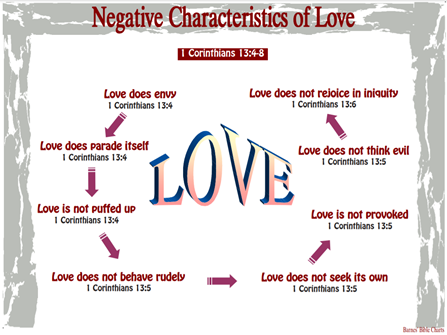
The last, but certainly not the least passage that compels me is actually several; those passages about LOVE. It’s best to read them and let them be their own commentary…
“Jesus said unto him, Thou shalt love the Lord thy God with all thy heart, and with all thy soul, and with all thy mind.” (Mat 22:37)
“For this is the love of God, that we keep his commandments: and his commandments are not grievous.” (1John 5:3)
“Beloved, let us love one another: for love is of God; and every one that loveth is born of God, and knoweth God. He that loveth not knoweth not God; for God is love.” (1John 4:7-8)
“But I say unto you which hear, Love your enemies, do good to them which hate you,” (Luke 6:27)
“Love not the world, neither the things that are in the world. If any man love the world, the love of the Father is not in him. For all that is in the world, the lust of the flesh, and the lust of the eyes, and the pride of life, is not of the Father, but is of the world. And the world passeth away, and the lust thereof: but he that doeth the will of God abideth for ever.” (1John 2:15-17)
Paul calls love, “a more excellent way” [1Cor 12:31; 13:13].
“And Jesus answered him, The first of all the commandments is, Hear, O Israel; The Lord our God is one Lord: And thou shalt love the Lord thy God with all thy heart, and with all thy soul, and with all thy mind, and with all thy strength: this is the first commandment. And the second is like, namely this, Thou shalt love thy neighbour as thyself. There is none other commandment greater than these.” [Mark 12:29-31]
The best commentary on Love is found in the Scriptures. Let’s see love from four perspectives.
God’s Love for us
God is Love – 1Jo 4:8 He that loveth not knoweth not God; for God is love. Titus 3:4-6
God Gave His son – 1Jo 4:9, 10 In this was manifested the love of God toward us, because that God sent his only begotten Son into the world, John 3:16, 17; Rom 5:8; Eph 2:4,5
God blesses His children – 1Jo 3:1 Behold, what manner of love the Father hath bestowed upon us, that we should be called the sons of God: Eph 1:3 every spiritual blessings
Every good thing – James 1:17 – comes from above; Acts 17:28
God sends sun & rain – Mt 5:45 for he maketh his sun to rise on the evil and on the good, and sendeth rain on the just and on the unjust.
Christ’s Love for us
Passes knowledge– Eph 3:19 And to know the love of Christ, which passeth knowledge, that ye might be filled with all the fulness of God.
As Father loved Him – Joh 15:9, 10 If ye keep my commandments, ye shall abide in my love; even as I have kept my Father’s commandments, and abide in his love.
He gave Himself – Joh 15:13 Greater love hath no man than this, that a man lay down his life for his friends.; Eph 5:2; 1Joh 3:16; Rev 1:5
His own– Joh 13:1, 34 A new commandment I give unto you, That ye love one another; as I have loved you, that ye also love one another.
Those who obey – Joh 14:21 He that hath my commandments, and keepeth them, he it is that loveth me: and he that loveth me shall be loved of my Father, and I will love him, and will manifest myself to him.
Man’s love for God & Christ
Great command– 1Jo 4:19 We love him, because he first loved us. Mark 12:28-30; Mt 22:36-40
Good thing for those that do – Ro 8:28 And we know that all things work together for good to them that love God, 1Corinthians 2:9 ings which God hath prepared for them that love him.
Crown of life / Kingdom – Jas 2:5 Hearken, my beloved brethren, Hath not God chosen the poor of this world rich in faith, and heirs of the kingdom which he hath promised to them that love him? [1:12]
Love displayed through obedience – 1Jo 5:3 For this is the love of God, that we keep his commandments:
2Joh 6; John 14:15, 21, 23
Love for truth – 2Th 2:10-12 because they received not the love of the truth, that they might be saved.
Man’s love for others
Brethren – 1Th 4:9; 1Th 3:12 And the Lord make you to increase and abound in love one toward another, and toward all men, even as we do toward you:
John 13:34; 15:12; 1Pe 1:22; 2:17;
1Jo 2:10, 3:11, 14, 23; 4:11, 12
2Pe 1:7 And to godliness brotherly kindness; and to brotherly kindness charity.
Neighbor – Ro 13:8 Owe no man any thing, but to love one another: for he that loveth another hath fulfilled the law.
[Mr 12:31; James 2:8]
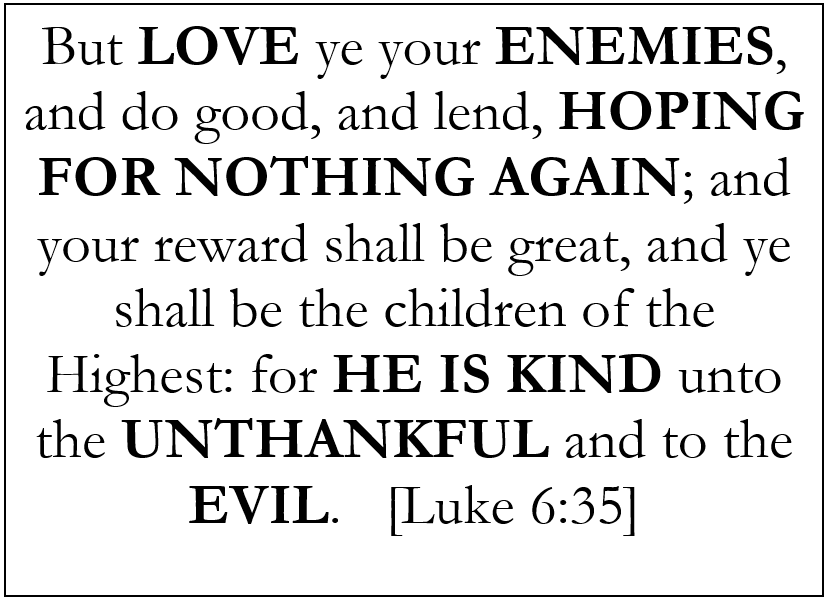
Enemies – Lu 6:35 But love ye your enemies, and do good, and lend, hoping for nothing again; and your reward shall be great, and ye shall be the children of the Highest:
Mt 5:43, 44 But I say unto you, Love your enemies, bless them that curse you, do good to them that hate you, and pray for them which despitefully use you, and persecute you;




 Borger church of Christ @ Franklin & Juniper