In my walk with Christ, I’m learning to aspire to excellence through godliness and holiness, though I often feel unworthy of such a high calling. 1 Timothy 6:11 urges me to pursue godliness, a life of devotion to God, while Hebrews 12:14 calls me to “pursue… holiness, without which no one will see the Lord.” These virtues connect to the righteousness and faith in 1 Timothy 6:11 and 2 Timothy 2:22, and they echo the call to seek “things above” in Colossians 3:1-2. I’m far from perfect, but I long to reflect God’s character more each day.
This pursuit is crucial because it draws me closer to God Himself. Godliness means living with reverence, seeking His will in every decision, but I often get distracted by worldly concerns. Holiness, too, challenges me to stand apart from sin and selfishness, as Hebrews 12:14 warns that without it, I won’t see God. This sobers me, reminding me that my efforts matter, not to earn salvation but to honor the One who saved me. These virtues shape my heart, teaching me to love what God loves and hate what He hates, aligning with the righteousness of both Timothy passages.
Aspiring to godliness and holiness is a humbling journey. I need the support of other saint, as 2 Timothy 2:22 suggests, pursuing these virtues “with those who call on the Lord.” Through prayer, Scripture, and accountability, I’m slowly growing, learning to forgive quickly, speak truthfully, and serve humbly. Each step feels like a battle, but it’s worth it to become more like Christ. As a saint, I seek this treasure of excellence, trusting God to refine me into His image, one faltering step at a time.
As I walk this journey of faith, I’m learning that selfless love is the heartbeat of what it means to follow Christ. The New Testament tells me to pursue love (agape, the kind of love that puts others first) as Paul urges in 1 Corinthians 14:1, “Pursue love,” and 1 Corinthians 10:24, “Let no one seek his own, but each one the other’s well-being.” I see this love woven into the virtues of 1 Timothy 6:11 and 2 Timothy 2:22, where love stands alongside righteousness, faith, and peace. Yet, I confess, loving selflessly doesn’t come naturally to me. It’s a daily choice to set aside my own desires and seek the good of those around me.
This pursuit matters deeply because love is the foundation of God’s kingdom. Paul says in 1 Corinthians 13:13 that love is greater than faith or hope, and I’m beginning to understand why. When I choose to love others (whether through a kind word, a listening ear, or an act of hospitality like Romans 12:13 encourages) I reflect Christ’s heart. Every effort to encourage others flows from this love. But I stumble often. My selfishness creeps in, and I need God’s grace to soften my heart, to help me embody the gentleness of 1 Timothy 6:11 or the peace of 2 Timothy 2:22 in my relationships.
Striving for selfless love is transforming me. It pushes me to forgive when I’d rather hold a grudge, to serve when I’m tired, and to prioritize others’ needs over my own comfort. It’s humbling to realize how far I fall short, yet I find joy in small steps, like a kind word to a neighbor or praying for a struggling friend. This pursuit brightens the light of Christ in my heart, showing the world a glimpse of Jesus’ love through my imperfect efforts. As a saint, I am to keep chasing this treasure, trusting God to make my love more like His.
Life can throw some heavy punches, can’t it? For the believers in Thessalonica, those punches came in the form of persecutions, false teachings, and even some within their own community slacking off and stirring up trouble. Yet, in his second letter to them, Paul points to three timeless virtues (faith, hope, and love) as the keys to standing firm, no matter what others say or do. Rooted in knowing God’s word, these qualities enabled the Thessalonians to rise above their troubles and the “lowness” of their troublers.
Chapter 1: Enduring Through Faith, Hope, and Love
The Thessalonian church was under fire, literally and figuratively. They faced “persecutions and tribulations” (2 Thessalonians 1:4, KJV), likely from hostile neighbors or authorities who opposed their faith. Yet Paul couldn’t stop bragging about them: “We ourselves glory in you in the churches of God for your patience and faith in all your persecutions and tribulations that ye endure” (1:4). Their faith wasn’t just a Sunday morning nod to God; it was a steadfast trust in His promises, even when the world seemed against them. That faith, Paul says, was “growing exceedingly” (1:3), and their love for one another was increasing right alongside it.
But what kept them going? HOPE. Paul paints a vivid picture of hope tied to God’s justice and Christ’s return: “Seeing it is a righteous thing with God to recompense tribulation to them that trouble you; And to you who are troubled rest with us, when the Lord Jesus shall be revealed from heaven with his mighty angels” (1:6-7). The promise that God would deal with their troublers and grant them relief gave them a reason to hold on. This hope wasn’t wishful thinking, it was grounded in God’s word, which assured them that their suffering was “a manifest token of the righteous judgment of God” (1:5). Knowing God’s word fueled their faith to endure, their hope to look forward, and their love to care for one another, even under pressure. Paul prayed for this to continue, asking God to “fulfil all the good pleasure of his goodness, and the work of faith with power” (1:11).
So, what’s the lesson? When trouble comes (whether it’s people attacking your faith or life’s hardships piling up) lean into faith, hope, and love. Trust God’s word, hold fast to the promise of Christ’s return, and keep loving those around you. That’s how you stay faithful, no matter what others do.
Chapter 2: Standing Firm Against Deception
The troubles didn’t stop with persecution. Someone was spreading lies, maybe even claiming Paul’s authority, saying the day of the Lord had already come. This shook the Thessalonians, leaving them “troubled” and “shaken in mind” (2 Thessalonians 2:2). Imagine the confusion, thinking you missed the biggest event in history! But Paul steps in with clarity, urging them not to be “soon shaken in mind, or be troubled, neither by spirit, nor by word, nor by letter as from us” (2:2). He reminds them of God’s word, which he’d already taught: the day of the Lord won’t come until the “man of lawlessness” is revealed (2:3-4) and destroyed by Christ’s return (2:8).
Here’s where faith, hope, and love shine again. Their faith in the truth (God’s word) kept them from falling for deception. Paul calls them “brethren beloved of the Lord” (2:13), chosen for salvation “through sanctification of the Spirit and belief of the truth” (2:13; see John 17:17). That belief anchored them. Hope came from knowing Christ would return to set things right: “The Lord Jesus Christ… shall destroy with the brightness of his coming” (2:8). This hope steadied them against false alarms. And love? Paul prays for their hearts to be comforted and established “in every good word and work” (2:16-17), a call to keep loving and serving each other despite the chaos.
The troublers spreading lies were low, trying to unsettle God’s people. But Paul’s answer is clear: “Therefore, brethren, stand fast, and hold the traditions which ye have been taught, whether by word, or our epistle” (2:15). Stay rooted in God’s word. Let faith keep you grounded, hope keep you looking up, and love keep you moving forward. That’s how you abound, no matter what others say.
Chapter 3: Overcoming Internal Troubles
If external persecution and false teachings weren’t enough, the Thessalonians had trouble within their own ranks. Some believers were “walking disorderly,” refusing to work and meddling as busybodies (2 Thessalonians 3:6, 11). This idleness wasn’t just laziness, it disrupted the work of the church. Paul doesn’t mince words: “If any would not work, neither should he eat” (3:10). Yet even this discipline is rooted in love, as he urges the church to correct the idle “as a brother” (3:15), not an enemy.
Faith shows up in Paul’s confidence that the Thessalonians would stay faithful: “We have confidence in the Lord touching you, that ye both do and will do the things which we command you” (3:4). Their hope was tied to God’s word, which provided clear instructions for living, and to the promise of God’s peace: “Now the Lord of peace himself give you peace always by all means” (3:16). Love guided their response to the troublers within, balancing discipline with care, and Paul prayed that “the Lord direct your hearts into the love of God, and into the patient waiting for Christ” (3:5).
The idle were acting low, causing trouble by neglecting their responsibilities. But Paul calls the church to a higher standard: “Be not weary in well doing” (3:13). By staying faithful to God’s word (working diligently, loving one another, and holding fast to His commands) they could overcome even internal challenges.
Tying It All Together
What do we learn from the Thessalonians? Troubles and troublers come in many forms: persecutors who mock your faith, deceivers who twist the truth, or even fellow believers who let you down. But faith, hope, and love, rooted in knowing God’s word, are your strength. Faith keeps you trusting God’s truth, like the Thessalonians’ belief in the gospel (2:13) and obedience to Paul’s teaching (3:4). Hope lifts your eyes to God’s vengeance (1:6-9, 2:8) and Christ’s return (1:7, 2:8), assuring you that troubles won’t have the last word. Love binds you to your brothers and sisters, growing even in tough times (1:3) and guiding how you correct the wayward (3:15).
Knowing God’s word is the thread that ties it all together. It’s the foundation for faith, the source of hope, and the guide for love. The Thessalonians’ troubles didn’t define them, their faithfulness did. They stayed abounding, growing in faith and love (1:3), standing firm against lies (2:15), and doing good despite setbacks (3:13). So, when others try to drag you down with their words or actions, don’t stoop to their level. Hold fast to God’s word. Let faith, hope, and love keep you faithful and abounding, just as they did for the Thessalonians.
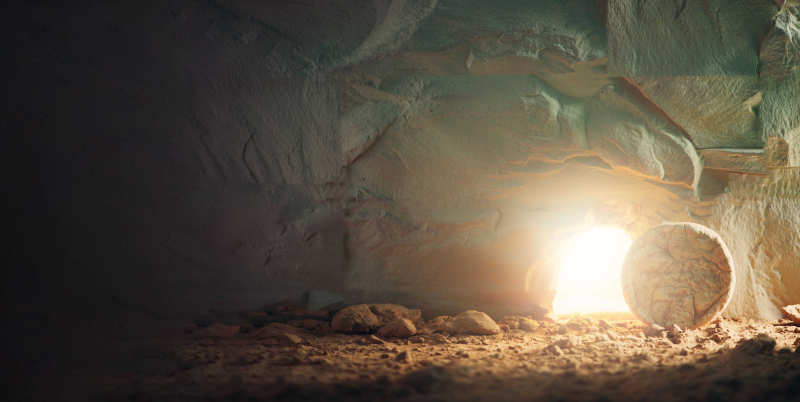
The Empty Tomb: Historical Evidence and Explanations
The empty tomb of Jesus Christ stands as one of the most compelling pieces of historical evidence supporting His resurrection, defying naturalistic explanations and aligning with the transformative impact of early Christianity. Recorded in all four Gospels (Matthew 28:1-10, Mark 16:1-8, Luke 24:1-12, John 20:1-18), the tomb’s vacancy is more than a theological claim but a historical puzzle that demands a logical resolution.
First, the empty tomb is a widely attested fact, even by Jesus’ opponents. The Gospel of Matthew notes that the Jewish leaders bribed guards to claim the disciples stole the body (Matthew 28:11-15), implicitly conceding the tomb was empty. This early counter-narrative, preserved in a text dated to within decades of the event, suggests the vacancy was undeniable—otherwise, producing the body would have silenced the resurrection claim. Historian N.T. Wright, in The Resurrection of the Son of God (2003), argues that this admission from hostile sources strengthens the case, as it reflects a historical reality too stubborn to dismiss.
Second, alternative explanations falter under scrutiny. The “stolen body” theory lacks plausibility: the disciples, described as terrified post-crucifixion (John 20:19), were unlikely to overpower Roman guards, risking death for a corpse. The Roman seal and guard presence (Matthew 27:62-66) further complicate this scenario—failure to secure the tomb would have cost the soldiers their lives. The “wrong tomb” hypothesis also fails; the burial site, owned by Joseph of Arimathea, a known figure (Mark 15:43), was no obscure location. Women witnesses, the first to report the empty tomb (Luke 24:1-3), would have ensured accuracy, as their testimony—unexpected in a patriarchal culture—adds credibility, per historian Michael Licona in The Resurrection of Jesus (2010).
Third, the empty tomb’s implications align with historical outcomes. If Jesus’ body remained, the Jewish or Roman authorities, with every motive to crush Christianity, could have displayed it to end the movement. Instead, Christianity exploded, with Paul citing over 500 witnesses to the risen Christ (1 Corinthians 15:3-8), a claim circulated early enough to be verified. The transformation of disciples into bold proclaimers (Acts 2:14-36) and the conversion of skeptics like Paul (Acts 9:1-19) hinge on an event—the resurrection—tied to that empty tomb. Archaeologically, no rival tomb has ever surfaced, despite Jerusalem’s significance.
Finally, the cultural context bolsters the argument. Jewish theology expected a general resurrection at history’s end, not an individual rising (Daniel 12:2). The claim of Jesus’ resurrection, centered on an empty tomb, was radical yet gained traction, suggesting an extraordinary event shifted expectations. As scholar Gary Habermas notes in The Case for the Resurrection of Jesus (2004), the tomb’s emptiness, paired with appearances, best explains this shift. The empty tomb stands as a historical anchor—unrefuted by foes, unexplainable by skeptics, and unshaken by time. No body was found because no body remained; the tomb’s silence screams resurrection.
A Passionate Plea to My Catholic Friends: Turn to the True Gospel
MY DEAR CATHOLIC FRIENDS, I come to you with a heart overflowing with love and urgency, pleading with you to hear the truth about the dangers of the Catholic faith. As your friend, I cannot stay silent when I see you entangled in a system that strays from the pure gospel of Christ. With Scripture as our guide, here are five critical warnings, praying they will open your eyes to the truth and lead you to the freedom found in Jesus alone.
FIRST, Jesus Himself warned us in Matthew 23:9, “Call no man your father on earth, for you have one Father, who is in heaven.” Yet the Catholic Church exalts the Pope, calling him “Holy Father” or “Papa,” a title reserved for God alone. This is no minor mistake—it elevates a man to a position that belongs only to our Heavenly Father. Paul referenced himself “as a father” but never took on the title as “Holy Father.” He often used humbling language and pleaded with people not to bow down to him. “Sirs, why do ye these things? We also are men of like passions with you, and preach unto you that ye should turn from these vanities unto the living God, which made heaven, and earth, and the sea, and all things that are therein:” (Acts 14:15). I implore you to reject this practice and honor God alone as your Father.
SECOND, the organization of the Catholic Church, with its hierarchy of popes, cardinals, and priests, contradicts the biblical model for the church. In 1 Timothy 3:1-10, Paul outlines the qualifications for elders and deacons—humble, local leaders who serve the local body of Christ, not a global institution with supreme rulers. The Catholic structure, centered in the Vatican, adds layers of human authority that Scripture never endorses. The largest organization of the Lord’s church on earth is the local church with autonomy from any other. Please, compare this to God’s Word and see the difference for yourselves!
THIRD, the Catholic religion preaches a perverted gospel, which Paul condemns in Galatians 1:6-10. The Catholic Church distorts the biblical gospel by adding human inventions like infant baptism, the granting of indulgences, an infallible Pope, and purgatory, which obscure the truth of salvation. Scripture teaches that salvation comes through faith in Christ, expressed in obedience to His commands, such as believing and being baptized, as Jesus declared in Mark 16:16: “Whoever believes and is baptized will be saved.” In Acts 19:1-5, Paul taught the Ephesians to believe and be baptized, and they demonstrated repentance by burning their magic books, showing fruits worthy of their faith. While Ephesians 2:8-9 affirms salvation is by grace through faith, not by works of human merit, this faith is active and obedient, not a mere mental assent. By contrast, Catholicism’s reliance on sacraments, human mediators to forgive sins, and man-made doctrines perverts the gospel’s simplicity. Paul warns, “If anyone is preaching to you a gospel contrary to the one you received, let him be accursed!” My friends, this is a matter of eternal life—reject these false teachings and embrace the true gospel of Christ’s grace and obedient faith!
FOURTH, the Catholic Church elevates men above what is proper, violating 1 Corinthians 4:6, which warns us “not to think of men above that which is written.” The veneration of Mary, the canonization of saints, and the authority given to priests and popes place mere humans on pedestals that belong to God alone. Mary was a humble servant, not a co-redeemer; saints are all believers, not an elite class; and no man can stand between you and Christ as your mediator (1 Timothy 2:5). I plead with you to humble yourselves before God and reject these man-made traditions!
FINALLY, the Catholic Church promotes false signs and a misunderstanding of saints, contradicting 1 Corinthians 1:2 and 13:8-11. In 1 Corinthians 1:2, Paul calls all Christians saints, not just those canonized by the Church. The Catholic obsession with miracles, apparitions, and relics often borders on idolatry, and 1 Corinthians 13:8-11 tells us that miraculous signs were temporary, meant to confirm the gospel in the early church, not to be sought after today. Turn away from these deceptive signs and embrace the sufficiency of Christ and His Word!
MY FRIENDS, I know these words may be hard to hear, but they come from a heart that loves you and longs for you to know the freedom of the true gospel. The traditions of Catholicism may feel comforting, but they are a trap, leading you away from the simplicity and purity of Christ. I beg you, search the Scriptures for yourselves, test what I’ve said, and turn to Jesus alone for salvation. He is enough! May God open your eyes and draw you to His truth. With all my love, I pray for you.
The resurrection of Jesus Christ, as recounted in the New Testament, is a cornerstone of Christian faith, yet its historical plausibility rests on compelling logical evidence that withstands scrutiny. Unlike myths or fabrications, the resurrection narrative is supported by the rapid transformation of disciples, the empty tomb, and the inability of contemporary authorities to disprove it—details that align with human behavior, historical context, and rational inference. When examined alongside biblical accounts and extra-biblical corroboration, these elements form a persuasive case for its occurrence.
First, the dramatic shift in the disciples’ behavior provides strong circumstantial evidence. Before Jesus’ crucifixion, they were fearful and scattered—Peter denying him thrice (John 18:17-27) and others fleeing (Matthew 26:56). Yet, post-resurrection, these same men boldly proclaimed his rising, risking death (Acts 4:19-20). Psychologist J.P. Moreland (Scaling the Secular City, 1987) argues that such a psychological reversal, from despair to unwavering conviction, demands an extraordinary catalyst. The resurrection appearances (1 Corinthians 15:5-8) offer a logical explanation, as no mere hallucination or fraud could sustain their lifelong commitment, evidenced by martyrdoms like Peter’s (Eusebius, Ecclesiastical History, 2.25).
Second, the empty tomb stands as a physical anchor for the resurrection claim. All four Gospels (Matthew 28:6, Mark 16:6, Luke 24:3, John 20:6-7) report the tomb vacant, a detail corroborated by the inability of Jewish and Roman authorities to produce Jesus’ body despite their incentive to quash the nascent Christian movement. Historian Gary Habermas (The Case for the Resurrection of Jesus, 2004) notes that the Sanhedrin’s accusation of body theft by disciples (Matthew 28:13) implicitly concedes the tomb was empty. Logically, if the body remained, displaying it would have been the simplest rebuttal, yet no such counterevidence emerged—a silence that speaks volumes.
Third, the rapid rise and spread of Christianity in a hostile environment defy naturalistic explanations. Within decades, a movement rooted in a crucified leader—deemed a failure by Roman and Jewish standards—flourished, as attested by Tacitus (Annals, 15.44) and Pliny the Younger (Letters, 10.96). The resurrection provided the ideological fuel, transforming a shameful death into a triumph (1 Corinthians 15:54-55). Sociologist Rodney Stark (The Rise of Christianity, 1996) calculates that Christianity grew at 40% per decade, a rate inexplicable without a galvanizing event like the resurrection, which offered hope and empirical testimony (Acts 2:32).
Critics propose alternatives—swoon theory, theft, or mass hallucination—but these falter under scrutiny. A half-dead Jesus (swoon) couldn’t inspire worship, theft lacks motive given the disciples’ initial disbelief (Luke 24:11), and hallucinations don’t align with group encounters over 40 days (Acts 1:3). The Journal of the American Academy of Religion (Vol. 74, 2006) notes that the resurrection hypothesis best accounts for the data’s coherence.
The resurrection’s logical strength lies in its explanatory power—uniting transformed lives, an empty grave, and a movement’s improbable rise into a singular, rational narrative. Jesus didn’t just defy death; he redefined history, leaving evidence too robust to dismiss.
In Matthew 25:10, within the parable of the ten virgins, Jesus declares, “And while they were going to buy, the bridegroom came, and those who were ready went in with him to the marriage feast, and the door was shut.” This vivid imagery underscores a sobering truth: opportunities for salvation and readiness have limits. The shutting of the door represents finality, a point of no return in our spiritual journey. How, then, is this door shut in practical application? Scripture reveals four key ways that the door becomes shut.
First, death is a closed door. Hebrews 9:27 states, “It is appointed for man to die once, and after that comes judgment.” Life is the season for repentance and faith, but death ends that opportunity, once life ends, the opportunity for repentance ceases. The parable’s foolish virgins, unprepared when the bridegroom arrived, mirror those who delay repentance, assuming time remains. Death seals our choices, shutting the door to further chances to accept God’s grace by obeying the gospel. This urges us to live ready, embracing salvation now, as tomorrow is not promised (2 Corinthians 6:2). Like the foolish virgins who scrambled too late to prepare, those who postpone turning to Christ risk facing eternity unprepared. This reality presses us to act now, (by obeying the gospel through baptism by through faith, Colossians 2:11-12) because no one knows their final hour (James 4:14). Death’s finality demands we live ready.
Second, obstinance toward the Holy Spirit shuts the door. Acts 7:51 warns against resisting the Spirit, who convicts us of sin and guides us to truth (John 16:8). Rejecting the revealed Word (God’s plan for salvation through Christ and call to godliness) hardens the heart. Like Pharaoh, who ignored God’s signs (Exodus 8:15), persistent refusal to heed Scripture’s clear path (John 3:16; Acts 2:38) closes the door to grace. Jesus warned of blasphemy against the Spirit as an unforgivable sin (Matthew 12:31-32), reflecting a willful, persistent refusal to accept God’s way. The foolish virgins’ lack of oil mirrors this neglect, choosing self-reliance over surrender. The foolish virgins’ neglect of oil symbolizes this willful unpreparedness, choosing self over surrender to God’s Spirit. To keep the door open, we must heed the Spirit’s prompting today through the revealed word in scripture.
Third, refusing to open the door Jesus knocks upon seals our exclusion. Revelation 3:20 declares, “Behold, I stand at the door and knock. If anyone hears my voice and opens the door, I will come in.” Salvation is a personal choice; Jesus invites, but we must respond. Ignoring His call (through apathy, pride, or worldly distractions) leaves us outside the feast, as the virgins discovered. Scripture laments those who reject God’s invitation (Luke 14:24), underscoring that an unopened heart shuts the door to eternal life. There are several examples of those who turned away from Jesus. The Rich Young Ruler (Matthew 19:16-22). Some of Jesus’ Disciples (John 6:60-66). Answering Jesus now ensures entry.
Fourth, Christ’s return will shut the door finally for all. Matthew 25:31-46 describes the judgment day, when Christ separates the ready from the unprepared. The bridegroom’s arrival in the parable foreshadows this moment, when “the Son of Man comes” unexpectedly (Matthew 24:44). No further chances remain; every soul will account for their faith and deeds (2 Corinthians 5:10). As God shut the ark’s door before the flood (Genesis 7:16), Christ’s return will close salvation’s offer, finalizing destinies. On that day, “But the day of the Lord will come as a thief in the night; in the which the heavens shall pass away with a great noise, and the elements shall melt with fervent heat, the earth also and the works that are therein shall be burned up.” (2Peter 3:10). This compels us to live in readiness, clothed in Christ (Galatians 3:27), faith and obedience.
Matthew 25:10 is a call to vigilance. Death’s certainty, the Spirit’s voice, Jesus’ knock, and Christ’s return all remind us: the door is open now, but not forever. Like the wise virgins, we must prepare (embracing salvation, yielding to God’s Spirit, welcoming Christ, and awaiting His return). Let us act before the door is shut, securing our place at the eternal feast.
Life is full of hardship. Suffering, loss, and disappointment are part of the human experience. Some struggle with grief, others with betrayal, loneliness, or physical pain. No one is immune to the trials of life. Yet, in the midst of sorrow, there is One who offers healing, hope, and peace—Jesus Christ.
Jesus understands suffering because He experienced it firsthand. Isaiah 53:3 describes Him as “a man of sorrows, and acquainted with grief.” He knew what it was like to be rejected, betrayed, and physically tormented. He endured humiliation and pain on the cross, bearing the weight of humanity’s sin. Because of this, He is uniquely qualified to comfort those who are hurting. Hebrews 4:15 assures us that we have a Savior who can sympathize with our weaknesses, for He was “tempted like as we are, yet without sin.”
Hope in Christ for the Hurt of This Life
Pain can make life feel unbearable. The world offers temporary distractions, but they cannot bring lasting peace. Only Christ provides true hope. John 16:33 reminds us of this reality: “In the world ye shall have tribulation: but be of good cheer; I have overcome the world.” The suffering of this present life is temporary, but the joy found in Christ is eternal. Paul declares in Romans 8:18, “For I reckon that the sufferings of this present time are not worthy to be compared with the glory which shall be revealed in us.” When we trust in Christ, we gain a perspective that allows us to endure, knowing that something far greater awaits.
“For as many of you as have been baptized into Christ have put on Christ.” (Galatians 3:27)
Understanding from Christ, Who Endured Suffering
One of the most comforting truths about Jesus is that He understands human suffering. He was betrayed by a close friend (Luke 22:48; Psalm 41:9), falsely accused (Matthew 26:59-60), mocked (Matthew 27:29-31), and crucified (Luke 23:33). He knows what it feels like to be abandoned, rejected, and mistreated. This means that when we pour out our hearts to Him, we are speaking to One who truly understands. Psalm 34:18 assures us, “The Lord is nigh unto them that are of a broken heart.”
“Know ye not, that so many of us as were baptized into Jesus Christ were baptized into his death?” (Romans 6:3)
Rest and Peace in His Forgiveness and Mercy
Many suffer not only from external circumstances but also from the weight of guilt and shame. Sin leaves scars, and the burden of past mistakes can feel overwhelming. Yet, Jesus offers complete forgiveness. Matthew 11:28 invites us, “Come unto me, all ye that labour and are heavy laden, and I will give you rest.” Through His sacrifice, we are freed from sin’s condemnation. Psalm 103:12 declares, “As far as the east is from the west, so far hath he removed our transgressions from us.” In Christ, we find peace, knowing that our past does not define us.
“And now why tarriest thou? arise, and be baptized, and wash away thy sins, calling on the name of the Lord.” (Acts 22:16)
Truth, Life, and True Joy
Many search for meaning in temporary pleasures, but Jesus alone is the source of true life. He declares in John 14:6, “I am the way, the truth, and the life.” The joy He gives is not dependent on circumstances but is rooted in a relationship with Him. John 15:11 states, “These things have I spoken unto you, that my joy might remain in you, and that your joy might be full.”
“And when they were come up out of the water, the Spirit of the Lord caught away Philip, that the eunuch saw him no more: and he went on his way rejoicing.” (Acts 8:39)
Jesus, Our Intercessor
For those who feel distant from God, Jesus bridges the gap. 1 Timothy 2:5 tells us, “For there is one God, and one mediator between God and men, the man Christ Jesus.” He intercedes for us before the Father, offering continual access to God’s grace and help.
“And whatsoever we ask, we receive of him, because we keep his commandments, and do those things that are pleasing in his sight.” (1John 3:22)
He Never Leaves nor Forsakes Us
Loneliness is one of the deepest forms of suffering. Yet, Jesus promises, “I will never leave thee, nor forsake thee” (Hebrews 13:5). Even when we feel abandoned, He is always near.
“And he that keepeth his commandments dwelleth in him, and he in him. And hereby we know that he abideth in us, by the Spirit which he hath given us.” (1John 3:24)
Good Can Come Despite the Pain
While suffering is hard, God can bring blessings out of trials. Romans 8:28 reassures us, “And we know that all things work together for good to them that love God.” Even when we don’t understand, we can trust that He can bring about good despite the pain and suffering in this life.
“My brethren, count it all joy when ye fall into divers temptations; Knowing this, that the trying of your faith worketh patience.” (James 1:2-3)
Conclusion
No matter what pain or sorrow you carry, Jesus offers hope and healing. Turn to Him, and you will find peace, understanding, and the strength to endure. “Casting all your care upon him; for he careth for you.” (1 Peter 5:7)
Agape
Spencer
There is a way you may know if you have eternal life.
Who Was in the Manger? The question, “Who was in the manger?” directs our thoughts to a singular event in human history: the birth of Jesus Christ. The identity of the One lying in that humble setting reveals profound truths about God’s plan for mankind.
The Messiah The child in the manger was the long-awaited Messiah, the Anointed One sent to save humanity. Andrew declared in John 1:41, “We have found the Messiah.” The angels echoed this truth to shepherds, proclaiming, “Unto you is born this day in the city of David a Saviour, which is Christ the Lord” (Luke 2:11). This Messiah came not just for Israel but for all mankind, as Matthew 1:21 reveals: “He shall save his people from their sins.” Paul emphasized in 1 Timothy 1:15 that Christ’s purpose was to save sinners.
Alpha and Omega The baby in the manger was more than just the Savior; He was the eternal God, the Alpha and the Omega, the beginning and the end (Revelation 1:8). While the world saw a helpless infant, in Him dwelled the fullness of deity. His coming was the intersection of the Creator stepping into His creation.
Name Above All Names The child born in Bethlehem carried the name above all names, one that is unequaled in power and significance. Acts 4:12 declares, “There is none other name under heaven given among men, whereby we must be saved.” Philippians 2:9 states that God exalted Jesus and gave Him a name above every name.
God’s Only and Beloved Son This infant was God’s only begotten and beloved Son, sent to fulfill His divine mission. Mark 9:7 records God’s declaration: “This is my beloved Son: hear him.” Peter confessed in Matthew 16:16, “Thou art the Christ, the Son of the living God.” As God’s Son, Jesus was uniquely qualified to reconcile humanity to the Father, demonstrating both God’s love and His justice.
Eternal Life Giver In the manger lay the giver of eternal life. John 1 portrays Him as the Word, the source of life and light for all. Jesus Himself said, “The words that I speak unto you, they are spirit, and they are life” (John 6:63). This eternal life is not only a future promise but a present reality for those who believe in Hime and obey the Gospel.
The Root and Offspring of David Finally, the child in the manger was both the root and offspring of David, fulfilling prophecy and confirming His rightful place as King. Revelation 22:16 proclaims, “I am the root and the offspring of David, and the bright and morning star.” He is the Lion of the tribe of Judah, worthy to reign forever (Revelation 5:5).
The one in the manger was no ordinary child. He was the Messiah, the Alpha and Omega, the name above all names, God’s beloved Son, the eternal life giver, and the root and offspring of David. While we don’t know when Jesus was born, we take this time of year as an opportunity to talk to folks because many are already thinking about Him. It’s an opportunity to remind the world of who Jesus truly is and why He came: to offer salvation and eternal hope to all who believe. Let’s use this season and every season to share the good news of the Savior who changed everything.
When Jesus had spoken these words, He went forth with His disciples over the brook Cedron, where was a garden, into the which He entered, and His disciples. And Judas also, which betrayed Him, knew the place: for Jesus oftentimes resorted thither with His disciples (John 18:1-2).
And while He yet spake, lo, Judas, one of the twelve, came, and with him a great multitude with swords and staves, from the chief priests and elders of the people (Matthew 26:47). And Judas received a band of men and officers from the chief priests and Pharisees, and cometh thither with lanterns and torches and weapons (John 18:3).
Jesus therefore, knowing all things that should come upon Him, went forth, and said unto them, “Whom seek ye?” They answered Him, “Jesus of Nazareth.” Jesus saith unto them, “I am He.” And Judas also, which betrayed Him, stood with them. As soon then as He had said unto them, “I am He,” they went backward, and fell to the ground (John 18:4-6).
Then asked He them again, “Whom seek ye?” And they said, “Jesus of Nazareth.” Jesus answered, “I have told you that I am He: if therefore ye seek Me, let these go their way:” that the saying might be fulfilled, which He spake, “Of them which Thou gavest Me have I lost none” (John 18:7-9).
Now he that betrayed Him gave them a sign, saying, “Whomsoever I shall kiss, that same is He: hold Him fast, and lead Him away safely” (Mark 14:44). And forthwith he came to Jesus, and said, “Hail, Master;” and kissed Him (Matthew 26:49).
And Jesus said unto him, “Friend, wherefore art thou come? Betrayest thou the Son of man with a kiss?” (Matthew 26:50, Luke 22:48). When they which were about Him saw what would follow, they said unto Him, “Lord, shall we smite with the sword?” (Luke 22:49). Then Simon Peter having a sword drew it, and smote the high priest’s servant, and cut off his right ear. The servant’s name was Malchus (John 18:10).
Then said Jesus unto Peter, “Put up thy sword into the sheath: for all they that take the sword shall perish with the sword. The cup which My Father hath given Me, shall I not drink it?” (John 18:11, Matthew 26:52). And He touched his ear, and healed him (Luke 22:51).
In that same hour said Jesus to the multitudes, “Are ye come out as against a thief with swords and staves for to take Me? I sat daily with you teaching in the temple, and ye laid no hold on Me. But this is your hour, and the power of darkness” (Matthew 26:55, Luke 22:53). All this was done, that the scriptures of the prophets might be fulfilled (Matthew 26:56).
Then all the disciples forsook Him, and fled (Matthew 26:56, Mark 14:50).





 Borger church of Christ @ Franklin & Juniper