
Jesus is the one to follow when we’re HURTING

Hope and Healing in Christ for the Hurting

Life is full of hardship. Suffering, loss, and disappointment are part of the human experience. Some struggle with grief, others with betrayal, loneliness, or physical pain. No one is immune to the trials of life. Yet, in the midst of sorrow, there is One who offers healing, hope, and peace—Jesus Christ.

Jesus understands suffering because He experienced it firsthand. Isaiah 53:3 describes Him as “a man of sorrows, and acquainted with grief.” He knew what it was like to be rejected, betrayed, and physically tormented. He endured humiliation and pain on the cross, bearing the weight of humanity’s sin. Because of this, He is uniquely qualified to comfort those who are hurting. Hebrews 4:15 assures us that we have a Savior who can sympathize with our weaknesses, for He was “tempted like as we are, yet without sin.”

Hope in Christ for the Hurt of This Life

Pain can make life feel unbearable. The world offers temporary distractions, but they cannot bring lasting peace. Only Christ provides true hope. John 16:33 reminds us of this reality: “In the world ye shall have tribulation: but be of good cheer; I have overcome the world.” The suffering of this present life is temporary, but the joy found in Christ is eternal. Paul declares in Romans 8:18, “For I reckon that the sufferings of this present time are not worthy to be compared with the glory which shall be revealed in us.” When we trust in Christ, we gain a perspective that allows us to endure, knowing that something far greater awaits.

Understanding from Christ, Who Endured Suffering

One of the most comforting truths about Jesus is that He understands human suffering. He was betrayed by a close friend (Luke 22:48; Psalm 41:9), falsely accused (Matthew 26:59-60), mocked (Matthew 27:29-31), and crucified (Luke 23:33). He knows what it feels like to be abandoned, rejected, and mistreated. This means that when we pour out our hearts to Him, we are speaking to One who truly understands. Psalm 34:18 assures us, “The Lord is nigh unto them that are of a broken heart.”

Rest and Peace in His Forgiveness and Mercy

Many suffer not only from external circumstances but also from the weight of guilt and shame. Sin leaves scars, and the burden of past mistakes can feel overwhelming. Yet, Jesus offers complete forgiveness. Matthew 11:28 invites us, “Come unto me, all ye that labour and are heavy laden, and I will give you rest.” Through His sacrifice, we are freed from sin’s condemnation. Psalm 103:12 declares, “As far as the east is from the west, so far hath he removed our transgressions from us.” In Christ, we find peace, knowing that our past does not define us.

Truth, Life, and True Joy

Many search for meaning in temporary pleasures, but Jesus alone is the source of true life. He declares in John 14:6, “I am the way, the truth, and the life.” The joy He gives is not dependent on circumstances but is rooted in a relationship with Him. John 15:11 states, “These things have I spoken unto you, that my joy might remain in you, and that your joy might be full.”

Jesus, Our Intercessor

For those who feel distant from God, Jesus bridges the gap. 1 Timothy 2:5 tells us, “For there is one God, and one mediator between God and men, the man Christ Jesus.” He intercedes for us before the Father, offering continual access to God’s grace and help.

He Never Leaves nor Forsakes Us

Loneliness is one of the deepest forms of suffering. Yet, Jesus promises, “I will never leave thee, nor forsake thee” (Hebrews 13:5). Even when we feel abandoned, He is always near.

Good Can Come Despite the Pain

While suffering is hard, God can bring blessings out of trials. Romans 8:28 reassures us, “And we know that all things work together for good to them that love God.” Even when we don’t understand, we can trust that He can bring about good despite the pain and suffering in this life.

Conclusion

No matter what pain or sorrow you carry, Jesus offers hope and healing. Turn to Him, and you will find peace, understanding, and the strength to endure. “Casting all your care upon him; for he careth for you.” (1 Peter 5:7)

Agape

Spencer

There is a way you may know if you have eternal life.

Who was in the MANGER?

Who Was in the Manger?
The question, “Who was in the manger?” directs our thoughts to a singular event in human history: the birth of Jesus Christ. The identity of the One lying in that humble setting reveals profound truths about God’s plan for mankind.

The Messiah
The child in the manger was the long-awaited Messiah, the Anointed One sent to save humanity. Andrew declared in John 1:41, “We have found the Messiah.” The angels echoed this truth to shepherds, proclaiming, “Unto you is born this day in the city of David a Saviour, which is Christ the Lord” (Luke 2:11). This Messiah came not just for Israel but for all mankind, as Matthew 1:21 reveals: “He shall save his people from their sins.” Paul emphasized in 1 Timothy 1:15 that Christ’s purpose was to save sinners.

Alpha and Omega
The baby in the manger was more than just the Savior; He was the eternal God, the Alpha and the Omega, the beginning and the end (Revelation 1:8). While the world saw a helpless infant, in Him dwelled the fullness of deity. His coming was the intersection of the Creator stepping into His creation.

Name Above All Names
The child born in Bethlehem carried the name above all names, one that is unequaled in power and significance. Acts 4:12 declares, “There is none other name under heaven given among men, whereby we must be saved.” Philippians 2:9 states that God exalted Jesus and gave Him a name above every name.

God’s Only and Beloved Son
This infant was God’s only begotten and beloved Son, sent to fulfill His divine mission. Mark 9:7 records God’s declaration: “This is my beloved Son: hear him.” Peter confessed in Matthew 16:16, “Thou art the Christ, the Son of the living God.” As God’s Son, Jesus was uniquely qualified to reconcile humanity to the Father, demonstrating both God’s love and His justice.

Eternal Life Giver
In the manger lay the giver of eternal life. John 1 portrays Him as the Word, the source of life and light for all. Jesus Himself said, “The words that I speak unto you, they are spirit, and they are life” (John 6:63). This eternal life is not only a future promise but a present reality for those who believe in Hime and obey the Gospel.

The Root and Offspring of David
Finally, the child in the manger was both the root and offspring of David, fulfilling prophecy and confirming His rightful place as King. Revelation 22:16 proclaims, “I am the root and the offspring of David, and the bright and morning star.” He is the Lion of the tribe of Judah, worthy to reign forever (Revelation 5:5).

The one in the manger was no ordinary child. He was the Messiah, the Alpha and Omega, the name above all names, God’s beloved Son, the eternal life giver, and the root and offspring of David. While we don’t know when Jesus was born, we take this time of year as an opportunity to talk to folks because many are already thinking about Him. It’s an opportunity to remind the world of who Jesus truly is and why He came: to offer salvation and eternal hope to all who believe. Let’s use this season and every season to share the good news of the Savior who changed everything.

Agape,

Spencer

What did Judas bring to the garden?

When Jesus had spoken these words, He went forth with His disciples over the brook Cedron, where was a garden, into the which He entered, and His disciples. And Judas also, which betrayed Him, knew the place: for Jesus oftentimes resorted thither with His disciples (John 18:1-2).

And while He yet spake, lo, Judas, one of the twelve, came, and with him a great multitude with swords and staves, from the chief priests and elders of the people (Matthew 26:47). And Judas received a band of men and officers from the chief priests and Pharisees, and cometh thither with lanterns and torches and weapons (John 18:3).

Jesus therefore, knowing all things that should come upon Him, went forth, and said unto them, “Whom seek ye?”
They answered Him, “Jesus of Nazareth.”
Jesus saith unto them, “I am He.” And Judas also, which betrayed Him, stood with them. As soon then as He had said unto them, “I am He,” they went backward, and fell to the ground (John 18:4-6).

Then asked He them again, “Whom seek ye?”
And they said, “Jesus of Nazareth.”
Jesus answered, “I have told you that I am He: if therefore ye seek Me, let these go their way:” that the saying might be fulfilled, which He spake, “Of them which Thou gavest Me have I lost none” (John 18:7-9).

Now he that betrayed Him gave them a sign, saying, “Whomsoever I shall kiss, that same is He: hold Him fast, and lead Him away safely” (Mark 14:44). And forthwith he came to Jesus, and said, “Hail, Master;” and kissed Him (Matthew 26:49).

And Jesus said unto him, “Friend, wherefore art thou come? Betrayest thou the Son of man with a kiss?” (Matthew 26:50, Luke 22:48).
When they which were about Him saw what would follow, they said unto Him, “Lord, shall we smite with the sword?” (Luke 22:49). Then Simon Peter having a sword drew it, and smote the high priest’s servant, and cut off his right ear. The servant’s name was Malchus (John 18:10).

Then said Jesus unto Peter, “Put up thy sword into the sheath: for all they that take the sword shall perish with the sword. The cup which My Father hath given Me, shall I not drink it?” (John 18:11, Matthew 26:52). And He touched his ear, and healed him (Luke 22:51).

In that same hour said Jesus to the multitudes, “Are ye come out as against a thief with swords and staves for to take Me? I sat daily with you teaching in the temple, and ye laid no hold on Me. But this is your hour, and the power of darkness” (Matthew 26:55, Luke 22:53).
All this was done, that the scriptures of the prophets might be fulfilled (Matthew 26:56).

Then all the disciples forsook Him, and fled (Matthew 26:56, Mark 14:50).


Agape,
Spencer

Unshakable Sovereignty: How God’s Will and Human Will Coexist

The basic error in the Calvinist understanding of God’s sovereignty lies in their assumption that God’s sovereignty means He must exercise absolute, irresistible control over every aspect of human will.

Calvinism argues that because God is sovereign, no created being could truly have the option to reject Him, as this would supposedly compromise His power. As a result, Calvinism teaches that God must first miraculously regenerate a person’s heart to make them capable of seeking Him, thus removing the genuine exercise of free will in the process of coming to faith.

However, this view misunderstands the nature of sovereignty. True sovereignty means God possesses ultimate authority and power, including the authority to grant His creation the freedom to choose, even if that choice involves rejection. By equating sovereignty with strict determinism, Calvinism limits God, suggesting He cannot be truly sovereign unless He exercises control in a particular way. But as seen in Scripture, God’s sovereignty encompasses the ability to bring about His purposes despite human choices, even when those choices oppose Him. This view implies God’s sovereignty cannot accommodate human freedom without being diminished. Biblically, God’s sovereignty is displayed in His supreme ability to accomplish His purposes through or in spite of human decisions.

The sovereignty of God is neither dependent on human response nor diminished by human rejection. To assert that God’s sovereignty is undermined if someone rejects Him is to misunderstand what sovereignty means. Sovereignty refers to supreme authority and power over all things, independent of external influence or acceptance. Here are key points to help understand this:

God’s Sovereignty as Absolute: Scripture portrays God’s sovereignty as all-encompassing and unchanging. In passages like Isaiah 46:9-10, God declares, “I am God, and there is none like me… My counsel shall stand, and I will do all my pleasure.” God’s authority and purpose are not contingent on human acceptance but are established solely by His will.

God Permits Free Will without Diminishing His Sovereignty: Sovereignty includes the authority to grant free will to humanity. In His omnipotence, God has chosen to allow individuals the freedom to accept or reject Him, but this choice does not lessen His power. In Acts 17:30-31, Paul speaks of God’s patient desire for repentance, showing that God’s authority remains, even as He allows humanity space for choice. “And the times of this ignorance God winked at; but now commandeth all men every where to repent: Because he hath appointed a day, in the which he will judge the world in righteousness by that man whom he hath ordained; whereof he hath given assurance unto all men, in that he hath raised him from the dead.”

Judgment Demonstrates Sovereign Authority: When humans reject God, it doesn’t affect His sovereignty but rather reveals it. God’s authority is demonstrated through judgment as well as mercy. 2 Thessalonians 1:8-9 describes that those who “know not God” or “obey not the gospel” will face His judgment. This action affirms His authority over all creation, holding all accountable whether or not they choose to honor Him.

Christ’s Rejection Does Not Diminish God’s Power: Jesus Himself faced widespread rejection, yet God’s plan of salvation was fulfilled, displaying His sovereignty. John 1:11 says, “He came unto his own, and his own received him not,” yet the mission was accomplished by God’s power, demonstrating that rejection by some does not disrupt God’s overarching purpose.

Free Will Does Not Thwart God’s Sovereignty: God’s sovereignty is not threatened by human opposition or rejection, as He is fully capable of bringing His plans to fruition regardless of human response. In Luke 3:8, John the Baptist tells the crowds, “Bring forth therefore fruits worthy of repentance, and begin not to say within yourselves, We have Abraham to our father: for I say unto you, That God is able of these stones to raise up children unto Abraham.” This statement underscores that God’s purposes are not dependent on human lineage, acceptance, or compliance; if one avenue is closed, He has countless ways to fulfill His plan. God’s authority and ability remain supreme, unaffected by human resistance.

Therefore, God’s sovereignty is upheld through His supreme authority, His allowance of free will, and His ultimate judgment. Human rejection of God does not weaken His sovereignty but instead highlights the greatness of His rule over a world in which He allows choice, yet remains in complete control.

“For the grace of God that bringeth salvation hath appeared to all men, Teaching us that, denying ungodliness and worldly lusts, we should live soberly, righteously, and godly, in this present world; Looking for that blessed hope, and the glorious appearing of the great God and our Saviour Jesus Christ;”

Agape,
Spencer

Sermons from Mark: the END is near (11-13)

The End is Near: Reflections on Mark 11-13

In Mark chapters 11-13, we see Jesus moving decisively toward the end of His earthly ministry, dealing with the religious leaders’ challenges for the final time, and issuing grave prophecies about the fate of the temple and the world. This profound sequence of events signals not only the close of His earthly mission but also foretells the fulfillment of God’s grand Scheme of Redemption.

Mark 11: The Triumphal Entry and the Judgment on Faithlessness

Jesus’ entry into Jerusalem marks a pivotal moment in His ministry. In the “triumphal entry” (Mark 11:1-11), Jesus rides into the city on a colt, deliberately fulfilling Zechariah’s prophecy that the Messiah would come “lowly, and riding upon a donkey” (Zechariah 9:9). Crowds wave palm branches and cry, “Hosanna,” acknowledging Him as the long-awaited King. Yet the people’s understanding is limited; they view Him as a political savior from Roman oppression rather than as the Savior from sin.

When Jesus arrives at the temple, He sees corruption in the place meant for worship. The next day, He returns and cleanses the temple, overturning tables of money changers (Mark 11:15-17). Jesus’ actions here fulfill prophecy and echoes the judgment He spoke against Israel in previous parables—rebuking faithlessness and religious hypocrisy. His anger is not random; it is a righteous judgment on a system that had been corrupted by its adherents.

The lesson of the withered fig tree (Mark 11:12-14, 20-25) reinforces this theme of faithfulness. Jesus curses a barren fig tree, symbolizing Israel’s spiritual barrenness. Like the fig tree, the religious leaders had outward displays of godliness, yet their hearts were empty. This powerful imagery calls for introspection, challenging believers to examine whether they bear genuine fruit or merely appear faithful.

Mark 12: The End of Religious Challenges

In chapter 12, Jesus faces a final series of challenges from the religious leaders. The Pharisees, Sadducees, and Herodians take turns trying to trap Him in His words, asking questions about taxes (Mark 12:13-17), the resurrection (Mark 12:18-27), and the greatest commandment (Mark 12:28-34). Jesus answers with authority, exposing their lack of understanding. His wisdom silences them, and the challenges from the Pharisees and Sadducees come to an end.

In the parable of the tenants (Mark 12:1-12), Jesus issues a clear warning to Israel’s leaders. The landowner represents God, the tenants represent Israel’s leaders, and the son represents Jesus. The tenants’ violence toward the landowner’s servants and son reflects the way Israel had repeatedly rejected God’s messengers—and now, God’s own Son. By telling this parable, Jesus points to their impending judgment, for rejecting the Messiah would bring about the end of the Mosaic system.

Mark 13: Prophecy of the End of the Temple and the End of the World

In Mark 13, Jesus delivers what is often called the “Olivet Discourse,” a prophecy concerning the destruction of the temple and events leading up to the end of the age. His disciples are astonished when Jesus tells them that the magnificent temple will be utterly destroyed (Mark 13:2). This prophecy was fulfilled in A.D. 70 when Roman armies razed Jerusalem and destroyed the temple.

Up until verse 30, Jesus speaks about events leading to the fall of Jerusalem, warning of wars, earthquakes, famines, and the persecution of His followers. He urges them to watch and pray, to flee when they see signs of the impending destruction, and to remain faithful through trials.

In verse 31 and onward, Jesus shifts His focus to a distant event: the end of the world and His return. Unlike the destruction of Jerusalem, which had visible signs, the timing of the world’s end is unknown. “But of that day and that hour knoweth no man, no, not the angels which are in heaven, neither the Son, but the Father” (Mark 13:32). This shift emphasizes that believers should live in constant readiness, understanding that the ultimate end could come at any moment.

Living in Light of the End

The “end” in Mark 11-13 serves as both a warning and a call to action. The end of Jesus’ ministry shows the extent of His love, as He knowingly walks toward the cross. The end of the Mosaic system signifies the fulfillment of God’s promises through Christ. And the end of the world serves as a reminder for us to live faithfully, vigilantly, and prayerfully.

Jesus’ message is clear: The end is near, both for those who reject Him and those who await His return. The call is to prepare by obeying His Word and entering His kingdom. Let us take to heart His call to “watch” and live each day in light of His coming, knowing that this end will be the beginning of eternal life with Him.

Agape,

Spencer

This article is part of a series of sermons from the book of Mark.

Moses Chose

When we look back at Moses, we see a man standing at the crossroads of history, faith, and destiny. He didn’t just stumble into leadership or into God’s favor. No sir, he made some mighty choices—five monumental ones that shaped the course of Israel’s future. It’s worth asking ourselves: What motivated Moses to choose the harder road? What lessons can we glean from his resolve?

1. The Motivation of Moses

Acts 7:25 tells us Moses had a sense of destiny, that he “supposed his brethren would have understood how that God by his hand would deliver them.” Hebrews 11:24-25 sheds more light on this by saying, “By faith Moses, when he was come to years, refused to be called the son of Pharaoh’s daughter; choosing rather to suffer affliction with the people of God, than to enjoy the pleasures of sin for a season.”

Moses wasn’t motivated by the luxury and ease that the Egyptian palace offered. No, he had a fire burning within him that Pharaoh’s wealth and influence couldn’t extinguish. Moses saw his people suffering, and rather than turning a blind eye, he chose to embrace their pain as his own. There’s something noble in that, isn’t there? Like a wise man once said, “It’s not what you stand on that defines you, but what you stand for.”

2. Oppression: Choosing Affliction Over Comfort

Hebrews 11:25 continues by showing that Moses chose “to suffer affliction with the people of God.” Think about that for a moment. This man had it all—prestige, power, privilege—but he willingly stepped away from the trappings of luxury to join the oppressed. Imagine leaving behind the Egyptian courts, not because you had to, but because you chose to.

Now, that’s the kind of conviction that echoes through history. We know that when oppression knocks at the door, it’s not always convenient to answer. But Moses didn’t care about convenience. He knew his place was with God’s people, not lounging in the pleasures of the palace.

3. Stood Against Pharaoh: Not a Slave, But a Servant of the Most High

When Moses went before Pharaoh, he wasn’t some lowly slave groveling for mercy. No, he stood tall as a servant of the God Most High, with the authority of heaven behind him. Exodus 5:20-23 tells us how the elders of Israel turned against Moses after Pharaoh made their labor even harder. Imagine that! He’s trying to lead his people to freedom, and the very folks he’s trying to help turn on him. If that ain’t a leadership test, I don’t know what is.

But Moses pressed on. He knew that he wasn’t doing this for himself or for the approval of man. He was on God’s mission, and that’s a lesson for us all. When the road gets rough, and even those closest to us lose faith, we’ve got to stand firm and remember who we serve.

4. Exposed as Exodus Leader: Challenges on Every Side

Leadership exposed Moses. Exodus 14:11-14 shows the people complaining when they saw no way out as Pharaoh’s army bore down on them at the Red Sea. Then, in Exodus 15:24, they grumbled again, this time over a lack of water. And if that wasn’t enough, they complained in Exodus 16:1-3 when there was no bread.

Now, it’s easy to criticize when you’re on the sidelines, but Moses was in the thick of it. No one said leading God’s people was going to be easy. It’s like that old saying: “Everybody wants to be a leader until it’s time to make decisions.” Moses made tough decisions, and though the people grumbled, God delivered—again and again.

5. Stood With Christ

Moses’ ultimate vindication came long after his earthly life ended. Mark 9:4 tells us that Moses stood with Christ on the Mount of Transfiguration. Think about that! After all the struggles, complaints, and hardships, Moses stood in glory with the Savior of the world.

And when Moses died, God Himself buried him (Deuteronomy 34:5-6). Now, if you ask me, there’s no better way to go than to have God take care of your final resting place.

What Do You Think of His Choice Now?

Looking back, I’d say Moses made the right choice, wouldn’t you? He didn’t choose comfort, wealth, or the easy road. He chose faith, suffering, and ultimately, the eternal reward of standing with Christ. Moses showed us that it’s not the temporary pleasures of this world that define our legacy, but the eternal decisions we make in the service of God.

So, when we face our own crossroads, let’s remember Moses.

Agape,

Spencer

What’s LOVE got to do with it?

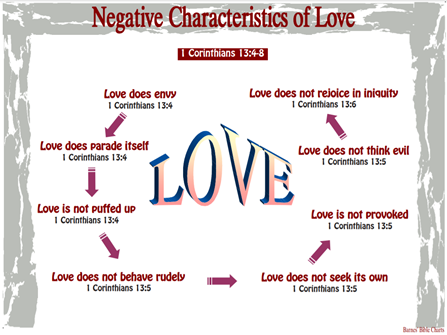
Love does not…

EVERYTHING!!

Love is the first & great commandment.

Paul calls love, “a more excellent way” [1Cor 12:31; 13:13].

“And Jesus answered him, The first of all the commandments is, Hear, O Israel; The Lord our God is one Lord: And thou shalt love the Lord thy God with all thy heart, and with all thy soul, and with all thy mind, and with all thy strength: this is the first commandment. And the second is like, namely this, Thou shalt love thy neighbour as thyself. There is none other commandment greater than these.” [Mark 12:29-31]

09-14-23 UPDATE ————————————-

In a world that has reduced love to just a feeling we need to understand Biblical love.

the culture of the day reminds me of the culture found in the book of judges; “In those days there was no king in Israel: every man did that which was right in his own eyes.” (Judges 21:25

Let’s be reminded of biblical love.

——————————————————————————–

The best commentary on Love is found in the Scriptures. Let’s see love from four perspectives.

  1. God’s Love for us
    1. God is Love – 1Jo 4:8 He that loveth not knoweth not God; for God is love. Titus 3:4-6
    2. God Gave His son – 1Jo 4:9, 10 In this was manifested the love of God toward us, because that God sent his only begotten Son into the world, John 3:16, 17; Rom 5:8; Eph 2:4,5
    3. God blesses His children – 1Jo 3:1 Behold, what manner of love the Father hath bestowed upon us, that we should be called the sons of God: Eph 1:3 every spiritual blessings
    4. Every good thing – James 1:17 – comes from above; Acts 17:28
    5. God sends sun & rain – Mt 5:45 for he maketh his sun to rise on the evil and on the good, and sendeth rain on the just and on the unjust.
  • Christ’s Love for us
    • Passes knowledge– Eph 3:19 And to know the love of Christ, which passeth knowledge, that ye might be filled with all the fulness of God.
    • As Father loved Him – Joh 15:9, 10 If ye keep my commandments, ye shall abide in my love; even as I have kept my Father’s commandments, and abide in his love.
    • He gave Himself – Joh 15:13 Greater love hath no man than this, that a man lay down his life for his friends.; Eph 5:2; 1Joh 3:16; Rev 1:5
    • His own– Joh 13:1, 34 A new commandment I give unto you, That ye love one another; as I have loved you, that ye also love one another.
    • Those who obey – Joh 14:21 He that hath my commandments, and keepeth them, he it is that loveth me: and he that loveth me shall be loved of my Father, and I will love him, and will manifest myself to him.
  • Man’s love for God & Christ
    • Great command– 1Jo 4:19 We love him, because he first loved us. Mark 12:28-30; Mt 22:36-40
    • Good thing for those that do – Ro 8:28 And we know that all things work together for good to them that love God, 1Corinthians 2:9 ings which God hath prepared for them that love him.
    • Crown of life / Kingdom – Jas 2:5 Hearken, my beloved brethren, Hath not God chosen the poor of this world rich in faith, and heirs of the kingdom which he hath promised to them that love him? [1:12]
    • Love displayed through obedience – 1Jo 5:3 For this is the love of God, that we keep his commandments:
      • 2Joh 6; John 14:15, 21, 23
    • Love for truth – 2Th 2:10-12 because they received not the love of the truth, that they might be saved.
  • Man’s love for others
    • Brethren – 1Th 4:9; 1Th 3:12 And the Lord make you to increase and abound in love one toward another, and toward all men, even as we do toward you:
      • John 13:34; 15:12; 1Pe 1:22; 2:17;
      • 1Jo 2:10, 3:11, 14, 23; 4:11, 12
      • 2Pe 1:7 And to godliness brotherly kindness; and to brotherly kindness charity.
    • Husbands & Wives – Eph 5:25, 28, 33; Col 3:19; Tit 2:3,4
    • Neighbor – Ro 13:8 Owe no man any thing, but to love one another: for he that loveth another hath fulfilled the law.
      • [Mr 12:31; James 2:8]
    • Enemies – Lu 6:35 But love ye your enemies, and do good, and lend, hoping for nothing again; and your reward shall be great, and ye shall be the children of the Highest:
      • Mt 5:43, 44 But I say unto you, Love your enemies, bless them that curse you, do good to them that hate you, and pray for them which despitefully use you, and persecute you;

Plea for Pure Christianity

“And whatsoever ye do in word or deed, do all in the name of the Lord Jesus, giving thanks to God and the Father by him.” (Colossians 3:17).

(by Jere E. Frost, via “According To The Pattern”, Medina, TN, 04/01/1990)

WE BELIEVE the Bible to be the inspired word of God, a perfect and sufficient guide (2 Timothy 3:16, 17). It does not incidentally contain some things which we teach — it is the alpha and omega of our faith and practice, and we dare not go beyond it (2 John 9).

WE COME to you with no denominational plan seeking your favor, but only in the name of Christ, desiring to help you find the truth, anxious that you obey all of God’s commandments. The obedient have a right to the tree of life and may enter in through the gates into the city (Revelation 22:14). But those who merely cry, “Lord, Lord,” shall not enter into the kingdom of heaven (Matthew 7:21).

WE SUBMIT to the matchless authority of Christ, heeding the faultless message that He and his inspired servants taught (Hebrews 2:3). His word produces faith, and faith in Him as the Son of God is the foundation of hope (Hebrews 11:1; John 8:24). Every person must repent, repentance being required of all and death being held forth as the wage of refusal (Acts 17:30; Luke 13:3). Confession of faith in Christ is unto salvation, and upon such a confession one may be baptized (Romans 10:10; Acts 8:37). Baptism was commanded by Christ Himself (Mark 16:16), puts one into Christ (Galatians 3:27) where all spiritual blessings abound (Ephesians 1:3), and is for the remission of our sins and the salvation of our souls (Acts 2:38; 1 Peter 3:21). Who dares refuse it? Faithfulness unto life’s end is promised a rich heavenly reward (Revelation 2:10).

WE PRAY for unity among all professed believers, for Christ so prayed (John 17:20-23). Paul besought the Corinthians to be “of the same mind” and to “speak the same things.” (1 Corinthians 1:10). Since human wisdom is the cause of (not the cure for) division, we must discard and abandon it in order to be true to any prayer for unity. A perfect and God-given platform for genuine unity is set forth in Ephesians 4:3-6. This is the basis for spiritual harmony and lasting peace with God. Consider: One God (unity in worship), one Lord, Jesus Christ (unity in authority), one Spirit (unity in life), one faith (unity in doctrine), one body, the church (unity in organization), one baptism (unity in practice), and one hope (unity in desire and expectation).

WE REFUSE to sectarianize ourselves by wearing man-made religious names; they are not only unauthorized, but actually foment division. We are to be Christians, nothing more and nothing less, being completely satisfied and humbly grateful to be honored with the privilege of wearing Christ’s name (1 Peter 4:16). God has placed His name above every name, and the disciples wore it (Philippians 2:9; Acts 11:26). The body (church) of Christ also wears His name, preferring none other, and thus the New Testament speaks of “the churches of Christ” (Romans 16:16).

WE ENDEAVOR to speak where the Bible speaks, and to be silent where it is silent. Christians have no creed but Christ, are to uphold no name but the divine, and have no plea but the gospel. We should mutually seek to establish and maintain unity in essentials, liberty in opinions, and love in all things.

WE INVITE you, most sincerely, to come and study the Bible with us – pure Christianity is wonderful! Embrace it! Be just a Christian!

Agape

Hear Him

In a world filled with a myriad of voices, opinions, and influences, it can be challenging to discern the truth. As Christians, we are to hear and follow the voice of Jesus above all others. The Bible provides the clear words of Jesus and how we should prioritize hearing Him over other voices that compete for our attention. Let’s explore why it’s essential to hear Jesus and how we can overcome the distractions that often lead us away from His teachings.

Listening to Self.
In our modern culture, self-reliance and personal wisdom are often exalted. We’re told to “trust our gut” and “follow our hearts.” However, the Bible warns against leaning on our own understanding. Proverbs 3:5-6 reminds us, “Trust in the LORD with all thine heart; and lean not unto thine own understanding. In all thy ways acknowledge him, and he shall direct thy paths.”

    Imagine a ship’s captain in the middle of the ocean who ignores his navigational charts and instruments, relying solely on his instincts. Despite his confidence, he quickly becomes lost, unable to find his way through the vast and treacherous waters. In the same way, when we rely solely on our own understanding and desires, we can easily lose our way spiritually.

    Our hearts can be deceptive, leading us into paths that seem right but ultimately end in destruction. “The heart is deceitful above all things, and desperately wicked: who can know it” (Jeremiah 17:9)? Instead of placing our trust in ourselves, we are urged to submit to God and trust in His wisdom. When we choose to hear Jesus, we are placing our confidence in the One who knows all, sees all, and loves us all. By aligning our thoughts with His teachings, we find guidance and direction that are far beyond our limited human understanding.

    Listening to Relationships Like Family & Friends.
    Family and friends often have a significant influence on our lives. While these relationships are important, they must not take precedence over our relationship with Christ. In Matthew 10:37, Jesus makes a bold statement: “Anyone who loves their father or mother more than me is not worthy of me; anyone who loves their son or daughter more than me is not worthy of me.”

      This scripture isn’t a call to neglect our loved ones but rather a reminder to keep Jesus as our primary focus. When we elevate the opinions, traditions, and desires of others above the teachings of Christ, we risk compromising our faith. When we prioritize the voices of our loved ones over God’s Word, we become confused and unfocused in our walk with Christ

      Our love for Jesus should surpass all other affections, ensuring that His voice is the loudest in our lives. By hearing Jesus first, we can love and serve our families better, rooted in the truth of the Gospel.

      Listening to Authority Figures Without Verification.
      We live in a world where authority figures—be they religious leaders, politicians, or cultural icons—can significantly shape our beliefs. However, it’s crucial to remember that no human authority is infallible. Acts 17:11 praises the Bereans for their diligence in verifying Paul’s teachings: “These were more noble than those in Thessalonica, in that they received the word with all readiness of mind, and searched the scriptures daily, whether those things were so.”

        This passage encourages us to be discerning listeners. We should respect authority but also verify their words against the ultimate authority—the Word of God. Hearing Jesus requires us to examine everything through the lens of Scripture, ensuring that we remain grounded in truth (see 1John 4:1; 1Thess 5:21).

        Listening to Evil Spirits, Tarot Cards, Mediums, Psychics, and Astrology.
        In a quest for guidance and answers, some people turn to supernatural sources like tarot cards, mediums, psychics, and astrology. However, the Bible explicitly warns against such practices. Isaiah 8:19-20 says, “And when they shall say unto you, Seek unto them that have familiar spirits, and unto wizards that peep, and that mutter: should not a people seek unto their God? for the living to the dead? To the law and to the testimony: if they speak not according to this word, it is because there is no light in them.”

          Imagine a traveler, seeking guidance, consults a broken compass, believing it will lead them to their destination. Instead, it leads them further into danger. When we turn to tarot cards, psychics, or astrology, we are like that traveler, misguided and led astray. These sources cannot truly communicate with us or guide us because they are not from God.

          These practices are dangerous because they open the door to deception and spiritual harm. Instead of seeking answers from these sources, we are called to seek God directly. Jesus is the ultimate source of truth, and when we hear Him, we receive the guidance and wisdom that leads to life.

          Hearing Jesus.
          Amidst all these competing voices, God’s command is clear: we must hear Jesus. In Matthew 17:5, during the Transfiguration, God the Father declares, “This is my beloved Son, in whom I am well pleased; hear ye him!” This directive emphasizes the authority and importance of Jesus’ teachings. When we listen to Jesus, we are hearing the voice of God Himself.

            Jesus affirms this in John 14:6, where He states, “I am the way and the truth and the life. No one comes to the Father except through me.” By hearing and following Jesus, we find the true path to salvation and eternal life. His voice leads us to the Father, guiding us through the complexities of life with divine wisdom and love. We hear Jesus through the words that have been recorded for us in the New Testament. “He that rejecteth me, and receiveth not my words, hath one that judgeth him: the word that I have spoken, the same shall judge him in the last day” (John 12:48; cf. John 20:30-31).

            Hearing Jesus above all others is not just a command; it is a necessity for every believer. By prioritizing His voice, we can navigate the challenges of life with clarity, purpose, and peace. Let us commit to tuning our ears to His teachings, allowing His words to shape our hearts and guide our steps.

            Agape,
            spencer

            What is the Value of your Soul?

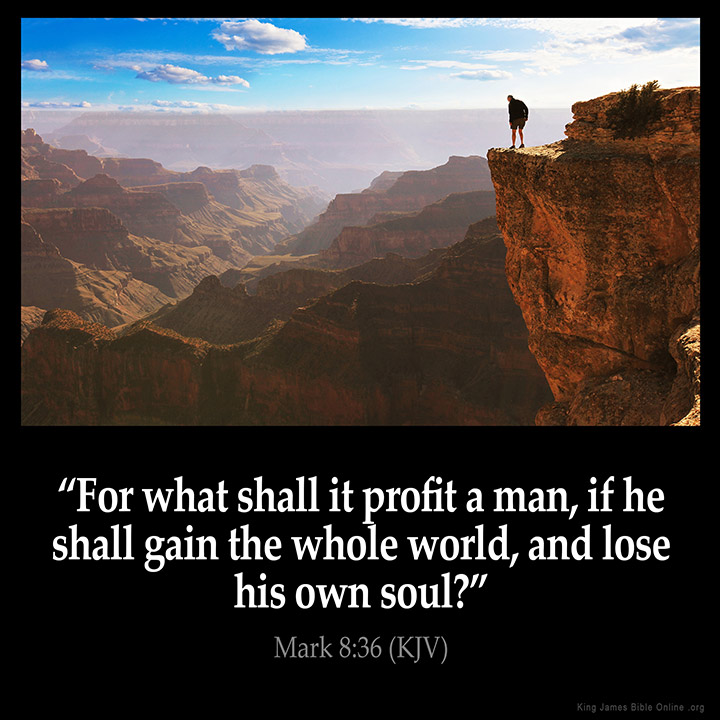
            For what shall it profit a man, if he shall gain the whole world, and lose his own soul? Or what shall a man give in exchange for his soul?” (Mark 8:36-37).

            The question of the soul’s worth is one that transcends time and culture, touching the very essence of human existence. Jesus Himself addressed this profound query in Mark 8:34-38 and Matthew 16:24-26, challenging us to consider the eternal value of our souls. Let us explore four pivotal aspects that underscore the immeasurable worth of a soul.

            As living souls, we have much greater potential than all others of God’s creation. Technology, Arts, and Mercy are unique to humans. More than these, we have the potential to become like Christ. “So also is the resurrection of the dead. It is sown in corruption; it is raised in incorruption: It is sown in dishonour; it is raised in glory: it is sown in weakness; it is raised in power: It is sown a natural body; it is raised a spiritual body. There is a natural body, and there is a spiritual body” (1Cor 15:42-44). When we obey the gospel, we look forward to eternal life with our Savior and to see Him as He is, (cf. Rev 22:4).

            In Matthew 10:28, Jesus admonishes, “And fear not them which kill the body, but are not able to kill the soul: but rather fear him which is able to destroy both soul and body in hell.” This declaration underscores the eternal nature of the soul, distinguishing it from our temporal physical bodies. The body may perish, but the soul endures beyond the grave, facing either eternal life or eternal punishment as stated in Matthew 25:46: “And these shall go away into everlasting punishment: but the righteous into life eternal.”

            The everlasting nature of the soul is a solemn reminder of its infinite value. Our earthly concerns often distract us from this reality, yet Jesus calls us to prioritize our spiritual well-being. The choices we make in this life have eternal consequences, emphasizing the need for a life aligned with God’s will.

            Jesus highlighted the incomparable worth of a soul by pointing to God’s providence over creation. In Matthew 6:26-30, He illustrates His care for the birds and the flowers, reminding us that we are of far greater value: “Are ye not much better than they?” Jesus also said that “the very hairs of your head are all numbered” (Matt 10:30). These passages underscore the unique and cherished place humanity holds in God’s creation.

            I am fearfully and wonderfully made” (Psalm 139:14). This divine craftsmanship reflects the soul’s worth, a masterpiece of God’s creative power. Unlike the rest of creation, the human soul bears a unique value.

            The soul’s worth is further magnified by its divine origin. Acts 17:29 declares, “Forasmuch then as we are the offspring of God, we ought not to think that the Godhead is like unto gold, or silver, or stone, graven by art and man’s device.” We are not merely physical beings but spiritual offspring of God, created in His image.

            Genesis 1:26-27 records God’s decision to create humanity in His likeness, endowing us with attributes that reflect His nature: “And God said, Let us make man in our image, after our likeness.” The Preacher reminds us that at death, “Then shall the dust return to the earth as it was: and the spirit shall return unto God who gave it” (Ecc 12:7). The soul’s divine origin and destiny underscore its unparalleled worth, calling us to live in a manner that honors our Creator.

            The ultimate measure of the soul’s worth is found in the sacrifice of Jesus Christ. John 3:16, perhaps the most well-known verse in the Bible, proclaims, “For God so loved the world, that he gave his only begotten Son, that whosoever believeth in him should not perish, but have everlasting life.” This profound act of love underscores the soul’s value, worthy of the highest price (cf. Rom 5:8-10).

            2Peter 3:9 emphasizes God’s desire for our salvation, stating, “The Lord is not slack concerning his promise, as some men count slackness; but is longsuffering to us-ward, not willing that any should perish, but that all should come to repentance.” The sacrificial death of Christ on the cross is the ultimate testament to the worth of our souls, offering us redemption and eternal life.

            In contemplating the worth of a soul, we must recognize its eternal nature, its unparalleled value in creation, its divine origin, and the supreme sacrifice made for its salvation. As we reflect on these truths, let us heed Jesus’ call in Mark 8:34-38 and Matthew 16:24-26 to deny ourselves, take up our cross, and follow Him. For in doing so, we affirm the immeasurable worth of our souls and align our lives with God’s eternal purpose.

            Agape,
            Spencer

            This article is from a series of sermons on the Gospel of Mark. Click here for the list of available articles on the Gospel of Mark.