
Speaking the truth in Love

Demonstrating Love Through Our Speech

The way we speak reveals the condition of our hearts and serves as a powerful expression of love. Scripture, particularly Ephesians, provides a blueprint for how our words can reflect Christ’s love, fostering unity, encouragement, and grace. By aligning our speech with biblical principles, we demonstrate love that honors God and uplifts others.

Seasoned with Salt; Colossians 4:6 urges believers to let their speech be “always full of grace, seasoned with salt,” so that they know how to answer everyone (“seasoned with salt” suggesting speech that is gracious, wise, and impactful, enhancing conversations like salt enhances food). Similarly, James 3:17 describes wisdom from above as pure, peace-loving, and gentle. Words seasoned with salt are purposeful, preserving truth and adding value to conversations. They avoid blandness or harshness, striking a balance that reflects thoughtfulness and care. When our speech is seasoned with grace, it becomes a tool to point others to Christ, making our interactions meaningful and impactful.

Pleasant, Not Profane; Ephesians 5:4 warns against “filthiness, foolish talk, or crude joking,” which are out of place for those who follow Christ. Instead, our words should be pleasant, reflecting gratitude and reverence. Filthy or foolish speech tears down, while pleasant words build up and create an atmosphere of love. Avoiding foul language doesn’t mean stifling humor or joy but choosing words that align with God’s holiness. Pleasant speech invites others into a space of dignity and respect, mirroring the love Christ shows us.

Edifying, Empathetic, & Encouraging; Ephesians 4:29 instructs, “Let no corrupting talk come out of your mouths, but only such as is good for building up, as fits the occasion, that it may give grace to those who hear” (Edifying means Building up or strengthening others spiritually). Romans 14:19 tells us to pursue peace and mutual edification, while Colossians 3:16 encourages teaching and admonishing one another with wisdom. Hebrews 10:24-25 emphasizes spurring one another toward love and good works. Empathetic and encouraging speech listens deeply, validates feelings, and inspires growth. It puts others’ needs above our own, fostering community and reflecting Christ’s sacrificial love.

Speaking Truth in Love; Ephesians 4:15 and 4:25 highlight the importance of speaking truth in love, rooted in agape type (love selfless, unconditional love). Truth without love can wound, while love without truth can enable. Speaking truth in love requires humility and courage, ensuring our words are honest yet delivered with kindness. This balance builds trust and strengthens relationships, as we lovingly correct or guide others toward God’s truth. Loving speech prioritizes the other person’s spiritual growth, even when it’s uncomfortable, because it seeks their ultimate good.

Kindness in Speech; Ephesians 4:32 tells us to be kind and compassionate, forgiving one another as God forgave us. James 1:26 warns that those who fail to bridle their tongues deceive themselves, and Colossians 3:12-13 emphasizes clothing ourselves with kindness and patience. Kind words diffuse conflict, heal wounds, and demonstrate grace. They reflect a heart transformed by Christ, choosing gentleness over harshness and forgiveness over bitterness. Kindness in speech is a daily practice of love, creating a ripple effect of grace in our interactions.

agape
Evidence for our Faith: Why Atheism Fails to Explain the Universe’s Origin

Atheism, as a worldview, suggests that the universe exists without a purposeful intelligent design, relying instead on naturalistic explanations for its origin. Sadly, this perspective struggles to provide a coherent and comprehensive account of the universe’s beginning, leaving critical questions unanswered. In contrast, the Bible offers a logically compelling framework for understanding the universe.

One of atheism’s primary challenges is the question of what caused the beginning of the universe. The universe, according to modern cosmology, began with the Big Bang approximately 13.8 billion years ago (Hawking, 1988). Atheism often leans on theories like quantum fluctuations or multiverse hypotheses to explain this event without invoking a cause. Yet, these explanations falter, only pushing back the question without answering it. Quantum mechanics operates within the framework of space-time, which itself began at the Big Bang. To suggest quantum fluctuations caused the universe requires a pre-existing framework, which doesn’t answer but only blurs the discussion. The multiverse theory, while speculative, lacks any real evidence and merely shifts the question of origin to an unobservable realm (Krauss, 2012). Atheism’s reliance on such theories often feels like an attempt to avoid the question rather than answer it, and requires lots of faith.

In contrast, the Bible presents a clear cause: “In the beginning, God created the heavens and the earth” (Genesis 1:1). This aligns with the philosophical principle of sufficient reason, which argues that everything must have a reason or cause. A transcendent (beyond Time, Space, & Matter), purposeful intelligent design provides a logically consistent explanation for why the universe exists rather than nothing. As Psalm 19:1 states, “The heavens declare the glory of God; and the firmament sheweth his handywork,” suggesting a purposeful order to creation.

Another issue is the fine-tuning of the universe. The physical constants governing gravity, electromagnetism, and nuclear forces are precisely calibrated to allow life (Barrow & Tipler, 1986). Even slight deviations would render the universe inhospitable. Atheism attributes this to chance or necessity, but the odds of such precision arising randomly are astronomically low; it’s like winning a cosmic lottery trillions of times over. Theistic arguments, supported by Romans 1:20, assert that the universe’s order reflects a purposeful design: “For the invisible things of him from the creation of the world are clearly seen, being understood by the things that are made, even his eternal power and Godhead; so that they are without excuse.”

Atheism also struggles with the origin of consciousness and morality. Naturalistic processes like evolution falter in accounting for subjective experiences or objective moral standards as well as biological development. If humans are merely products of matter, why do we possess self-awareness or universal moral intuitions? John 1:3 suggests a divine source for all things: “All things were made by him; and without him was not any thing made that was made.” This implies a purposeful intelligent design behind both the physical and metaphysical aspects of existence.

While atheism offers skepticism, it lacks a robust explanation for the universe’s origin, fine-tuning, and the emergence of consciousness. Theistic arguments, grounded in biblical revelation, provide a coherent narrative that aligns with both reason and observation. Ultimately, atheism’s failure to explain why there is something rather than nothing points to a truth the Bible boldly declares: the universe exists because a purposeful God willed it into being.

The basic question for me is; did everything come from nothing, or did it come from someone who is outside of Time, Space, and Matter? To me, atheism is the least logical belief system (Atheism is the lack of belief in the existence of God). We as humans are currently unable to scan the known universe, let alone the unknown universe, let alone the bottom of our own oceans. How that can one state with confidence, “there is no God.”

AGAPE

Sources:
Barrow, J. D., & Tipler, F. J. (1986). The Anthropic Cosmological Principle. Oxford University Press.
Hawking, S. (1988). A Brief History of Time. Bantam Books.
Krauss, L. M. (2012). A Universe from Nothing. Free Press.
The Bible (KJV): Genesis 1:1, Psalm 19:1, Romans 1:20, John 1:3.

My Sheep KNOW My Voice John 10:4

Knowing the Voice of Jesus: The Written Word as the Sole Means

In John 10:4, Jesus, the Good Shepherd, declares, “And when he putteth forth his own sheep, he goeth before them, and the sheep follow him: for they know his voice.” Believers today do not hear an audible voice nor witness the signs Jesus performed during His earthly ministry, as those signs, per John 20:30-31, were recorded so that we might believe without seeing them firsthand: “And many other signs truly did Jesus in the presence of his disciples, which are not written in this book: But these are written, that ye might believe that Jesus is the Christ, the Son of God; and that believing ye might have life through his name.” The implication is that the signs done then will not be repeated; instead, we know Jesus’ voice through the written word. The apostles’ teaching, the New Testament history of Jesus, and obedience to Christ all converge in the written word as the sole means to know His voice and the truth.

We will know His voice by keeping the apostles’ teaching. The apostles, guided by the Holy Spirit, delivered Jesus’ teachings, preserved in Scripture. John 16:13 promises, “When he, the Spirit of truth, is come, he will guide you into all truth.” Their doctrine, recorded in the written word, allows us to hear Jesus. Later Jesus prays for the apostles in John 17:20, “Neither pray I for these alone, but for them also which shall believe on me through their word;” This shows us that people will believe through their inspired preaching and teaching which is now recorded for all in the New Testament.  Acts 2:42 shows early believers “continued stedfastly in the apostles’ doctrine,” while Galatians 1:11-12 clarifies, “The gospel which was preached of me is not after man… but by the revelation of Jesus Christ.” These inspired writings are our access to His voice today.

We will know His voice by the New Testament history of Jesus Christ. The Gospels record Jesus’ life and works, but the signs He performed were for those who saw them personally. John 20:29 reinforces this: “Blessed are they that have not seen, and yet have believed.” We know Him through the written record, as Luke 1:1-4 states: “To set forth in order a declaration… that thou mightest know the certainty of those things.” The written history in Scripture conveys His voice to us. John 20:31a, “But these are written, that ye might believe that Jesus is the Christ, the Son of God;”

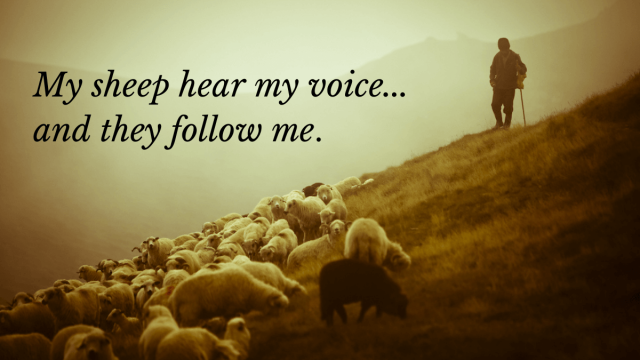
We will know His voice by obedience to Christ. Obeying Jesus’ commands, found in Scripture, confirms we hear His voice. John 10:27 says, “My sheep hear my voice… and they follow me.” 1 John 2:4 warns, “He that saith, I know him, and keepeth not his commandments, is a liar, and the truth is not in him.” John 14:23 adds, “If a man love me, he will keep my words: and my Father will love him.” Obedience to the written word ensures we know Him.

The written word is the only means by which we know Jesus’ voice and the truth. The signs Jesus performed, as recorded in John 20:30-31, were for those who saw them, but we believe through what is written. Jesus’ life is in the word (John 5:39: “Search the scriptures… they are they which testify of me”). The apostles’ teachings come from the word (2 Peter 1:21). The Holy Spirit revealed the word (2 Timothy 3:16). While preachers may proclaim the gospel (Romans 10:14), they must teach from the written word. 2 John 1:9 emphasizes, “He that abideth in the doctrine of Christ, he hath both the Father and the Son.” The written word alone enables us to hear and follow the Good Shepherd.

We will know His voice by keeping the apostles’ teaching. The apostles, guided by the Holy Spirit, delivered Jesus’ teachings, preserved in Scripture. John 16:13 promises, “When he, the Spirit of truth, is come, he will guide you into all truth.” Their doctrine, recorded in the written word, allows us to hear Jesus. After Jesus then prays for the apostles, He then prays this in John 17:20, “Neither pray I for these alone, but for them also which shall believe on me through their word;” This shows us that people will believe through their inspired preaching and teaching which is now recorded for all in the New Testament.  Acts 2:42 shows early believers “continued stedfastly in the apostles’ doctrine,” while Galatians 1:11-12 clarifies, “The gospel which was preached of me is not after man… but by the revelation of Jesus Christ.” These inspired writings are our access to His voice today.

We will know His voice by the New Testament history of Jesus Christ. The Gospels record Jesus’ life and works, but the signs He performed were for those who saw them personally. John 20:29 reinforces this: “Blessed are they that have not seen, and yet have believed.” We know Him through the written record, as Luke 1:1-4 states: “To set forth in order a declaration… that thou mightest know the certainty of those things.” The written history in Scripture conveys His voice to us.

We will know His voice by obedience to Christ. Obeying Jesus’ commands, found in Scripture, confirms we hear His voice. John 10:27 says, “My sheep hear my voice… and they follow me.” 1 John 2:4 warns, “He that saith, I know him, and keepeth not his commandments, is a liar, and the truth is not in him.” John 14:23 adds, “If a man love me, he will keep my words: and my Father will love him.” Obedience to the written word ensures we know Him.

In conclusion, the written word is the only means by which we know Jesus’ voice and the truth. The signs Jesus performed, as recorded in John 20:30-31, were for those who saw them, but we believe through what is written. Jesus’ life is in the word (John 5:39: “Search the scriptures… they are they which testify of me”). The apostles’ teachings come from the word (2 Peter 1:21). The Holy Spirit revealed the word (2 Timothy 3:16). While preachers may proclaim the gospel (Romans 10:14), they must teach from the written word. 2 John 1:9 emphasizes, “He that abideth in the doctrine of Christ, he hath both the Father and the Son.” The written word alone enables us to hear and follow the Good Shepherd.

Agape

Evidence for our Faith: The Historical Reality of the Crucifixion

The crucifixion of Jesus Christ stands as one of the most pivotal events in human history, yet its reality is occasionally questioned. However, a careful analysis of historical evidence, both biblical and secular, reveals compelling and logical arguments supporting its occurrence. Far from being a mere theological construct, the crucifixion aligns with the historical context of Roman governance, is corroborated by non-Christian sources, and is consistently detailed in early Christian writings.

First, the Roman practice of crucifixion provides a strong foundation for its historical plausibility. Crucifixion was a well-documented method of execution in the Roman Empire, reserved for slaves, rebels, and those deemed threats to imperial authority. Historian Tacitus, in his Annals (15.44), references the execution of Jesus under Pontius Pilate during Tiberius’ reign, aligning with the biblical timeline. The Gospel of Matthew (27:31-37) describes Jesus’ crucifixion in detail, including Roman soldiers, a cross, and a public spectacle, elements consistent with Roman punitive customs as noted by scholars like Martin Hengel in Crucifixion in the Ancient World. This convergence of Roman practice and biblical narrative anchors the event in historical reality.

Second, multiple independent sources outside the Bible affirm the crucifixion. Alongside Tacitus, Jewish historian Josephus, in Antiquities of the Jews (18.3.3), mentions Jesus’ death by crucifixion, though some debate the text’s authenticity due to later Christian edits. Even skeptical scholars, such as Bart Ehrman in Did Jesus Exist?, concede that the core reference to Jesus’ execution is likely genuine. Additionally, the Roman satirist Lucian, in The Death of Peregrinus (circa 165 CE), mocks Christians for worshiping a “crucified sage,” indicating that Jesus’ death was widely known beyond Christian circles. These secular testimonies provide external validation of the biblical accounts in Mark 15:24-32 and John 19:16-18.

Third, the coherence and early attestation of the New Testament writings bolster the argument. The Gospels (Matthew, Mark, Luke, and John) were composed within decades of Jesus’ life. Paul’s letters, such as 1 Corinthians 15:3-4 (written circa 55 CE), affirm the crucifixion as a foundational belief among early Christians, predating the Gospels. This rapid documentation, combined with the lack of contemporary refutations from Jesus’ opponents, suggests the event was an accepted fact. As historian N.T. Wright argues in The Resurrection of the Son of God, the crucifixion’s prominence in such early texts reflects a historical memory too vivid to dismiss.

Critics might argue that the accounts are biased or mythologized, yet the consistency across sources, the embarrassment of a crucified messiah (contrary to Jewish expectations, as in Deuteronomy 21:23), and the absence of alternative narratives strengthen the case. The crucifixion’s historical reality emerges not from blind faith but from a convergence of evidence that withstands scrutiny.

In the end, the crucifixion of Jesus is not a fable spun by devotees but a stark historical event etched into the annals of time. Its truth pierces through centuries, demanding we confront its weight.

Agape,

Seeking God; Aspiring to Excel

Aspiring to Excellence (Godliness and Holiness)

In my walk with Christ, I’m learning to aspire to excellence through godliness and holiness, though I often feel unworthy of such a high calling. 1 Timothy 6:11 urges me to pursue godliness, a life of devotion to God, while Hebrews 12:14 calls me to “pursue… holiness, without which no one will see the Lord.” These virtues connect to the righteousness and faith in 1 Timothy 6:11 and 2 Timothy 2:22, and they echo the call to seek “things above” in Colossians 3:1-2. I’m far from perfect, but I long to reflect God’s character more each day.

This pursuit is crucial because it draws me closer to God Himself. Godliness means living with reverence, seeking His will in every decision, but I often get distracted by worldly concerns. Holiness, too, challenges me to stand apart from sin and selfishness, as Hebrews 12:14 warns that without it, I won’t see God. This sobers me, reminding me that my efforts matter, not to earn salvation but to honor the One who saved me. These virtues shape my heart, teaching me to love what God loves and hate what He hates, aligning with the righteousness of both Timothy passages.

Aspiring to godliness and holiness is a humbling journey. I need the support of other saint, as 2 Timothy 2:22 suggests, pursuing these virtues “with those who call on the Lord.” Through prayer, Scripture, and accountability, I’m slowly growing, learning to forgive quickly, speak truthfully, and serve humbly. Each step feels like a battle, but it’s worth it to become more like Christ. As a saint, I seek this treasure of excellence, trusting God to refine me into His image, one faltering step at a time.

Seeking God; Selfless Love

Striving for Selfless Love

As I walk this journey of faith, I’m learning that selfless love is the heartbeat of what it means to follow Christ. The New Testament tells me to pursue love (agape, the kind of love that puts others first) as Paul urges in 1 Corinthians 14:1, “Pursue love,” and 1 Corinthians 10:24, “Let no one seek his own, but each one the other’s well-being.” I see this love woven into the virtues of 1 Timothy 6:11 and 2 Timothy 2:22, where love stands alongside righteousness, faith, and peace. Yet, I confess, loving selflessly doesn’t come naturally to me. It’s a daily choice to set aside my own desires and seek the good of those around me.

This pursuit matters deeply because love is the foundation of God’s kingdom. Paul says in 1 Corinthians 13:13 that love is greater than faith or hope, and I’m beginning to understand why. When I choose to love others (whether through a kind word, a listening ear, or an act of hospitality like Romans 12:13 encourages) I reflect Christ’s heart. Every effort to encourage others flows from this love. But I stumble often. My selfishness creeps in, and I need God’s grace to soften my heart, to help me embody the gentleness of 1 Timothy 6:11 or the peace of 2 Timothy 2:22 in my relationships.

Striving for selfless love is transforming me. It pushes me to forgive when I’d rather hold a grudge, to serve when I’m tired, and to prioritize others’ needs over my own comfort. It’s humbling to realize how far I fall short, yet I find joy in small steps, like a kind word to a neighbor or praying for a struggling friend. This pursuit brightens the light of Christ in my heart, showing the world a glimpse of Jesus’ love through my imperfect efforts. As a saint, I am to keep chasing this treasure, trusting God to make my love more like His.

agape,

spencer

Faith, Hope, and Love: The Keys to Overcoming Troubles and Troublers

Life can throw some heavy punches, can’t it? For the believers in Thessalonica, those punches came in the form of persecutions, false teachings, and even some within their own community slacking off and stirring up trouble. Yet, in his second letter to them, Paul points to three timeless virtues (faith, hope, and love) as the keys to standing firm, no matter what others say or do. Rooted in knowing God’s word, these qualities enabled the Thessalonians to rise above their troubles and the “lowness” of their troublers.

Chapter 1: Enduring Through Faith, Hope, and Love

The Thessalonian church was under fire, literally and figuratively. They faced “persecutions and tribulations” (2 Thessalonians 1:4, KJV), likely from hostile neighbors or authorities who opposed their faith. Yet Paul couldn’t stop bragging about them: “We ourselves glory in you in the churches of God for your patience and faith in all your persecutions and tribulations that ye endure” (1:4). Their faith wasn’t just a Sunday morning nod to God; it was a steadfast trust in His promises, even when the world seemed against them. That faith, Paul says, was “growing exceedingly” (1:3), and their love for one another was increasing right alongside it.

But what kept them going? HOPE. Paul paints a vivid picture of hope tied to God’s justice and Christ’s return: “Seeing it is a righteous thing with God to recompense tribulation to them that trouble you; And to you who are troubled rest with us, when the Lord Jesus shall be revealed from heaven with his mighty angels” (1:6-7). The promise that God would deal with their troublers and grant them relief gave them a reason to hold on. This hope wasn’t wishful thinking, it was grounded in God’s word, which assured them that their suffering was “a manifest token of the righteous judgment of God” (1:5). Knowing God’s word fueled their faith to endure, their hope to look forward, and their love to care for one another, even under pressure. Paul prayed for this to continue, asking God to “fulfil all the good pleasure of his goodness, and the work of faith with power” (1:11).

So, what’s the lesson? When trouble comes (whether it’s people attacking your faith or life’s hardships piling up) lean into faith, hope, and love. Trust God’s word, hold fast to the promise of Christ’s return, and keep loving those around you. That’s how you stay faithful, no matter what others do.

Chapter 2: Standing Firm Against Deception

The troubles didn’t stop with persecution. Someone was spreading lies, maybe even claiming Paul’s authority, saying the day of the Lord had already come. This shook the Thessalonians, leaving them “troubled” and “shaken in mind” (2 Thessalonians 2:2). Imagine the confusion, thinking you missed the biggest event in history! But Paul steps in with clarity, urging them not to be “soon shaken in mind, or be troubled, neither by spirit, nor by word, nor by letter as from us” (2:2). He reminds them of God’s word, which he’d already taught: the day of the Lord won’t come until the “man of lawlessness” is revealed (2:3-4) and destroyed by Christ’s return (2:8).

Here’s where faith, hope, and love shine again. Their faith in the truth (God’s word) kept them from falling for deception. Paul calls them “brethren beloved of the Lord” (2:13), chosen for salvation “through sanctification of the Spirit and belief of the truth” (2:13; see John 17:17). That belief anchored them. Hope came from knowing Christ would return to set things right: “The Lord Jesus Christ… shall destroy with the brightness of his coming” (2:8). This hope steadied them against false alarms. And love? Paul prays for their hearts to be comforted and established “in every good word and work” (2:16-17), a call to keep loving and serving each other despite the chaos.

The troublers spreading lies were low, trying to unsettle God’s people. But Paul’s answer is clear: “Therefore, brethren, stand fast, and hold the traditions which ye have been taught, whether by word, or our epistle” (2:15). Stay rooted in God’s word. Let faith keep you grounded, hope keep you looking up, and love keep you moving forward. That’s how you abound, no matter what others say.

Chapter 3: Overcoming Internal Troubles

If external persecution and false teachings weren’t enough, the Thessalonians had trouble within their own ranks. Some believers were “walking disorderly,” refusing to work and meddling as busybodies (2 Thessalonians 3:6, 11). This idleness wasn’t just laziness, it disrupted the work of the church. Paul doesn’t mince words: “If any would not work, neither should he eat” (3:10). Yet even this discipline is rooted in love, as he urges the church to correct the idle “as a brother” (3:15), not an enemy.

Faith shows up in Paul’s confidence that the Thessalonians would stay faithful: “We have confidence in the Lord touching you, that ye both do and will do the things which we command you” (3:4). Their hope was tied to God’s word, which provided clear instructions for living, and to the promise of God’s peace: “Now the Lord of peace himself give you peace always by all means” (3:16). Love guided their response to the troublers within, balancing discipline with care, and Paul prayed that “the Lord direct your hearts into the love of God, and into the patient waiting for Christ” (3:5).

The idle were acting low, causing trouble by neglecting their responsibilities. But Paul calls the church to a higher standard: “Be not weary in well doing” (3:13). By staying faithful to God’s word (working diligently, loving one another, and holding fast to His commands) they could overcome even internal challenges.

Tying It All Together

What do we learn from the Thessalonians? Troubles and troublers come in many forms: persecutors who mock your faith, deceivers who twist the truth, or even fellow believers who let you down. But faith, hope, and love, rooted in knowing God’s word, are your strength. Faith keeps you trusting God’s truth, like the Thessalonians’ belief in the gospel (2:13) and obedience to Paul’s teaching (3:4). Hope lifts your eyes to God’s vengeance (1:6-9, 2:8) and Christ’s return (1:7, 2:8), assuring you that troubles won’t have the last word. Love binds you to your brothers and sisters, growing even in tough times (1:3) and guiding how you correct the wayward (3:15).

Knowing God’s word is the thread that ties it all together. It’s the foundation for faith, the source of hope, and the guide for love. The Thessalonians’ troubles didn’t define them, their faithfulness did. They stayed abounding, growing in faith and love (1:3), standing firm against lies (2:15), and doing good despite setbacks (3:13). So, when others try to drag you down with their words or actions, don’t stoop to their level. Hold fast to God’s word. Let faith, hope, and love keep you faithful and abounding, just as they did for the Thessalonians.

Evidence for our faith: The Empty Tomb

The Empty Tomb: Historical Evidence and Explanations

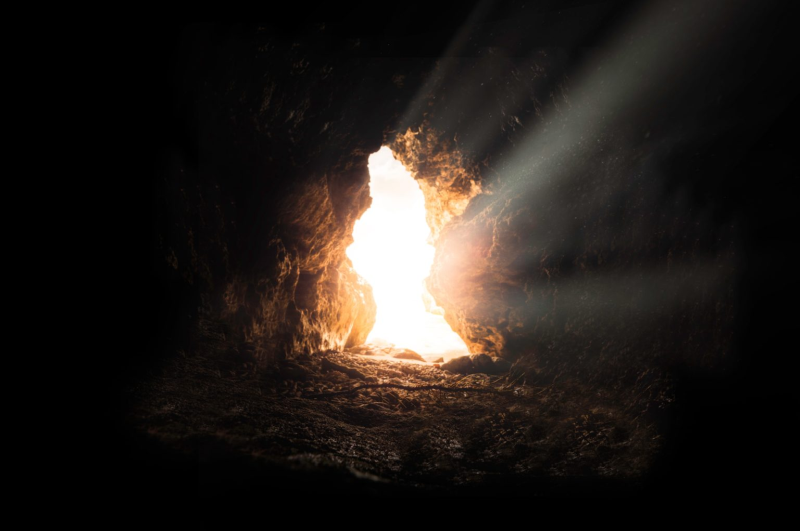
The empty tomb of Jesus Christ stands as one of the most compelling pieces of historical evidence supporting His resurrection, defying naturalistic explanations and aligning with the transformative impact of early Christianity. Recorded in all four Gospels (Matthew 28:1-10, Mark 16:1-8, Luke 24:1-12, John 20:1-18), the tomb’s vacancy is more than a theological claim but a historical puzzle that demands a logical resolution.

First, the empty tomb is a widely attested fact, even by Jesus’ opponents. The Gospel of Matthew notes that the Jewish leaders bribed guards to claim the disciples stole the body (Matthew 28:11-15), implicitly conceding the tomb was empty. This early counter-narrative, preserved in a text dated to within decades of the event, suggests the vacancy was undeniable—otherwise, producing the body would have silenced the resurrection claim. Historian N.T. Wright, in The Resurrection of the Son of God (2003), argues that this admission from hostile sources strengthens the case, as it reflects a historical reality too stubborn to dismiss.

Second, alternative explanations falter under scrutiny. The “stolen body” theory lacks plausibility: the disciples, described as terrified post-crucifixion (John 20:19), were unlikely to overpower Roman guards, risking death for a corpse. The Roman seal and guard presence (Matthew 27:62-66) further complicate this scenario—failure to secure the tomb would have cost the soldiers their lives. The “wrong tomb” hypothesis also fails; the burial site, owned by Joseph of Arimathea, a known figure (Mark 15:43), was no obscure location. Women witnesses, the first to report the empty tomb (Luke 24:1-3), would have ensured accuracy, as their testimony—unexpected in a patriarchal culture—adds credibility, per historian Michael Licona in The Resurrection of Jesus (2010).

Third, the empty tomb’s implications align with historical outcomes. If Jesus’ body remained, the Jewish or Roman authorities, with every motive to crush Christianity, could have displayed it to end the movement. Instead, Christianity exploded, with Paul citing over 500 witnesses to the risen Christ (1 Corinthians 15:3-8), a claim circulated early enough to be verified. The transformation of disciples into bold proclaimers (Acts 2:14-36) and the conversion of skeptics like Paul (Acts 9:1-19) hinge on an event—the resurrection—tied to that empty tomb. Archaeologically, no rival tomb has ever surfaced, despite Jerusalem’s significance.

Finally, the cultural context bolsters the argument. Jewish theology expected a general resurrection at history’s end, not an individual rising (Daniel 12:2). The claim of Jesus’ resurrection, centered on an empty tomb, was radical yet gained traction, suggesting an extraordinary event shifted expectations. As scholar Gary Habermas notes in The Case for the Resurrection of Jesus (2004), the tomb’s emptiness, paired with appearances, best explains this shift. The empty tomb stands as a historical anchor—unrefuted by foes, unexplainable by skeptics, and unshaken by time. No body was found because no body remained; the tomb’s silence screams resurrection.

Agape

A Plea to Our Catholic Friends

A Passionate Plea to My Catholic Friends: Turn to the True Gospel

MY DEAR CATHOLIC FRIENDS, I come to you with a heart overflowing with love and urgency, pleading with you to hear the truth about the dangers of the Catholic faith. As your friend, I cannot stay silent when I see you entangled in a system that strays from the pure gospel of Christ. With Scripture as our guide, here are five critical warnings, praying they will open your eyes to the truth and lead you to the freedom found in Jesus alone.

FIRST, Jesus Himself warned us in Matthew 23:9, “Call no man your father on earth, for you have one Father, who is in heaven.” Yet the Catholic Church exalts the Pope, calling him “Holy Father” or “Papa,” a title reserved for God alone. This is no minor mistake—it elevates a man to a position that belongs only to our Heavenly Father. Paul referenced himself “as a father” but never took on the title as “Holy Father.” He often used humbling language and pleaded with people not to bow down to him. “Sirs, why do ye these things? We also are men of like passions with you, and preach unto you that ye should turn from these vanities unto the living God, which made heaven, and earth, and the sea, and all things that are therein:” (Acts 14:15). I implore you to reject this practice and honor God alone as your Father.

SECOND, the organization of the Catholic Church, with its hierarchy of popes, cardinals, and priests, contradicts the biblical model for the church. In 1 Timothy 3:1-10, Paul outlines the qualifications for elders and deacons—humble, local leaders who serve the local body of Christ, not a global institution with supreme rulers. The Catholic structure, centered in the Vatican, adds layers of human authority that Scripture never endorses. The largest organization of the Lord’s church on earth is the local church with autonomy from any other. Please, compare this to God’s Word and see the difference for yourselves!

THIRD, the Catholic religion preaches a perverted gospel, which Paul condemns in Galatians 1:6-10. The Catholic Church distorts the biblical gospel by adding human inventions like infant baptism, the granting of indulgences, an infallible Pope, and purgatory, which obscure the truth of salvation. Scripture teaches that salvation comes through faith in Christ, expressed in obedience to His commands, such as believing and being baptized, as Jesus declared in Mark 16:16: “Whoever believes and is baptized will be saved.” In Acts 19:1-5, Paul taught the Ephesians to believe and be baptized, and they demonstrated repentance by burning their magic books, showing fruits worthy of their faith. While Ephesians 2:8-9 affirms salvation is by grace through faith, not by works of human merit, this faith is active and obedient, not a mere mental assent. By contrast, Catholicism’s reliance on sacraments, human mediators to forgive sins, and man-made doctrines perverts the gospel’s simplicity. Paul warns, “If anyone is preaching to you a gospel contrary to the one you received, let him be accursed!” My friends, this is a matter of eternal life—reject these false teachings and embrace the true gospel of Christ’s grace and obedient faith!

FOURTH, the Catholic Church elevates men above what is proper, violating 1 Corinthians 4:6, which warns us “not to think of men above that which is written.” The veneration of Mary, the canonization of saints, and the authority given to priests and popes place mere humans on pedestals that belong to God alone. Mary was a humble servant, not a co-redeemer; saints are all believers, not an elite class; and no man can stand between you and Christ as your mediator (1 Timothy 2:5). I plead with you to humble yourselves before God and reject these man-made traditions!

FINALLY, the Catholic Church promotes false signs and a misunderstanding of saints, contradicting 1 Corinthians 1:2 and 13:8-11. In 1 Corinthians 1:2, Paul calls all Christians saints, not just those canonized by the Church. The Catholic obsession with miracles, apparitions, and relics often borders on idolatry, and 1 Corinthians 13:8-11 tells us that miraculous signs were temporary, meant to confirm the gospel in the early church, not to be sought after today. Turn away from these deceptive signs and embrace the sufficiency of Christ and His Word!

MY FRIENDS, I know these words may be hard to hear, but they come from a heart that loves you and longs for you to know the freedom of the true gospel. The traditions of Catholicism may feel comforting, but they are a trap, leading you away from the simplicity and purity of Christ. I beg you, search the Scriptures for yourselves, test what I’ve said, and turn to Jesus alone for salvation. He is enough! May God open your eyes and draw you to His truth. With all my love, I pray for you.

—Anon

If I met the Pope

Evidence for our Faith: Logical evidence for the Resurrection of Christ

Logical Evidence for the Resurrection of Christ

The resurrection of Jesus Christ, as recounted in the New Testament, is a cornerstone of Christian faith, yet its historical plausibility rests on compelling logical evidence that withstands scrutiny. Unlike myths or fabrications, the resurrection narrative is supported by the rapid transformation of disciples, the empty tomb, and the inability of contemporary authorities to disprove it—details that align with human behavior, historical context, and rational inference. When examined alongside biblical accounts and extra-biblical corroboration, these elements form a persuasive case for its occurrence.

First, the dramatic shift in the disciples’ behavior provides strong circumstantial evidence. Before Jesus’ crucifixion, they were fearful and scattered—Peter denying him thrice (John 18:17-27) and others fleeing (Matthew 26:56). Yet, post-resurrection, these same men boldly proclaimed his rising, risking death (Acts 4:19-20). Psychologist J.P. Moreland (Scaling the Secular City, 1987) argues that such a psychological reversal, from despair to unwavering conviction, demands an extraordinary catalyst. The resurrection appearances (1 Corinthians 15:5-8) offer a logical explanation, as no mere hallucination or fraud could sustain their lifelong commitment, evidenced by martyrdoms like Peter’s (Eusebius, Ecclesiastical History, 2.25).

Second, the empty tomb stands as a physical anchor for the resurrection claim. All four Gospels (Matthew 28:6, Mark 16:6, Luke 24:3, John 20:6-7) report the tomb vacant, a detail corroborated by the inability of Jewish and Roman authorities to produce Jesus’ body despite their incentive to quash the nascent Christian movement. Historian Gary Habermas (The Case for the Resurrection of Jesus, 2004) notes that the Sanhedrin’s accusation of body theft by disciples (Matthew 28:13) implicitly concedes the tomb was empty. Logically, if the body remained, displaying it would have been the simplest rebuttal, yet no such counterevidence emerged—a silence that speaks volumes.

Third, the rapid rise and spread of Christianity in a hostile environment defy naturalistic explanations. Within decades, a movement rooted in a crucified leader—deemed a failure by Roman and Jewish standards—flourished, as attested by Tacitus (Annals, 15.44) and Pliny the Younger (Letters, 10.96). The resurrection provided the ideological fuel, transforming a shameful death into a triumph (1 Corinthians 15:54-55). Sociologist Rodney Stark (The Rise of Christianity, 1996) calculates that Christianity grew at 40% per decade, a rate inexplicable without a galvanizing event like the resurrection, which offered hope and empirical testimony (Acts 2:32).

Critics propose alternatives—swoon theory, theft, or mass hallucination—but these falter under scrutiny. A half-dead Jesus (swoon) couldn’t inspire worship, theft lacks motive given the disciples’ initial disbelief (Luke 24:11), and hallucinations don’t align with group encounters over 40 days (Acts 1:3). The Journal of the American Academy of Religion (Vol. 74, 2006) notes that the resurrection hypothesis best accounts for the data’s coherence.

The resurrection’s logical strength lies in its explanatory power—uniting transformed lives, an empty grave, and a movement’s improbable rise into a singular, rational narrative. Jesus didn’t just defy death; he redefined history, leaving evidence too robust to dismiss.

Agape,

spencer