Joseph’s life and actions, as depicted in the Gospels, offer an example of virtue and obedience, qualities that emphasize his critical role in the life of Jesus.
Described in the Gospel of Matthew as a “just man” (Matthew 1:19), Joseph’s character is first revealed through his merciful reaction to Mary’s unexpected pregnancy. Engaged to Mary, he discovers she is pregnant before they have come together, and knowing the child is not his, he faces a societal and personal crossroad. He chooses a path of kindness, intending to spare Mary from possible humiliation or harm, which alone sets a significant tone for his character.
Later, He is visited by an angel in a dream, instructing him to not fear taking Mary as his wife because the child conceived in her is from the Holy Spirit (Matthew 1:20). His response to this divine intervention highlights another of his virtues: obedience. Matthew 1:24-25 tells us that Joseph did as the angel of the Lord commanded; he took Mary as his wife and named the child Jesus. This act of faith and submission to God’s will shows him as a man deeply committed to following God’s direction without hesitation.
Later, he and Mary bring Jesus to the temple to present Him to the Lord as prescribed in the Law of Moses (Luke 2:22-24), and they make the annual pilgrimage to Jerusalem for Passover, demonstrating his commitment to his faith and his role as a spiritual guide to his family (Luke 2:41-43).
Joseph’s profession as a carpenter, mentioned in Matthew 13:55, underscores his role as a provider who earns a living for his family. Moreover, the offering described in Luke 2:24, “a pair of doves or two young pigeons,” which was allowed for those who could not afford a lamb, indicates that Joseph’s means were limited, yet he did what was necessary within his resources to fulfill his service to God (cf. 1Tim 5:8).
When Herod seeks to kill the newborn Jesus in Matthew 2:13-23, Joseph again heeds an angelic warning in a dream, this time to flee to Egypt, and later, to return to Nazareth, safeguarding his family from harm. These episodes not only portray him as a decisive protector but also as a man of action who places the safety and well-being of Mary and Jesus above his own comfort and security.
Lastly, Joseph’s honorable acceptance to adopt Jesus as his own son seals his legacy as a man of immense faith and virtue. This act of adoption was not merely a legal formality but a wholehearted acceptance of Jesus into his life, treating Him as his own and providing for Him as any father would, so that all knew Jesus as the son of Joseph and Mary. “And they said, Is not this Joseph’s son” (Luke 4:22; cf; John 6:42)?
Joseph’s life, therefore, offers a remarkable model of justice, obedience, scriptural fidelity, diligent earning, protection, and honor. In the grand narrative of Christianity, Joseph might often be seen in the background, but his influence and guidance were surely foreground in the early life of Jesus, the Savior of mankind. Through Joseph’s exemplary character, we see the qualities that God values in those He chooses.
Matthew 16:26 says, “For what is a man profited, if he shall gain the whole world, and lose his own soul? or what shall a man give in exchange for his soul?”
The world often tells us that success is measured by our wealth, our status, our accomplishments. But Jesus flips this notion on its head. He asks us to consider the value of our soul. What good is it if we gain everything the world offers, but lose the most precious thing we have—our eternal soul?
We Give up our Soul
Our soul is so valuable that God gave His own Son that we have the opportunity to be saved. Jesus died on the cross not to make us rich or famous, but to save our souls. He paid the ultimate price so that we might have eternal life. This is the greatest treasure, far surpassing anything the world can offer. (Rom 5:8-10)
We gain the affection of the World
When we set our affections on worldly gains over our spiritual well-being, we risk losing our soul. We can become so consumed by the pursuit of success, wealth, and approval that we neglect what is pleasing to God. We might find temporary happiness, but it’s fleeting and shallow compared to the deep, abiding joy that comes from knowing Christ. Romans 12:2 tells us, “And be not conformed to this world: but be ye transformed by the renewing of your mind, that ye may prove what is that good, and acceptable, and perfect, will of God.” We are to live differently, to set our minds on things above, not on earthly things.
The Illusion of Worldly Gain
The world tells us to chase after material wealth, to seek power and fame. It tells us that the more we have, the happier we will be. But how often have we seen people who seem to have it all, yet are deeply unhappy, unfulfilled, and lost? They’ve gained the world but lost their soul’s true purpose and joy.
Jesus reminds us that our souls are eternal, while the things of this world are temporary. In 1 Timothy 6:7, we are reminded, “For we brought nothing into this world, and it is certain we can carry nothing out.” No amount of money, fame, or power can accompany us beyond this life. What truly matters is the condition of our soul.
We gain nothing except what we deserve
So, what do we win if we win the world but lose our soul? We gain nothing of true value. But when we seek first the kingdom of God and His righteousness, all these things will be added unto us (Matthew 6:33). When we focus on serving God, we find true peace, joy, and fulfillment.
Revelation 3:21 promises, “To him that overcometh will I grant to sit with me in my throne, even as I also overcame, and am set down with my Father in his throne.” This is the ultimate reward—eternity with Jesus, reigning with Him in glory. This is worth far more than anything the world can offer.
Let’s not be deceived by the lure of worldly success. Let’s keep our eyes on Jesus, the author and finisher of our faith. Let’s treasure our relationship with Him above all else, knowing that our soul is of infinite worth. . “Ye are my friends, if ye do whatsoever I command you” (John 15:14).
In Mark chapter 5, we read about several encounters of those seeing Jesus. Amidst the miracles and interactions, these folks stand out, each exhibiting varying degrees of fear or awe towards Jesus. Let’s look at a few of their stories and see if their fear was justified, or why they ought to have no fear.
The Legion: The first in Mark 5, is a man possessed by a legion of demons. This legion, fearing Jesus, pleads not to be tormented. Their fear stems from the recognition of Jesus’ authority over the spiritual realm. They understand His power to cast them out and disrupt their malevolent activities. Their fear is justified, for Jesus indeed removes them from the man, demonstrating His supremacy over darkness.
The Citizens: Following the exorcism of the legion, the citizens of the region witness the transformation of the possessed man. Instead of rejoicing at this miraculous deliverance, they are gripped by fear and beg Jesus to leave their region. Their fear is rooted in the disruption caused by His power. They show no concern for the one who has been restored from his torments. Their fear is misplaced by priorities that lead them to reject Jesus, despite this miraculous deed.
The Exorcised Man: The man formerly possessed by is now clothed and in his right mind, sitting at Jesus’ feet. He has no fear of Jesus, but rather a desire to go with Him wherever He goes. He is instead told to “go home and tell,” where he boldly proclaims all that Jesus had done for him; and they marveled.
Jairus: a synagogue leader, approaches Jesus in desperation, pleading for his daughter’s healing. Despite his high status in society, Jairus humbles himself before Jesus, acknowledging His power to heal. His fear is one of urgency and desperation, fueled by the impending death of his beloved daughter. Jairus’ faith outweighs his fear as he trusts in Jesus’ ability to perform the impossible. Unlike the denizens of the region who rejected Jesus, Jairus pleads with Him to come to his house.
The Woman with the Issue of Blood: Amidst the crowd pressing around Jesus, a woman suffering from a twelve-year hemorrhage reaches out in faith, believing that merely touching His garment would bring healing. Her fear is one of vulnerability and shame, as she has endured societal separation due to her condition. However, her faith overcomes her fear, and Jesus commends her for her courage and belief, declaring her healed.
In reflecting on these characters from Mark chapter 5, it becomes evident that fear can manifest in various ways when confronted with the divine presence of Jesus Christ. Some respond with reverence and faith, while others react with skepticism and rejection. Ultimately, those who approached Jesus with humility and trust found freedom, and healing, while those who allowed fear to hinder their faith miss out on the abundant blessings He offers.
Agape,
Spencer
This is part 6 of a series called Preaching through Mark.
“Let the word of Christ dwell in you richly in all wisdom” (Colossians 3:16).
The concept of blasphemy against the Holy Spirit has long intrigued and, at times, perplexed believers. In Mark 3:29, Jesus warns about an unforgiveable sin called blasphemy against the Holy Spirit. Some have said that it’s saying a certain phrase. That view doesn’t fit with the rest of the scriptures on this matter.
It makes sense that this blasphemy involves disobeying the written word of God and remaining unrepentant unto death. It is the Holy Spirit that reveals God’s will to man. This is true for the Old and the New Testaments.
“For the prophecy came not in old time by the will of man: but holy men of God spake as they were moved by the Holy Ghost”
(2Pet 1:21; Acts 1:16; Heb 9:8; 2Tim 3:16-17).
To better understand this ultimate sin, let’s explore the many ways we sin against the Holy Spirit as revealed in the written word.
Ephesians 4:30 implores believers not to grieve the Holy Spirit. Sorrowing the Spirit occurs when we engage in actions contrary to God’s commands. Look at what Isaiah wrote; “But they rebelled, and vexed his holy Spirit: therefore he was turned to be their enemy, and he fought against them” (Isaiah 63:10). This grief is a result of our disobedience and disregard for His word. When we knowingly choose sin over righteousness, we grieve the Spirit.
In 1 Thessalonians 5:19, we are warned not to quench the Spirit. The Holy Spirit is often symbolized as a flame or fire (Acts 2:3-4). To quench the Spirit is to suppress His influence in our lives through the word. When we ignore His revealed word, or neglect the pursuit of spiritual growth, we extinguish the flame of the Spirit that should cause a burning within us. “Did not our heart burn within us, while he talked with us by the way, and while he opened to us the scriptures?” (cf. Luke 24:32).
Acts 5:1-11 recounts the tragic tale of Ananias and Sapphira, who lied to God the Holy Spirit. Deception never draws us closer to God. They chose to lie to be seen as being more generous than they were. We can fake out men, but we’ll never pull the wool over the all-seeing eyes of God.
In Acts 7:51, Stephen accuses the religious leaders of resisting the Holy Spirit. Resistance involves actively opposing the Spirit’s instructions in the revealed word. When we resist the Holy Spirit, we interfere with the saving power of the Gospel (Romans 1:16).
The account of Simon the sorcerer in Acts 8:17-24 illustrates the danger of insulting the Holy Spirit. Simon sought to purchase the power of the Holy Spirit, demonstrating a profound misunderstanding of the Spirit’s purpose. This sin lies in attempting to commercialize the divine. When we seek to use the Word for personal gain, we insult His sovereignty and it seeks to take advantage (cf. 2Pet 2:3).
Mark 3:22-30 warns against turning away from the Holy Spirit in an unrepentant state. Turning away involves a deliberate rejection of the Spirit’s convicting work and a refusal to acknowledge our need for repentance. If this form of rebellion continues until death, it closes the door to God’s mercy and forgiveness. Unrepentance signifies a hardened heart that resists the transformative power of the Gospel leading to eternal death.
Agape,
Spencer
Here’s a link for additional reading on how we’re led by the Holy Spirit.
“Am I therefore become your enemy, because I tell you the truth?” (Gal 4:16).
The New Testament recounts the life, teachings, death, and resurrection of Jesus Christ. It tells us about the love of God through the sacrifice of Christ. We also find instances where the truth elicited strong and often negative reactions from people of the time.
The Truth has the power to disturb, unsettle, and even anger those who encountered it. The stories in the NT serve as a timeless reminder that the truth, though uncomfortable, has the potential to challenge the status quo, expose hypocrisy, and disrupt ingrained power dynamics.
The reactions to the truth highlight the vehement resistance toward the truth & truth tellers. Knowing this we can be better prepared to proclaim the truth with resilience, confidence, and determination.
5 things the TRUTH does.
In today’s diverse world, where ideologies clash and beliefs vary, the concept of objective truth is often lost on many. A closer examination of scriptures reveals that the truth is both unwavering and, at times, divisive.
Paul warns us that some will turn away from the truth toward their own lusts, (2Timothy 4:3-4). Jesus’ own teaching was difficult for some and they turned away from our Lord, walking no more with Him, (John 6:60-66). We still see this same thing when people fail to understand the truth.
The exclusivity of truth is underscored in passages like John 14:6, Mark 16:15-16, and Acts 4:12. These verses assert that the path to truth is narrow and requires faithful obedience. While the gospel is open to all, (Mark 16:15), it maintains the exclusivity of salvation through faith in Christ, repentance to sin, and water baptism.
Moreover, the unchanging and unalterable nature of truth is emphasized in 1Peter 1:23-25, Psalm 119:160, and 2Timothy 1:13. The very nature of truth requires that it be unchanging. Subjectiveness is confusing, changing, and unstable. “For God is not the author of confusion, but of peace, as in all churches of the saints” (1Cor 14:33; cf Matt 7:24-29).
Yet, the unyielding nature of truth can be troubling to those who choose to believe otherwise. In Matthew 15:10-12 and Galatians 4:16, the Bible addresses the offense caused by the truth, creating tension and discomfort among those who resist its teachings. “Let them alone: they be blind leaders of the blind. And if the blind lead the blind, both shall fall into the ditch” (Mat 15:14).
Furthermore, truth can be seen as both hostile and divisive. The hostility arises from the clash of conflicting beliefs and is often directed toward truth tellers, (cf. 1Cor 22:21,22). Despite its divisive nature, truth brings joy to believers who embrace it, (Acts 13:48).
The Bible presents truth as a constant, exclusive, and unchanging entity that can be divisive and troubling to those who choose to turn away. While the truth may offend some, it remains a source of joy and happiness for those who embrace it wholeheartedly. The truth shall set you free.
Mark may be the shortest of the Gospels, but what it contains often has more detail than the other synoptic Gospels.
Mark chapter two is a great chapter because of the significant teachings from Jesus. It’s also easy to outline by looking at the 4 questions asked of Him.
Who can forgive sins but God alone? (2:7).
How is it that he eateth and drinketh with publicans and sinners? (2:16).
Why do the disciples of John and of the Pharisees fast, but thy disciples fast not? (2:18).
Why do they on the sabbath day that which is not lawful?” (2:24).
In answering these questions Jesus teaches one of the greatest lessons in the Gospels. The lesson is that Jesus is God.
The second chapter of the Gospel of Mark is a rich tapestry of events and dialogues that offer profound insights into the ministry of Jesus Christ.
“Who can forgive sins but God alone?” (2:7). The Pharisees were quick to question Jesus’ authority when He forgave the sins of a paralytic man. Their query (stated privately in their head), “Who can forgive sins but God alone?” reflects a fundamental theological concern. The forgiveness of sins is an exclusive prerogative of God, and the Pharisees were wary of any challenges to this divine authority. In answering, Jesus reveals His power to know the thoughts and intents of the heart and the power to forgive sins. By healing the paralytic He proves His deity. He directly states why He did it, “But that ye may know that the Son of man hath power on earth to forgive sins, (he saith to the sick of the palsy,) I say unto thee, Arise, and take up thy bed, and go thy way into thine house. And immediately he arose, took up the bed, and went forth before them all; insomuch that they were all amazed, and glorified God, saying, We never saw it on this fashion” (2:10-12).
“How is it that he eateth and drinketh with publicans and sinners?” (2:16). In the cultural context of that time, sharing a meal signified more than a casual encounter; it symbolized acceptance. His response highlighted the core of Jesus’ mission – to seek and to save the lost, which is a demonstration of the divine Love of God that transcends social boundaries. The Pharisees wouldn’t stoop down to reach out to the lost, but God does.
“Why do the disciples of John and of the Pharisees fast, but thy disciples fast not?” (2:18). Fasting was a point of contention between the Pharisees, and Jesus’ disciples. The question sought to understand the apparent disparity in their observance of this spiritual discipline. Jesus, in his response, likened himself to a bridegroom, indicating that while the bridegroom is present, it is a time of joy, not mourning. It was an early lesson about the coming end of the Old Law and the coming in of the prophetic New Testament of Christ.
“Why do they on the sabbath day that which is not lawful?” (2:24). The final question revolves around Sabbath observance, a cornerstone of Jewish religious life. The Pharisees were quick to criticize Jesus and his disciples for plucking grain on the Sabbath, an action they deemed unlawful. Jesus targets the weakness of their belief system by pointing out the error of David, someone they held in high esteem. Jesus doesn’t teach situation ethics, He points out their willingness to overlook the sins of David, but unwilling to recognize the innocence of David’s Royal Divine Son. “But I say unto you, That in this place is one greater than the temple. But if ye had known what this meaneth, I will have mercy, and not sacrifice, ye would not have condemned the guiltless” (Matt 12:6,7).
Agape,
Spencer
This is part of a series of sermons preached at the Franklin & Juniper st church of Christ in Borger, Texas. Click here for Mark 1.
“Therefore thus saith the Lord GOD, Behold, I lay in Zion for a foundation a stone, a tried stone, a precious corner stone, a sure foundation: he that believeth shall not make haste.” (Isaiah 28:16).
In this language we hear the voice of God predicting the coming of the Messiah who is described as a “sure foundation.”
God has used this language of building before. “And when thy days be fulfilled, and thou shalt sleep with thy fathers, I will set up thy seed after thee, which shall proceed out of thy bowels, and I will establish his kingdom. He shall build an house for my name, and I will stablish the throne of his kingdom for ever” (2Sam 7:12, 13).
It’s axiomatic that before building of any structure one must begin with a foundation that is strong, level, and sure. Every other building block will be aligned to the foundation.
We’re speaking about a spiritual building which is divine in origin, and therefore worthy to be built upon.
The OT prophecies identify Jerusalem as the place of the building, also called SION (ZION). “I lay in Zion.” This is a Synonym for the Jewish nation, Jerusalem in particular. Jesus was a Jew, of the family of David (Matt 1). In Jerusalem He was crucified, Buried, and raised. In Jerusalem the gospel was 1st preached. (Acts 2). “And he shall be for a sanctuary; but for a stone of stumbling and for a rock of offence to both the houses of Israel, for a gin and for a snare to the inhabitants of Jerusalem” (Isaiah 8:14). Many at that time expected a physical building, but God laid the foundation to a spiritual building in Jerusalem. This continues to be a common error of denominationalism.
Jesus said, “I will build my church.” and “My kingdom is not of this world.” (Matt 16:18; John 18:36). Jerusalem (Zion / Sion) is the place where the spiritual kingdom of God would begin. Prophecy prevents Jesus from having a physical building & throne in Jerusalem. “Thus saith the LORD, Write ye this man childless, a man that shall not prosper in his days: for no man of his seed shall prosper, sitting upon the throne of David, and ruling any more in Judah” (Jer 22:30).
Isaiah says that this would be a TRIED Stone. A tried stone is a stone for solidarity, for strength, for duration. Jesus was tried by Satan, by men, and by God. “For we have not an high priest which cannot be touched with the feeling of our infirmities; but was in all points tempted like as we are, yet without sin” (Heb 3:15).
While there are many stones in a building, there is only ONE foundation stone. It is of Precious value to God, the Father. The ONLY begotten Son, (John 1:14; 3:16; Mark 1:11). Precious to Man, the believer (1Pet 2:7). The ONLY sufficient sacrifice, (1Pet 1:18,19). The ONLY hope of salvation. “This is the stone which was set at nought of you builders, which is become the head of the corner” (Acts 4:11,12).
Christ is the chief cornerstone. The cornerstone is the NUMBER ONE stone. His position is chief (Col 1:18). He has the Preeminence. The chief cornerstone unites both sides of the edifice. He is Deity & Humanity, the old and the new dispensations. He brings together both Jew & Gentile united in HIM (Eph 2:19,20).
We are warned about how we build. “Except the LORD build the house, they labour in vain that build it: except the LORD keep the city, the watchman waketh but in vain” (Psalm 127:1). We must be careful to build on this stone.
Chapter one of the Gospel of Mark may be concise, but it is full of information.
One could read this chapter as if it was the announcement and coronation of a King.
A New King has an announcement, “The beginning of the gospel of Jesus Christ, the Son of God” (Mark 1:1). To Romans and Jews, it would communicate the coming of a King.
A New King has a herald or a forerunner that announces the New King. In the Roman world, when someone took the throne, a messenger would go to all the villages announcing the good news of the King. John the Baptist serves as the forerunner of Jesus. “As it is written in the prophets, Behold, I send my messenger before thy face, which shall prepare thy way before thee. The voice of one crying in the wilderness, Prepare ye the way of the Lord, make his paths straight” (Mark 1:2-3).
John declares he is not the King. “There cometh one mightier than I after me, the latchet of whose shoes I am not worthy to stoop down and unloose” (Mark 1:7).
A New King has a coronation. This is when a King is anointed before all the people to identify the New King. When Jesus is baptized, the Holy Spirit comes upon Him. This was the sign given to John to identify the Christ. “And straightway coming up out of the water, he saw the heavens opened, and the Spirit like a dove descending upon him: And there came a voice from heaven, saying, Thou art my beloved Son, in whom I am well pleased” (Mark 1:10-11). “And I knew him not: but he that sent me to baptize with water, the same said unto me, Upon whom thou shalt see the Spirit descending, and remaining on him, the same is he which baptizeth with the Holy Ghost” (John 1:33).
A New King has an enemy to face. The New King brings peace by battling an enemy causing problems for the people. Jesus goes into the wilderness to battle against Satan. “And immediately the Spirit driveth him into the wilderness. And he was there in the wilderness forty days, tempted of Satan; and was with the wild beasts; and the angels ministered unto him” (Mark 1:12-13).
A New King has servants. We make note from above that Jesus has angels that ministered to Him. They didn’t come to prevent nor rescue Him from the battle against Satan. Consider the angels that brought Elijah food in the OT, (1Kings 19:5-8). It makes sense that these angels brought food for Jesus after having fasted 40 days in the wilderness.
A New King has a message. Jesus begins preaching; “Now after that John was put in prison, Jesus came into Galilee, preaching the gospel of the kingdom of God, And saying, The time is fulfilled, and the kingdom of God is at hand: repent ye, and believe the gospel” (Mark 1:14-15). This verse is significant in that it declares the prophecy from the Old Testament is fulfilled in Christ (cf. Dan 2:44; 7:14; 9:25)
A New King has followers and citizens. The first people called are four fishermen. The number will grow, but the text reveals that King Jesus has followers. “Now as he walked by the sea of Galilee, he saw Simon and Andrew his brother casting a net into the sea: for they were fishers. And Jesus said unto them, Come ye after me, and I will make you to become fishers of men. And straightway they forsook their nets, and followed him. And when he had gone a little further thence, he saw James the son of Zebedee, and John his brother, who also were in the ship mending their nets. And straightway he called them: and they left their father Zebedee in the ship with the hired servants, and went after him” (Mark 1:16-20).
Mark Chapter One is the announcing, coronation, and the beginning reign of our King.
Agape,
Spencer
This is part of a series of sermons preached at the Franklin & Juniper st church of Christ in Borger, Texas. Click here for Mark 2.
Lord Willing, Each first Sunday of the month in 2024 will come from the Gospel of Mark. While there are 16 chapters in Mark and only 12 first Sundays, we will follow each chapter until chapter 12-16 which will have one sermon in December.
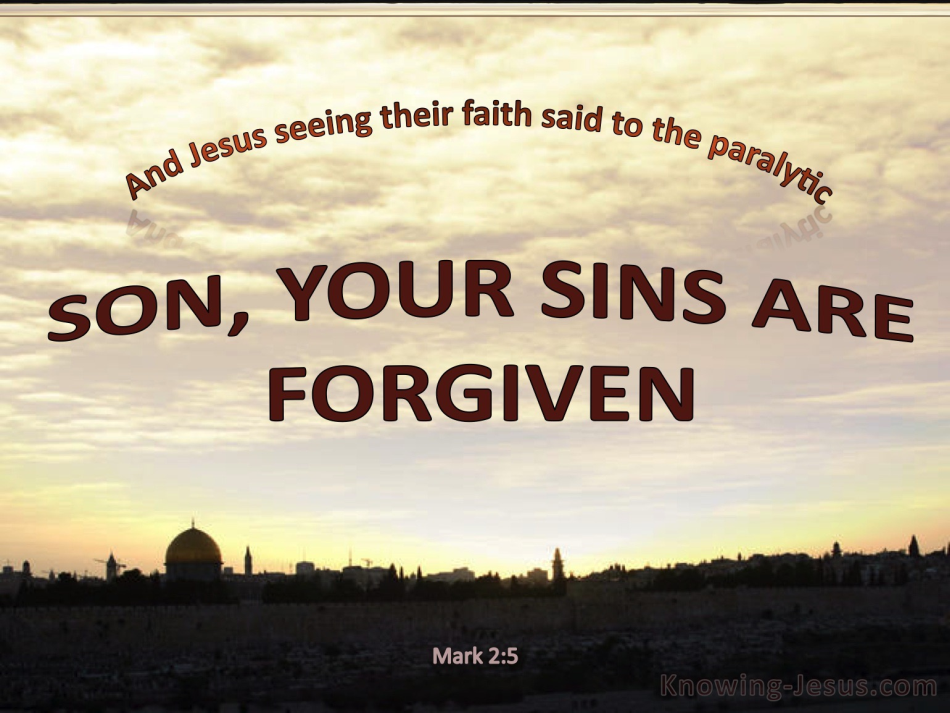
“When Jesus saw their faith, he said unto the sick of the palsy, Son, thy sins be forgiven thee.”
(Mark 2:5).
When speaking about Jesus, we must remember that He is able to forgive us our SINS. “And he is the propitiation for our sins: and not for ours only, but also for the sins of the whole world” (1John 2:2).
Some see license to sin in the above verse, but when carefully reading the context they’ll see the exact opposite. “My little children, these things write I unto you, that ye sin not. And if any man sin, we have an advocate with the Father, Jesus Christ the righteous” (1John 2:1).
“For all have sinned, and come short of the glory of God” (Rom 3:23). We all sin, but what is that? Sin Separates us from God and is against Him, (Isa 59:2). It Imprisons us, (Rom 6:16; 23), and we have Nothing to pay the cost (Rom 3:23).
We need the forgiveness of Christ.
Sadly, some say their sin is so bad that Jesus can’t forgive them, or still feel guilt even after having faithfully obeying the gospel. Maybe we need a reminder of the sins Jesus FORGIVES for those that obey Him. We have a couple of lists of sins that Saints can have forgiven through Christ.
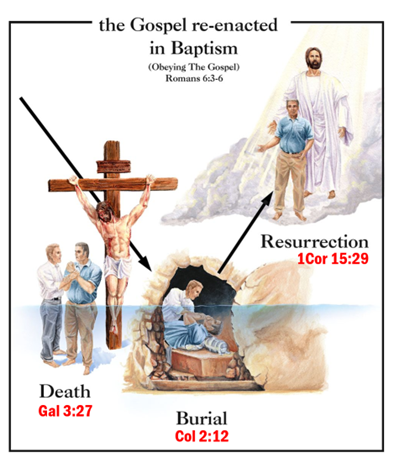
Jesus forgives Fornicators and all manner of sexual sins. “Know ye not that the unrighteous shall not inherit the kingdom of God? Be not deceived: neither fornicators, nor idolaters, nor adulterers, nor effeminate, nor abusers of themselves with mankind, Nor thieves, nor covetous, nor drunkards, nor revilers, nor extortioners, shall inherit the kingdom of God. And such were some of you: but ye are washed, but ye are sanctified, but ye are justified in the name of the Lord Jesus, and by the Spirit of our God” (1Cor 6:9-11). Notice that it says, “such WERE some of you.” They had repented and been forgiven, but how? It says, “ye are WASHED.” How were they washed? Look to what the writer said had happened to him when he obeyed the gospel. “And now why tarriest thou? arise, and be baptized, and wash away thy sins, calling on the name of the Lord” (Acts 22:16). Paul had his sins washed away through his faithful baptism in water.
Jesus forgives Outbursts of wrath, Drunkenness and Revelries which are works of the flesh. “Now the works of the flesh are manifest, which are these; Adultery, fornication, uncleanness, lasciviousness, Idolatry, witchcraft, hatred, variance, emulations, outbursts of wrath, strife, seditions, heresies, Envyings, murders, drunkenness, revellings, and such like: of the which I tell you before, as I have also told you in time past, that they which do such things shall not inherit the kingdom of God” (Gal 5:19-21). This passage shows that Jesus also forgives our Greed, Idolatry, theft, strife, and seditions.
Jesus even forgives Violent & Murderous crimes as seen in the forgiveness of Paul. As Saul of Tarsus, he once persecuted the church of Christ. “I verily thought with myself, that I ought to do many things contrary to the name of Jesus of Nazareth. Which thing I also did in Jerusalem: and many of the saints did I shut up in prison, having received authority from the chief priests; and when they were put to death, I gave my voice against them. And I punished them oft in every synagogue, and compelled them to blaspheme; and being exceedingly mad against them, I persecuted them even unto strange cities” (Acts 26:9-11).
He too found forgiveness in Christ; “This is a faithful saying, and worthy of all acceptation, that Christ Jesus came into the world to save sinners; of whom I am chief. Howbeit for this cause I obtained mercy, that in me first Jesus Christ might shew forth all longsuffering, for a pattern to them which should hereafter believe on him to life everlasting. Now unto the King eternal, immortal, invisible, the only wise God, be honour and glory for ever and ever. Amen.” (1Tim 1:15).
As noted above, we know how he obtained mercy; by obeying the Gospel, “And now why tarriest thou? arise, and be baptized, and wash away thy sins, calling on the name of the Lord” (Acts 22:16). It is what he taught everyone, “Know ye not, that so many of us as were baptized into Jesus Christ were baptized into his death? Therefore we are buried with him by baptism into death: that like as Christ was raised up from the dead by the glory of the Father, even so we also should walk in newness of life. For if we have been planted together in the likeness of his death, we shall be also in the likeness of his resurrection: Knowing this, that our old man is crucified with him, that the body of sin might be destroyed, that henceforth we should not serve sin” (Romans 6:3-6).
Jesus also forgives all manner of Evil, Envy, “and Such like” (Gal 5:21b).
Jesus FORGIVES sin. He has the power and the authority to forgive us of all unrighteousness, but we must obey the gospel and be faithful to Him. “Though he were a Son, yet learned he obedience by the things which he suffered; And being made perfect, he became the author of eternal salvation unto all them that obey him” (Hebrews 5:8-9).
There is only one sin that never has forgiveness. “Verily I say unto you, All sins shall be forgiven unto the sons of men, and blasphemies wherewith soever they shall blaspheme: But he that shall blaspheme against the Holy Ghost hath never forgiveness, but is in danger of eternal damnation” (Mark 3:28-29).
What is this unforgiveable sin? It is any unrepentant sin that a person is unwilling to put away before death or the return of Christ. This is the blasphemy of the Holy Spirit. Disobedience to the gospel is blaspheme of the Spirit, for it was the Holy Spirit that has revealed to us the commands of God through the inspired word. If we are unwilling to repent, we are committing the “sin leading to death” (1John 5:16).
This is the confidence we have in Christ, the forgiveness of sins. “My little children, these things write I unto you, that ye sin not. And if any man sin, we have an advocate with the Father, Jesus Christ the righteous: And he is the propitiation for our sins: and not for ours only, but also for the sins of the whole world. And hereby we do know that we know him, if we keep his commandments” (1John 2:1-3).
Jesus has power to FORGIVE sins.
Agape,
Spencer
Spencer is an evangelist for the Franklin & Juniper st church of Christ in Borger, Tx.
This is part of a series of articles about reasons to Talk About Jesus.






 Borger church of Christ @ Franklin & Juniper