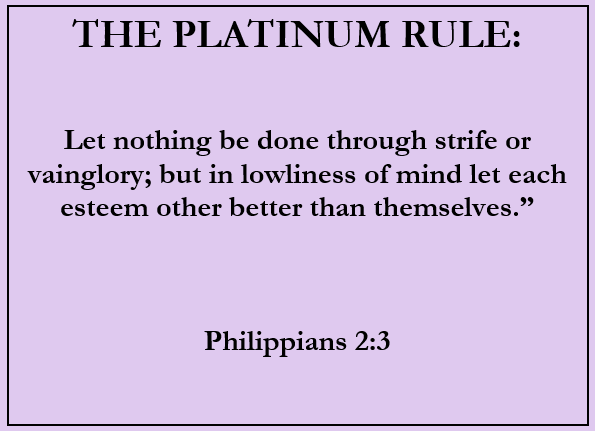
The previous articles looked at doubt from Disbelief, Obstacles, Untruths, and now we look at doubt that comes from strife & divisive behavior.
Casting doubt is the next on our list of reasons why we doubt. There are some outside of the church that cast doubt, but there are also some inside the church.
The church is wonderful. Jesus said this about the church, “I will build my church; and the gates of hell shall not prevail against it” (Matt 16:18b). He built it, and it’s indestructible, but that doesn’t mean some won’t try.
For the most part, folks aren’t necessarily trying to wreck the church, but we can be casting doubt upon it through certain attitudes and actions. This leads to some leaving the church.
People do not like conflict. When we fail to resolve issues in kind, loving and truthful ways it leads to disappointment and division. Some leave to another congregation. Others leave the church for a denomination.
To ward off doubt, we need to identify our negative behaviors without casting more doubt!
5 things we do to cast doubt upon others in the church.
The first negative behavior that casts doubt on others is BACKBITING. “A froward man soweth strife: and a whisperer separateth chief friends” (Prov 16:28). In Romans, backbiting is in the list of the unrighteous (Rom 1:30. It’s among the list of thing Paul hoped to find missing when he visited the church at Corinth (2Cor 12:20). Backbiting is defaming speech to attack the good name or reputation of a person by uttering anything false or injurious. This can cast doubt on the faith of some by tearing down those who teach, aid, or example for others. This kind of doubt leads to trust issues and divisions.
The next way we could cause doubt is through RIVALRIES. The church at Corinth had this problem. “For ye are yet carnal: for whereas there is among you envying, and strife, and divisions, are ye not carnal, and walk as men” (1Cor 3:3)? The first chapter shows the root of this rivalry was about who baptized who. In chapter six there was rivalry caused by doing wrong to one another and they were taking their grievances before unbelievers (6:1-6). This causes doubt about the church inside and outside the church. “For where envying and strife is, there is confusion and every evil work” (James 3:16). This sort of doubt causing gives occasion for the enemies of God to blaspheme.
EVIL Speaking is another area when we might cast doubt. I recall a friend telling me about when he was a kid riding home with his parents from worship. They began to speak about something a brother in Christ had done when his father stopped the conversation. His father told him that he didn’t want to talk poorly about a brother in front of the kids. Perhaps the brother would repent, but if they had poisoned the mind of the children about this brother, they may harbor ill feelings toward him into adulthood. “Wherefore laying aside all malice, and all guile, and hypocrisies, and envies, and all evil speakings, As newborn babes, desire the sincere milk of the word, that ye may grow thereby” (1Pet 2:1-2). “A false witness that speaketh lies, and he that soweth discord among brethren” (Prov 6:12-14; 19). This kind of doubt leads to division between brethren and ultimately a weaker congregation.
The next attitude is ANGER toward others in the church. “But now ye also put off all these; anger, wrath, malice, blasphemy, filthy communication out of your mouth.” (Col 3:8, 21; Eph 4:31, 26). Animosity is in opposition to loving kindness. “Put on therefore, as the elect of God, holy and beloved, bowels of mercies, kindness, humbleness of mind, meekness, longsuffering. (Col 3:12). When people come together there may times when we disappoint each other, but we must not allow this to develop into anger and cause division and doubt about our brethren or doubt about the church. “Beloved, let us love one another: for love is of God; and every one that loveth is born of God, and knoweth God. He that loveth not knoweth not God; for God is love” (1John 4:7-8).
Lastly, there is doubt cast on another when someone lays claim to special KNOWLEDGE that others lack. Paul warned Timothy about these people. “But foolish and unlearned questions avoid, knowing that they do gender strifes” (2Tim 2:23). “He is proud, knowing nothing, but doting about questions and strifes of words, whereof cometh envy, strife, railings, evil surmisings” (1Tim 6:4). When people engage in doubtful disputations (Rom 14:2) it may cause a weaker brother to stumble. Paul also wrote about KNOWLEDGE that a strong brother has that a weaker brother does not have. In these cases, the stronger brother is to forebear so as not to cause stumbling in the weaker.
“But take heed lest by any means this liberty of yours become a stumblingblock to them that are weak. For if any man see thee which hast knowledge sit at meat in the idol’s temple, shall not the conscience of him which is weak be emboldened to eat those things which are offered to idols; And through thy knowledge shall the weak brother perish, for whom Christ died” (1Cor 8:9-11)?
Casting doubt about brethren casts doubt about the church for the church is the brethren. There will be disagreements, disappointments, and differences in understanding. However, these can be overcome through Love for God, Love for His word and Love for one another.
Agape,
Spencer
This is part 4 of a series on Overcoming Doubt.
 Borger church of Christ @ Franklin & Juniper