The Fatherhood of God

FATHER’S DAY is upon us, as we take time out to honor our father’s in the flesh it seems appropriate to look at how Scripture describes God as a Father.

It may surprise you to learn that the Old Testament portrayal of God as Father is quite rare. He is referred to as the Father of the nation of Israel [De 32:6; 1Chron 29:10; Isa 63:16; 64:8; Jeremiah 3:4 Jeremiah 3:19; 31:9; Mal 1:6; 2:10]. “But now, O LORD, thou art our father; we are the clay, and thou our potter; and we all are the work of thy hand” [Isa 64:8]. It speaks of Him as the Father of certain individuals, [2 Sam 7:14; 1 Chron 17:13; 22:10; 28:6; Psalm 68:5; 89:26], and in other places, the idea of Fatherhood is present although the term is not used [Ex 4:22; De 14:1; 32:5, Isa 1:2; 8:18; 9:6; Hos 1:10; 11:1].

As we survey the New Testament, all that changes. The frequency of calling God the Father increases dramatically. Most likely because Jesus said, “Our Father which art in Heaven…” when He taught His disciples to pray, [Mat 6:9]. Jesus, rightfully so, calls God “Father” nearly 200 times in the gospel (over 100 times in the book of John alone). Another word for Father Jesus used was “Abba,” found only 3 times in the New Testament [Mark 14:26; Rom 8:15; Gal 4:6]. In Vine’s Expository Dictionary it says about “Abba”, “It approximates to a personal name, in contrast to ‘Father,’ with which it is always joined in the NT. This is probably due to the fact that, abba having practically become a proper name, Greek-speaking Jews added the Greek word pater, “father,” from the language they used. Abba is the word framed by the lips of infants, and betokens unreasoning trust; ‘father’ expresses an intelligent apprehension of the relationship. The two together express the love and intelligent confidence of the child.” (Vines, W.E., Vines Concise Dictionary of the Bible, Thomas Nelson, Inc. 2005 print page 1)

Should we call God “daddy”?

I’ve noticed a trend among some to refer to God as “daddy” as an attempt to make God sound more familiar to them. They suggest that since the Aramaic word “Abba” is used by children and our nearest English equivalent is “daddy” we have liberty. Their reasoning is flawed since the term is used by older children and adults alike. I’m not a fan of that. Although He is called our Father, we still ought to honor Him with respect, He is still the Almighty God.

God is our Father

There should be no doubt that God is our Father. As the Creator of all things which includes mankind, “So God created man in his own image, in the image of God created he him; male and female created he them” [Gen 1:27], He is our Father. Let us never forget that. Our Father, the Creator, provides for His creation, despite our sin toward Him, in this we ought to be very grateful. “Nevertheless he left not himself without witness, in that he did good, and gave us rain from heaven, and fruitful seasons, filling our hearts with food and gladness” [Acts 14:17]. Because of His goodness over all mankind through His creation, some make the mistake of thinking that this will equate to salvation. For that we need to consider God in another sense, as a Father through adoption.

God, our adopted Father.

Paul tells us in Galatians 4:4-7 that through Christ we may become children of God through adoption, “But when the fulness of the time was come, God sent forth his Son, made of a woman, made under the law, To redeem them that were under the law, that we might receive the adoption of sons. And because ye are sons, God hath sent forth the Spirit of his Son into your hearts, crying, Abba, Father. Wherefore thou art no more a servant, but a son; and if a son, then an heir of God through Christ.” It should be understood that some shall NOT be adopted by God to become their Father, and shall NOT inherit the promises. The question becomes, how do we receive this adoption?

Just a few verses earlier, Paul wrote, “For ye are all the children of God by faith in Christ Jesus. For as many of you as have been baptized into Christ have put on Christ. And if ye be Christ’s, then are ye Abraham’s seed, and heirs according to the promise.” [Galatians 3:26-29]. Friends, don’t miss that. We can all become children of God, He can be our Father by faith when we obey the Gospel of Jesus Christ.

THINGS JESUS NEVER SAID

Some of the biggest challenges I face as an evangelist are the things people THINK are in the Bible or they BELIEVE Jesus taught.  The evangelist, like the statue carver, must chip away everything that doesn’t belong. Some of these beliefs are so firmly attached that it requires a lot of pounding. Below is a list of things folks THINK Jesus said, but never did. Perhaps this list can help you in your personal work. (editors note; there are far more than these listed and may show up in a future article. Seb)

The uppercase words are ‘things Jesus never said’

Jesus never said… “Go ye therefore, and teach all nations, TO ASK ME INTO THEIR HEARTS.”

What He really said…  ”…baptizing them in the name of the Father, and of the Son, and of the Holy Ghost:” [Mat 28:19]


Jesus never said… “Mt 7:1 Judge not, AND REMAIN SILENT WHEN YOU SEE FOLKS DO EVIL.

What He really said… “that ye be not judged. For with what judgment ye judge, ye shall be judged: and with what measure ye mete, it shall be measured to you again.” Mat 7:1-2


Jesus never said… “And he answered and said unto them, Have ye not read, that he which made them at the beginning made them TO CHOOSE 1 OR MORE OF 58 GENDERS?”

What He really said… “made them male and female,” Mat 19:4 [cr. Gen 1:27]


Jesus never said… “IT’S MY OPINION”

What He really said… “And Jesus came and spake unto them, saying, All power is given unto me in heaven and in earth.” Mat 28:18 [cr. Mt 7:29]


Jesus never said… “If the world hates you, REMEMBER, CHANGE WHAT YOU TEACH TO CONFORM WITH THE TIMES, MAKING IT EASIER TO FOLLOW SO EVERYONE WILL LIKE YOU AGAIN.

What He really said… “If the world hate you, ye know that it hated me before it hated you.” John 15:18


Jesus never said… “Neither do I condemn you, go and DO WHATEVER MAKES YOU HAPPY.

What He really said… “Neither do I condemn thee: go, and sin no more.” [John 8:11 the woman caught in adultery]


Jesus never said… “Enter ye in at the strait gate: for wide is the gate, and broad is the way, that leadeth to ETERNAL LIFE, and many there be which go in thereat:

What He really said… “Enter ye in at the strait gate: for wide is the gate, and broad is the way, that leadeth to destruction, and many there be which go in thereat: Because strait is the gate, and narrow is the way, which leadeth unto life, and few there be that find it.” [Mat 7:13-14]


Jesus never said… “I am A way, A truth, and A life: ANYONE CAN GO TO THE MOTHER ON THEIR OWN.

What He really said… “I am the way, the truth, and the life: no man cometh unto the Father, but by me. [John 14:6]


Jesus never said… “And I say also unto thee, That thou art Peter, and upon this rock I will build my churchES;

What He really said… “And I say also unto thee, That thou art Peter, and upon this rock I will build my church.” [Mat 16:18]


He also said… “Therefore whosoever heareth these sayings of mine, and doeth them, I will liken him unto a wise man, which built his house upon a rock:” [Mat 7:24]

And, “If ye love me, keep my commandments.” [John 14:15]

Things We Should Know

WE ARE TOLD BY JESUS, “And ye shall know the truth, and the truth shall make you free” [John 8:32]. He is telling us that there are some things we should know, namely the truth. Later, this is written to Christians, “For though by this time you ought to be teachers, you need someone to teach you again the first principles of the oracles of God; and you have come to need milk and not solid food” [Hebrews 5:12]. This demonstrates that there are some things a Christian should know.

Let’s see just a few things that every Christian should know:

You should know that, in the New Testament, the church is called

  • The temple of God. 1Cor 3:16
  • The bride of Christ. Eph 5:21-32
  • The body of Christ. Eph 1:22-23; Col 1:24
  • The kingdom of God’s Son. Col 1:13
  • The house of God. 1Tim 3:15
  • The church of the Firstborn. Heb 12:23
  • The church of the Lord. Acts 20:28
  • The churches of Christ. Ro 16:16

These are terms referring to the same institution.

You should know that the church was

  • Built by Jesus the Christ. Matt 16:13-18.
  • Purchased by His Blood. Acts 20:28
  • Built upon Christ as the only foundation. 1Cor 3:11
  • Not built upon any man. 1Cor 1:12-13
  • Fully established on the first Pentecost after Christ arose from the dead. Lk 24:49; Acts 1:8; Mark 9:1; Acts 2.

You should know that members of the church are called

  • 1Cor 12:27
  • Acts 6:1
  • Acts 5:14; 2Cor 6:15
  • Acts 9:13; Rom 1:7; Phil 1:1
  • 1Peter 2:9; Rev 1:6
  • 1Jno 3:1-2
  • Acts 11:26; 26:28; 1Peter 4:16

You should know that the 3 permanent classes in the church are – All are to be Christians (saints). You cannot “join” the church of our Lord, God ADDS TO THE CHURCH those who are being saved. Acts 2:47.

  • Elders, who are bishops, overseers or pastors. Their duty is to oversee and feed the flock. Acts 20:28; 1Tim 3:1-7; Titus 1:5-9; 1Peter 5:1-4
  • Deacons to serve the church if there are Elders. 1Tim 3:8-13
  • Evangelists to teach and preach God’s word. For their work and qualifications, see Ephesians 4:11; 1 & 2 Timothy; Titus.

You should know that Jesus Christ Himself

  • Loved the church. Eph 5:25
  • Bled for the church. Acts 20:28
  • Established the church. Matt 16:18
  • Called the church His. Matt 16:18
  • Is the Head of the church. Eph 5:23; 4:4; 1:22-23
  • Will save the church. Eph 5:23; 4:4; 1:22-23

You should know that the church and the body of Christ are

  • The same. Eph 1:22-23; Col 1:18; 1:24
  • The only group saved. Eph 5:23

You should know that man did not

  • Purpose the church. Eph 3:10-11
  • Purchase the church. Acts 20:28
  • Build the church. Matt 16:18
  • Name its people. Acts 11:26; Is 62:2
  • Add to the church. Acts 2:47
  • Give the church its doctrine. 2John 1:9-10; Gal 1:11

You should know that in New Testament times there was

  • The family of God. Eph 3:15: 1Tim 3:15
  • The kingdom of Christ. Col 1:13-14
  • The body of Christ. Eph 1:22-23; 4:4
  • The bride of Christ. Rom 7:1-7; Eph 5:22-23
  • The church of Christ. Matt 16:18; Eph 1:22-23; 4:4; Rom 16:16

You should know that in order to get into the church you must

  • Believe in Christ. John 8:24; Acts 16:31; Heb 11:6
  • Repent of your sins. Luke 13:3; Acts 2:38; 3:19; 17:30
  • Confess your faith in Christ. Mat 10:32-33; Rom 10:10; Acts 8:37-38
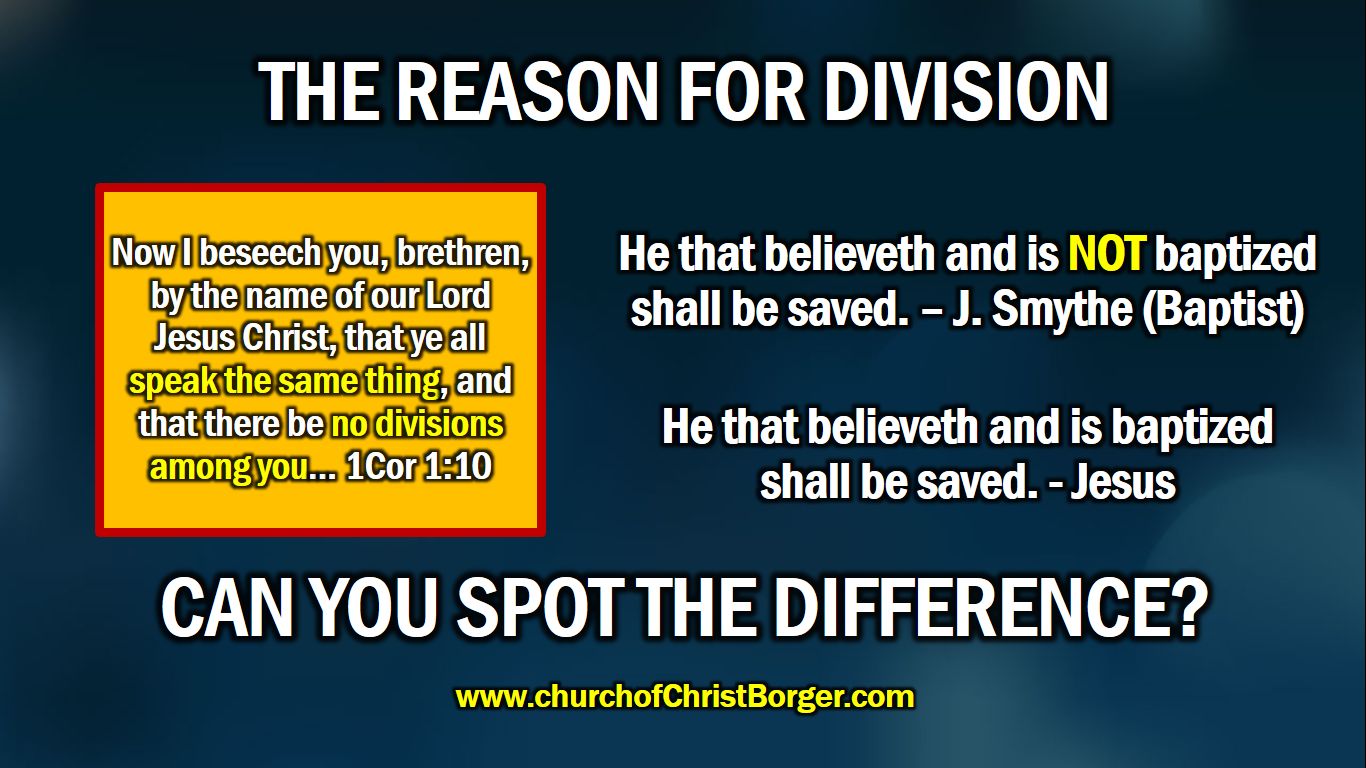
  • Be Baptized. Matt 28:19; Mark 16:16; Acts 2:38; 10:48; 22:16; 1Peter 3:21; Gal 3:27

You should know that baptism requires

  • Acts 10:47
  • Much Water. John 3:23
  • Going to the water. Acts 8:36; Matt 3:5-6
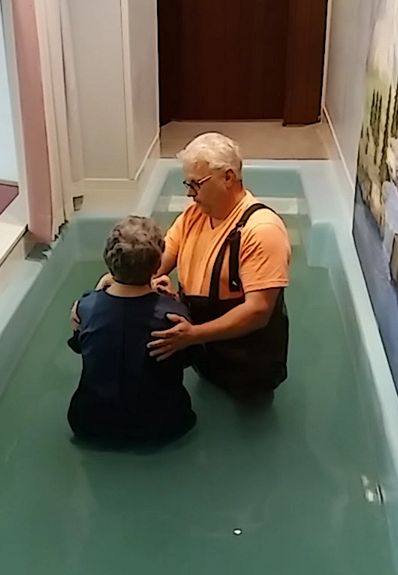
  • Going INTO the water. Acts 8:38; Matt 3:5-6
  • A Burial. Rom 6:3-5; Col 2:12
  • A Planting. Rom 6:5
  • A Washing. Acts 22:16
  • A Raising out of the water. Col 2:12
  • A coming out of the water. Acts 8:39
  • A Birth. John 3:5

IGNORANCE, INTENT AND EMAILS

(this article may reference current events but is in no way a commentary on political views by the author as it relates to these events)

Confidential emails have been in the news of late. The jist of which is that a certain, high level, government employee, mishandled classified communication within the government. The FBI investigated and found unsecured & unguarded servers (the device where electronic mail would be stored and sent), “extremely careless” handling of email by this employee and her staff, and poor judgement on the part of this high level employee in the handling of Top Secret communication. The FBI then said, “We did not find…clearly intentional and willful mishandling of classified information.”

It’s on this last point that this article shall address as it relates sin, salvation and getting into heaven.

Under human laws, intent plays a major role. For example, if a person was negligent in their behavior, they may or may not be prosecuted. In recent cases of accidental harm to a person involving a vehicle, intent becomes the deciding factor. God spoke about these situations and gave instructions under the Law of Moses for unintentional harm. “as when a man goes to the woods with his neighbor to cut timber, and his hand swings a stroke with the ax to cut down the tree, and the head slips from the handle and strikes his neighbor so that he dies-he shall flee to one of these cities and live; [Deuteronomy 19:5] and in some cases were required to pay restitution.

Intent may be a factor, but ignorance of the law is another matter. Under our law system, Ignorantia juris non excusat (Latin for “ignorance of the law excuses not”) is a legal principle holding that a person who is unaware of a law may not escape liability for violating that law merely because he or she was unaware of its content. There are plenty of examples where a person is fined or punished having been unaware that they were committing a crime. If you doubt this, the next time you’re pulled over for speeding just tell the officer you didn’t know the speed limit.

For humanity, God leaves everyone without excuse whether they’ve read the Bible or not.

Look at Roman 1:18-21; “For the wrath of God is revealed from heaven against all ungodliness and unrighteousness of men, who suppress the truth in unrighteousness, 19 because what may be known of God is manifest in them, for God has shown it to them. 20 For since the creation of the world His invisible attributes are clearly seen, being understood by the things that are made, even His eternal power and Godhead, so that they are without excuse, 21 because, although they knew God, they did not glorify Him as God, nor were thankful, but became futile in their thoughts, and their foolish hearts were darkened.” [emphasis mine]

You see, God has made every effort to show himself to every person and it’s their willful disregard for Him that will earns His wrath.

In another place, regarding ignorance, Paul said, “Truly, these times of ignorance God overlooked, but now commands all men everywhere to repent, because He has appointed a day on which He will judge the world in righteousness by the Man whom He has ordained. He has given assurance of this to all by raising Him from the dead.” [Acts 17:30-31]

Peter also taught that we are not to remain in our ignorance but to obey; “Therefore gird up the loins of your mind, be sober, and rest your hope fully upon the grace that is to be brought to you at the revelation of Jesus Christ; as obedient children, not conforming yourselves to the former lusts, as in your ignorance; but as He who called you is holy, you also be holy in all your conduct, because it is written, “Be holy, for I am holy.” [1Peter 1:13-16]

Here’s the point of what I am saying, when we face the judgement of God, saying “I didn’t know” or “I didn’t intend to sin” will not open the gates of heaven unto us. The only way that we can survive the judgement and to receive an entry into heaven is through the saving blood of Jesus the Christ.

How can one be saved?

Now that you’ve heard about God’s wrath and salvation through Jesus, Repent and be converted from your ignorance. “Yet now, brethren, I know that you did it in ignorance, as did also your rulers. But those things which God foretold by the mouth of all His prophets, that the Christ would suffer, He has thus fulfilled. Repent therefore and be converted, that your sins may be blotted out, so that times of refreshing may come from the presence of the Lord,” [Acts 3:17-19]

After your repentance, their remains the blotting (washing) away of your sins. “And now why tarriest thou? arise, and be baptized, and wash away thy sins, calling on the name of the Lord.” [Acts 22:16] “Then Peter said unto them, Repent, and be baptized every one of you in the name of Jesus Christ for the remission of sins, and ye shall receive the gift of the Holy Ghost.” [Acts 2:38]

If you do this, you will be saved, but this doesn’t give you liberty to keep on sinning. Therefore, the Christian must remain faithful. “What shall we say then? Shall we continue in sin, that grace may abound? God forbid. How shall we, that are dead to sin, live any longer therein? Know ye not, that so many of us as were baptized into Jesus Christ were baptized into his death? Therefore we are buried with him by baptism into death: that like as Christ was raised up from the dead by the glory of the Father, even so we also should walk in newness of life.” [Romans 6:1-4] And if we sin, “My little children, these things write I unto you, that ye sin not. And if any man sin, we have an advocate with the Father, Jesus Christ the righteous:” [1John 2:1]

Though human courts overlook ignorance, God won’t. Why delay?

Judge not, for God loves me

judge not

ARE YOU AWARE of the most commonly used Bible verse? It’s usually quoted this way; Someone takes note that a sin exists in another’s life and to stop the rebuke this one will say, “Judge not, for God so loved the world that He gave His only son.

It’s as if to say, “You can’t judge me, God loves me just as I am.” They quote this verse in defense of sin, assuming the belief that the Bible condemns judging others because we’re saved by God regardless of our behaviors.

In the hybrid verse, “Judge not, for God loves me,” a new meaning emerges which is so very different from the meaning which can be easily understood if one will study the context of these verses.

In actuality, these are two separate verses, not one, which are, “Judge not, that ye be not judged” and “For God so loved the world that He gave His only begotten Son, that whosoever believeth in him should not perish, but have everlasting life.” [Matthew 7:1; John 3:16]

In Matthew 7:1, Jesus is teaching about making false or poor judgements hypocritically. We know this because of verse 2 & 3, “For with what judgment ye judge, ye shall be judged: and with what measure ye mete, it shall be measured to you again. 3 And why beholdest thou the mote that is in thy brother’s eye, but considerest not the beam that is in thine own eye?”

Making judgements, determinations, is not condemned in scripture. The condemnation comes when we judge according to non-biblical or hypocritical standards. We must first begin with ourselves, looking at God’s standards, then we can look at others. If we were not allowed to make judgments, how then could we ever determine if somebody needed to hear the gospel to be saved?

The second half of this hybrid verse is also abused when it’s removed from its context. Yes, God does love us, all of us. It’s from this love that we even have a savior, [Romans 5:8]. To suggest that God’s love excuses un-repented sin is contrary to so many other verses in scripture. [Rom 6:1; Acts 2:38; 8:22]

Look closely at all of John chapter 3. Verse 5 shows the need to be baptized. Verses 20-21 shows the need to change from doing evil. Speaking about belief, John 1:12 says, “But as many as received Him, to them He gave the RIGHT to become children of God, to those who believe in His name.” (emphasis mine)

When we believe in Jesus, the Christ, we have the RIGHT to become children of God. Belief alone never GIVES US salvation, just THE RIGHT to become saved. [James 2:24; Mark 16:26; Matthew 28:18-20] Belief is the reason we will obey the Gospel. Any reason short of believing that “Jesus is the Christ, the Son of the living God” [Matthew 16:16], is inadequate for our salvation.

What about the Thief on the Cross?

what about the thief

Folks will use many reasons to take away the command by our Lord to be baptized. The one heard most commonly by me is, “What about the thief on the cross?” This one is offered by those who have a little biblical knowledge, and by those who’ve heard it before, but have never been challenged with scriptural evidence.

THE ARGUMENT goes like this; “If, as you say, baptism is necessary for salvation, then what about the thief on the cross? He was never baptized, yet the Lord said, “To day shalt thou be with me in paradise.” Baptism is not necessary to salvation, because the thief could not obey that command, yet the Lord said he would be in paradise.” [Lu 23:43]

The Scriptures examined: The real issue pertains to a crucial feature of Bible interpretation, are we to take all 66 books of the Bible and take everything that is said and apply it directly and equally to everyone? The Bible is literally filled with commands, instructions, and requirements that were not intended to be duplicated by people living today. People are amenable to the law period under which they lived. [2Timothy 2:15]. There are three dispensations found in the Scriptures:

  • The Patriarchal Dispensation – From creation, everyone was subject to a body of legislation passed down by God through the fathers of family clans (cf. Hebrews 11:1), until the giving of the Law of Moses.
  • The Mosaic Dispensation – At Mt. Sinai, Moses was given a new Law from God and Jews were subject to that body of legal information [Law of Moses] from that time until it also was terminated at the cross of Christ. Consider the following passages:[Matthew 27:51; Romans 2:12-16; Galatians 3:7-29; Ephesians 2:11-22; Colossians 2:11-17]
  • The Christian Dispensation – After Jesus’ death on the Cross, all peoples are now amenable to the Law of Christ. [Galatians 6:2]
Now that we have this background information, let’s examine the reasons which make their argument invalid:

Reason #1– The Law of Moses was still in effect. Many folks are confused when reading the Gospels for it is commonly called, “The New Testament.” However, the majority of the gospel story in Matthew, Mark, Luke & John, take place while Jesus was alive and living as a Jew subject to the Law of Moses.

Jesus was born to a Jewish family under the Law [Mat 1; Luke 3; Ga 4:4], circumcised the 8th day [Lu 2:21], observed the Passover [Lu 2:41, 22:8-20], taught people to follow the Law [Matthew 5:23-24; 8:4], and followed the Law Himself [Matthew 5:17-18].

Under the Law of Moses, never was there a command to be baptized for the remission of sins. Sins were atoned for through the sacrifice of bulls; And he shall do with the bull as he did with the bull as a sin offering; thus he shall do with it. So the priest shall make atonement for them, and it shall be forgiven them. (Leviticus 4:20). The word “atonement” <kaphar> literally means “to cover” and is the same as in Gen 6:14 regarding covering the ark with pitch.

Nowhere in the Old Testament is the teaching that sins were totally removed. As we study our Bibles, we find in Hebrews 10:4 For it is not possible that the blood of bulls and of goats should take away sins. [Heb 10:11 …can never take away sins.] This system pointed to the sacrifice of Jesus on the cross and terminated at the cross [see above scripture references]

The thief on the cross lived during this Mosaic period, therefore was subject to the Law of Moses and it’s system of sacrifice through bulls and goats.

Which brings us to the second reason……

Reason #2 – Since Jesus lived under the Law of Moses, He followed that law. Of course, He would have no reason to offer a sacrifice on His own behalf [Hebrews 4:15] being without sin, He did teach those around Him to do it for themselves [Mt 8:1-4]

As we study, we find out that the sacrifices in the Law of Moses were pointing to the sacrifice that Jesus would offer of Himself. Galatians 3:19-27 teaches that the Law was a teacher to bring us to Christ.

The letter to the HEBREWS teaches us that it was Christ’s death that ended the Law and began the New Covenant. [Hebrews 8-10]. Paul, speaking about the death of Jesus in relationship to the Law of Moses, said “Blotting out the handwriting of ordinances that was against us, which was contrary to us, and took it out of the way, nailing it to his cross;” [Colossians 2:14]

Therefore, the THIEF on the cross never had a command to be baptized for the remission of sins. He died, having repented and placed his trust in the Christ, as EVERYONE UNDER THE LAW OF MOSES did when they obeyed the ordinances under that law.

Reason #3– The command to be baptized “for the remission of sins” was issued AFTER Jesus’ death, burial and resurrection. When Jesus was on the cross, He was fulfilling the Law of Moses, ending it, and bringing in the New Covenant. It was AFTER His death, burial and resurrection that He gave the great commission, “Go ye therefore, and teach all nations, baptizing them in the name of the Father, and of the Son, and of the Holy Ghost:” [Matthew 28:19]

FOR THE REMISSION OF SIN – This phrase is found in connection with baptism. It is particularly important to note how and when it was used;

  • Mt 26:28 For this is my blood of the new testament, which is shed for many for the remission of sins.
  • Ac 2:38 Then Peter said unto them, Repent, and be baptized every one of you in the name of Jesus Christ for the remission of sins, and ye shall receive the gift of the Holy Ghost.

These two verses show the connection between, baptism, Christ’s blood AND the remission of sins.

The other instances of this phrase are connected to the preaching of John “the Baptist”. When we study the scriptures, we find that John’s baptism never remitted any sins, for we read in Acts 19:1-5;

And it came to pass, that, while Apollos was at Corinth, Paul having passed through the upper coasts came to Ephesus: and finding certain disciples, 2 He said unto them, Have ye received the Holy Ghost since ye believed? And they said unto him, We have not so much as heard whether there be any Holy Ghost. 3 And he said unto them, Unto what then were ye baptized? And they said, Unto John’s baptism.  4 Then said Paul, John verily baptized with the baptism of repentance, saying unto the people, that they should believe on him which should come after him, that is, on Christ Jesus. 5 When they heard this, they were baptized in the name of the Lord Jesus.

CONCLUSION:
  • The thief on the cross lived AND DIED under the Law of Moses, as did Jesus our Lord, where there was NO COMMAND to be baptized.
  • The thief, had he been able to obey the command, was not under any obligation to obey it for it DIDN’T APPLY TO HIM at the time of his death, because the Law of Moses was the covenant in force at the time of the statement, “To day shalt thou be with me in paradise.”
  • The command to be baptized was given AFTER his death.

Touching Jesus

I’m sure you’ve seen photos of celebrities engulfed around a sea of people, some paparazzi, others just trying to get an autograph, still others seeking to touch them.

There are 3 stories in the NT of folks that were able to touch Jesus….

In Mark 5:21-34……25And a woman, who had an issue of blood twelve years, ……. 28she said, If I touch but his garments, I shall be made whole. 34And he said unto her, Daughter, thy faith hath made thee whole; go in peace, and be whole of thy plague.

Why I love this story…..
This woman was desperate, spending all that she had seeking a cure. It reminds me of (Mt 13:46 “who, when he had found one pearl of great price, went and sold all that he had and bought it.) She didn’t want to bother Jesus, feeling so unworthy, yet had the faith, knowing if she was only to touch him, she would be cured. “Who touched me” He asked. He knew her sorrow, and He cured her. (Joh 2:24 because he knew all men,)

In another story…….
This one concerning a different woman in Luke 7:36

And one of the Pharisees desired him that he would eat with him. And he entered into the Pharisee’s house, and sat down to meat. 37And behold, a woman who was in the city, a sinner; and when she knew that he was sitting at meat in the Pharisee’s house, she brought an alabaster cruse of ointment, 38and standing behind at his feet, weeping, she began to wet his feet with her tears, and wiped them with the hair of her head, and kissed his feet, and anointed them with the ointment. …. 50And he said unto the woman, Thy faith hath saved thee; go in peace.

Why I like this story…….
We have this contrast between Simon and this sinful woman – Pharisee’s didn’t like to be touched (Mr 7:4 When they come from the marketplace, they do not eat unless they wash.) Yet this woman, in a show of great humility, anointed His head with costly oil – perhaps worth 1 years wages? How much is too much to come in contact with the Savior? She washed His feet with her tears – How do your sins make you feel?

In this third story.….
We find one who wanted to touch Jesus for proof in Joh 20

But Thomas, one of the twelve, …27Then saith he to Thomas, Reach hither thy finger, and see my hands; and reach hither thy hand, and put it into my side: and be not faithless, but believing. 28Thomas answered and said unto him, My Lord and my God. 29Jesus saith unto him, Because thou hast seen me, thou hast believed: blessed are they that have not seen, and yet have believed.

Why I Like this story…………..
Many are like Thomas, “I’ll never believe unless I see Jesus.” Let me warn you friend, you will believe when you see Him. (Ro 14:11 For it is written: “As I live, says the LORD, Every knee shall bow to Me, And every tongue shall confess to God.”) We need to remember the words found in Hebrews, (But without faith it is impossible to please him: for he that cometh to God must believe that he is, and that he is a rewarder of them that diligently seek him. Heb 11:6)

These are some touching stories…………..
All 3 strove to touch Jesus
All 3 had an attitude of unworthiness and a godly fear of Jesus (though Thomas got it after)
All 3 had faith that healed. Thomas finally saw what the others had already seen.
All 3 were repentant

THERE WAS ANOTHER THAT TOUCHED JESUS.

Mat27:27 Then the soldiers of the governor took Jesus into the Praetorium, and gathered unto him the whole band. 28And they stripped him, and put on him a scarlet robe. 29And they platted a crown of thorns and put it upon his head, and a reed in his right hand; and they kneeled down before him, and mocked him, saying, Hail, King of the Jews! 30And they spat upon him, and took the reed and smote him on the head. 31And when they had mocked him, they took off from him the robe, and put on him his garments, and led him away to crucify him.
The warning for us is to not do as they did. Heb 6:4 For as touching those who were once enlightened and tasted of the heavenly gift, and were made partakers of the Holy Spirit, 5 and tasted the good word of God, and the powers of the age to come, 6 and then fell away, it is impossible to renew them again unto repentance; seeing they crucify to themselves the Son of God afresh, and put him to an open shame.

But there is one more story………..YOURS…….Will He touch you?

Rev21: and he shall wipe away every tear from their eyes; and death shall be no more; neither shall there be mourning, nor crying, nor pain, any more: the first things are passed away.

BUT ONLY IF YOU’VE TOUCHED HIS BLOOD
Our Lord said in Mt 26:28 For this is my blood of the new testament, which is shed for many for the remission of sins. Then, in Ac 2:38 Then Peter said to them, “Repent, and let every one of you be baptized in the name of Jesus Christ for the remission of sins; and you shall receive the gift of the Holy Spirit.” Please notice, “for the remission of sin” is the same wording!! The Bible connects baptism with the shedding of Christs blood!!
(Ro 6:3 Know ye not, that so many of us as were baptized into Jesus Christ were baptized into his death? 4 Therefore we are buried with him by baptism into death: that like as Christ was raised up from the dead by the glory of the Father, even so we also should walk in newness of life. 5 For if we have been planted together in the likeness of his death, we shall be also in the likeness of his resurrection.) Baptism is the only way we come in contact with the blood that will give us, “the remission of sins.”

Ac 22:16 ‘And now why are you waiting? Arise and be baptized, and wash away your sins, calling on the name of the Lord.’