How to READ the bible pt2

So then faith cometh by hearing, and hearing by the word of God.”  (Rom 10:17)

The New Testament has 260 chapters, 7959 verses, and 181,253 words. For the whole Bible the total is 1189 chapters, 31,173 verses, and 773,746 words.

The size of the Bible intimidates some and is one reason people don’t read it. Others have said they have trouble understanding it. This is talking about application to their lives and not the ability to know the words, because the Bible is written on a high school level.

Two of the excuses given as to why we’re not reading it is size (difficulty) and application. The third, boredom, is related to the first two.

The Bible is written for all; from the PHD to the GED. We can read and we can understand it. “Whereby, when ye read, ye may understand my knowledge in the mystery of Christ)” (Eph 3:4).  

Last week’s tip was for us to RIGHTLY divide the Bible (2Tim 2:15). This meant we need to correctly handle it, and know its parts. This first tip helps to solve the problem of the size and relevance. Today we look at another tip.

Tip #2 of the 4 Tips on how to READ the Bible. We need to make careful EXAMINATION of the bible. There are 4 things we need to EXAMINE as we look into this great book; The Language (defining words as they were originally used), Ourselves whether we’re doers of the word, what Others are teaching, and to Know the love of the Lord Jesus Christ.

First, we need to EXAMINE the text to Learn what is the will of the Lord. “Wherefore be ye not unwise, but understanding what the will of the Lord is” (Eph 5:17). The bible informs us about sin, and educates us about how to avoid the penalty of sin through Christ. “For the wages of sin is death; but the gift of God is eternal life through Jesus Christ our Lord” (Rom 6:23).

The Old Testament is for our Learning, “For whatsoever things were written aforetime were written for our learning, that we through patience and comfort of the scriptures might have hope” (Rom 15:4). In The New Testament we Learn the will of the Lord for all mankind today. “Now to him that is of power to stablish you according to my gospel, and the preaching of Jesus Christ, according to the revelation of the mystery, which was kept secret since the world began, But now is made manifest, and by the scriptures of the prophets, according to the commandment of the everlasting God, made known to all nations for the obedience of faith” (Rom 16:25-26).

The bible is written for understanding, and contains the commandments of the Lord. “If any man think himself to be a prophet, or spiritual, let him acknowledge that the things that I write unto you are the commandments of the Lord” (1Corinthians 14:37). Therefore, after we know what the text says, the next step is to…

EXAMINE OURSELVES to see if we’re doing what the Lord commands. “And why call ye me, Lord, Lord, and do not the things which I say” (Luke 6:46)?

Paul, an Apostle of Jesus Christ wrote, “Examine yourselves, whether ye be in the faith; prove your own selves” (2Cor 13:5a). The bible is to be read so we can learn how to live in a way that is pleasing to God and to be with Him in heaven. When we recognize that God has revealed to us the solution to death, then we instantly realize its relevance.

The theme of the whole bible is about Jesus the Christ. “Search the scriptures; for in them ye think ye have eternal life: and they are they which testify of me. For had ye believed Moses, ye would have believed me: for he wrote of me. But if ye believe not his writings, how shall ye believe my words?” (John 5:39, 46-47). From Genesis to Revelation is about salvation in Christ Jesus. Therefore, we read to learn how to be saved from our sins. “And with many other words did he testify and exhort, saying, Save yourselves from this untoward generation. Then they that gladly received his word were baptized: and the same day there were added unto them about three thousand souls” (Acts 2:40-41).

Therefore, we read to examine ourselves to know how to be saved. Since we can examine our own selves when we read, it also means that we can examine OTHER’S TEACHING to know if it’s true. When Paul preached to those in Berea, they examined the bible to see if what was being taught was accurate. “These were more noble than those in Thessalonica, in that they received the word with all readiness of mind, and searched the scriptures daily, whether those things were so” (Acts 17:11).

There are some denominations that say the average person cannot read the bible themselves and understand it. They claim that only their special clergy can tell you what it means. The Bible says the exact opposite. In addition to what Paul wrote in Ephesians 3, John wrote, “And many other signs truly did Jesus in the presence of his disciples, which are not written in this book: But these are written, that ye might believe that Jesus is the Christ, the Son of God; and that believing ye might have life through his name” (John 20:30-31). Not only can we know what the text means, we can know if we’re in compliance, and we can know if what OTHERS are saying is true.

Lastly, we examine the bible to KNOW the depth of Christ’s love for us. “But grow in grace, and in the knowledge of our Lord and Saviour Jesus Christ. To him be glory both now and for ever. Amen” (2Peter 3:18). Paul’s prayer for the saints in Ephesus, and for us, “For this cause I bow my knees unto the Father of our Lord Jesus Christ, Of whom the whole family in heaven and earth is named, That he would grant you, according to the riches of his glory, to be strengthened with might by his Spirit in the inner man; That Christ may dwell in your hearts by faith; that ye, being rooted and grounded in love, May be able to comprehend with all saints what is the breadth, and length, and depth, and height; And to know the love of Christ, which passeth knowledge, that ye might be filled with all the fulness of God” (Eph 3:14-19).

In conclusion, we read to EXAMINE the Learn the will of the Lord.

We read to EXAMINE Ourselves.

We read to EXAMINE what Others are teaching, and

we read to EXAMINE so we may Know the breadth, and length, and depth, and height of God’s Love in Christ.  

Agape,

Spencer

The Franklin & Juniper st church of Christ in Borger is very much involved in Bible reading and study. You’re invited to attend one of our services to hear the Gospel preached in plainness of speech easy to understand.

You can read part one here.
Why I PREACH

Recently, someone asked me why I got into preaching. I gave an answer that had two main motivations. Afterward, I got to thinking about why we preach at all. From this study I came up with 4 more reasons why we preach.

Why do we PREACH?

HEARING requires preaching. Rom 10:14) How then shall they call on him in whom they have not believed? and how shall they believe in him of whom they have not heard? and how shall they hear without a preacher? Hearing is the first step in God’s plan to save mankind. There will be no “zapping” of the Holy Spirit to save us. We must Seek Him through a study of His word.

CHRIST commanded preaching. Mark 16:15) And he said unto them, Go ye into all the world, and preach the gospel to every creature. Before He ascended into heaven, Christ commanded that the Gospel be preached. Who am I to go against a command of Christ?

Luke 6:46) And why call ye me, Lord, Lord, and do not the things which I say?

ANGELS are looking into it. 1Pet 1:10-2) Of which salvation the prophets have enquired and searched diligently, who prophesied of the grace that should come unto you: 11 Searching what, or what manner of time the Spirit of Christ which was in them did signify, when it testified beforehand the sufferings of Christ, and the glory that should follow. 12 Unto whom it was revealed, that not unto themselves, but unto us they did minister the things, which are now reported unto you by them that have preached the gospel unto you with the Holy Ghost sent down from heaven; which things the angels desire to look into. The gospel that was preached by the Apostles, then recorded for us in the written word, was searched out by Angels. That’s amazing to me. Yet we often don’t read it, much less to search through it diligently.

EVERYONE I know needs it. Matt 28:19; Col 1:27-28) To whom God would make known what is the riches of the glory of this mystery among the Gentiles; which is Christ in you, the hope of glory: 28 Whom we preach, warning every man, and teaching every man in all wisdom; that we may present every man perfect in Christ Jesus: Every person needs Christ and to obey His gospel. The gospel is about the death, burial, and resurrection of Jesus. (cf 2Thess 1:7-8; 2Pet 3:9)

I’m REQUIRED to preach. 1Cor 9:16) For though I preach the gospel, I have nothing to glory of: for necessity is laid upon me; yea, woe is unto me, if I preach not the gospel! Now it gets a little more personal. Since I’ve become an evangelist, one who’s main work is to preach the gospel, woe unto me if I don’t. This is what I do, spread the gospel. I’ve become that guy who needs to talk about Jesus anytime I’m in the presence of another person.

PERSONAL REASONS Luke 16:19-31) And it came to pass, that the beggar died, and was carried by the angels into Abraham’s bosom: the rich man also died, and was buried; 23 And in hell he lift up his eyes, being in torments, and seeth Abraham afar off, and Lazarus in his bosom. The last reason, and maybe the most emotional reason, is that those that I love the most are dying OUTSIDE of Christ. They have not all obeyed the Gospel and are in jeopardy of their souls. All of us need to take this seriously. In the story of the Rich man & Lazarus, the Rich man became very evangelistic upon discovery of his fate. This motivates me to be evangelistic in life!!

This is why I PREACH the Gospel.

Agape,

Spencer

Spencer is a gospel preacher for the church of Christ at Franklin & Juniper in Borger, Texas.

How to READ the Bible pt 1

So then faith cometh by hearing, and hearing by the word of God.”  (Rom 10:17)

One of the chief complaints I hear about reading the Bible is that people find it hard to read.

I’ve wondered why? Is it because of the genealogies, the narrative of the divided kingdom, or difficult concepts? Perhaps it’s a combination of all of these or some other. Perhaps, people are just intimidated by its size and don’t know where to begin?

The average word count for adult fiction is between 70,000 to 120,000 words. Whereas the Old Testament has 929 chapters, 33,214 verses, and 503,493 words.

The New Testament has 260 chapters, 7959 verses, and 181,253 words. For the whole Bible the total is 1189 chapters, 31,173 verses, and 773,746 words.

Maybe it’s a combination of factors. I believe that the main reason folks don’t read the Bible is that they don’t see any relevance for their lives. One man told me, “Sometimes I just real-life help, and not the Bible.” It’s funny that I was giving him real life help at the time along with encouragement to read the bible to avoid future trouble. It’s not either or, it’s both.

The Bible has direct relevance to everyone for the here and now, but especially in the there and then of eternity. Peter writes about the relevant word.

According as his divine power hath given unto us all things that pertain unto life and godliness, through the knowledge of him that hath called us to glory and virtue” (2Pet 1:3). God’s word contains advice on LIFE, the earthly application, and GODLINESS, the spiritual application. Paul reminded Timothy that the “holy scriptures, which are able to make thee wise unto salvation through faith which is in Christ Jesus” (2Tim 3:15-17). The Bible has relevance!

To those that are still intimidated about reading the Bible, I ask you; Has anyone ever shown you how to READ the Bible? You may be better equipped if you knew 4 simple things about how to READ the Bible.

4 Tips on how to READ the Bible.

First, you need to RIGHTLY DIVIDE the word. “Study to shew thyself approved unto God, a workman that needeth not to be ashamed, rightly dividing the word of truth” (2Tim 2:15). To “rightly divide” means to handle it accurately and correctly. Besides knowing that there’s an Old and New Testament, one needs to know what that means for application.

Handling the word accurately one needs to know that we are under the law of Christ, the New Testament, and are no longer under the law of Moses, the Old Testament. Neither are we a law to ourselves. “In that he saith, A new covenant, he hath made the first old. Now that which decayeth and waxeth old is ready to vanish away” (Heb 8:13). The Apostle John wrote, “Whosoever transgresseth, and abideth not in the doctrine of Christ, hath not God. He that abideth in the doctrine of Christ, he hath both the Father and the Son” (2John 1:9)

While we are under the New Testament that in no way tells us to ignore the Old. The Apostle Paul, in writing about the Old Testament said this, “For whatsoever things were written aforetime were written for our learning, that we through patience and comfort of the scriptures might have hope” (Rom 15:4).

The Old Testament is for our learning about sin, sacrifice, and a future Messiah (Jesus). The New Testament tells us the Messiah has arrived. “Wherefore then serveth the law? It was added because of transgressions, till the seed should come to whom the promise was made; and it was ordained by angels in the hand of a mediator” (Galatians 3:19).

If you’re just getting started in Reading the Bible, allow me to recommend that you begin in the New Testament. Here is a breakdown…

The GOSPELS. Matthew, Mark, Luke, John. These are the books about the life of the Messiah who is being predicted and foreshadowed in the Old Testament.

I recommend you Read LUKE first.

ACTS. This book is written through the inspiration of the Holy Spirit by the same author of the Gospel of Luke. It covers the beginning of the church of Christ that Jesus promised to build (Matt 16:18). This book is the textbook on how to become a Christian.

I recommend you read ACTS next after the Gospel of LUKE.

The rest of the New Testament is written to Christians, who are also called Saints. These are letters written to Christians about being faithful. They also contain warnings about false teachers, and the possibility of falling.

The letters of the Apostle PAUL. Romans, 1&2Corinthians, Galatians, Ephesians, Philippians, Colossians, 1&2Thessalonians, 1&2 Timothy, Titus, Philemon. These letters are addressed to specific local congregations or individual evangelists. They have application for us today.

The GENERAL letters. Hebrews, James, 1&2Peter, 1,2&3John, Jude. These are letters by various authors written to Christians in general. A few are addressed to individuals. The contents are still very much applicable.

The REVELATION. This oft abused book is full of figurative language. It has a message relevant for us today, but much of it is historic. Having a strong understanding of the Old Testament will help you understand the figurative language in this book.

Next week we’ll look at another tip on how to READ the Bible.

Agape,

Spencer

The Franklin & Juniper st church of Christ in Borger is very much involved in Bible reading and study. You’re invited to attend one of our services to hear the Gospel preached in plainness of speech easy to understand.

You can read part Two here.

You can read part Three here.

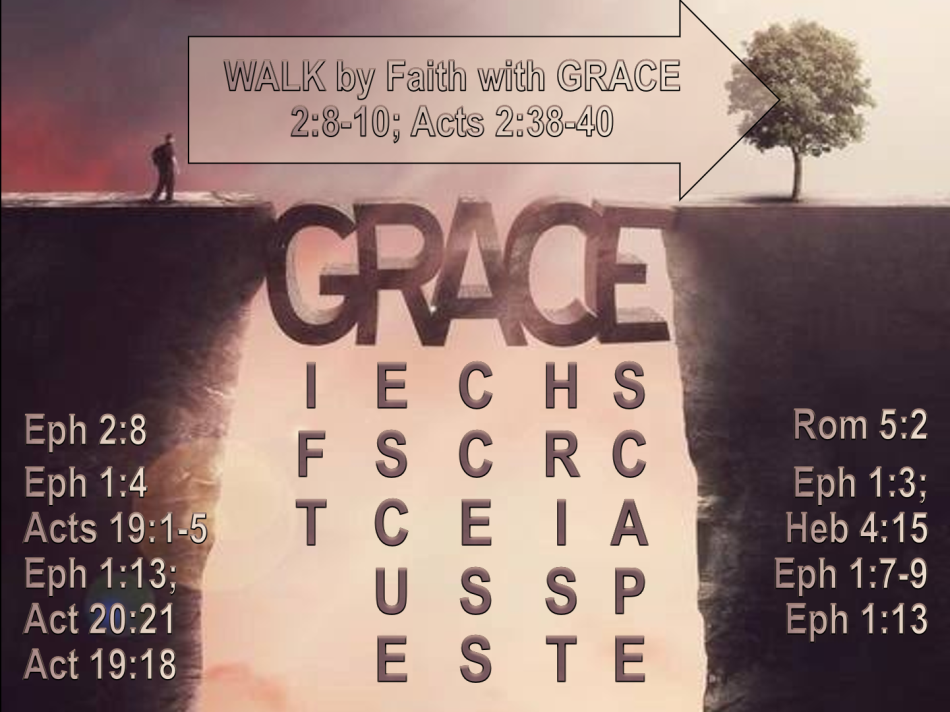
GRACE is the means to ESCAPE

GRACE gives us the means to escape from the penalty of our sin.

Eph 1:7-9 In whom we have redemption through his blood, the forgiveness of sins, according to the riches of his grace; 8 Wherein he hath abounded toward us in all wisdom and prudence; 9 Having made known unto us the mystery of his will, according to his good pleasure which he hath purposed in himself:


Eph 1:13 In whom ye also trusted, after that ye heard the word of truth, the gospel of your salvation: in whom also after that ye believed, ye were sealed with that holy Spirit of promise,

Without acting on the GRACE that has been given, we shall not escape.

Heb 2:3 How shall we escape, if we neglect so great salvation; which at the first began to be spoken by the Lord, and was confirmed unto us by them that heard him;

Ro 2:4 Or despisest thou the riches of his goodness and forbearance and longsuffering; not knowing that the goodness of God leadeth thee to repentance?

GRACE, FAITH, WORKS is the first part in this five part series.

The Franklin & Juniper st church of Christ invites you to visit during one of their services.

GRACE is in Christ

Christ is the object of Grace. Without His blood there is no grace.

Eph 1:3 Blessed be the God and Father of our Lord Jesus Christ, who hath blessed us with all spiritual blessings in heavenly places in Christ:

Eph 1:6 To the praise of the glory of his grace, wherein he hath made us accepted in the beloved. 7 In whom we have redemption through his blood, the forgiveness of sins, according to the riches of his grace;

Eph 1:13 In whom ye also trusted, after that ye heard the word of truth, the gospel of your salvation: in whom also after that ye believed, ye were sealed with that holy Spirit of promise,

CHRIST is the object of Grace…

He was CRUCIFIED for us. John 3:16

We were redeemed with HIS BLOOD. 1Peter 1:18-19

He is the RESURRECTION from the dead. John 11:25

He is the IMAGE of the INVISIBLE God. Col 1:15

His SACRIFICE is the one and only sacrifice for everyone. Heb 10:12

He TASTED death for everyone. Heb 2:9

Click here for the first article in the series on GRACE.

GRACE is ACCESS to Salvation

what is GRACE?

IN the first article on GRACE, we learned that it is the Gift of God through faith.

the GRACE of God is a gift, and it can either be RECEIVED or REJECTED.

Grace is a gift of God that provides ACCESS to salvation.

Romans 5:2 KJV

By whom also we have access by faith into this grace wherein we stand, and rejoice in hope of the glory of God.

Eph 2:8-10 tells us it’s a gift.

But what did Paul teach the Ephesians when he first met them?

They HEARD and BELIEVED the gospel.

Ephesians 1:13 KJV

In whom ye also trusted, after that ye heard the word of truth, the gospel of your salvation: in whom also after that ye believed, ye were sealed with that holy Spirit of promise,

They continued to CONFESS and bring forth fruits worthy of REPENTANCE.

Acts 19:18-19 KJV

And many that believed came, and CONFESSED, and SHEWED their deeds. [19] Many of them also which used curious arts brought their books together, and burned them before all men: and they counted the price of them, and found it fifty thousand pieces of silver. (cf. Acts 20:20-21)

They were BAPTIZED into Christ.

Acts 19:2-5 KJV

He said unto them, Have ye received the Holy Ghost since ye believed? And they said unto him, We have not so much as heard whether there be any Holy Ghost. [3] And he said unto them, Unto what then were ye baptized? And they said, Unto John’s baptism. [4] Then said Paul, John verily baptized with the baptism of repentance, saying unto the people, that they should believe on him which should come after him, that is, on Christ Jesus. [5] When they heard this, they were baptized in the name of the Lord Jesus.

So yes, they were saved by GRACE because by grace through faith we’re given ACCESS to the gospel which is the means of salvation.

What will you do with this GRACE?

Would you like to know more about how to ACCESS His GRACE?

Here is part four in this series on GRACE.

GRACE can be Received or Rejected

IN the prior article on GRACE, we learned that it is the Gift of God through faith.

the GRACE of God is a gift, and it can either be RECEIVED or REJECTED.

Received

Titus 2:11-12 For the grace of God that bringeth salvation hath appeared to all men, [12] Teaching us that, denying ungodliness and worldly lusts, we should live soberly, righteously, and godly, in this present world;

Rejected

Hebrews 12:15 Looking diligently lest any man fail of the grace of God; lest any root of bitterness springing up trouble you, and thereby many be defiled;

Galatians 5:4 Christ is become of no effect unto you, whosoever of you are justified by the law; ye are fallen from grace.

What shall you do with God’s Gift of GRACE?

Are you seeking to better understand God’s Grace and his word?

Send me a message and we can have a home Bible study in person or have one sent to you.

Click here to read part three, by Grace we have ACCESS to salvation.

Grace, Faith, Works

GRACE without FAITH will not save us.

For by grace are ye saved through faith; and that not of yourselves: it is the gift of God:” Eph 2:8

But without faith it is impossible to please him: for he that cometh to God must believe that he is, and that he is a rewarder of them that diligently seek him.” Heb 11:6

FAITH without WORKS is dead being alone.

Ye see then how that by works a man is justified, and not by faith only.” James 2:24

There are no WORKS of God to save without GRACE.

Buried with him in baptism, wherein also ye are risen with him through the faith of the operation of God, who hath raised him from the dead.” Col 2:11

In whom we have redemption through his blood, the forgiveness of sins, according to the riches of his grace;” Eph 1:7

That being justified by his grace, we should be made heirs according to the hope of eternal life.” Titus 3:7

GRACE, FAITH, WORKS of God. Rom 5:2-10.

“2 By whom also we have access by faith into this grace wherein we stand, and rejoice in hope of the glory of God. (see 1Cor 15:1-4)
6 For when we were yet without strength, in due time Christ died for the ungodly.
7 For scarcely for a righteous man will one die: yet peradventure for a good man some would even dare to die.
8 But God commendeth his love toward us, in that, while we were yet sinners, Christ died for us.
9 Much more then, being now justified by his blood, we shall be saved from wrath through him.
10 For if, when we were enemies, we were reconciled to God by the death of his Son, much more, being reconciled, we shall be saved by his life.” Romans 5:2-10

What shall you do with God’s Gift of GRACE?

Are you seeking to better understand God’s Grace and his word?

Send me a message and we can have a home Bible study in person or have one sent to you.

Part two of this five point series can be found here. Part three is here. Part four here.

5 Things the SAVED do. pt 2

Moreover, brethren, I declare unto you the gospel which I preached unto you, which also ye have received, and wherein ye stand; By which also ye are saved, if ye keep in memory what I preached unto you, unless ye have believed in vain.”  (1Cor 15:1-2)

In part one we noted that those that are SAVED go out SPREADING the Gospel. “Therefore they that were scattered abroad went every where preaching the word” (Acts 8:4). Their changed behavior is just one of the ways they Spread the tidings round (cf. 1Pet 3:1-6).

They also ASSEMBLE with the Saints in person on the first day of the week to worship. “And let us consider one another to provoke unto love and to good works: Not forsaking the assembling of ourselves together, as the manner of some is; but exhorting one another: and so much the more, as ye see the day approaching” (Hebrews 10:24-25; cf. 1Cor 11:17-34; 16:1-2; Acts 2:42).

In part two we will notice 3 more things the SAVED do.

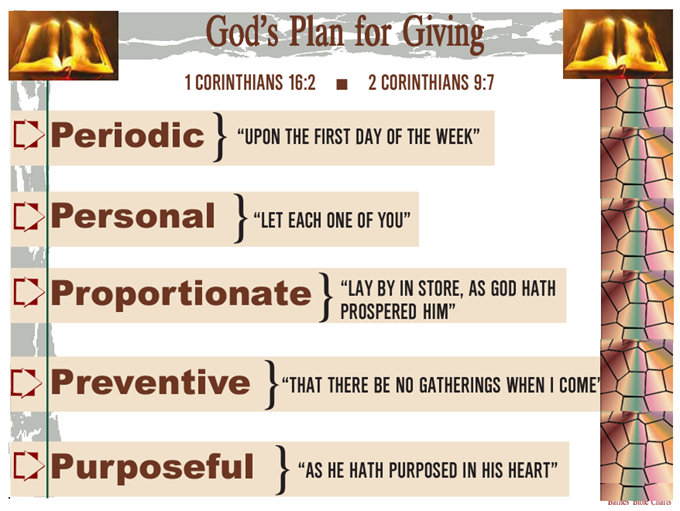
The saved VISIT the Saints. We use VISIT today to mean meeting with each other in a social setting. While Saints do get together socially (Acts 2:46), the word VISIT in the New Testament deals with giving aid to other needy saints or their orphaned children. “Pure religion and undefiled before God and the Father is this, To visit the fatherless and widows in their affliction, and to keep himself unspotted from the world” (James 1:27).

In the beginning of the church, the Saints gave generously to aid the needy Saints. “Neither was there any among them that lacked: for as many as were possessors of lands or houses sold them, and brought the prices of the things that were sold, And laid them down at the apostles’ feet: and distribution was made unto every man according as he had need” (Acts 4:34-35; cf. 11:29; 1Cor 16:1-2).

The SAVED are very generous. They help needy Saints* (individually or through the local church; 1Tim 5:8-10; Matt 25:36), and they, from their own personal treasure, help those outside of the church among their family, friends, and neighbors (cf. Gal 6:10; Eph 4:28). *the funds collected in the local church (1Cor 16:1-2) are limited to Saints only for Making Saints, Teaching Saints, and Helping Saints.

The saved also spend time in self-EXAMINATION. “Examine yourselves, whether ye be in the faith; prove your own selves. Know ye not your own selves, how that Jesus Christ is in you, except ye be reprobates” (2Cor 13:5)? Another way of saying this is we JUDGE ourselves. “For if we would judge ourselves, we should not be judged” (1Cor 11:31). When we are proactive about looking within ourselves first, we will have no worry about those looking at us from outside.

We do this EXAMINATION of ourselves through studying the New Testament. “All scripture is given by inspiration of God, and is profitable for doctrine, for reproof, for correction, for instruction in righteousness: That the man of God may be perfect, throughly furnished unto all good works” (2Tim 3:16-17). It’s this way we find assurance of our salvation (cf 1John 2:12-14). If there is any doubt about ourselves, we will learn from the Bible what to change.

John gave the purpose of the written word, which requires us to read it, and examine ourselves with it to know whether we’re following it. “My little children, these things write I unto you, that ye sin not” (1John 2:1).

Emphasis mine seb.

Lastly (in our list), the saved are DILIGENT to present themselves approved into God. “Be DILIGENT to present yourself approved to God, a worker who does not need to be ashamed, rightly dividing the word of truth” (2Tim 2:15). The word “diligent” (study in the KJV) means that the Saints endeavor, or labor to be well pleasing to God by keeping His commands.

Jesus said, “Therefore whosoever heareth these sayings of mine, and doeth them, I will liken him unto a wise man, which built his house upon a rock: And the rain descended, and the floods came, and the winds blew, and beat upon that house; and it fell not: for it was founded upon a rock” (Matt 7:24-25).

Jesus did the same. “And he that sent me is with me: the Father hath not left me alone; for I do always those things that please him” (John 8:29). He gave us an example in Himself of the thing He commands. At the Judgment, Jesus will ask about our faithfulness, “And why call ye me, Lord, Lord, and do not the things which I say” (Luke 6:46)?

One of the areas that DILIGENCE shows up is when we discover an area of error from which we must repent (see EXAMINATION in the previous point). “For observe this very thing, that you sorrowed in a godly manner: What DILIGENCE it produced in you, what clearing of yourselves, what indignation, what fear, what vehement desire, what zeal, what vindication! In all things you proved yourselves to be clear in this matter” (2Cor 7:11).

Back to John’s writing in 1John 2, we have hope in repentance because we have an Advocate in Christ. “And if any man sin, we have an advocate with the Father, Jesus Christ the righteous: And he is the propitiation for our sins: and not for ours only, but also for the sins of the whole world. And hereby we do know that we know him, if we keep his commandments. He that saith, I know him, and keepeth not his commandments, is a liar, and the truth is not in him. But whoso keepeth his word, in him verily is the love of God perfected: hereby know we that we are in him. He that saith he abideth in him ought himself also so to walk, even as he walked” (1John 2:2-6).

Becoming one of the SAVED in hope is the beginning of our eternal life. It’s no wonder that the saved Spread the word, Assemble with other Saints, Visit the needs of the poor, Examine themselves, and are Diligent to show themselves approved to God. The Saints are saved by grace, and they exemplify salvation by living a life of Grace.

Agape,

Spencer