
Tag church of Christ Borger
What do I do now?
The Franklin St church of Christ in Borger, Tx
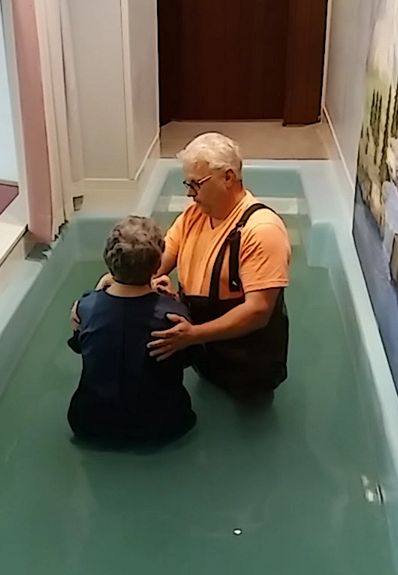
IT IS WITH GREAT joy that we announce a new sister in Christ, Margie. Just as there is joy in the heart of the one who obeys the gospel, there is also much joy in heaven and we are also full of joy for her [Luke 15:7, 10].
After a person obeys the gospel, the most oft asked question is, “what do I do now?” However, this question is asked by both the new convert AND the members of the local congregation. The new convert, full of joy and gratitude, has a desire to serve and to do what is right. The older members want to help them, but where do you begin?
For the answer, let us turn to Acts 2, the place where the church of Christ began.
41 Then they that gladly received his word were baptized: and the same day there were added unto them about three thousand souls. That’s where we are with Margie, and all others who obeyed the gospel recently (a young man was also baptized into Christ on the same day.) Nobody joins the church; the Lord adds to the church [47].
42 And they continued stedfastly in the apostles’ doctrine and fellowship, and in breaking of bread, and in prayers. Here’s where we find our answer to the question, “what do I do next?”
Continue in the apostles’ doctrine. The Apostles’ doctrine is Christ’s doctrine. Jesus said to the Apostles, that in addition to making disciples, as one who has all authority, teach them “to observe all things whatsoever I have commanded you” [Mat 28:19-20]. Paul said about his letters, “let him acknowledge that the things that I write unto you are the commandments of the Lord.” [1Cor 14:37]
So, the first thing we need to do is to continue to learn through study of the Scriptures what Jesus expects from us. The most effective way to do this is for the new convert and the “old” members to get together and study the scriptures. We need to note that “continue” means to do them. It’s not enough to learn what Jesus wants, we must obey Him [John 14:15]. We can also learn when we gather to worship on the first day of the week.
And Fellowship and in breaking of bread, and in prayers. The new Christians worshiped together. They had fellowship, which means that they were in partnership with one another. This partnership begins when we, “all speak the same thing, and that there be no divisions among you; but that ye be perfectly joined together in the same mind and in the same judgment” [1Cor 1:10]. The partnership also includes the collection of money for the work of the church. (As you continue to study, you’ll begin to understand the work God has given the church is to spread the Gospel, Teach the saints and practice limited benevolence). The Philippians gave money to spread the gospel, and were in fellowship in the gospel [Phil 1:3-7].
One of the parts of worship (there are 5 activities in sound worship) the disciples ‘broke bread’ which is to remember the death of our Lord and Savior, Christ Jesus. Commonly referred to as “The Lord’s Supper” the first Christians met on the 1st day of the week, Sunday, where they would take unleavened bread and fruit of the vine to commemorate His death. The Apostle Paul wrote the early Christians how to properly observe this important part of our worship [1Cor 11:23-34].
They also prayed. Prayer is the privilege of the saints. Christians are called saint in the Scriptures [Rom 1:7; Eph 1:1; Phil 1:1; Col 1:1]. In obeying the gospel through baptism, we have “put on Christ” [Gal 3:27] and have been given access through Him to the “throne of grace” [Heb 4:16]. Prayer is an incredible part of becoming a child of God. We know that God does not listen to sinners [John 9:31] but He hears us!
God is not our “genie in a bottle,” to gift us with everything we want like a spoiled child. Rather, He wants to help us in our time of need. It says in Hebrews 4:16; “that we may obtain mercy, and find grace to help in time of need.” Temptation doesn’t stop when we become Christians, neither do troubles & pains, “but God is faithful, who will not suffer you to be tempted above that ye are able; but will with the temptation also make a way to escape, that ye may be able to bear it” [1Cor 10:13]. So, all Christians need to pray.
Finally, let us note one more thing from Acts 2…
47 Praising God, and having favour with all the people. As you begin your journey as a new Christian, and every Christian, let us never forget from whom we received the gift of grace. We received it from God through Christ Jesus [Eph 2:8-10]. May we never forget, may it never grow old and may we never grow tired of praising God for His indescribable gift.
Thanks be unto God for his indescribable gift.
2 Corinthians 9:15
Memorial Day
Do This In Remembrance…
MONDAY marks an important holiday for our country. It’s a day we take time to remember the people who have died while serving in the country’s armed forces defending the freedoms we often take for granted.
Unfortunately, it has become less about remembering and more about hot dogs, picnics and sleeping in. Until we became blue star parents we spent the holiday in much the same way. When two of our sons served simultaneously in Afghaninstan, the concern for their lives made us take notice of holidays such as this one. Fortunately, our sons returned safe and sound, but so many other’s children did not. It’s for them we take time to remember.
It’s sad to think that many, if not most, will not even pause to consider the cost of their freedom. It has become a day off, not to reflect, rather a day of revelry.
Do This In Remembrance of Me…
The church of Christ has a memorial day. It was instituted by our Savior on the night He was betrayed, and then observed in the church He bought with His own blood [Mat 26:26-29; Acts 20:28].
For I have received of the Lord that which also I delivered unto you, That the Lord Jesus the same night in which he was betrayed took bread: And when he had given thanks, he brake it, and said, Take, eat: this is my body, which is broken for you: this do in remembrance of me. After the same manner also he took the cup, when he had supped, saying, This cup is the new testament in my blood: this do ye, as oft as ye drink it, in remembrance of me. [1Corinthians 11:23-25]
Rather than being an annual observance, the first century saints observed this memorial supper each week… “And upon the first day of the week, when the disciples came together to break bread, Paul preached unto them…” [Acts 20:7].
Even the first century saints neglected this memorial, turning it into a common meal and neglecting the ‘remembrance in me.’ The Apostle Paul rebuked this perversion when he wrote, “What? have ye not houses to eat and to drink in? or despise ye the church of God, and shame them that have not? What shall I say to you? shall I praise you in this? I praise you not.” [1Corinthians 11:22]
Monday is a day to remember the soldiers who gave their lives in service for our country. Sunday, however, is the Lord’s Day, the day that Christians come together to worship, to pray, to sing, to learn, to have fellowship (to lay by in store) and to remember the Lord’s Death. When we take this supper, we “proclaim the Lord’s death til He come.”
Wouldn’t it be sad if folks today started to view Sunday (the 1st day of the week) as just another day off? Wouldn’t it be sad if folks treated the Lord’s Day as a day for hot dogs, picnics and sleeping in? Wouldn’t it be sad if folks started asking, “why do I have to go to church?” Wouldn’t it be sad if folks stopped observing the Lord’s Supper every week? Wouldn’t it be sad if folks looked forward to playing games at the worship rather than meditating on the incredible price paid for our freedom from sin?
May it never be so, but alas…
If the gospel is good news, then why did they need boldness?
IN ACTS 4 and verse 29, the early Christians prayed for boldness, “And now, Lord, behold their threatenings: and grant unto thy servants, that with all boldness they may speak thy word.” They sent up this prayer since Peter and John had just been arrested and released for preaching the Gospel of Jesus Christ. In chapter 5, they will again be arrested and we will see the fulfillment of their request when they told the council, “We ought to obey God rather than men.” Immediately after this bold statement they also preach to them the Gospel (the Death, Burial & Resurrection of Jesus [1Cor 15:1-4]) in verses 30-32.
If the Gospel is such “good news,” then why where they arrested and beaten? Why was there such negative reaction to ‘good news?’ Why do we see the same reaction among folks today?
As we look through God’s word, we can find at least 3 reasons…
FOOLISHNESS: For many people of their day, the Gospel appeared to them as foolishness. They didn’t believe it and thought it to be like a fairy tale. Paul wrote about this in 1 Corinthians 1:18, “For the preaching of the cross is to them that perish foolishness; but unto us which are saved it is the power of God.” This is as true today as it has ever been. Many today have placed their faith in evolution and ignored the signs of creation that point to an Almighty Creator. Paul noted about folks like these, “For the invisible things of him from the creation of the world are clearly seen, being understood by the things that are made, even his eternal power and Godhead; so that they are without excuse:” [Romans 1:20].
In the same chapter, his example encourages us to remain faithful and bold against those who find the Gospel to be foolish, “For I am not ashamed of the gospel of Christ: for it is the power of God unto salvation to every one that believeth;” [Romans 1:16]
FOES: There are also enemies to the Gospel. The main enemy of the cross for those in the 1st century is very much the same for us today. There will be some who will hate the Gospel because it requires an end to a hedonistic life. Paul wrote that some will follow the Gospel, “Brethren, be followers together of me, and mark them which walk so as ye have us for an ensample.” Then he said there will be some whose life is spent on their own lusts, “For many walk, of whom I have told you often, and now tell you even weeping, that they are the enemies of the cross of Christ: Whose end is destruction, whose God is their belly, and whose glory is in their shame, who mind earthly things” [Phil 3:17-19].
In his warning was an encouragement for us, follow those who are living a godly life. It takes boldness to be different from the world, but it is extremely important that we succeed. “Enter ye in at the strait gate: for wide is the gate, and broad is the way, that leadeth to destruction, and many there be which go in thereat” [Matthew 7:13-14].
FALSE TEACHERS: Perhaps related to the other 2, there will be some who will lie about the Gospel and speak against it. For the first Christians, the false teachers were the Jews and they spoke against the Gospel because of envy, “But when the Jews saw the multitudes, they were filled with envy, and spake against those things which were spoken by Paul, contradicting and blaspheming” [Acts 13:45].
There were also false teachers who tried to look like believers. In Paul’s time, he had to deal with people who wanted to exalt themselves, “For such are false apostles, deceitful workers, transforming themselves into the apostles of Christ” [2Corinthians 11:12-13]. How true is this today? Men, owners of denominations, have become the center of attention and the main attraction. Professing to be Christians, they are, in reality, false teachers leading so many toward destruction. This is the most dangerous kind, for Paul compared these to Satan who, “himself is transformed into an angel of light” and calls these people Satan’s ministers [v15].
Boldness is needed here as well. Paul combated these through humble and faithful service. He preached the Gospel with a humility such as that of Jesus Himself. “For though I be free from all men, yet have I made myself servant unto all, that I might gain the more” [1Corinthians 9:19].
So, you see, we are in just as much need of courage as they, for the Gospel, though Good News to us who are being saved, it is bad news for those who are perishing.
Is church a pill?

A couple of things first. I’m referring to the weekly assembly on Sunday when I say ‘church’, since that is how much of the world uses it. The scriptures clearly teach that the church is actually the people. [1Cor 12:14]
When I say ‘pill’ I’m referring to the idea of a prescription but could just as easily work as “something disagreeable that must be swallowed”.
Do we treat church like a pill?
Many folks take pills to treat some illness, and in most cases, they seek the pill rather than change the underlying behavior that caused the condition. Take diet pills as an example. For many, rather than reduce their calorie intake, increase their exercise and eat better quality food they will take a pill as if it will solve their condition.
That’s what I mean when I ask, “do we treat church like a pill?” Do we believe we can act ungodly all week long, and if we take a pill (church attendance), that our sinful condition will go away?
Please understand what I am saying. The weekly assembly of God’s people is a necessity for continuing in the Apostles doctrine and shouldn’t be forsaken [Heb 10:25; Acts 20:7; 1Cor 16:2], but it is not a ‘pill’ one takes to offset our bad behavior and sinful heart.
James wrote; “For if any be a hearer of the word, and not a doer, he is like unto a man beholding his natural face in a glass: For he beholdeth himself, and goeth his way, and straightway forgetteth what manner of man he was.” [James 1:23-24]
Here’s a question for you, how long after assembling with the saints before you revert to your sinful conduct. 24 hours or 24 seconds? I must confess that I’ve been guilty of this as well. For my family, we had screaming car fights before arriving to the assembly, acting all lovey dovey during the worship, then picking up where we left off with the battle as soon as we got back into the car.
How to take a pill
When you’re given a prescription from a doc, he also gives you a list of things to change. The weekly assembly can be viewed in much the same way. The lesson, prayers, songs, our giving and the Lord’s Supper all have an ability to teach us and remind us what manner of person we ought to be.
The medications we take, very often, would be much more effective if we also modified our behaviors that caused the illness. Without the modification of behavior we will remain sick and possibly die. Paul said something similar to the church at Corinth; “But let a man examine himself, and so let him eat of that bread, and drink of that cup. For he that eateth and drinketh unworthily, eateth and drinketh damnation to himself, not discerning the Lord’s body. For this cause many are weak and sickly among you, and many sleep.” [1 Corinthians 11:28-30]
Church attendance should remind us of the sacrificial gift of Christ, and the promise of His return when He will gather up the saints and destroy the world.
“Seeing then that all these things shall be dissolved, what manner of persons ought ye to be in all holy conversation and godliness,” [2Peter 3:11]
2 Responses to every sermon Pt. 2

LAST WEEK, we began the discussion on the 2 responses to every sermon, WALKING OUT or WALKING FORWARD. We noted that these can be literal actions where a person really walks out of the building or comes to the front to confess sin, or it could be done mentally.
To recap WALKING OUT
We walk out on a sermon for a few reasons. We may be TIRED, we think it’s about SOMEONE ELSE or we just DISAGREE. Regardless the reason, we “check out” mentally or physically.
Now let’s look at…
Walking forward
It’s common for folks, when pricked in the heart by God’s message, to leave their pew and proceed to the front of the auditorium to confess the sin in their lives in a public way. This is good, it’s an accountability measure, especially for sin committed publicly. It’s not only good, it’s Godly for it is a confession of sin along with a vow of repentance. The Jews on Pentecost, upon hearing how they had been party to the crucifixion of Jesus the Christ, the text says; “they were pricked in their heart, and said unto Peter and to the rest of the apostles, Men and brethren, what shall we do?” [Acts 2:37] These folks recognized their sin, recognized their need for forgiveness and made an immediate, public response.
If we’re paying attention to the message, and studying the Word of God, eventually we come to some area of our lives in which we’ve failed. We’ve sinned. I know this is true for John said, “If we say that we have no sin, we deceive ourselves, and the truth is not in us.” [1John 1:8] At this point we must either reject the word of God, or accept it and submit to it. What makes this difficult is when someone else comes to us and points out our error. [Matt 18:15-17; 1Corinthians] It’s in those moments that we’re most resistant to repentance. Honest folks choose the latter, as did those on Pentecost and Saul of Tarsus [Acts 9:1-19], they repent and “WALKED FORWARD.”
Whether the need is to make a public confession because of public sin, or a private confession which is a natural part of Christian growth, both require a Godly sorrow. When Paul wrote the 1st letter to the church at Corinth, he pointed out several problems, flaws and sins. His worry was that he had made them sorry in a worldly sense, but it turned out that it was a sorrow in a Godly manner [2Cor 7:9-10]. He wrote, “For godly sorrow worketh repentance to salvation not to be repented of: but the sorrow of the world worketh death.”
Did you catch it? “Godly sorrow” produces repentance and this repentance leads to SALVATION! Did you also see the other kind of sorrow, “sorrow of the world?” To fully appreciate what the Holy Spirit wants us to hear, let’s break this verse down.
For godly sorrow – A RESPECT for God’s word. A Godly sorrow is produced by faith in God which seeks to please God. Faith comes from hearing the word of God. [Romans 10:17]
Worketh – RESULTS in the heart. ‘Worketh’ means to produce, or leads to; the word of God produces an effect on our heart which produces something. [Matthew 26:75]
repentance – the REVERSAL of a decision. The respect of God’s word, working on our heart produces a change, first in our heart and then in our activities. I tell you, Nay: but, except ye repent, ye shall all likewise perish. [Luke 13:3]
to salvation – REDEMPTION. Godly respect of God’s word which produces the Godly sorrow and repentance gives us access to the ransom paid by Christ Jesus. [Ephesians 1:7]
not to be repented of – no REGRET. This kind of repentance brings about the joy of knowing you’ve been pleasing to God the creator. [Acts 8:39]
but the sorrow of the world – selfish REASONS that are carnal, and fleshly which elevates the concern for self over the concerns of God. [1Corinthians 3:1-4] For some, the only reason to change is a concern for how others perceive them. This is the wrong kind of sorrow. This is why some are ‘rebaptized.’ They recognized that the only reason they originally submitted to God’s will was to be pleasing to mom & dad or because that is what everyone else was doing. Folks, this kind of obedience to God will fail us in the judgment.
worketh death – RUIN. A sorrow of the world produces complete ruin of our eternal future. [Matthew 7:21-29] When we’re only worried about what others may thing about us, we’ve set our sights too low. We haven’t sought to be pleasing to God, instead we seek to be pleasing to man. [Luke 16:13]
Another way the Bible describes ‘godly sorrow’ is with the phrase, a broken and contrite heart [Psalms 34:18]. A broken & contrite heart is a heart of sadness and regret for failing to serve the Almighty King, the Loving Creator who gave Himself as a payment for our sin against Him. [Romans 5:8-10]
Are we sad when we sin against God? Does our heart break when we fail Him? If it does, it will lead us to find out how to have eternal life.
2 Responses to every sermon
I’ve found that there are two basic responses to every sermon. I’ve also spoken to other Gospel Preachers and they have come to a similar conclusion.
Walk out or Walk forward
These responses can be literally walking out of the auditorium or coming forward to the front to confess your sin in a public manner. They can also be done with your mind. So often folks, myself included, walk out or walk forward in our minds as we listen.
WALKING OUT
Walking out on a sermon, whether in your mind or physically getting up and leaving, happens for a variety of reasons…
You’re distracted – You’re sitting there, hot, tired and hungry thinking about lunch. Hoping the sermon is short, you begin taking steps to prevent yourself from falling asleep. If you’re someplace else in your mind, it matters very little whether the speaker is dynamic or boring. Sometimes you’re distracted by the goings on of other members shifting and squirming in their seats.
The remedy for this type of walking out is simple. Take notes. Engage your mind with the theme of the sermon. I have personally found this to be most effective.
Another tactic is to get some rest. So many of us stay up late and fail to plan for our Sunday morning worship. I’m guilty too. Saturday is a day off for most folks, and we just want to enjoy as much of our weekend as possible. I get it, I’ve been there. Eutychus in Acts 20 had the same trouble. If you’re going to stay up late, here’s a little tip that may help you feel more alert in the morning. Plan your sleep length in 90min cycles. 1.5, 3, 4.5 or 6 hours. Our bodies have up and down sleep cycles and we are at the top of the cycle [close to being awake] every 90 minutes. Do an internet search for sleep cycles and you’ll see what I mean.
Another reason we walk out is…
We think it’s about someone else – Yup, I’ve done this one too. While listening to a sermon you say to yourself, “self, I hope so-n-so is listening to this.” It reminds me of Nathan telling David about a man that had stolen a lamb in 2Sam 12:1-5. David became angry and demanded justice for the victim. However, look at what Nathan did in vs7, “You are the man!” Rather than trying to assign a lesson to another, we should be examining ourselves to see if it applies [1Co 11:28; 2Co 13:5].
Lastly, one reason we walk out is…
We disagree – It’s ok to disagree, but be careful about HOW you disagree. Is your disagreement based on scriptures? Will you “try the spirits whether they are of God:” [1Jo 4:1]? Or, are you just disagreeing because you or a family member are committing the sin under consideration and don’t see anything wrong with it?
You might say to yourself, ‘that’s just his opinion’. Are we entitled to have an opinion on scriptural matters? Some people have said, “I know what it says, but I don’t like it.” When it comes to sin & doctrine, as enumerated in God’s word, we have no choice but to accept it and to obey it. Nothing in scripture is up for a personal interpretation that suits your opinion, [2Pe 1:20 Knowing this first, that no prophecy of the scripture is of any private interpretation].
If the speaker is wrong, then go to him about it privately. Perhaps he misspoke, or you misunderstood, but bring BCV [book chapter verse]. We can both be wrong, or one of us can be wrong and the other right, but we cannot BOTH BE RIGHT. I want to go to heaven and you would be a great friend if you show me where I was mistaken so that I could make correction.
It’s for this reason some folks church hop. They find the teaching to be contrary to their personal desires and go searching for a place of worship that suits their tastes. Or they stop worshiping altogether. This is not new, Paul warned that there are some whose ‘god is their belly’ [Philippians 3:19]. He also said, “For the time will come when they will not endure sound doctrine; but after their own lusts shall they heap to themselves teachers, having itching ears” [2Timothy 4:3].
There may be other reasons why folks “WALK OUT” on a sermon, but my desire is that we all “grow in grace and knowledge of the Lord and Savior Jesus Christ [2Peter 3:18].
Where is your mind when you “WALK OUT” on a sermon?
Next week we’ll examine ‘walk forward’.
THINGS JESUS NEVER SAID
Some of the biggest challenges I face as an evangelist are the things people THINK are in the Bible or they BELIEVE Jesus taught. The evangelist, like the statue carver, must chip away everything that doesn’t belong. Some of these beliefs are so firmly attached that it requires a lot of pounding. Below is a list of things folks THINK Jesus said, but never did. Perhaps this list can help you in your personal work. (editors note; there are far more than these listed and may show up in a future article. Seb)
The uppercase words are ‘things Jesus never said’
Jesus never said… “Go ye therefore, and teach all nations, TO ASK ME INTO THEIR HEARTS.”
What He really said… ”…baptizing them in the name of the Father, and of the Son, and of the Holy Ghost:” [Mat 28:19]
Jesus never said… “Mt 7:1 Judge not, AND REMAIN SILENT WHEN YOU SEE FOLKS DO EVIL.
What He really said… “that ye be not judged. For with what judgment ye judge, ye shall be judged: and with what measure ye mete, it shall be measured to you again.” Mat 7:1-2
Jesus never said… “And he answered and said unto them, Have ye not read, that he which made them at the beginning made them TO CHOOSE 1 OR MORE OF 58 GENDERS?”
What He really said… “made them male and female,” Mat 19:4 [cr. Gen 1:27]
Jesus never said… “IT’S MY OPINION”
What He really said… “And Jesus came and spake unto them, saying, All power is given unto me in heaven and in earth.” Mat 28:18 [cr. Mt 7:29]
Jesus never said… “If the world hates you, REMEMBER, CHANGE WHAT YOU TEACH TO CONFORM WITH THE TIMES, MAKING IT EASIER TO FOLLOW SO EVERYONE WILL LIKE YOU AGAIN.
What He really said… “If the world hate you, ye know that it hated me before it hated you.” John 15:18
Jesus never said… “Neither do I condemn you, go and DO WHATEVER MAKES YOU HAPPY.
What He really said… “Neither do I condemn thee: go, and sin no more.” [John 8:11 the woman caught in adultery]
Jesus never said… “Enter ye in at the strait gate: for wide is the gate, and broad is the way, that leadeth to ETERNAL LIFE, and many there be which go in thereat:
What He really said… “Enter ye in at the strait gate: for wide is the gate, and broad is the way, that leadeth to destruction, and many there be which go in thereat: Because strait is the gate, and narrow is the way, which leadeth unto life, and few there be that find it.” [Mat 7:13-14]
Jesus never said… “I am A way, A truth, and A life: ANYONE CAN GO TO THE MOTHER ON THEIR OWN.
What He really said… “I am the way, the truth, and the life: no man cometh unto the Father, but by me. [John 14:6]
Jesus never said… “And I say also unto thee, That thou art Peter, and upon this rock I will build my churchES;
What He really said… “And I say also unto thee, That thou art Peter, and upon this rock I will build my church.” [Mat 16:18]
He also said… “Therefore whosoever heareth these sayings of mine, and doeth them, I will liken him unto a wise man, which built his house upon a rock:” [Mat 7:24]
And, “If ye love me, keep my commandments.” [John 14:15]
What if I don’t want to?
IMAGINE WHAT THE world would be like if we only did those things they wanted to do. What if we only ate the things we wanted to eat or got up only when we wanted to and only did things that felt good?
Actually, I’ve done that on the food side of things, eating only what I wanted, and the results are devestating. Weight gain, health and heart problems as well as the total lack of energy.
All success is predicated on the idea of doing those things we don’t want to do. Successes in business, in relationships and health are found when we do things that others don’t like to do. The fact is, we should do MORE things we don’t like to do. Better, we should find things we don’t like to do and learn to like doing them.
Paul said, “But I discipline my body and bring it into subjection, lest, when I have preached to others, I myself should become disqualified” [1Cor. 9:27].
Rather than success, let’s use the word grow. Growing means more than just getting physically bigger, it also means getting better. We can grow in many areas, mentally, emotionally, spiritually. Peter said, “But grow in grace, and in the knowledge of our Lord and Saviour Jesus Christ. To him be glory both now and for ever.” [2Peter 3:18]
Growth requires effort, it requires us to train our bodies and our minds by doing those tasks that seem unpleasant at the time. This is the full idea behind the word ‘chastening’ in Hebrews 12:11. “Now no chastening for the present seemeth to be joyous, but grievous: nevertheless afterward it yieldeth the peaceable fruit of righteousness unto them which are exercised thereby.”
The word we often use to describe training is exercise. Not only should we exercise our bodies, we should exercise our minds. This training of the mind and the body prepares us to respond in those times of need.
Doing laps may sound horrible (they do) and boring, but come gametime, you’ll be glad you did. Michael Jordan said, “I play to win, whether during practice or a real game.” The same can be said about the hours spent in the study of God’s word. Come gametime (ie. Evangelism, times of trouble etc.) you’ll be glad you spent the time. No one is ever faithful during difficult times or times of persecution that wasn’t first faithful during times of ease.
Success (growth) or failure in any endeavor is not an event. Successful marriages, financial well being, educational degrees and the like are only ever achieved by multiple tiny decisions to do unpleasant things over and over until.
Yes, I intentionally ended the sentence with ‘until’, because the next question is, “how long?” Until you’ve made it, until you have it, until you face the judgement.
“That thou keep this commandment without spot, unrebukeable, until the appearing of our Lord Jesus Christ:” [1Tim 6:14]
Is God Speaking to you? pt 2
LAST WEEK’S article began the discussion about the problems with a personal revelation from God today. These articles are a response to those who believe, feel or otherwise think that God, Jesus or the Holy Spirit is communicating with them SEPARATE & APART from God’s written word.
In the previous article, we discussed the first 2 problems. FIRST, it’s error and is contrary to God’s word about His own revelation. TWO, is the problem of AUTHENTICITY. How are we (or you) to know that this feeling inside of you is coming from God.
Allow me to clarify something. I do believe that God is communicating with mankind, but that the communication is through His divine, preserved written word, as was shown in the last article.
The next two problems are; REVIEWABILITY & ACCESS.
The THIRD problem with a personal revelation is REVIEW:
If Personal revelation is true, then why are there over 30,000 different “Christian” denominations? How would we become unified except by some standard upon which we all could review? I’m unable to STUDY your statements because of 3 problems;
First, It’s all in your head. Have you noticed that not everyone is hearing these voices? You might say that it’s a problem of “faith”, and you’d be right. But Romans 10:17 says, “faith comes by hearing and hearing by the word of God”. This means that it is YOUR faith that has trouble. For we have faith because of God’s written word. “But these are written, that ye might believe that Jesus is the Christ, the Son of God;” If this “revelation” is in your head, how are we to know what God said? Furthermore, how am I to REVIEW the information? Oh, I know a way; IT COULD BE WRITTEN DOWN. Which is what God did in the first place.
Second, there’s the problem of memory. A person’s recollection of conversations is very poor. A study revealed that you remember approximately 20 percent of what you hear, 30 percent of what you see and 50 percent of what you hear and see together. Here’s a question; How much can you recall when you have at your fingertips the entire revelation of God? Answer: All of it, because you can look through God’s word continually.
Third, human communication is difficult, even under the best of conditions. But with all the communication methods available, the only one that allows for a continual REVIEW of God’s word is when it is written. A WRITTEN WORD IS REVIEWABLE BY EVERYONE.
This is what happened in 2Kings 22-23. The book of the Law was found in the temple. It was read to King Josiah (22:10), then it was read to the people, both small and great (23:2) and they could obey it. Today, we can read God’s word and understand the mystery of Christ. This is what made the Berean’s honorable. They searched the scriptures daily [Acts 17:11].
“Whereby, when ye read, ye may understand my knowledge in the mystery of Christ).” Eph 3:3-4
The FOURTH problem with a personal revelation is ACCESS:
Are you going to come over to my house at 3am to let me study God’s word? What if I’m out of cell range? What about the different languages of the world? These difficulties were solved by God when He directed the inspired writers of His word to WRITE IT DOWN. 1 Corinthians 14 demonstrates the difficulties that come from oral communication. One man said to me, “you can verify what I’m saying by comparing it to the Bible.” If I must go verify it with the written word anyway, why do I need you?
What does the bible say about ACCESS to His word?
I charge you by the Lord that this epistle be read unto all the holy brethren. 1Thess 5:27
And if any man obey not our word by this epistle, note that man, and have no company with him, that he may be ashamed. 2Thess 3:14
For we write none other things unto you, than what ye read or acknowledge; and I trust ye shall acknowledge even to the end; 2Cor 1:13
Well over 100x in the New Testament, both Jesus and His Apostles refer to the written word. We could continue with more scriptures to drive the point home, but these are sufficient. The question of “WHY ARE THERE SO MANY CHURCHES” now has its answer. We’re not all speaking the same thing, and the best way to become unified is when we all go back to the written Bible of God.
“Now I beseech you, brethren, by the name of our Lord Jesus Christ, that ye all speak the same thing, and that there be no divisions among you; but that ye be perfectly joined together in the same mind and in the same judgment.” [1Corinthians 1:10]
 Borger church of Christ @ Franklin & Juniper