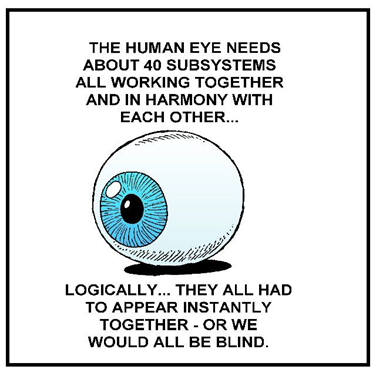
The human eye is one of the most intricate and sophisticated organs in the body, often cited as evidence of intelligent design. Its complexity and functionality defy random chance, pointing instead to purposeful creation. The eye’s ability to perceive light, distinguish colors, and adapt to varying conditions showcases an engineering marvel that naturalistic evolutionary processes struggle to explain.
The eye operates as an integrated system, relying on the coordinated function of numerous components. These include the cornea, lens, retina, optic nerve, and a network of supporting cells and tissues. The retina, for example, contains millions of photoreceptor cells—rods and cones—that convert light into electrical signals. These signals are then processed by the brain, enabling us to perceive the world in vivid detail. The cones are responsible for color vision, while rods excel in low-light conditions, allowing us to adapt to different environments.
A hallmark of the eye’s design is its irreducible complexity. Each part of the eye depends on the others to function properly. For instance, the lens focuses light onto the retina, which converts the light into signals transmitted by the optic nerve to the brain. If any of these components were absent or incomplete, the eye would be nonfunctional. This interdependence challenges the notion of gradual evolution, as intermediate stages would provide no survival advantage.
Darwin himself acknowledged this difficulty, writing in On the Origin of Species: “To suppose that the eye, with all its inimitable contrivances… could have been formed by natural selection, seems, I freely confess, absurd in the highest degree.” (Charles Darwin, On the Origin of Species.)
Biblically, the eye’s intricacy reflects God’s intentional design. Psalm 94:9 asks, “He that planted the ear, shall he not hear? He that formed the eye, shall he not see?” This rhetorical question emphasizes that the Creator, who designed the human eye, possesses perfect knowledge and wisdom. The complexity of the eye aligns with this biblical perspective, affirming a purposeful Designer.
Scientific attempts to explain the evolution of the eye, such as the idea of incremental improvements through natural selection, fail to account for the precise coordination required for its functionality. Mutations alone cannot produce the tightly integrated system observed in the human eye, further supporting the argument for intelligent design.
The human eye stands as a testament to the existence of a Creator. Its complexity, irreducible nature, and unparalleled functionality defy naturalistic explanations, pointing instead to purposeful design. As Romans 1:20 declares, “For the invisible things of him from the creation of the world are clearly seen, being understood by the things that are made.” The human eye, a marvel of engineering, is a clear manifestation of God’s creative power and wisdom.
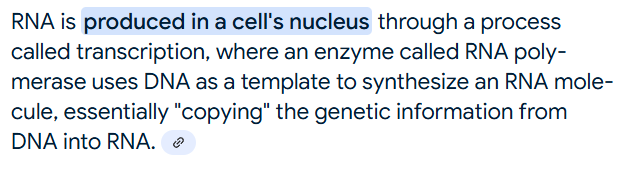
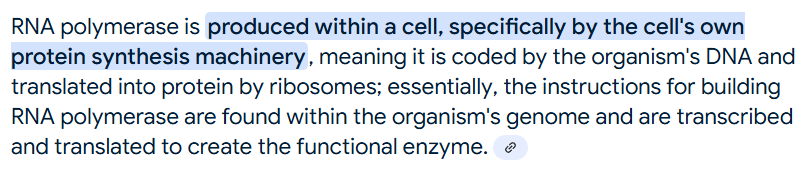
RNA is necessary to produce the proteins, like RNA polymerase, that are required to transcribe RNA from DNA, creating an interdependent system that could not function without all parts existing simultaneously.
Evidence of God in DNA
DNA, deoxyribonucleic acid, serves as the molecular basis of heredity and the blueprint for all living organisms. Within its structure lies an extraordinary amount of information encoded in sequences of nucleotide bases. This informational content directs the development, functioning, and reproduction of living beings, showcasing a complexity that defies random chance.
The intricate information stored in DNA speaks to the concept of intelligent design proposed by the Cosmological Argument. This argument posits that the order and complexity observed in the universe, including biological systems like DNA, imply a purposeful design rather than mere random processes. The information-rich nature of DNA points towards a mind behind its creation—a mind that comprehends and engineers complex systems far beyond human understanding.
Biblically, the narrative supports this idea of intentional design. Psalm 139:14 states, “I praise you, for I am fearfully and wonderfully made. Wonderful are your works; my soul knows it very well.” This verse acknowledges the intricate craftsmanship evident in human beings, echoing the complexity found in DNA. Moreover, Genesis 1:27 affirms that mankind is created in the image of God, implying a deliberate act of creation imbued with purpose and design.
Scientifically, the discovery of DNA’s structure and function has revolutionized our understanding of biology and genetics. Francis Crick and James Watson’s explanation of its double helix structure in 1953 marked a watershed moment in science, revealing the elegance and complexity of this molecule. Since then, advancements in genomic research have uncovered layers of complexity within DNA that continue to astonish scientists.
Moreover, the concept of irreducible complexity, as proposed by biochemist Michael Behe, further bolsters the argument for intelligent design in DNA. Irreducible complexity posits that certain biological systems are composed of multiple intricate parts that must all be present and functioning for the system to work. This challenges the idea of gradual evolution through natural selection alone, suggesting instead a purposeful arrangement of components.
Romans 1:20 declares, “For his invisible attributes, namely, his eternal power and divine nature, have been clearly perceived, ever since the creation of the world, in the things that have been made.” This verse emphasizes that the intricacies of creation, such as DNA, bear witness to God’s existence and creative power.
The study of DNA provides compelling evidence for the Cosmological Argument, pointing towards an intelligent designer behind the complexity of life.
The Cosmological Argument: Why the Universe Needs a Cause
The cosmological argument, one of the oldest and most compelling proofs for the existence of God, asserts that the universe must have a cause. Its foundation lies in the principle of causality: everything that begins to exist has a cause. Scientific discoveries and philosophical reasoning bolster this argument, making a strong case for a Creator.
The Universe Had a Beginning. One of the most significant discoveries of modern science is that the universe had a beginning. The Big Bang theory, widely accepted among cosmologists, posits that all matter, energy, space, and time originated from a singular event approximately 13.8 billion years ago. Before this point, there was no time, space, or physical reality. This supports the biblical assertion that the universe is not eternal but was created, as described in Genesis 1:1: “In the beginning, God created the heaven and the earth.” (other evidence supports the Biblical narrative for the age of the Earth)
The Second Law of Thermodynamics also supports this conclusion. The universe is moving toward a state of increased entropy, or disorder, which implies that it had an initial highly ordered state. If the universe were eternal, it would have already reached maximum entropy, contradicting observable reality.
Causality and the Need for a Cause. The principle of causality states that everything that begins to exist has a cause. Since the universe began to exist, it must have a cause. However, this cause cannot be part of the physical universe because time, space, and matter only came into existence at the universe’s origin. Therefore, the cause must be timeless, spaceless, and immaterial—qualities that align with the biblical description of God.
Hebrews 11:3 affirms this: “Through faith, we understand that the worlds were framed by the word of God so that things which are seen were not made of things which do appear.” This aligns with the cosmological argument, as it emphasizes that the universe was caused by something outside itself.
The Impossibility of Infinite Regress. An infinite regress of causes—where every cause has a prior cause—leads to logical contradictions. If there were no first cause, the chain of causes could never begin, and the universe could not exist. This necessitates a first, uncaused cause, which philosophers and theologians identify as God.
The cosmological argument is reinforced by scientific evidence that the universe had a beginning, philosophical reasoning on causality, and the impossibility of infinite regress. These findings point to a timeless, spaceless, immaterial, and powerful Creator—attributes consistent with the God of the Bible. As Psalm 33:6 declares, “By the word of the Lord were the heavens made; and all the host of them by the breath of his mouth.”
Sources: • Craig, W.L. Reasonable Faith: Christian Truth and Apologetics. • Hawking, S., and Mlodinow, L. The Grand Design. • Genesis 1:1, Hebrews 11:3, Psalm 33:6 (KJV).
The biblical account of a global flood is detailed in Genesis 6–9, describing Noah’s ark, the catastrophic deluge, and the repopulation of the earth. This narrative has parallels in ancient cultures worldwide, suggesting a shared memory of a catastrophic event. Scientific evidence also lends credibility to this account, providing compelling data that aligns with the possibility of a global flood.
Sedimentary Layers and Fossil Evidence
Sedimentary rock layers, found across the earth, contain fossils of marine and land organisms, often in unexpected locations. For instance, marine fossils have been discovered atop the Himalayas and other high-altitude regions. This suggests that these areas were once submerged under water. Rapid burial of organisms during a massive flood could explain the fossilization of soft-bodied creatures and the preservation of delicate features, such as jellyfish imprints, which would decay under normal conditions.
Polystrate Fossils
Polystrate fossils, or fossils that extend vertically through multiple sedimentary layers, challenge the standard geological timeline that attributes these layers to slow accumulation over millions of years. A rapid deposition of sediment, such as during a global flood, provides a more plausible explanation for how these fossils formed without significant decay.
Large-Scale Erosion and Canyon Formation
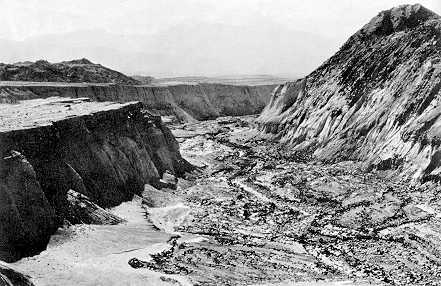
The formation of canyons, such as the Grand Canyon, shows evidence of rapid water erosion rather than slow geological processes. Experiments following events like the eruption of Mount St. Helens in 1980 showed how massive volumes of water can carve canyons in a short period, mirroring what a global flood might accomplish on a larger scale.
Flood Legends Across Cultures
Over 200 flood legends exist among ancient cultures worldwide, including those of the Sumerians, Babylonians, and Native Americans. Many of these accounts include a large vessel, a remnant of humanity and animals, and a divine reason for the flood. Such widespread narratives suggest a historical basis for the biblical account of Noah’s flood.
Biblical Consistency with Science
Genesis describes “the fountains of the great deep” breaking open and “the windows of heaven” releasing water (Genesis 7:11). Modern geology acknowledges subterranean water reserves and their role in catastrophic events. Furthermore, the ark’s dimensions (Genesis 6:15) align with the proportions needed for stability and capacity, as confirmed by naval architects.
Conclusion
While interpretations of evidence vary, the sedimentary layers, polystrate fossils, rapid erosion patterns, and global flood legends align with the Genesis narrative. These findings challenge the notion of slow geological processes and suggest that a catastrophic event, consistent with the biblical flood, is plausible.
Agape,
Spencer
Sources:
Morris, J. “The Global Flood.” Institute for Creation Research.
Snelling, A. “Flood Evidences.” Answers in Genesis.
The story of the man of God in 1Kings 13:1-26 is one of the Bible’s most sobering narratives about obedience. This account teaches timeless lessons about the seriousness of following God’s Word without compromise. Let us examine these lessons in light of Scripture.
God gave the man of God specific instructions (1Kings 13:9): not to eat, drink, or return by the same way. These commands were obvious, straightforward, and easy to understand. God’s Word consistently provides clear guidance for those who seek it. “For this commandment which I command thee this day, it is not hidden from thee, neither is it far off. It is not in heaven, that thou shouldest say, Who shall go up for us to heaven, and bring it unto us, that we may hear it, and do it? Neither is it beyond the sea, that thou shouldest say, Who shall go over the sea for us, and bring it unto us, that we may hear it, and do it? But the word is very nigh unto thee, in thy mouth, and in thy heart, that thou mayest do it.” (Deut 30:11-14).
In the example of the flood story, Noah’s adherence to God’s precise instructions for building the ark (Genesis 6:14-22) saved his family from the flood. Ignoring or altering God’s commands would have led to disaster.
The man of God told Jeroboam that there would be no variation to God’s command (v8-10). “And the man of God said unto the king, If thou wilt give me half thine house, I will not go in with thee, neither will I eat bread nor drink water in this place.” Galatians 1:8-9 warns that even an angel preaching a different gospel is accursed. Nadab and Abihu’s offering of “strange fire” resulted in their immediate death (Leviticus 10:1-2). Their unauthorized act highlights the danger of altering God’s instructions.
No matter how sincere or convincing, error cannot produce righteousness. The old prophet’s lie (v18-19) did not excuse the man of God’s disobedience. King Saul’s partial obedience when sparing Amalekite spoils led to his rejection by God (1Samuel 15:22-23). Obedience requires following God’s commands completely.
The man of God believed the old prophet’s lie, and it led to his death. Sincerity alone cannot excuse disobedience to God’s truth. 2Thessalonians 2:10-12 teaches that those who reject the truth and believe lies will be condemned. “In flaming fire taking vengeance on them that know not God, and that obey not the gospel of our Lord Jesus Christ:”
The man of God’s failure to obey all of God’s instructions cost him his life. Every command of God is significant and deserves our attention. Luke 16:10 emphasizes that faithfulness in small matters reflects overall faithfulness. Uzzah’s touching the Ark of the Covenant (2 Samuel 6:6-7) highlights that even seemingly minor acts of disobedience are significant to God.
The account of the man of God from Judah serves as a solemn reminder: God’s way is clear, unchanging, and demands our full obedience. We must respect His commands, rejecting lies and half-truths. By adhering to His Word, we honor Him and secure our eternal reward. Believing lies or compromising His commands leads to spiritual ruin. Let us resolve to honor God by faithfully following His Word in every aspect of our lives.
Timothy’s Faithful Heart – A Teachable, Ready, and Strong Servant Timothy’s life offers us an inspiring example of Christian service. He was young, but he was full of wisdom, strength, and dedication. The New Testament paints a picture of a man who was willing to be taught, always ready to serve, and strong in the face of adversity. These qualities made Timothy a powerful servant of God and a true blessing to others.
A Teachable Teacher One of Timothy’s most admirable traits was his teachability. From childhood, he was taught the Holy Scriptures which are able to save. As Paul wrote, “And that from a child thou hast known the holy scriptures, which are able to make thee wise unto salvation through faith which is in Christ Jesus” (2Timothy 3:15). Timothy shared this knowledge with others, training up faithful believers to teach in turn (2 Timothy 2:2). As Proverbs 1:5 says, “A wise man will hear and will increase learning.”
God wants us to be teachers. As Jesus commanded in the Great Commission, we’re not only to be taught but to teach others, “teaching them to observe all things whatsoever I have commanded you” (Matthew 28:20). Like Timothy, as we grow in wisdom, we can pass it on to those around us (see Hebrews 5:12).
Ready in Season and Out Timothy was ready to serve at all times. In 2Timothy 4:2, Paul urges him to “preach the word; be instant in season, out of season.” To be instant means being prepared to share the gospel, whether the timing seems favorable or not. Timothy didn’t wait for ideal conditions or worry about convenience. His faithfulness kept him ready, and he served wherever there was need. 1Peter 3:15 reminds us of this same readiness: “But sanctify the Lord God in your hearts: and be ready always to give an answer to every man that asketh you a reason of the hope that is in you.”
When we live in readiness, we are better able to respond to the needs of those around us. Romans 12:11 says, “Not slothful in business; fervent in spirit; serving the Lord.” May we, like Timothy, respond eagerly to God’s work, not allowing any situation to keep us from sharing the gospel.
Strong and Courageous Timothy’s strength in the face of trials is yet another remarkable example for us. Paul reminds us of his courage in Hebrews 13:23, showing that Timothy was steadfast and faithful despite challenges. the challenges of bondage.
The Bible encourages all believers to be strong. “Watch ye, stand fast in the faith, quit you like men, be strong” (1 Corinthians 16:13). God wants us to face the obstacles in life, just as Timothy did, with confidence and faith. Our strength isn’t in ourselves but in God. We see this echoed in Philippians 4:13: “I can do all things through Christ which strengtheneth me.”
Conclusion Timothy’s life is an example for us to be teachable, ready, and strong in faith. He shows us that when we’re open to learning, prepared to serve, and firm in our strength from God, we can fulfill our calling and make a difference in others’ lives. His example encourages us to seek wisdom, stay prepared, and find our courage in the Lord.
As we grow in these qualities, we can serve like Timothy did, with a willing spirit and a heart full of faith, trusting that God can use us wherever we are. Just as Timothy’s legacy continues to inspire us, may our lives reflect a commitment to serving the Lord faithfully in all seasons.
In Mark chapters 11-13, we see Jesus moving decisively toward the end of His earthly ministry, dealing with the religious leaders’ challenges for the final time, and issuing grave prophecies about the fate of the temple and the world. This profound sequence of events signals not only the close of His earthly mission but also foretells the fulfillment of God’s grand Scheme of Redemption.
Mark 11: The Triumphal Entry and the Judgment on Faithlessness
Jesus’ entry into Jerusalem marks a pivotal moment in His ministry. In the “triumphal entry” (Mark 11:1-11), Jesus rides into the city on a colt, deliberately fulfilling Zechariah’s prophecy that the Messiah would come “lowly, and riding upon a donkey” (Zechariah 9:9). Crowds wave palm branches and cry, “Hosanna,” acknowledging Him as the long-awaited King. Yet the people’s understanding is limited; they view Him as a political savior from Roman oppression rather than as the Savior from sin.
When Jesus arrives at the temple, He sees corruption in the place meant for worship. The next day, He returns and cleanses the temple, overturning tables of money changers (Mark 11:15-17). Jesus’ actions here fulfill prophecy and echoes the judgment He spoke against Israel in previous parables—rebuking faithlessness and religious hypocrisy. His anger is not random; it is a righteous judgment on a system that had been corrupted by its adherents.
The lesson of the withered fig tree (Mark 11:12-14, 20-25) reinforces this theme of faithfulness. Jesus curses a barren fig tree, symbolizing Israel’s spiritual barrenness. Like the fig tree, the religious leaders had outward displays of godliness, yet their hearts were empty. This powerful imagery calls for introspection, challenging believers to examine whether they bear genuine fruit or merely appear faithful.
Mark 12: The End of Religious Challenges
In chapter 12, Jesus faces a final series of challenges from the religious leaders. The Pharisees, Sadducees, and Herodians take turns trying to trap Him in His words, asking questions about taxes (Mark 12:13-17), the resurrection (Mark 12:18-27), and the greatest commandment (Mark 12:28-34). Jesus answers with authority, exposing their lack of understanding. His wisdom silences them, and the challenges from the Pharisees and Sadducees come to an end.
In the parable of the tenants (Mark 12:1-12), Jesus issues a clear warning to Israel’s leaders. The landowner represents God, the tenants represent Israel’s leaders, and the son represents Jesus. The tenants’ violence toward the landowner’s servants and son reflects the way Israel had repeatedly rejected God’s messengers—and now, God’s own Son. By telling this parable, Jesus points to their impending judgment, for rejecting the Messiah would bring about the end of the Mosaic system.
Mark 13: Prophecy of the End of the Temple and the End of the World
In Mark 13, Jesus delivers what is often called the “Olivet Discourse,” a prophecy concerning the destruction of the temple and events leading up to the end of the age. His disciples are astonished when Jesus tells them that the magnificent temple will be utterly destroyed (Mark 13:2). This prophecy was fulfilled in A.D. 70 when Roman armies razed Jerusalem and destroyed the temple.
Up until verse 30, Jesus speaks about events leading to the fall of Jerusalem, warning of wars, earthquakes, famines, and the persecution of His followers. He urges them to watch and pray, to flee when they see signs of the impending destruction, and to remain faithful through trials.
In verse 31 and onward, Jesus shifts His focus to a distant event: the end of the world and His return. Unlike the destruction of Jerusalem, which had visible signs, the timing of the world’s end is unknown. “But of that day and that hour knoweth no man, no, not the angels which are in heaven, neither the Son, but the Father” (Mark 13:32). This shift emphasizes that believers should live in constant readiness, understanding that the ultimate end could come at any moment.
Living in Light of the End
The “end” in Mark 11-13 serves as both a warning and a call to action. The end of Jesus’ ministry shows the extent of His love, as He knowingly walks toward the cross. The end of the Mosaic system signifies the fulfillment of God’s promises through Christ. And the end of the world serves as a reminder for us to live faithfully, vigilantly, and prayerfully.
Jesus’ message is clear: The end is near, both for those who reject Him and those who await His return. The call is to prepare by obeying His Word and entering His kingdom. Let us take to heart His call to “watch” and live each day in light of His coming, knowing that this end will be the beginning of eternal life with Him.
Agape,
Spencer
This article is part of a series of sermons from the book of Mark.
In Colossians 3:1-4:6, Paul encourages Christians to live in a way that reflects their new identity in Christ. He challenges us to seek things above, focusing on heavenly things while living responsibly here on earth. The principles laid out by Paul guide our daily actions as individuals and members of one another.
These verses remind us that living as Christians involves things we can do, you and I, to embody these teachings.
1) Submit. Submission is a key theme in the Christian life, and it touches various aspects of our relationships and responsibilities. Here are several areas where Paul tells us to SUBMITTo:
a) Spouses (Colossians 3:18-19; Ephesians 5:22; 1 Peter 3:1-7)
The first place where submission begins is in the home. Wives to submit to their husbands, while husbands are to love their wives and not be harsh with them. This mutual submission creates a loving and harmonious household, reflecting Christ’s relationship with the church (Ephesians 5:22-33). If we’re married, you and I are to build marriages that mirror this sacred love and respect.
b) Unity with One Another (Ephesians 5:21; 4:1-6)
Submission doesn’t stop in the home—it extends to the church. There is mutual submission among believers out of reverence for Christ (Ephesians 5:21). Unity requires humility, patience, and bearing with one another in love (Ephesians 4:2). In a world where division often reigns, you and I can stand out as peacemakers, fostering unity and love in our relationships.
c) Children (Ephesians 6:1-2; Colossians 3:20; Matthew 15:4; Mark 7:10)
Children are instructed to obey their parents, honoring them as God has commanded (Ephesians 6:1-2; Colossians 3:20). Parents, on the other hand, should not provoke their children but nurture them in the discipline and instruction of the Lord. As parents, grandparents, or caregivers, you and I have a responsibility to raise the next generation with wisdom, love, and guidance according to God’s word.
d) Masters (Ephesians 6:5; 1 Timothy 6:1; Titus 2:9; Colossians 3:22; 1 Peter 2:18)
In the workplace, Christians are to submit to their employers, working wholeheartedly as if serving the Lord (Colossians 3:22). This principle applies whether you are an employee or in a position of leadership. You and I are to treat those we work with or for with integrity and respect, always reflecting Christ in our actions.
e) In the Church (1 Peter 5:5; Hebrews 13:7, 17)
Within the church, submission to spiritual leaders is essential for maintaining order and spiritual growth. We are to respect and follow those who watch over our souls, submitting to their leadership as they guide us in our walk with Christ (Hebrews 13:7, 17). You and I can contribute to the health of the church by being humble, teachable, and respectful.
f) Territory (Romans 13:1-7)
Submission also extends to governing authorities. Paul reminds us that all authority is established by God, and as Christians, we are to be law-abiding citizens (Romans 13:1-7). Whether we agree with every decision or not, you and I are to respect authority, as long as it doesn’t conflict with God’s commands, knowing that our ultimate allegiance is to Christ.
2) Earn for Our Needs (Ephesians 4:28; 6:5; Colossians 3:22)
Work is a gift from God, and earning an honest living is part of our responsibilities as saints. Paul encourages believers to work hard, not just for themselves but so they can help those in need (Ephesians 4:28). You and I are to be diligent and faithful in our work, providing for our families and contributing to the well-being of others.
3) Relieve the Afflicted (1 Timothy 5:10; 1 Peter 4:9)
Hospitality and care for the afflicted are essential aspects of Christian love. Peter exhorts us to show hospitality without grumbling (1 Peter 4:9). Whether through financial support, emotional encouragement, or practical assistance, you and I can bring comfort to those who are suffering, offering a tangible expression of Christ’s love.
4) Visit the Widows and Orphans in Their Need (James 1:27)
True religion, according to James, is marked by care for the most vulnerable: widows and orphans. Visiting and helping them in their distress is a way to practice our faith in action (James 1:27). You and I can look for opportunities to serve those who are often overlooked, offering them hope and support in their times of need.
Finally, Christians are to build one another up. Whether through words of encouragement, teaching, or acts of service, our goal is to strengthen the body of Christ (Ephesians 4:12). You and I can help fellow believers grow in their faith and love for God.
Conclusion
In summary, Paul’s teaching in Colossians 3:1–4:6 provides a clear path for how you and I can live as Christians. By submitting in various relationships, working diligently, caring for the afflicted, and edifying the church, we embody the character of Christ and reflect His love to the world. These are practical actions we can take every day to live out our faith and bring glory to God.
Agape,
spencer
This is part 4 of a series of lessons on the Duties of Saints, pt1
When we look back at Moses, we see a man standing at the crossroads of history, faith, and destiny. He didn’t just stumble into leadership or into God’s favor. No sir, he made some mighty choices—five monumental ones that shaped the course of Israel’s future. It’s worth asking ourselves: What motivated Moses to choose the harder road? What lessons can we glean from his resolve?
1. The Motivation of Moses
Acts 7:25 tells us Moses had a sense of destiny, that he “supposed his brethren would have understood how that God by his hand would deliver them.” Hebrews 11:24-25 sheds more light on this by saying, “By faith Moses, when he was come to years, refused to be called the son of Pharaoh’s daughter; choosing rather to suffer affliction with the people of God, than to enjoy the pleasures of sin for a season.”
Moses wasn’t motivated by the luxury and ease that the Egyptian palace offered. No, he had a fire burning within him that Pharaoh’s wealth and influence couldn’t extinguish. Moses saw his people suffering, and rather than turning a blind eye, he chose to embrace their pain as his own. There’s something noble in that, isn’t there? Like a wise man once said, “It’s not what you stand on that defines you, but what you stand for.”
2. Oppression: Choosing Affliction Over Comfort
Hebrews 11:25 continues by showing that Moses chose “to suffer affliction with the people of God.” Think about that for a moment. This man had it all—prestige, power, privilege—but he willingly stepped away from the trappings of luxury to join the oppressed. Imagine leaving behind the Egyptian courts, not because you had to, but because you chose to.
Now, that’s the kind of conviction that echoes through history. We know that when oppression knocks at the door, it’s not always convenient to answer. But Moses didn’t care about convenience. He knew his place was with God’s people, not lounging in the pleasures of the palace.
3. Stood Against Pharaoh: Not a Slave, But a Servant of the Most High
When Moses went before Pharaoh, he wasn’t some lowly slave groveling for mercy. No, he stood tall as a servant of the God Most High, with the authority of heaven behind him. Exodus 5:20-23 tells us how the elders of Israel turned against Moses after Pharaoh made their labor even harder. Imagine that! He’s trying to lead his people to freedom, and the very folks he’s trying to help turn on him. If that ain’t a leadership test, I don’t know what is.
But Moses pressed on. He knew that he wasn’t doing this for himself or for the approval of man. He was on God’s mission, and that’s a lesson for us all. When the road gets rough, and even those closest to us lose faith, we’ve got to stand firm and remember who we serve.
4. Exposed as Exodus Leader: Challenges on Every Side
Leadership exposed Moses. Exodus 14:11-14 shows the people complaining when they saw no way out as Pharaoh’s army bore down on them at the Red Sea. Then, in Exodus 15:24, they grumbled again, this time over a lack of water. And if that wasn’t enough, they complained in Exodus 16:1-3 when there was no bread.
Now, it’s easy to criticize when you’re on the sidelines, but Moses was in the thick of it. No one said leading God’s people was going to be easy. It’s like that old saying: “Everybody wants to be a leader until it’s time to make decisions.” Moses made tough decisions, and though the people grumbled, God delivered—again and again.
5. Stood With Christ
Moses’ ultimate vindication came long after his earthly life ended. Mark 9:4 tells us that Moses stood with Christ on the Mount of Transfiguration. Think about that! After all the struggles, complaints, and hardships, Moses stood in glory with the Savior of the world.
And when Moses died, God Himself buried him (Deuteronomy 34:5-6). Now, if you ask me, there’s no better way to go than to have God take care of your final resting place.
What Do You Think of His Choice Now?
Looking back, I’d say Moses made the right choice, wouldn’t you? He didn’t choose comfort, wealth, or the easy road. He chose faith, suffering, and ultimately, the eternal reward of standing with Christ. Moses showed us that it’s not the temporary pleasures of this world that define our legacy, but the eternal decisions we make in the service of God.
So, when we face our own crossroads, let’s remember Moses.
Several of the world’s denominations teach that Christians cannot sin so as to become lost; that is, there is no way that a true convert of Christ he cannot go to hell may sin, and thereby, receive eternal damnation – he cannot go to hell after having once been saved. This is popularly spoken of as the doctrine of “once saved, always saved”.
On one extreme, this doctrine is expressed as, “True Christians will not sin as they lack the desire and the capability to sin, because their allegiance to Christ has changed their nature”. At its other extreme, this doctrine is expressed as, “No matter how grievous, the sins of Christians will not be held against them in the final judgement”. Those who hold this last view believe that Christians can do wrong, but they also believe that Christ will forgive them of any, and every, sin so that they will be blameless on the day of judgement.
You researched this question to find, not what man teaches, but what the Bible teaches about the possibility of Christians falling from the way of truth, and becoming lost.
The most clear treatment of this subject in the New Testament is found in the second chapter of II Peter. Study this entire chapter carefully. I quote now verses 20 and 21, which best summarize its teachings,
“For if after they have escaped the pollution of the world through the knowledge of the Lord and Saviour Jesus Christ, they are again entangled therein, and overcome, the latter end is worse with them than the beginning. For it had been better for them not to have known the way of righteousness, than, after they have known it to turn from the holy commandment delivered unto them“.
Unquestionably the people spoken of here were once Christians, for the writer speaks of them as those who had, “(quote) escaped from the pollution of the world through the knowledge of the Lord Jesus Christ” (unquote). Unquestionably these same people were, again, entangled in worldly pollution, that is, they had fallen from the way of the truth, and had (again) become sinners. Also, unquestionably they are subject to condemnation for these sins, for the verse says that their final state is worse than their initial state, that is, they are worse off than before they were saved. Thus, the doctrine of “once saved, always saved”, is not supported by the scriptures, for the Bible here shows that Christians can sin, and that they may receive punishment for those deeds.
All verses of the Bible agree with all other verses when the subject is the same, and when the rule, or law of God, is the same. Also, when the rule, or law, is consistent, clear verses serve to explain less clear verses about the same subject. Said in a different way, the Bible never contradicts itself, and the Bible is its own best interpreter. Remember, God cannot lie, and God is not the author of confusion. Study Hebrews 6:18, and I Corinthians 14:33. To illustrate this, we can study verses about baptism (for instance) in the New Testament books written by the apostles John, Paul, and James, and expect agreement. But, we cannot necessarily expect agreement between the Old Testament writings of Moses and the New Testament writings of Paul concerning (say) worship; Moses’ laws were in effect until Jesus’ death ended them. See Col. 2:14. Paul’s writings, however, are a part of the will of Christ, His New Testament. The New Testament is our guide today.
In I John 3:9, we read, “Whosoever is born of God doth not commit sin; for his seed remaineth in him: and he cannot sin, because he is born of God“. If this verse teaches, “once saved, always saved”, it is contrary to II Peter 2:20 and 21 (which we read previously). Thus, a contradiction is forced into the scriptures which cannot exist. However, apparent conflict disappears when we see that the writer is stating the obvious fact that Christians cannot sin and remain faithful followers of the Lord. This is verified by the very same writer in the very same letter where the apostle, John, in I John 1:8-10 says, “If we say that we have no sin, we deceive ourselves, and the truth is not in us. If we confess our sins he is faithful and just to forgive us our sins, and to cleanse us from all unrighteousness. If we say that we have not sinned, we make him a liar, and his word is not in us“.
Here, again, we find an inspired writer telling true believers, Christians (including himself) that they can sin, and that they can do unrighteousness. More deeply, John is here instructing Christians how they can find forgiveness for their sins; Christians are to confess their sins and they will be forgiven them. This instruction is not for sinners who have never become Christians. Christians are citizens of God’s kingdom, and must abide by its rules. People who are not citizens in the kingdom must first become so before its laws apply to them. We suggest that you find how to become a citizen of God’s kingdom through study the message, “What Must I Do To Be Saved?” and “Are We Saved By Faith Only?”.
Belief in, “once saved, always saved” may seem justified by John 10:27-29, “My sheep hear my voice, and I know them, and they follow me: And I give unto them eternal life; and they shall never perish, neither shall any man pluck them out of my hand“. If this scripture proves, “once saved, always saved”, the scriptures contradict each other, and this, of course, is an impossibility. To harmonize the scriptures (to make them agree, one with another), we must notice that Jesus did not say that his sheep could not leave of their own accord; He said that no man could pluck them away.
Each Christian may leave Christ, if he chooses; but unless the individual wishes to go, no one else can make him leave. Notice in verse 27, Jesus said that His sheep, “know me and follow me“, and thus, following, and continuing to follow the Savior is a condition that we must fulfill if the promise, “neither shall any man pluck them out of my hand” is to be kept.
And so, in addition to those things necessary to become saved (namely, believing the word of God, believing that Jesus is the Christ, the Son of God, repenting of (or changing away from) a sinful life, and being baptized into Christ for the remission of sins, we have an additional requirement, that of being faithful unto death (Revelation 2:10).
“Once saved, always saved” is a dangerous doctrine: The Christian who does fall away (upon seeing his sinful life) may conclude that he was never saved and become doubtful of the power of God; another may live a sinful life, and become lost, while believing that God is unmindful of the sins being committed. Either way can result in eternal death for the sinner’s soul, and it would be such a useless death, for (as we have seen), the doctrine of “once saved, always saved” is wrong. The Christian who sins must confess those sins to God, who will forgive them.





 Borger church of Christ @ Franklin & Juniper