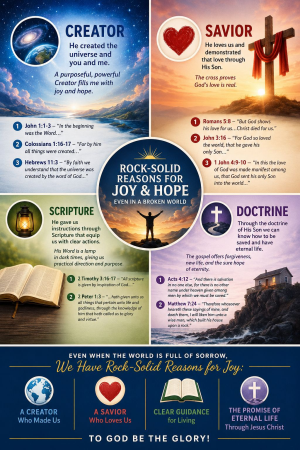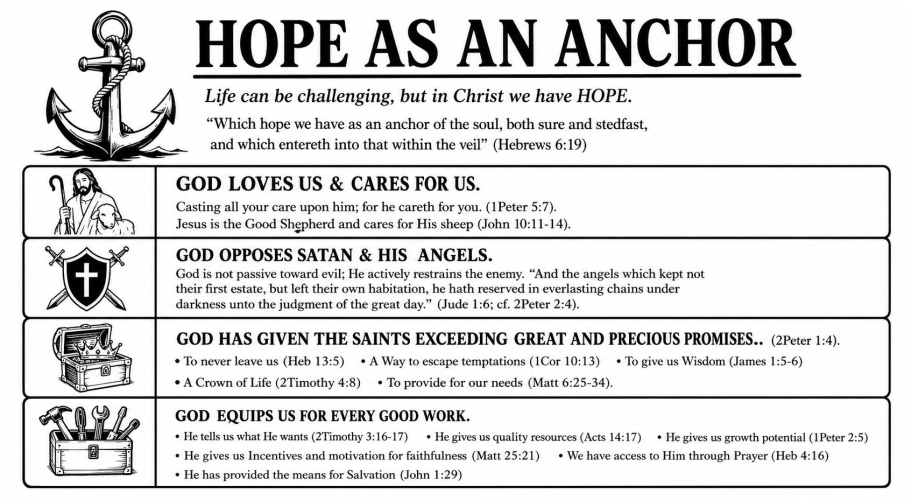
Adoption & Heirs Every spiritual blessing God gives comes to us only in Christ. The apostle Paul opens Ephesians with this sweeping truth: “Blessed be the God and Father of our Lord Jesus Christ, who has blessed us in Christ with every spiritual blessing in the heavenly places” (Ephesians 1:3).
Among the greatest of these blessings are adoption and inheritance. Through faith in Jesus, God takes us who were once outsiders and adopts us as His own children. We are no longer slaves or strangers but sons and daughters in His family. “But when the fulness of the time was come, God sent forth his Son, made of a woman, made under the law, To redeem them that were under the law, that we might receive the adoption of sons. And because ye are sons, God hath sent forth the Spirit of his Son into your hearts, crying, Abba, Father. Wherefore thou art no more a servant, but a son; and if a son, then an heir of God through Christ” (Galatians 4:4-7).
This adoption brings full rights. We receive the Spirit of adoption. And because we are now children, we become heirs of God and co-heirs with Christ. An eternal inheritance awaits us that nothing in this world can take away. “And if children, then heirs; heirs of God, and joint-heirs with Christ; if so be that we suffer with him, that we may be also glorified together” (Romans 8:15-17).
How did we come to this inheritance and adoption? Paul wrote by inspiration, “For ye are all the children of God by faith in Christ Jesus. For as many of you as have been baptized into Christ have put on Christ. There is neither Jew nor Greek, there is neither bond nor free, there is neither male nor female: for ye are all one in Christ Jesus. And if ye be Christ’s, then are ye Abraham’s seed, and heirs according to the promise” (Galatians 3:26-29).
We’re able to be baptized into Christ because of what He did on the cross. “And that he might reconcile both unto God in one body by the cross, having slain the enmity thereby… Now therefore ye are no more strangers and foreigners, but fellowcitizens with the saints, and of the household of God” (Ephesians 2:14-19);
All of it is found in Christ alone. Through Jesus we are welcomed home, fully adopted, and made rich with every spiritual blessing the Father has to give. Now all that remains is the redemption of our body when Christ returns. “…even we ourselves groan within ourselves, waiting for the adoption, to wit, the redemption of our body” (Romans 8:23). Having been justified by His grace we should become heirs according to the hope of eternal life (Titus 3:7).
“Blessed be the God and Father of our Lord Jesus Christ, which according to his abundant mercy hath begotten us again unto a lively hope by the resurrection of Jesus Christ from the dead, To an inheritance incorruptible, and undefiled, and that fadeth not away, reserved in heaven for you, Who are kept by the power of God through faith unto salvation ready to be revealed in the last time” (1Peter 1:3-5).
“Herein is my Father glorified, that ye bear much fruit; so shall ye be my disciples.” (John 15:8)
The Apostle Paul writes about bearing fruit, comparing our former lives to our new life having been baptized into Christ.
“For when ye were the servants of sin, ye were free from righteousness. What fruit had ye then in those things whereof ye are now ashamed? for the end of those things is death. But now being made free from sin, and become servants to God, ye have your fruit unto holiness, and the end everlasting life. For the wages of sin is death; but the gift of God is eternal life through Jesus Christ our Lord” (Romans 6:20-23).
In this passage he had reminded the saints in Rome they had died to sin when they were baptized into the death of Christ. “How shall we, that are dead to sin, live any longer therein? Know ye not, that so many of us as were baptized into Jesus Christ were baptized into his death? Therefore we are buried with him by baptism into death: that like as Christ was raised up from the dead by the glory of the Father, even so we also should walk in newness of life” (vss 2-4).
What does all of this mean for us today? Prior to obeying the gospel the fruit of our shameful lives was leading to death (eternal separation from God Isaiah 59:2). Do you remember Romans chapter one? “Who knowing the judgment of God, that they which commit such things are worthy of death, not only do the same, but have pleasure in them that do them” (Rom 1:32). Read that whole chapter and see those shameful things worthy of death. Recall what Paul wrote to the church at Corinth; “Know ye not that the unrighteous shall not inherit the kingdom of God? Be not deceived: neither fornicators, nor idolaters, nor adulterers, nor effeminate, nor abusers of themselves with mankind, Nor thieves, nor covetous, nor drunkards, nor revilers, nor extortioners, shall inherit the kingdom of God. And such were some of you: but ye are washed, but ye are sanctified, but ye are justified in the name of the Lord Jesus, and by the Spirit of our God” (1Corinthians 6:9-11).
Here’s the comfort: Those who have been baptized into Christ’s death, for the forgiveness of sins, have put on Christ, and have the circumcision of the heart by the working of God, have been set free from sin, and are now on that narrow path that leads to eternal life as servants of God!* We have been washed, we are sanctified, we are justified in the name of the Lord Jesus, and by the Spirit of our God.
“I am the vine, ye are the branches: He that abideth in me, and I in him, the same bringeth forth much fruit: for without me ye can do nothing” (John 15:5).
Today is the first day of summer. While we in Texas thought it already began, it’s officially today.
I find it interesting that last winter I complained about the cold, and now I’m complaining about the heat. I guess I’m shocked by each season’s weather. Perhaps it’s just me?
Spiritually speaking, the seasons are there for our benefit. Paul told those in Lystra about God and His seasons, “Nevertheless He did not leave Himself without witness, in that He did good, gave us rain from heaven and fruitful seasons, filling our hearts with food and gladness” (Acts 14:17).
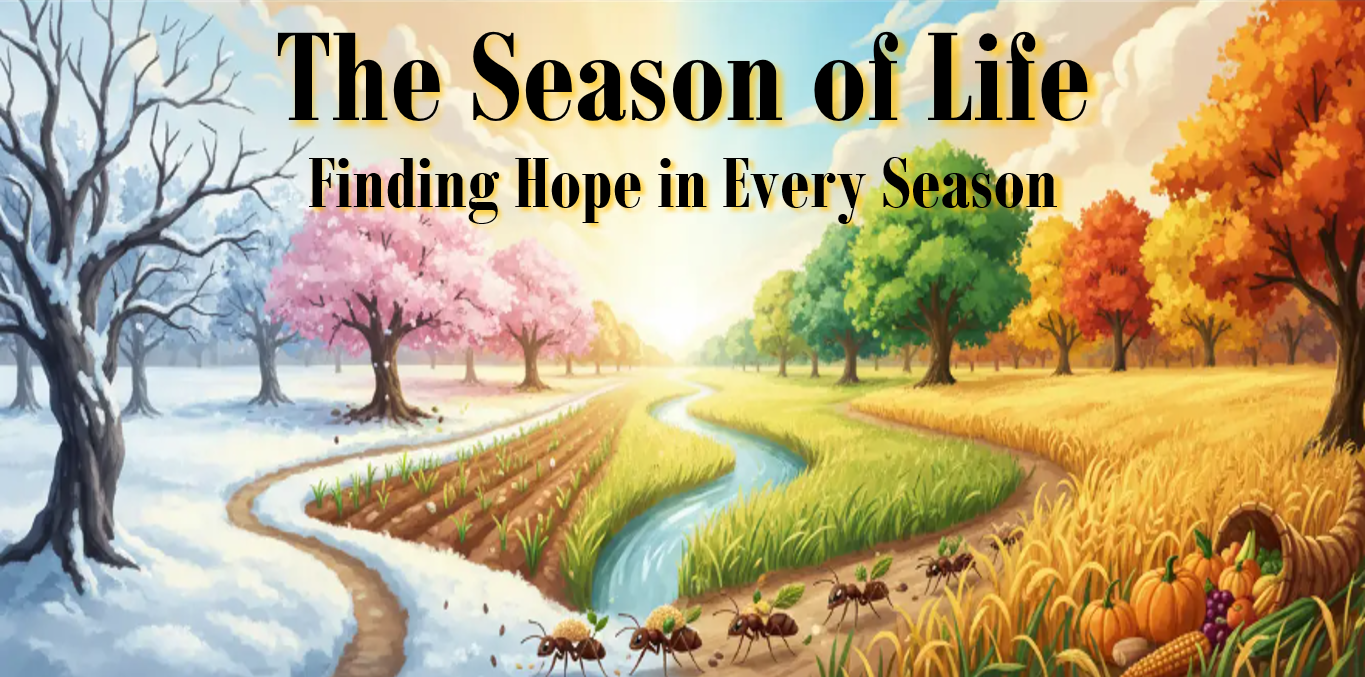
God’s regulated creation gives us constancy in our lives which allows us to live, plan, and grow. If nature did not have this constant regularity we could not survive. The seasons have their order and their purpose. There is WINTER (preparation), which every single time is followed by SPRING (planting), bringing us back to SUMMER (cultivation) after which is AUTUMN (harvesting). Every human everywhere can count on the seasons (within their regions). These seasons, a part of God’s overall creation, is there for us, for our health, and for our spiritual well-being. “For the invisible things of him from the creation of the world are clearly seen, being understood by the things that are made, even his eternal power and Godhead; so that they are without excuse” (Romans 1:20; cf Matt 5:45).
Other parts of God’s creation teach us about the seasons of life, “Go to the ant, you sluggard! Consider her ways and be wise…Provides her supplies in the summer, And gathers her food in the harvest” (Prov 6:6-8). Ants are all in all the time. They Never quit, and they take advantage of every season in its TIME.
Other scriptures give us spiritual lessons through the physical seasons. The law of Sowing & Reaping is a powerful lesson both physically and spiritually. Let us be Sowing & or Reaping in its proper season.
The famous passage in Ecclesiastes 3 teaches us the seasons of life have a certain opportunity, “To everything there is a season, A time for every purpose under heaven” (Ecc 3:1). We often view these negatively (read most times at funerals), but that view overlooks the opportunities available in every season of life, both the positive and the negative.
A lesson for me from the seasons and its regularity is to never give up when you’re in one particularly hard season. Winter reminds me of death and sadness. When we lived in Alaska we were warned about cabin fever. That’s when folks experience the distressing irritability, restlessness, and anxiety from being confined inside during the harsh subzero weather and prolonged darkness. Never let one hard season ruin all the seasons.
We need to stay strong and remember that SPRING follows every WINTER. It might be hot today, but very soon we’ll enjoy the beautiful cooler Autumn weather. But I haven’t been talking about weather.
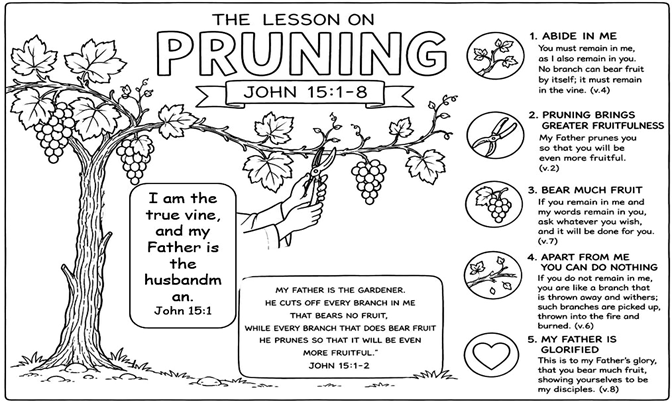
“Every branch in me that beareth not fruit he taketh away: and every branch that beareth fruit, he purgeth (prunes) it, that it may bring forth more fruit.” (John 15:2)
PRUNING for greater fruitfulness. In grape production (viticulture), the vinedresser removes dead or unfruitful branches entirely to concentrate the vine’s energy to improve growth and health for greater productivity. This is not destruction but care. God actively tends His people for fruitfulness, accomplished primarily through His Word, all aimed at greater Christlikeness and productivity. From this verse in John 15 we see two actions being taken by the vinedresser (God the Father):
ONE: Branches that produce no fruit are removed. “If a man abide not in me, he is cast forth as a branch, and is withered; and men gather them, and cast them into the fire, and they are burned” (John 15:6). This is a warning about those who were “in me” but are not bearing fruit. We see other scriptures warning of this same condition; The parable of the Sower (Mark 4:13-20); the warning about false prophets (Matt 7:15-20); and the breaking off of branches (Romans 11:11-27). The possibility of apostasy is real.
TWO: The Father cleanses or prunes fruitful branches “that it may bring forth more fruit.” The goal is increase, not comfort—removing what hinders maximum productivity. Paul wrote about a similar “pruning” using the metaphor of “mortifying” and “putting off” the works of the world (Colossians 3:5-17).
The primary instrument of pruning Jesus says is the word, “Now ye are clean through the word which I have spoken unto you… If ye abide in me, and my words abide in you” (John 15:3, 7). Reading, applying, and obeying Scripture convicts, corrects, and trains (cf. 2Timothy 3:16-17).
Another way God prunes is through the trials that are in this world since the fall. “My brethren, count it all joy when ye fall into divers temptations; Knowing this, that the trying of your faith worketh patience. But let patience have her perfect work, that ye may be perfect and entire, wanting nothing” (James 1:2-4). Trials test and develop endurance, leading to maturity (perfection). God has established principles in creation and redemption that automatically correct deviation (sowing and reaping, consequences of sin, Galatians 6:7). Any true understanding of discipline through trial comes from the revealed Word of God.
Hebrews 12 informs us that discipline is for our good, as a father who loves and disciplines his son. It’s considered loving to train a child. “For whom the Lord loveth he chasteneth, and scourgeth every son whom he receiveth” (Hebrews 12:6). God may use circumstances, but understanding flows from knowing His Word. God “prunes” for greater fruitfulness, because He loves us, for maturity, and to remove hindrances. We respond by abiding in Him (through His word), count trials as joy because of what it will produce in us, actively participate by removing sin & distractions, and fully trusting in God who wants us to be fully equipped for every good work. “Herein is my Father glorified, that ye bear much fruit; so shall ye be my disciples” (John 15:8).
“For the word of God is quick, and powerful, and sharper than any twoedged sword, piercing even to the dividing asunder of soul and spirit, and of the joints and marrow, and is a discerner of the thoughts and intents of the heart” (Hebrews 4:12).
I asked a fellow one day if he knew why people read the Bible daily. He said that he didn’t really know why. It got me thinking about why we ought to read the Bible.
In a world filled with confusion, relativism, and aimless wandering, we desperately need to immerse ourselves in the Bible, God’s inspired Word. As Ephesians 5:17 urges, we must not live foolishly but understand the WILL OF THE LORD, which is revealed clearly through Scripture. John 17:17 declares that GOD’S WORD IS TRUTH ITSELF; the objective anchor in an age of shifting sand of public opinions, guarding us from deception. Moreover, 1 Peter 3:15 tells us to always BE READY TO GIVE A DEFENSE FOR THE HOPE WITHIN US, a readiness that comes only from knowing and internalizing biblical truth. Finally, recognizing that it is not in man to direct his own steps (Jeremiah 10:23), we turn to Psalm 119:105, where GOD’S WORD BECOMES A LAMP TO OUR FEET AND A LIGHT TO OUR PATH, illuminating our purpose and guiding us safely through life’s journey. Without regular reading of the Bible, we stumble in darkness; with it, we walk confidently in God’s eternal direction.
Get A Bookmark; it’s the easiest Bible Reading Plan. A simple bookmark can be one of the most powerful tools for staying consistent in Bible reading, even without following a formal plan. Life is unpredictable with busy schedules, unexpected interruptions, and shifting priorities that can easily derail our good intentions to read Scripture daily. But a bookmark quietly solves this problem by marking exactly where we left off, so we know where to go when we pick back up the Bible again. No need to remember the last chapter or verse, no pressure to “catch up” on missed days, and no guilt over abandoning a rigid reading schedule. It allows us to resume right where we stopped, whether that was yesterday, or last week. This simple device keeps the habit alive, allowing steady progress through the Word over months and years. Over time, that humble bookmark becomes a faithful companion helping us build a lifelong rhythm of reading His Word; one verse, one chapter, one bookmark placement at a time.
I have found it most effective to set a time to read each day. In the early years I would read just before bed (a great strategy if you’re trying to avoid screen time at the end of the day). This helped me to go to sleep with God’s word on my heart. Now a days I read in the mornings (Monday – Friday) following a 5-day reading plan to read through the whole bible in one year. May God’s word be a blessing to you as you read in 2026.
Comfort in Christ: I aint ‘fraid of no Ghosts. The Ghost of Jacob Marley vs. the Truth of Luke 16:19-31
Charles Dickens’ “A Christmas Carol” paints a vivid picture of Jacob Marley’s ghost returning from the dead to warn Ebenezer Scrooge of his selfish ways, hoping to spare him a grim afterlife. Marley’s clanking chains and desperate plea grip our imaginations, but how does this fictional tale stack up against the truth of God’s Word in Luke 16:19-31, the story of Lazarus and the rich man? The Bible offers a different, more comforting reality for believers: Neither the faithful nor the lost return as ghosts.
In “A Christmas Carol”, Marley’s ghost is a restless spirit, burdened by chains forged from his greed and indifference in life. He returns to haunt Scrooge, warning him to change his ways to avoid eternal torment. The story suggests the dead can cross back to the living (or never cross over to the realm of the dead), intervening to deliver messages of repentance or hope. This makes for a compelling plot, stirring Scrooge to transform, but it leans on a cultural idea of ghosts lingering to settle unfinished business. Marley’s return implies the afterlife allows such spectral visits, with the dead actively influencing the living. This concept has enriched Hollywood with movies like “Ghost” and “The sixth sense.”
Contrast this with Luke 16:19-31, where Jesus tells of Lazarus, a poor man, and a rich man who die. Lazarus rests in peace at Abraham’s side, while the rich man suffers in torment. The rich man begs Abraham to send Lazarus back to warn his brothers, hoping to save them from his fate. Abraham says, “They have Moses and the prophets; let them hear them” (Luke 16:29). When the rich man insists a return from the dead would convince them, Abraham replies, “If they hear not Moses and the prophets, neither will they be persuaded, though one rose from the dead” (Luke 16:31). Unlike Marley, Lazarus doesn’t haunt the earth (nor does the rich man); he’s at rest, and the rich man’s plea for a ghostly messenger is denied. God’s Word, not supernatural visits, is sufficient for guidance. Ironically, a man named Lazarus did come back from the dead, “But the chief priests consulted that they might put Lazarus also to death; Because that by reason of him many of the Jews went away, and believed on Jesus” (John 12:10-11). So also did ANOTHER come back from the dead and it’s HIS WORD that either warns or haunts us today. “He that rejecteth me, and receiveth not my words, hath one that judgeth him: the word that I have spoken, the same shall judge him in the last day” (John 12:48). The message today is the same; if we hear not Christ, neither will we be persuaded, though one rose from the dead.
Marley’s story fuels the idea that the dead roam to fix past wrongs, reflecting a human longing for second chances or closure. But this clashes with Scripture’s truth: the faithful, like Lazarus, are immediately in comfort, not wandering as spirits. Hebrews 9:27 states, “And as it is appointed unto men once to die, but after this the judgment,” with no provision for ghostly returns. For believers, this is a warm comfort; the faithful in Christ aren’t trapped or restless but safe with God.
Dickens’ tale captivates, but it’s fiction. Luke 16:19-31 grounds us in truth: God’s Word guides the living, and the faithful find eternal rest, not a ghostly mission.
agape
Sources:
Holy Bible KJV.
Dickens, Charles. “A Christmas Carol” (1843).
Final Thought: Marley’s ghost makes a great story, but God’s Word assures us there are no ghosts haunting the earth. I aint ‘fraid of no Ghosts.
Let’s talk about this Calvinist idea of predestination. Basically, that God pulls every string, deciding who’s in and who’s out, with free will just a side note because God’s Sovereignty demands it. Sounds tidy, right? But the Bible keeps pushing back, shouting from the rooftops that we’ve got real choices to make. It’s not some robotic rerun; it’s a dynamic story where God hands us the reins and says, “Your move.”
God repeatedly tells individuals to make choices, implying free will. In Joshua 24:15, Joshua exhorts the Israelites, “Choose this day whom you will serve,” presenting a clear decision between serving God or idols. This command assumes the ability to choose freely, not a predetermined outcome. Similarly, Deuteronomy 30:19 declares, “I have set before you life and death, blessing and curse. Therefore choose life.” The imperative to “choose” underscores human responsibility to respond to God’s call, incompatible with a view where every decision is divinely dictated.
In the New Testament, Jesus’ invitations affirm free will. Matthew 11:28 says, “Come to me, all you who are weary and heavy laden, and I will give you rest.” This open invite requires a voluntary response, suggesting individuals can accept or reject it. Likewise, John 7:17 states, “If any man will do his will, he shall know of the doctrine, whether it be of God, or whether I speak of myself.” Jesus emphasizes choice as central to faith, countering the idea that God irresistibly determines belief.
Calvinists often cite Romans 9:16-18, which highlights God’s sovereignty in showing mercy, to support predestination. However, Paul’s broader argument in Romans emphasizes human responsibility. Romans 10:9 declares, “If you declare with your mouth, ‘Jesus is Lord,’ and believe in your heart… you will be saved.” (Paul will continue on in the text pointing to baptism & faith). The conditional “if” implies that salvation hinges on personal choice, not divine coercion. Furthermore, 2 Peter 3:9 reveals God’s desire that “not willing that any should perish, but that all should come to repentance,” suggesting universal opportunity for salvation through free response, not selective predetermination.
Ephesians 1:4-5, another Calvinist cornerstone, states God chose believers “before the foundation of the world.” Yet, this should be understood corporately; God predestining the church as a body for salvation, while individuals freely choose to obey the Gospel and are added to the church through faith (Ephesians 2:8-9; Acts 2:38,41,47). This harmonizes with passages like Revelation 3:20, where Jesus says, “I stand at the door and knock. If anyone hears my voice and opens the door, I will come in.” The imagery of opening the door underscores human agency in responding to divine initiative.
Moreover, Calvinism’s strict determinism raises concerns about God’s character. If God ordains all actions, including sin, it conflicts with James 1:13, which states, “God cannot be tempted by evil, nor does he tempt anyone.” Free will allows humans to bear responsibility for sin, preserving God’s holiness and justice. Neither the devil nor God made us do it. Scripture consistently portrays God as inviting, not compelling, human response. Scripture paints God as the ultimate pursuer, not puppet-master. Free will aligns with a God who desires genuine relationship over robotic obedience.
The Bible’s Enduring Influence on Western Law and the U.S. Constitution
It is apparent to me that the Bible has profoundly shaped Western civilization and the U.S. Constitution, providing moral and legal principles. Its scriptural teachings influenced the cultural and intellectual society of the West and the American founding, creating a legacy evident in modern legal systems and constitutional governance.
The biblical concept of human dignity, derived from the idea that humans are created in God’s image (Genesis 1:26-27), laid the foundation for Western notions of individual rights. Historian David Landes, in The Wealth and Poverty of Nations, argues that this principle inspired accountability and fairness, influencing documents like the Magna Carta (1215), which echoes Deuteronomy 16:20’s call for justice. This idea can be seen in the Declaration of Independence’s “unalienable rights” and the Constitution’s Bill of Rights, particularly the First Amendment’s protections of speech and religion. James Madison, a key framer, drew on biblical notions of human worth, as noted by Carl Richard in The Founders and the Bible.
The Ten Commandments (Exodus 20:1-17) provided a moral framework for Western jurisprudence, with prohibitions against murder, theft, and perjury shaping legal codes from medieval Europe to colonial America. Legal scholar Harold Berman, in Law and Revolution, highlights how biblical ethics standardized justice in fragmented societies, a legacy reflected in the Constitution’s emphasis on impartiality (Leviticus 19:15). The command to “love your neighbor as yourself” (Leviticus 19:18; Matthew 22:39) further inspired Western social welfare laws and the Constitution’s reliance on civic virtue, as Benjamin Franklin emphasized in his writings.
The Bible’s warnings against unchecked power (1 Samuel 8:10-18; Deuteronomy 17:14-20) influenced the Western concept of the rule of law and the Constitution’s checks and balances. John Locke’s Two Treatises of Government, which cites scripture, argued for limited government, shaping the Constitution’s separation of powers (Articles I-III). Historian Donald Lutz, in The Origins of American Constitutionalism, notes that colonial sermons often referenced Exodus 18:21-22’s decentralized governance, influencing federalism. John Adams, in his Defence of the Constitutions, tied governance to biblical morality (Proverbs 29:2), reinforcing accountability.
The Great Awakening (1730s-1740s) embedded biblical values in colonial culture, shaping the framers’ commitment to liberty, as Daniel Dreisbach details in Reading the Bible with the Founding Fathers. While Enlightenment ideas contributed, the Bible’s influence provided a moral compass for constitutional principles like forgiveness (Colossians 3:13), evident in rehabilitative justice systems. Critics may emphasize secular influences, but the framers’ biblical worldview, as seen in their writings, brought together faith and reason.
agape
Sources: Berman, Harold. Law and Revolution. Harvard University Press, 1983. Dreisbach, Daniel L. Reading the Bible with the Founding Fathers. Oxford University Press, 2017. Landes, David. The Wealth and Poverty of Nations. W.W. Norton, 1998. Lutz, Donald S. The Origins of American Constitutionalism. LSU Press, 1988. Richard, Carl J. The Founders and the Bible. Rowman & Littlefield, 2016. The Bible (KJV): Genesis 1:26-27, Exodus 18:21-22, 20:1-17, Leviticus 19:15, 19:18, Deuteronomy 16:20, 17:14-20, 1 Samuel 8:10-18, Proverbs 29:2, Matthew 22:39, Colossians 3:13.
Knowing the Voice of Jesus: The Written Word as the Sole Means
In John 10:4, Jesus, the Good Shepherd, declares, “And when he putteth forth his own sheep, he goeth before them, and the sheep follow him: for they know his voice.” Believers today do not hear an audible voice nor witness the signs Jesus performed during His earthly ministry, as those signs, per John 20:30-31, were recorded so that we might believe without seeing them firsthand: “And many other signs truly did Jesus in the presence of his disciples, which are not written in this book: But these are written, that ye might believe that Jesus is the Christ, the Son of God; and that believing ye might have life through his name.” The implication is that the signs done then will not be repeated; instead, we know Jesus’ voice through the written word. The apostles’ teaching, the New Testament history of Jesus, and obedience to Christ all converge in the written word as the sole means to know His voice and the truth.
We will know His voice by keeping the apostles’ teaching. The apostles, guided by the Holy Spirit, delivered Jesus’ teachings, preserved in Scripture. John 16:13 promises, “When he, the Spirit of truth, is come, he will guide you into all truth.” Their doctrine, recorded in the written word, allows us to hear Jesus. Later Jesus prays for the apostles in John 17:20, “Neither pray I for these alone, but for them also which shall believe on me through their word;” This shows us that people will believe through their inspired preaching and teaching which is now recorded for all in the New Testament. Acts 2:42 shows early believers “continued stedfastly in the apostles’ doctrine,” while Galatians 1:11-12 clarifies, “The gospel which was preached of me is not after man… but by the revelation of Jesus Christ.” These inspired writings are our access to His voice today.
We will know His voice by the New Testament history of Jesus Christ. The Gospels record Jesus’ life and works, but the signs He performed were for those who saw them personally. John 20:29 reinforces this: “Blessed are they that have not seen, and yet have believed.” We know Him through the written record, as Luke 1:1-4 states: “To set forth in order a declaration… that thou mightest know the certainty of those things.” The written history in Scripture conveys His voice to us. John 20:31a, “But these are written, that ye might believe that Jesus is the Christ, the Son of God;”
We will know His voice by obedience to Christ. Obeying Jesus’ commands, found in Scripture, confirms we hear His voice. John 10:27 says, “My sheep hear my voice… and they follow me.”1 John 2:4 warns, “He that saith, I know him, and keepeth not his commandments, is a liar, and the truth is not in him.”John 14:23 adds, “If a man love me, he will keep my words: and my Father will love him.” Obedience to the written word ensures we know Him.
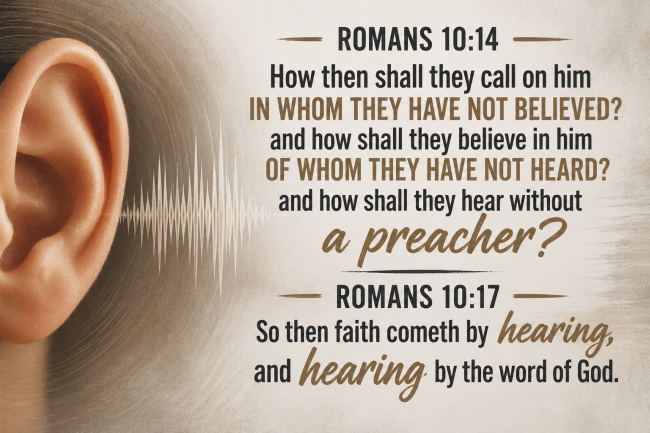
The written word is the only means by which we know Jesus’ voice and the truth. The signs Jesus performed, as recorded in John 20:30-31, were for those who saw them, but we believe through what is written. Jesus’ life is in the word (John 5:39: “Search the scriptures… they are they which testify of me”). The apostles’ teachings come from the word (2 Peter 1:21). The Holy Spirit revealed the word (2 Timothy 3:16). While preachers may proclaim the gospel (Romans 10:14), they must teach from the written word. 2 John 1:9 emphasizes, “He that abideth in the doctrine of Christ, he hath both the Father and the Son.” The written word alone enables us to hear and follow the Good Shepherd.
We will know His voice by keeping the apostles’ teaching. The apostles, guided by the Holy Spirit, delivered Jesus’ teachings, preserved in Scripture. John 16:13 promises, “When he, the Spirit of truth, is come, he will guide you into all truth.” Their doctrine, recorded in the written word, allows us to hear Jesus. After Jesus then prays for the apostles, He then prays this in John 17:20, “Neither pray I for these alone, but for them also which shall believe on me through their word;” This shows us that people will believe through their inspired preaching and teaching which is now recorded for all in the New Testament. Acts 2:42 shows early believers “continued stedfastly in the apostles’ doctrine,” while Galatians 1:11-12 clarifies, “The gospel which was preached of me is not after man… but by the revelation of Jesus Christ.” These inspired writings are our access to His voice today.
We will know His voice by the New Testament history of Jesus Christ. The Gospels record Jesus’ life and works, but the signs He performed were for those who saw them personally. John 20:29 reinforces this: “Blessed are they that have not seen, and yet have believed.” We know Him through the written record, as Luke 1:1-4 states: “To set forth in order a declaration… that thou mightest know the certainty of those things.” The written history in Scripture conveys His voice to us.
We will know His voice by obedience to Christ. Obeying Jesus’ commands, found in Scripture, confirms we hear His voice. John 10:27 says, “My sheep hear my voice… and they follow me.”1 John 2:4 warns, “He that saith, I know him, and keepeth not his commandments, is a liar, and the truth is not in him.”John 14:23 adds, “If a man love me, he will keep my words: and my Father will love him.” Obedience to the written word ensures we know Him.
In conclusion, the written word is the only means by which we know Jesus’ voice and the truth. The signs Jesus performed, as recorded in John 20:30-31, were for those who saw them, but we believe through what is written. Jesus’ life is in the word (John 5:39: “Search the scriptures… they are they which testify of me”). The apostles’ teachings come from the word (2 Peter 1:21). The Holy Spirit revealed the word (2 Timothy 3:16). While preachers may proclaim the gospel (Romans 10:14), they must teach from the written word. 2 John 1:9 emphasizes, “He that abideth in the doctrine of Christ, he hath both the Father and the Son.” The written word alone enables us to hear and follow the Good Shepherd.
“But thou, O man of God, flee these things; and follow after righteousness, godliness, faith, love, patience, meekness.” (1Tim 6:11)
“Flee also youthful lusts: but follow righteousness, faith, charity, peace, with them that call on the Lord out of a pure heart.” (2Tim 2:22)
Striving for Selfless Love. As I walk through this life, I’m learning that selfless love is the heartbeat of what it means to follow Christ. The New Testament tells me to pursue love (agape, the kind of love that puts others first) as Paul urges in 1 Corinthians 14:1, “Pursue love,” and 1 Corinthians 10:24, “Let no one seek his own, but each one the other’s well-being.” I see this love woven into the virtues of 1 Timothy 6:11 and 2 Timothy 2:22, where love stands alongside righteousness, faith, and peace. Yet, I confess, loving selflessly doesn’t come naturally to me. It’s a daily choice to set aside my own desires and seek the good of those around me.
This pursuit matters deeply because love is the foundation of God’s kingdom. Paul says in 1 Corinthians 13:13 that love is greater than faith or hope, and I’m beginning to understand why. When I choose to love others (whether through a kind word, a listening ear, or an act of hospitality like Romans 12:13 encourages) I reflect Christ’s heart. Every effort to encourage others flows from this love. But I stumble often. My selfishness creeps in, and I need God’s grace to soften my heart, to help me embody the gentleness of 1 Timothy 6:11 or the peace of 2 Timothy 2:22 in my relationships.
Striving for selfless love changes me. It pushes me to forgive when I’d rather hold a grudge, to serve when I’m tired, and to prioritize others’ needs over my own comfort. It’s humbling to realize how far I fall short, yet I find joy in small steps, like a kind word to a neighbor or praying for a struggling friend. This pursuit brightens the light of Christ in my heart, showing the world a glimpse of Jesus’ love through my imperfect efforts. I keep chasing selflessness to make my love more like God’s.
Seeking God; Aspiring to Excellence (Godliness and Holiness) In my walk with Christ, I’m learning to aspire to excellence through godliness and holiness, though I often feel unworthy of such a high calling. 1 Timothy 6:11 urges me to pursue godliness, a life of devotion to God, while Hebrews 12:14 says to “pursue… holiness, without which no one will see the Lord.” These virtues connect to the righteousness and faith in 1 Timothy 6:11 and 2 Timothy 2:22, and they echo the urging to seek “things above” in Colossians 3:1-2. I’m far from perfect, but I long to reflect God’s character more each day.
This pursuit is crucial because it draws me closer to God Himself. Godliness means living with reverence, seeking His will in every decision, but I often get distracted by worldly concerns. Holiness, too, challenges me to stand apart from sin and selfishness, as Hebrews 12:14 warns that without it, I won’t see God. This sobers me, reminding me that my efforts matter, not to earn salvation but to honor the One who saved me. These virtues shape my heart, teaching me to love what God loves and hate what He hates, aligning with the righteousness of both Timothy passages.
Aspiring to godliness and holiness is a humbling journey. I need the support of other saint, as 2 Timothy 2:22 suggests, pursuing these virtues “with those who call on the Lord.” Through prayer, Scripture, and accountability, I’m slowly growing, learning to forgive quickly, speak truthfully, and serve humbly. Each step feels like a battle, but it’s worth it to become more like Christ. As a saint, I seek this treasure of excellence, trusting God to refine me into His image, one faltering step at a time.
Seeking God; Longing for Eternal Life As I seek to grow in faith, the hope of eternal life has become a treasure I hold dear, though I’m still learning to pursue it with the patience it demands. Romans 2:7 speaks of “eternal life to those who by patient continuance in doing good seek for glory, honor, and immortality,” and I see this echoed in the patience and righteousness Paul pleads for in 1 Timothy 6:11 and 2 Timothy 2:22. I’m not there yet, my faith wavers, and my endurance falters, but I keep pressing forward, trusting God to sustain me.
This pursuit is vital because it anchors my life in something beyond the fleeting moments of this world. Eternal life isn’t just a future hope; it shapes how I live now. The urging to “patient continuance” in Romans 2:7 reminds me of the patience in 1 Timothy 6:11, compelling me to persevere through trials without giving up. I often grow weary, tempted to chase temporary comforts instead of God’s eternal reward. But when I fix my eyes on eternity, I find strength to choose righteousness, even when it’s costly, like forgiving an offense or staying faithful in difficult times.
Longing for eternal life humbles me. It is God’s gift through Christ to those who obey the gospel. Yet, I’m told to seek it by living uprightly, as 2 Timothy 2:22 encourages in pursuing righteousness. Each step, resisting temptation, serving others, or trusting God in hardship, feels like a deposit toward that eternal hope. It’s a slow, steady journey, and I rely on God’s mercy and His word to keep me faithful. This pursuit reminds me that my true home is with Him, forever.
Seeking God; Seeking the Kingdom of God and His Righteousness As I grow in faith, I’m learning to make the kingdom of God and His righteousness my highest pursuit, though I often fall short of this priority. Jesus’ words in Matthew 6:33, “Seek first the kingdom of God and His righteousness,” and Luke 12:31 tell me to focus on God’s rule and moral standard above all else. This aligns with the righteousness, faith, and godliness in 1 Timothy 6:11 and 2 Timothy 2:22, but I confess it’s a struggle to keep this first in my heart when life’s demands pull me in every direction.
This pursuit is the cornerstone of my faith because it reorients everything else. Jesus promises that when I seek God’s kingdom first, my needs will be met, freeing me from worry. But trusting this promise requires the faith of 1 Timothy 6:11 and 2 Timothy 2:22, believing God’s way is better than my own. Righteousness (living justly and obediently) isn’t just a rule to follow; it’s a reflection of God’s character, as is the godliness in 1 Timothy 6:11. I’m humbled by how often I prioritize my plans over God’s, yet His word directs me back to God’s seeking His way.
Seeking the kingdom means living differently, praying for God’s will, sharing the gospel, and standing for His truth, even when it’s unpopular. I stumble, chasing lesser things, but each time I refocus, through study, and service, I find purpose and peace. As a saint, I’m learning to seek the Kingdom of God and His righteousness above all, trusting Him along the way.