In an era of social division, mental health crises, and moral ambiguity, the teachings of Jesus Christ offer timeless solutions rooted in love, forgiveness, and purpose. Grounded in a biblical worldview, these principles address modern challenges with clarity and hope. Let’s see how Jesus’ teachings, as recorded in Scripture, provide practical answers to today’s pressing issues.
First, Jesus’ emphasis on love as the greatest commandment counters the divisions that are plaguing society. In Matthew 22:37-39, He instructs to “love the Lord your God” and “love your neighbor as yourself.” Selfless love goes beyond political and cultural divides, fostering unity despite our differences. Studies show that communities practicing altruistic behaviors, like those Jesus modeled, experience lower conflict and higher social connection (Putnam, 2000). By prioritizing love over enmity, We can improve how we relate to one another in workplaces, families, and on social media.
Second, Jesus’ teachings on forgiveness address the mental health epidemic. Modern psychology links unforgiveness to anxiety and depression (Toussaint et al., 2015). In Matthew 6:14-15, Jesus teaches that forgiving others is a prerequisite to God’s forgiveness, which promotes better relationships with others. His parable of the unforgiving servant (Matthew 18:21-35) illustrates the destructive cycle of unforgiveness in light of the mercy shown to us. Applying the principle of forgiveness (whether it be exoneration, forbearance, or release) we are able to move forward in healing relationships strained by betrayal or misunderstanding.
Third, Jesus provides purpose in a world grappling with life altering despair. Rising rates of loneliness and suicide reflect a loss of meaning (Twenge, 2017). In John 10:10, Jesus declares, “I have come that they may have life, and have it to the full.” When we truly follow Jesus, we find purpose in our lives higher than ourselves. It moves us to serve our fellow man, and gives us hope a hopeless world. If you’re dealing with recovery of any sort, you’ll find a greater rate of success in your fight against addiction and despair by becoming anchored in purpose (Koenig, 2012). Jesus’ call to “follow me” (Matthew 4:19) offers a roadmap for navigating life’s uncertainties. “But be ye doers of the word, and not hearers only, deceiving your own selves.” (James 1:22)
Critics may argue that Jesus’ teachings are outdated or impractical, yet their universal applicability endures. Loving one’s enemy (Luke 6:27) disarms hostility, forgiveness heals psychological wounds, and purpose through faith counters defeatism. These principles align with the evidence and human needs, proving their relevance.
Jesus’ teachings are not mere ideals but actionable solutions. By embracing love, forgiveness, and purpose, individuals and societies can overcome division, heal emotional wounds, and find meaning.
Agape,
spencer
Sources:
Koenig, H. G. (2012). Religion and Mental Health. Academic Press.
Putnam, R. D. (2000). Bowling Alone. Simon & Schuster.
Toussaint, L., et al. (2015). Forgiveness and Health. Springer.
Twenge, J. M. (2017). iGen. Atria Books. Zehr, H. (2015). Changing Lenses. Herald Press.
Knowing the Voice of Jesus: The Written Word as the Sole Means
In John 10:4, Jesus, the Good Shepherd, declares, “And when he putteth forth his own sheep, he goeth before them, and the sheep follow him: for they know his voice.” Believers today do not hear an audible voice nor witness the signs Jesus performed during His earthly ministry, as those signs, per John 20:30-31, were recorded so that we might believe without seeing them firsthand: “And many other signs truly did Jesus in the presence of his disciples, which are not written in this book: But these are written, that ye might believe that Jesus is the Christ, the Son of God; and that believing ye might have life through his name.” The implication is that the signs done then will not be repeated; instead, we know Jesus’ voice through the written word. The apostles’ teaching, the New Testament history of Jesus, and obedience to Christ all converge in the written word as the sole means to know His voice and the truth.
We will know His voice by keeping the apostles’ teaching. The apostles, guided by the Holy Spirit, delivered Jesus’ teachings, preserved in Scripture. John 16:13 promises, “When he, the Spirit of truth, is come, he will guide you into all truth.” Their doctrine, recorded in the written word, allows us to hear Jesus. Later Jesus prays for the apostles in John 17:20, “Neither pray I for these alone, but for them also which shall believe on me through their word;” This shows us that people will believe through their inspired preaching and teaching which is now recorded for all in the New Testament. Acts 2:42 shows early believers “continued stedfastly in the apostles’ doctrine,” while Galatians 1:11-12 clarifies, “The gospel which was preached of me is not after man… but by the revelation of Jesus Christ.” These inspired writings are our access to His voice today.
We will know His voice by the New Testament history of Jesus Christ. The Gospels record Jesus’ life and works, but the signs He performed were for those who saw them personally. John 20:29 reinforces this: “Blessed are they that have not seen, and yet have believed.” We know Him through the written record, as Luke 1:1-4 states: “To set forth in order a declaration… that thou mightest know the certainty of those things.” The written history in Scripture conveys His voice to us. John 20:31a, “But these are written, that ye might believe that Jesus is the Christ, the Son of God;”
We will know His voice by obedience to Christ. Obeying Jesus’ commands, found in Scripture, confirms we hear His voice. John 10:27 says, “My sheep hear my voice… and they follow me.”1 John 2:4 warns, “He that saith, I know him, and keepeth not his commandments, is a liar, and the truth is not in him.”John 14:23 adds, “If a man love me, he will keep my words: and my Father will love him.” Obedience to the written word ensures we know Him.
The written word is the only means by which we know Jesus’ voice and the truth. The signs Jesus performed, as recorded in John 20:30-31, were for those who saw them, but we believe through what is written. Jesus’ life is in the word (John 5:39: “Search the scriptures… they are they which testify of me”). The apostles’ teachings come from the word (2 Peter 1:21). The Holy Spirit revealed the word (2 Timothy 3:16). While preachers may proclaim the gospel (Romans 10:14), they must teach from the written word. 2 John 1:9 emphasizes, “He that abideth in the doctrine of Christ, he hath both the Father and the Son.” The written word alone enables us to hear and follow the Good Shepherd.
We will know His voice by keeping the apostles’ teaching. The apostles, guided by the Holy Spirit, delivered Jesus’ teachings, preserved in Scripture. John 16:13 promises, “When he, the Spirit of truth, is come, he will guide you into all truth.” Their doctrine, recorded in the written word, allows us to hear Jesus. After Jesus then prays for the apostles, He then prays this in John 17:20, “Neither pray I for these alone, but for them also which shall believe on me through their word;” This shows us that people will believe through their inspired preaching and teaching which is now recorded for all in the New Testament. Acts 2:42 shows early believers “continued stedfastly in the apostles’ doctrine,” while Galatians 1:11-12 clarifies, “The gospel which was preached of me is not after man… but by the revelation of Jesus Christ.” These inspired writings are our access to His voice today.
We will know His voice by the New Testament history of Jesus Christ. The Gospels record Jesus’ life and works, but the signs He performed were for those who saw them personally. John 20:29 reinforces this: “Blessed are they that have not seen, and yet have believed.” We know Him through the written record, as Luke 1:1-4 states: “To set forth in order a declaration… that thou mightest know the certainty of those things.” The written history in Scripture conveys His voice to us.
We will know His voice by obedience to Christ. Obeying Jesus’ commands, found in Scripture, confirms we hear His voice. John 10:27 says, “My sheep hear my voice… and they follow me.”1 John 2:4 warns, “He that saith, I know him, and keepeth not his commandments, is a liar, and the truth is not in him.”John 14:23 adds, “If a man love me, he will keep my words: and my Father will love him.” Obedience to the written word ensures we know Him.
In conclusion, the written word is the only means by which we know Jesus’ voice and the truth. The signs Jesus performed, as recorded in John 20:30-31, were for those who saw them, but we believe through what is written. Jesus’ life is in the word (John 5:39: “Search the scriptures… they are they which testify of me”). The apostles’ teachings come from the word (2 Peter 1:21). The Holy Spirit revealed the word (2 Timothy 3:16). While preachers may proclaim the gospel (Romans 10:14), they must teach from the written word. 2 John 1:9 emphasizes, “He that abideth in the doctrine of Christ, he hath both the Father and the Son.” The written word alone enables us to hear and follow the Good Shepherd.
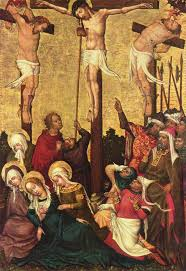
The crucifixion of Jesus Christ stands as one of the most pivotal events in human history, yet its reality is occasionally questioned. However, a careful analysis of historical evidence, both biblical and secular, reveals compelling and logical arguments supporting its occurrence. Far from being a mere theological construct, the crucifixion aligns with the historical context of Roman governance, is corroborated by non-Christian sources, and is consistently detailed in early Christian writings.
First, the Roman practice of crucifixion provides a strong foundation for its historical plausibility. Crucifixion was a well-documented method of execution in the Roman Empire, reserved for slaves, rebels, and those deemed threats to imperial authority. Historian Tacitus, in his Annals (15.44), references the execution of Jesus under Pontius Pilate during Tiberius’ reign, aligning with the biblical timeline. The Gospel of Matthew (27:31-37) describes Jesus’ crucifixion in detail, including Roman soldiers, a cross, and a public spectacle, elements consistent with Roman punitive customs as noted by scholars like Martin Hengel in Crucifixion in the Ancient World. This convergence of Roman practice and biblical narrative anchors the event in historical reality.
Second, multiple independent sources outside the Bible affirm the crucifixion. Alongside Tacitus, Jewish historian Josephus, in Antiquities of the Jews (18.3.3), mentions Jesus’ death by crucifixion, though some debate the text’s authenticity due to later Christian edits. Even skeptical scholars, such as Bart Ehrman in Did Jesus Exist?, concede that the core reference to Jesus’ execution is likely genuine. Additionally, the Roman satirist Lucian, in The Death of Peregrinus (circa 165 CE), mocks Christians for worshiping a “crucified sage,” indicating that Jesus’ death was widely known beyond Christian circles. These secular testimonies provide external validation of the biblical accounts in Mark 15:24-32 and John 19:16-18.
Third, the coherence and early attestation of the New Testament writings bolster the argument. The Gospels (Matthew, Mark, Luke, and John) were composed within decades of Jesus’ life. Paul’s letters, such as 1 Corinthians 15:3-4 (written circa 55 CE), affirm the crucifixion as a foundational belief among early Christians, predating the Gospels. This rapid documentation, combined with the lack of contemporary refutations from Jesus’ opponents, suggests the event was an accepted fact. As historian N.T. Wright argues in The Resurrection of the Son of God, the crucifixion’s prominence in such early texts reflects a historical memory too vivid to dismiss.
Critics might argue that the accounts are biased or mythologized, yet the consistency across sources, the embarrassment of a crucified messiah (contrary to Jewish expectations, as in Deuteronomy 21:23), and the absence of alternative narratives strengthen the case. The crucifixion’s historical reality emerges not from blind faith but from a convergence of evidence that withstands scrutiny.
In the end, the crucifixion of Jesus is not a fable spun by devotees but a stark historical event etched into the annals of time. Its truth pierces through centuries, demanding we confront its weight.
“But thou, O man of God, flee these things; and follow after righteousness, godliness, faith, love, patience, meekness.” (1Tim 6:11)
“Flee also youthful lusts: but follow righteousness, faith, charity, peace, with them that call on the Lord out of a pure heart.” (2Tim 2:22)
Striving for Selfless Love. As I walk through this life, I’m learning that selfless love is the heartbeat of what it means to follow Christ. The New Testament tells me to pursue love (agape, the kind of love that puts others first) as Paul urges in 1 Corinthians 14:1, “Pursue love,” and 1 Corinthians 10:24, “Let no one seek his own, but each one the other’s well-being.” I see this love woven into the virtues of 1 Timothy 6:11 and 2 Timothy 2:22, where love stands alongside righteousness, faith, and peace. Yet, I confess, loving selflessly doesn’t come naturally to me. It’s a daily choice to set aside my own desires and seek the good of those around me.
This pursuit matters deeply because love is the foundation of God’s kingdom. Paul says in 1 Corinthians 13:13 that love is greater than faith or hope, and I’m beginning to understand why. When I choose to love others (whether through a kind word, a listening ear, or an act of hospitality like Romans 12:13 encourages) I reflect Christ’s heart. Every effort to encourage others flows from this love. But I stumble often. My selfishness creeps in, and I need God’s grace to soften my heart, to help me embody the gentleness of 1 Timothy 6:11 or the peace of 2 Timothy 2:22 in my relationships.
Striving for selfless love changes me. It pushes me to forgive when I’d rather hold a grudge, to serve when I’m tired, and to prioritize others’ needs over my own comfort. It’s humbling to realize how far I fall short, yet I find joy in small steps, like a kind word to a neighbor or praying for a struggling friend. This pursuit brightens the light of Christ in my heart, showing the world a glimpse of Jesus’ love through my imperfect efforts. I keep chasing selflessness to make my love more like God’s.
Seeking God; Aspiring to Excellence (Godliness and Holiness) In my walk with Christ, I’m learning to aspire to excellence through godliness and holiness, though I often feel unworthy of such a high calling. 1 Timothy 6:11 urges me to pursue godliness, a life of devotion to God, while Hebrews 12:14 says to “pursue… holiness, without which no one will see the Lord.” These virtues connect to the righteousness and faith in 1 Timothy 6:11 and 2 Timothy 2:22, and they echo the urging to seek “things above” in Colossians 3:1-2. I’m far from perfect, but I long to reflect God’s character more each day.
This pursuit is crucial because it draws me closer to God Himself. Godliness means living with reverence, seeking His will in every decision, but I often get distracted by worldly concerns. Holiness, too, challenges me to stand apart from sin and selfishness, as Hebrews 12:14 warns that without it, I won’t see God. This sobers me, reminding me that my efforts matter, not to earn salvation but to honor the One who saved me. These virtues shape my heart, teaching me to love what God loves and hate what He hates, aligning with the righteousness of both Timothy passages.
Aspiring to godliness and holiness is a humbling journey. I need the support of other saint, as 2 Timothy 2:22 suggests, pursuing these virtues “with those who call on the Lord.” Through prayer, Scripture, and accountability, I’m slowly growing, learning to forgive quickly, speak truthfully, and serve humbly. Each step feels like a battle, but it’s worth it to become more like Christ. As a saint, I seek this treasure of excellence, trusting God to refine me into His image, one faltering step at a time.
Seeking God; Longing for Eternal Life As I seek to grow in faith, the hope of eternal life has become a treasure I hold dear, though I’m still learning to pursue it with the patience it demands. Romans 2:7 speaks of “eternal life to those who by patient continuance in doing good seek for glory, honor, and immortality,” and I see this echoed in the patience and righteousness Paul pleads for in 1 Timothy 6:11 and 2 Timothy 2:22. I’m not there yet, my faith wavers, and my endurance falters, but I keep pressing forward, trusting God to sustain me.
This pursuit is vital because it anchors my life in something beyond the fleeting moments of this world. Eternal life isn’t just a future hope; it shapes how I live now. The urging to “patient continuance” in Romans 2:7 reminds me of the patience in 1 Timothy 6:11, compelling me to persevere through trials without giving up. I often grow weary, tempted to chase temporary comforts instead of God’s eternal reward. But when I fix my eyes on eternity, I find strength to choose righteousness, even when it’s costly, like forgiving an offense or staying faithful in difficult times.
Longing for eternal life humbles me. It is God’s gift through Christ to those who obey the gospel. Yet, I’m told to seek it by living uprightly, as 2 Timothy 2:22 encourages in pursuing righteousness. Each step, resisting temptation, serving others, or trusting God in hardship, feels like a deposit toward that eternal hope. It’s a slow, steady journey, and I rely on God’s mercy and His word to keep me faithful. This pursuit reminds me that my true home is with Him, forever.
Seeking God; Seeking the Kingdom of God and His Righteousness As I grow in faith, I’m learning to make the kingdom of God and His righteousness my highest pursuit, though I often fall short of this priority. Jesus’ words in Matthew 6:33, “Seek first the kingdom of God and His righteousness,” and Luke 12:31 tell me to focus on God’s rule and moral standard above all else. This aligns with the righteousness, faith, and godliness in 1 Timothy 6:11 and 2 Timothy 2:22, but I confess it’s a struggle to keep this first in my heart when life’s demands pull me in every direction.
This pursuit is the cornerstone of my faith because it reorients everything else. Jesus promises that when I seek God’s kingdom first, my needs will be met, freeing me from worry. But trusting this promise requires the faith of 1 Timothy 6:11 and 2 Timothy 2:22, believing God’s way is better than my own. Righteousness (living justly and obediently) isn’t just a rule to follow; it’s a reflection of God’s character, as is the godliness in 1 Timothy 6:11. I’m humbled by how often I prioritize my plans over God’s, yet His word directs me back to God’s seeking His way.
Seeking the kingdom means living differently, praying for God’s will, sharing the gospel, and standing for His truth, even when it’s unpopular. I stumble, chasing lesser things, but each time I refocus, through study, and service, I find purpose and peace. As a saint, I’m learning to seek the Kingdom of God and His righteousness above all, trusting Him along the way.
“And Jesus said unto him, Verily I say unto thee, To day shalt thou be with me in paradise.” (Luke 23:43)
This Objection sounds like this; “What about The Thief on the cross? He wasn’t baptized.”
You’re right, he wasn’t. He didn’t become a Christian either! You see, the Thief was a Jew (context bears that out) who lived and died under the Law of Moses, the Old Testament system. The New Testament command to be baptized came only after the death of Jesus. (Heb 9:15-17; Luke 23:32-43).
First, The TESTATOR was still alive. A will is not in force while the Testator lives. Jesus is the Testator of the New Covenant. Jesus had power to forgive sins while He was on earth (Mark 2:10). Now that He has died and rose from the dead, we are subject to His Will & Testament. “For where a testament is, there must also of necessity be the death of the testator. For a testament is of force after men are dead: otherwise it is of no strength at all while the testator liveth” (Heb 9:16-17).
The Thief HOPED in the future resurrection of Jesus, whereas we HOPE in a risen Savior’s return. He HOPED that Jesus would finish His prophetic work. We know that it is finished. “When Jesus therefore had received the vinegar, he said, It is finished: and he bowed his head, and gave up the ghost” (John 19:30).
He lived before the completed work of Jesus; we live on this side of the cross. “Moreover, brethren, I declare unto you the gospel which I preached unto you, which also ye have received, and wherein ye stand; By which also ye are saved, if ye keep in memory what I preached unto you, unless ye have believed in vain. For I delivered unto you first of all that which I also received, how that Christ died for our sins according to the scriptures; And that he was buried, and that he rose again the third day according to the scriptures” (1Cor 15:1-4).
Folks that ask about the Thief IGNORE the other times Jesus offered salvation with conditions. I often ask, “why pick the thief, why not be saved in the same way as the rich young ruler?” He asked for eternal life and was told to sell all that he had and give to the poor (Mark 10:17-25). When’s your garage sale? (Matthew 19:16-22, go, sell all, and give away)?
How come nobody asks to be saved like the woman “caught in adultery” (John 8:1-11, GO AND SIN NO MORE)? How come nobody asks to be saved like the laborers in the vineyard (Matthew 20:1-16,)? GO TO WORK. And, in truth, no one could be “saved like the thief,” unless they were crucified with Jesus!
How come folks overlook the multiple EXAMPLES of conversions in the book of Acts? When I ask a denominational person about how to be saved, they appeal to the thief or a verse in Romans. Why not appeal to the EXAMPLES in Acts where preachers went to the lost and baptized them into Christ? We need to ask about everyone that made this same request in the New Testament AFTER the Death, Burial, & Resurrection of Christ, (Acts 2:38; Acts 8:36; Acts 16:30). WHAT DID THEY DO? These were all baptized in water through faith for the remission of sins.
o The first of these conversions were 3,000 Jews on Pentecost to when the church was established. The text (Acts 2:14) shows that they had the Gospel preached to them; they heard (vv. 36-37); they repented of their sins (v. 38); and they were baptized into Christ (v. 38). The result was they had their sins washed away. o In Acts 8:4-5, Phillip preached to the people of Samaria; they heard (v. 6); they believed (v.13); they were baptized (v. 12). o Phillip also preached to Simon (Acts 8:4-5); he heard the Gospel (v. 6); he believed (v.13); and he was baptized (v. 13). o Phillip preached to the Eunuch (Acts 8:35-39); he made the good confession (v. 37); he was baptized (v. 38) and rejoiced in the forgiveness of his sins (v. 39). If a denominational pastor preaches Jesus (as Phillip did) would their audience respond with the same question as the Eunuch? “See, here is water; what doth hinder me to be baptized?”
o Ananias preached to Saul, later called Paul (Acts 9:17); he was baptized (Acts 22:16), and the rest of his life he taught others to do the same (1Cor. 12:13). o Peter preached to Cornelius (Acts 10:34-35); he and his family heard (v. 44); they repented of their sins (Acts 11:18); they were baptized (v. 48). They were saved (Acts 11:14). o Paul preached the saving message to Lydia (Acts 16:13); she heard (v. 14); she was baptized (v. 15). o Paul preached to the Philippian Jailor (Acts 16:32); he repented and he was baptized (v. 33). o Paul preached to and converted souls at Corinth (Acts 18:5); they heard and they were baptized (v. 8). o Paul preached to Crispus (Acts 18:5); when we turn to the letter to the Corinthians, we find that Crispus and others were baptized (1Cor. 1:14). o The Ephesians had the Gospel preached to them (Acts 19:8); they heard the message of salvation (Eph. 1:13). They were baptized (Acts 19:5) and it is in this way that they were saved by grace (Eph. 2:8-10).
Another response to the question, “what about the Thief on the cross” is found in a similar question asked of Jesus by Peter. Jesus indicates to Peter by what death he would glorify Christ (John 21:18-19). Then Peter, gesturing toward John, asks, “what shall this man do?” The Lord’s response to Peter is the same one I give to people who ask about the Thief; “what is that to thee? FOLLOW thou me” (v. 22b emphasis mine seb). The Thief found forgiveness while Jesus lived on earth, but he was not the first one, he is just the last one. There was the man Sick with a palsy (Mark 2:1-12), and the woman that anointed His feet with Oil. (Luke 7:36-50). Christ gave forgiveness during His earthly ministry as a proof that He is God. “Why doth this man thus speak blasphemies? who can forgive sins but God only” (Mark 2:7)?
These received forgiveness before Jesus died (Matt 23:46), before He was buried (Luke 23:53), before He rose again (Luke 24:6), before the command to be baptized for the remission of sins was given (Matt 28:19), and before the church was built (Matt 16:18). Nobody today can be saved like the Thief on the Cross. We live AFTER all these things; therefore, we cannot be saved like the Thief on the cross. Therefore, what’s that to you? you FOLLOW Jesus.
The Astonishing Mathematical Probability of Jesus Fulfilling the Full Scope of Old Testament Prophecies
The historical existence of Jesus Christ gains unparalleled logical support when we consider the sheer mathematical improbability of any individual fulfilling the entirety of Old Testament prophecies attributed to him. These predictions, numbering over 300 by some counts, spanning centuries and covering his lineage, birth, ministry, death, and legacy, converge on Jesus with a precision that defies random chance. Calculating the cumulative probability of this alignment offers a compelling case that Jesus was not a myth but a figure uniquely embedded in a prophetic framework, as recorded in the New Testament.
Scholars like J. Barton Payne (The Encyclopedia of Biblical Prophecy, 1973) identify approximately 333 messianic prophecies across the Old Testament, written between 1500 BC and 400 BC. These range from broad themes (e.g., a savior from David’s line, 2 Samuel 7:12-13) to precise details (e.g., born in Bethlehem, Micah 5:2; betrayed for 30 pieces of silver, Zechariah 11:12). Jesus’ life, as documented in Matthew, Mark, Luke, and John, fulfills these with remarkable consistency, his genealogy (Matthew 1:1-16), virgin birth (Matthew 1:22-23), crucifixion (John 19:18), and resurrection (1 Corinthians 15:4). To assess this logically, we must estimate the odds of one person matching this vast array by chance.
Mathematician Peter Stoner (Science Speaks, 1958), peer-reviewed by the American Scientific Affiliation, analyzed just eight specific prophecies, e.g., Bethlehem birth (1 in 2,000), virgin birth (1 in 10,000), crucifixion details (1 in 10,000), and burial with the rich (1 in 1,000). He calculated a combined probability of 1 in 10^17 (1 followed by 17 zeros), akin to picking one marked coin from a pile covering Texas two feet deep. Scaling this to all 333 prophecies is daunting, but let’s conservatively assign an average probability of 1 in 1,000 per prophecy—far more generous than Stoner’s estimates for specific ones. The cumulative odds become 1 in 10^999 (1,000 raised to the 333rd power), a number so vast it exceeds the atoms in the observable universe (estimated at 10^80).
Consider key examples: Genesis 49:10 ties the Messiah to Judah’s tribe before its sovereignty ends, fulfilled as Jesus’ lineage traces to Judah (Luke 3:33) before Rome’s dominance. Daniel 9:25-26 predicts the Messiah’s death 483 years after a decree to rebuild Jerusalem (circa 445 BC), aligning with Jesus’ crucifixion around AD 30-33, a 1 in 100,000 earthly precision. Psalm 16:10’s promise of no decay (Acts 2:31) adds another layer, rare for executed figures. Each prophecy compounds the improbability exponentially.
Critics might argue some prophecies are vague or retrofitted, but the Dead Sea Scrolls (e.g., 4Q521, pre-100 BC) confirm their antiquity, and many, like Zechariah 9:9’s humble king on a donkey (Matthew 21:5), are too specific to stretch. Scholar John Lennox (God’s Undertaker, 2009) notes that this convergence surpasses statistical fluke, pointing to intentional fulfillment.
As I grow in faith, I’m learning to make the kingdom of God and His righteousness my highest pursuit, though I often fall short of this priority. Jesus’ words in Matthew 6:33, “Seek first the kingdom of God and His righteousness,” and Luke 12:31 call me to focus on God’s rule and moral standard above all else. This aligns with the righteousness, faith, and godliness in 1 Timothy 6:11 and 2 Timothy 2:22, but I confess it’s a struggle to keep this first in my heart when life’s demands pull me in every direction.
This pursuit is the cornerstone of my faith because it reorients everything else. Jesus promises that when I seek God’s kingdom first, my needs will be met, freeing me from worry. But trusting this promise requires the faith of 1 Timothy 6:11 and 2 Timothy 2:22, believing God’s way is better than my own. Righteousness (living justly and obediently) isn’t just a rule to follow; it’s a reflection of God’s character, as is the godliness in 1 Timothy 6:11. I’m humbled by how often I prioritize my plans over God’s, yet His word directs me back to God’s seeking His way.
Seeking the kingdom means living differently, praying for God’s will, sharing the gospel, and standing for His truth, even when it’s unpopular. I stumble, chasing lesser things, but each time I refocus, through study, and service, I find purpose and peace. As a saint, I’m learning to seek the Kingdom of God and His righteousness above all, trusting Him along the way.
In my walk with Christ, I’m learning to aspire to excellence through godliness and holiness, though I often feel unworthy of such a high calling. 1 Timothy 6:11 urges me to pursue godliness, a life of devotion to God, while Hebrews 12:14 calls me to “pursue… holiness, without which no one will see the Lord.” These virtues connect to the righteousness and faith in 1 Timothy 6:11 and 2 Timothy 2:22, and they echo the call to seek “things above” in Colossians 3:1-2. I’m far from perfect, but I long to reflect God’s character more each day.
This pursuit is crucial because it draws me closer to God Himself. Godliness means living with reverence, seeking His will in every decision, but I often get distracted by worldly concerns. Holiness, too, challenges me to stand apart from sin and selfishness, as Hebrews 12:14 warns that without it, I won’t see God. This sobers me, reminding me that my efforts matter, not to earn salvation but to honor the One who saved me. These virtues shape my heart, teaching me to love what God loves and hate what He hates, aligning with the righteousness of both Timothy passages.
Aspiring to godliness and holiness is a humbling journey. I need the support of other saint, as 2 Timothy 2:22 suggests, pursuing these virtues “with those who call on the Lord.” Through prayer, Scripture, and accountability, I’m slowly growing, learning to forgive quickly, speak truthfully, and serve humbly. Each step feels like a battle, but it’s worth it to become more like Christ. As a saint, I seek this treasure of excellence, trusting God to refine me into His image, one faltering step at a time.
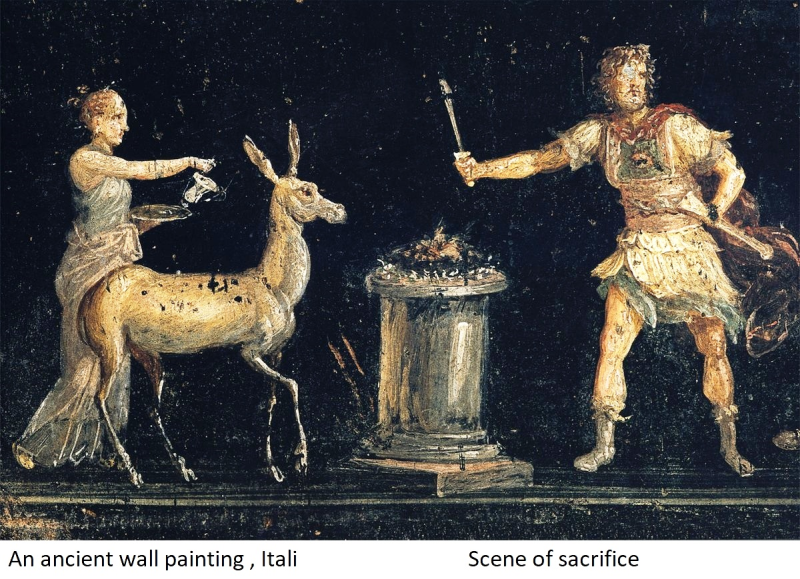
People from all over the world, in different cultures and religions, have practiced some form of sacrifice. Whether it was to please a god, seek forgiveness, or keep some kind of cosmic balance, it’s something humanity has been doing for thousands of years. But when we look at Jesus’ death on the cross, we see something that really stands out from the rest.
What makes it so different? Well, there are three big reasons: it was intentional, it was for everyone, and it was once and for all.
One of the most powerful things about Jesus’ death is that He wasn’t forced into it. In John 10:17-18, He says, “I lay down my life… No one takes it from me, but I lay it down of my own accord.” That’s huge. He didn’t get caught in the wrong place at the wrong time or die just for the sake of being a hero. He chose to die for a purpose.
Now, other traditions talk about noble deaths too. Think of Socrates, the Greek philosopher who drank poison rather than run away from what he believed in (Plato, Apology). That’s admirable, but it was more about personal honor. Similarly, in Hinduism, animal sacrifices in Vedic rituals (Rigveda, 10.91) aim to sustain cosmic order, not to personally bridge a gap between humanity and the divine. Jesus’ death, on the other hand, was meant to bring people back to God. He wasn’t just a martyr, He was both the priest and the sacrifice.
Another thing that makes Jesus’ sacrifice unique is that it wasn’t limited to just one group of people. Hebrews 10:10 says, “We have been made holy through the sacrifice of the body of Jesus Christ once for all.” That means it wasn’t just for the Jews, or for a certain tribe, or people from a certain time, it was for all of us.
Other religions had sacrifices too, but they were often done just for a specific community or to honor a local god. For example, the ancient Israelites had the Day of Atonement once a year, and only the high priest could do it, for Israel. And in some cultures like the Aztecs, sacrifices were made to specific gods in hopes of things like rain or victory in battle (Florentine Codex, Book 2). But Jesus’ sacrifice reached across time, culture, and race. It was global.
Most ancient sacrifices had to be repeated year after year, or even more often. It was never-ending. But Jesus’ death was different. Hebrews 9:26 says He “appeared once for all… to do away with sin by the sacrifice of himself.” That means it was complete. Done. No do-overs needed.
This stands in stark contrast to the cyclical sacrifices of ancient pagan religions, such as Rome’s suovetaurilia (Livy, History of Rome, 1.7), or even Buddhism’s karmic atonements, which rely on ongoing personal effort rather than a singular, completed act.
When you step back and look at the big picture, Jesus’ sacrifice isn’t just a church teaching, it’s something totally unique in all of history. Religious scholar Mircea Eliade, who studied sacrifice across many cultures, found sacrifice everywhere, but nothing quite like what Jesus did.
He wasn’t just another teacher or martyr. He was God in the flesh, choosing to give His life, for everyone, forever. And that’s what makes His sacrifice so different, and so deeply personal for each of us.
Life can throw some heavy punches, can’t it? For the believers in Thessalonica, those punches came in the form of persecutions, false teachings, and even some within their own community slacking off and stirring up trouble. Yet, in his second letter to them, Paul points to three timeless virtues (faith, hope, and love) as the keys to standing firm, no matter what others say or do. Rooted in knowing God’s word, these qualities enabled the Thessalonians to rise above their troubles and the “lowness” of their troublers.
Chapter 1: Enduring Through Faith, Hope, and Love
The Thessalonian church was under fire, literally and figuratively. They faced “persecutions and tribulations” (2 Thessalonians 1:4, KJV), likely from hostile neighbors or authorities who opposed their faith. Yet Paul couldn’t stop bragging about them: “We ourselves glory in you in the churches of God for your patience and faith in all your persecutions and tribulations that ye endure” (1:4). Their faith wasn’t just a Sunday morning nod to God; it was a steadfast trust in His promises, even when the world seemed against them. That faith, Paul says, was “growing exceedingly” (1:3), and their love for one another was increasing right alongside it.
But what kept them going? HOPE. Paul paints a vivid picture of hope tied to God’s justice and Christ’s return: “Seeing it is a righteous thing with God to recompense tribulation to them that trouble you; And to you who are troubled rest with us, when the Lord Jesus shall be revealed from heaven with his mighty angels” (1:6-7). The promise that God would deal with their troublers and grant them relief gave them a reason to hold on. This hope wasn’t wishful thinking, it was grounded in God’s word, which assured them that their suffering was “a manifest token of the righteous judgment of God” (1:5). Knowing God’s word fueled their faith to endure, their hope to look forward, and their love to care for one another, even under pressure. Paul prayed for this to continue, asking God to “fulfil all the good pleasure of his goodness, and the work of faith with power” (1:11).
So, what’s the lesson? When trouble comes (whether it’s people attacking your faith or life’s hardships piling up) lean into faith, hope, and love. Trust God’s word, hold fast to the promise of Christ’s return, and keep loving those around you. That’s how you stay faithful, no matter what others do.
Chapter 2: Standing Firm Against Deception
The troubles didn’t stop with persecution. Someone was spreading lies, maybe even claiming Paul’s authority, saying the day of the Lord had already come. This shook the Thessalonians, leaving them “troubled” and “shaken in mind” (2 Thessalonians 2:2). Imagine the confusion, thinking you missed the biggest event in history! But Paul steps in with clarity, urging them not to be “soon shaken in mind, or be troubled, neither by spirit, nor by word, nor by letter as from us” (2:2). He reminds them of God’s word, which he’d already taught: the day of the Lord won’t come until the “man of lawlessness” is revealed (2:3-4) and destroyed by Christ’s return (2:8).
Here’s where faith, hope, and love shine again. Their faith in the truth (God’s word) kept them from falling for deception. Paul calls them “brethren beloved of the Lord” (2:13), chosen for salvation “through sanctification of the Spirit and belief of the truth” (2:13; see John 17:17). That belief anchored them. Hope came from knowing Christ would return to set things right: “The Lord Jesus Christ… shall destroy with the brightness of his coming” (2:8). This hope steadied them against false alarms. And love? Paul prays for their hearts to be comforted and established “in every good word and work” (2:16-17), a call to keep loving and serving each other despite the chaos.
The troublers spreading lies were low, trying to unsettle God’s people. But Paul’s answer is clear: “Therefore, brethren, stand fast, and hold the traditions which ye have been taught, whether by word, or our epistle” (2:15). Stay rooted in God’s word. Let faith keep you grounded, hope keep you looking up, and love keep you moving forward. That’s how you abound, no matter what others say.
Chapter 3: Overcoming Internal Troubles
If external persecution and false teachings weren’t enough, the Thessalonians had trouble within their own ranks. Some believers were “walking disorderly,” refusing to work and meddling as busybodies (2 Thessalonians 3:6, 11). This idleness wasn’t just laziness, it disrupted the work of the church. Paul doesn’t mince words: “If any would not work, neither should he eat” (3:10). Yet even this discipline is rooted in love, as he urges the church to correct the idle “as a brother” (3:15), not an enemy.
Faith shows up in Paul’s confidence that the Thessalonians would stay faithful: “We have confidence in the Lord touching you, that ye both do and will do the things which we command you” (3:4). Their hope was tied to God’s word, which provided clear instructions for living, and to the promise of God’s peace: “Now the Lord of peace himself give you peace always by all means” (3:16). Love guided their response to the troublers within, balancing discipline with care, and Paul prayed that “the Lord direct your hearts into the love of God, and into the patient waiting for Christ” (3:5).
The idle were acting low, causing trouble by neglecting their responsibilities. But Paul calls the church to a higher standard: “Be not weary in well doing” (3:13). By staying faithful to God’s word (working diligently, loving one another, and holding fast to His commands) they could overcome even internal challenges.
Tying It All Together
What do we learn from the Thessalonians? Troubles and troublers come in many forms: persecutors who mock your faith, deceivers who twist the truth, or even fellow believers who let you down. But faith, hope, and love, rooted in knowing God’s word, are your strength. Faith keeps you trusting God’s truth, like the Thessalonians’ belief in the gospel (2:13) and obedience to Paul’s teaching (3:4). Hope lifts your eyes to God’s vengeance (1:6-9, 2:8) and Christ’s return (1:7, 2:8), assuring you that troubles won’t have the last word. Love binds you to your brothers and sisters, growing even in tough times (1:3) and guiding how you correct the wayward (3:15).
Knowing God’s word is the thread that ties it all together. It’s the foundation for faith, the source of hope, and the guide for love. The Thessalonians’ troubles didn’t define them, their faithfulness did. They stayed abounding, growing in faith and love (1:3), standing firm against lies (2:15), and doing good despite setbacks (3:13). So, when others try to drag you down with their words or actions, don’t stoop to their level. Hold fast to God’s word. Let faith, hope, and love keep you faithful and abounding, just as they did for the Thessalonians.





 Borger church of Christ @ Franklin & Juniper