“For the word of God is quick, and powerful, and sharper than any twoedged sword, piercing even to the dividing asunder of soul and spirit, and of the joints and marrow, and is a discerner of the thoughts and intents of the heart” (Hebrews 4:12).
I asked a fellow one day if he knew why people read the Bible daily. He said that he didn’t really know why. It got me thinking about why we ought to read the Bible.
In a world filled with confusion, relativism, and aimless wandering, we desperately need to immerse ourselves in the Bible, God’s inspired Word. As Ephesians 5:17 urges, we must not live foolishly but understand the WILL OF THE LORD, which is revealed clearly through Scripture. John 17:17 declares that GOD’S WORD IS TRUTH ITSELF; the objective anchor in an age of shifting sand of public opinions, guarding us from deception. Moreover, 1 Peter 3:15 tells us to always BE READY TO GIVE A DEFENSE FOR THE HOPE WITHIN US, a readiness that comes only from knowing and internalizing biblical truth. Finally, recognizing that it is not in man to direct his own steps (Jeremiah 10:23), we turn to Psalm 119:105, where GOD’S WORD BECOMES A LAMP TO OUR FEET AND A LIGHT TO OUR PATH, illuminating our purpose and guiding us safely through life’s journey. Without regular reading of the Bible, we stumble in darkness; with it, we walk confidently in God’s eternal direction.
Get A Bookmark; it’s the easiest Bible Reading Plan. A simple bookmark can be one of the most powerful tools for staying consistent in Bible reading, even without following a formal plan. Life is unpredictable with busy schedules, unexpected interruptions, and shifting priorities that can easily derail our good intentions to read Scripture daily. But a bookmark quietly solves this problem by marking exactly where we left off, so we know where to go when we pick back up the Bible again. No need to remember the last chapter or verse, no pressure to “catch up” on missed days, and no guilt over abandoning a rigid reading schedule. It allows us to resume right where we stopped, whether that was yesterday, or last week. This simple device keeps the habit alive, allowing steady progress through the Word over months and years. Over time, that humble bookmark becomes a faithful companion helping us build a lifelong rhythm of reading His Word; one verse, one chapter, one bookmark placement at a time.
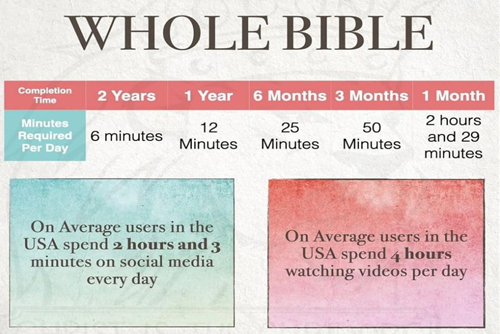
I have found it most effective to set a time to read each day. In the early years I would read just before bed (a great strategy if you’re trying to avoid screen time at the end of the day). This helped me to go to sleep with God’s word on my heart. Now a days I read in the mornings (Monday – Friday) following a 5-day reading plan to read through the whole bible in one year. May God’s word be a blessing to you as you read in 2026.
The Bible we hold today is a treasure, a book that has shaped lives for centuries. But how can we trust it’s the real deal, faithfully passed down through time? The early believers (often called church fathers) from the first few centuries after Christ give us compelling evidence that our Bible is reliable, rooted in their lives, writings, and devotion.
To begin with, people like Ignatius of Antioch and Polycarp, were taught by the apostles or their immediate followers. They didn’t just read about Jesus; they learned from those who walked with Him. Their writings, like Ignatius’ letters (circa 110 AD), echo the New Testament teachings, quoting books like Matthew, John, and Paul’s epistles as Scripture. For example, Ignatius references Jesus’ death and resurrection (Letter to the Smyrnaeans 1:1-2), aligning with 1 Corinthians 15:3-4. This shows the New Testament was already revered as God’s Word within a generation of the apostles, not some later invention.
Also, 2nd century believers defended the Bible’s truth against heresies. Irenaeus, in his Against Heresies (circa 180 AD), argued that the four Gospels (Matthew, Mark, Luke, and John) were uniquely authoritative, handed down through apostolic tradition. He tied their reliability to the Old Testament prophecies fulfilled in Christ, like Isaiah 53:5, which speaks of the Messiah’s suffering. Irenaeus’ work shows the early Church carefully preserved the Scriptures, ensuring no random texts slipped in. Their vigilance gives us confidence that our Bible matches what they held sacred.
Additionally, they sealed their trust in Scripture. Polycarp, martyred around 155 AD, faced death boldly, quoting Jesus’ words from Matthew 10:28: “Do not fear those who kill the body but cannot kill the soul.” His courage, recorded in The Martyrdom of Polycarp, proves he didn’t just believe the Bible, he staked his life on it. Countless others, like Justin Martyr, died for their faith, showing the Scriptures weren’t myths but truths worth everything. Their sacrifices declare to us: this Book is trustworthy. (BTW: their willingness to die wasn’t related in any way to a desire to kill as many folks as possible, as some religions do)
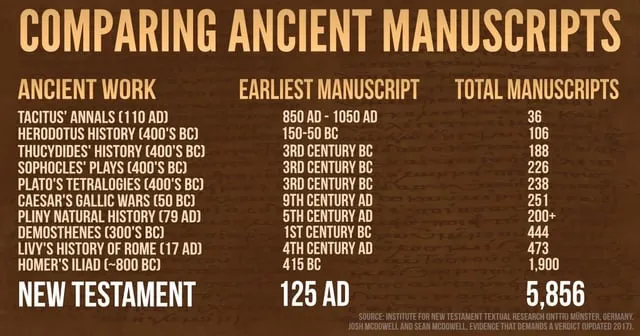
Finally, their meticulous copying and sharing of Scriptures ensured accuracy. Clement of Alexandria (c.150-c.215) and Origen (c.185-c.254) cataloged and taught from texts that match our modern Bible (long before the claims of the catholic church to have brought us the Bible), as seen in surviving manuscripts like the Codex Sinaiticus (4th century). Their efforts preserved God’s Word through persecution and time, a demonstration of faithfulness.
The early believers weren’t perfect, but their writings, lives, and love for Scripture shine as evidence: the Bible we have is the same one they cherished. They bridge the gap between us and the apostles, inviting us to trust God’s Word with the same fire they did.
The Bible stands firm because the early Church Fathers lived and died for it, passing down the truth we hold today.
How Long Would It Take to Teach the Whole Bible Three Times a Week?
While planning the Bible studies for this congregation, I wondered how long it would take to teach the entire Bible in depth in only our 3 sessions per week?
The schedule in question was familiar: two Bible classes each week, each about 45 minutes long but with an introduction, prayer, discussion, and summary that left roughly 30 minutes for actual material. The third session would be a sermon (possibly as long as 45 minutes) but in reality, I only have about 30 minutes. That gave me three half-hour teaching slots per week to teach.
There are several common methods of teaching Scripture, each has its own pace. The first and perhaps most obvious is the EXPOSITORY method; going chapter-by-chapter in order. At first glance, this seems easy to measure: 1,189 chapters, one per session, for 1,189 classes; about 7.6 years at three sessions per week. But here’s the reality: many chapters require a minimum of two or even three sessions to capture the fullness of their meaning. You could go chapter-per-session if you only did an overview, but true depth would extend the timeline significantly. Recognizing this reality, a book-by-book overview may pick up the pace, but no real depth will be accomplished.
Other methods would take different amounts of time. A topical study, covering 100 major subjects like baptism, love, faith, or the church and giving each three sessions, would total 300 lessons; just under 2 years. Character studies (looking at lives like Abraham, David, Peter, and Paul) might only take around 100 sessions if you covered about 50 people with two classes each. That’s less than a year. Thematic or doctrinal studies, following threads like covenant, kingdom, or grace from Genesis to Revelation, would run about 120 sessions, taking nine months. A chronological narrative, telling the Bible’s story in the order events happened, would be more ambitious: about 250 sessions, or 1.6 years.
If you stacked all these methods back-to-back without repeating material, the grand total would be 2,105 sessions. That’s about 13½ years of steady teaching (three times a week, every week). Start now and finish somewhere in the late 2030s. But here’s the twist: this assumes each important doctrine, like salvation in Christ, IS GIVEN ONLY ONCE. That would be like a wilderness wandering of teaching and never helping anyone actually enter the Promised Land. If salvation (and many other vital subjects) is left as a single stop along the way, we risk people hearing the gospel once every few years.
The truth is, many of these methods overlap, and rightly so. Some themes, especially the gospel of Christ, must resurface again and again no matter which teaching plan is in use. Whether chapter-by-chapter, book-by-book, or topic-by-topic, there must be repeated lessons on repentance, faith, and obedience. Yes, we could make a plan that takes a decade or more to cover everything, but if we’re truly guiding people toward salvation in Christ, we won’t wait until year seven to bring up the cross again.
“Jesus saith unto him, I am the way, the truth, and the life: no man cometh unto the Father, but by me.” (John 14:6)
Since Jesus is the only way to the Father, it stands to reason that we ought to know what He has said on the matter.
“And Jesus came and spake unto them, saying, All power is given unto me in heaven and in earth” (Matt 28:18).
Since Jesus has all power (authority), it stands to reason that we ought to know what He has commanded.
“And then will I profess unto them, I never knew you: depart from me, ye that work iniquity” (Matt 7:23).
Since Jesus will reject those that practice iniquity (lawlessness), it stands to reason that we ought to know what He considers lawful.
We’ll only know these things when we READ His word.
The things we’ve seen so far about how to READ the bible are, 1) Rightly dividing the word, which means to handle it accurately. 2) Examine the bible carefully; Examine ourselves by it, and Examine the teaching of others with it. In this article we’ll notice that the bible contains the Commands of the Lord.
One of the ice-breakers I use to talk with others about the bible is this question; “How do we know what God wants?” Over and over again people answer by saying, “you have to be quiet and listen,” “pray and ask,” “If God opens a way for something or closes a door at something, that’s how you’ll know.” After listing several of these, they may sometimes say, “oh, and the Bible.”
Ask any Christian this question and they will immediately say, “The Bible, specifically the New Testament.” Christians know and understand that “holy men of God spake as they were moved by the Holy Ghost” (1Pet 1:21b). Holy Spirit inspiration of God’s will was revealed to holy men, who then revealed it orally at the beginning, and then written for perpetuity. (1Cor 2:9-13; Joh 20:30-31; Eph 3:3-4; 2Tim 3:15-17). The New Testament is the will of our Lord and Savior Jesus Christ. Here are 3 things to consider about the New Testament.
First, the New Testament writings ARE THE COMMANDMENTS of the Lord. “If any man think himself to be a prophet, or spiritual, let him acknowledge that the things that I write unto you ARE THE COMMANDMENTS OF THE LORD [emphasis added]” (1Cor 14:37). After you read this, note what Jesus said during His time on earth.
“He that rejecteth me, and receiveth not my words, hath one that judgeth him: the word that I have spoken, the same shall judge him in the last day” (John 12:48). These two verses together are very impactful, but consider what will happen on the last day. “And I saw the dead, small and great, stand before God; and the books were opened: and another book was opened, which is the book of life: and the dead were judged out of those things which were written in the books, according to their works” (Rev 20:12).
What Books you ask? It’s clear that one of the books will be the words of Christ. Then, on that day, Jesus will say to some, “And why call ye me, Lord, Lord, and do not the things which I say” (Luke 6:46)? To those who have read His word, and done His will (Matt 7:24) shall hear these words, “Come, ye blessed of my Father, inherit the kingdom prepared for you from the foundation of the world” (Matt 25:34). The New Testament is the will of our Lord.
Second, before we can do His will, we must LOOK into His Law. James wrote, “But whoso looketh into the perfect law of liberty, and continueth therein, he being not a forgetful hearer, but a doer of the work, this man shall be blessed in his deed” (James 1:25). He then wrote in chapter two, “So speak ye, and so do, as they that shall be judged by the law of liberty” (2:12). James repeats what we’ve just learned, we shall be judged by the words, law of Christ. If we don’t know His will, we ought to LOOK into it.
Think about what King Josiah learned upon reading the will of God for His time. “And it came to pass, when the king had heard the words of the book of the law, that he rent his clothes. And the king commanded Hilkiah the priest, and Ahikam the son of Shaphan, and Achbor the son of Michaiah, and Shaphan the scribe, and Asahiah a servant of the king’s, saying, Go ye, enquire of the LORD for me, and for the people, and for all Judah, concerning the words of this book that is found: for great is the wrath of the LORD that is kindled against us, because our fathers have not hearkened unto the words of this book, to do according unto all that which is written concerning us” (2Kings 22:11-13). The New Testament is the will of our Lord.
Lastly, we need to LET His word dwell in our hearts. This speaks to reading, and learning. “Let the word of Christ dwell in you richly in all wisdom” Colossians 3:16a). Note again what James wrote, “But be ye doers of the word, and not hearers only, deceiving your own selves. For if any be a hearer of the word, and not a doer, he is like unto a man beholding his natural face in a glass: For he beholdeth himself, and goeth his way, and straightway forgetteth what manner of man he was. But whoso looketh into the perfect law of liberty, and continueth therein, he being not a forgetfulhearer, but a doer of the work, this man shall be blessed in his deed” (James 1:22-25) [emphasis added]. We need to read, understand, and apply it.
Peter, in his second letter to the Saints, repeatedly said that he wrote to “REMIND” them. To “put you always in remembrance of” (1:12), “putting you in remembrance” (1:13), “always in remembrance” (1:15), “by way of remembrance” (3:1). He was very direct about this point, “But he that lacketh these things is blind, and cannot see afar off, and hath forgotten that he was purged from his old sins” (2Pet 1:9).
O’ that we never FORGET the great things the Lord has done!!!
The New Testament is the will of our Lord. The things that are written ARE His commands. We ought to LOOK into His Law of Liberty. We must LET the word of Christ dwell in our hearts.
Agape,
Spencer
The Franklin & Juniper st church of Christ in Borger is very much involved in Bible reading and study. You’re invited to attend one of our services to hear the Gospel preached in plainness of speech easy to understand.
“Which are a shadow of things to come; but the body is of Christ.” (Col 2:17)
Jesus the Christ, is the main point of the bible which was in the mind of God before the foundation of the world. “Who verily was foreordained before the foundation of the world, but was manifest in these last times for you” (1Pet 1:20).
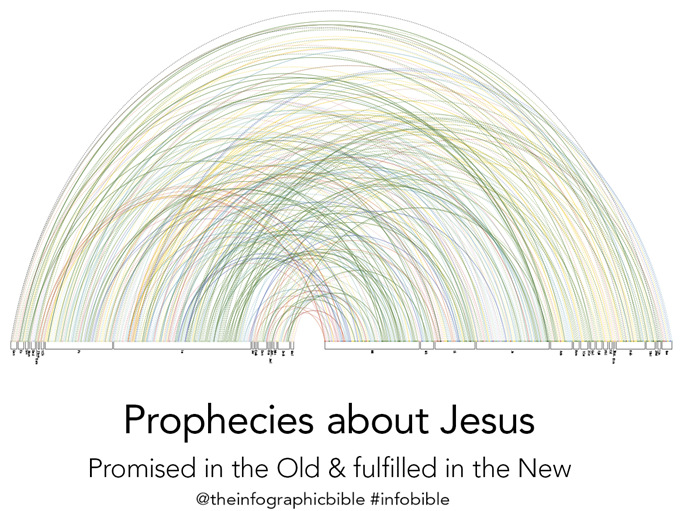
This means that the things written before in the Old Testament point to the things in the New Testament. This concept gives us better understanding of what Paul wrote in Rom 15:4, “For whatsoever things were written aforetime were written for our learning, that we through patience and comfort of the scriptures might have hope.”
While we cannot use the commands of the OT for doctrine today, we can look into the OT for the message of Christ. These messages are contained in Types and Shadows. “For the law having a shadow of good things to come, and not the very image of the things, can never with those sacrifices which they offered year by year continually make the comers thereunto perfect” (Heb 10:1).
Types and shadows are Old Testament people, events, or ceremony the foreshadow the coming Messiah and His church. We often use the terms “Type” and “Antitype. For some this can be confusing. The “TYPE” is the shadow of the real thing. The “ANTITYPE” is the real thing.
EVENTS, like the Flood, the Plagues of Egypt, the Passover, the Brazen Serpent, Crossing the Jordan, Cities of Refuge.
CEREMONIES, like the Offerings, Ceremonial Cleansing, Feasts, Year of Jubilee, Day of Atonement. To this could be added STRUCTURES, like the Ark, the Tabernacle, the Temple, and the furnishings in the temple. We would also include COLORS & NUMBERS.
Another way to describe these 3 types is as Historical, Legal, and Prophetic types.
The purpose of the SHADOWS.
The first purpose of the SHADOWS was to give a picture and outline representing something in the future. Especially the Scheme of Redemption. Such were the point of the SACRIFICES from patriarchal to Jewish age. (Heb 9, 10:18)
Another purpose of the type or shadow was as proof and as a demonstration of the Divine origin of the antitype. “And Moses verily was faithful in all his house, as a servant, for a testimony of those things which were to be spoken after; But Christ as a son over his own house; whose house are we, if we hold fast the confidence and the rejoicing of the hope firm unto the end” (Heb 3:5-6).
Here’s what is of powerful interest to us. The TYPES & SHADOWS must have originated by ONE who perfectly understood the antitype toward which the type or shadow pointed. God alone understood them from before, and could author them perfectly.
The Patriarchs and the Jews engaging in the events, setting up and writing on the types, could not understand them. Hence, they are not the originators of them. The Bible is all of God!!! This is another evidence for the validity of the Bible as being the Inspired Word of God.
The System of Sacrifices serve as a Shadow for the sacrifice of Christ.
“Which was a figure for the time then present, in which were offered both gifts and sacrifices, that could not make him that did the service perfect, as pertaining to the conscience; Which stood only in meats and drinks, and divers washings, and carnal ordinances, imposed on them until the time of reformation. But Christ being come an high priest of good things to come, by a greater and more perfect tabernacle, not made with hands, that is to say, not of this building; Neither by the blood of goats and calves, but by his own blood he entered in once into the holy place, having obtained eternal redemption for us. For if the blood of bulls and of goats, and the ashes of an heifer sprinkling the unclean, sanctifieth to the purifying of the flesh: How much more shall the blood of Christ, who through the eternal Spirit offered himself without spot to God, purge your conscience from dead works to serve the living God?” (Heb 9:9-14)
If you find reading the Old Testament boring, or you are unable to see its relevance, looking for the Types & Shadows may help you develop an excitement to read those things written before. The Old Testament is about Jesus. “Search the scriptures; for in them ye think ye have eternal life: and they are they which testify of me” (John 5:39).
Heb 8:1 Now this is the main point of the things we are saying: We have such an high priest, who is set on the right hand of the throne of the Majesty in the heavens;
Jesus is Seated at the right hand of the throne of the Majesty in the heavens. 1.
Jesus is A Minister, A Mediator, of a A Better covenant… 2,6.
“IWill…” Jeremiah 31:31-34; 8-12.
“A New Covenant.” 8:8, 13; Jer 31:31.
How is Jesus BETTER?
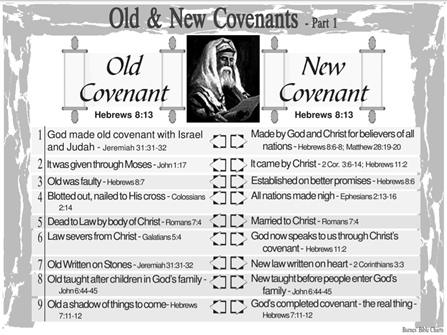
The Old Covenant is obsolete, growing old, and ready to vanish away. (now has vanished after the destruction of Jerusalem).
This topic is most often seen when those objecting to the practices of the New Covenant of Christ bring up…
Instrumental music in worship.
Sabbath Keeping.
Food restrictions.
Priests & Clergy Laity.
Saving the Thief on the cross.
misc. practices.
It is true that the Old Testament was written for our learning, it is not used to be used for doctrine under the New Covenant of Christ. [Rom 15:4; 1Cor 10:6,11].
If we understand the OT is over, we can answer the vast majority of challenges by denominations.
The Bible Calls the Law of Moses OLD.
We don’t call it OLD or New of ourselves, God calls it OLD. “In that he saith, A new covenant, he hath made the first old. Now that which decayeth and waxeth old is ready to vanish away.” [Heb 8:13]
The purpose of the Law of Moses was because of TRANSGRESSIONS.
If God had in mind a New Covenant, why did He make the Law of Moses? “It was added because of transgressions, till the seed should come to whom the promise was made; and it was ordained by angels in the hand of a mediator… Wherefore the law was our schoolmaster to bring us unto Christ, that we might be justified by faith.” [Gal 3:19-24]
The Bible also says that the Law of Moses is LIMITED, Faulty & Weak as compared to the Law of Christ.
“For it is not possible that the blood of bulls and of goats should take away sins.” [Heb 10:4]
“For if that first covenant had been faultless, then should no place have been sought for the second.” [Heb 8:7]
“But now, after that ye have known God, or rather are known of God, how turn ye again to the weak and beggarly elements, whereunto ye desire again to be in bondage?” [Gal 4:9]
These verses don’t teach that God made a mistake. They teach that the Old Covenant served a Temporary purpose, “to bring us to Christ.” [Gal 3:19-24].
When the Seed Promise, who is Christ, appeared, the Law of Moses was ABOLISHED on the cross.
“Blotting out the handwriting of ordinances that was against us, which was contrary to us, and took it out of the way, nailing it to his cross;” [Col 2:14]
“Having abolished in his flesh the enmity, even the law of commandments contained in ordinances; for to make in himself of twain one new man, so making peace; And that he might reconcile both unto God in one body by the cross, having slain the enmity thereby:” [Eph 2:15-16]
What does OLD, LIMITED, ABOLISHED, & WEAK, mean to you?
Lastly, the Law of Moses WAS a SHADOW of good things to come.
“For the law having a shadow of good things to come, and not the very image of the things, can never with those sacrifices which they offered year by year continually make the comers thereunto perfect.” [Heb 10:1]
“Which are a shadow of things to come; but the body is of Christ.” [Col 2:16-17]
“But Christ being come an high priest of good things to come, by a greater and more perfect tabernacle, not made with hands, that is to say, not of this building;” [Heb 9:11]
“Who serve unto the example and shadow of heavenly things, as Moses was admonished of God when he was about to make the tabernacle:” [Heb 8:5]
When presented with these truths, some may ask, “Why then do we study the Old Testament?” This is a great question which God answers in His word. It is for our learning from their examples [1Cor 10:6,11]. What should we learn? Let’s read…
“Now these things were our examples, to the intent we should not lust after evil things, as they also lusted. Neither be ye idolaters, as were some of them; as it is written, The people sat down to eat and drink, and rose up to play. Neither let us commit fornication, as some of them committed, and fell in one day three and twenty thousand. Neither let us tempt Christ, as some of them also tempted, and were destroyed of serpents. Neither murmur ye, as some of them also murmured, and were destroyed of the destroyer. Now all these things happened unto them for ensamples: and they are written for our admonition, upon whom the ends of the world are come.”
Just because the Law of Moses was abolished DOES NOT MEAN there is no Law nor Doctrine. That’s another mistake being made.
“Bear ye one another’s burdens, and so fulfil the law of Christ.”
[Gal 6:2]
“Whosoever transgresseth, and abideth not in the doctrine of Christ, hath not God. He that abideth in the doctrine of Christ, he hath both the Father and the Son.” [2John 1:9; Heb 6:1]
Read that again; “…through the comfort of the scriptures we might have hope.” Did you catch it? Paul was referring to the Old Testament scriptures, and that those scriptures can give us comfort and hope.
I know many that find the Old Testament unpalatable, being too disgusting and violent. While it’s true that the OT is full of those things, the Holy Spirit has revealed that through them we may have COMFORT and HOPE.
The new year is upon us. Let’s renew our efforts to read for COMFORT and HOPE.
The first thing we can notice is that CHRIST is in the Old Testament. “Search the scriptures; for in them ye think ye have eternal life: and they are they which testify of me.” Jesus taught of Himself to those on the road to Emmaus, and they said, “Was not our heart burning within us, while he spake to us in the way, while he opened to us the scriptures?” [John 5:39; Luke 24:13-27,32]
Paul wrote in two of his letters saying the scriptures were written for OUR Learning and OUR admonition upon whom the end of the age are come. We have a huge advantage in that we have the full revelation of Jesus Christ. [Rom 15:4; 1Cor 10:11]
In the letter to the Corinthians he wrote about those God brought out of Egypt, “Howbeit withMOSTof them God was not well pleased: for they were overthrown in the wilderness. Now these things were our examples, to the intent we should not lust after evil things, as they also lusted. We always learn by others example or experiences. The Old Testament scriptures reveal both good and negative examples. It is foolish to try to learn from just your own mistakes. You may never recover! [1Cor 10:1-13]
A major lesson the entire world needed from the very first day of man in the Garden until now is to learn the FEAR of the Lord. Every generation, every person must learn this. The Old Testament teaches this lesson over and over through the example of those that disobeyed God. “And unto man he said, Behold, the fear of the Lord, that is wisdom; And to depart from evil is understanding.” Some dislike this idea of the FEAR of the Lord, but they misunderstand. If you’re in Christ through faithful baptism, you will have a reverential fear. But if not, you ought to have a terror type fear. “Knowing therefore the terror of the Lord, we persuade men.” [Job 28:28; 2Cor 5:11; cr Prov 1:7; Ecc 12:13; Mat 10:28]
Another lesson is that the OLDCovenant was hard, really hard. By reading Leviticus & Deuteronomy (reading through Romans & Hebrews also) we can see that the Law of Moses went well beyond the 10 Commandments. The Jewish traditions teach that there are about 613 commandments. But now we are under the Liberty of Christ. “A better covenant, which hath been enacted upon better promises.” We are no longer under the bondage of the OLD testament system that couldn’t remove sins, but left a reminder of sin year by year. “Thanks be to God for his unspeakable gift.” [Heb 8:6; Gal 2:4; 4:3, 9, 24, 25; 5:1]
The Law of Moses has been REMOVED & REPLACED by the Love and Blood of Christ on that cross. Having abolished in his flesh the enmity, even the law of commandments. We now live under grace through the doctrine of Christ. [Col 2:12-14; Eph 2:15; 2John 1:9]
Finally, we can use both the Old and the New Testament scriptures to TEST the spirits. The Bereans were “more noble than those in Thessalonica, in that they received the word with all readiness of the mind, examining the Scriptures daily, whether these things were so.” Who’s teaching where they testing? It was the Apostle Paul’s delivered to him through the inspiration of the Holy Spirit, AND THEY ARE CALLED MORE NOBLE! [Acts 17:11; Eph 3:3-4; cr. 1Thess 5:21; 1John 4:1-4; Deut 13:1-11; 18:20-22]
We need not abhor the OT scriptures for in them is COMFORT and HOPE.
OBJECTIONS #8; Appeal to the Old Testament for doctrine.
This objection sounds like this; “David used a harp and wrote about it in Psalms.”
“Blotting out the handwriting of ordinances that was against us, which was contrary to us, and took it out of the way, nailing it to his cross;” Col 2:14
I met a person once that was starting a new denomination based on all the feast days in the Old Testament Law of Moses. This is just one example of many where people look to the Old Testament to find doctrine or practices today. It becomes a buffet of picking and choosing based on personal taste, or in this case, a BBQ buffet.
How come nobody ever goes back and brings forward stoning of the disobedient? (there was one guy that wrote a book about trying to live under the Law of Moses. He carried small pebbles around and flicked them at folks.) Yet, they’ll go back and grab any number of things from the Old Testament.
The easy answer is in Galatians chapter 5:1-4; “Stand fast therefore in the liberty wherewith Christ hath made us free, and be not entangled again with the yoke of bondage. Behold, I Paul say unto you, that if ye be circumcised, Christ shall profit you nothing. For I testify again to every man that is circumcised, that he is a debtor to do the whole law. Christ is become of no effect unto you, whosoever of you are justified by the law; ye are fallen from grace.”
As you can see, the Law of Moses has been fulfilled and if you intend to appeal to any part of it then you’re obligated to keep the entirety of it. This drops you from Christ.
Here are a few more points about why we don’t appeal to the Old Testament for authority, doctrine or practices today.
First, the Old was, well… OLD. Hebrews 8:13 speaks about the better New covenant in Christ rendering the first old.
Next, the OT was given because of TRANSGRESSIONS, “till the seed should come to whom the promise was made.” [Gal 3:19] Once the one promised came, fulfilling the Old Law, why would you go back and bring anything forward?
We should then note that the OT was LIMITED in that it was impossible for the blood of bulls and of goats should take away sins. [Heb 10:4]. Christ’s sacrifice did what the Law of Moses only foreshadowed [Heb 9:12]. The New Testament writers also calls it, ‘faulty’ [Heb 8:7], and ‘weak’ [Gal 4:9].
Continuing on, we find the Law of Moses was ABOLISHED at the death of Christ. “Blotting out the handwriting of ordinances that was against us, which was contrary to us, and took it out of the way, nailing it to his cross;” [Col 2:14]. Paul wrote in Ephesians 2:15; “Having abolished in his flesh the enmity, even the law of commandments contained in ordinances; for to make in himself of twain one new man, so making peace;”
Finally, the Holy Spirit says that the Law of Moses WAS A SHADOW of good things to come [Heb 10:1]. If there was something good coming, and the real thing is in life of Jesus, why would you want to go back to the shadow?
There are several places in the New Testament that explain the shadows from the Old Testament and their application to Christ;
1COR 10:11 EXAMPLES.
Col 2:17 Which are a shadow of things to come;
Hagar, Ishmael, Sarah, Isaac; GAL 4:22-31.
Moses; Deut 18:15; Acts 3:22; Heb 3
We find our authority in Jesus. God said, “Hear ye Him.” [Mark 9:7]. The Hebrew writer opens the book with; “God, who at sundry times and in divers manners spake in time past unto the fathers by the prophets, Hath in these last days spoken unto us by his Son, whom he hath appointed heir of all things, by whom also he made the worlds;” [Heb 1:1-2]
We find our authority from those who were given the revelation of the Lord’s will and wrote it for us in the New Testament writings. “If any man think himself to be a prophet, or spiritual, let him acknowledge that the things that I write unto you are the commandments of the Lord.” [1Cor 14:37]
“For this cause I Paul, the prisoner of Jesus Christ for you Gentiles, If ye have heard of the dispensation of the grace of God which is given me to you-ward: How that by revelation he made known unto me the mystery; (as I wrote afore in few words, Whereby, when ye read, ye may understand my knowledge in the mystery of Christ.)” [Eph 3:1-4]
“Christ is become of no effect unto you, whosoever of you are justified by the law; ye are fallen from grace.” [Galatians 5:4]
This passage in Galatians is a warning for Christians that keeping any part of the Law of Moses will take you out of the grace of Christ. Some try to reinterpret it as a faith only passage. Not so. The followers of Christ are to be command keepers [Mat 7:21-23; Luke 6:46] of His New Covenant.
There is a reason why the churches of Christ do what they do (a Capella singing, simple worship, weekly observance of the Lord’s Supper). We recognize Christ as our Head [Col 1:18], He has all authority [Mat 28:18] and those that love Him will keep HIS commandments [John 14:15]. God the Father said this, “This is my beloved Son: hear him.” [Mark 9:7] This means that we listen to Jesus, not Moses, and especially not any man nor man made religion.
Jesus promised to build His church [Mat 16:18], and that this church [which is His kingdom Col 1:13] will begin within the lifetime of those that heard him [Mark 9:1]. On the first Pentecost after His resurrection, [Acts 2:1–47] the church began. No one spoke of it being in existence before that day, and thereafter it’s spoken of as being in existence.
The guiding rules of faith and practices are found in the covenant from Jesus, as delivered by the Holy Spirit [John 16:13; Eph 3:1-4] and not the Law of Moses from Mt. Sinai.
We need to pay attention to what The Holy Spirit reveals in the New Testament about the change from the Law of Moses to the Law of Christ.
• Hear Jesus, not Moses [Mat 17:5; Mark 9:7].
• Preach the gospel [Mat 28:18–20].
• The Word of Christ Judges [John 12:48].
• Dead to the Law of Moses [Romans 7:1–7].
• “Christ is the end of the law” [Romans 10:4].
• “Engraven in stones…done away” [2Cor 3:7–14].
• Broken down the wall [Eph 2:14].
• Nailing it to His cross [Col 2:14].
• A Priesthood change required a Law change [Hebrews 7:12; 9:11].
• He is the mediator of the new testament [Hebrews 9:16–17].
• He (Jesus) taketh away the first, that he may establish the second. [Hebrews 10:9].
No longer does man offer animals to atone for sin. “For it is not possible that the blood of bulls and of goats should take away sins.” [Heb 10:4] Jesus shed His blood “once for all” and has “sat down on the right hand of God.” [Heb 10:12]
No longer does man keep the Passover, abstain from certain foods nor keep certain days [Col 2:14-17]. No longer do we need a special group of priests, for those added to the church are now a ‘royal priesthood’ [1Pet 2:9]. This new Law of Christ doesn’t require it, and to revert to it is to sin against the One who shed His blood, ‘ye have fallen from Grace.’
In the New Testament, no longer do we burn incense, build temples (we are the temple Eph 2:21), dance or play instruments. Did God leave New Testament worship up for us to decide? No, God tells us what He wants, and we do it [Mat 28:20]. We are given unleavened bread, fruit of the vine, prayers, vocal singing, giving & teaching.
The Old Testament is for our learning, not for New Testament law. “For whatsoever things were written aforetime were written for our learning,” [Rom 15:4]. We should read the Old Testament to learn about many things, some of which is how God communicates with and how He instructs man. However, to go back to the Law of Moses to bring forward any practice (musical instruments, clergy / laity, feasts) will remove you from the grace of Christ and obligate you to do it all. You will have fallen from Grace.
We here at the Franklin & Juniper church of Christ practice New Testament Christianity with the Bible as our creed book. We Welcome you to come find out what the Bible says.





 Borger church of Christ @ Franklin & Juniper