“Blessed be the God and Father of our Lord Jesus Christ, who hath blessed us with all spiritual blessings in heavenly places in Christ” (Eph 1:3)
The main spiritual blessing found only in Christ is the forgiveness of sins. Some erroneously say one can never lose salvation, while others claim we are immediately lost every time we stumble.
John wrote to the disciples so we may know that we have eternal life. “These things have I written unto you that believe on the name of the Son of God; that ye may know that ye have eternal life, and that ye may believe on the name of the Son of God” (1John 5:17). The written words of the New Testament give us this assurance. Let us consider a few simple questions that help us know where we stand.
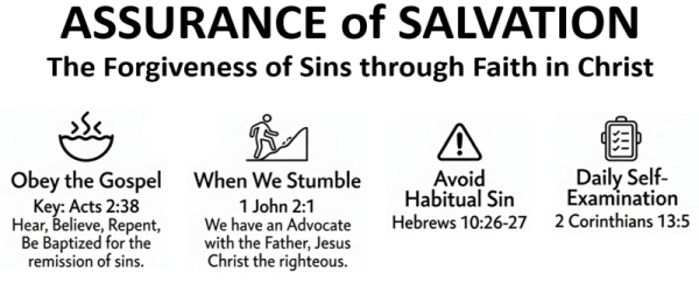
Have we Heard and Obeyed the Gospel (2Thess 1:8)? (see the here for a simple outline of God’s plan of salvation). Assurance begins with a clear and obedient response to the gospel of Christ. The New Testament presents a consistent pattern for entering into Christ and remaining in Him. “Repent, and be baptized every one of you in the name of Jesus Christ for the remission of sins, and ye shall receive the gift of the Holy Ghost” (Acts 2:38). If we have obeyed the gospel of Jesus Christ, we have the forgiveness of sins.
What happens we do when we stumble? John acknowledged that we all sin at times, yet he pointed us to the remedy. “My little children, these things write I unto you, that ye sin not. And if any man sin, we have an advocate with the Father, Jesus Christ the righteous” (1 John 2:1; see also 1:7–2:2). John’s first letter distinguishes between the person who lives in habitual sin and the one who stumbles but turns back to the Lord.
Are we Knowingly, Willingly, and Habitually Violating the Doctrine of Christ Without Repentance? Assurance is not for those who deliberately and persistently reject the teaching of Christ while claiming faith. The New Testament issues solemn warnings; “For if we go on sinning deliberately after receiving the knowledge of the truth, there no longer remains a sacrifice for sins, but a fearful expectation of judgment” (Hebrews 10:26-27). Even in such a condition, repentance remains possible, as the example of Simon in Acts 8:18-24 shows.
Finally, are we practicing self-examination daily? True assurance involves honest, ongoing self-examination in light of Scripture, preparing us for the final judgment. “Examine yourselves, to see whether you are in the faith. Test yourselves” (2 Corinthians 13:5).
John was telling the truth when he said that that through these things “ye may know that ye have eternal life.” There are many things we do not know, but through faith which comes from reading, studying, and obeying God’s word, we can know the truth and be set free.
“Go ye therefore, and teach all nations, baptizing them in the name of the Father, and of the Son, and of the Holy Ghost:” (Matt 28:19).
Who does what? This may appear like a simple question to you, but some are making it difficult and are opposing Jesus’ commands on how to be saved. Here’s how the objection sounds; “Water is not stated in that verse therefore it’s Holy Spirit baptism.” They will make this claim in all the places that baptism is commanded, (see Acts 2:38; 8:12; 9:1-18; 22:16; 16:15; 25-34).
There are several ways to answer this objection but let’s just look at a simple and logical one; Answer the question: Who is being commanded to do what?
In every case that a command is given, the one receiving the command is the one expected to perform it. This includes both inward actions (faith, believing, repentance, loving) and outward actions (going, teaching, baptizing, praying, singing, giving). Scripture never presents a command that is fulfilled by another person performing the commanded action in the place of the one commanded. In other words, the command is being given to people to do, therefore people comply with the action being commanded.
Faith is not excluded from this principle simply because it is inward. • Jesus commanded: “Believe the gospel.” (Mark 1:15); • Paul told the jailer: “Believe on the Lord Jesus Christ.” (Acts 16:31); • John writes: “This is his commandment, That we should believe on the name of his Son Jesus Christ.” (1 John 3:23);
Believing is therefore something the hearer is commanded to do. Likewise: • Repent (Acts 17:30); • Confess (Romans 10:9-10); • Continue in the faith (Colossians 1:23).
These are personal responses. Although invisible to others, they are nevertheless actions of the person commanded. (this same reasoning answers other similar objections).
Back to Matthew 28:19; what kind of baptism can a person administer who is commanded to “go…baptizing them”? A human being cannot administer: the baptism of the Holy Spirit, nor the baptism of fire. John the Baptist distinguished these. “I indeed baptize you with water unto repentance… he shall baptize you with the Holy Ghost, and with fire” (Matthew 3:11). Notice the distinction. John administered water baptism. Christ administers Holy Spirit baptism. The administrator identifies the baptism. Only Jesus is ever said to baptize with the Holy Spirit. No apostle is ever commanded to baptize anyone with the Holy Spirit. But the apostles are commanded to baptize. Therefore, the baptism they administer must be one that men can administer. That baptism is water baptism.
Matthew 28 does not have to mention water explicitly. It identifies the administrator. Once Scripture identifies that men are to administer the baptism, the only baptism men are ever shown administering is water baptism.
Necessary inference. When Scripture gives a command: • The person commanded is responsible for performing the commanded action. • Matthew 28:19 commands people to baptize. • People can administer only water baptism. • Therefore, the baptism commanded in Matthew 28:19 is water baptism administered by one person to another.
Agape Spencer
BONUS ANSWER: Acts 8:34-39 “And the eunuch answered Philip, and said, I pray thee, of whom speaketh the prophet this? of himself, or of some other man? 35 Then Philip opened his mouth, and began at the same scripture, and preached unto him Jesus. 36 And as they went on their way, they came unto a certain water: and the eunuch said, See, here is water; what doth hinder me to be baptized? 37 And Philip said, If thou believest with all thine heart, thou mayest. And he answered and said, I believe that Jesus Christ is the Son of God. 38 And he commanded the chariot to stand still: and they went down both into the water, both Philip and the eunuch; and he baptized him. 39 And when they were come up out of the water, the Spirit of the Lord caught away Philip, that the eunuch saw him no more: and he went on his way rejoicing.”
What Inescapable conclusions do you draw from this passage?
Far from a mere ritual, BAPTISM is a divinely ordained step that aligns believers with Christ’s redemptive work. Through baptism, individuals experience a cleansing of sins, union with Christ’s church, salvation, and an inheritance as heirs of God’s promises.
1. Washing Away Our Sins
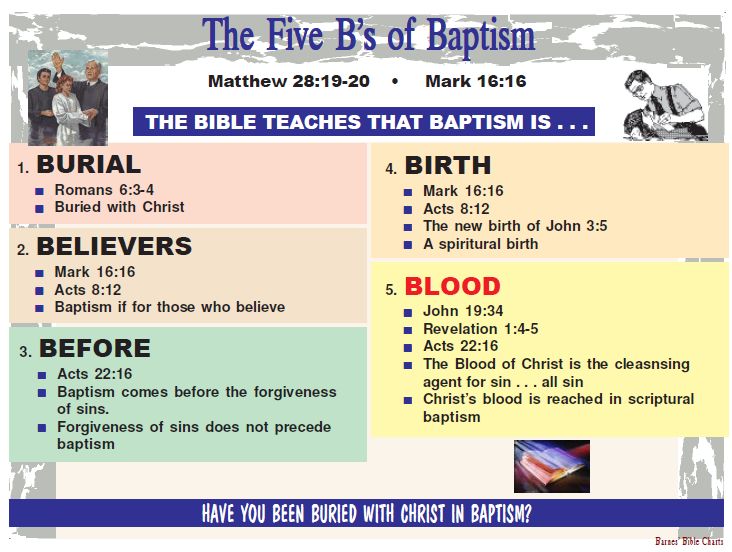
Baptism serves as a divine act of cleansing, washing away the stain of sin. In Acts 22:16, Ananias urges Saul, “And now why do you wait? Rise and be baptized and wash away your sins, calling on his name.” This passage emphasizes baptism’s role in cleansing the believer’s conscience before God. Similarly, Acts 2:38 declares, “Repent and be baptized every one of you in the name of Jesus Christ for the forgiveness of your sins, and you will receive the gift of the Holy Spirit.” Here, baptism is linked directly to the remission of sins and the reception of the Holy Spirit. Additionally, Matthew 26:28 connects the concept of forgiveness to Christ’s sacrifice: “For this is my blood of the covenant, which is poured out for many for the forgiveness of sins.” Baptism, therefore, is the moment when a believer appropriates the forgiveness secured by Christ’s blood. Supporting this, Ephesians 5:26 describes Christ sanctifying the church “by the washing of water with the word,” reinforcing baptism’s cleansing power.
2. Added to the Church That Christ Built
Through baptism, believers are united with the body of Christ, the church He established. Acts 2:47 states, “And the Lord added to their number day by day those who were being saved.” This follows the account of 3,000 souls being baptized and added to the church after Peter’s sermon (Acts 2:41). Baptism is the entry point into Christ’s church, as seen in 1 Corinthians 12:13: “For in one Spirit we were all baptized into one body—Jews or Greeks, slaves or free—and all were made to drink of one Spirit.” This passage highlights the unity of believers in the church through baptism. Additionally, Colossians 1:18 affirms Christ as “the head of the body, the church,” underscoring that baptism incorporates individuals into this divine institution, built by Christ Himself (Matthew 16:18).
3. Saved Through Baptism
Baptism is intricately tied to salvation, as it is the moment when a believer’s faith is actualized in obedience to God’s command. 1 Peter 3:21 explicitly states, “Baptism, which corresponds to this, now saves you, not as a removal of dirt from the body but as an appeal to God for a good conscience, through the resurrection of Jesus Christ.” This verse clarifies that baptism is not a mere physical cleansing but a spiritual act that appeals to God for salvation. Mark 16:16 further supports this: “Whoever believes and is baptized will be saved, but whoever does not believe will be condemned.” The connection between baptism and salvation is also evident in Romans 6:3-4, which describes believers being “baptized into his death” and raised to “walk in newness of life,” symbolizing the transformative power of baptism in securing salvation.
4. Becoming Heirs of Abraham
Baptism establishes believers as heirs of the promises made to Abraham, uniting them in God’s covenant family. Galatians 3:27-29 explains, “For as many of you as were baptized into Christ have put on Christ… And if you are Christ’s, then you are Abraham’s offspring, heirs according to promise.” Through baptism, believers become part of the spiritual lineage of Abraham, inheriting the blessings of God’s covenant. Romans 4:16 reinforces this, stating that the promise to Abraham comes “to the one who shares the faith of Abraham, who is the father of us all.” Additionally, Ephesians 3:6 affirms that through the gospel, Gentiles are “fellow heirs” with Israel, a reality actualized in baptism as believers are incorporated into Christ’s body.
5. Putting on Christ
In baptism, believers clothe themselves with Christ, taking on His identity and righteousness. Galatians 3:27 declares, “For as many of you as were baptized into Christ have put on Christ.” This vivid imagery portrays baptism as the moment when a believer is enveloped in Christ’s nature. Romans 13:14 echoes this, urging believers to “put on the Lord Jesus Christ,” a process initiated at baptism. Colossians 3:9-10 further supports this idea, describing believers as having “put off the old self with its practices and… put on the new self,” a transformation that begins with baptism’s symbolic burial and resurrection (Colossians 2:12).
6. Becoming a Disciple of Christ
Baptism marks the beginning of a life of discipleship, as believers commit to following Christ. Matthew 28:19 commands, “Go therefore and make disciples of all nations, baptizing them in the name of the Father and of the Son and of the Holy Spirit.” Baptism is the initiatory step in making disciples, signifying a public commitment to Christ’s teachings. Acts 8:12 illustrates this: “But when they believed Philip as he preached good news… they were baptized, both men and women,” showing that baptism follows belief and marks the start of discipleship. John 3:5 further emphasizes baptism’s role in entering the kingdom of God: “Unless one is born of water and the Spirit, he cannot enter the kingdom of God,” linking baptism to the disciple’s journey of faith.
Baptism is far more than a symbolic act; it is a transformative moment in the believer’s life, rich with spiritual significance. Through baptism, sins are washed away, believers are added to Christ’s church, salvation is received, the promises to Abraham are inherited, Christ is put on, and a lifelong journey of discipleship begins. These truths, grounded in Scripture, underscore baptism’s ESSENTIAL role in the Christian faith.
“Ye ask, and receive not, because ye ask amiss, that ye may consume it upon your lusts.” (James 4:3)
If one can pray AMISS, then it stands to reason that we can do other commands of God in a manner that He won’t accept. There are examples of people…
Preaching a different Gospel: “But though we, or an angel from heaven, preach any other gospel unto you than that which we have preached unto you, let him be accursed.” (Gal 1:8)
Following a different Jesus: “For if he that cometh preacheth another Jesus, whom we have not preached, or if ye receive another spirit, which ye have not received, or another gospel, which ye have not accepted, ye might well bear with him.” (2Cor 11:4)
Obeying the Law of Moses: “And certain men which came down from Judaea taught the brethren, and said, Except ye be circumcised after the manner of Moses, ye cannot be saved.” (Acts 15:1)
“Stand fast therefore in the liberty wherewith Christ hath made us free, and be not entangled again with the yoke of bondage. Behold, I Paul say unto you, that if ye be circumcised, Christ shall profit you nothing. For I testify again to every man that is circumcised, that he is a debtor to do the whole law. Christ is become of no effect unto you, whosoever of you are justified by the law; ye are fallen from grace.” (Gal 5:1-4)
Practicing vain worship: “Howbeit in vain do they worship me, teaching for doctrines the commandments of men.” (Mark 7:7)
From these few examples it’s clear that we can appear to be obeying God, but in reality, we’re disobedient. How can we know?
Can we be Baptized AMISS?
If you’ve been baptized to be ADDED to a denomination, then you’ve been baptized AMISS.
The Lord adds to the church, and never to a denomination. “Then they that gladly received his word were baptized: and the same day there were added unto them about three thousand souls.” (Acts 2:41).
Getting baptized solely as a requirement to join a specific denomination or church, rather than for the biblical purpose of remission of sins and entrance into the body of Christ (Galatians 3:27), misses the true purpose (cf. 1Cor 1:10-13).
Some might get baptized to gain favor in a political or social context, which is not a biblical reason. Some might seek baptism to gain prestige or authority within a religious community, which is not a biblical reason.
If you’ve been baptized as a MERITORIOUS work, then you’ve been baptized AMISS.
Some believe that baptism is a meritorious work that earns salvation, whereas the New Testament teaches that baptism is an act of faith and obedience (Ephesians 2:8-9; Colossians 2:12). It is not legalism to comply with the conditions of salvation given by God.
Any reason for baptism except to obey the gospel through faith in Jesus Christ for the remission of sins is no reason at all. It’s possible to outwardly comply with a command of God, but inwardly. “This people draweth nigh unto me with their mouth, and honoureth me with their lips; but their heart is far from me. But in vain they do worship me, teaching for doctrines the commandments of men.” (Matt 15:8,9)
Believing that baptism will bring material or physical blessings, such as health, wealth, or prosperity, is not a biblical reason for baptism. Repentance is a prerequisite for baptism (Acts 2:38).
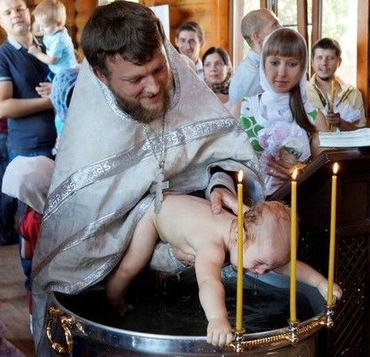
If you’ve been baptized as an INFANT or by any mode other than IMMERSION, then you’ve been baptized AMISS.
Infant baptism is contrary to the doctrine of Christ. “Suffer the little children to come unto me, and forbid them not: for of such is the kingdom of God. Verily I say unto you, Whosoever shall not receive the kingdom of God as a little child, he shall not enter therein.” (Mark 10:14,15). To Cleanse from Original Sin is not a doctrine taught in the New Testament. The doctrine of original sin and its cleansing through infant baptism is not supported by the Bible, which teaches that baptism is for the remission of personal sins (Acts 2:38).
Baptism is a burial (immersion in water) for those that believe. “Buried with him in baptism, wherein also ye are risen with him through the faith of the operation of God, who hath raised him from the dead.” (Col 2:12). Getting baptized without personal faith and understanding, possibly under coercion or pressure, is not scriptural. Baptism requires belief.
“And as they went on their way, they came unto a certain water: and the eunuch said, See, here is water; what doth hinder me to be baptized? And Philip said, If thou believest with all thine heart, thou mayest. And he answered and said, I believe that Jesus Christ is the Son of God.” (Acts 8:36,37)
If you’ve been baptized after you think you were SAVED, then you’ve been baptized AMISS.
The bible teaches that a person is baptized to be saved. “The like figure whereunto even baptism doth also now save us (not the putting away of the filth of the flesh, but the answer of a good conscience toward God,) by the resurrection of Jesus Christ:” (1Peter 3:21).
Saul of Tarsus (later to become Paul the Apostle), was baptized to wash away his sins. How can one be saved then have their sins washed away? “And now why tarriest thou? arise, and be baptized, and wash away thy sins, calling on the name of the Lord.” (Acts 22:16)
The idea that baptism is merely a symbolic public declaration of faith without any salvific purpose contradicts the biblical teaching that it is essential for the forgiveness of sins (Acts 2:38).
Viewing baptism as merely a religious tradition or ritual without understanding its significance in salvation contradicts the New Testament teaching (Romans 6:3-4).
If you’ve been baptized for SOCIAL acceptance, then you’ve been baptized AMISS.
There are some who are baptized for social acceptance among their Family or friends, or to fit in. Some have been baptized to make their parents happy. Some are baptized so they can make a future spouse happy. If we’re baptized to please a person and not for the remission of sins, then we’ve been baptized amiss. It’s a very nervous thing for parents who desire that their children obey the gospel, but they want it to be on the child’s own volition and not just to please their parents.
Jesus taught about counting the cost of discipleship (Luke 14:28-33). Baptism should not be entered into lightly or without understanding its lifelong commitment. The concept of being baptized because one has already been saved through a prior “decision” for Christ overlooks the New Testament’s connection of baptism with the forgiveness of sins and new birth (Acts 22:16; John 3:5).
I know of several young people who get baptized because their older peers had obeyed the gospel, rather than out of personal conviction and obedience to Christ. because they didn’t want to feel left out.
“He that believeth and is baptized shall be saved; but he that believeth not shall be damned.”
(Mark 16:16)
There are other reasons people give for baptism. The practice of baptism for the dead, as practiced in some religious groups, is not supported by New Testament teaching and is mentioned only ambiguously in 1 Corinthians 15:29 without endorsement.
The idea that baptism is an emergency ritual to be performed in dire circumstances, without the individual’s faith and understanding, does not align with the New Testament teaching.
Any reason for baptism that does not align with the biblical teaching that it is for the remission of sins, to receive the gift of the Holy Spirit, and to be added to the body of Christ (Acts 2:38; 1Corinthians 12:13) is not according to the Bible.
It is crucial to emphasize that baptism, according to the New Testament, is an act of faith and obedience, necessary for the forgiveness of sins, the gift of the Holy Spirit, and entrance into the body of Christ (Acts 2:38; Romans 6:3-4; Galatians 3:27).
“For by grace are ye saved through faith; and that not of yourselves: it is the gift of God:” Eph 2:8
“But without faith it is impossible to please him: for he that cometh to God must believe that he is, and that he is a rewarder of them that diligently seek him.” Heb 11:6
FAITH without WORKS is dead being alone.
“Ye see then how that by works a man is justified, and not by faith only.” James 2:24
There are no WORKS of God to save without GRACE.
“Buried with him in baptism, wherein also ye are risen with him through the faith of the operation of God, who hath raised him from the dead.” Col 2:11
“In whom we have redemption through his blood, the forgiveness of sins, according to the riches of his grace;” Eph 1:7
“That being justified by his grace, we should be made heirs according to the hope of eternal life.” Titus 3:7
GRACE, FAITH, WORKS of God. Rom 5:2-10.
“2 By whom also we have access by faith into this grace wherein we stand, and rejoice in hope of the glory of God. (see 1Cor 15:1-4) 6 For when we were yet without strength, in due time Christ died for the ungodly. 7 For scarcely for a righteous man will one die: yet peradventure for a good man some would even dare to die. 8 But God commendeth his love toward us, in that, while we were yet sinners, Christ died for us. 9 Much more then, being now justified by his blood, we shall be saved from wrath through him. 10 For if, when we were enemies, we were reconciled to God by the death of his Son, much more, being reconciled, we shall be saved by his life.” Romans 5:2-10
What shall you do with God’s Gift of GRACE?
Are you seeking to better understand God’s Grace and his word?
Send me a message and we can have a home Bible study in person or have one sent to you.
Part two of this five point series can be found here. Part three is here. Part four here.
“My sheep hear my voice, and I know them, and they follow me” (John 10:27)
Last week we began the discussion about hearing the VOICE of Jesus. The previous article included the first 3 of 5 points.
This article will touch on the next 2 points in this series.
What does it mean to hear the VOICE of Jesus? Some claim He will speak directly, personally, and miraculously to us. What is the truth?
Hearing the VOICE of Jesus.
The voice of Jesus (through the study of His Word) is a source of comfort for us in our pains, sorrows, and hurts. The letters of the New Testament are also the commands of Jesus; “If any man think himself to be a prophet, or spiritual, let him acknowledge that the things that I write unto you are the commandments of the Lord” (1Cor 14:37), The truths contained therein contain comfort. One example is in 1Thess 4.
“But I would not have you to be ignorant, brethren, concerning them which are asleep, that ye sorrow not, even as others which have no hope. For if we believe that Jesus died and rose again, even so them also which sleep in Jesus will God bring with him. For this we say unto you by the word of the Lord, that we which are alive and remain unto the coming of the Lord shall not prevent them which are asleep. For the Lord himself shall descend from heaven with a shout, with the voice of the archangel, and with the trump of God: and the dead in Christ shall rise first: Then we which are alive and remain shall be caught up together with them in the clouds, to meet the Lord in the air: and so shall we ever be with the Lord. Wherefore comfort one another with these words” (1Thess 4:13-18).
We can find comfort through the words of Jesus. “Blessed be God, even the Father of our Lord Jesus Christ, the Father of mercies, and the God of all comfort; Who comforteth us in all our tribulation, that we may be able to comfort them which are in any trouble, by the comfort wherewith we ourselves are comforted of God” (2Cor 1:3-4)
Another one of the ways His word comforts us is through the assurance we have from His promises. “That by two immutable things, in which it was impossible for God to lie, we might have a strong consolation, who have fled for refuge to lay hold upon the hope set before us: Which hope we have as an anchor of the soul, both sure and stedfast, and which entereth into that within the veil” (Heb 6:18-19). “But without faith it is impossible to please him: for he that cometh to God must believe that he is, and that he is a rewarder of them that diligently seek him” (Heb 11:6).
Paul wrote; “I have fought a good fight, I have finished my course, I have kept the faith: Henceforth there is laid up for me a crown of righteousness, which the Lord, the righteous judge, shall give me at that day: and not to me only, but unto all them also that love his appearing” (2Tim 4:7-8).
When we seek His voice through the reading & study of His inspired word, and we Obey it, we can have the assurance that He will reward us.
Finally, His voice has the words of ETERNAL Life.
“My sheep hear my voice, and I know them, and they follow me: And I give unto them eternal life; and they shall never perish, neither shall any man pluck them out of my hand” (John 10:27-28).
Sadly, some will hear it & turn from it. “From that time many of his disciples went back, and walked no more with him. Then said Jesus unto the twelve, Will ye also go away? Then Simon Peter answered him, Lord, to whom shall we go? thou hast the words of eternal life” (John 6:66-68).
Jesus said, “He that rejecteth me, and receiveth not my words, hath one that judgeth him: the word that I have spoken, the same shall judge him in the last day” (John 12:48). “It is the spirit that quickeneth; the flesh profiteth nothing: the words that I speak unto you, they are spirit, and they are life” (John 6:63).
The writer of Hebrew was inspired to write, “And being made perfect, he became the author of eternal salvation unto all them that obey him” (Heb 5:9). Cornelius was told he needed to hear words, so he sent for Peter who came to tell him words and they were ready to, “hear all things that are commanded thee of God” (Acts 10:6, 22, 33).
When we read, we can believe that we might have life, “But these are written, that ye might believe that Jesus is the Christ, the Son of God; and that believing ye might have life through his name” (John 20:31). When we read, we can understand the mystery, “Whereby, when ye read, ye may understand my knowledge in the mystery of Christ” (Eph 3:4).
The VOICE of Jesus is represented as a sword in the imagery seen by John in Revelation 1:16. The Hebrew writer said, “For the word of God is quick, and powerful, and sharper than any twoedged sword, piercing even to the dividing asunder of soul and spirit, and of the joints and marrow, and is a discerner of the thoughts and intents of the heart” (Heb 4:12).
The sheep will find comfort, peace, assurance, and salvation through the words of the Good Shepherd, Christ Jesus.
People often ask questions about what happens if a person is not water baptized. “What if you’re on the way to the baptistry and you’re killed on the way?”
For the answer we appeal solely to the word of God. We can know nothing about it except that it was revealed by God.
Without water BAPTISM.
Was not BURIED with Him, Col 2:11-12
In whom also ye are circumcised with the circumcision made without hands, in putting off the body of the sins of the flesh by the circumcision of Christ: Buried with him in baptism, wherein also ye are risen with him through the faith of the operation of God, who hath raised him from the dead.
Not ADDED to the church. Acts 2:38-47
Then they that gladly received his word were baptized: and the same day there were added unto them about three thousand souls.
Praising God, and having favour with all the people. And the Lord added to the church daily such as should be saved.
Did not PUT on Christ. Gal 3:27
For as many of you as have been baptized into Christ have put on Christ.
TRANSGRESSED the command of Christ, (& Apostles) Luke 6:46; Mark 16:16; 1Cor 14:37; 2Thess 1:7-9
Mr 16:16 He that believeth and is baptized shall be saved; but he that believeth not shall be damned.
2Th 1:8 In flaming fire taking vengeance on them that know not God, and that obey not the gospel of our Lord Jesus Christ:
1Co 14:37 If any man think himself to be a prophet, or spiritual, let him acknowledge that the things that I write unto you are the commandments of the Lord.
Did not follow Christ INTO the likeness of His death. Rom 6:3-6
Ro 6:3 Know ye not, that so many of us as were baptized into Jesus Christ were baptized into his death? 4 Therefore we are buried with him by baptism into death: that like as Christ was raised up from the dead by the glory of the Father, even so we also should walk in newness of life. 5 For if we have been planted together in the likeness of his death, we shall be also in the likeness of his resurrection: 6 Knowing this, that our old man is crucified with him, that the body of sin might be destroyed, that henceforth we should not serve sin.
Did not wash away SINS. Acts 22:16; Is not SAVED. 1Pet 3:21
Ac 22:16 And now why tarriest thou? arise, and be baptized, and wash away thy sins, calling on the name of the Lord.
1Pe 3:21 The like figure whereunto even baptism doth also now save us (not the putting away of the filth of the flesh, but the answer of a good conscience toward God,) by the resurrection of Jesus Christ:
We MUST be baptized into Christ to be saved by Grace. Acts 19:1-5; Eph 2:8-10
Ac 19:1 And it came to pass, that, while Apollos was at Corinth, Paul having passed through the upper coasts came to Ephesus: and finding certain disciples, 2 He said unto them, Have ye received the Holy Ghost since ye believed? And they said unto him, We have not so much as heard whether there be any Holy Ghost. 3 And he said unto them, Unto what then were ye baptized? And they said, Unto John’s baptism. 4 Then said Paul, John verily baptized with the baptism of repentance, saying unto the people, that they should believe on him which should come after him, that is, on Christ Jesus. 5 When they heard this, they were baptized in the name of the Lord Jesus.
spencer is an evangelist for the Franklin & Juniper st church of Christ in Borger Texas
Because I have no ability to read a person’s heart, I’m very careful to ascertain what a person understands before baptizing them.
It would be a tragedy to baptize someone who doesn’t understand it properly and they go through life, and possibly death, without having truly obeyed the gospel.
We know that it is important from an account found in Acts 19. There were some disciples of John the baptizer who didn’t know about Jesus and needed to be ‘re-baptized.’ (there’s really no such thing as ‘re-baptized.’ You either were or you weren’t.)
“When they heard this, they were baptized in the name of the Lord Jesus.” [19:5]
We know that denominationalism practices baptism incorrectly; they utilize the wrong mode & often the wrong reason. Even when they do practice it by immersion, it’s usually NOT for the reason God commanded it. It’s a tragedy that some are walking around with a false hope of Salvation. It’s for this reason we ask the question…What happensBEFOREbaptism?
Paul asks a few questions about obeying the gospel in Romans 10. He writes, “How then shall they call on him in whom they have not BELIEVED?” [Romans 10:14a; cr. Acts 22:16 calling on the name of the Lord is connected to baptism]. Before anyone can obey the gospel, there must be BELIEF. This simple concept eliminates babies & young children from being eligible for baptism.
He writes in the same verse about something that precedes belief, “and how shall they believe in him of whom they have not heard? We see then that the candidate for true baptism must have EARS TO HEAR. [cf. Mr 7:16] This is describing understanding the word of God. Mockers accuse us of baptism only salvation. There’s nothing of the sort. A person must HEAR & BELIEVE, but are those the only requirements?
In the first gospel sermon at Pentecost, Peter said, “Repent, and be baptized every one of you in the name of Jesus Christ for the remission of sins…” [Acts 2:38a]. “FOR the remission of sins must be understood that baptism is the moment our sins are washed away. Some would try to confuse you by saying, ‘you’re baptized BECAUSE your sins are remitted.’ This false doctrine is easily proven by the Apostle Paul’s own retelling of his conversion. “And now why tarriest thou? arise, and be baptized, and wash away thy sins, calling on the name of the Lord.” [Acts 22:16] Peter would later write about baptism, “The like figure whereunto even baptism doth also now save us (not the putting away of
the filth of the flesh, but the answer of a good conscience toward God,) by the resurrection of Jesus Christ:” [1Peter 3:21]. The eligible candidate is baptized to remove their sins, ‘FOR the remission of sins.’
While we’re on this subject, what if you’re immersed when there’s no sin being imputed toward the person? Babies & young children are NOT being charged with sin by God [Mark 10:13-16]. Youth baptisms need to be done with great care. If God is NOT imputing sin toward them, then they are not being baptized FOR the remission of sin.
The eligible candidate must obey the gospel in its proper ORDER. As we’ve already seen, HEARING comes first, which brings about BELIEF about Jesus. Some would say that one is saved at the moment of belief, placing salvation in the wrong ORDER. Belief is essential, but salvation is NOT BY FAITH ALONE. [James 2:24] Being saved comes after baptism [Acts 2:40]
There are 4 essentials that precede true baptism. They are in order; HEARING, BELIEVING, REPENTING & CONFESSION. Jesus commanded, “except ye repent, ye shall all likewise perish.” [Luke 13:3]. Peter preached REPENTANCE at Pentecost [Acts 2:38]. Likewise, one must CONFESS that Jesus is the Christ, the Son of the Living God. We see the Ethiopian confessing just prior to being baptized by Philip. [Acts 8:37-38; cf. Mat 10:32]
Lastly, some teach that you can never lose your salvation. This too is false. Therefore, the eligible candidate for true baptism must sit down and count the cost of being Christ’s disciple. [Luke 14:25-33]. The eligible candidate must know that Christ EXPECTS him to remain faithful until death, that he can so sin as to lose his salvation. [Rev 3:10; Jas 2:24; Luke 6:46]
“Wherefore, O king Agrippa, I was not disobedient unto the heavenly vision: but declared both to them of Damascus first and at Jerusalem, and throughout all the country of Judaea, and also to the Gentiles, that they should REPENT and TURN to God, doing works worthy of repentanc.” [Acts 26:19,20. emph mine seb]
The preaching of the Apostle Paul, from the beginning of his baptism, included repentance and works worthy of repentance. John the baptizer taught the same, [Mt 3:8].
Repentance was Jesus’ teaching and it is taught as a part of preaching Jesus today.
#3, we must REPENT: All quotations are from the ASV
“From that time began Jesus to preach, and to say, Repent ye; for the kingdom of heaven is at hand.” Mat 4:17
“I tell you, Nay: but, except ye repent, ye shall all in like manner perish.” Luke 13:3
“Repent ye, and be baptized every one of you in the name of Jesus Christ unto the remission of your sins; and ye shall receive the gift of the Holy Spirit.” Acts 2:38
“Repent ye therefore, and turn again, that your sins may be blotted out, that so there may come seasons of refreshing from the presence of the Lord;” Acts 3:19
“The times of ignorance therefore God overlooked; but now he commandeth men that they should all everywhere repent:” Acts 17:30
“The Lord is not slack concerning his promise, as some count slackness; but is longsuffering to you-ward, not wishing that any should perish, but that all should come to repentance.” 2Peter 3:9
“…be zealous therefore, and repent.” Rev 3:19
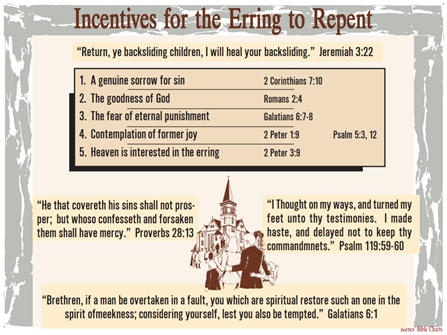
The false teaching of salvation by faith only must deny repentance. If one teaches repentance, as written in scripture, they must deny faith only. What does it mean to REPENT?
The definition of repent is to RECONSIDER, to make a change of heart. Repentance begins in the heart with an examination of your life and ways. However, biblical repentance goes further.
Biblical repentance is preached. Jesus said, ‘EXCEPTye repent, ye shall all likewise perish.” [Luke 13:5]. He also said that repentance was to be preached as part of the preaching of the gospel. [Luke 24:47; 5:32; Mar 6:12; Mat 4:17]
Biblical repentance goes beyond a reconsideration in the heart, it includes the penitent to PERFORM the commands of God. Jesus said, “Remember therefore whence thou art fallen, and repent and do the first works; or else I come to thee, and will move thy candlestick out of its place, except thou repent.” [Rev 2:5; cr. Jas 1:22; Luke 3:8; Mat 3:8; Mat 21:28-32].
Repentance is an EMOTIONAL response of sorrow that leads to repentance. “For godly sorrow worketh repentance to salvation” [2Cor 7:8-11]. People often accuse the church of Christ of being heartless and legalistic. This is false. Repentance is a very emotional and heartfelt response to our self-examination compared to the scriptures.
There will be NO opportunity to repent after death or upon Christ’s return. Esau could not repent after the blessing was given [Heb 12:17]. The judgement scene clearly shows this, “Many will say to me in that day, Lord, Lord…And then will I profess unto them, I never knew you: depart from me, ye that work iniquity.” [Mat 7:21-29; Mat 25; Luke 6:46].
Repentance can and must be practiced toward our fellow man, but repenting unto salvation [Acts 2:38] is TOWARD GOD. “Testifying both to the Jews, and also to the Greeks, repentance toward God, and faith toward our Lord Jesus Christ.” [Acts 20:21]. The person repenting for salvation is TURNING toward God. “that they should repent and turn to God, doing works worthy of repentance.” [Acts 26:20].
“Wherefore, O king Agrippa, I was not disobedient unto the heavenly vision: but declared both to them of Damascus first and at Jerusalem, and throughout all the country of Judaea, and also to the Gentiles, that they should REPENT and TURN to God, doing works worthy of repentanc.” [Acts 26:19,20. emph mine seb]
The preaching of the Apostle Paul, from the beginning of his baptism, included repentance and works worthy of repentance. John the baptizer taught the same, [Mt 3:8].
Repentance was Jesus’ teaching and it is taught as a part of preaching Jesus today.
The false teaching of salvation by faith only must deny repentance. If one teaches repentance, as written in scripture, they must deny faith only. What does it mean to REPENT?
The definition of repent is to RECONSIDER, to make a change of heart. Repentance begins in the heart with an examination of your life and ways. However, biblical repentance goes further.
Biblical repentance is preached. Jesus said, ‘EXCEPTye repent, ye shall all likewise perish.” [Luke 13:5]. He also said that repentance was to be preached as part of the preaching of the gospel. [Luke 24:47; 5:32; Mar 6:12; Mat 4:17]
Biblical repentance goes beyond a reconsideration in the heart, it includes the penitent to PERFORM the commands of God. Jesus said, “Remember therefore whence thou art fallen, and repent and do the first works; or else I come to thee, and will move thy candlestick out of its place, except thou repent.” [Rev 2:5; cr. Jas 1:22; Luke 3:8; Mat 3:8; Mat 21:28-32].
Repentance is an EMOTIONAL response of sorrow that leads to repentance. “For godly sorrow worketh repentance to salvation” [2Cor 7:8-11]. People often accuse the church of Christ of being heartless and legalistic. This is false. Repentance is a very emotional and heartfelt response to our self-examination compared to the scriptures.
There will be NO opportunity to repent after death or upon Christ’s return. Esau could not repent after the blessing was given [Heb 12:17]. The judgement scene clearly shows this, “Many will say to me in that day, Lord, Lord…And then will I profess unto them, I never knew you: depart from me, ye that work iniquity.” [Mat 7:21-29; Mat 25; Luke 6:46].
Repentance can and must be practiced toward our fellow man, but repenting unto salvation [Acts 2:38] is TOWARD GOD. “Testifying both to the Jews, and also to the Greeks, repentance toward God, and faith toward our Lord Jesus Christ.” [Acts 20:21]. The person repenting for salvation is TURNING toward God. “that they should repent and turn to God, doing works worthy of repentance.” [Acts 26:20].




 Borger church of Christ @ Franklin & Juniper