
“God is a Spirit: and they that worship him must worship him in spirit and in truth.” (John 4:24)
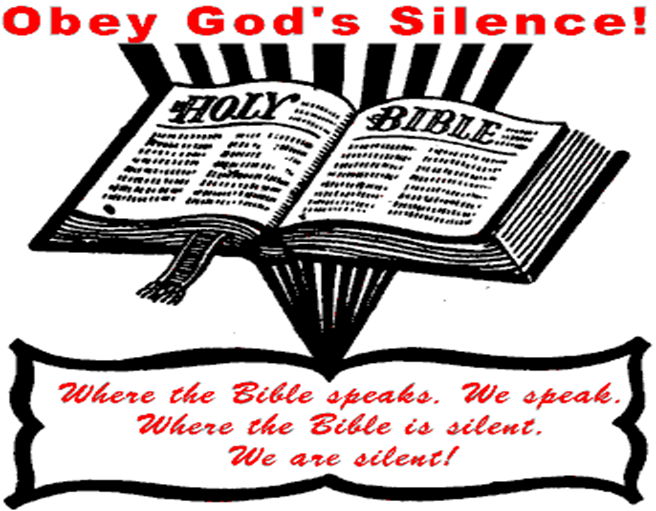
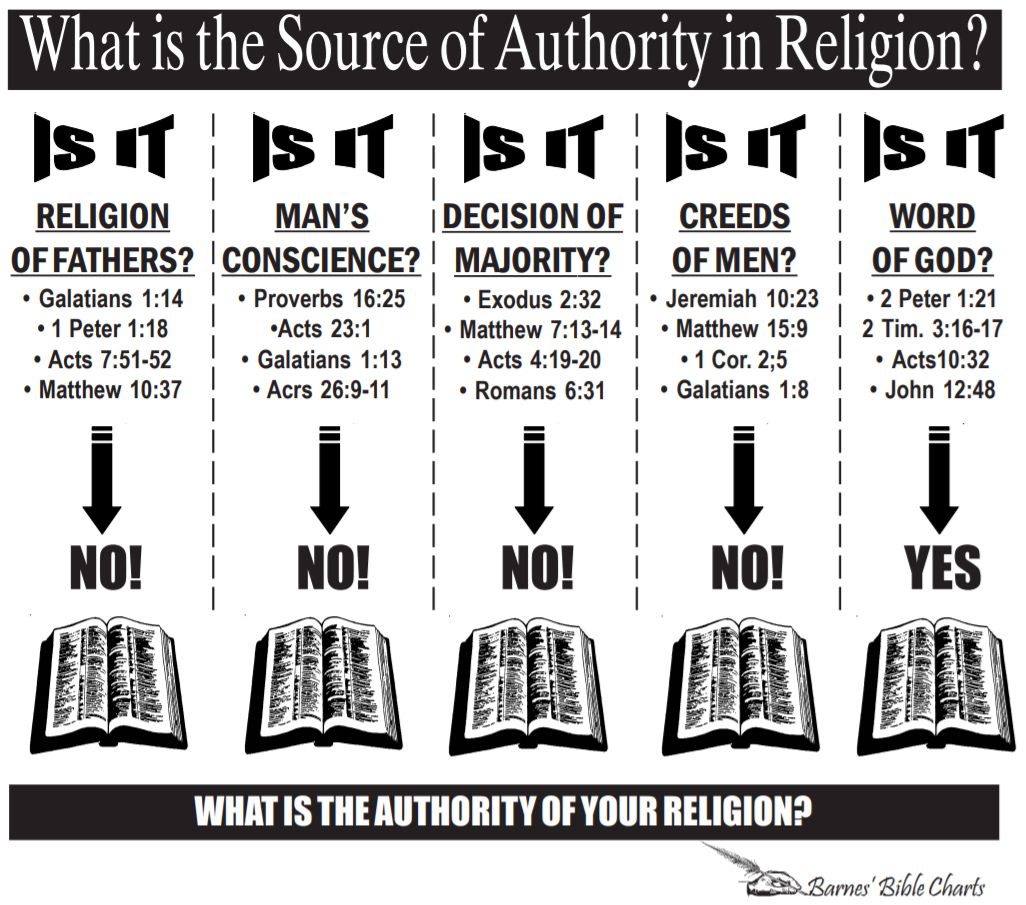
One cannot be walking by faith in Christ while offering strange worship God commanded us not. How do we know what God wants? We can answer that question if we will learn how God communicates. He gives DIRECT commands & statements, He gives EXAMPLES, and He IMPLIES things from which we may infer. He also expects us to respect when He is SILENT on a matter.
Last week we looked at the first 2 ways to discover what God wants,
- Direct commands & statements.
- Approved Examples.
Today we will look at 2 more,
- Implications & Necessary Inferences.
- Silence, when God gives no command.
Since we’re not to ADD nor TAKE AWAY from His word, we need to understand how He communicates.
III) Implications & Necessary Inferences. (Inescapable conclusions)
One of the ways we communicate is by implying something and we infer from it. Here’s a simple example. When our parents gave us $20 to go to the store to buy bread and milk, it is necessarily inferred that they want the change brought back and we’re not to spend the rest of the money on candy & video games. A lesson my older brother learned quickly.
We all communicate this way. God does too. In Acts 10, Peter saw a vision Acts 10:12, “Wherein were all manner of fourfooted beasts of the earth, and wild beasts, and creeping things, and fowls of the air.” The Lord told him to rise, kill, and eat.
After Peter’s refusal because they were unclean, the Lord said, “What God hath cleansed, that call not thou common.” Peter would eventually understand the implication, that God had included gentiles as candidates for the gospel. Peter made a necessary inference based on what the Lord had implied through the vision, the events that followed, and His command to preach the gospel to every nation. (Read Acts 10-11; Mark 16:15-16).
Another example of necessary inference is in Acts 8:35-36. “Then Philip opened his mouth, and began at the same scripture, and preached unto him Jesus. And as they went on their way, they came unto a certain water: and the eunuch said, See, here is water; what doth hinder me to be baptized?” All that we read is that Philip preached Jesus, and the Eunuch concludes baptism is commanded. We Necessarily Infer that baptism is included in the preaching of Jesus.
Without a command from God, we do not make any inferences about what God wants.
IV) God commands us not (no command). Silence is not permissive.
This is an answer to the objection, “it doesn’t say not to.” In regard to service rendered to God, human wisdom must not do what God has FORBIDDEN, OMIT what He’s commanded, nor add EXTRA which He has not commanded. To do otherwise is to walk by our own judgment, and not by faith.
Here are several examples which show that where there is no command there is no permission. GOD GAVE NO COMMAND.
- Lev 10:1 And Nadab and Abihu, the sons of Aaron, took either of them his censer, and put fire therein, and put incense thereon, and offered strange fire before the LORD, which he commanded them not.
- Deut 17:3 And hath gone and served other gods, and worshipped them, either the sun, or moon, or any of the host of heaven, which I have not commanded;
- Deut 18:20 But the prophet, which shall presume to speak a word in my name, which I have not commanded him to speak, or that shall speak in the name of other gods, even that prophet shall die.
- Jer 7:22 For I spake not unto your fathers, nor commanded them in the day that I brought them out of the land of Egypt, concerning burnt offerings or sacrifices:
- Jer 29:23 Because they have committed villany in Israel, and have committed adultery with their neighbours’ wives, and have spoken lying words in my name, which I have not commanded them; even I know, and am a witness, saith the LORD.
- Jer 32:35 And they built the high places of Baal, which are in the valley of the son of Hinnom, to cause their sons and their daughters to pass through the fire unto Molech; which I commanded them not, neither came it into my mind, that they should do this abomination, to cause Judah to sin.
- Acts 15:24 Because we have knowledge that some who went from us have been troubling you with their words, putting your souls in doubt; to whom we gave no such order; (BBE). KJV. we gave no such commandment:
In two other instances we find the same lesson.
- 2Sam 7:1-7. David’s desire to build a temple. God asks him where He ever asked for it. 2Sa 7:7 In all the places wherein I have walked with all the children of Israel spake I a word with any of the tribes of Israel, whom I commanded to feed my people Israel, saying, Why build ye not me an house of cedar?
- Heb 7:11-14 In explaining the Priesthood of Christ, the writer points out that God never spoke anything about Priests from Judah.
- Heb 7:14 For it is evident that our Lord arose from Judah, of which tribe Moses spoke nothing concerning priesthood.
When you say, “God never said not to.” I reply, “God doesn’t need to tell you not to do something when He’s told you specifically what He wants. Where did He ever give the command for it?” If it’s a good enough explanation for God, it’s a good principle for us to use today.
Men are not divided over what the Bible says but what it doesn’t say. We must respect His Silence.
Agape,
Spencer
You can read pt 1 of How to know What God wants here.

 Borger church of Christ @ Franklin & Juniper