The Bible’s Historical Accuracy: Archaeology and Scripture
The historical accuracy of the Bible has long been debated, yet archaeological discoveries consistently affirm its reliability as a historical document. Far from being a mere collection of spiritual tales, the Bible contains detailed accounts of people, places, and events that align with evidence unearthed by modern archaeology. This interplay between Scripture and science offers a compelling case for the Bible’s trustworthiness, bridging faith and reason in a unique way.
One striking example is the discovery of the Hittites, a once-obscure people mentioned over 50 times in the Old Testament (e.g., Genesis 15:20, 2 Chronicles 1:17). For centuries, skeptics dismissed the Hittites as fictional, as no evidence of their existence appeared in known ancient records. However, in 1906, German archaeologist Hugo Winckler excavated Hattusa, the Hittite capital, in modern-day Turkey. Tablets and ruins revealed a sophisticated Bronze Age civilization that matched biblical descriptions, including their interactions with Abraham’s descendants (Genesis 23:10). This find silenced doubters and showcased the Bible’s precision in recording historical peoples.
Similarly, the Pool of Bethesda, described in John 5:2 as having “five porches,” was long questioned by critics who argued no such structure existed in Jerusalem. Excavations in the 19th century, however, uncovered a twin-pool complex with five porticoes, precisely as Scripture depicted. This discovery, detailed by archaeologist Conrad Schick, not only confirmed the Gospel’s topographic accuracy but also its cultural context, as the site was linked to healing practices consistent with the narrative of John 5:7-9.
The Tel Dan Stele, unearthed in 1993 in northern Israel, provides another powerful corroboration. This 9th-century BC inscription references the “House of David,” marking the first extra-biblical mention of King David, a central figure in Scripture (2 Samuel 5:11). Critics had previously argued David was a myth, akin to King Arthur, but this basalt fragment, discovered by archaeologist Avraham Biran, aligns with the biblical timeline and dynasty, lending credibility to the historicity of Israel’s monarchy as recorded in 1 and 2 Kings.
Even the New Testament finds support in archaeology. The Pilate Stone, discovered in 1961 at Caesarea Maritima by Italian archaeologist Antonio Frova, bears the name and title of Pontius Pilate, the Roman prefect who sentenced Jesus to death (Matthew 27:24). This limestone block, dated to AD 26-36, matches the biblical timeframe and refutes claims that Pilate was a fabricated character. Such finds anchor the Gospel narratives in verifiable history.
These examples, spanning countries, centuries, and both Testaments, demonstrate a pattern: the Bible’s details, once dismissed as implausible, are repeatedly vindicated by the spade of the archaeologist. While not every verse has been archaeologically confirmed, the cumulative weight of evidence challenges the notion that Scripture is detached from reality. Sources like The Archaeology of the Bible by James K. Hoffmeier (2008) and Biblical Archaeology Review underscore this growing alignment.
The Empty Tomb: Historical Evidence and Explanations
The empty tomb of Jesus Christ stands as one of the most compelling pieces of historical evidence supporting His resurrection, defying naturalistic explanations and aligning with the transformative impact of early Christianity. Recorded in all four Gospels (Matthew 28:1-10, Mark 16:1-8, Luke 24:1-12, John 20:1-18), the tomb’s vacancy is more than a theological claim but a historical puzzle that demands a logical resolution.
First, the empty tomb is a widely attested fact, even by Jesus’ opponents. The Gospel of Matthew notes that the Jewish leaders bribed guards to claim the disciples stole the body (Matthew 28:11-15), implicitly conceding the tomb was empty. This early counter-narrative, preserved in a text dated to within decades of the event, suggests the vacancy was undeniable—otherwise, producing the body would have silenced the resurrection claim. Historian N.T. Wright, in The Resurrection of the Son of God (2003), argues that this admission from hostile sources strengthens the case, as it reflects a historical reality too stubborn to dismiss.
Second, alternative explanations falter under scrutiny. The “stolen body” theory lacks plausibility: the disciples, described as terrified post-crucifixion (John 20:19), were unlikely to overpower Roman guards, risking death for a corpse. The Roman seal and guard presence (Matthew 27:62-66) further complicate this scenario—failure to secure the tomb would have cost the soldiers their lives. The “wrong tomb” hypothesis also fails; the burial site, owned by Joseph of Arimathea, a known figure (Mark 15:43), was no obscure location. Women witnesses, the first to report the empty tomb (Luke 24:1-3), would have ensured accuracy, as their testimony—unexpected in a patriarchal culture—adds credibility, per historian Michael Licona in The Resurrection of Jesus (2010).
Third, the empty tomb’s implications align with historical outcomes. If Jesus’ body remained, the Jewish or Roman authorities, with every motive to crush Christianity, could have displayed it to end the movement. Instead, Christianity exploded, with Paul citing over 500 witnesses to the risen Christ (1 Corinthians 15:3-8), a claim circulated early enough to be verified. The transformation of disciples into bold proclaimers (Acts 2:14-36) and the conversion of skeptics like Paul (Acts 9:1-19) hinge on an event—the resurrection—tied to that empty tomb. Archaeologically, no rival tomb has ever surfaced, despite Jerusalem’s significance.
Finally, the cultural context bolsters the argument. Jewish theology expected a general resurrection at history’s end, not an individual rising (Daniel 12:2). The claim of Jesus’ resurrection, centered on an empty tomb, was radical yet gained traction, suggesting an extraordinary event shifted expectations. As scholar Gary Habermas notes in The Case for the Resurrection of Jesus (2004), the tomb’s emptiness, paired with appearances, best explains this shift. The empty tomb stands as a historical anchor—unrefuted by foes, unexplainable by skeptics, and unshaken by time. No body was found because no body remained; the tomb’s silence screams resurrection.
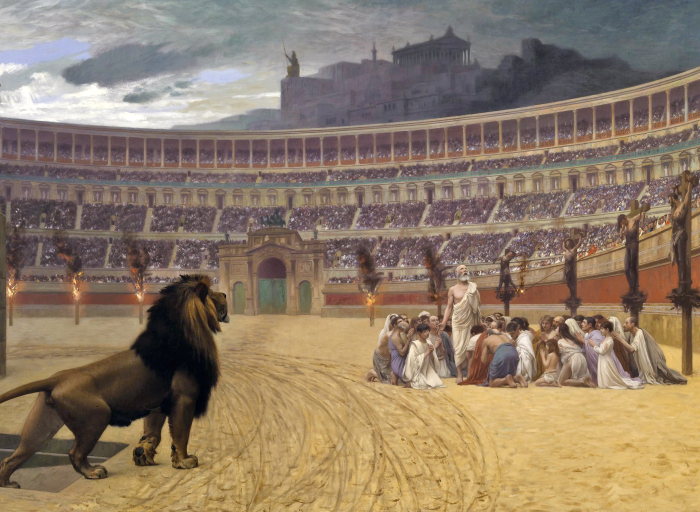
In the pages of Scripture, we find heroes like Esther, Daniel, Abigail, and Paul, who faced imprisonment, death, and danger with unwavering faith in God. Their resolve to remain faithful, even at the cost of their lives, inspires us. Yet, for most Christians today, the threats to faith are subtler but no less real. We may not face lions’ dens or executioners, but we encounter pressures that test our determination to live for Christ. This article explores four modern challenges Christians face in keeping faith and how God’s Word compels us to respond with active, courageous faith.
The Weight of Shame: Proclaiming the Gospel Boldly
“I am not ashamed of the gospel, for it is the power of God for salvation to everyone who believes” (Romans 1:16). Yet, in a world that often dismisses or derides Christianity, many believers feel guilt or embarrassment when sharing their faith. Whether it’s hesitating to mention Jesus in a workplace conversation or softening biblical truths to avoid conflict at a family gathering, the fear of being labeled judgmental or outdated can silence us. Paul, who faced beatings and imprisonment for preaching, urges us not to be “ashamed of the testimony about our Lord” (2 Timothy 1:8) but to handle God’s Word rightly, unashamed (2 Timothy 2:15).
Like Daniel, who prayed openly despite a death decree (Daniel 6:10), Christians today must anchor their identity in Christ. The gospel’s power to save outweighs fleeting social discomfort. When a young professional risks awkwardness by inviting a colleague to church or a parent teaches their child biblical values in a skeptical culture, they echo Esther’s resolve: “If I perish, I perish” (Esther 4:16). Faith compels action, speaking boldly, trusting God’s Spirit to work through his word.
The Cost of Reputation and Relationships: Choosing Christ First
“Have I become your enemy by telling you the truth?” Paul asked the Galatians (Galatians 4:16). Jesus warned that loving family more than Him makes us unworthy of discipleship (Matthew 10:37). These verses strike at a deep fear: losing reputation or relationships for our faith. In a hyper-connected world, taking a stand on biblical issues (whether on morality, justice, or salvation) can lead to social ostracism, canceled friendships, or strained family ties. A student defending creationism in a classroom or a friend confronting a loved one’s sin risks becoming an outcast.
Abigail’s example shines here. She risked her relationship and safety to mediate peace, aligning with God’s will despite potential backlash (1 Samuel 25:24). Christians today must prioritize allegiance to Christ, even when it costs social capital. This doesn’t mean being harsh but speaking truth in love, trusting God to mend or redeem relationships. Like Esther, who risked her life for her people, we show faith by valuing God’s approval over human esteem, knowing our ultimate family is eternal (Galatians 1:10).
The Risk of Resources: Trusting God’s Provision
Revelation 13:17 paints a stark picture: those without the “mark of the beast” cannot buy or sell. This passage shows a time when some faced economic exclusion for faithfulness, a challenge Christians continue to face. Refusing to compromise ethics in business, prioritizing assembling with the saints for overtime, or declining opportunities that conflict with faith can lead to lost income or career setbacks. A graphic designer who turns down a lucrative but morally questionable project or a doctor who risks her job by objecting to unethical practices feels this pressure.
Daniel’s refusal to bow to Darius’ decree, despite the lion’s den, shows trust in God’s provision (Daniel 6:23). Jesus promised that seeking God’s kingdom first ensures our needs are met (Matthew 6:33). Christians today must act on this promise, choosing integrity over wealth. Like Esther, who faced death to save her people, we demonstrate faith when we sacrifice financial security for God’s principles, confident in His care.
The Choke of Distractions: Persevering Through Trouble
In the parable of the sower, Jesus describes faith shrivel away when trouble comes or choked by “the cares of the world, the deceitfulness of riches, and the desires for other things” (Mark 4:16-19). Modern life bombards us with distractions (endless notifications, career pressures, personal crises) that threaten to erode our spiritual vitality. A single mother juggling work and parenting may skip prayer time; a student consumed by social media may neglect Scripture. Troubles like health issues or financial stress can further crowd out faith, leaving us fruitless.
Paul’s relentless focus on his mission, despite shipwrecks and imprisonments (Acts 20:24), inspires us to stay rooted. Like Abigail, who acted decisively amidst chaos (1 Samuel 25:18), we must discipline ourselves to prioritize God. Regular prayer, Scripture study, and congregational worship act as anchors, ensuring our faith bears fruit. Esther’s focused intercession, fasting amidst a genocidal threat, reminds us that faith thrives when we cling to God’s Word, not the world’s noise.
A Faith That Works: Compelled by God’s Word
The courage of Esther, Daniel, Abigail, and Paul was no blind leap but a response to God’s Word. Daniel obeyed the command to worship God alone (Exodus 20:3); Abigail acted on principles of justice (Proverbs 31:9); Paul preached Christ’s mandate (Matthew 28:19). Their faith produced works (prayer, mediation, proclamation) proving it was alive (James 2:17). Similarly, God’s Word compels us today:
Based on Scripture: Romans 1:16 gives confidence in the gospel’s power; Matthew 10:37 prioritizes Christ; Revelation 13:17 trusts God’s provision; Mark 4:19 warns against distractions.
Compelled to Action: These truths drive us to share the gospel unashamed, stand for truth despite relational loss, choose integrity over wealth, and persevere through distractions.
Their integrity Inspires Others: Their courage became a testimony, encouraging future generations (e.g., Daniel’s influence in Jewish tradition, Paul’s letters, Abigail’s role in David’s story). Esther’s legacy similarly inspired Jewish resilience.
Trust in God that Transcends Circumstances: Their actions show that faithfulness is not contingent on safety or success but on God’s unchanging nature.
Hope in God that Anticipates Eternity: Their willingness to die reflects hope in God’s promises, whether immediate deliverance or eternal resurrection (Hebrews 11:35). This aligns with Esther’s implied trust in God’s salvation for the Jews.
Living the Courageous Faith Today
While we may not face death, the challenges of shame, relational loss, financial risk, and distractions test our faith as surely as the lion’s den tested Daniel’s. Yet, God’s Word equips us. When we feel shame, we proclaim Christ boldly, trusting His power. When we fear losing reputation, we choose Jesus, knowing His approval lasts. When income is at stake, we trust God’s provision. When distractions overwhelm, we root ourselves in Scripture.
Every Christian is called to this courageous faith. The parent teaching biblical values, the worker refusing unethical shortcuts, the student sharing Christ despite mockery, all reflect Esther’s resolve. Our faith, like hers, is not passive but active, producing works that glorify God. As Paul wrote, “I am not ashamed… for I know whom I have believed” (2 Timothy 1:12). Let us stand firm, compelled by God’s Word, trusting Him through every challenge, for His glory and our eternal hope.
“6 I marvel that ye are so soon removed from him that called you into the grace of Christ unto another gospel: 7 Which is not another; but there be some that trouble you, and would pervert the gospel of Christ. 8 But though we, or an angel from heaven, preach any other gospel unto you than that which we have preached unto you, let him be accursed. 9 As we said before, so say I now again, If any man preach any other gospel unto you than that ye have received, let him be accursed.” (Galatians 1:6-9)
The Uncompromising Gospel: A Warning Against Deviation
The Apostle Paul’s words in Galatians 1:8 are a thunderous declaration of the exclusivity and purity of the gospel: “But though we, or an angel from heaven, preach any other gospel unto you than that which we have preached unto you, let him be accursed.” This verse is not merely a caution but a divine boundary, safeguarding the truth of Christ’s gospel against distortion. Paul’s warning underscores the danger of deviating from the apostolic teaching, structure, and practice of the church as revealed in Scripture. Any alteration, whether in organization, doctrine, hierarchy, mission, or worship, risks leading souls astray. Let us explore this verse through the lens of biblical fidelity, examining why deviations are perilous and why Paul’s response is so severe.
No Other Centralized Organization Beyond the Local Church Scripture establishes the local church as the sole earthly organization for God’s people, with Christ as the head and heaven as its headquarters (1 Corinthians 11:3). The New Testament knows no centralized authority—such as denominations, synods, or councils—beyond the autonomous local congregation. Each church, under the oversight of its elders, answers directly to Christ, who reigns from heaven. Introducing hierarchical structures or external governing bodies usurps Christ’s authority and distorts the simplicity of His design. Paul’s warning in Galatians 1:8 condemns such innovations as a departure from the gospel, for they shift allegiance from Christ to human institutions.
No Other Doctrine of Christ The gospel is singular and unchangeable, rooted in the teachings of Christ and His apostles. Second John 9 warns, “Whosoever transgresseth, and abideth not in the doctrine of Christ, hath not God.” To preach “another gospel” is to introduce teachings foreign to the New Testament—whether adding human traditions, altering the plan of salvation, or diluting the truth with cultural compromises. The doctrine of Christ encompasses His deity, His sacrifice, His resurrection, and His commands for obedience (e.g., faith, repentance, baptism, and perseverance). Any deviation risks severing fellowship with God, making Paul’s curse a necessary defense of eternal truth.
No Other Hierarchy Beyond Elders, Deacons, and Saints The New Testament prescribes a simple leadership structure for the church: elders (overseers), deacons, and saints (Philippians 1:1; 1 Timothy 3:1-10). Elders shepherd the flock, deacons serve practical needs, and all members are saints, called to holiness. No additional offices—such as popes, cardinals, or regional bishops—are authorized. Introducing such hierarchies elevates human authority above Scripture and undermines the priesthood of all believers. Paul’s anathema in Galatians 1:8 applies to those who impose unbiblical structures, as they distort the gospel’s call to humility and submission to Christ alone.
No Other Work Beyond Making, Teaching, and Helping Saints The mission of the church is clear: make disciples, teach them, and provide limited benevolence to saints in need (Matthew 28:18-20). The church is not a social club, political organization, or community activity center. Its work is spiritual—evangelizing the lost, edifying believers, and assisting struggling Christians (e.g., widows, as in 1 Timothy 5:16). Romans 16:16 identifies congregations as “churches of Christ,” not entertainment hubs or welfare agencies. When churches prioritize secular goals over spiritual ones, they preach “another gospel” by redefining the church’s purpose, incurring Paul’s curse.
No Other Worship Practices True worship is regulated by Scripture, limited to specific acts that honor God and edify the church. Acts 2:42, Ephesians 5:19, Colossians 3:16, and 1 Corinthians 16:1-2 outline these practices: partaking in Communion, hearing biblical preaching, singing understandable vocal songs, praying for God’s help, contributing financially to the church’s work, and encouraging one another to love and good deeds. Adding instrumental music, theatrical performances, or other innovations introduces “strange fire” into worship, akin to Nadab and Abihu’s unauthorized offering (Leviticus 10:1-2). Such practices deviate from the gospel’s pattern, inviting the condemnation of Galatians 1:8.
Why Was Paul So Harsh? Paul’s pronouncement—“let him be accursed”—is jarring, but its severity reflects the stakes involved. The Greek word for “accursed” (anathema) denotes something devoted to destruction, cut off from God. Paul’s harshness stems from the eternal consequences of a corrupted gospel. The true gospel saves souls (Romans 1:16); a false gospel damns them. By invoking this curse, Paul emphasizes that no one—not even an apostle or an angel—has the authority to alter the message delivered once for all (Jude 3). His zeal mirrors Christ’s cleansing of the temple (John 2:17), protecting the purity of God’s truth from human tampering.
The Galatian churches were being swayed by Judaizers, who added circumcision and Mosaic law to the gospel (Galatians 1:6-7). This distortion threatened to enslave believers and nullify Christ’s sacrifice (Galatians 5:4). Paul’s curse is not vindictive but protective, urging believers to cling to the unaltered gospel. For modern readers, this serves as a sobering reminder: deviations in organization, doctrine, hierarchy, mission, or worship are not mere preferences but assaults on the truth that saves.
Galatians 1:8 is a blaring trumpet call to preserve the gospel in its pristine form. The church must remain a local, autonomous body under Christ’s headship, teaching only His doctrine, led by elders and deacons, focused on making and nurturing saints, and worshipping according to Scripture’s pattern. Any deviation risks preaching “another gospel,” leading souls to ruin. Paul’s harsh curse underscores the gravity of this truth: the gospel is not ours to modify. Let us heed his warning, holding fast to the faith delivered to the saints, ensuring that our churches reflect Christ’s design and our worship glorifies Him alone.
A Passionate Plea to My Catholic Friends: Turn to the True Gospel
MY DEAR CATHOLIC FRIENDS, I come to you with a heart overflowing with love and urgency, pleading with you to hear the truth about the dangers of the Catholic faith. As your friend, I cannot stay silent when I see you entangled in a system that strays from the pure gospel of Christ. With Scripture as our guide, here are five critical warnings, praying they will open your eyes to the truth and lead you to the freedom found in Jesus alone.
FIRST, Jesus Himself warned us in Matthew 23:9, “Call no man your father on earth, for you have one Father, who is in heaven.” Yet the Catholic Church exalts the Pope, calling him “Holy Father” or “Papa,” a title reserved for God alone. This is no minor mistake—it elevates a man to a position that belongs only to our Heavenly Father. Paul referenced himself “as a father” but never took on the title as “Holy Father.” He often used humbling language and pleaded with people not to bow down to him. “Sirs, why do ye these things? We also are men of like passions with you, and preach unto you that ye should turn from these vanities unto the living God, which made heaven, and earth, and the sea, and all things that are therein:” (Acts 14:15). I implore you to reject this practice and honor God alone as your Father.
SECOND, the organization of the Catholic Church, with its hierarchy of popes, cardinals, and priests, contradicts the biblical model for the church. In 1 Timothy 3:1-10, Paul outlines the qualifications for elders and deacons—humble, local leaders who serve the local body of Christ, not a global institution with supreme rulers. The Catholic structure, centered in the Vatican, adds layers of human authority that Scripture never endorses. The largest organization of the Lord’s church on earth is the local church with autonomy from any other. Please, compare this to God’s Word and see the difference for yourselves!
THIRD, the Catholic religion preaches a perverted gospel, which Paul condemns in Galatians 1:6-10. The Catholic Church distorts the biblical gospel by adding human inventions like infant baptism, the granting of indulgences, an infallible Pope, and purgatory, which obscure the truth of salvation. Scripture teaches that salvation comes through faith in Christ, expressed in obedience to His commands, such as believing and being baptized, as Jesus declared in Mark 16:16: “Whoever believes and is baptized will be saved.” In Acts 19:1-5, Paul taught the Ephesians to believe and be baptized, and they demonstrated repentance by burning their magic books, showing fruits worthy of their faith. While Ephesians 2:8-9 affirms salvation is by grace through faith, not by works of human merit, this faith is active and obedient, not a mere mental assent. By contrast, Catholicism’s reliance on sacraments, human mediators to forgive sins, and man-made doctrines perverts the gospel’s simplicity. Paul warns, “If anyone is preaching to you a gospel contrary to the one you received, let him be accursed!” My friends, this is a matter of eternal life—reject these false teachings and embrace the true gospel of Christ’s grace and obedient faith!
FOURTH, the Catholic Church elevates men above what is proper, violating 1 Corinthians 4:6, which warns us “not to think of men above that which is written.” The veneration of Mary, the canonization of saints, and the authority given to priests and popes place mere humans on pedestals that belong to God alone. Mary was a humble servant, not a co-redeemer; saints are all believers, not an elite class; and no man can stand between you and Christ as your mediator (1 Timothy 2:5). I plead with you to humble yourselves before God and reject these man-made traditions!
FINALLY, the Catholic Church promotes false signs and a misunderstanding of saints, contradicting 1 Corinthians 1:2 and 13:8-11. In 1 Corinthians 1:2, Paul calls all Christians saints, not just those canonized by the Church. The Catholic obsession with miracles, apparitions, and relics often borders on idolatry, and 1 Corinthians 13:8-11 tells us that miraculous signs were temporary, meant to confirm the gospel in the early church, not to be sought after today. Turn away from these deceptive signs and embrace the sufficiency of Christ and His Word!
MY FRIENDS, I know these words may be hard to hear, but they come from a heart that loves you and longs for you to know the freedom of the true gospel. The traditions of Catholicism may feel comforting, but they are a trap, leading you away from the simplicity and purity of Christ. I beg you, search the Scriptures for yourselves, test what I’ve said, and turn to Jesus alone for salvation. He is enough! May God open your eyes and draw you to His truth. With all my love, I pray for you.
The resurrection of Jesus Christ, as recounted in the New Testament, is a cornerstone of Christian faith, yet its historical plausibility rests on compelling logical evidence that withstands scrutiny. Unlike myths or fabrications, the resurrection narrative is supported by the rapid transformation of disciples, the empty tomb, and the inability of contemporary authorities to disprove it—details that align with human behavior, historical context, and rational inference. When examined alongside biblical accounts and extra-biblical corroboration, these elements form a persuasive case for its occurrence.
First, the dramatic shift in the disciples’ behavior provides strong circumstantial evidence. Before Jesus’ crucifixion, they were fearful and scattered—Peter denying him thrice (John 18:17-27) and others fleeing (Matthew 26:56). Yet, post-resurrection, these same men boldly proclaimed his rising, risking death (Acts 4:19-20). Psychologist J.P. Moreland (Scaling the Secular City, 1987) argues that such a psychological reversal, from despair to unwavering conviction, demands an extraordinary catalyst. The resurrection appearances (1 Corinthians 15:5-8) offer a logical explanation, as no mere hallucination or fraud could sustain their lifelong commitment, evidenced by martyrdoms like Peter’s (Eusebius, Ecclesiastical History, 2.25).
Second, the empty tomb stands as a physical anchor for the resurrection claim. All four Gospels (Matthew 28:6, Mark 16:6, Luke 24:3, John 20:6-7) report the tomb vacant, a detail corroborated by the inability of Jewish and Roman authorities to produce Jesus’ body despite their incentive to quash the nascent Christian movement. Historian Gary Habermas (The Case for the Resurrection of Jesus, 2004) notes that the Sanhedrin’s accusation of body theft by disciples (Matthew 28:13) implicitly concedes the tomb was empty. Logically, if the body remained, displaying it would have been the simplest rebuttal, yet no such counterevidence emerged—a silence that speaks volumes.
Third, the rapid rise and spread of Christianity in a hostile environment defy naturalistic explanations. Within decades, a movement rooted in a crucified leader—deemed a failure by Roman and Jewish standards—flourished, as attested by Tacitus (Annals, 15.44) and Pliny the Younger (Letters, 10.96). The resurrection provided the ideological fuel, transforming a shameful death into a triumph (1 Corinthians 15:54-55). Sociologist Rodney Stark (The Rise of Christianity, 1996) calculates that Christianity grew at 40% per decade, a rate inexplicable without a galvanizing event like the resurrection, which offered hope and empirical testimony (Acts 2:32).
Critics propose alternatives—swoon theory, theft, or mass hallucination—but these falter under scrutiny. A half-dead Jesus (swoon) couldn’t inspire worship, theft lacks motive given the disciples’ initial disbelief (Luke 24:11), and hallucinations don’t align with group encounters over 40 days (Acts 1:3). The Journal of the American Academy of Religion (Vol. 74, 2006) notes that the resurrection hypothesis best accounts for the data’s coherence.
The resurrection’s logical strength lies in its explanatory power—uniting transformed lives, an empty grave, and a movement’s improbable rise into a singular, rational narrative. Jesus didn’t just defy death; he redefined history, leaving evidence too robust to dismiss.
In Matthew 25:10, within the parable of the ten virgins, Jesus declares, “And while they were going to buy, the bridegroom came, and those who were ready went in with him to the marriage feast, and the door was shut.” This vivid imagery underscores a sobering truth: opportunities for salvation and readiness have limits. The shutting of the door represents finality, a point of no return in our spiritual journey. How, then, is this door shut in practical application? Scripture reveals four key ways that the door becomes shut.
First, death is a closed door. Hebrews 9:27 states, “It is appointed for man to die once, and after that comes judgment.” Life is the season for repentance and faith, but death ends that opportunity, once life ends, the opportunity for repentance ceases. The parable’s foolish virgins, unprepared when the bridegroom arrived, mirror those who delay repentance, assuming time remains. Death seals our choices, shutting the door to further chances to accept God’s grace by obeying the gospel. This urges us to live ready, embracing salvation now, as tomorrow is not promised (2 Corinthians 6:2). Like the foolish virgins who scrambled too late to prepare, those who postpone turning to Christ risk facing eternity unprepared. This reality presses us to act now, (by obeying the gospel through baptism by through faith, Colossians 2:11-12) because no one knows their final hour (James 4:14). Death’s finality demands we live ready.
Second, obstinance toward the Holy Spirit shuts the door. Acts 7:51 warns against resisting the Spirit, who convicts us of sin and guides us to truth (John 16:8). Rejecting the revealed Word (God’s plan for salvation through Christ and call to godliness) hardens the heart. Like Pharaoh, who ignored God’s signs (Exodus 8:15), persistent refusal to heed Scripture’s clear path (John 3:16; Acts 2:38) closes the door to grace. Jesus warned of blasphemy against the Spirit as an unforgivable sin (Matthew 12:31-32), reflecting a willful, persistent refusal to accept God’s way. The foolish virgins’ lack of oil mirrors this neglect, choosing self-reliance over surrender. The foolish virgins’ neglect of oil symbolizes this willful unpreparedness, choosing self over surrender to God’s Spirit. To keep the door open, we must heed the Spirit’s prompting today through the revealed word in scripture.
Third, refusing to open the door Jesus knocks upon seals our exclusion. Revelation 3:20 declares, “Behold, I stand at the door and knock. If anyone hears my voice and opens the door, I will come in.” Salvation is a personal choice; Jesus invites, but we must respond. Ignoring His call (through apathy, pride, or worldly distractions) leaves us outside the feast, as the virgins discovered. Scripture laments those who reject God’s invitation (Luke 14:24), underscoring that an unopened heart shuts the door to eternal life. There are several examples of those who turned away from Jesus. The Rich Young Ruler (Matthew 19:16-22). Some of Jesus’ Disciples (John 6:60-66). Answering Jesus now ensures entry.
Fourth, Christ’s return will shut the door finally for all. Matthew 25:31-46 describes the judgment day, when Christ separates the ready from the unprepared. The bridegroom’s arrival in the parable foreshadows this moment, when “the Son of Man comes” unexpectedly (Matthew 24:44). No further chances remain; every soul will account for their faith and deeds (2 Corinthians 5:10). As God shut the ark’s door before the flood (Genesis 7:16), Christ’s return will close salvation’s offer, finalizing destinies. On that day, “But the day of the Lord will come as a thief in the night; in the which the heavens shall pass away with a great noise, and the elements shall melt with fervent heat, the earth also and the works that are therein shall be burned up.” (2Peter 3:10). This compels us to live in readiness, clothed in Christ (Galatians 3:27), faith and obedience.
Matthew 25:10 is a call to vigilance. Death’s certainty, the Spirit’s voice, Jesus’ knock, and Christ’s return all remind us: the door is open now, but not forever. Like the wise virgins, we must prepare (embracing salvation, yielding to God’s Spirit, welcoming Christ, and awaiting His return). Let us act before the door is shut, securing our place at the eternal feast.
The resurrection of Jesus Christ stands as a pivotal claim of Christianity, and its credibility is bolstered by the transformations of skeptics like Simon Greenleaf and Frank Morison, who, through rigorous examination of evidence, became convinced of its truth. These non-biblical figures—initially doubters—offer compelling, logical arguments rooted in historical and legal scrutiny, making their conclusions a powerful case for the resurrection.
Simon Greenleaf, a 19th-century Harvard law professor and co-founder of its law school, was a skeptic of Christianity. Known for his work A Treatise on the Law of Evidence, Greenleaf applied legal standards to the Gospel accounts. He argued that the testimonies of Matthew, Mark, Luke, and John (e.g., Matthew 28:1-10, John 20:1-18) hold up as credible eyewitness reports. In his book The Testimony of the Evangelists (1874), Greenleaf noted the consistency of the resurrection narratives despite minor variations, a hallmark of authentic, uncoached testimony. He emphasized that the disciples’ willingness to die for their claims, as tradition records (e.g., Peter’s crucifixion), defies the behavior of liars protecting a hoax. Greenleaf concluded that the resurrection met the burden of proof beyond reasonable doubt, converting him from skeptic to believer.
Similarly, Frank Morison, a 20th-century British journalist, set out to disprove the resurrection in his book Who Moved the Stone? (1930). Initially viewing the story as myth, Morison approached it with a detective’s mindset, analyzing historical context and psychological plausibility. He found the empty tomb (Matthew 28:11-15) particularly persuasive—Roman and Jewish authorities, with every incentive to produce Jesus’ body, failed to do so. Morison also grappled with the transformation of the disciples, from despairing cowards (John 20:19) to bold proclaimers (Acts 2:14-36), a shift he deemed inexplicable without a real event. The sudden conversion of Paul, a former persecutor (Acts 9:1-19), further convinced Morison that only a tangible encounter with the risen Christ could account for such a reversal. His investigation led him to faith.
Both men highlight the resurrection’s evidential strength outside biblical bias. Greenleaf’s legal lens underscores the reliability of the Gospel witnesses, while Morison’s historical probe reveals the improbability of alternative explanations (like theft or hallucination) given the cultural and political pressures of the time. The rapid spread of Christianity, despite persecution, aligns with their findings: a fabricated tale wouldn’t inspire such conviction. Paul’s own testimony in 1 Corinthians 15:3-8, listing over 500 witnesses, adds weight, as Greenleaf and Morison noted its early circulation, too soon for legend to distort fact.
These skeptics-turned-believers demonstrate that the resurrection withstands intellectual scrutiny. Their journeys from doubt to conviction rest on evidence (eyewitness accounts, an empty tomb, and transformed lives) that defies dismissal.
The rapid spread of Christianity in its early years, despite relentless persecution, offers a compelling and logical argument for the resurrection of Jesus Christ. In the first century, followers of Jesus faced hostility from both Jewish authorities and the Roman Empire, yet their movement not only survived but flourished. This phenomenon defies natural explanation unless the resurrection, a transformative event, provided the catalyst for such resilience and growth.
First, consider the historical context. Early Christians endured brutal persecution, including detention, affliction, and execution. The Roman historian Tacitus records that under Emperor Nero, Christians were blamed for the Great Fire of Rome in 64 AD and subjected to horrific deaths (Tacitus, Annals 15.44). Despite this, Christianity grew from a small sect in Judea to a dominant force across the empire within three centuries. Sociologically, movements based on fabricated claims typically collapse under such pressure, as followers abandon a cause that offers no tangible reward. Yet, the unwavering commitment of Jesus’ disciples suggests they witnessed something extraordinary—something worth dying for.
This leads to the second point: the transformation of the disciples. The New Testament describes them as fearful and scattered after Jesus’ crucifixion (John 20:19), yet post-resurrection, they boldly proclaimed His rising, even at the cost of their lives. Peter, who denied Jesus three times (Luke 22:54-62), later preached fearlessly in Jerusalem (Acts 2:14-36). Tradition holds that most disciples faced martyrdom—Peter crucified upside-down, James beheaded—yet none recanted their testimony. Psychologically, people do not die for a known lie. The resurrection, as recorded in all four Gospels (Matthew 28:1-10, Mark 16:1-8, Luke 24:1-12, John 20:1-18), provides a logical explanation: they saw the risen Christ.
Third, the conversion of skeptics like Paul strengthens the case. Initially a persecutor of Christians (Acts 8:1-3), Paul’s dramatic turnaround after encountering the risen Jesus on the road to Damascus (Acts 9:1-19) turned him into the faith’s greatest missionary. His epistles, such as 1 Corinthians 15:3-8, affirm the resurrection as a historical event witnessed by over 500 people. Paul’s shift from enemy to advocate, risking death himself (2 Corinthians 11:23-27), underscores the event’s credibility. A fabricated story would hardly sway a hostile intellectual like Paul without overwhelming evidence.
Finally, the empty tomb, acknowledged even by Jesus’ opponents (Matthew 28:11-15), poses a challenge. If the body remained, producing it would have crushed the movement. Instead, the claim of resurrection fueled Christianity’s expansion, despite every effort to suppress it. The Jewish and Roman authorities, with motive and means to disprove it, could not.
The spread of Christianity under persecution defies logic unless anchored in a real event. The resurrection, attested by transformed lives, historical records, and an empty tomb, emerges as the most reasonable explanation. In a world bent on silencing them, early Christians didn’t just survive—they thrived, because a dead man walked out of His grave.
Agape Spencer
Sources: Morris, Henry M. The Biblical Basis for Modern Science. Baker Books, 1984. Montgomery, John W. Evidence for Faith. Probe Books, 1991. Uman, Martin A. The Lightning Discharge. Academic Press, 1987.
In the same article De Beer goes on to describe in detail an interesting case which illustrates that even actual developmental mechanisms, by which apparently homologous structures are formed during embryogenesis, may not be homologous at all: “It was a problem to know why the lens of the vertebrate eye, which develops from the epidermis overlying the optic cup, should develop exactly in the “right” place, and fit into the optic cup so perfectly, until it was discovered that the optic cup is itself an organizer which induces the epidermis to differentiate into a tailor-made lens. At least, this is what it does in the common frog, Rana fusca, in the embyro of which, if the optic cup is cut out, no lens develops at all. But in the closely related edible frog, Rana esculents, the optic cup can be cut out from the embryo, and the lens develops all the same. It cannot be doubted that the lenses of these two species of frog are homologous, yet they differ completely in the mechanism by which determination and differentiation are brought about. This is no isolated example. In true vertebrates the spinal cord and brain develop as a result of induction by the underlying organizer; but in the “tadpole larva” of the tunicates, which has a “spinal cord” like the vertebrates, it differentiates without any underlying organizer at all. All this shows that homologous structures can owe their origin and stimulus to differentiate to different organizer- induction processes without forfeiting their homology. [emphasis added]” (Evolution: A Theory in Crisis, Michael Denton, 1985, p 147, citing: Homology: An Unsolved Problem, G. De Beer, 1971) (bible.ca)
Biological Similarities: Evidence for God in a Six-Day Creation
The remarkable biological similarities between species—too intricate and precise to be explained by evolution—provide powerful scientific evidence for God’s existence as the Creator of all life. These shared features across diverse organisms defy the idea of gradual, naturalistic development, pointing instead to a purposeful design as recounted in the Bible’s six-day creation narrative.
Take the camera-like eye found in both humans and octopuses. Despite no evolutionary link close enough to explain it, both possess retinas, lenses, and optic nerves in stunningly similar arrangements. Evolution suggests these complex structures emerged separately by chance, but the odds of such identical designs arising independently are astronomical.
Biologist Simon Conway Morris notes that these similarities occur too frequently to be random, hinting at a deliberate pattern (Morris, 2015, The Runes of Evolution). Genesis 1:20-21 tells us God created sea creatures and birds on the fifth day, suggesting He crafted these eyes intentionally, not through eons of trial and error.
Then there’s the universal genetic code and protein-building systems—DNA and ribosomes—shared by all life, from bacteria to mankind. Evolution claims this arose once and persisted unchanged, but the complexity of these systems resists explanation as a fluke of nature. Biochemist Michael Denton calls them “primal patterns,” more akin to a master plan than a cosmic accident (Denton, 1986, Evolution: A Theory in Crisis). Genesis 1:26-27 reveals God made man in His image on the sixth day, implying a purposeful design woven into all life from the start.
Enzymes like cytochrome c, vital for energy production, further challenge evolutionary logic. Found in yeast and horses alike, their near-identical structure across vast species gaps suggests a fixed design, not random divergence. Why would such precision hold steady unless crafted by intent? Genesis 1:11-12 describes God creating plants on the third day, each “according to its kind,” hinting at a blueprint for life’s consistency. Psalm 139:14 praises His “wonderful works,” reflecting this meticulous handiwork.
Critics might argue that similarities reflect adaptation or convergence, but this overlooks the sheer complexity and specificity involved. The odds of unrelated organisms independently developing identical genetic and metabolic systems strain credulity without invoking a creator. Psalm 104:24 celebrates this: “How many are your works, Lord! In wisdom you made them all; the earth is full of your creatures.” Biological similarities, then, are not accidents but fingerprints of a Creator who, in six days, crafted a coherent, interconnected world.
Evolution’s tale of chance and time crumbles under these biological marvels. The six-day creation offers a clearer answer: God designed life’s similarities as a signature of His power. From eyes to enzymes, the evidence aligns with Scripture’s bold claim of a purposeful beginning.
Agape, spencer
Sources: Denton, M. (1986). Evolution: A Theory in Crisis. Adler & Adler. Meyer, S. C. (2013). Darwin’s Doubt. HarperOne. Morris, S. C. (2015). The Runes of Evolution. Templeton Press.






 Borger church of Christ @ Franklin & Juniper