Who are God’s Chosen People today?

WHO ARE GOD’S CHOSEN PEOPLE TODAY?

The Bible presents the children of Abraham, specifically the twelve tribes of Israel, as God’s chosen people, selected for a divine purpose: to bring forth the Messiah, Jesus Christ, through whom all nations would be blessed. This narrative weaves through the Old and New Testaments, showing the progression from the Law of Moses to the New Covenant in Christ, culminating in the universal call to become God’s chosen through faith and obedience to the Gospel.

The Chosen People and the Promise.
God’s covenant with Abraham (Genesis 12:1-3) established his descendants as the vehicle for His redemptive plan. Through Abraham’s seed—ultimately Christ (Galatians 3:16)—all nations would be blessed. The twelve tribes of Israel, descending from Abraham through Isaac and Jacob (Genesis 17:19; 35:10-12), were chosen to preserve God’s covenant, carry His oracles, and prepare the world for the Messiah. Deuteronomy 7:6-8 emphasizes that Israel’s election was not due to their merit but God’s love and faithfulness to His promise.

The Purpose of the Law of Moses.
The Law of Moses, given to Israel at Sinai (Exodus 19-20), served as a tutor to lead humanity to Christ (Galatians 3:24-25). It revealed God’s holiness, exposed human sinfulness (Romans 3:20), and provided a framework for Israel’s covenant relationship with God. The Law included moral, ceremonial, and civil commands, pointing to Christ through types and shadows (Hebrews 10:1). For example, the Passover lamb (Exodus 12) prefigured Christ’s sacrificial death (1 Corinthians 5:7). However, the Law was temporary, unable to justify or remove sin permanently (Hebrews 7:19; 10:4). Its purpose was to prepare Israel—and the world—for the coming of the Messiah.

Fulfillment in Christ and the New Covenant.
With Christ’s death, burial, and resurrection—the Gospel (1 Corinthians 15:1-4)—the Law of Moses was fulfilled and abrogated (Colossians 2:14; Hebrews 8:6-13). Jesus, as the promised seed of Abraham (Galatians 3:16), accomplished what the Law could not: justification and reconciliation with God (Romans 5:1-2). The New Covenant, established through His blood (Matthew 26:28), replaced the Old Covenant, making salvation accessible to all—Jew and Gentile—through faith in Christ (Romans 10:12-13). The Great Commission (Matthew 28:18-20) commands the spread of this Gospel to all nations, inviting everyone to obey Christ’s doctrine (2 John 1:9).

Paul expresses his heart for Israel’s salvation in Romans 10:1, noting their zeal for God but lack of knowledge about the righteousness that comes through faith in Christ (Romans 10:3-4). The Law’s purpose was fulfilled in Christ, and now all who believe—whether Jew or Gentile—are justified by faith (Galatians 3:26-29).

The Saints as the Chosen People.
Under the New Covenant, the “chosen people” are no longer defined by ethnicity but by faith and obedience to the Gospel. 1 Peter 2:9 describes believers—Jew & Gentile—as a “chosen generation, a royal priesthood, a holy nation,” echoing Israel’s calling in Exodus 19:5-6 but now applied universally to the church. Anyone who obeys the Gospel by faith (Romans 1:16; Acts 2:38) becomes part of this spiritual Israel, grafted into God’s family (Romans 11:17-24). The saints, through Christ, inherit the promises made to Abraham (Galatians 3:29).


The twelve tribes of Israel were chosen to bring Christ into the world, with the Law of Moses guiding them toward this purpose while exposing humanity’s need for a Savior. Christ’s Gospel fulfilled and replaced the Law, opening salvation to all who obey Him by faith. The saints, as God’s new chosen people, reflect His redemptive plan: a universal call to become His own through the New Covenant, demonstrating His grace and power to save.

HOW IS ISRAEL SAVED TODAY?

Israel (and everyone else) is saved not by the Law of Moses but by the Law of Christ under the New Covenant. The fulfillment of Jeremiah 31:31-34, as affirmed in Hebrews 8, establishes that salvation for Israel—and all people—comes through faith and obedience to the Gospel of Christ.

Salvation Through the Law of Christ.

Since Pentecost, when the New Covenant was inaugurated with the outpouring of the Holy Spirit (Acts 2:1-4), salvation for Israel (and all nations) is through the Law of Christ, which is the Gospel—the message of His death, burial, and resurrection (1 Corinthians 15:1-4).

The Bible is clear:

  • Faith and Obedience to the Gospel: Romans 10:9-13 states that salvation comes by confessing Jesus as Lord and believing in His resurrection, with “no distinction between Jew and Greek, for the same Lord over all is rich to all who call upon Him.” Acts 2:38, preached to Jews on Pentecost, commands repentance and baptism in Jesus’ name for the forgiveness of sins, resulting in 3,000 Jews being saved (Acts 2:41). This marks the beginning of salvation under the Law of Christ.
  • The New Covenant Fulfilled: Jeremiah 31:31-34 promised a new covenant with Israel, where God would write His law on their hearts and forgive their sins. Hebrews 8:6-13 declares this fulfilled in Christ, who is the “mediator of a better covenant.” His sacrifice replaced the Old Covenant (Hebrews 8:13), making the Gospel the means of salvation for all, including Israel.
  • The Law of Christ: Galatians 6:2 refers to “the law of Christ” as the guiding principle for believers. This involves faith working through love (Galatians 5:6), obedience to Christ’s commands (John 14:15), and adherence to His doctrine (2 John 1:9). For Israel, this means accepting Jesus as the Messiah and obeying His Gospel, as seen in the Jewish believers of the early church (Acts 2:41; 6:7).

The Law of Moses Abrogated.

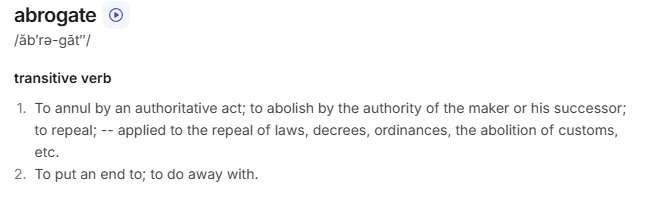
(Abrogated: To annul by an authoritative act; to abolish by the authority of the maker or his successor; To put an end to; to do away with.)

The Law of Moses, given to Israel at Sinai (Exodus 19-20), is no longer the means of salvation:

  • Fulfilled and Replaced: Jesus fulfilled the Law (Matthew 5:17-18), and His death on the cross abolished it as a system of justification (Colossians 2:14; Ephesians 2:15). Hebrews 10:9 states that Christ “takes away the first [covenant] that He may establish the second.” The Law’s sacrifices and ordinances could not perfect or justify (Hebrews 10:1-4; Galatians 3:10-13).
  • A Tutor to Christ: Galatians 3:24-25 explains that the Law was a “tutor to bring us to Christ,” but “after faith has come, we are no longer under a tutor.” For Israel, the Law pointed to the Messiah, but since His coming, salvation is through faith in Him, not the Law’s works (Romans 10:4).
  • Inability to Save: Acts 15:10-11, in the context of Jewish believers, affirms that neither Jews nor Gentiles are saved by the Law, which was a “yoke” they could not bear. Instead, “through the grace of the Lord Jesus Christ we shall be saved.”

Israel’s Salvation Today.

Since Pentecost, Jews (Israel) are saved by:

  • Hearing and Believing the Gospel: Romans 10:17 says faith comes by hearing the word of Christ. Jews must believe Jesus is the Messiah, as Peter proclaimed to Israel (Acts 2:36).
  • Repentance and Baptism: Acts 2:38 applies to Jews, as seen in the mass conversions at Pentecost. Baptism in Jesus’ name unites Jews and Gentiles with Christ (Galatians 3:27-29).
  • Ongoing Faithfulness: Like all believers, Jews must abide in Christ’s doctrine (2 John 1:9) and remain faithful (Hebrews 3:14). The remnant of Israel saved today includes Jews who obey the Gospel, such as the apostles and early disciples (Romans 11:5).

The Remnant and Future Hope.

Romans 11:5 speaks of a “remnant according to the election of grace” among Israel, saved by faith in Christ, as exemplified by Jewish believers in the New Testament (e.g., Acts 21:20). While Romans 11:26 anticipates a future time when “all Israel will be saved,” this does not imply salvation apart from the Gospel. The context (Romans 11:23-27) suggests Israel’s salvation comes through faith in Christ, aligning with the New Covenant promise of Jeremiah 31:31-34, fulfilled in Christ’s blood (Hebrews 8:8-12; Matthew 26:28).

Conclusion.

Since Pentecost, Israel is saved through the Law of Christ—the Gospel—not the Law of Moses, which was fulfilled and abrogated (Hebrews 8:13; Colossians 2:14). The New Covenant, promised in Jeremiah 31:31-34 and established through Christ (Hebrews 8:6), requires Jews to believe in Jesus as Messiah, repent, and be baptized (Acts 2:38; Romans 10:9-13). The remnant of Israel today, like all believers, enters God’s chosen people (1 Peter 2:9) by faith and obedience to the Gospel, fulfilling God’s redemptive plan through the eternal covenant of Christ.

agape

The Kingdom of Christ and His church are present realities.

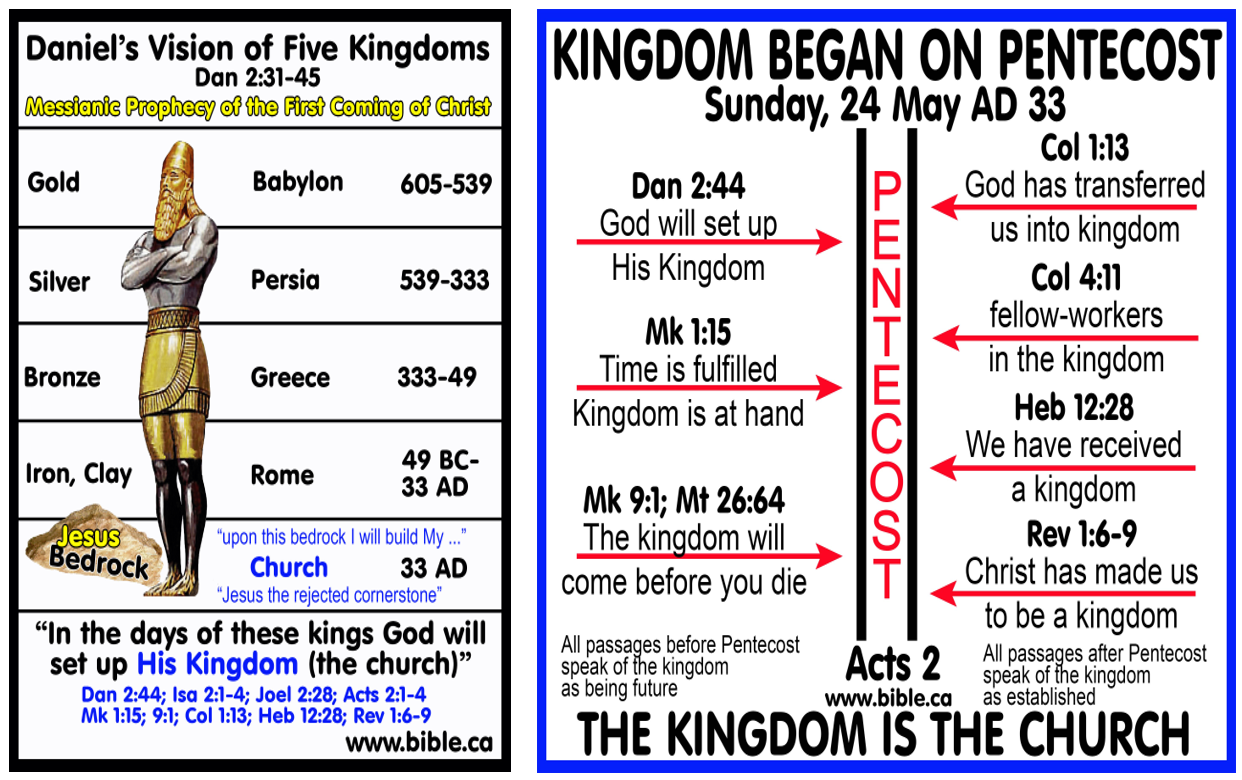
The Kingdom of God (also called the Kingdom of Christ or of Heaven) is not a distant hope but a present reality inaugurated at Pentecost and advancing until Christ’s return. Here are five scriptural proofs that the Kingdom has been established and is operative now.

The Kingdom was Predicted and Came with Power on Pentecost: Jesus declared, “Some standing here will not taste death until they see the kingdom of God come with power” (Mark 9:1, ESV). He tied this power to the Holy Spirit’s arrival (Acts 1:8). On Pentecost, Acts 2:1–4 records the Spirit’s descent with wind, fire, and tongues, fulfilling Joel’s prophecy (Acts 2:16–21). Three thousand were baptized, marking the Kingdom’s (and the church’s) explosive launch (Acts 2:41). This was no mere preview; the Spirit’s outpouring signaled the Kingdom’s arrival, as Peter affirmed Christ’s enthronement (Acts 2:30–36). The Kingdom came with power, not as a future event but a present reality. Christ did not fail to set up His Kingdom and His church.

The Ordinance and Observation of the Lord’s Supper show the Kingdom is a present reality: Jesus promised to drink the cup anew “in the kingdom of God” (Matthew 26:29), and in 1Corinthians 11:20–26, Paul describes the early church regularly partaking of the Lord’s Supper, proclaiming Christ’s death “until He comes.” If the Supper is exclusive to the Kingdom, and believers ate it weekly on the 1st day of the week, the Kingdom must be present. This ordinance isn’t a rehearsal but a participation in Christ’s reign, a Kingdom meal served now, uniting believers with their risen King. Christ did not fail to set up His Kingdom and His church.

Since Pentecost, those that obeyed the Gospel Were and Are Translated into the Kingdom: Colossians 1:13 declares, “He has delivered us from the domain of darkness and transferred us to the kingdom of His beloved Son.” The past tense (“has transferred”) confirms believers are already Kingdom citizens ( cf. Philippians 3:19). Written to living Christians around AD 60, this verse shows the Kingdom isn’t a future destination but a current reality. We’ve been relocated, not to a physical territory but to Christ’s spiritual dominion, where His redemption and forgiveness reign (Col 1:14). Christ did not fail to set up His Kingdom and His church.

The Kingdom came with Power as seen in the Enthronement of Christ: Peter’s Pentecost sermon links Christ’s resurrection to His enthronement on David’s throne (Acts 2:30–36). Ephesians 1:20–22 adds that God seated Christ “far above all rule and authority,” making Him head over all things for the church. A king on the throne means a kingdom in session. Christ’s ascension wasn’t a delay but a coronation, inaugurating His reign over the Kingdom that began at Pentecost and continues now. He will reign until He delivers the kingdom to God when “he hath put all enemies under his feet” 1Cor 15:24-25). Christ did not fail to set up His Kingdom and His church.

We who are in Christ Reign with Him now: Paul writes that Jesus sits on His throne, “Which he wrought in Christ, when he raised him from the dead, and set him at his own right hand in the heavenly places,” (Ephesians 1:20). Then he says, “And hath raised us up together, and made us sit together in heavenly places in Christ Jesus:” (Ephesians 2:6). This present tense language shows the Saints reigning with Christ now. The language of Revelation 1:6 shows our identity as kings and priests now; “And hath made us kings and priests unto God and his Father; to him be glory and dominion for ever and ever.” We reign with Christ when we obey the Gospel of Christ. Christ did not fail to set up His Kingdom and His church.

Since Pentecost, Christ reigns, Satan is bound (Rev 20:2; Matt 12:29), and believers live as Kingdom citizens. This perspective embraces the “already” of Christ’s rule, and rejects any idea that Jesus failed to set up His promised Kingdom and His church. This reality is urging us to live boldly for the King who reigns now.

Christ is: “who is the blessed and only Potentate, the King of kings, and Lord of lords;” (1Timothy 6:15)

Christ did not fail to set up His Kingdom and His church.

agape

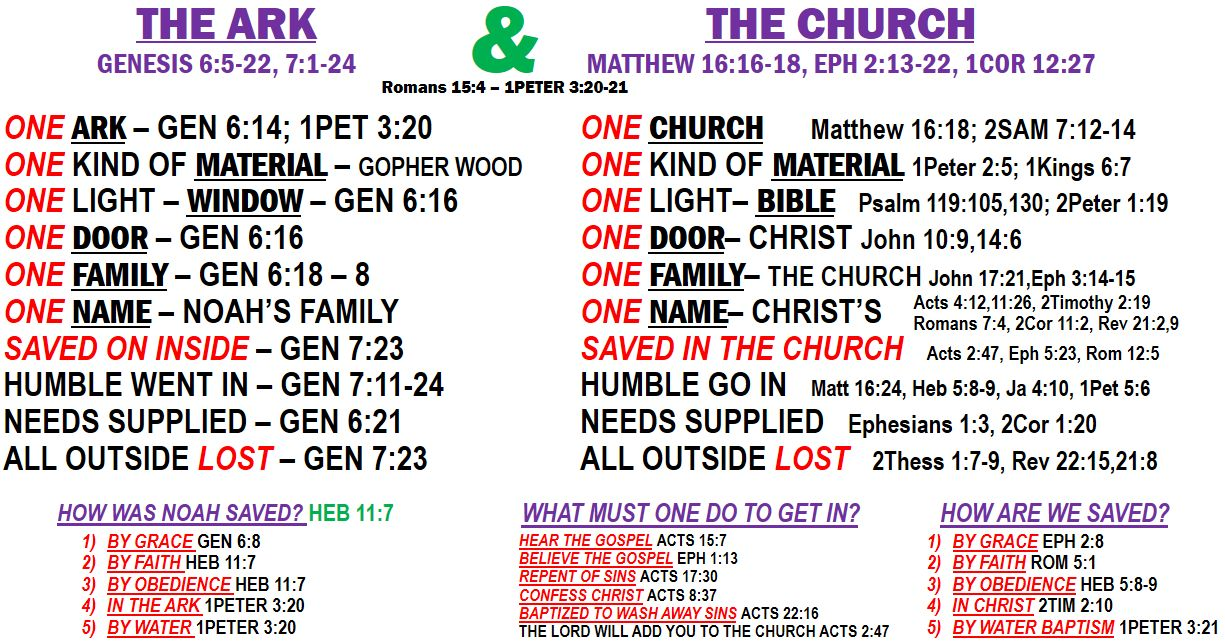
How was Noah saved?

What does the bible say about how Noah was saved?

By Grace (Gen 6:8) But Noah found grace in the eyes of the LORD.

By Faith (Heb 11:7) By faith Noah, being warned of God of things not seen as yet, moved with fear, prepared an ark to the saving of his house; by the which he condemned the world, and became heir of the righteousness which is by faith.

By Obedience (Heb 11:7) By faith Noah, being warned of God of things not seen as yet, moved with fear, prepared an ark to the saving of his house; by the which he condemned the world, and became heir of the righteousness which is by faith.

In the Ark (1Pet 3:20) Which sometime were disobedient, when once the longsuffering of God waited in the days of Noah, while the ark was a preparing, wherein few, that is, eight souls were saved by water.

By Water (1Pet 3:21) The like figure whereunto even baptism doth also now save us

What does the bible say about how WE are saved?

By Grace (Eph 2:8) For by grace are ye saved through faith; and that not of yourselves: it is the gift of God:

By Faith (Rom 5:1) Therefore being justified by faith, we have peace with God through our Lord Jesus Christ:

By Obedience (Heb 5:8-9) Though he were a Son, yet learned he obedience by the things which he suffered; And being made perfect, he became the author of eternal salvation unto all them that obey him;

In Christ (2Tim 2:10) Therefore I endure all things for the elect’s sakes, that they may also obtain the salvation which is in Christ Jesus with eternal glory.

Baptized into Christ (Gal 3:27; Col 2:11; Acts 8:35-38; Rom 6:3-5) For as many of you as have been baptized into Christ have put on Christ.

1Peter 3:21 The like figure whereunto even baptism doth also now save us.

Which of the following sentences are true? Let them that oppose it erase the one he says is NOT true.

baptism doth also NOW save us.

baptism doth also NOT save us.

What questions do you have about this material? Please let us know.

The church of Christ at Franklin & Juniper st in Borger invites you to attend one of their services.

we can RESTORE the New Testament church

Here’s a question almost nobody asks; Is the Lord pleased with so many varied churches teaching contradicting and erroneous doctrines? The answer is self evident.

We ought to seek to RESTORE the New Testament church that Christ built in the first century.

And I say also unto thee, That thou art Peter, and upon this rock I will build my church; and the gates of hell shall not prevail against it.” Matt 16:18

How to continually RESTORE the New Testament church.

  1. RECOGNIZE there are different ones and it is not pleasing to the Lord.
    1. Gal 1:6-10
  2. EXPECT that it can be done. 1Tim 3; Titus 1; Matt 16:18
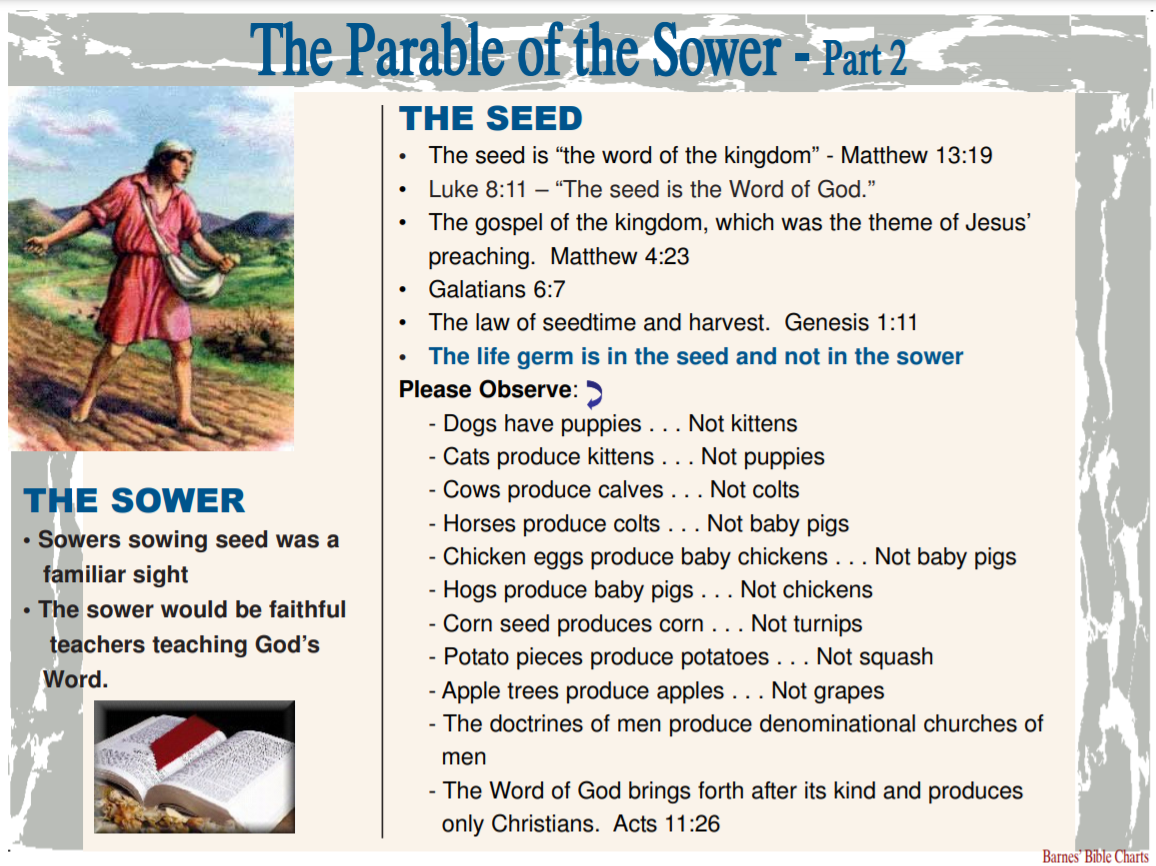
  3. SEED of the SCRIPTURE is the STANDARD by which we restore. Mark 4:13-20
  4. TRUE JESUS vs fake Jesus. 2Cor 11:4 “For if he that cometh preacheth another Jesus, whom we have not preached, or if ye receive another spirit, which ye have not received, or another gospel, which ye have not accepted, ye might well bear with him.”
  5. ORIGINAL identifying marks of doctrine, organization, and function.
    1. 1John 1:9
  6. RETURN, Restore, Repent. 1Cor 1-5 This was the problem with the church at Corinth. They had become divisive over several issues. “For it hath been declared unto me of you, my brethren, by them which are of the house of Chloe, that there are contentions among you.”
  7. ESTABLISHED, organized, met. Acts 2:38-47
    1. 1Cor 11:17-34; 16:1-2; Acts 20:7
    2. They worshipped (Sing Acapella, Prayer, Giving, Teaching, & observing the Lord’s death)
    3. They worked together in local congregations (cf. Rom 16:16)
      • Organized with Elders, Deacons, & Saints. (Phil 1:1; 1Tim 3; Titus 1)
    4. The work of these local congregations (congruently with all local congregations) is all about saints…
      • Making Saints. (Matt 28:19)
      • Teaching Saints. (Matt 28:20)
      • Helping needy Saints. (Acts 11:29)

Give us a KING

Kingdom of Christ

Behold, thou art old, and thy sons walk not in thy ways: now make us a king to judge us like all the nations” (1Samuel 8:5).

The last Judge of the “Judges Period” of OT History was Samuel. His sons were behaving in a disorderly way and the people had become frustrated. They respond to this by asking for a King.

God is never caught by surprise and had already warned them about this situation. In Deuteronomy He said, “When thou art come unto the land which the LORD thy God giveth thee, and shalt possess it, and shalt dwell therein, and shalt say, I will set a king over me, like as all the nations that are about me; Thou shalt in any wise set him king over thee, whom the LORD thy God shall choose: one from among thy brethren shalt thou set king over thee: thou mayest not set a stranger over thee, which is not thy brother. But…” (Deut 17:14-16)

It’s here where we begin our study.

God warned Israel about this situation long before they had even taken the land in which they now reside. Now that they have asked for a KING, He tells Samuel to remind them of this lesson. Then, after the lesson, it is interesting to notice their reaction and it is also important to know what God is doing.

First, He says; “Now therefore hearken unto their voice: howbeit yet protest solemnly unto them, and shew them the manner of the king that shall reign over them” (1Sam 8:9). God wants them to KNOW what they’re asking.

Second, this KING will IMPOSE heavy burdens on them. “This will be the manner of the king that shall reign over you: He will take…”

  • (11) your sons, and appoint them for himself, for his chariots, and to be his horsemen; and some shall run before his chariots.
  • (12) And he will appoint him captains over thousands, and captains over fifties; and will set them to ear his ground, and to reap his harvest, and to make his instruments of war, and instruments of his chariots.
  • (13) And he will take your daughters to be confectionaries, and to be cooks, and to be bakers.
  • (14) And he will take your fields, and your vineyards, and your oliveyards, even the best of them, and give them to his servants.
  • (15) And he will take the tenth of your seed, and of your vineyards, and give to his officers, and to his servants.
  • (16) And he will take your menservants, and your maidservants, and your goodliest young men, and your asses, and put them to his work.
  • (17) He will take the tenth of your sheep: and ye shall be his servants.
  • (18) And ye shall cry out in that day because of your king which ye shall have chosen you; and the LORD will not hear you in that day.

By the end of the UNITED KINGDOM period this truth will become the sore spot for the people. “Thy father made our yoke grievous: now therefore make thou the grievous service of thy father, and his heavy yoke which he put upon us, lighter, and we will serve thee” (1Kings 12:4).

After this warning about their request, the people say, “NEVERTHELESS the people refused to obey the voice of Samuel; and they said, Nay; but we will have a king over us; That we also may be like all the nations; and that our king may judge us, and go out before us, and fight our battles” (1Sam 8:19-20).

Amazing!! Even after hearing the warnings, they REFUSE to obey. Isn’t this still true today? It’s a common response of the disobedient. It was a similar response of the nation of Israel at their first attempt to enter the land of Canaan. “And they said one to another, Let us make a captain, and let us return into Egypt” (Num 14:4).

This next point is important. “And the LORD said to Samuel, Hearken unto their voice, and make them a king” (1Sam 8:7,22). GOD GAVE them a KING, but that is not the complete picture. We need to study the whole counsel of God.

In Hosea, after this and their subsequent apostasy, the prophet said, “I gave thee a king in mine anger, and took him away in my wrath” (Hosea 13:11). They had rejected God, so He gave them a KING. Later, He will remove the earthly king (cf. Jer 22:29-30).

Religious scholars today make the mistake in claiming that God is intent on setting up an earthly kingdom in Jerusalem. That contradicts what God has done and what He has said. God has promised to set up a Spiritual Kingdom beginning at Pentecost (cf. Joh 18:36; Dan 2:44). Christ is KING, and reigns now, sitting on His throne in Heaven at the right hand of God.

For David is not ascended into the heavens: but he saith himself, The LORD said unto my Lord, Sit thou on my right hand, Until I make thy foes thy footstool. Therefore let all the house of Israel know assuredly, that God hath made that same Jesus, whom ye have crucified, both Lord and Christ” (Acts 2:34-36).

Let us never make the same mistake as they and ask for a different king. Christ is KING. “Which in his times he shall shew, who is the blessed and only Potentate, the King of kings, and Lord of lords” (1Tim 6:15).

Spencer

Listen Here.

CALLED out of darkness

The term ‘church’ (ekklesia) literally means, ‘the called out.’ It is a derivative of the word ‘kaleo’ which means a ‘calling out.’

I bring this to you attention because this is the word Peter uses in his 1st letter to us, the church.

But ye are a chosen generation, a royal priesthood, an holy nation, a peculiar people; that ye should shew forth the praises of him who hath CALLED YOU OUT of darkness into his marvellous light” (1Peter 2:9; emph mine seb).

Peter’s inspired letter says much about being separate, set apart, and different from the rest of the world. The comparison in this verse is light vs darkness.

This calling is to be heeded, but how? To understand what Christian must do to stay out of the darkness and be in the light can be seen in a study of chapter two.

Before we begin, it’s important to remember that the calling by God occurs through the word preached. “Whereunto he called you by our gospel, to the obtaining of the glory of our Lord Jesus Christ” (2Thess 2:14). We become Christians by obeying the Gospel. “Know ye not, that so many of us as were baptized into Jesus Christ were baptized into his death? Therefore we are buried with him by baptism into death: that like as Christ was raised up from the dead by the glory of the Father, even so we also should walk in newness of life” (Rom 6:3-4; 2Thess 2:8-9; 1Cor 15:1-4). After responding to this call, we can then continue to answer the call to walk in the light as He is in the light (cf. 1John 1:7).

With this background, we can now proceed to answer how to answer the call to come out of darkness.

CAST OFF

Beginning at verse one of chapter two we read, “Wherefore laying aside all malice, and all guile, and hypocrisies, and envies, and all evil speakings…” From this we see that we are to CAST OFF worldly behaviors. The Christian that is walking in the light has nothing to do with worldliness and sin. Paul wrote, “But fornication, and all uncleanness, or covetousness, let it not be once named among you, as becometh saints” (Eph 5:3). Paul also described the putting off as a putting to death these worldly attributes.

APPETITE for the word

Continuing on, Peter gives the source of knowing what is to be cast off and what our attitude should be toward it. “As newborn babes, desire the sincere milk of the word, that ye may grow thereby” (1Peter 2:2). The revealed word of God is the source book of information to teach us the difference between light and darkness, and that we need to develop an APPETITE for it as much as a newborn baby cries out for milk when it’s hungry. What a vivid description for us to see how vital the bread of life is to our growth.

LIVING STONES

From here, Peter describes who the called are. “To whom coming, as unto a LIVING STONE, disallowed indeed of men, but chosen of God, and precious, Ye also, as LIVELY STONES, are built up a spiritual house, an holy priesthood, to offer up spiritual sacrifices, acceptable to God by Jesus Christ” (1Pet 2:4-5, emph mine seb). This is important to understand for the Christian. Especially as we face persecution for being Christians. Peter will point this out in the remainder of this letter. We are the LIVING STONES of the Spiritual Temple of God.

LIGHT BEARER

Another thing to notice for those that walk in the light. We are to be LIGHT BEARERS to the dark world. “But ye are a chosen generation, a royal priesthood, an holy nation, a peculiar people; that ye should shew forth the praises of him who hath called you out of darkness into his marvellous light” (1Peter 2:9-12). Notice that we are to “shew forth the praises of Him who hath called you out.” We can do this directly through preaching, and also through our actions in the world. Note verse 12, “they may by your good works, which they shall behold, glorify God in the day of visitation.” The Christian that is CALLED out of darkness shines forth the Light of Christ in their words and deeds (cf. Col 3:17).

EXAMPLE

This walking in the Light becomes an EXAMPLE for others to observe and to follow. Peter lists several areas in which the Christian can shine the Light, “which they shall behold, glorify God in the day of visitation” (1Peter 2:13-17)

DO GOOD

Finally, those that are called out of darkness are to be DO GOODERS. People that continue to do good despite persecution. “For what glory is it, if, when ye be buffeted for your faults, ye shall take it patiently? but if, when ye do well, and suffer for it, ye take it patiently, this is acceptable with God” (1Peter 2:18-25).

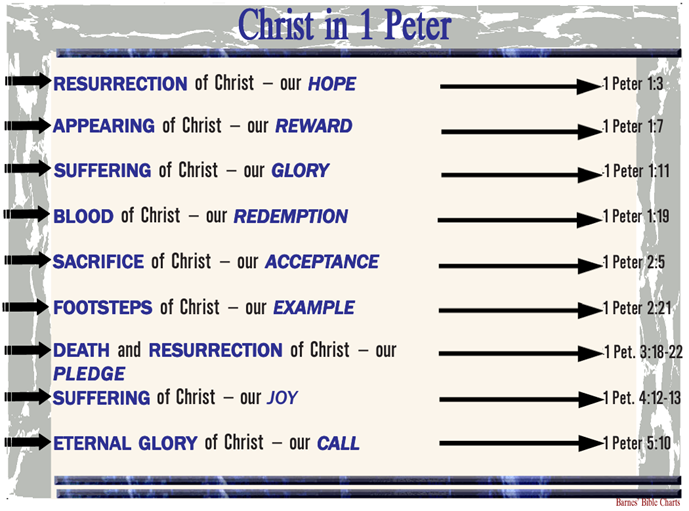
But this is not a do as I say, not as I do command. It is a “do as I did” command. Jesus Himself being the standard for those called to follow. “For even hereunto were ye called: because Christ also suffered for us, leaving us an example, that ye should follow his steps: Who did no sin, neither was guile found in his mouth: Who, when he was reviled, reviled not again; when he suffered, he threatened not; but committed himself to him that judgeth righteously: Who his own self bare our sins in his own body on the tree, that we, being dead to sins, should live unto righteousness: by whose stripes ye were healed” (1Peter 2:21-24, emph mine seb).

It’s interesting to note that chapter two is not the only place in this letter that talks about our being CALLED (see 1Pet 1:15; 3:9; 5:10). The last one is given just before the closing greetings.

But the God of all grace, who hath called us unto his eternal glory by Christ Jesus, after that ye have suffered a while, make you perfect, stablish, strengthen, settle you.”

(1Peter 5:10)

This gives us comfort as we suffer persecution because we walk in the Light. It comforts because the suffering is only temporary, but glory is Eternal!

Spencer

Spencer is an evangelist of the church of Christ in Borger Texas. He has been working with the congregation on Franklin and Juniper since 2014.

We’re Looking for a church, part 2

Last week we began to answer those who say, “We’re looking for a church.” To answer we had to first describe what the church is NOT.

  • It is not a DIVISION.
  • It is not a BUILDING.
  • It is not just a NAME.
  • It is not an ORGANIZATION for general benevolence.
  • It is not for ENTERTAINMNET.

In this article we will look at a few things to consider when looking for a ‘church.’

By the way; we use this language accommodatively. We’re looking for Christians who are coming together as a church to do the work of the Lord in a local area.

We must search the scriptures with honest hearts and answer such requests in a kind, loving and scriptural way. We also need to be careful not to treat the church of Christ as just another denomination by using denominational language. (1Peter 4:11)

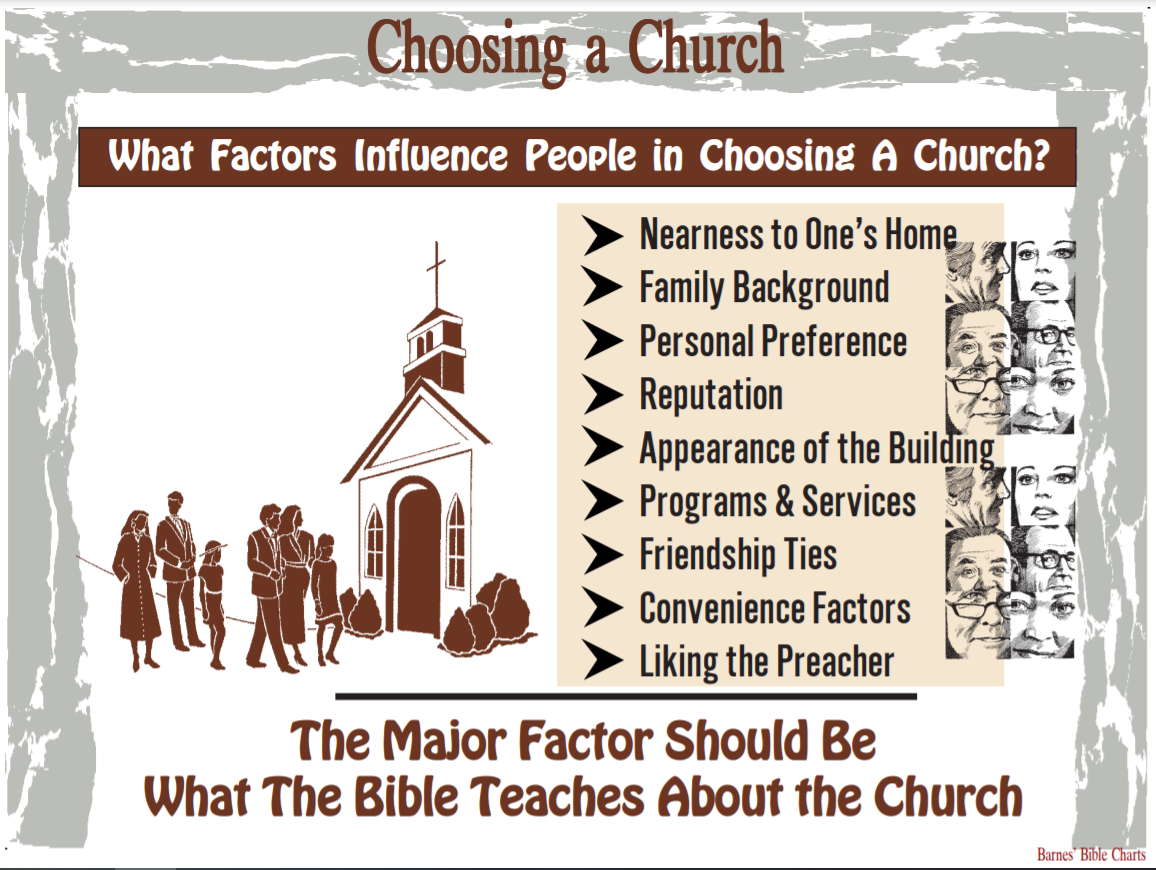
What are you looking for in a CHURCH?

Are you looking for the church (people) that CONFORMS to the scriptures in the New Testament, or one that conforms to the CULTURE of our times? Are you looking for God’s people that CONFORM themselves to the doctrine of Christ, or one that conforms to your schedule, your likes, your daycare needs?

And be not conformed to this world: but be ye transformed by the renewing of your mind, that ye may prove what is that good, and acceptable, and perfect, will of God.” [Rom 12:2; 2John 1:9]

Are you looking for a church whose HEAD is Christ, sitting in HEAVEN on His throne, or one that has a HEADQUARTERS on earth with unqualified men at its head?

And call no man your father upon the earth: for one is your Father, which is in heaven.” [Mat 23:9; Acts 2:30-36; Col 1:18]

Are you looking for a church that is scripturally UNIFIED with Christ, or one that is UNIFIED only in their diversity of practices, and tolerance of sin?

Endeavouring to keep the unity of the Spirit in the bond of peace. There is one body, and one Spirit, even as ye are called in one hope of your calling; One Lord, one faith, one baptism, One God and Father of all, who is above all, and through all, and in you all.” [Eph 4:3-6]

Are you looking for the church that will be RAISED up on the last day, or the many that will be REFUSED by Christ for their works done without His authority? Christ will only RAISE one church, His church.  

Not every one that saith unto me, Lord, Lord, shall enter into the kingdom of heaven; but he that doeth the will of my Father which is in heaven.” [Mat 7:21-23; Luke 6:46; Eph 5:23]

Are you looking for the one that is being CONSTRUCTED by Christ, or the one that is being built in a way that is CONTRARY to Christ?

And I say also unto thee, That thou art Peter, and upon this rock I will build my church; and the gates of hell shall not prevail against it.” [Mat 16:18; Eph 2:19-20; 2Cor 11:4; Gal 1:6-10]

Are you looking for the church that you can read & HEAR about in the Bible, that requires a HEARTFUL obedience to God’s instructions? The one we can’t join, but are added to when we obey from the HEART that form of doctrine (water baptism).

But God be thanked, that ye were the servants of sin, but ye have obeyed from the heart that form of doctrine which was delivered you.” [Rom 6:17; cf 3-4; Acts 2:38-47; Col 2:12; 1Pet 3:21]

Much more can be said about how to Identify the Lord’s church. Would you like to learn what the Bible says about the church of Christ? We want to help you to be set free by the truth of God’s Word. [John 8:32]

— spencer

Looking for a church? pt1

How many times have you heard someone make that statement? How many times have you invited them to worship only to hear them try to explain why the church of Christ doesn’t fit in with their expectations?
 
Yeah, me too. Many times, you’ll see people post on social media groups about seeking a church.
 
They will also list the criterion by which they will choose a church. Things like; Daycare, children’s & single’s programs. One person said to me, “I didn’t join my church because of their food & carnivals, but I would join one without them.”
 
How can we answer our neighbors better? We can help them find THE church,

but we have to be ready to give them an answer. Let’s prepare ourselves to answer such requests in a kind, loving and scriptural way. Before we can show them what the bible says, we need to see if they’re willing to have a conversation about what the bible says. Many have never heard what you know about what the bible says about the Lord’s church. Many only have a denominational understanding.
 
If you get to have the conversation, the first thing that might help is to show them what the church is NOT.
 
First, it is not a DENOMINATION. It’s not even non-denominational. The church that Christ built is UN-DENOMINATIONAL. “Now this I say, that every one of you saith, I am of Paul; and I of Apollos; and I of Cephas; and I of Christ. Is Christ divided? was Paul crucified for you? or were ye baptized in the name of Paul?” (1Cor 1:12-13)
 
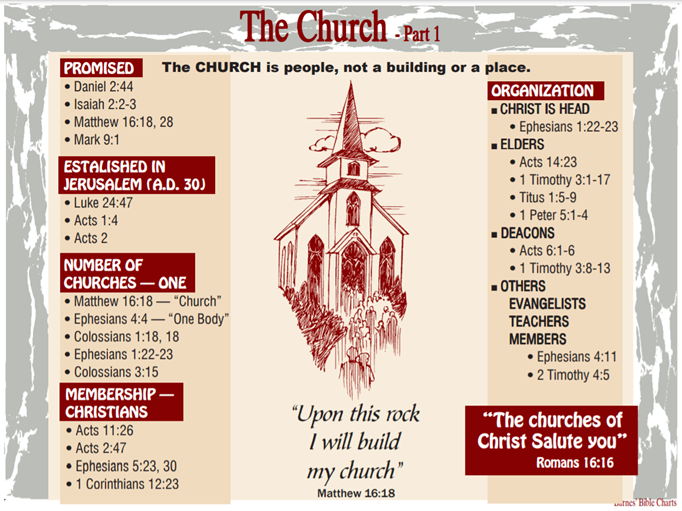
Second, the church is not an EDIFICE, a building, nor a place. The church of the bible is a People. The church is spoken of as if it’s a building, (eg; “Let’s go to church.”). John wrote to people not a building; “I wrote unto the church:” (3John 1:9; cf Phm 1:2; Col 1:24; 4:15). People are the church (Heb 3:6; 1Co 3:16)
 
Third, the church is not the Lord’s church just because of a NAME. Talking about the church as a name contributes to the denominational concept. The phrase, “church of Christ” denotes ownership. “Take heed therefore unto yourselves, and to all the flock, over the which the Holy Ghost hath made you overseers, to feed the church of God, which he hath purchased with his own blood.” (Acts 20:28). There are many buildings with a sign on front that says, “the church of Christ,” but that doesn’t make it so. There are identifying marks that will tell us if it’s the church that the Lord bought. The church at Ephesus was in danger of having their candlestick removed unless they repent. (Rev 2:1-5)
 
I know this point confuses many. We all recognize that many denominations wear man made NAMES and wear the NAME of their founders. (eg. Lutheran). The New Testament uses many identifying phrases; (often including location)
·       My church; Matt 16:18
·       church of the Lord, church of God; Acts 20:28; 1Cor 1:2
·       The body, The church; Col 1:18; Eph 1:22-23; 5:23; 1Thess 1:1
·       Household of God, church of the living God; Eph 2:19; 1Tim 3:15
·       Church of the Firstborn; Heb 12:23
·       God’s field, God’s building; 1Cor 3:9
·       The Flock; 1Peter 5:3; Acts 20:28
·       Church of Christ; Rom 16:16
 
Fourth, the church is not an ORGANIZATION for general benevolence nor a political action committee. This is one of the main points of confusion. Our culture today believes that the church exists to ease the physical needs of mankind or to raise up a political movement. The primary purpose of the church found in the bible is as a gospel teaching ORGANIZATION. “But if I tarry long, that thou mayest know how thou oughtest to behave thyself in the house of God, which is the church of the living God, the pillar and ground of the truth.” (1Tim 3:15, 5:3-16; cf. Mat 28:18-20; Eph 3:10)
 
Fifthly and finally, the church does not exist for entertainment nor MERRYMAKING purposes. This doesn’t mean one must be sad & unhappy when they worship the Lord. What it does mean is that the church exists for a higher purpose than carnal entertainment. “What? have ye not houses to eat and to drink in? or despise ye the church of God, and shame them that have not? What shall I say to you? shall I praise you in this? I praise you not.” (1Cor 11:22).
 
Next week we’ll take a look at what IS the church found in the New Testament.
— spencer

Distracted by the CARES of the world

14 The sower soweth the word.

WAYSIDE.

15 And these are they by the way side, where the word is sown; but when they have heard, Satan cometh immediately, and taketh away the word that was sown in their hearts.

STONY GROUND.

16 And these are they likewise which are sown on stony ground; who, when they have heard the word, immediately receive it with gladness;

17 And have no root in themselves, and so endure but for a time: afterward, when affliction or persecution ariseth for the word’s sake, immediately they are offended.

THORNY GROUND.

18 And these are they which are sown among thorns; such as hear the word,

19 And the cares of this world, and the deceitfulness of riches, and the lusts of other things entering in, choke the word, and it becometh unfruitful.

GOOD GROUND.

20 And these are they which are sown on good ground; such as hear the word, and receive it, and bring forth fruit, some thirtyfold, some sixty, and some an hundred. [Mark 4:14-20]

All of us are barraged daily with things that distract. The CHALLENGES of life feel like trying to take a SIP of water from a FIREHOSE. Does your life feel like that? Mine too. Everyone seems to want / need your attention. Some of them are not sinful in themselves, but when we allow them to take away from more important things, then they become sin.

Therefore to him that knoweth to do good, and doeth it not, to him it is sin.” [James 4:17]

Paul tells us, “And be not conformed to this world” [Rom 12:2]; John says we must “not love the world or the things in the world” [1John 2:15-17]; James wrote “Do you not know that friendship with the world is enmity with God” [James 4:4] and to remain “unspotted from the world” [James 1:27]. While much can be said about all 4 soils, this article will focus on the Thorny Ground, “the CARES of this world.”

First, we all face the physical (the bible calls them CARNAL) needs of life. Food, Clothing & Shelter are necessities and not sinful. For most of us it feels like we work just to pay our bills, or that we’re in a rat race. This is telling us that the Carnal needs of life are surpassing the “weightier matters.” Another way of saying this is with one word, WORRY. Jesus gives us the remedy; “But seek ye first the kingdom of God, and his righteousness; and all these things shall be added unto you.” [Mat 6:19-34]

A second thing that is not necessarily sinful are the AMUSEMENTS we have. The scriptures teach us that God, “giveth us richly all things to enjoy.” It’s ok to relax, rest and enjoy the fruits of our labor. However, when they push out the “weightier matters” they have become sin.“There is treasure to be desired and oil in the dwelling of the wise; but a foolish man spendeth it up.” [Prov 21:20] When we take time to enjoy the fruits of our labor, do we forsake the assembling of ourselves together when we go on vacation? We’re not speaking of sinful things like adultery, fornication, stealing, drunkenness, lying, etc. Often, it’s the lawful things that we’ve placed ahead of our service to the Lord.

The third thing that can become a distraction, and I say this with all humility knowing that this one hits our heart, is our RELATIONSHIPS. Family & Friends are important, commanded, and necessary to our existence. [cf. Gen 2:18; 1Cor 7:2; 1Tim 5:16 et al] However, even these can lead to distraction if we allow relationships to take us away from that which is right. “He that loveth father or mother more than me is not worthy of me: and he that loveth son or daughter more than me is not worthy of me.” [Mat 10:37; cf. 1Cor 7:32-33] We must care for our families, AND we must serve the Lord. God is not telling us to stop loving our family, friends, or neighbors. We ought to do these things without leaving the others undone. Here’s something to remember; our family, who have gone on before us, would give this exact advice! [Luke 16:19-31:]

Fourthly, mixed in with all of the above is our need for money. Our household ECONOMICS can elevate to a point where we begin to trust it above our trust in God. “Charge them that are rich in this world, that they be not highminded, nor trust in uncertain riches, but in the living God,” [1Tim 6:10,17; cf. James 5:3; Mat 6:19] One must love and trust the Lord PREEMINENTLY [Col 1:18].

A fifth distraction can be the SOCIAL Ills of the world. Some of us have placed our concern for Societal ills ABOVE the spreading of the Gospel. This concern creeps into our practices in the church. We must be constantly reminded that the Gospel “is the power of God unto salvation to every one that believeth; to the Jew first, and also to the Greek.” [Rom 1:16]. We must help our neighbors, and the best way to do that is by teaching them the way of the Lord and by doing things His way [Mat 22:21; 2Thess 3:12; 1Tim 5:16; Eph 4:28].

Be on your guard, be watching and let’s not grow weary doing good while waiting for the Lord’s return. May we be found well doing when He returns. “Blessed are those servants, whom the Lord when he cometh shall find watching: verily I say unto you, that he shall gird himself, and make them to sit down to meat, and will come forth and serve them.” [Luke 12:37]

And take heed to yourselves, lest at any time your hearts be overcharged with surfeiting, and drunkenness, and CARES of this life, and so that day come upon you unawares.” [Luke 21:34; emp mine seb]

Preaching the Cross

Some will argue against the preaching of obedience to the gospel by crying, “PREACH THE MAN, NOT THE PLAN.” They may also say, “THE NEW TESTAMENT IS A LOVE LETTER NOT A LAW BOOK.”

How does one answer such charges? Are they correct in their assertions? Is preaching about baptism, the one church, and against the errors of liberalism & denominationalism opposed to preaching the Cross of Christ?

What does the Bible say? If our speech and preaching needs any revision, let us hear it from the revealed word of Jesus the Christ. Philosophies of preaching from liberal professors will not suffice. We shall appeal to the word of God for all things in word or deed [Col 3:17].

 As this article begins, we are reminded to ‘season our words with salt’ [Col 4:6]. We are not mad any anyone. Our desire is that everyone come to the knowledge of the truth and be saved. It’s to that end that we “Preach the Cross of Christ.”

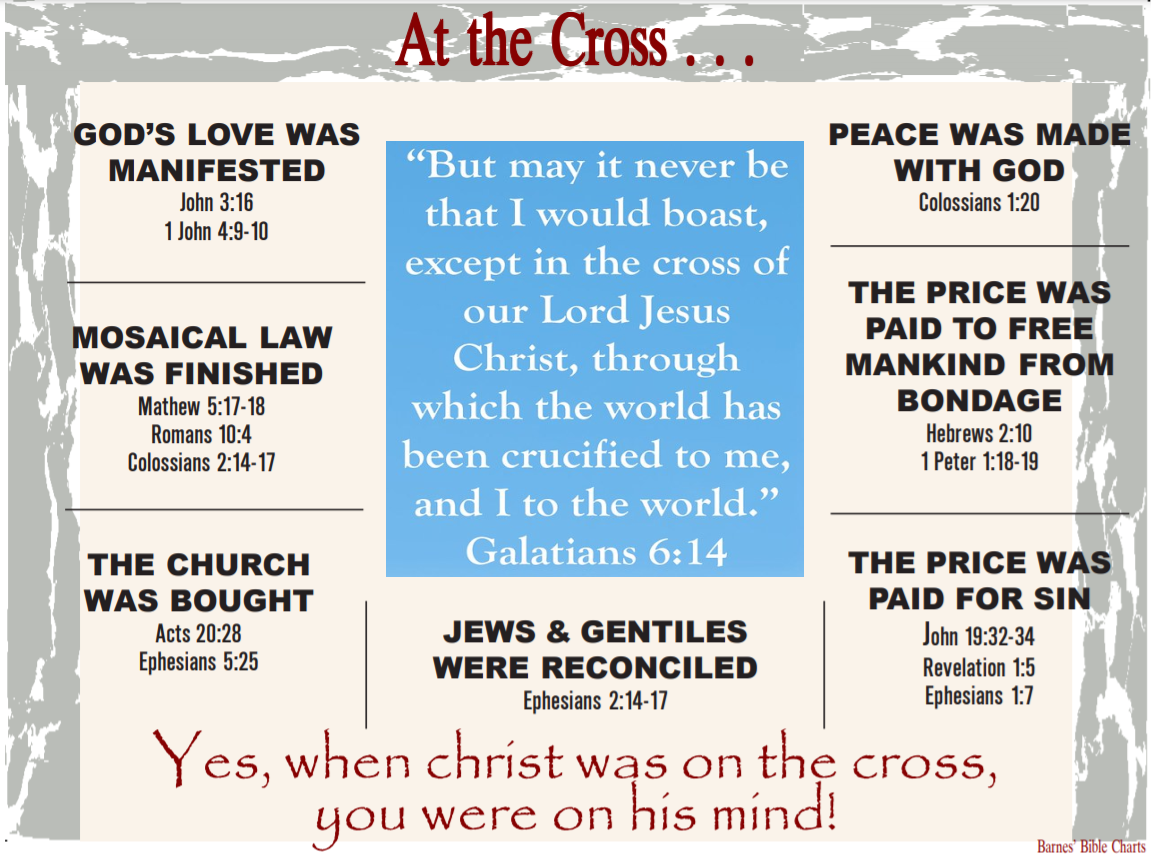
To preach the CROSS is to preach “CHRIST CRUCIFIED” [1Cor 1:23]. Preaching the cross is to preach the gospel [1Cor 1:17,18]. It is not “with enticing words of man’s wisdom,” “But we speak the wisdom of God in a mystery,” which has been revealed by the Spirit of God in the book of God, the Bible [1Cor 2:1-13].

Those that heard the preaching of the Cross RECEIVED the gospel [Acts 2:41; 8:14; 1Cor 15:1]. To receive the gospel, through the word, is to receive the ‘grace of God’ [2Cor 6:1; Titus 2:11-12]. To preach the cross is to ‘testify the gospel of the grace of God’ [Act 20:24].

Until one is OBEDIENT to the word of his grace, he has not been saved by the preaching of the Cross [1Pet 1:22; 1Cor 1:18]. Whenever and wherever one is obedient to the gospel he is saved by grace [Acts 10:48; 15:11]. When Paul preached the cross to the Corinthians, they were obedient in baptism in the name of Jesus the Christ [Acts 18:8; 1Cor 1:13]. This is how they were “washed” [1Cor 6:11]. Baptism is “in the name of the Lord Jesus” [Mat 28:19; Acts 10:48; 19:5], and baptism “in the name of the Lord” is “for the remission of sins” [Acts 2:38; 10:48; 19:5].

Then, as Paul rebuked SIN found in the church at Corinth, was he not ‘preaching the cross?’ When he spoke against division, immorality, marriage, and the perversions of the Lord’s Supper, was he not ‘preaching the cross?’ [1Cor 14:37]. The entire letter is the command of the Lord, the wisdom of God, the Gospel.

When the elitist tells us to ‘preach the man, not the plan,’ without condemning the antichrist teachings of denominations, they have missed the mark regarding the connection of Jesus to His plan. To preach the Man without His plan is to miss the SYNONYMOUS terms spoken of salvation.

  • “Baptized into Christ” [Rom 6:3,4; Gal 3:27]. “Baptized into one body,” the church [1Cor 12:13, 20; Eph 1:22-23; Col 1:18, 24].
  • Reconciled unto God “in Christ” [2Cor 5:18-20]. Reconciled unto God “in one body by the cross,” the church [Eph 1:22,23; 2:16].
  • Saved, redeemed by the blood of Christ [1Peter 1:18-19; Eph 1:7; Col 1:14]. Church purchased with the blood of Christ [Act 20:28].
  • Christ “gave himself for me” and tasted “death for every man” [Gal 2:20; Heb 2:9]. Christ “gave himself for it,” the church [Eph 5:25].
  • “In Christ” – “made nigh” – “by the blood” [Eph 2:13]. “In one body” – “reconciled” – “by the cross” [Eph 2:16].

It is not off balance, nor out of focus, to speak about baptism into the body or church of Christ, to speak of reconciliation in one body, the church, to speak of Christ having purchased the church with His own blood. To speak of one, Christ, is to speak of the other, the church. Paul once “persecuted the church” [Act 8:3; Gal 1:13; 1Cor 15:9], but when the Lord appeared to him, He said, “why persecutest thou me?” [Acts 9:4; 22:7; 26:14]. To preach Christ, to preach the Cross, is to preach the church. If to persecute Christ is to persecute the church, then to preach Christ is to preach the church. It stands to reason, anyone against the doctrine of Christ, is against Christ [2John 9].

Let us therefore, speaking the truth in love, Preach the Cross.