The ontological argument, first articulated by St. Anselm of Canterbury in the 11th century, explores the concept of God as a necessary being whose existence is self-evident through reason. Unlike other arguments that rely on empirical evidence, the ontological argument is a philosophical proof, rooted in the nature of God as “that than which nothing greater can be conceived.” Modern developments in philosophy and science reinforce the logic of this timeless argument.
The Concept of Necessary Existence. The argument begins with the definition of God as the greatest conceivable being. Such a being must exist not only in the mind (as a concept) but also in reality, for existence in reality is greater than existence solely in thought. If God existed only as a concept, then a greater being—one that exists in reality—could be imagined, contradicting the original definition. Thus, God must exist in reality.
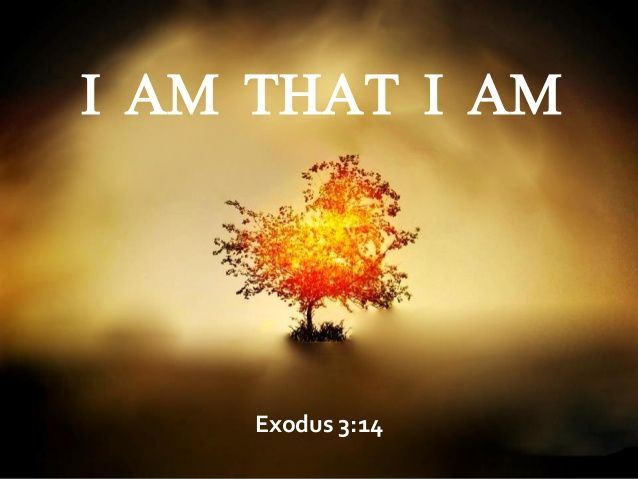
This concept aligns with the biblical understanding of God as self-existent and eternal. Exodus 3:14 encapsulates this when God declares, “I AM THAT I AM,” signifying His independent and necessary existence.
Modern Philosophical Insights. Contemporary philosophers like Alvin Plantinga have refined the argument, framing it within modal logic. Plantinga’s version argues that if it is possible for a maximally great being to exist, then such a being exists in some possible world. If it exists in one possible world, its necessary nature means it exists in all possible worlds—including our own.
This formulation strengthens the argument by considering God’s existence as necessary rather than contingent. A necessary being is one that must exist; its non-existence is impossible. This necessity aligns with the biblical portrayal of God as eternal and unchanging (Malachi 3:6).
Scientific Corroboration of a Necessary Cause. While the ontological argument is primarily philosophical, modern science lends indirect support. The universe, with its intricate fine-tuning, suggests a source that exists outside time and space. This aligns with the concept of a necessary being who undergirds all reality. Romans 1:20 reflects this idea: “For the invisible things of him from the creation of the world are clearly seen, being understood by the things that are made.”
Implications of God’s Necessary Existence. If God’s existence is necessary, He is the source of all contingent reality—everything that depends on something else to exist. This explains not only the existence of the universe but also the rationality, order, and purpose evident in creation.
Conclusion. The ontological argument, grounded in reason and supported by scripture, reveals God as the necessary being upon whom all existence depends. As Colossians 1:17 declares, “And he is before all things, and by him all things consist.” This philosophical proof, when coupled with scripture, underscores the truth of God’s eternal and unchanging nature.
Sources: • Plantinga, A. The Nature of Necessity. • Craig, W.L. Reasonable Faith: Christian Truth and Apologetics. • Exodus 3:14, Romans 1:20, Malachi 3:6, Colossians 1:17 (KJV).
Not Just another Bible Reading plan you won’t finish.
It’s that time of year again when we encourage folks to find the right Bible reading plan that works for them. If you’ve ever struggled to read the Bible consistently, having a structured plan can make all the difference.
Before we introduce the 2025 plan, let’s take a moment to reflect on why a regular approach to Bible reading is so valuable.
The Word of God is our spiritual nourishment (Matthew 4:4), and regular reading allows us to grow in knowledge, faith, and obedience. A well thought out plan provides consistency and focus, ensuring that we engage with the whole counsel of God (Acts 20:27). It also helps us build a daily habit of spending time in God’s Word, which strengthens our walk with Him and equips us for every good work (2 Timothy 3:16-17).
Following is a simplified version of the Bible Reading Plan I’ve followed for the last few years. This plan is both simple and engaging. By breaking up the reading between the Old and New Testaments it helps to break up any monotony that keeps many folks from finishing.
The Monday Through Friday 5-day Reading Plan This year’s plan has us reading the New Testament twice while incorporating the Old Testament and Poetry/Wisdom books. It is structured to give variety and balance:
• Mondays: Read 4 chapters from the Gospels (Matthew, Mark, Luke, and John – 89 chapters twice).
• Tuesdays: Read 4 chapters from Paul’s letters (Romans through Philemon – 87 chapters twice).
• Wednesdays: Read 4 chapters from the General Letters and Acts (Hebrews through Revelation and Acts – 84 chapters twice).
• Thursdays & Fridays: Read 7 chapters each on these two days from the Old Testament History & prophets (728 chapters total).
• Monday–Friday: Add 1 chapter each morning or evening from the Poetry and Wisdom books (Psalms, Proverbs, Ecclesiastes, Song of Solomon – 201 chapters total). With the 59 days to spare I’ll usually read Proverbs, Ecclesiastes, & Song of Solomon again.
By following this plan, you will read through the entire Bible in a year, with the New Testament covered twice.
Why This Plan Works As New Testament Christians, the focus on the New Covenant is especially meaningful. By reading the New Testament twice in a year—just 4 chapters a day—you’ll gain a deeper understanding of Jesus’ life and teachings, as well as learning about the Lord’s church. In about 15–20 minutes each day, you can reflect on God’s grace and truth revealed through His Word.
The plan also ensures exposure to the Old Testament, grounding us in God’s purpose, and wisdom. With its organized structure, each day brings fresh motivation and variety, helping you stay engaged.
Imagine this time next year, having read about the life of Jesus twice and journeyed through the entire Bible. You’ll gain not just knowledge, but also a richer, deeper relationship with God through His Word. Start your journey today, and see how consistent Bible reading transforms your life in 2025!.
Who Was in the Manger? The question, “Who was in the manger?” directs our thoughts to a singular event in human history: the birth of Jesus Christ. The identity of the One lying in that humble setting reveals profound truths about God’s plan for mankind.
The Messiah The child in the manger was the long-awaited Messiah, the Anointed One sent to save humanity. Andrew declared in John 1:41, “We have found the Messiah.” The angels echoed this truth to shepherds, proclaiming, “Unto you is born this day in the city of David a Saviour, which is Christ the Lord” (Luke 2:11). This Messiah came not just for Israel but for all mankind, as Matthew 1:21 reveals: “He shall save his people from their sins.” Paul emphasized in 1 Timothy 1:15 that Christ’s purpose was to save sinners.
Alpha and Omega The baby in the manger was more than just the Savior; He was the eternal God, the Alpha and the Omega, the beginning and the end (Revelation 1:8). While the world saw a helpless infant, in Him dwelled the fullness of deity. His coming was the intersection of the Creator stepping into His creation.
Name Above All Names The child born in Bethlehem carried the name above all names, one that is unequaled in power and significance. Acts 4:12 declares, “There is none other name under heaven given among men, whereby we must be saved.” Philippians 2:9 states that God exalted Jesus and gave Him a name above every name.
God’s Only and Beloved Son This infant was God’s only begotten and beloved Son, sent to fulfill His divine mission. Mark 9:7 records God’s declaration: “This is my beloved Son: hear him.” Peter confessed in Matthew 16:16, “Thou art the Christ, the Son of the living God.” As God’s Son, Jesus was uniquely qualified to reconcile humanity to the Father, demonstrating both God’s love and His justice.
Eternal Life Giver In the manger lay the giver of eternal life. John 1 portrays Him as the Word, the source of life and light for all. Jesus Himself said, “The words that I speak unto you, they are spirit, and they are life” (John 6:63). This eternal life is not only a future promise but a present reality for those who believe in Hime and obey the Gospel.
The Root and Offspring of David Finally, the child in the manger was both the root and offspring of David, fulfilling prophecy and confirming His rightful place as King. Revelation 22:16 proclaims, “I am the root and the offspring of David, and the bright and morning star.” He is the Lion of the tribe of Judah, worthy to reign forever (Revelation 5:5).
The one in the manger was no ordinary child. He was the Messiah, the Alpha and Omega, the name above all names, God’s beloved Son, the eternal life giver, and the root and offspring of David. While we don’t know when Jesus was born, we take this time of year as an opportunity to talk to folks because many are already thinking about Him. It’s an opportunity to remind the world of who Jesus truly is and why He came: to offer salvation and eternal hope to all who believe. Let’s use this season and every season to share the good news of the Savior who changed everything.
The basic error in the Calvinist understanding of God’s sovereignty lies in their assumption that God’s sovereignty means He must exercise absolute, irresistible control over every aspect of human will.
Calvinism argues that because God is sovereign, no created being could truly have the option to reject Him, as this would supposedly compromise His power. As a result, Calvinism teaches that God must first miraculously regenerate a person’s heart to make them capable of seeking Him, thus removing the genuine exercise of free will in the process of coming to faith.
However, this view misunderstands the nature of sovereignty. True sovereignty means God possesses ultimate authority and power, including the authority to grant His creation the freedom to choose, even if that choice involves rejection. By equating sovereignty with strict determinism, Calvinism limits God, suggesting He cannot be truly sovereign unless He exercises control in a particular way. But as seen in Scripture, God’s sovereignty encompasses the ability to bring about His purposes despite human choices, even when those choices oppose Him. This view implies God’s sovereignty cannot accommodate human freedom without being diminished. Biblically, God’s sovereignty is displayed in His supreme ability to accomplish His purposes through or in spite of human decisions.
The sovereignty of God is neither dependent on human response nor diminished by human rejection. To assert that God’s sovereignty is undermined if someone rejects Him is to misunderstand what sovereignty means. Sovereignty refers to supreme authority and power over all things, independent of external influence or acceptance. Here are key points to help understand this:
God’s Sovereignty as Absolute: Scripture portrays God’s sovereignty as all-encompassing and unchanging. In passages like Isaiah 46:9-10, God declares, “I am God, and there is none like me… My counsel shall stand, and I will do all my pleasure.” God’s authority and purpose are not contingent on human acceptance but are established solely by His will.
God Permits Free Will without Diminishing His Sovereignty: Sovereignty includes the authority to grant free will to humanity. In His omnipotence, God has chosen to allow individuals the freedom to accept or reject Him, but this choice does not lessen His power. In Acts 17:30-31, Paul speaks of God’s patient desire for repentance, showing that God’s authority remains, even as He allows humanity space for choice. “And the times of this ignorance God winked at; but now commandeth all men every where to repent: Because he hath appointed a day, in the which he will judge the world in righteousness by that man whom he hath ordained; whereof he hath given assurance unto all men, in that he hath raised him from the dead.”
Judgment Demonstrates Sovereign Authority: When humans reject God, it doesn’t affect His sovereignty but rather reveals it. God’s authority is demonstrated through judgment as well as mercy. 2 Thessalonians 1:8-9 describes that those who “know not God” or “obey not the gospel” will face His judgment. This action affirms His authority over all creation, holding all accountable whether or not they choose to honor Him.
Christ’s Rejection Does Not Diminish God’s Power: Jesus Himself faced widespread rejection, yet God’s plan of salvation was fulfilled, displaying His sovereignty. John 1:11 says, “He came unto his own, and his own received him not,” yet the mission was accomplished by God’s power, demonstrating that rejection by some does not disrupt God’s overarching purpose.
Free Will Does Not Thwart God’s Sovereignty: God’s sovereignty is not threatened by human opposition or rejection, as He is fully capable of bringing His plans to fruition regardless of human response. In Luke 3:8, John the Baptist tells the crowds, “Bring forth therefore fruits worthy of repentance, and begin not to say within yourselves, We have Abraham to our father: for I say unto you, That God is able of these stones to raise up children unto Abraham.” This statement underscores that God’s purposes are not dependent on human lineage, acceptance, or compliance; if one avenue is closed, He has countless ways to fulfill His plan. God’s authority and ability remain supreme, unaffected by human resistance.
Therefore, God’s sovereignty is upheld through His supreme authority, His allowance of free will, and His ultimate judgment. Human rejection of God does not weaken His sovereignty but instead highlights the greatness of His rule over a world in which He allows choice, yet remains in complete control.
“For the grace of God that bringeth salvation hath appeared to all men, Teaching us that, denying ungodliness and worldly lusts, we should live soberly, righteously, and godly, in this present world; Looking for that blessed hope, and the glorious appearing of the great God and our Saviour Jesus Christ;”
In a world filled with a myriad of voices, opinions, and influences, it can be challenging to discern the truth. As Christians, we are to hear and follow the voice of Jesus above all others. The Bible provides the clear words of Jesus and how we should prioritize hearing Him over other voices that compete for our attention. Let’s explore why it’s essential to hear Jesus and how we can overcome the distractions that often lead us away from His teachings.
Listening to Self. In our modern culture, self-reliance and personal wisdom are often exalted. We’re told to “trust our gut” and “follow our hearts.” However, the Bible warns against leaning on our own understanding. Proverbs 3:5-6 reminds us, “Trust in the LORD with all thine heart; and lean not unto thine own understanding. In all thy ways acknowledge him, and he shall direct thy paths.”
Imagine a ship’s captain in the middle of the ocean who ignores his navigational charts and instruments, relying solely on his instincts. Despite his confidence, he quickly becomes lost, unable to find his way through the vast and treacherous waters. In the same way, when we rely solely on our own understanding and desires, we can easily lose our way spiritually.
Our hearts can be deceptive, leading us into paths that seem right but ultimately end in destruction. “The heart is deceitful above all things, and desperately wicked: who can know it” (Jeremiah 17:9)? Instead of placing our trust in ourselves, we are urged to submit to God and trust in His wisdom. When we choose to hear Jesus, we are placing our confidence in the One who knows all, sees all, and loves us all. By aligning our thoughts with His teachings, we find guidance and direction that are far beyond our limited human understanding.
Listening to Relationships Like Family & Friends. Family and friends often have a significant influence on our lives. While these relationships are important, they must not take precedence over our relationship with Christ. In Matthew 10:37, Jesus makes a bold statement: “Anyone who loves their father or mother more than me is not worthy of me; anyone who loves their son or daughter more than me is not worthy of me.”
This scripture isn’t a call to neglect our loved ones but rather a reminder to keep Jesus as our primary focus. When we elevate the opinions, traditions, and desires of others above the teachings of Christ, we risk compromising our faith. When we prioritize the voices of our loved ones over God’s Word, we become confused and unfocused in our walk with Christ
Our love for Jesus should surpass all other affections, ensuring that His voice is the loudest in our lives. By hearing Jesus first, we can love and serve our families better, rooted in the truth of the Gospel.
Listening to Authority Figures Without Verification. We live in a world where authority figures—be they religious leaders, politicians, or cultural icons—can significantly shape our beliefs. However, it’s crucial to remember that no human authority is infallible. Acts 17:11 praises the Bereans for their diligence in verifying Paul’s teachings: “These were more noble than those in Thessalonica, in that they received the word with all readiness of mind, and searched the scriptures daily, whether those things were so.”
This passage encourages us to be discerning listeners. We should respect authority but also verify their words against the ultimate authority—the Word of God. Hearing Jesus requires us to examine everything through the lens of Scripture, ensuring that we remain grounded in truth (see 1John 4:1; 1Thess 5:21).
Listening to Evil Spirits, Tarot Cards, Mediums, Psychics, and Astrology. In a quest for guidance and answers, some people turn to supernatural sources like tarot cards, mediums, psychics, and astrology. However, the Bible explicitly warns against such practices. Isaiah 8:19-20 says, “And when they shall say unto you, Seek unto them that have familiar spirits, and unto wizards that peep, and that mutter: should not a people seek unto their God? for the living to the dead? To the law and to the testimony: if they speak not according to this word, it is because there is no light in them.”
Imagine a traveler, seeking guidance, consults a broken compass, believing it will lead them to their destination. Instead, it leads them further into danger. When we turn to tarot cards, psychics, or astrology, we are like that traveler, misguided and led astray. These sources cannot truly communicate with us or guide us because they are not from God.
These practices are dangerous because they open the door to deception and spiritual harm. Instead of seeking answers from these sources, we are called to seek God directly. Jesus is the ultimate source of truth, and when we hear Him, we receive the guidance and wisdom that leads to life.
Hearing Jesus. Amidst all these competing voices, God’s command is clear: we must hear Jesus. In Matthew 17:5, during the Transfiguration, God the Father declares, “This is my beloved Son, in whom I am well pleased; hear ye him!” This directive emphasizes the authority and importance of Jesus’ teachings. When we listen to Jesus, we are hearing the voice of God Himself.
Jesus affirms this in John 14:6, where He states, “I am the way and the truth and the life. No one comes to the Father except through me.” By hearing and following Jesus, we find the true path to salvation and eternal life. His voice leads us to the Father, guiding us through the complexities of life with divine wisdom and love. We hear Jesus through the words that have been recorded for us in the New Testament. “He that rejecteth me, and receiveth not my words, hath one that judgeth him: the word that I have spoken, the same shall judge him in the last day” (John 12:48; cf. John 20:30-31).
Hearing Jesus above all others is not just a command; it is a necessity for every believer. By prioritizing His voice, we can navigate the challenges of life with clarity, purpose, and peace. Let us commit to tuning our ears to His teachings, allowing His words to shape our hearts and guide our steps.
“If any man think himself to be a prophet, or spiritual, let him acknowledge that the things that I write unto you are the commandments of the Lord”
The letter to the Colossians, penned by the Apostle Paul, serves as a profound guide for Christian living. In Colossians 3:1-4:6, Paul outlines the duties of saints, offering a roadmap for believers to follow. These duties can be encapsulated in six main directives: Seek things above, Abolish sin, Implement virtues, Act in the Name of the Lord, Treat your family well, and Serve with steadfastness.
Seek Things Above (Colossians 3:1-4) Paul begins by urging believers to set their minds on things above, where Christ is seated at the right hand of God. This heavenly focus requires a shift from earthly desires to a pursuit of spiritual growth and eternal truths. As Christians, our lives are hidden with Christ in God, and our ultimate hope is in His return and our future glory with Him. This perspective not only shapes our priorities but also transforms our daily actions, aligning them with God’s eternal purposes.
Abolish Sin (Colossians 3:5-9) The next step is to mortify, or put to death, sinful behaviors. Paul specifically mentions immorality, impurity, passion, evil desire, and greed. These vices are part of the old self, which believers are to shed. Additionally, anger, wrath, malice, slander, and obscene talk must be eradicated from our lives. By abolishing these sins, we break free from their destructive power and align ourselves with God’s holiness (cf 1Pet 1:16).
Implement Virtues (Colossians 3:10-14) Having discarded the old self, Paul instructs us to put on the new self, which is being renewed in knowledge after the image of its Creator. This new self is characterized by virtues such as compassion, kindness, humility, meekness, and patience. Forgiveness and love are paramount, with love binding all these virtues together in perfect harmony. These qualities reflect the character of Christ and foster a spirit of unity and peace within the church.
Act in the Name of the Lord (Colossians 3:15-17) In every action, whether in word or deed, believers are to do everything in the name of the Lord Jesus, giving thanks to God the Father through Him. This command underscores the importance of living a life that seeks the authority of Christ in all circumstances. The peace of Christ should rule in our hearts, and the word of Christ should dwell richly among us, teaching and admonishing one another with wisdom. Our lives become a model of God’s grace and truth when we consistently act in His name.
Treat Your Family Well (Colossians 3:18-21) Paul then addresses family relationships, emphasizing the importance of treating each other well. Wives are called to submit to their husbands as is fitting in the Lord, and husbands are instructed to love their wives and not be harsh with them. Children are to obey their parents in everything, as this pleases the Lord, while fathers are cautioned not to provoke their children, lest they become discouraged. These instructions promote faithfulness to God and love within the home, reflecting God’s design to lead them to heaven.
Serve with Steadfastness (Colossians 3:22-4:6) Finally, Paul speaks to servants and masters, urging them to serve and lead with integrity and devotion. Servants are to obey their earthly masters with sincerity of heart, as if serving the Lord, while masters are to treat their servants justly and fairly, knowing they too have a Master in heaven. This principle extends to all areas of life, encouraging believers to serve wholeheartedly, remain steadfast in prayer, and conduct themselves wisely towards outsiders, making the most of every opportunity.
Conclusion The duties outlined in Colossians 3:1-4:6 provide a comprehensive framework for Christian living. By seeking things above, abolishing sin, implementing virtues, acting in the name of the Lord, treating our families well, and serving with steadfastness, we fulfill our calling as saints. These principles guide us to live lives that are pleasing to God, edifying to the church, and impactful to the world around us. May we, as followers of Christ, diligently pursue these duties, growing in faith and reflecting the glory of our Savior in all we do.
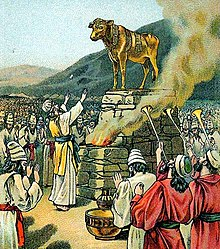
“Here are your gods, Israel, who brought you up out of Egypt.” (1Kings 12:28)
Jeroboam, the first king of the northern kingdom of Israel, initiated a series of significant changes that altered the course of worship for his people. His actions were driven by political motives rather than spiritual fidelity, leading to the establishment of a false system of worship that had long-lasting ramifications.
Replacing the Place, Object, and Priests of Worship
His primary objective was to prevent his subjects from traveling to Jerusalem, in the southern kingdom of Judah, for worship. He feared that such pilgrimages would foster loyalty to the house of David and threaten his own reign. To counter this, Jeroboam replaced the central place of worship and also substituted the object of worship with idols. He also appointed non-Levitical priests to serve, undermining the divinely ordained priesthood.
The Enduring Error of Jeroboam
Jeroboam’s innovations did not end with his reign but extended into the next generations. His establishment of idolatrous practices became a stumbling block for the northern kingdom of Israel. Kings who followed Jeroboam perpetuated these errors, leading the people further away from true worship. The legacy of Jeroboam’s apostasy was so significant that it became a standard by which the sins of Israel’s kings were measured (1Kings 16:26).
The Idolatrous Practices of Ahab and Jezebel
The reign of Ahab and his queen, Jezebel, marked a further decline in the spiritual state of Israel. Jezebel introduced the worship of Baal and Asherah into Israel, practices that were abominable to the Lord. Ahab provoked the Lord more than all the kings of Israel before him (1Kings 16:31-33).
The Lord’s disapproval on Mount Carmel
The prophet Elijah emerged as a powerful voice against the rampant idolatry. In one of the most dramatic confrontations recorded in Scripture, Elijah challenged the prophets of Baal on Mount Carmel. He called upon the Lord to demonstrate His sovereignty, and God responded with fire from heaven, consuming Elijah’s sacrifice (1Kings 18:36-39). This miraculous event underscored the Lord’s disapproval of Israel’s idolatry and called the people back to genuine worship.
Prophetic Admonishment and Call for Repentance
Despite Elijah’s victory, the prophets continuously admonished Israel to repent. The persistent call for repentance echoed throughout the ministries of subsequent prophets, yet the people remained obstinate. Their refusal to abandon false worship led to their downfall (see Hos 8:4-6; Amos 4:4-5).
The Consequences of Continued Apostasy
Israel’s continued apostasy ultimately resulted in their captivity. In 722 BC, the Assyrians conquered the northern kingdom, scattering the ten tribes and bringing an end to the Northern Kingdom. The seeds of their destruction were sown by Jeroboam’s initial departure from true worship.
The Persistence of Errors in Judah
In the southern kingdom of Judah, despite periodic reforms, such as those under King Josiah, errors persisted. Josiah’s reforms were extensive, yet they could not completely eradicate the entrenched practices of idolatry.
Nehemiah’s Acknowledgment of Persistent Disobedience
Centuries later, Nehemiah reflected on Israel’s history of disobedience and idolatry. In his prayer, he acknowledged the persistent sinfulness that had plagued the nation, attributing their suffering to their unfaithfulness (Nehemiah 9:26-37). Nehemiah’s reflection underscores the long-lasting impact of Jeroboam’s initial errors, demonstrating that false worship and disobedience to God’s commands lead to severe consequences.
Conclusion
The establishment of false worship by Jeroboam in 1Kings 12:25-33 had long-lasting effects on the northern kingdom of Israel. This sin was perpetuated by subsequent kings and contributed to the spiritual decline of Israel. Prophets repeatedly condemned these practices and called for repentance, but the people’s persistence in idolatry ultimately led to their downfall and exile. The enduring influence of Jeroboam’s sin is a stark reminder of the consequences of deviating from God’s commands.
Agape, Spencer
“Howbeit in vain do they worship me, teaching for doctrines the commandments of men.” (Mark 7:7)
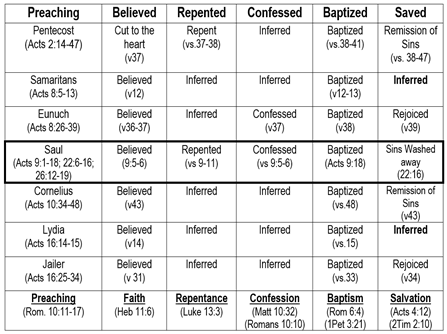
People often appeal to single passages on how to be saved, but ignore an entire book in the New Testament that shows people going from a lost condition to being saved. That book is called ACTS. It contains the founding of the church of Christ at Pentecost, and the conversion of the lost to salvation in Christ Jesus.
Cases of Conversion in the book of Acts.
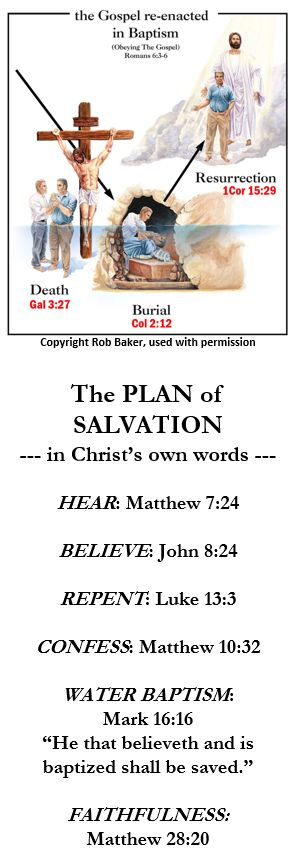
1. The first of these conversions happened on the notable day of Pentecost when the church was established. The text (Acts 2:14) shows that they had the Gospel preached to them; they heard (vv. 36-37); they repented of their sins (v. 38); and they were baptized into Christ (v. 38). The result was that they had their sins washed away.
2. In Acts 8:4-5, Phillip preached to the people of Samaria; they heard (v. 6); they were baptized (v. 12).
3. Phillip also preached to Simon (Acts 8:4-5); he heard the Gospel (v. 6); he was baptized (v. 13).
4. Phillip preached to the Eunuch (Acts 8:35-39); he made the good confession (v. 37); he was baptized (v. 38) and rejoiced in the forgiveness of his sins (v. 39).
5. Ananias preached to Saul, later called Paul (Acts 9:17); he was baptized (Acts 22:16), and the rest of his life he taught others to do the same (I Cor. 12:13).
6. Peter preached to Cornelius (Acts 10:34-35); he and his family heard (v. 44); they repented of their sins (Acts 11:18); they were baptized (v. 48). They were saved (Acts 11:14).
7. Paul preached the saving message to Lydia on his second missionary journey (Acts 16:13); she heard (v. 14); she was baptized (v. 15).
8. Paul preached to the Jailor (Acts 16:32); he repented (v. 33); he was baptized (v. 33).
9. Paul preached to and converted souls at Corinth (Acts 18:5); they heard (v. 8); they were baptized (v. 8).
10. Paul preached to Crispus (Acts 18:5); though it is not recorded in the book of Acts that he was baptized, he was baptized according to Paul’s writing to the Corinthian church (1Cor. 1:14).
11. The Ephesians had the Gospel preached to them (Acts 19:8); they heard the message of salvation (Eph. 1:13). They were baptized (Acts 19:5) and were in this way saved by grace (Eph. 2:8-10).
agape,
spencer
Here is a link to another article on the conversions in Acts.
Joseph’s life and actions, as depicted in the Gospels, offer an example of virtue and obedience, qualities that emphasize his critical role in the life of Jesus.
Described in the Gospel of Matthew as a “just man” (Matthew 1:19), Joseph’s character is first revealed through his merciful reaction to Mary’s unexpected pregnancy. Engaged to Mary, he discovers she is pregnant before they have come together, and knowing the child is not his, he faces a societal and personal crossroad. He chooses a path of kindness, intending to spare Mary from possible humiliation or harm, which alone sets a significant tone for his character.
Later, He is visited by an angel in a dream, instructing him to not fear taking Mary as his wife because the child conceived in her is from the Holy Spirit (Matthew 1:20). His response to this divine intervention highlights another of his virtues: obedience. Matthew 1:24-25 tells us that Joseph did as the angel of the Lord commanded; he took Mary as his wife and named the child Jesus. This act of faith and submission to God’s will shows him as a man deeply committed to following God’s direction without hesitation.
Later, he and Mary bring Jesus to the temple to present Him to the Lord as prescribed in the Law of Moses (Luke 2:22-24), and they make the annual pilgrimage to Jerusalem for Passover, demonstrating his commitment to his faith and his role as a spiritual guide to his family (Luke 2:41-43).
Joseph’s profession as a carpenter, mentioned in Matthew 13:55, underscores his role as a provider who earns a living for his family. Moreover, the offering described in Luke 2:24, “a pair of doves or two young pigeons,” which was allowed for those who could not afford a lamb, indicates that Joseph’s means were limited, yet he did what was necessary within his resources to fulfill his service to God (cf. 1Tim 5:8).
When Herod seeks to kill the newborn Jesus in Matthew 2:13-23, Joseph again heeds an angelic warning in a dream, this time to flee to Egypt, and later, to return to Nazareth, safeguarding his family from harm. These episodes not only portray him as a decisive protector but also as a man of action who places the safety and well-being of Mary and Jesus above his own comfort and security.
Lastly, Joseph’s honorable acceptance to adopt Jesus as his own son seals his legacy as a man of immense faith and virtue. This act of adoption was not merely a legal formality but a wholehearted acceptance of Jesus into his life, treating Him as his own and providing for Him as any father would, so that all knew Jesus as the son of Joseph and Mary. “And they said, Is not this Joseph’s son” (Luke 4:22; cf; John 6:42)?
Joseph’s life, therefore, offers a remarkable model of justice, obedience, scriptural fidelity, diligent earning, protection, and honor. In the grand narrative of Christianity, Joseph might often be seen in the background, but his influence and guidance were surely foreground in the early life of Jesus, the Savior of mankind. Through Joseph’s exemplary character, we see the qualities that God values in those He chooses.
“For the time past of our life may suffice us to have wrought the will of the Gentiles, when we walked in lasciviousness, lusts, excess of wine, revellings, banquetings, and abominable idolatries: Wherein they think it strange that ye run not with them to the same excess of riot, speaking evil of you.” (1Peter 4:3,4).
This passage highlights the contrast between the behaviors of Christians and those of the secular world.
It describes a past life indulged in excesses and immoral activities such as lust, drunkenness, revelry, and idolatry.
Upon turning to a Christian way of life, believers abstain from these practices, leading to a stark difference in conduct.
This transformation often confounds non-believers, who find it strange that Christians no longer join in their excessive and riotous behaviors. As a result, Christians might face criticism or slander for their newfound restraint and moral discipline.
In our secular society, there is a growing trend to sideline morality, with the world often asserting that ethical standards are subjective and unimportant. The Bible warns against this destructive philosophy.
The idea that wrong is relative is exemplified by the biblical account of Pharaoh’s defiance in Exodus 5:2: “And Pharaoh said, Who is the LORD, that I should obey his voice to let Israel go? I know not the LORD, neither will I let Israel go.” Pharaoh’s stance reflects a broader modern sentiment that moral obligations are negotiable based on personal belief systems or the lack thereof. This relativism undermines the concept of an absolute moral authority.
The pursuit of personal gain often overrides moral considerations. In Luke 12:13-21, Jesus tells the parable of the rich fool, who hoards wealth without regard for others or his spiritual well-being. This story highlights how the quest for material success can eclipse ethical responsibilities, leading individuals to prioritize self-interest over faithfulness to God.
Doing what is “right in one’s own eyes” epitomizes the relativistic approach to morality. Judges 21:25 states, “In those days there was no king in Israel: every man did that which was right in his own eyes.” This verse illustrates the chaos and moral decay that arise when subjective judgments replace universal ethical standards.
Contemporary society often masks moral deviations under the guise of love. This rationalization can be seen in the acceptance of various forms of relationships, such as living together, polyamory, and other more controversial issues. By framing these practices as expressions of love, societal norms shift, challenging biblical moral frameworks.
The belief that death is the end and therefore morality is inconsequential is a profound reflection of nihilistic thought. If life has no ultimate purpose beyond physical existence, ethical considerations may seem futile. This outlook fosters a disregard for moral behavior, as the finality of death negates the perceived need for a moral compass.
The world’s dismissal of morality poses significant contrast to sound ethical standards. This is why we must be on guard against such flawed reasoning.





 Borger church of Christ @ Franklin & Juniper