As I grow in faith, I’m learning to make the kingdom of God and His righteousness my highest pursuit, though I often fall short of this priority. Jesus’ words in Matthew 6:33, “Seek first the kingdom of God and His righteousness,” and Luke 12:31 call me to focus on God’s rule and moral standard above all else. This aligns with the righteousness, faith, and godliness in 1 Timothy 6:11 and 2 Timothy 2:22, but I confess it’s a struggle to keep this first in my heart when life’s demands pull me in every direction.
This pursuit is the cornerstone of my faith because it reorients everything else. Jesus promises that when I seek God’s kingdom first, my needs will be met, freeing me from worry. But trusting this promise requires the faith of 1 Timothy 6:11 and 2 Timothy 2:22, believing God’s way is better than my own. Righteousness (living justly and obediently) isn’t just a rule to follow; it’s a reflection of God’s character, as is the godliness in 1 Timothy 6:11. I’m humbled by how often I prioritize my plans over God’s, yet His word directs me back to God’s seeking His way.
Seeking the kingdom means living differently, praying for God’s will, sharing the gospel, and standing for His truth, even when it’s unpopular. I stumble, chasing lesser things, but each time I refocus, through study, and service, I find purpose and peace. As a saint, I’m learning to seek the Kingdom of God and His righteousness above all, trusting Him along the way.
In my walk with Christ, I’m learning to aspire to excellence through godliness and holiness, though I often feel unworthy of such a high calling. 1 Timothy 6:11 urges me to pursue godliness, a life of devotion to God, while Hebrews 12:14 calls me to “pursue… holiness, without which no one will see the Lord.” These virtues connect to the righteousness and faith in 1 Timothy 6:11 and 2 Timothy 2:22, and they echo the call to seek “things above” in Colossians 3:1-2. I’m far from perfect, but I long to reflect God’s character more each day.
This pursuit is crucial because it draws me closer to God Himself. Godliness means living with reverence, seeking His will in every decision, but I often get distracted by worldly concerns. Holiness, too, challenges me to stand apart from sin and selfishness, as Hebrews 12:14 warns that without it, I won’t see God. This sobers me, reminding me that my efforts matter, not to earn salvation but to honor the One who saved me. These virtues shape my heart, teaching me to love what God loves and hate what He hates, aligning with the righteousness of both Timothy passages.
Aspiring to godliness and holiness is a humbling journey. I need the support of other saint, as 2 Timothy 2:22 suggests, pursuing these virtues “with those who call on the Lord.” Through prayer, Scripture, and accountability, I’m slowly growing, learning to forgive quickly, speak truthfully, and serve humbly. Each step feels like a battle, but it’s worth it to become more like Christ. As a saint, I seek this treasure of excellence, trusting God to refine me into His image, one faltering step at a time.
Life can throw some heavy punches, can’t it? For the believers in Thessalonica, those punches came in the form of persecutions, false teachings, and even some within their own community slacking off and stirring up trouble. Yet, in his second letter to them, Paul points to three timeless virtues (faith, hope, and love) as the keys to standing firm, no matter what others say or do. Rooted in knowing God’s word, these qualities enabled the Thessalonians to rise above their troubles and the “lowness” of their troublers.
Chapter 1: Enduring Through Faith, Hope, and Love
The Thessalonian church was under fire, literally and figuratively. They faced “persecutions and tribulations” (2 Thessalonians 1:4, KJV), likely from hostile neighbors or authorities who opposed their faith. Yet Paul couldn’t stop bragging about them: “We ourselves glory in you in the churches of God for your patience and faith in all your persecutions and tribulations that ye endure” (1:4). Their faith wasn’t just a Sunday morning nod to God; it was a steadfast trust in His promises, even when the world seemed against them. That faith, Paul says, was “growing exceedingly” (1:3), and their love for one another was increasing right alongside it.
But what kept them going? HOPE. Paul paints a vivid picture of hope tied to God’s justice and Christ’s return: “Seeing it is a righteous thing with God to recompense tribulation to them that trouble you; And to you who are troubled rest with us, when the Lord Jesus shall be revealed from heaven with his mighty angels” (1:6-7). The promise that God would deal with their troublers and grant them relief gave them a reason to hold on. This hope wasn’t wishful thinking, it was grounded in God’s word, which assured them that their suffering was “a manifest token of the righteous judgment of God” (1:5). Knowing God’s word fueled their faith to endure, their hope to look forward, and their love to care for one another, even under pressure. Paul prayed for this to continue, asking God to “fulfil all the good pleasure of his goodness, and the work of faith with power” (1:11).
So, what’s the lesson? When trouble comes (whether it’s people attacking your faith or life’s hardships piling up) lean into faith, hope, and love. Trust God’s word, hold fast to the promise of Christ’s return, and keep loving those around you. That’s how you stay faithful, no matter what others do.
Chapter 2: Standing Firm Against Deception
The troubles didn’t stop with persecution. Someone was spreading lies, maybe even claiming Paul’s authority, saying the day of the Lord had already come. This shook the Thessalonians, leaving them “troubled” and “shaken in mind” (2 Thessalonians 2:2). Imagine the confusion, thinking you missed the biggest event in history! But Paul steps in with clarity, urging them not to be “soon shaken in mind, or be troubled, neither by spirit, nor by word, nor by letter as from us” (2:2). He reminds them of God’s word, which he’d already taught: the day of the Lord won’t come until the “man of lawlessness” is revealed (2:3-4) and destroyed by Christ’s return (2:8).
Here’s where faith, hope, and love shine again. Their faith in the truth (God’s word) kept them from falling for deception. Paul calls them “brethren beloved of the Lord” (2:13), chosen for salvation “through sanctification of the Spirit and belief of the truth” (2:13; see John 17:17). That belief anchored them. Hope came from knowing Christ would return to set things right: “The Lord Jesus Christ… shall destroy with the brightness of his coming” (2:8). This hope steadied them against false alarms. And love? Paul prays for their hearts to be comforted and established “in every good word and work” (2:16-17), a call to keep loving and serving each other despite the chaos.
The troublers spreading lies were low, trying to unsettle God’s people. But Paul’s answer is clear: “Therefore, brethren, stand fast, and hold the traditions which ye have been taught, whether by word, or our epistle” (2:15). Stay rooted in God’s word. Let faith keep you grounded, hope keep you looking up, and love keep you moving forward. That’s how you abound, no matter what others say.
Chapter 3: Overcoming Internal Troubles
If external persecution and false teachings weren’t enough, the Thessalonians had trouble within their own ranks. Some believers were “walking disorderly,” refusing to work and meddling as busybodies (2 Thessalonians 3:6, 11). This idleness wasn’t just laziness, it disrupted the work of the church. Paul doesn’t mince words: “If any would not work, neither should he eat” (3:10). Yet even this discipline is rooted in love, as he urges the church to correct the idle “as a brother” (3:15), not an enemy.
Faith shows up in Paul’s confidence that the Thessalonians would stay faithful: “We have confidence in the Lord touching you, that ye both do and will do the things which we command you” (3:4). Their hope was tied to God’s word, which provided clear instructions for living, and to the promise of God’s peace: “Now the Lord of peace himself give you peace always by all means” (3:16). Love guided their response to the troublers within, balancing discipline with care, and Paul prayed that “the Lord direct your hearts into the love of God, and into the patient waiting for Christ” (3:5).
The idle were acting low, causing trouble by neglecting their responsibilities. But Paul calls the church to a higher standard: “Be not weary in well doing” (3:13). By staying faithful to God’s word (working diligently, loving one another, and holding fast to His commands) they could overcome even internal challenges.
Tying It All Together
What do we learn from the Thessalonians? Troubles and troublers come in many forms: persecutors who mock your faith, deceivers who twist the truth, or even fellow believers who let you down. But faith, hope, and love, rooted in knowing God’s word, are your strength. Faith keeps you trusting God’s truth, like the Thessalonians’ belief in the gospel (2:13) and obedience to Paul’s teaching (3:4). Hope lifts your eyes to God’s vengeance (1:6-9, 2:8) and Christ’s return (1:7, 2:8), assuring you that troubles won’t have the last word. Love binds you to your brothers and sisters, growing even in tough times (1:3) and guiding how you correct the wayward (3:15).
Knowing God’s word is the thread that ties it all together. It’s the foundation for faith, the source of hope, and the guide for love. The Thessalonians’ troubles didn’t define them, their faithfulness did. They stayed abounding, growing in faith and love (1:3), standing firm against lies (2:15), and doing good despite setbacks (3:13). So, when others try to drag you down with their words or actions, don’t stoop to their level. Hold fast to God’s word. Let faith, hope, and love keep you faithful and abounding, just as they did for the Thessalonians.
As I navigate life’s winding paths, I often try to present my best self to the world, hoping to mask my flaws. Yet, there are four things I cannot hide: my speech, my assumptions about others, how I let trouble affect me, and my perseverance despite obstacles. These aspects of my character slip through the cracks of my carefully curated facade, revealing my true heart. Through the lens of Scripture, I see both my shortcomings and the path to transformation, as God’s Word guides me to align these areas with His truth.
1. My Speech: The Way I Talk to Others My words betray my heart. Whether I speak with kindness, impatience, or cutting sarcasm, my tone and intent are laid bare for others to see. I cannot hide the impact of my speech, it lingers, shaping how others perceive me. A harsh word can wound, while a gentle one can heal. Proverbs 15:1 offers wisdom: “A soft answer turneth away wrath: but grievous words stir up anger.” When I choose words that uplift and encourage, I reflect God’s will for my life on how to interact with others. “Let no corrupt word proceed out of your mouth, but what is good for necessary edification, that it may impart grace to the hearers.” (Eph 4:29; see Col 4:6) O God, forgive me.
2. My Assumptions: Judging Without Knowing I often catch myself forming quick judgments about others based on their appearance or actions. Someone comically said, “I can tell a judgmental person just by looking at them.” These assumptions (especially in impugning motives) creep out through my body language, a fleeting glance, a hesitant tone, or an unconscious step back. My biases betray me, revealing a heart prone to prejudging. James 2:1-4 (KJV) challenges me: “My brethren, have not the faith of our Lord Jesus Christ, the Lord of glory, with respect of persons… Have ye not then been partial in yourselves, and are become judges of evil thoughts?” By seeking to understand others, I strive to embody humility, countering my tendency to assume. (see Matt 7:1-6 Judge not…) O God, forgive me.
3. The Way I Let Trouble Bother Me When trials come, my response reveals the depth of my faith. Too often, I grumble or slip into pessimism, broadcasting a lack of trust in God. My complaints expose a heart struggling to hold onto hope. Philippians 4:6-7 (KJV) offers a better way: “Be careful for nothing; but in every thing by prayer and supplication with thanksgiving let your requests be made known unto God. And the peace of God, which passeth all understanding, shall keep your hearts and minds through Christ Jesus.” By turning to prayer and gratitude, I can display hope, letting God’s peace shine through my troubles. “Do all things without complaining and disputing, that you may become blameless and harmless, children of God without fault in the midst of a crooked and perverse generation, among whom you shine as lights in the world,” (Phil 2:14-15) O God, Forgive me.
4. The Way I Keep On Despite Obstacles My perseverance (or lack thereof) reveals my resilience (or lack thereof). Do I press forward when others criticize, when obstacles loom, or when doubts creep in? My response is visible to all. Galatians 6:9 (KJV) encourages me: “And let us not be weary in well doing: for in due season we shall reap, if we faint not.” This verse urges me to keep going, trusting God, no matter what stands in my way. My steadfastness displays my Hope in God. “For you have need of endurance, so that after you have done the will of God, you may receive the promise:” (Heb 10:36) O God, Forgive me.
The Problem Exemplified When I fail to guard these areas, my flaws are exposed. Proverbs 21:23 (KJV) warns, “Whoso keepeth his mouth and his tongue keepeth his soul from troubles.” My unguarded words can spark conflict, reflecting a broader truth: when my speech, assumptions, complaints, or lack of perseverance go unchecked, I invite calamity. This verse humbles me, reminding me of the consequences of letting my heart run unrestrained.
Transforming My Life Though I cannot hide these four aspects of myself, I can, by God’s grace, refine them to reflect His character. Proverbs 15:1 teaches me to speak with gentleness. James 2:1-4 calls me to love without prejudice. Philippians 4:6-7 guides me to replace complaints with hope. Galatians 6:9 strengthens me to persevere. Together, these scriptures shape me to live in a better way, letting my words, actions, and attitudes shine as a testimony to the transformative power of God’s word. In a world that sees what I cannot hide, I pray my life reflects Christ.
In the pages of Scripture, we find heroes like Esther, Daniel, Abigail, and Paul, who faced imprisonment, death, and danger with unwavering faith in God. Their resolve to remain faithful, even at the cost of their lives, inspires us. Yet, for most Christians today, the threats to faith are subtler but no less real. We may not face lions’ dens or executioners, but we encounter pressures that test our determination to live for Christ. This article explores four modern challenges Christians face in keeping faith and how God’s Word compels us to respond with active, courageous faith.
The Weight of Shame: Proclaiming the Gospel Boldly
“I am not ashamed of the gospel, for it is the power of God for salvation to everyone who believes” (Romans 1:16). Yet, in a world that often dismisses or derides Christianity, many believers feel guilt or embarrassment when sharing their faith. Whether it’s hesitating to mention Jesus in a workplace conversation or softening biblical truths to avoid conflict at a family gathering, the fear of being labeled judgmental or outdated can silence us. Paul, who faced beatings and imprisonment for preaching, urges us not to be “ashamed of the testimony about our Lord” (2 Timothy 1:8) but to handle God’s Word rightly, unashamed (2 Timothy 2:15).
Like Daniel, who prayed openly despite a death decree (Daniel 6:10), Christians today must anchor their identity in Christ. The gospel’s power to save outweighs fleeting social discomfort. When a young professional risks awkwardness by inviting a colleague to church or a parent teaches their child biblical values in a skeptical culture, they echo Esther’s resolve: “If I perish, I perish” (Esther 4:16). Faith compels action, speaking boldly, trusting God’s Spirit to work through his word.
The Cost of Reputation and Relationships: Choosing Christ First
“Have I become your enemy by telling you the truth?” Paul asked the Galatians (Galatians 4:16). Jesus warned that loving family more than Him makes us unworthy of discipleship (Matthew 10:37). These verses strike at a deep fear: losing reputation or relationships for our faith. In a hyper-connected world, taking a stand on biblical issues (whether on morality, justice, or salvation) can lead to social ostracism, canceled friendships, or strained family ties. A student defending creationism in a classroom or a friend confronting a loved one’s sin risks becoming an outcast.
Abigail’s example shines here. She risked her relationship and safety to mediate peace, aligning with God’s will despite potential backlash (1 Samuel 25:24). Christians today must prioritize allegiance to Christ, even when it costs social capital. This doesn’t mean being harsh but speaking truth in love, trusting God to mend or redeem relationships. Like Esther, who risked her life for her people, we show faith by valuing God’s approval over human esteem, knowing our ultimate family is eternal (Galatians 1:10).
The Risk of Resources: Trusting God’s Provision
Revelation 13:17 paints a stark picture: those without the “mark of the beast” cannot buy or sell. This passage shows a time when some faced economic exclusion for faithfulness, a challenge Christians continue to face. Refusing to compromise ethics in business, prioritizing assembling with the saints for overtime, or declining opportunities that conflict with faith can lead to lost income or career setbacks. A graphic designer who turns down a lucrative but morally questionable project or a doctor who risks her job by objecting to unethical practices feels this pressure.
Daniel’s refusal to bow to Darius’ decree, despite the lion’s den, shows trust in God’s provision (Daniel 6:23). Jesus promised that seeking God’s kingdom first ensures our needs are met (Matthew 6:33). Christians today must act on this promise, choosing integrity over wealth. Like Esther, who faced death to save her people, we demonstrate faith when we sacrifice financial security for God’s principles, confident in His care.
The Choke of Distractions: Persevering Through Trouble
In the parable of the sower, Jesus describes faith shrivel away when trouble comes or choked by “the cares of the world, the deceitfulness of riches, and the desires for other things” (Mark 4:16-19). Modern life bombards us with distractions (endless notifications, career pressures, personal crises) that threaten to erode our spiritual vitality. A single mother juggling work and parenting may skip prayer time; a student consumed by social media may neglect Scripture. Troubles like health issues or financial stress can further crowd out faith, leaving us fruitless.
Paul’s relentless focus on his mission, despite shipwrecks and imprisonments (Acts 20:24), inspires us to stay rooted. Like Abigail, who acted decisively amidst chaos (1 Samuel 25:18), we must discipline ourselves to prioritize God. Regular prayer, Scripture study, and congregational worship act as anchors, ensuring our faith bears fruit. Esther’s focused intercession, fasting amidst a genocidal threat, reminds us that faith thrives when we cling to God’s Word, not the world’s noise.
A Faith That Works: Compelled by God’s Word
The courage of Esther, Daniel, Abigail, and Paul was no blind leap but a response to God’s Word. Daniel obeyed the command to worship God alone (Exodus 20:3); Abigail acted on principles of justice (Proverbs 31:9); Paul preached Christ’s mandate (Matthew 28:19). Their faith produced works (prayer, mediation, proclamation) proving it was alive (James 2:17). Similarly, God’s Word compels us today:
Based on Scripture: Romans 1:16 gives confidence in the gospel’s power; Matthew 10:37 prioritizes Christ; Revelation 13:17 trusts God’s provision; Mark 4:19 warns against distractions.
Compelled to Action: These truths drive us to share the gospel unashamed, stand for truth despite relational loss, choose integrity over wealth, and persevere through distractions.
Their integrity Inspires Others: Their courage became a testimony, encouraging future generations (e.g., Daniel’s influence in Jewish tradition, Paul’s letters, Abigail’s role in David’s story). Esther’s legacy similarly inspired Jewish resilience.
Trust in God that Transcends Circumstances: Their actions show that faithfulness is not contingent on safety or success but on God’s unchanging nature.
Hope in God that Anticipates Eternity: Their willingness to die reflects hope in God’s promises, whether immediate deliverance or eternal resurrection (Hebrews 11:35). This aligns with Esther’s implied trust in God’s salvation for the Jews.
Living the Courageous Faith Today
While we may not face death, the challenges of shame, relational loss, financial risk, and distractions test our faith as surely as the lion’s den tested Daniel’s. Yet, God’s Word equips us. When we feel shame, we proclaim Christ boldly, trusting His power. When we fear losing reputation, we choose Jesus, knowing His approval lasts. When income is at stake, we trust God’s provision. When distractions overwhelm, we root ourselves in Scripture.
Every Christian is called to this courageous faith. The parent teaching biblical values, the worker refusing unethical shortcuts, the student sharing Christ despite mockery, all reflect Esther’s resolve. Our faith, like hers, is not passive but active, producing works that glorify God. As Paul wrote, “I am not ashamed… for I know whom I have believed” (2 Timothy 1:12). Let us stand firm, compelled by God’s Word, trusting Him through every challenge, for His glory and our eternal hope.
Life is full of hardship. Suffering, loss, and disappointment are part of the human experience. Some struggle with grief, others with betrayal, loneliness, or physical pain. No one is immune to the trials of life. Yet, in the midst of sorrow, there is One who offers healing, hope, and peace—Jesus Christ.
Jesus understands suffering because He experienced it firsthand. Isaiah 53:3 describes Him as “a man of sorrows, and acquainted with grief.” He knew what it was like to be rejected, betrayed, and physically tormented. He endured humiliation and pain on the cross, bearing the weight of humanity’s sin. Because of this, He is uniquely qualified to comfort those who are hurting. Hebrews 4:15 assures us that we have a Savior who can sympathize with our weaknesses, for He was “tempted like as we are, yet without sin.”
Hope in Christ for the Hurt of This Life
Pain can make life feel unbearable. The world offers temporary distractions, but they cannot bring lasting peace. Only Christ provides true hope. John 16:33 reminds us of this reality: “In the world ye shall have tribulation: but be of good cheer; I have overcome the world.” The suffering of this present life is temporary, but the joy found in Christ is eternal. Paul declares in Romans 8:18, “For I reckon that the sufferings of this present time are not worthy to be compared with the glory which shall be revealed in us.” When we trust in Christ, we gain a perspective that allows us to endure, knowing that something far greater awaits.
“For as many of you as have been baptized into Christ have put on Christ.” (Galatians 3:27)
Understanding from Christ, Who Endured Suffering
One of the most comforting truths about Jesus is that He understands human suffering. He was betrayed by a close friend (Luke 22:48; Psalm 41:9), falsely accused (Matthew 26:59-60), mocked (Matthew 27:29-31), and crucified (Luke 23:33). He knows what it feels like to be abandoned, rejected, and mistreated. This means that when we pour out our hearts to Him, we are speaking to One who truly understands. Psalm 34:18 assures us, “The Lord is nigh unto them that are of a broken heart.”
“Know ye not, that so many of us as were baptized into Jesus Christ were baptized into his death?” (Romans 6:3)
Rest and Peace in His Forgiveness and Mercy
Many suffer not only from external circumstances but also from the weight of guilt and shame. Sin leaves scars, and the burden of past mistakes can feel overwhelming. Yet, Jesus offers complete forgiveness. Matthew 11:28 invites us, “Come unto me, all ye that labour and are heavy laden, and I will give you rest.” Through His sacrifice, we are freed from sin’s condemnation. Psalm 103:12 declares, “As far as the east is from the west, so far hath he removed our transgressions from us.” In Christ, we find peace, knowing that our past does not define us.
“And now why tarriest thou? arise, and be baptized, and wash away thy sins, calling on the name of the Lord.” (Acts 22:16)
Truth, Life, and True Joy
Many search for meaning in temporary pleasures, but Jesus alone is the source of true life. He declares in John 14:6, “I am the way, the truth, and the life.” The joy He gives is not dependent on circumstances but is rooted in a relationship with Him. John 15:11 states, “These things have I spoken unto you, that my joy might remain in you, and that your joy might be full.”
“And when they were come up out of the water, the Spirit of the Lord caught away Philip, that the eunuch saw him no more: and he went on his way rejoicing.” (Acts 8:39)
Jesus, Our Intercessor
For those who feel distant from God, Jesus bridges the gap. 1 Timothy 2:5 tells us, “For there is one God, and one mediator between God and men, the man Christ Jesus.” He intercedes for us before the Father, offering continual access to God’s grace and help.
“And whatsoever we ask, we receive of him, because we keep his commandments, and do those things that are pleasing in his sight.” (1John 3:22)
He Never Leaves nor Forsakes Us
Loneliness is one of the deepest forms of suffering. Yet, Jesus promises, “I will never leave thee, nor forsake thee” (Hebrews 13:5). Even when we feel abandoned, He is always near.
“And he that keepeth his commandments dwelleth in him, and he in him. And hereby we know that he abideth in us, by the Spirit which he hath given us.” (1John 3:24)
Good Can Come Despite the Pain
While suffering is hard, God can bring blessings out of trials. Romans 8:28 reassures us, “And we know that all things work together for good to them that love God.” Even when we don’t understand, we can trust that He can bring about good despite the pain and suffering in this life.
“My brethren, count it all joy when ye fall into divers temptations; Knowing this, that the trying of your faith worketh patience.” (James 1:2-3)
Conclusion
No matter what pain or sorrow you carry, Jesus offers hope and healing. Turn to Him, and you will find peace, understanding, and the strength to endure. “Casting all your care upon him; for he careth for you.” (1 Peter 5:7)
Agape
Spencer
There is a way you may know if you have eternal life.
The basic error in the Calvinist understanding of God’s sovereignty lies in their assumption that God’s sovereignty means He must exercise absolute, irresistible control over every aspect of human will.
Calvinism argues that because God is sovereign, no created being could truly have the option to reject Him, as this would supposedly compromise His power. As a result, Calvinism teaches that God must first miraculously regenerate a person’s heart to make them capable of seeking Him, thus removing the genuine exercise of free will in the process of coming to faith.
However, this view misunderstands the nature of sovereignty. True sovereignty means God possesses ultimate authority and power, including the authority to grant His creation the freedom to choose, even if that choice involves rejection. By equating sovereignty with strict determinism, Calvinism limits God, suggesting He cannot be truly sovereign unless He exercises control in a particular way. But as seen in Scripture, God’s sovereignty encompasses the ability to bring about His purposes despite human choices, even when those choices oppose Him. This view implies God’s sovereignty cannot accommodate human freedom without being diminished. Biblically, God’s sovereignty is displayed in His supreme ability to accomplish His purposes through or in spite of human decisions.
The sovereignty of God is neither dependent on human response nor diminished by human rejection. To assert that God’s sovereignty is undermined if someone rejects Him is to misunderstand what sovereignty means. Sovereignty refers to supreme authority and power over all things, independent of external influence or acceptance. Here are key points to help understand this:
God’s Sovereignty as Absolute: Scripture portrays God’s sovereignty as all-encompassing and unchanging. In passages like Isaiah 46:9-10, God declares, “I am God, and there is none like me… My counsel shall stand, and I will do all my pleasure.” God’s authority and purpose are not contingent on human acceptance but are established solely by His will.
God Permits Free Will without Diminishing His Sovereignty: Sovereignty includes the authority to grant free will to humanity. In His omnipotence, God has chosen to allow individuals the freedom to accept or reject Him, but this choice does not lessen His power. In Acts 17:30-31, Paul speaks of God’s patient desire for repentance, showing that God’s authority remains, even as He allows humanity space for choice. “And the times of this ignorance God winked at; but now commandeth all men every where to repent: Because he hath appointed a day, in the which he will judge the world in righteousness by that man whom he hath ordained; whereof he hath given assurance unto all men, in that he hath raised him from the dead.”
Judgment Demonstrates Sovereign Authority: When humans reject God, it doesn’t affect His sovereignty but rather reveals it. God’s authority is demonstrated through judgment as well as mercy. 2 Thessalonians 1:8-9 describes that those who “know not God” or “obey not the gospel” will face His judgment. This action affirms His authority over all creation, holding all accountable whether or not they choose to honor Him.
Christ’s Rejection Does Not Diminish God’s Power: Jesus Himself faced widespread rejection, yet God’s plan of salvation was fulfilled, displaying His sovereignty. John 1:11 says, “He came unto his own, and his own received him not,” yet the mission was accomplished by God’s power, demonstrating that rejection by some does not disrupt God’s overarching purpose.
Free Will Does Not Thwart God’s Sovereignty: God’s sovereignty is not threatened by human opposition or rejection, as He is fully capable of bringing His plans to fruition regardless of human response. In Luke 3:8, John the Baptist tells the crowds, “Bring forth therefore fruits worthy of repentance, and begin not to say within yourselves, We have Abraham to our father: for I say unto you, That God is able of these stones to raise up children unto Abraham.” This statement underscores that God’s purposes are not dependent on human lineage, acceptance, or compliance; if one avenue is closed, He has countless ways to fulfill His plan. God’s authority and ability remain supreme, unaffected by human resistance.
Therefore, God’s sovereignty is upheld through His supreme authority, His allowance of free will, and His ultimate judgment. Human rejection of God does not weaken His sovereignty but instead highlights the greatness of His rule over a world in which He allows choice, yet remains in complete control.
“For the grace of God that bringeth salvation hath appeared to all men, Teaching us that, denying ungodliness and worldly lusts, we should live soberly, righteously, and godly, in this present world; Looking for that blessed hope, and the glorious appearing of the great God and our Saviour Jesus Christ;”
“In the beginning, God created the heavens and the earth” (Genesis 1:1).
This statement is a foundational truth that establishes God’s existence and His unparalleled power. As Creator, God brought everything into being out of nothing, speaking life and order into the void. The intricate design of the universe, from the vast galaxies to the smallest particles, testifies to His wisdom and omnipotence. This truth is said also of Jesus, “For by him were all things created, that are in heaven, and that are in earth, visible and invisible, whether they be thrones, or dominions, or principalities, or powers: all things were created by him, and for him” (Col 1:16). But some do not recognize the Creator, “Who is the LORD, that I should obey his voice to let Israel go? I know not the LORD…” (Exo 5:2_
Everything that exists owes its existence to Him. This includes not only the physical universe but also the moral and spiritual dimensions of life. Since He is the source of all life, He possesses an inherent authority over His creation.
GOD is the OWNER of all things.
Because God is the Creator, He is also the Owner of all that He has made. Psalm 24:1-2 proclaims, “The earth is the Lord’s, and everything in it, the world, and all who live in it; for he founded it on the seas and established it on the waters.” Ownership implies a deep and comprehensive authority. Just as an artist has rights over their masterpiece, God has the ultimate right and claim over His creation.
God’s ownership extends to every aspect of our lives. Our talents, resources, and even our very breath belong to Him. This perspective shifts our focus from self-centered living to a life that honors and glorifies Him. But some would not honor Him, “Because that, when they knew God, they glorified him not as God, neither were thankful” (Rom 1:21a).
GOD is the DEFINER of Righteousness, Justice, & Salvation.
Flowing from this truth that God is Creator and Owner, He possesses the sole right to define and decide what is right, just, and necessary for salvation. This divine prerogative is evident throughout Scripture. In Isaiah 45:9, the prophet declares, “Woe to those who quarrel with their Maker… Does the clay say to the potter, ‘What are you making?’” This rhetorical question highlights the absurdity of creation questioning its Creator.
God’s authority encompasses defining moral and ethical standards. In a world rife with moral relativism, God’s Word stands as the absolute standard. His laws and commandments, revealed through Scripture, are not arbitrary rules but reflections of His holy and righteous character.
Moreover, God’s authority extends to the realm of salvation. Throughout the Bible, He has clearly delineated the path to reconciliation with Him. The New Testament emphasizes that salvation is through Jesus Christ alone. In John 14:6, Jesus asserts, “I am the way and the truth and the life. No one comes to the Father except through me.” This exclusivity underscores God’s right to determine the means by which humanity can be saved. But some say that salvation can be found another way, “And when they heard of the resurrection of the dead, some mocked” (Acts 17:32). For some, the gospel is foolishness, (1Cor 1:18).
Understanding God as the ultimate authority challenges us to submit to His will and to obey the gospel (Mark 16:16; Acts 2:38). We trust His wisdom, even when it contradicts our limited understanding or societal norms.
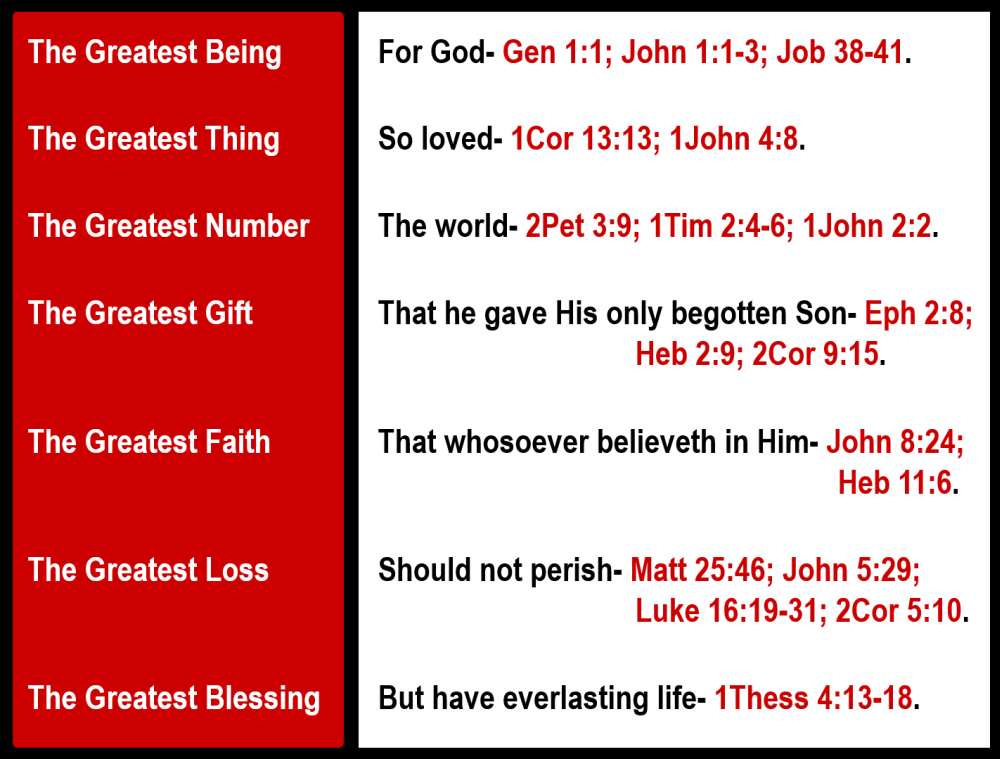
“For God so loved the world, that he gave his only begotten Son, that whosoever believeth in him should not perish, but have everlasting life.”
The Greatest Being
The verse begins with “FOR GOD.” The verse begins with the greatest being in existence. In Genesis 1:1, we read, “In the beginning, God created the heavens and the earth.” God is the Creator, the Alpha and the Omega, the beginning and the end. John 1:1-3 tells us, “In the beginning was the Word, and the Word was with God, and the Word was God. The same was in the beginning with God. All things were made by him; and without him was not any thing made that was made.” Job 38-41 presents a majestic depiction of God’s power and wisdom. Our faith rests upon the foundation of this greatest being, who is sovereign over all creation.
The Greatest Thing
Next, we see the greatest thing: “SO LOVED.” God is love. In 1Corinthians 13:13, we learn that “the greatest of these is love.” 1John 4:8 declares, “He that loveth not knoweth not God; for God is love.” God’s love is unparalleled and incomprehensible. It is a love that is willing to sacrifice, a love that seeks the well-being of others. It is the greatest thing because it defines the actions of the greatest being.
The Greatest Number
“THE WORLD.” This phrase encompasses the greatest number: the entire world. God’s love is not limited to a select few but extends to every person on this earth. 2Peter 3:9 states, “The Lord is not slack concerning his promise, as some men count slackness; but is longsuffering to us-ward, not willing that any should perish, but that all should come to repentance.” 1Timothy 2:4-6 reinforces this by saying, “Who will have all men to be saved, and to come unto the knowledge of the truth.” 1John 2:2 confirms that “And he is the propitiation for our sins: and not for ours only, but also for the sins of the whole world.” The greatest number shows the expanse of God’s love. God is not a respecter of persons (Rom 2:11).
The Greatest Gift
“THAT HE GAVE HIS ONLY BEGOTTEN SON.” In this we see the greatest gift. Ephesians 2:8 reminds us that “For by grace are ye saved through faith; and that not of yourselves: it is the gift of God.” Hebrews 2:9 tells us, “But we see Jesus, who was made a little lower than the angels for the suffering of death, crowned with glory and honour; that he by the grace of God should taste death for every man.” 2Corinthians 9:15 exclaims, “Thanks be unto God for his indescribable gift!” The greatest gift (grace) is God’s own Son, given for the redemption of mankind.
The Greatest Faith
“THAT WHOSOEVER BELIEVETH IN HIM.” This phrase highlights the greatest faith. Jesus declares in John 8:24, “I said therefore unto you, that ye shall die in your sins: for if ye believe not that I am he, ye shall die in your sins.” Hebrews 3:18-19 warns of the consequences of unbelief as seen through disobedience, while Hebrews 11:6 teaches that “without faith it is impossible to please God.” The greatest faith is an active belief in Jesus Christ as the Son of God and the Savior of the world (James 2:14-26).
The Greatest Loss
“SHOULD NOT PERISH.” The greatest loss is the eternal separation from God. While any can be saved, the bible tells us that not all will obey the Gospel (Matt 7:24-29; 2Thess 1:8-9). Matthew 25:46 warns of “everlasting punishment,” and John 5:29 speaks of those who will “resurrection of damnation.” The story of the rich man and Lazarus in Luke 16:19-31 vividly portrays the torment of those who perish. 2Corinthians 5:10 reminds us that “we must all appear before the judgment seat of Christ.” The greatest loss is the eternal consequence of rejecting God’s gift of salvation.
The Greatest Difference
“BUT.” While all may be saved, some won’t obey the gospel. “And being made perfect, he became the author of eternal salvation unto all them that obey him” (Heb 5:9). Some will hear, but not do; “Therefore whosoever heareth these sayings of mine, and doeth them, I will liken him unto a wise man, which built his house upon a rock: And the rain descended, and the floods came, and the winds blew, and beat upon that house; and it fell not: for it was founded upon a rock. And every one that heareth these sayings of mine, and doeth them not, shall be likened unto a foolish man, which built his house upon the sand: And the rain descended, and the floods came, and the winds blew, and beat upon that house; and it fell: and great was the fall of it.” (Matt 7:24-27). Many may confess Jesus as Lord and Savior, but not do what He says, “And why call ye me, Lord, Lord, and do not the things which I say” (Luke 6:46)?
The Greatest Blessing
“HAVE EVERLASTING LIFE.” Finally, we come to the greatest blessing. 1Thessalonians 4:13-18 describes the hope of the resurrection and the promise of eternal life with Christ. Everlasting life is the ultimate blessing, the fulfillment of God’s promise to those who believe.
John 3:16 is a verse that reveals to us the greatest being, the greatest thing, the greatest number, the greatest gift, the greatest faith, the greatest loss, and the greatest blessing. Let us hold fast to this truth, share it with others, and walk in the light of God’s incredible love and grace.
“And he said, Who art thou, Lord? And the Lord said, I am Jesus whom thou persecutest: it is hard for thee to kick against the pricks” (Acts 9:5)
We live in a time where there are many Christs being preached.
“For if he that cometh preacheth another Jesus, whom we have not preached, or if ye receive another spirit, which ye have not received, or another gospel, which ye have not accepted, ye might well bear with him” (2Cor 11:4).
We need to know the Real Jesus of the Bible. Last week we made just a few observations about the True Christ. It is impossible for a few articles to say all that could be said about Him. “And there are also many other things which Jesus did, the which, if they should be written every one, I suppose that even the world itself could not contain the books that should be written. Amen” (John 21:25).
This article will look at a few more things we learn from scripture about Jesus.
Jesus is the Savior of the world. “And we have seen and do testify that the Father sent the Son to be the Saviour of the world” (1John 4:14).
Jesus is a Sympathetic and Understanding Savior. “For in that he himself hath suffered being tempted, he is able to succour them that are tempted” (Heb 2:18).
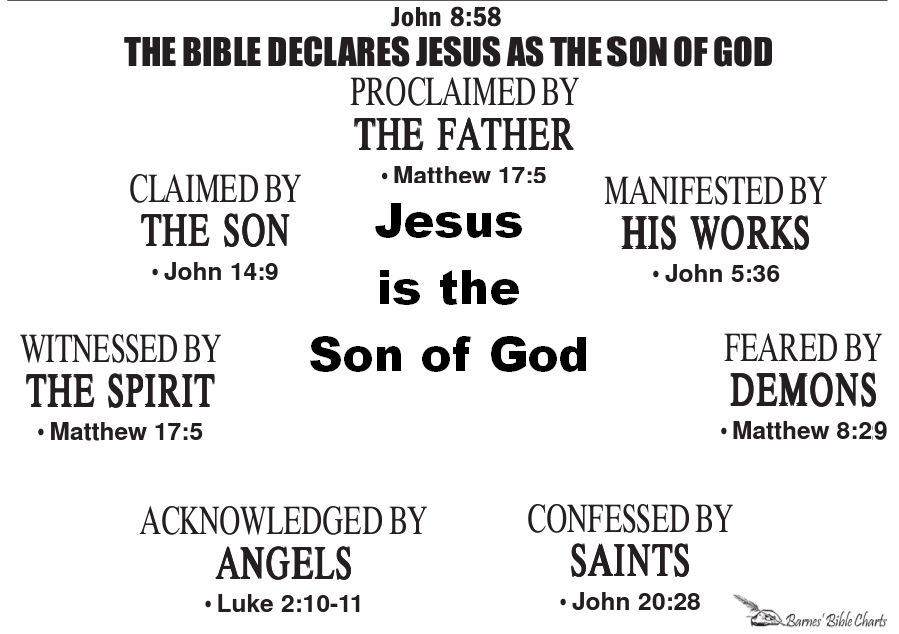
Jesus is the Son of God. “God, who at sundry times and in divers manners spake in time past unto the fathers by the prophets, Hath in these last days spoken unto us by his Son, whom he hath appointed heir of all things, by whom also he made the worlds; Who being the brightness of his glory, and the express image of his person, and upholding all things by the word of his power, when he had by himself purged our sins, sat down on the right hand of the Majesty on high” (Heb 1:2-3).
Who is Jesus? Part 2.
Jesus is the Express Image of the Godhead. “And he is the head of the body, the church: who is the beginning, the firstborn from the dead; that in all things he might have the preeminence. For it pleased the Father that in him should all fulness dwell” (Col 1:18-19). “For in him dwelleth all the fulness of the Godhead bodily” (Col 2:9).
While much could be said about this, I want to focus on the fact that Jesus is Divine, He is Deity, He is God. Some religions do not see Jesus as God, but as a created being. This simply is not true. Jesus is God.
The Scriptures teach “In the beginning was the Word, and the Word was with God, and the Word was God” (John 1:1). In this passage Jesus is called “the Word.” Note the Scriptures said Jesus “the Word” was “God.” Some will use their rewritten bibles to argue about “definite articles” and misquote passages in attempt to make Jesus not God, but “a God.” We know better.
The Scriptures affirm the deity and godhood of Jesus. Jesus calls Himself the name “I AM” which is the name used for God (John 8:58; Exo 3:14). Jesus said God is “My Father” which made “Himself equal with God” (John 5:18). Jesus accepted the identification “My Lord and my God!” from Thomas (John 20:28). Jesus’ agreement with Thomas in verse 29 is a shattering deathblow to the false doctrine that Jesus is only “a god.”
“Jesus said to him, ‘Thomas, because you have seen Me, you have believed. Blessed are those who have not seen and yet have believed’” (20:29). Jesus affirmed what Thomas “believed” was in fact the truth; Jesus is “Lord” and “God.”
There are other Scriptures that confirm the deity of Christ. “For unto us a child is born, unto us a son is given: and the government shall be upon his shoulder: and his name shall be called Wonderful, Counsellor, The mighty God, The everlasting Father, The Prince of Peace”. (Isaiah 9:6; Acts 20:28; Matt 1:23; Heb 1:8).
Jesus is the final Judge of the world. While living on earth He did not come to bring judgment at that time. Now that He has Died, was Buried, and is Resurrected, He sits on His Judgment seat and everyone will appear before Him. “For we must all appear before the judgment seat of Christ; that every one may receive the things done in his body, according to that he hath done, whether it be good or bad. Knowing therefore the terror of the Lord, we persuade men” (2Cor 5:10-11a).
It will be a terrifying thing to appear before Him if we’re found to be disobedient. “It is a fearful thing to fall into the hands of the living God” (Heb 10:31). But, how can we appear before His throne with confidence? “Let us therefore come boldly unto the throne of grace, that we may obtain mercy, and find grace to help in time of need” (Heb 4:16). We can know when we know His word.
Jesus said, “He that rejecteth me, and receiveth not my words, hath one that judgeth him: the word that I have spoken, the same shall judge him in the last day” (John 12:48). Jesus has given us His Divine word to guide us. “And that from a child thou hast known the holy scriptures, which are able to make thee wise unto salvation through faith which is in Christ Jesus. All scripture is given by inspiration of God, and is profitable for doctrine, for reproof, for correction, for instruction in righteousness: That the man of God may be perfect, throughly furnished unto all good works” (2Tim 3:15-17). “And ye shall know the truth, and the truth shall make you free” (John 8:32).
These are comforting words. We can know the Real, Living, & True Jesus.
Do you remember the list from that social media post last week? Could you verify the validity of them? Did you look them up? Here’s what I found.
Joy Giver, John 17:13.
Eternal life Giver, John 10:28.
Strength Giver, 2Cor 12:9.
Unconditional Lover, Rom 5:8. (this one is often misleading)




 Borger church of Christ @ Franklin & Juniper